Wednesday, November 25, 2009

[Interview] Christian Saunders

Welsh author, Christian Saunders has been published in several magazines and anthologies.

His first book, Into the Dragon's Lair: A Supernatural History of Wales was published in 2003. Since returning to the horror fiction fold, he has had a story run in Screams of Terror e-zine and another featured in the anthology, Return of the Raven.

His novella, Apartment 14F: An Oriental Ghost Story is available through Damnation Books.

In this interview, Christian Saunders talks about his writing:

When did you start writing?

I started writing back in 1997. Actually I always wrote, for as long as I can remember, but it was around then that I began to try and get my stuff published.

I remember telling my careers adviser in school that I wanted to be a writer and he just laughed at me, said I wasn't bright enough and tried to persuade me to join the army instead (I am from a strictly working class area, and the school I attended didn't exactly encourage creativity!). In a perverse way, I took great inspiration from that, and set about proving him wrong.

My first few short stories were published in the small press, which was at its peak in the late 90's. However, the small press didn't pay, and as I worked in a factory at the time, I needed a second source of income so I moved over to mainstream journalism for a few years where I was a real media whore. I wrote anything, for anyone who would pay me.

My non-fiction has appeared in Fortean Times, Enigma, Bizarre, Record Collector, Big Cheese, Maxim, Nuts, Urban Ink, Chat... Its Fate, and many others.

I also had a book published in 2003 called Into the Dragon's Lair: A Supernatural History of Wales.

As for how do I do it, the best advice I can give is: identify your market, then submit, submit, submit. Never doubt yourself and never be discouraged by the haters. Over the years I've had literally hundreds of rejection letters, and each one makes me stronger.

How would you describe the writing you are doing?

In recent years I have arrived at a stage in my life where I am not so motivated by money so I have been able to return to my first love -- horror fiction (though I am still a regular contributor to the Vital Football website where I write about the ups and downs of Cardiff City FC).

This year I've had several short stories published in different places and my novella, Apartment 14F: An Oriental Ghost Story was published on paperback and PDF by Damnation Books on September 1st.

Who is your target audience?

As a freelance writer my target audience changes and is dictated by the readership of the publication I am working for at the time. A smart writer will tailor his writing to suit the market.

When I write fiction I have no specific audience in mind, I write what I want and then try and find a suitable market when I finish. I believe it's the only way to stay true to yourself.

Which authors influenced you most?

I suppose my biggest single influence has been Stephen King. He is a master of the art of mystery and suspense. He doesn't get the respect he deserves in literary circles, but he is one of the all-time greats. I read my first King book when I was barely in my teens, I think it was Christine, and it totally captivated me.

Also, Dean Koontz is a great, prolific writer. With King it's about the story and characterization whereas with Koontz it's more about the words and language he uses.

I also like Joe Hill (Stephen King's son), Conrad Williams, Paul Kane and the late Richard Laymon.

How have your personal experiences influenced your writing?

Personal experience influences every writer, whether they are aware of it or not.

When I was in my mid 20's I left the small town in south Wales where I grew up and moved to Southampton to study journalism, living the city life was a huge culture shock at the time. After 5 years there I moved to China to teach English -- first in Beijing then Tianjin, and now Changsha (south China). This will be my third year there. China is a constant source of great material -- food, travel, culture, history, its all so different to the western model. I find it fascinating, this is why my new book is based in China.

What are your main concerns as a writer?

My main concerns are not being original. I'd hate to ever be boring, and not give someone satisfaction for the time and money they invest in me. It's a great responsibility.

Also, I'd hate to write something that was factually inaccurate. I've been pulled up once or twice in my career for making stupid mistakes, and it's always embarrassing.

The biggest challenges I face are the same ones that every other writer faces I think... struggling to fit everything in -- finding time to research and write, then identify markets, pitch ideas, and if you are lucky enough to have a substantial piece of work accepted anywhere, then you have all your own promo to do.

There is no real way to deal with it, it's just something that comes with the territory. It's also sometimes hard to come up with any good ideas, we all suffer from the dreaded writers block at some point.

Do you write everyday?

Yes I try to write every day, though I don't always write anything useful.

My day starts with reading my emails, then replying to any that require a response. I am constantly pitching various projects to editors and agents so my inbox is always overflowing. I try to have several different projects on the go at any given time because that way if you hit the wall with one you can just move on to something else. There are also other things I do -- I do various pieces of ghostwriting for different clients, maintain a MySpace page (come and say hello!) and keep a professional log (which should really be an online blog, but I haven't got around to that yet) where I write ideas for stories, any developments, and keep a record of what I've submitted and where.

Anything I do has to be structured around my teaching job.

How many books have you written so far?

Into the Dragon's Lair: A Supernatural History of Wales (published by Gwasg Carreg Gwalch, 2003). Four years in the making this is a compendium of various stories I found about wales, mostly with a supernatural slant.

I've written other books but none were picked up by publishers. At the moment I am looking for an agent to represent a Young Adult novel I finished this year, which is a kind of adventure mystery story, and I might do an anthology of some of my short stories at some point in the future.

What is Apartment 14F about?

Apartment 14F: An Oriental Ghost Story was published by Damnation Books on September 1, 2009. It's about a guy that leaves London to take up a teaching position in Beijing. When he moves into his new apartment he learns of the mysterious disappearance of his predecessor, and then things start going bump in the night. Yes, some of it is based on personal experience, though I made up all the ghostly stuff. Thankfully!

How did you find a publisher for the book?

I saw an ad the publisher had placed in a trade magazine, they were a new company and looking for authors to submit work. I had this story that I didn't know what to do with because it was an awkward length -- 10,000 words, so I submitted it and they liked it but told me to re-write it in novella form. So I went away, re-wrote parts of it, added about 5,000 words, and submitted it again.

What advantages or disadvantages has this presented?

At the moment the publisher is doing some very cool promotions. You can get free PDF's just by joining their yahoo group (just search yahoo groups for Damnation Books) and on release day, the first person to buy a copy of mine or another writer's book can get it for just 5 cents. After that the price will increase by 5 cents with every order until it reaches its full price (which is $4.50 for the PDF and $7.50 for the paperback). Its a superb marketing strategy.

Which aspects of the work that you put into the book did you find most difficult?

I found the editing process tough to deal with. I didn't agree with all the editorial decisions that were made, but I had to conform or else they wouldn't have published the book.

We'll have to wait and see who was right!

What did you enjoy most about the work that went into the novella?

I have always been fascinated by different cultures and I enjoyed using various characters in the book to illustrate the contrast between east and west. It's a far more complex and subtle way of doing it than just sitting there writing a travelogue.

What sets Apartment 14F apart from other things you've written?

It's the most substantial piece of fiction I have ever had published, and I am quite excited by it!

A lot of my work seems to have a recurring theme, whereby someone is searching for answers. Even a lot of my non-fiction work evolved around the great mysteries of the world. I've always had a restless spirit, and been haunted by this feeling that I'm supposed to be looking for something, though I don't know what it is iIm supposed to be looking for. Maybe a lot of people think this way, or maybe I'm the only one, I don't know. I've never really addressed it to be honest. A lot of my work, consciously or otherwise, reflects this.

What will your next book be about?

I'd love to write a zombie story! Just for the fun of it. I'm not sure how I'll do it, or whether it will be a short story, a novella or a full-blown novel -- there is only so much you can do with zombies, but it's a very popular sub-genre within the horror sphere.

I'd also like to write an apocalyptic End of the World-type opus, which might even be a trilogy of books, but I think I'll keep that for when I'm old!

What would you say has been your most significant achievement as a writer?

Probably my first book, Into the Dragon's Lair, for a variety of reasons.

It proved a lot of people wrong because not many people believed in me at first, so that was my big "F**k you".

Also, it got me a lot of recognition within the industry and opened all kinds of doors for me. Editors immediately took me more seriously and I won a place at uni purely on the strength of the book as I was a hopeless student at school and left without a single qualification to my name.

Possibly related books:

,,

Related article:

[Interview] Jeani Rector, author of 'Around A Dark Corner', Conversations with Writers, August 15, 2009

Tuesday, November 17, 2009

[Interview] Jonathan Vining

Jonathan Vining is the author of Diary of a First Year Grad Student, a work-in-progress which he describes as a novel about "the absurdities of academic life".

In this interview, Vining talks about what his concerns as a writer.

Is Jonathan Vining your real name or a pseudonym?

It’s a pseudonym.

Why are you using a pseudonym?

Like other books, mine will primarily be met either with praise, criticism, or indifference. Since the latter two possibilities would not exactly enhance my academic reputation and career, I prefer that Jonathan receive them instead of me.

Seriously, I think there is a non-trivial possibility that if Diary of a First Year Grad Student gets much attention, it could lead to the sort of needless academic brouhaha described in it. Some of my colleagues have been caught up in these, and they are not pleasant. So using a pseudonym here is intended as pro-active damage control.

Under what conditions would you reveal your true identity?

I might do so if the blog novel, by some miracle, receives a lot of praise -- or perhaps even if it receives only a little. I will decide whether or not to reveal my true identity when I post the last installment of the blog -- which will be in September 2010.

When did you start writing?

I started writing in 1971, shortly after the start of my last year in high school. My father had just died and our family finances declined sharply. We had to sell our home quickly. At a time when life was in chaos, what I wrote or typed on a sheet of paper was one of the few things that I could control. I valued that immensely. I wanted to publish what I wrote, but I soon found, of course, that that wasn’t so easy. None of my early writing was accepted by a publisher -- for good reason, I am sure.

How would you describe your writing?

I do different kinds of writing: academic, journalistic, and creative. The creative includes essays, travel narratives, and fiction.

My academic writing is targeted at specialists. My journalistic writing is targeted at a broader audience concerned with policy issues. I do creative writing just to please myself -- though I hope it will please others too.

Which authors influenced you most?

When I was younger, I loved what I thought of as the classic comic authors: [Miguel de] Cervantes, [François] Rabelais, [William] Shakespeare’s comedies, Moliere, Jonathan Swift, Voltaire’s Candide, [Edmond] Rostand’s Cyrano de Bergerac, and the like.

Later, I came to appreciate how George MacDonald Fraser weaved comedy with a deep knowledge of history in his Flashman series. I also love too many Irish comic authors to name, but especially Brendan Behan and Roddy Doyle.

More recently, I have come to appreciate some of the great 19th century English female authors: Jane Austen, all three Bronte sisters, and George Eliot. What I like about all these books is how the protagonist in each of them was able to overcome difficult circumstances partly by having a sense of humor.

How have your personal experiences influenced your writing?

My fiction is based mainly on my personal experience with the many absurdities of academic life.

What are your main concerns as a writer?

My main concern is not having as much quiet time as I need to write. I deal with it by writing when and where there is opportunity to do so.

The biggest challenge I face at present is that it is far easier for me to publish my academic and journalistic writing than my creative writing -- especially my fiction. Despite the absurdities of academic life that I alluded to earlier, one thing I appreciate about it is that if one’s academic writing is good, it is highly likely to be accepted for publication somewhere. Writing good fiction, by contrast, is not good enough to get it published. This is because, I believe, academic publishing is far less concerned about profitability than commercial publishing.

Do you write everyday?

Life is hectic, so I write when I can for as long as I can. I don’t have a set routine.

How many books have you written so far?

I am the author of five academic books and the editor of three more. I don’t want to talk about them here, though.

What is your latest book about?

My latest book is the blog novel that I am now posting: Diary of a First Year Grad Student. It is about the absurdities of academic life -- some of their own making -- that even what Americans call grad students (and Britons call post-graduates) can face. It only took about three months to write, but I never succeeded in finding a publisher for it -- which is why I am now publishing it as a blog novel.

The main advantage of this format is that since it is free, it is clearly accessible to anyone with an internet connection who wants to read it. The disadvantage, of course, is that blog novels don’t pay royalties (at least, not as far as I know). I am far more interested, though, in its getting some (hopefully positive) attention.

Which were the most difficult aspects of the work you put into Diary of a First Year Grad Student?

Two aspects of life in academia that my book deals with are, I believe, serious and sensitive issues.

One is how the concern that some academics express for the plight of minorities is based less on actual concern for them and more on a desire to use this issue for manipulative purposes, including discrediting others.

Another is how those charged with enforcing sexual misconduct rules at universities sometimes do not follow these rules themselves.

Which aspects of the work did you enjoy most?

As other fiction writers have reported, I enjoyed how the characters I created took control of the narrative as I wrote it. After a certain point, I felt that I was merely the instrument of their will. This helped make the writing process go by easily.

What sets Diary of a First Year Grad Student apart from other things you've written?

What sets it apart is that it is a work of fiction; what I mainly write and (more importantly) publish is non-fiction.

There really isn’t any similarity between writing academic non-fiction on the one hand and fiction on the other. Writing academic non-fiction requires a knowledge of what others have written. But fiction -- at least, the way I write it -- does not.

What will your next book be about?

I have written another novel about the trials and tribulations of the tenure process. I don’t think, however, that this one would lend itself to the blog novel format.

I started another novel about the hypocrisy of democratization efforts in the Middle East, but did not finish it. I was discouraged at not succeeding at publishing the other two novels, and distracted by increasing demand for my academic writing. If my Diary of a First Year Grad Student manages to receive positive attention, then perhaps I’ll finish it.

What would you say has been your most significant achievement as a writer?

That’s for others to judge.

Possibly related books:

,,

Related article:

[Interview] Bryce Beattie, author of 'Oasis', Conversations with Writers, July 6, 2009

Tuesday, November 10, 2009

[Interview: Part 2 of 2] Neil Marr

Publisher and author, Neil Marr worked as a journalist for over 35 years before he and his son, Alex, set up BeWrite (a non-commercial writers’ website which offered free professional editorial services and optional online showcasing).

After three years, they transformed the website into BeWrite Books publishing house and have gone on to release over 120 paperback titles.

In this interview, Neil Marr talks the formation of BeWrite Books, the use they are making of print-on-demand technology and their plans for the future.

What made you decide to transform BeWrite into BeWrite Books publishing house?

Quite simply, the talent out there that wasn’t getting a look in. The big houses are swamped (that is not a criticism) and their slushpiles are never cleared.

We read every proposal. OK, 98% might be knocked back at first fence with no request for full MS, but everything gets a fair crack of the whip -- not by interns, but by one of four experienced pro editors. Often a rejection is accompanied by a line edit and masses of editorial notes to guide the author in revision.

What challenges did this transformation present?

Hard work. Twenty-four-hour days. Simple as that... sheer hard graft and ever-producing mindplay.

I’ve worked 62-hour shifts for this wee house regularly. Partner (and son) Sandy took a full year off from his high-paying IT day job to help put things together.

How has BeWrite Books been received?

We’re still battling against the stigma of producing mostly with PoD, which -- unfairly -- lumps us in with the vanity cowboys, to the uninitiated.

We’re getting over that.

Folks are beginning to see that PoD ain’t necessarily a four-letter word. You will never Google up a negative review of BeWrite Books. We’re listed in all the publishing ‘bibles’ and our reputation for editorial excellence and general square dealing is always emphasised.

Who are these 'vanity cowboys' you talk about?

Sadly, the revolutionary new print-on-demand production system was soon hijacked by vanity press operators who simply convert a raw manuscript into a print-ready PDF at the touch of a button, and the innocent initials PoD came to often mean Publish on Demand.

The internet is bursting at the seams with companies offering to ‘publish’ anything that comes their way... at a price. There is no selection process, no editorial input and no quality control. The only books these companies are interested in are authors’ check books.

There are companies releasing up to three titles an hour... and still claiming editorial input. Nonsense. I sometimes have a novel in edit for over a year. Even with a pro editorial team of four, we’re hard pressed to release a dozen titles a year.

Some Publish on Demand operators boast of being ‘traditional’ (whatever that means) and don’t charge an author up front or even offer a single dollar advance. Instead they ask the author for a list of family and friends and press them into buying. Few sales are made to the general reading public. But production cost with no editorial input is so low that they’re soon making huge profits by playing the numbers game. Such companies have become known as ‘author mills’.

Why is it a fallacy to associate all PoD with vanity publishing?

Vanity press self-publishing was always risky for the author. There was the cost of a short run of a few hundred books and the difficulty of distributing and selling the books. Hardly ever would a self-published author recover his expenses, and he’d be left with a stack of unsold books gathering dust in the garage. Print on Demand technology has reduced the risk for genuine small press but it also presents an opportunity for Publish on Demand outfits to cash in on the enthusiasm of unpublished writers.

I think there’s little chance of vanity press and self-publishing ever going away. In fact, it’s in its hay day. Word processing computers make it simple (too simple?) for someone to knock out 60,000 words, call it a novel and tout it around electronically at zero cost and effort. We’ll always see thousands of sub-standard books released this way every year. And even more as time goes by.

Why?

Simply look at rejection rates with a genuinely selective publishing house. Even a small company like ours accepts less than four percent of what we’re offered (often, even then, after full author revision before it goes into full edit). Bigger houses and agencies reject an even greater percentage of submissions (because they receive more, not because they’re more choosey).

Some authors will learn from rejection and improve their work. And that’s exciting to see. Many others think they know better and self-publish or go the publish on demand route to by-pass the critical selection process.

Having said all this, I must add that some self-published work is quite fine -- usually when its author has employed a professional editor. But that’s a tiny, tiny minority, and it’s swamped by second, third and fourth rate self-published or author mill releases.

What does PoD allow you, as publishers, to do that you couldn't have done had the technology not been available?

In our case, PoD is a print term describing a process by which books are instantly printed on order -- one single copy or a few dozen at a time depending on the day’s demand. We use the excellent Lightning Source print company and set our titles both at their US and their UK bases. Books are printed and despatched by the press closest to the ordering party. Distribution and exposure is usually via online sites like Amazon, Barnes and Noble, etc.

This process allowed smaller companies like BeWrite Books to launch. Before then, publishing was a hugely expensive venture to set up with thousands necessary up front to pay for a mass print run. Then, of course, the books had to be stored and physically peddled around high street stores. And about 60 percent remain unsold and are returned or destroyed for a full rebate to the retailer by the publisher.

A PoD title costs relatively little to set up digitally for press, packaging and distribution is handled by the print shop, and there’s zero wastage. We covered all expenses -- not inconsiderable -- out of our own pockets for the first three years or so before starting to break even.

Our most valuable input, though, is not in money so much as professional editorial, technical and administration know-how. The editorial team of four, for instance, shares nearly 150 years of pro experience. I work long hours at least six days a week. But we’re not at the stage even now where we can afford to take salaries, which is why I occasionally have to moonlight for other publishers and -- like yesterday for Murdoch’s News International -- run a story for a big newspaper or magazine to go toward the household bills.

We do have working capital now, though, and we’re planning our first venture into short-run and stacking the shelves at physical (rather than online) bookshops with a thriller by David Hough called Prestwick (BeWrite Books, 2009) later this year.

What would you say sets BeWrite Books apart from other similar ventures (if that is the right word) that are out there?

In a word, editorial. There’s not a giant house to match our editorial expertise (almost two centuries combined experience), our eventual proofing. And we’re as selective as hell. The reader of a BB book will never be disappointed. We’re too darned smart for that.

What are your plans for the future?

Immediate future? A chilled beer and a tuna and cucumber sandwich.

Later this year, out first venture into short-run with David Hough’s Prestwick which we are short-run printing and plan to launch at all major UK airports over the next four months. One heck of a book!

Earlier, you mentioned that you started publishing with one or two co-authored collections from the BeWrite Community. What are the titles and characteristics of these collections, who were they by and are they still in circulation?

Actually, our first venture into publishing was an experiment to showcase the short story work of three particularly talented and prolific contributors to the website -- our first two members back in 2000, Peter Lee and Terri Pine (now Terri Nixon) and another regular poster, Andrew Muller. I added a piece to make up page count. We had no cover artists at the time, so the book, Chill (BeWrite Books, 2002) was covered by my son, Alex -- a fine photographer -- who used sugar to simulate ice with a ghostly image of a screaming skull showing through. Pretty effective.

A second collection by BeWriters was The Creature in the Rose (BeWrite Books, 2004), love stories with a macabre twist and co-authored by a whole bunch of gifted scribes.

We were becoming very, very busy on the publishing front by this time, though, and we had no choice but to close down the community and its forums. The lads and lassies all agreed that it was for the best. The BeWrite Community had done its job and it was time to move on to the natural second stage, helping authors into print. With a technologist pal in Canada, however, I opened a new writers’ group to pick up where BeWrite Community left off. Many old BeWriters meet up there and exchange work for critique. You’ll find it at www.bibliophilia.org.

These days, we no longer run collections and concentrate on full novels. Several genres (no horror or fantasy, chick lit, etc), but our main interest is in what’s become known as ‘literary fiction’: all about wordcraft.

Related resources:
Possibly related books:

,,

Related interview:

[Interview: Part 1 0f 2] Neil Marr, Conversations with Writers, November 5, 2009

Thursday, November 5, 2009

[Interview: Part 1 of 2] Neil Marr

Publisher, author and former journalist, Neil Marr is the author of Bullycide: Death at Playtime (Success Unlimited, 2001), a groundbreaking book which exposed the epidemic of bully-related child suicides in the UK.

Bullycide received rave reviews around the world and sparked countless campaigns and Bullycide-dedicated websites, official studies, several follow up books and government and education authority action to combat school bullying in several countries.

In this interview, Neil Marr talks about his writing and the challenges he and his partners faced when they set up BeWrite.net, a publishing house that started off as a non-commercial writers’ website offering free professional editorial services and optional online showcasing.

How did the idea for Bullycide: Death at Playtime come about?

In the sixties, when I was a cub reporter of about seventeen or eighteen, I covered a huge police search for a missing child who lived just down the road from me. It was just after the horrific 1960s’ Moors Murders in England.

The search for Stephen Shepherd was the biggest UK police operation in UK history. When a child went missing, folks paled and talked of paedophile killings similar to those committed by Ian Brady and Myra Hindley. Turned out that the wee boy -- twelve year old Steve -- hadn’t been murdered at all: He’d taken his own life because he could no longer face school bullies.

The media then lost interest and dropped the story ... no juicy murder.

I never did lose interest. It haunted me for over thirty years. This was Bullycide (a catchy word I had to invent to snatch attention and to conveniently fit newspaper headlines – it’s now entered specialist vocabulary).

I was driven to do wee Steve justice; tell his tale and that of others in his predicament. More than thirty years later I kept the promise I’d secretly made at his funeral to tell the whole truth.

How long did it take you to write the book?

Writing a non fiction book is not a problem. It’s like a news story -- off the top. Second nature as a journo. The heavy work is in the research, making sure that your claims are fireproof and that your publisher will catch no flak. Like the investigative journalism I spent so many years with for major -- and attractively sueable (that a word?) newspapers and magazines -- it’s a matter of being able to back up every single line with signed shorthand notes and tapes.

Every single line of what you read in my book was self-edited by the bereaved families involved to be sure there wasn’t the slightest error or misunderstanding on my part. No shocks or heartache. They became part of the effort. They became friends.

The process took three years -- and I don’t begrudge a day of it. It’s a sensitive issue and had to be handled gently and with profound understanding.

How did you go about it? What was involved?

Gosh. That’s a big question. Like a reporter, I guess. Someone who listens, probes and seldom intrudes. I’d been an award-winning investigative journalist, on the street for thirty years. You might as well ask Al Pacino to teach you how to act King Lear over the phone. My work rested on decades of experience. I just did the job I was built for.

Where and when was Bullycide published?

2000. Small press in Oxford.

How did you choose a publisher for the book?

I didn’t. The publisher chose me. A big mainstream publisher bought the book and paid me an advance of a few thousand pounds on the idea alone. That financed some of my travel and research (I’m in France, the story was in Britain). He later disagreed with my figures and methodology, so I went elsewhere to a small press in Oxford and pulled in a ‘qualified’ co-author to back up my findings; the late Tim Field.

Of course, it later turned out that I had my ducks in a row and -- if anything -- my startling numbers were conservative.

How was the book received?

Amazingly (am attaching early reviews). More than I could have dreamed of.

But there’s more...

On the back of the book have been several other book publications, countless internet campaigns, moves by education authorities and central government in several countries, plays, movies ... the book’s done its job. I’m chuffed with that. That was the whole idea.

Have you written other books since?

Oh yes, but I’m keeping those to myself because they’re mainly ghosted (fiction and non-fiction for other people to keep body and soul together) but I have edited/co-written 120 novels over the past ten years. Some authors acknowledge my input, others don’t bother. Fair enough because I’m a back-room boy by nature and don’t ask for up-front credit.

What made you decide to leave journalism?

Newspapers and magazines that pay worth a darn no longer compete with TV; they compete with the TV Guide. I was bored to tears and also embarrassed to be prostituted. Also, heart and vascular problems kicked in and I could no longer flit around the world as I used to. Can’t even catch a bus. Funnily enough, though, the Sun in the UK (rotten paper but great payer and I still have old pals there) called me today for 500 words on an Italian football yarn that will pay me more in an hour or so than I’ve collected from BB this year!

How easy or difficult was the transition from being a foreign correspondent to being an entrepreneur, editor and publisher?

Hey, I’m no ‘entrepreneur’. I’m just at old hack who knows his job and loves his writers and their words. The transition hasn’t been too traumatic because I apply the same principles I always did... are these pages worth reading? Health hassles slowed me down, too, so I’ve learned to live with those. These days, I hardly miss my suitcase.

What were some of the challenges that you faced when you first set up BeWrite?

Money. We were broke. And we were dedicated to keeping things in the black and absolutely independent. We’ve never been short of the cash to pay our dues, admin costs, print fees and royalties, but have resisted all outside financial help. We’re always a couple of books ahead of the shoe-shine and two steps away from the county line. I doubt that any one of our stable of writers realises that we’ve all worked for the past eight years without a salary, mostly covering our own expenses. That everything’s for free. Why should they when they’re coming up with the most valuable commodity of all -- the raw material? We’ve only just started to break even so that one book helps finance the next release (if it sells OK). Before now. every penny of expenses has come from the shallow pockets of the partners, me and Sandy.

There are other wee hitches, of course, but we can live with those because our authors and the other folks we deal with -- printers, distributors, publicists and reviewers -- very soon become good, trusting friends. We play from a square bat and it seems to count.

What reception did BeWrite receive?

Bewrite.net (the non-commercial website) had 3,000 members. There was free professional editing and enormous feedback (I handled over four million words myself). Everyone was happy. But we had to move to stage two -- publishing -- because so many people deserved that.

We started with one or two co-authored collections by BeWrite Community writers as an experiment while we got to understand the technology, then we moved on. When it comes to selection, BB is as tough as old boots, you know, but we do read every line submitted.

We would take non-agented work from writers who knew they were only almost there and work with it to make it spot on there ... at no cost whatsoever and with some tremendous results. BB produces beautiful books.

Related resources:
Possibly related books:

,,

Wednesday, October 28, 2009

[Interview] Ulysses Chuka Kibuuka

Ugandan writer, Ulysses Chuka Kibuuka has written and published three books: a thriller, For the Fairest (Fountain Publishers, 1991); a collection of short stories, Pale Souls Abroad (Fountain Publishers, 2004); and a novel, Saints and Scarecrows (Fountain Publishers, 2007).

His first novel, For the Fairest, won the 1993 Uganda Publishers and Booksellers Association (UPABA) Award for best fiction and was reviewed by The New Vision and Radio Uganda, among others.

In this interview, Ulysses Kibuuka talks about religion, writing and the state of publishing in Uganda:

When did you start writing?

I started writing when I was a kid in p4 (Uganda) but first got published 1991 even though I had written For the Fairest in 1980.

Uganda had a real hell of a time and education and all that goes with it went to the dogs -- hence the deficit in publishers or enthusiasts. The difference is not much today -- not in terms of security but in terms of respect for literature, writing, etc.

With the coming of the current administration into state power -- I was part of the guerrilla detail that captured the city Kampala and still serve in the armed forces aged 56! -- it was relatively easy to get a publisher. Fountain Publishers are new having began in 1990. I am their first (fiction) published writer.

What are the biggest challenges that you face?

The challenges a writer in Uganda must face are poverty -- inability to afford paper or, worse still, a computer. The worst is that our publishers, very well and perhaps rightly knowing the difficulty in marketing fiction, only encourage us to write as long as we don't expect them to handle our manuscripts with any iota of urgency.

I wrote Fairest in 1981 and only got it published in 1991 after a lot of beseeching and cajoling the publishers. I am sure the print run of nearly 2,000 copies isn't sold out so many years down the road!

Who is your target audience?

I never targeted any specific audience. All readers of books were in my mind as I penned down my words.

I -- wrongly, of course -- believed there were many readers in Uganda and that there was money to be made from writing a thriller.

Because I loved what I wrote, I believe it would be loved by everybody, it was almost as if I expected them to know my book was sweet even before they opened it!

Who influenced you most?

I was influenced by early books I read as a child in primary school.

Henry Rider Haggard's Montezuma's Daughter, The Black Arrow and Treasure Island by R. L. Stevenson, Typee by Herman Melville and much later Alistair MacLean's and Mickey Spillane's thrillers helped sharpen my whodunit sense of the thriller.

MacLean greatly influenced my Fairest.

Have your personal experiences influenced your writing in any way?

Yes, my personal experiences can be found in much of my writing. Some I've been unable to conceal!

What are your main concerns as a writer?

My concerns as a writer are plenty. I hate organised religion, for instance, and know Africa might never get over the damage these 'faiths' have done to our spiritual and even moral fibre(s). In Saints and Scarecrows, I vent my anger at this and give my reasons which I am 100% sure nobody can dispute to win over me.

I am motivated to write by looking at all the wrongs we as man do fellow man unnecessarily. I see apartheid practiced amongst us Africans in extents nearly, if not as bad, as the Boers did in South Africa.

Do you write everyday?

I don't write everyday. I even spend months without noting down anything. The reasons for this are many but one of them is that I've been disillusioned with writing.

However, I have more than 20 books projected in my head! Writers' block? Maybe.

I want to try my hand at screenplay writing. There is money there.

How would you describe your latest book?

My latest (last) book is Of Saints and Scarecrows which came out in 2001.

I always find it easy to write on the subjects I choose. Of course, I put in a lot of research. I don't see any aspects of my book(s) that I don't find enjoyable.

My last book is a novel that touches on carnal love between a Ugandan Muslim trader and a Munyarwanda (Rwandan) Catholic nun exiled in Uganda. I can say I started that book two decades before the Rwanda genocide, but I cannot prove that I predicted most of the causes since my publishers only accepted it long after the horrors.

If you do decide to continue writing, what will your next book be about?

I have projected four novels. One is to be titled The Dekabusa Autopsy and is a thriller involving a Ugandan secret agent operating in Nairobi who uncovers a plot by a group of post-apartheid South African supremacists who want to use East African politicians to bring back a sort of colonial rule.

The second novel, Flight of the Termites takes place during the last days in power of Field Marshal Idi Amin Dada. The war that ousts him starts in Tanzania and enters southern Uganda. In a southern Ugandan town, an Arab man has left behind nearly a ton of gold and several precious stones. He hires an Idi Amin army deserter to collect together a number of men to pick this stuff from the deep south and bring it to Kampala before it crumbles...

Possibly Related Books:

,,

Related Interview:
[Interview] Gisela Hoyle, author of 'The White Kudu', Conversations with Writers, October 3, 2009

Thursday, October 22, 2009

[Interview: Part 2 of 2] Dave and Lillian Brummet

In the first part of this interview, Dave Brummet talked, among other things, about how most writers today are also having to play a bigger role in promoting and marketing the work that they are producing.

Lillian Brummet now gives her views on the work she and Dave are doing. Together they have written and published two "how-to" books, Purple Snowflake Marketing: How to make your book stand out in a crowd (2nd edition, BookLocker, 2009) and Trash Talk: Learn how you can impact the planet (PublishAmerica, 2004) as well as Towards Understanding (PublishAmerica, 2005) a collection of 120 poems on society, the environment and overcoming trauma.

They also host two online radio programmes, Conscious Discussions talk radio show and Authors Read radio program.

How would you describe your writing?

I began with the Trash Talk column because I really believe in the individual’s power to impact the health of the planet with really simple actions. The success of this column, and later the book that Dave and I wrote, was the fuel that got us going on the road we are traveling now.

For me, writing is about leading others by showing them just how easy it is to create a more peaceful, healthy world. Each of us has a legacy to leave behind and we already have the tools to do it, what we need is some inspiring, positive information that will urge us to get out of the rut of apathy and become more proactive in life. That is my passion, when it comes to writing. Our first two published books and most of our articles reflect this passion. The most recent book is a slight diversion from this focus in that we have provided a marketing plan development guide for fellow authors.

When you were thinking about Purple Snowflake Marketing, which authors would you say had the most influenced you?

Initially it was conversations on writer’s forums that got us thinking about releasing a book like Purple Snowflake Marketing. People were constantly asking us questions on how we were able to build the name recognition we have and how to go about each step of the marketing process.

As book reviewers and self-education enthusiasts we had ready access to writer’s resource materials, and from this we saw several areas that were really lacking in providing the key skills that help a writer develop a plan that suits their particular situation. We made note of any area we felt was lacking in other resource materials and made a great effort to create a well-rounded resource for writers, one they can use indefinitely to promote each piece they create.

We cover emotions, writer’s block and even how to handle the responses from the family and friends in our lives. Every writer we’ve ever met, either in person or Online, has been an influence in this regard.

What are your main concerns as a writer?

Time management is a real biggie for me. There is always so much to do. Someone wants a banner ad, another radio show needs a promo ad, there’s guests to book on the radio show and outlines for their interviews to create… writing the column for Poetic Monthly Magazine, and articles for newsletters or blogs… emails popping in every few minutes for an interview, or networking opportunity.

Keeping records of all of this and making sure that everyone has been followed up on, while finding new contacts, new opportunities to reach an audience that has not yet heard of our work -- this can eat up a lot of time.

Part of the struggle is keeping up with the new technologies, each of these takes a little time to become accustomed to.

New book releases are the most time-constraining for writers, we need to find patience through this busy time and know that there will be time for writing again soon enough. Besides being patient, keeping good records is essential to ensuring nothing is left behind along the way.

How many books have you written so far?

To date we have three books available to the public.

Trash Talk discusses the 4-R’s of waste management and the proper order for them. This being Refuse, Reduce, Reuse Then Recycle… before we even consider sending the item to the trash bin. Trash Talk focuses on the third R, Reuse – which also saves people a lot of money (through reduced shopping, reduced utility bills...) and provides a way to make a real and measurable contribution towards a healthier planet - enabling readers to feel more positive in life and leave a lasting legacy. Trash Talk is currently available in both paperback & hardcover formats.

Towards Understanding’s revised edition is a collection of 125 non-fiction poems written in chronological order. It is a true story of a young pre-teen female growing up on her own, struggling to survive, breaking the chains of inner demons and finally growing towards understanding of her value & purpose in life -- but not quite reaching it. Thus the title… Towards Understanding.

The original version of this book is still available in paperback & hardcover. This new revised edition offers 5 new poems, creating an ending the author is more comfortable with, and updated author information – and is available through booklocker.com.

Purple Snowflake Marketing: How to make your book stand out in a crowd, is a reference guide for self-marketing authors who want to be noticed in a snowstorm of writers. This book provides reassurance to authors along with ample advice for avoiding pit-falls and setting a pace for marketing endeavors.

Which were the most difficult aspects of the work you put into Purple Snowflake Marketing?

I turn to Dave (she laughs). It is true! You see -- the benefit of our working relationship is his skills take over where mine falter, my abilities rise where his are not so strong, his talents shine where mine are listless. When he is feeling tired, I take over -- and vise-versa. I don’t think there is one thing that our office produces that hasn’t had both of us working on it in some way -- whether or not both our names are in the by-line.

What sets the book apart from the other things you've written?

Purple Snowflake Marketing, although it is a self-help, how-to book -- it is quite different from the other products we’ve produced in the past. This is a book geared for a specific audience -- writers… rather then a general audience of individuals looking for inspiration.

What would you say has been your most significant achievement as a writer?

Getting published (she grins)! Winning all these amazing awards is pretty cool, all the acknowledgments from leading environmental and writer-education organizations continues to be a huge honor -- getting thanked by the Premier of BC for our environmental efforts was really amazing. But honestly when you strip all this away, the real addiction to this drug we call writing is the fact that it offers both Dave and I an avenue to leave a real legacy behind.

Now, let me clarify here that I don’t mean having our name in print and being ‘known’ or famous. When I say the word legacy I mean this -- answering questions like: Why we exist in this moment… What is the value of our life… How did this world benefit from our existence? These are the questions we hope to answer through our writing.

Possibly related books:

,,

Related resources:

Monday, October 19, 2009

[Interview: Part 1 of 2] Dave and Lillian Brummet

Canadian authors, Dave and Lillian Brummet have written and published two "how-to" books, Purple Snowflake Marketing: How to make your book stand out in a crowd (2nd edition, BookLocker, 2009) and Trash Talk: Learn how you can impact the planet (PublishAmerica, 2004) as well as Towards Understanding (PublishAmerica, 2005) a collection of 120 poems on society, the environment and overcoming trauma.

In addition to writing, the Brummets host two online radio programmes, Conscious Discussions talk radio show and Authors Read radio program.

In this, the first of two interviews, Dave Brummet talks about the work they are doing:

When did you start writing?

I’ve been writing all my life.

I decided to become published around 1999 after taking a writing course and learning, most importantly, how to present one's self to a publisher. I just felt that writing was my calling and wanted to “follow my bliss” (from Joseph Campbell) -- so to speak. I also educated myself on the business and politics side of writing in order to query in a professional manner.

Who is your target audience?

Our target audience, with Purple Snowflake Marketing, is any writer -- because every writer needs the knowledge to be able to promote their work.

These days, as a writer, publishing companies expect authors to be willing to market themselves and their work, often with their own resources. We realized that there is a huge void in the information available for us, as writers, to do this.

How have your personal experiences influenced your writing?

Because we like to write about the things we love in life, for example gardening, cooking and outdoor recreation, these experiences become a part of each and every story. Even if it is a how-to article, I try to relay through the writing how I learned myself, as a first-timer, thus connecting with the reader.

I tend to write as if I am speaking to a person, often with some humor, rather than a textbook dictation-like approach. This seems to come across as more reader-friendly this way.

Do you write everyday?

Ideally I would like to write everyday but unfortunately editing, graphics, web maintenance, ads, radio promos, voiceovers, interviews (he laughs)… and life in general all have to maintain a balance as well.

When I do write I begin with outlines and well-thought out plans, I then extrapolate from there and size the article accordingly to the specified word count.

After the initial writing, an article or a book will need edits (often over and over) and the writers must take the time to get away and let their minds recover -- to come back to a piece fresh and proofread it.

At some point you have to stop editing because, with our ever-flexible English language, you could go on for forever. You need to trust in your talent and believe that it is going to be good enough for your market.

How would you describe your latest book?

Purple Snowflake Marketing: How to make your book stand out in a crowd, is our most recent release. The first edition was put out in 2007 and within 18 short months it had made the recommended reading list of a dozen writing courses.

We’ve created this new revised edition with updated information, hundreds of new resources and several new sections -- which is now available through booklocker.com We compiled it from our own market plans for our articles and books, which started back in 2004 with our first book Trash Talk.

We chose to create this project as an e-book specifically because writers are already at their computers and they benefit from the live links that link them to promotional opportunities and well-researched resources with the click of a mouse.

Which aspects of your work do you enjoy most?

I like the creative process of writing -- crafting a sentence out of nothing in order to convey what you want the reader to get out of the piece. To me this is the true art of writing, the reason why I got into it at first… this creative aspect of writing.

I also now enjoying the graphics and creative design of book covers, bookmarks, ads, business cards, radio promotion blurbs -- everything a writer needs to promote. I love the fact that we have more control and save a lot of money by doing this in-house. Graphic design work is not cheap.

What will your next book be about?

We have a series of garden, cookbook, animal rescue and landscaping books that we are currently working on.

As a musician and a drum-maker, I also have plans to share my years of knowledge and experience in these rather unique fields. I’ve repaired and refurbished a wide variety of instruments, built drums and taught students for 25 years -- this has given me a unique insight into the trade that I feel is worth sharing with readers.

Which one is next is a good question!

Related resources:
Possibly related books:

,,

Saturday, October 3, 2009

[Interview] Gisela Hoyle

Poet and novelist Gisela Hoyle was born in Barkly-West, in the Northern Cape of South Africa.
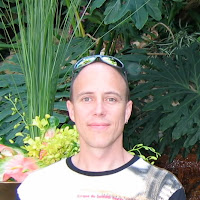
She attended Kimberley Girls High School and graduated with an MA in English from Rhodes University.

She taught at Rhodes University and then at various schools in South Africa. Currently, she lives and works in the UK.

The White Kudu (Picnic Publishing, 2010) is her first novel.

In this interview, Gisela Hoyle talks about her writing:

When did you start writing?

I have been writing since I was a child -- mostly poetry and mostly for occasions in the family or at school (I am a teacher).

I decided to get published about 18 months ago now -- because I had written my first complete novel, The White Kudu.

I took my manuscript to a Writers’ Clinic, where it was positively received, and I got some good advice on how to approach publishers; which I did.

How would you describe your writing?

Well I don’t think I’m a genre writer. I just write and let other people put it into categories.

The White Kudu has been described as both an Indiana Jones type of adventure story and a literary novel. I suppose this is because the plot follows this young geologist and his discoveries. These lead him to the local mythology -- which is what always seems to happen to Indiana Jones; and then the literary side, I suppose, has come from readers finding several layers of meaning in it, and perhaps the way it is written, I’m not sure. Also, because it is a story about stories and the role of narrative in defining identities, in the interaction between people and places.

Who is your target audience?

I don’t really write with a particular audience in mind -- I think ‘audiences’ are commercial categories for publishers, rather than real people. I’d like to think my writing would appeal to those -- of any age or gender or nationality.

What are the biggest challenges that you face?

Writing about South Africa’s past is a challenge. I want to do that compassionately and truthfully.

South Africa’s past (and present still) was fraught with conflict and violence -- brought on by deliberate injustice. There are so many stories and versions of stories and they each will have some element of truth, but they will each also be utterly subjective and almost inevitably biased.

When I was growing up there, everything you said, the most ordinary daily details -- like what you had for breakfast -- were politicised; placed you in a camp, somehow. It was extraordinarily tense and loaded. So, how can one speak about it clearly, fairly, objectively? I think this is what the Truth and Reconciliation Hearings were trying to address -- speaking about such a past is always a risk: it risks being unfair, it risks being misunderstood and yet if there is to be a future, it must be done and done in a spirit of reconciliation. It was abused, of course it was, but it was an astonishingly brave thing, too.

For me, writing about it now, from another country means risking rose-coloured spectacles and nostalgia on the one hand, and dramatisation on the other; both of which will skew the real, the human story. I have tried to focus on individuals within such a situation of strong group identification and the resulting violence -- what does it mean to live your life, and live it decently, in such a world?

In the writing you are doing, which authors influenced you most?

Probably mostly South African authors, such as Marguerite Poland, Andre Brink and Etienne van Heerden, who all share an interest I think in the mythology of South Africa and the relationship of various people (coloniser and native, missionary, shaman and farmer) to the land and the landscape.

How have your personal experiences influenced your writing?

Well, The White Kudu is set in the place where I grew up: a farm in the Northern Cape of South Africa. The place is a mission farm in an area, where land ownership was deeply contested -- and the questions of who the land belongs to, whether it can belong to anyone ; or whether it is not rather a question of people belonging to the land have always interested me. Also because of my own hybrid nationality. The time is the mid to late 90s -- so early post-Apartheid South Africa.

What are your main concerns as a writer?

I am interested in language: its role in defining our identities and how that works in multi-cultural or more specifically hybrid societies.

It is, I think, especially through stories that we achieve an understanding of ourselves and our societies. So The White Kudu is really a novel about stories -- their power over us, their beauty and their danger. But also their power to connect people and to help with understanding history.

You make reference to "hybrid nationality” and "hybrid societies". What do you mean by this?

I mean people and societies which are not defined by a single culture and that have been so for a time long enough to feel that they belong to both -- so, more than just multi-cultural.

I grew up in a German-speaking family with very close ties to Germany, as my parents worked for the Berlin Mission Society; but I also grew up in South Africa, went to South African schools, am ‘at home’ in South Africa. I belong to both. I think it is best expressed by a kind of ‘both and’; rather than ‘either/or’ approach to life -- it is always looking from two angles at once, and being OK with that.

Do you write every day?

I do try to write every day -- this is not always possible, especially during very busy times of term.

I get up early and write between 4 and 6 o’clock in the morning -- before school or anyone else in the family is even up. I love the quietness of that time.

I simply made a decision that a day in which I have not written is a day wasted and so I get up make a cup of tea and write.

At times I set myself a word target or just aim to get a certain scene or poem written. It ends because the rest of the day starts and I have to get to work.

How many books have you written so far?

The White Kudu is my first novel to be published.

It is the story of a young geologist, who is posted to a farm in the fairly remote rural area of the Northern Cape. He encounters there the legend of a white kudu as well as the story of his predecessor’s scandal. During his search for mineral wealth he uncovers an ancient skeleton, which adds another dimension the land claims battle raging in the area at the same time.

How did you choose a publisher for the book?

I chose Picnic Publishers because they stated very clearly that they were interested in the writing, the story or the poetry and not in the biography of the author. It is a small independent publisher, which is great as one stays far more involved in the entire process of publishing than I imagine one would with a bigger publisher.

Which were the most difficult aspects of the work that you put into the book?

There is quite a lot of anthropology in the novel -- that was an interesting challenge to work into the story. It was important for understanding the resolution, but it is not the sort of conversation people outside universities have much. So, I needed not to get too involved in that -- but it was very tempting, because it is so interesting.

What did you enjoy most?

I really enjoyed ‘reliving’ many of the stories of my childhood -- also doing the research on them and finding them to be a part of the authentic mythology of San people of South Africa. So the most difficult was also the most enjoyable, really.

What sets The White Kudu apart from other things you've written?

The strong mythological content makes it very different to many other books. The only other work I published is poetry, so as a novel it is very different. As a story it is also very closely linked to very specific places in the world -- poetry is not like that, or my poetry is not.

In what way is it similar?

The interest in language, in the power of naming things is present in all my work and the power language has to make connections: between people and the place in which they live, between people. The way shared language can create a sense of belonging -- but also the power of language to confuse and alienate.

Questions around who owns the land and who the land belongs to are contentious in many parts of Africa. Do you see a time when these questions will be resolved?

Yes, land ownership is very contentious, because it goes to the heart of the injustice of South Africa’s existence. When I was growing up, it was something constantly looming over our lives. The Nationalist government at the time did not trust the Berlin Mission at all and were constantly threatening to appropriate the land. So I grew up knowing that ‘home’ did not belong to us -- we were outsiders, from all sectors of South African society, but that did not prevent the feeling of belonging to the place. And I think that is perhaps a useful distinction: people belonging to the land and the land belonging to people.

People, for various reasons, have a right to live in a certain land: politically in South Africa the white farmers as a group had no right, because they had come by that land unjustly. But then, when you consider a farmer individually, who has worked the land, has got to know the land, has loved the land and taken care of it, perhaps even suffered for it -- what does that mean for ownership?

On the other hand, there are traditional claims to land ownership, there are blood-ties to land -- and the facts of stealing and war and conquest in history remain, too.

The farm I grew up on had been ‘given’ by the queen to the Mission Society as a refuge for those Black people, who had become Christian and were being persecuted by their people for it. So it occupies an interesting, ambiguous place in that history: it was both taken from the people but also being used for the people. The descendants of these communities still live there and the process of establishing their ownership of it is underway.

I have no answer to these problems but think that if history is so intractable, why can we not think about it practically -- what would be best for the land? I do not think that individual people owning an unworkably tiny piece of land as restitution for the past is a practical solution or is even fair in any real sense of the word.

The more I think about it, the more I find the concept of owning a piece of the earth strange. Perhaps we should only own time on the land, rather than the land itself?

What will your next book be about?

My next book is a coming of age story. It is also set in South Africa, but in the Knysna Forest in the Western Cape and further back in time -- still in the Apartheid era.

What would you say has been your most significant achievement as a writer?

I think it is very much too early to tell.

Possibly Related Books:

,,

Related Interview:
[Interview] Jason Blacker, author of "Black Dog Bleeding", Conversations with Writers, September 30, 2009

Wednesday, September 30, 2009

[Interview] Jason Blacker

South African author, Jason Blacker was born in Cape Town but grew up in Johannesburg. He moved to Vancouver, Canada when he was 18 years old and currently lives in Calgary.

He spent some time at art college before getting a degree in English Literature. He has worked, among other things, as a police officer, a privacy analyst, a school bus driver and a Starbucks Store Manager.

His first novel, Black Dog Bleeding (Lulu, 2008) explores South Africa's apartheid era and the personal cost paid by individuals who found the policy abhorrent and resisted it.

In this interview, Jason Blacker talks about his writing:

When did you start writing?

I started writing as soon as I could pick up a crayon. In the early days, kindergarten, I started off drawing and exploring colours before learning to write letters and and words.

I think, for me, writing was a natural evolution from drawing. I love drawing and took a couple of years at art college. But to write words that are transformed into images in the reader's mind is a great thrill. Especially if you get that poetic turn-of-phrase.

In grade 7 or 8 I wrote a poem about a man looking into a mirror and the poem was written as a mirror-image of itself. My teacher loved it, gave me an "A" and wrote some really generous comments. It was that experience that really turned on the light bulb for me. My A-ha moment where I thought: "Wow, people can really enjoy this thing I do with words just for fun." And that was the beginning of my journey to being a published and financially successful author. Prior to that, I had just messed around scribbling my own comics -- in the vein of spiderman and star wars. Huge fan of both. I'd do the drawings and writing and just dunk myself deeply into those imaginary worlds. Still today, there is nothing I like better than getting immersed in the story of my characters.

In university I took an undergrad in English Literature to explore some of my favourite authors. One class was on mystery fiction and we had the option of writing our own story. I did this and the professor loved it. She gave me another "A" and encouraged me to publish [the story]. It was at this time that I decided to write my first novel. Up to this point I had written poems and short stories.

My first novel, Black Dog Bleeding, was born during these days. It has been self published and is available at Lulu.com. It was important for me to write it. It deals with the life of someone like Stephen Biko who I greatly admire. Although fictitious, I needed to come to understand the sacrifice and courage of the heroes -- both men and women, black and white of the apartheid resistance. And I wanted to share that with the world.

How would you describe your writing?

My writing is informed by my poetic experience. And what I mean by that is that because I started out writing poetry in its various forms, poetry infuses my prose. I'm very interested in imagery and metaphors. And I love finding that phrase that captures an image in a poetic and original way. Some of my influences would be the poets -- Dylan Thomas, e. e. cummings, [Charles] Bukowski and Walt Whitman to name a few.

Some of the writer's I've enjoyed would be [John] Steinbeck, [Ernest] Hemmingway, [Chuck] Palahniuk and Dashiell Hammett. I think all of these folks have influenced my writing to degrees.

Who is your target audience?

This is an interesting question, as I have two answers to it. I started out writing literary fiction and wrote stories that I wanted to tell. I had no real audience in mind. These stories were character-driven. Based on characters that came to me and wrestled with me like a monkey on my back. I had to tell their tales without much thought to who would read them. But if I was pressed I'd say my stories focus on the theme of the triumph of the human spirit under duress. I write about the hopeful and optimistic potential of humanity. Although my stories are infused with suffering. I guess my audience would be those seeking more understanding of the human condition, and what it means to live this human existence.

On the other hand, I have started to write hard boiled detective novels too. My audience there is certainly for detective fiction fans. Especially those who are more interested in character than tricky story development.

You mentioned a number of authors who influenced you most. In what ways did they influence you?

The poets, as mentioned above, influenced me not only in their wonderfully fresh and innovative imagery but also in their understanding and compassionate take on life. I think, that is, the most influencing flavour is the writer's understanding and ability to relate, through his characters, the struggles of what it means to be human.

I love to be entertained too. And for me being entertained is enjoying the writing and the characters. The style the author has. These, too me are more important than tricky plots or clever red herrings.

With Hammett, he infused in me an abiding love of the hard boiled detective genre, escalating to the level of literary fiction, in my opinion. Also, I have yet to find many others who can write dialogue as forcefully and ironically as he does.

A couple of others I should mention are Nadine Gordimer, J. M. Coetzee and Alan Paton. All three being South African writers and their styles and empathy and my affinity for them as a fellow South African expat draw me into their works. A fourth South African writer deserves separate mention. K. Sello Duiker, a bright flame extinguished too soon showed great promise and is a sad loss to the global literary scene.

What are your main concerns as a writer?

My main concerns as a writer are what I would hope concern any caring and compassionate creative person. I am deeply concerned with the human condition. Especially the inequities and inequalities rampant even to this day within society. These affect me deeply and are what flavour most of my writing.

My goal in writing is one of uplifting the human spirit to greater heights, if that is possible, through writing -- which I hope and believe it is. I deal with my concerns through my artistic endeavours. Be they art, poetry or prose.

The concerns for my fellow man drive me in the pursuit of more generosity, more compassion and more equality as themes in my novels.

How have your personal experiences influenced your writing?

Well, as a first generation, white South African I have been affronted by the glaring disparities forced upon my countrymen. And both white South Africans as well as black South Africans were, I believe fractured by this disjoining. And to this day it creates difficulties that South Africa is confronted with and struggling to fix.

For me, even now living in Canada, I rage daily against these unacceptable disparities and they continue. I find solace in this sad state through the struggles my characters go through in their day-to-day lives.

Perhaps writers are mirrors to which society can see its faults and hopefully remove them.

What are the biggest challenges that you face?

On a professional level, the biggest challenges faced are trying to find publishers and agents. The road at times is long and the incline terribly steep. This is likely the biggest challenge to most emerging writers.

On the personal level, it is finding the time and energy to continually stay focused on a daily basis. Especially when there are multiple distractions and expectations attached to me. My family and employment income are challenges that continually need to be juggled in order to find the motivation and time to write.

Do you write everyday?

When I have a book on the go I do write every day except for weekends. But if I'm in the groove I'll write then too. I just sit down with my laptop to write and I review the previous day's writing and make very brief edits. I'm just looking for spelling and grammar mostly. Doing this review gets me into the character and it is easy to start up again.

Once I've done that I just start writing away on my laptop with the goal of 1,000 words. I use words rather than time as I occasionally will drift off. So some days it may take me an hour and others it might take two. I will write at least 1,000 words and I find I like to stop when I'm really into the story and things are going along smoothly. It is then easier the next day to pick up again if I've left off when I would have liked to continue on.

How many books have you written so far?

I have written three so far. The first Black Dog Bleeding is self-published through lulu.com. I published it in 2008.

As mentioned above, Black Dog Bleeding is a fictitious account of what I imagined the life of Stephen Biko might have been like. It follows my protagonist (Steven Bankulu), same initials on purpose, as he deals with immense personal loss but yet even in the midst of all of this finds a way to fight for the justice of all South Africans. Even though he ends up in jail on trumped up charges of treason. The novel is set in the 70's and 80's in South Africa.

Livid Blue is my second novel. It is not yet published though I continue to seek publishers and representations. It is a novel that follows two protagonists. The first is Janko who is dying from complications related to AIDS. The second is Michael, the psychiatrist who spends many sessions with Janko in order for him to come to terms with his difficult childhood in order to prepare for a peaceful death.

Janko carries a lot of anger and resentment having been abandoned by his mother and not knowing who his father is.

The novel explores different types of relationships and the validity of them. Why are blood relations seen as so strong when in fact they are often the weakest and most antagonistic? These are the kind of questions the novel deals with.

First Feature is a hard-boiled detective novel and has also not been published. Anthony Carrick is the main protagonist who is an ex-LAPD homicide detective now working on his own. He has been hired to find out who killed a high-powered Holllywood producer.

All is not as it seems in pristine Beverly Hills. And Anthony's employer (the production company) are eager to find out any skeletons before the mass media have a chance to feed on them. This novel follows Anthony through drug-adled Echo Park, a hippie vegetarian restaurant with the coroner and a fashionable gay bar all for the sake of solving a murder.

An interesting tidbit about this novel is that Anthony is named after my father and Carrick in Ireland where my ancestry is from.

What is your latest book about?

I'll talk about my fourth book, Red Reign, which I am in the process of writing. It will likely take me about a year for the first draft. Six months, if I could focus on it full time. And perhaps another six months to do all the edits where I feel it is well-dressed and presentable to the public. And the public in this case being agents and publishers.

I would likely choose a publisher based on a number of factors. Most often how well I get along with their representative I am dealing with. Oftentimes money will also be a factor as well as some of the other authors they publish too.

Which are the most difficult aspects of the work you put into your books?

The most difficult aspects of my books for me is the researching. I usually start a novel with a character and they will present their story to me and I head off under the bunker and start writing.

I research as I find it necessary to do so. But the major drawback of this is the break of continuity and rhythm that occurs when this happens. I deal with this by stubbornly sticking to only the research I need to do and ignoring any drifting or extraneous research that might catch my eye.

What do you enjoy most?

I enjoy really getting into the story of my characters. I enjoy the times when the writing flows and time stand still. It is at times like this when the character's really take on a life of their own and it is as if I am getting to know real people. When this happens it is magic. And I'm at the top of my game.

What sets Red Reign apart from other things you've written?

I'm getting better at writing all the time. My writing feels more fluid and the character more palpable.

What sets this book apart is also the fact that it takes place under more current political conditions. It deals with terrorism and corporate greed.

It [is similar to the others in that it] deals with the similar themes that infuse all my writing. That is human suffering and indifference and lack of compassion. But also the overcoming of these things to a spiritual salvation if you will.

After Red Reign, what will you work on next?

I will return to my hard boiled detective novel. It will be called Second Fiddle and will have intrigue, death, perhaps some romance and, of course, greed and fear.

What would you say has been your most significant achievement as a writer?

Just to be able to keep going under difficult circumstances. To keep it up after hundreds of rejections and many personal difficulties and changes in personal environments. To keep going at it while so many things rail against me. To not go gently into that good night as Dylan Thomas would say. And in the end... frankly, I'm just a stubborn bugger.

Possibly Related Books:

,,

Related Interview:
[Interview] Jennifer Armstrong, author of 'Minus the Morning', Conversations with Writers, September 27, 2009