Tuesday, February 9, 2010

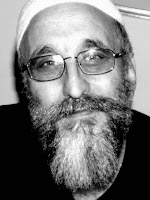
[Featured Author] Daniel Abelman

Sheer Magic
By Alexander James

Daniel Abelman was sixteen when he stumbled upon the battered corpse of a murdered black man at the side of a remote dirt road in South Africa.

He called the police who swung the body onto the back of a dusty pickup truck.

"Don’t you want my statement … you know … for your investigation?" Daniel asked.

The boss cop’s reply numbed him: "Investigation? Are you bloody mad, kid? It’s just another kaffir."

That’s when young Daniel decided to leave what had been the Beloved Country -- and the adventure began.

Daniel had been born in the busy South African shipping city of Port Elizabeth on the coast of the Indian Ocean in 1958. It was also the body-surfing capital of the world, and as a tot, he learned to swim long before he could walk.

Later, unknowingly, he started to play the illusion game that became his life and fueled his bitingly satirical novel of skullduggery, Allakazzam!

He said:
It was a pleasant four-mile downhill freewheel on my pushbike to the beach. But after a day’s surfing and swimming, the prospect of pedaling back, uphill and in the summer heat, wasn’t so appealing. So I’d let the air out of one of my tyres to fake a puncture and sit, looking thoroughly miserable, at the side of the road until some kind-hearted driver was fool enough to load my bike into the back of his car and take me home in style. Never failed.

When I arrived home -- invariably late for supper -- I’d blame the ‘puncture’ and the family would feel sorry for me and heap my plate. I guess that’s when I first learned about the power of illusion: my first step toward becoming a professional magician, and a writer. Mastery of illusion is vital in both art forms.

Conjuring is the plausible demonstration of the implausible. The audience is spoon-fed with only what they have to know; nothing more and nothing less if the demonstration is to be plausible. There are techniques in building a workable magic routine, and I use the same tricks of the trade when composing a story. The reader gets all the information they need; nothing more and nothing less. The outcome is a believable story, no matter however outrageous and impossible the concept might seem. The catch is that conjurors are made and not born -- with writers, it’s pretty well the opposite.

Daniel’s Jewish Lithuanian grandparents and uncle fled to Johannesburg from their home country in fear for their lives. With the outbreak of the Boer War, the Jewish community was transferred en masse to Port Elizabeth, yet again in fear for their safety. Enthusiastic and prolific breeders, the Abelman clan waxed with the years and did well for themselves as dairy farmers and wholesale merchants.

Daniel admits:
How they got their hands on the farms is shrouded in mystery. All I am prepared to say is that we come from a long line of renowned Lithuanian horse thieves and, by all accounts, grandpa and company made it onto the boat to Africa by the skin of their teeth -- with a posse of irate, horseless Cossacks hot on their tails.

Grandpa and Great Uncle Isaac would schlep their products from door to door in hessian bags, taking orders from farmers on the way so as so stock up with supplies for the return journey. They’d spend the night on the back of their donkey cart, snuggled up in sack cloth sleeping bags.

Later they opened a general store in Selborne. On Thursdays, my mother – a ten-year-old then – would run down to Rabbi Bloch, the ritual slaughterer, with a shilling and a hen. On Fridays she ran down to the Port Elizabeth train station with kosher cooked chicken and baked hallot loaves for the Sabbath, which she gave to the guard on the train. The guard, in turn, handed it over to Uncle Isaac on the Selborne platform.

Runaway horse thieves and rogues they may have been, but you’ve got to admit, they were good, kosher runaway horse thieves and rogues.

Writing was in the family from as long as Daniel could remember. His father was the community’s scribe, penning letters in Yiddish to the old country and reading replies from home.

The multilingual household, shelves stocked with books, was a literary incubator. Family time was spent with Daniel’s father reading to the company. Balzac and Herman Charles Bosman, the Yiddish literary greats, and running commentaries from Pa had the household moved to tears or howling with laughter.
Our edition of Balzac’s droll stories was illustrated and, as the level in Pa’s brandy bottle lowered, so did the Old Man’s guard, letting us peep at the naughty succubi and incubi pictures. Then Pa would decide it was time for bed and Ma would decide he was too drunk for that. The advent of TV and Ma’s distaste for Pa’s over-imbibing during story-telling sessions is probably what put an end to our family nights ... and what brought on the birth of the twins.

Now with five siblings, making up a total of seven souls in the family unit, and with three library cards per family member, the weekly trip to the public library was accomplished with the help of a giant wicker basket and a strong back.
We lived on 2nd Avenue and the library was way up on 5th. There is a lot a youngster can do traversing those few blocks, even when weighed down with a basked stuffed with books and a pair of flip-flops (the librarian wouldn’t let us in without some form of footwear). You could stop and mix with the mice (white) in the pet shop, or jive with the petrol station attendants (black). Great care was to be taken to resist the temptation of a rest on the bench in the 4th Avenue Park and make a start on the reading. It would invariably result in trouble when, once again, arriving home late for supper.

There was always something to read in the house. Daniel’s only complaint was that fate had left him as the middle child in a big family.
With a rich blend of shtetl and farmers’ blood flowing through our veins, nothing went to waste in our household. Hand-me-down was the name of the game. Via numerous cousins and finally off the back of my elder brother, my wardrobe was a motley collection of short pants and tee-shirts. When I joined the school soccer team, I remember being given a pair of old rugby boots that laced up past the ankle. The bulbous metal-reinforced toe cap was out of date even back then. But they came in handy for giving the ball, mostly in the wrong direction, a hefty kick whilst positioned at left-back.

The up side of being the middle pip was that my best friends were also my siblings, and that meant I was always surrounded by friends, some older, some younger. The close bonds of childhood remain to this day. My sisters married wisely and live in Johannesburg. The brothers, who married for love and nothing much else, now live in Israel. We’ve all done pretty well for ourselves.

The school where Daniel studied far from home had the reputation of being one of the best high schools in the southern hemisphere. Only one student had ever failed matriculation examinations. Young Daniel Abelman was the stain on an otherwise unblemished record.
They don’t invite me to school reunions. It’s no skin off my nose -- I hated school, I hated the teachers (that was probably mutual), I hated the curriculum ... and I probably would hate going to a reunion, too. The day I left school, I never looked back. I lost contact with teachers and schoolmates, most of whom I had sat with on the same school bench for 12 years. I did hear a rumour circulating that I was clinically insane.

I explained to my parents my motives for failing matriculation, that it was no accident. After a while, it was water under the bridge and they got over it. I think they might even have quietly approved.

The school was by no means rank with perves and paedophiles like the school described in Allakazzam! But it did have two of them who stood out like sore thumbs, seen but inexplicably ignored. The headmaster was aware of what was happening and, for his own personal reasons and agenda, did nothing about it.

This malpractice and social injustice had to be brought to an end, and it seemed it was up to me. I deliberately failed my incredibly easy matriculation exams and so tarnished the school’s clean record that the head was fired by the board of directors.

I remember coming out of those exams. The headmaster was waiting, anxious to find out how things had gone. It was a real pleasure to lie and say that the exam was as easy as pie and that I had done marvellously, knowing that he would carry the can. Without the head’s support, the paedophiles were soon got rid of.

About a year ago, I managed to establish contact with the old headmaster via email. We traded a message or two that were surprisingly genial. I sent him the first chapter of Allakazzam! His feedback was wonderful and I asked if he’d like to read more. When he said he would, I sent him the fictionalised schooldays chapter from deeper into the book. I never heard from him again. A bit of a belated twist of the knife, what?

Daniel later walked through his national matriculation certificate at another school of, he says, low esteem.

Then came the day at childhood’s end when he abruptly learned what the hateful South African apartheid system was all about -- when it hit him in the face in the shape of a murdered black man and a racist Afrikaans-speaking white cop.

He took to the road and travelled around Africa doing odd jobs and often living off the land. Eventually winning a grub stake in a card game, he left for Europe where the cruel climate took him unawares.

Eventually, the voices of his ancestors called out to him from Israel -- were he eventually landed up via a circuitous root that saw him working as a juggler, a tightrope walker, a fire eater, a magician ... and even a snake charmer.

When he got to the Levant, much to Abelman’s chagrin after successfully avoiding the South African national military service conscription, he soon found himself drafted into Israeli Defense Force. After many years of active service, slipping in and out of Lebanon, both in the regular army and in the reserves, he was honorably discharged with the towering rank of private. His military memoir has been published as the short story, "No Medals & No Mentions".

He said:
We were all Zionists in our family and supported Israel. There was no shortage of books on Judaism and related subjects in the house, both religious and secular.

One of the first games I can remember playing was ‘Germans and Jews’. In a draped, darkened dining room, the table was covered with blankets skirting down to the floor. The ‘Jews’ would hide under the table with a little reading lamp. When they heard a sound outside, they had to turn the lamp off and sit silently until a ‘German’ yanked up the blankets with a yell -- ‘Juden raus!’ -- giving a scare to the cowering ‘Jews’. I must have been three.

Jews in the Diaspora live dual lives. Outside the house we were proud South Africans and Jews, inside the house we were proud Zionist Jews and South Africans. My father’s name was Abraham, and rather than contend with the split personality of Diaspora life, I decided to move to the land of Abraham, where you can be yourself both inside and out.

My brother had made the move some years earlier so the way was paved for me. With a single suitcase, I left South Africa -- ‘coincidentally’, a week before induction into the South African Defence Force -- not to return until 15 years later, by which time the military police had stopped inquiring as to my whereabouts.

Military discipline in Israel didn’t come as too much of a shock -- I knew it existed. There are rules and regulations, but as long as you take your training seriously (and you’re stupid if you don’t because you can find yourself at war quicker than you expected over here) and do your job as directed, the Israeli Defence Force is a happy-go-lucky place to be; compared to other armies that is.

At a loose end after his army service, Daniel soon found employment as a professional performing artist. As thrice winner, in successive years, of the Israeli National Magic Competition, it paved the way to success. His hat trick set him off, traveling the country, performing up north in the Golan Heights and as far as the southern resort town of Eilat.

He said:
The performing arts can be a hot, sticky and, at times, filthy business. A tight rope walker may make a living with three ten minute acts a day -- but it’s not something I would recommend anyone trying. Artists spend more time waiting around for the show to begin then they actually do performing. It’s a boring, nerve racking and dangerous way to make a living.

Daniel married a rabbi’s daughter, Joani, and after the birth of their third child, it dawned on him that seasonal work as a performer wasn’t the best way to provide for a growing family and that long periods away from home wasn’t the best way to enjoy it. So he hung up his wand when the Intifada that followed the Israeli Scud War (into which he was drafted for three months) discouraged tourists, and the performing arts job became even more precarious.

He became a licensed electrician, a competent plumber and, for a while, built wooden frame houses.

But his beautiful wife’s outstanding success as a prenatal educator and childbirth assistant, a field in which she attained near guru status, decided Daniel to become the primary care-giver parent in the family, leaving Joani to spend more time on her career.

By the time Daniel became a house husband, there were four children. And between hectic breakfasts in the morning and brushing teeth before beddie-bies, was when he began to write in earnest. Mornings, with the young Abelmans at school, were his most productive hours. It was during these mini breaks from the bedlam of so many kids in a home of just sixty square yards, that Allakazzam! took shape.

Said Daniel:
Contrary to popular belief, kids have to be fed on a regular basis and tucked into bed on a regular basis. Hungry and tired kids are ratty kids. The quickest cooked meal to prepare is corn-on-the-cob with a sliced tomato for salad. Being a ‘fun-father’ we would sometimes do the outrageous; breakfast for supper! ‘Cereal for supper tonight!’

But kids aren’t stupid. They won’t put up with such dismal parenting for long. I really had to work hard at the job. It’s like tight rope walking, fire eating and juggling all in one ... and all sheer magic.

Then, of course, there’s the eternal battle as to whose turn it is on the computer. Mostly I have to write things on scraps of paper and then transcribe them into the computer when the kids decide it’s my turn. Out of school time, if I managed two good paragraphs a day on Allakazzam!, I was happy with the output ... and don’t forget there’s a wife who appears at the most ungodly of hours and who demands to be fed and given some love and attention, too.

When people ask Daniel how he ever got Allakazzam! finished, though, he doesn’t tell them about the late nights, the early mornings, the entire finished sentences and paragraphs carefully filed away in his head, the lifetime of research through experience, adventure, diversity and astute and compassionate people-watching, or the decades of practicing and mastering the writer’s skills to supplement an inborn talent -- and the years spent carefully polishing Allakazzam! to a perfect shine.

After all, it’s a poor magician who reveals all the secrets of his tricks.

This interview first appeared in Twisted Tongue Magazine

Possibly related books:

,,

Related interview:

The Low Down on High Fantasy: An interview with John Grant, By Alexander James, Conversations with Writers, January 28, 2010
Saturday, February 6, 2010

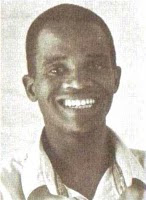
[Interview] Lawrence Hoba

Lawrence Hoba was born in 1983 in Masvingo, Zimbabwe.

His debut short story collection, The Trek and Other Stories was shortlisted in the 2010 Zimbabwean National Arts Merit Awards (NAMA).

His short stories and poems have also appeared in the Mirror; the magazine of the Budding Writers Association of Zimbabwe, and in anthologies that include Writing Now (Weaver Press, 2005) and Laughing Now (Weaver Press, 2007).

In this interview, Lawrence Hoba talks about his writing:

When did you start writing?

I started writing before I went to school. (I always enjoy this response from many artists.) I started writing fiction as a pastime around 1999.

The decision to become a published writer came much later on, around 2002, when I became a serious member of the Budding Writers Association of Zimbabwe (BWAZ), under the Chiredzi Chapter, where I attended writing skills workshops and met other aspiring and established writers who helped fuel the motivation to get published.

Getting to meet people like Charles Mungoshi in 2001 and Memory Chirere in 2002 made me begin to realise that nothing was impossible. Suddenly I wanted to get my name there among them and other writers.

How would you describe your writing?

Difficult question. I have never really understood the technical stuff critics and scholars use to describe writings so don’t expect any technical words from me.

I write short stories that I hope make people laugh, cry, smile and, at the end, learn a thing or two about other people.

Who is your target audience?

I write for the adult audience. I think it takes much more to be able to communicate effectively with children. The choice was never made deliberately but it became apparent from story to story that the way I expressed myself was more for the adult audience than for children.

Which authors influenced you most?

I have always liked Ernest Hemingway, D. H. Lawrence, Charles Mungoshi, Shimmer Chinodya, Gabriel Marquez, Ines Arredondo, Maxim Gorky, Carribean, Russian and African literature. The list is almost endless starting and includes the Bigglesworth Series which I read when I was nine.

I read almost everything that came my way but I liked those stories in which the basics of humanity were the core detail of the story. And my stories try to do that. Explore all aspects of human life.

Do you write everyday?

I don't write everyday. I do read everyday.

When I am writing, I always start with about a paragraph or so to get the ideas on paper. But then sometimes I hit blanks and I just leave it all. I get back to the story when it wants to write itself. Then, I usually finish the story in one sitting.

I can write at any time of the day, but I prefer to write when I am alone because this enables me to listen to each character speak and argue their case.

How many books have you written so far?

The Trek and other Stories (Weaver Press, 2009) is my first complete work. These are ten short stories which focus on the experiences of the ordinary people who went onto the farms hoping to make their lives better, only sometimes to find that things were not as rosy as they thought they would be. They are stories about the people’s successes and failures as new farmers.

I have also appeared in two Weaver Press short story anthologies edited by Irene Staunton: Writing Now (2005) and Laughing Now (2007).

Another of my stories was published in Exploding the Myths about Zimbabwe’s Land Reform, a journal by the Budding Writers Association of Zimbabwe in 2004. In addition to that, a number of my stories have also been published in the now defunct Mirror newspaper.

How long did it take you to write the stories that appear in The Trek?

The Trek and Other Stories is about the experiences of the people on the farms during the early days of land invasions. The stories in the book span from around 2003 to 2009. That makes it about six years. The short story collection was published in Harare, Zimbabwe in 2009.

Having been in a largely farming community in Chiredzi, Zimbabwe during the time of the early land invasions around 2001 meant that I got to experience things first hand. I was also lucky to have been assigned as a relief teacher in 2003 to a farm school where the new Black farmers were living side by side with a white farmer. I witnessed the despair, anger, humanity, stupidity and so on that came as a result of the tensions brought about by their co-existence, which, at the time, was a most awkward arrangement. It was these experiences that influenced the short story collection.

It almost became natural that I would choose Weaver Press for the project since they had had confidence in my work before. Besides, I admire their work ethics and thoroughness. The relationship with my publisher is superb. I am happy. They have excellent marketing outside the country and you are guaranteed that your book will at least be heard about outside the country. So far, The Trek has been submitted for consideration in the Zimbabwean National Arts Merit Awards (NAMA) and, as I write this, I am listening to the news and hear that it has made it onto the NAMA shortlist. The short story collection has also had a lot of international exposure.

Which were the most difficult aspects of the work you put into the book?

Trying to get the stories which were written separately and at different times to link with each other and read like one complete story was very difficult. I almost gave up. But I soldiered on.

This may sound crazy, but then I haven't claimed to be sane ... but the things that gave me the most problems were the same things that gave me the most joy. I enjoyed the way the stories could all read like one whole story and yet have each story stand on its own feet.

What sets The Trek apart from other things you've written?

The book is not different from the other things I have written. It contains most of the things I have written.

The next project, which I am currently working on, contains snippets of a child’s recollections of their childhood growing up in a new democracy just coming out of a war. It will all be short stories again, and hopefully with a bit of poetry.

What would you say has been your most significant achievement as a writer?

Getting published while still a young author, age-wise, and then within two months have the book generate so much interest in the country and beyond.

Possibly related books:

,,

Related Interview:

[Interview] Christopher Mlalazi, Conversations with Writers, January 13, 2010

Thursday, January 28, 2010

[Featured Author] John Grant

The Low Down on High Fantasy
By Alexander James

When it comes to fantasy and science fiction, Paul Barnett has both feet planted firmly on the ground.

And as a lifelong champion of literary quality under the pen name, John Grant, his stance against humdrum and gender-driven books has earned him a place at the top, with over 60 best sellers under his belt, both fiction and non-fiction.

Among the latter are two standard authorities in their fields: Encyclopedia of Walt Disney’s Animated Characters and, with John Clute, The Encyclopedia of Fantasy, for which he received the Hugo, Locus, Eaton, Mythopoeic Society and World Fantasy awards. He has also received a rare British Science Fiction Association Special Award and been shortlisted for the British Fantasy Society Award and Bram Stoker Award.

Two-time Hugo winner for his trailblazing science fiction/fantasy work, his novels include Albion and The World. For younger readers he has written the 12 novels in the Legends of Lone Wolf series, tied to the gamebooks by Joe Dever, as well as retellings of Frankenstein and Dr. Jekyll and Mr. Hyde.

His most recent books are Enchanted World: The Art of Anne Sudworth, Perceptualistics: Art by Jael and Masters of Animation and his quasi-mythology Dragonhenge. And in a courageous move from giant publishers to a small independent house, John published his new fantasy, Far Enough Window through BeWrite Books; his Sci Fi adventure Hundredfold Problem and re-released Earthdoom with David Langford – who with 24 Hugo Awards, has the largest arsenal of these rocket trophies outside the USA and the second largest in the world.

No-nonsense workaholic John has since become Consultant Editor (Sci Fi and Fantasy) with BeWrite and has introduced other mainstream authors to the UK-based house in a bid to break the restraints of mainstream houses he believes hold back writers by demanding that they work to an established commercial formula.

John was born in Aberdeen, Scotland but has lived for many years in the New Jersey countryside with his wife, Pamela D. Scoville, owner of the Animation Art Guild. Apart from his own books, he has lost count of those he’s ghosted and edited … certainly well over a thousand!

His rise to fame came when losing his job as senior commissioning books editor at a major UK publisher back in 1980 turned out to be a blessing in disguise.

He said:

I was living in Exeter – a long way from London, which was where most of the UK publishing jobs were – and I had no money and a wife and young daughter to support. Because of the young daughter, I didn’t anyway much want to move back to London; better, I thought, that she should spend her childhood away from the big city. So my only option was freelance work – either as an editor or as a writer, or, nervously backing both horses.

At the time I’d published a couple of books under the house name I’d created especially for those, John Grant. It seemed sensible to launch my fledgling writing career using a name that already had a couple of books under its belt. Now, of course, I wish I’d not taken that decision; it causes a fair amount of confusion, and anyway ‘John Grant’ is a lousy name for a writer, because it lacks any … hmm … memorability. But I’m stuck with it, especially since winning awards under that name.

Of course, the original idea was that, once I’d worked out which of the two horses was going to win the race, I’d jump onto it and regard the other as merely an ancillary ride, as it were. But I’ve never yet quite managed the trick. So I now have a full-time career as Paul Barnett the editor and another full-time career as John Grant the writer. It makes for a busy life, and often a complicated one; and it can make me pretty difficult to work with, too, I guess. Yet I myself still feel that my more important work is what I’ve done as a writer, and more specifically as a fantasy writer.
Of his fantasy work, top US reviewer Lou Anders said:

Each story from John Grant is like a single facet of a larger jewel. Just as the surrealist Salvador Dali utilized the repetition of certain images and themes across his body of work, so Grant weaves characters, gods and images through all of his novels and stories – each part of a brilliantly conceived cosmology that rivals in richness the work of famous fantasist Michael Moorcock and HP Lovecraft.
John broke new ground with his Legends of the Lone Wolf series with its game tie-in. But it wasn’t his first venture into the fantastic.

He said:

I’d actually made a few minor contributions. I’d edited, Aries 1 and I’d written two humorous sf/fantasy-sort-of fiction books, Sex Secrets of Ancient Atlantis and The Truth About the Flaming Ghoulies, not to mention the parody disaster novel Dave Langford and I had done together, Earthdoom. So I wasn’t a complete virgin.

However, I was a bit startled when I was asked to write this series of novels – initially four of them, in the end 12 – because this type of high, fighting fantasy wasn’t the sort of fantasy I’d hitherto been much interested in. Indeed, I’ll go further than that: at the time I wasn’t much interested in fantasy at all, because too much of what I’d read was the kind of generic crap that still, sadly, constitutes most of what’s published in the field. It seemed to me that fantasy, as a literary form, was a dead end; all the good stuff had already been done by people like C.S. Lewis and George Macdonald and Alan Garner and Lewis Carroll and Mervyn Peake and Diana Wynne Jones.

In short, I was a bit ignorant, and hadn’t realized the possibilities within fantasy. I’ve since become a complete convert, to the point that I will argue at great length to anyone prepared to listen that fantasy is the single most important form of literature the human species has ever invented and, as such, is one of the most important means of expression available to us.

The novels started off as mere tie-ins, but I had the advantage of having a publisher who was completely ignorant of fantasy and completely uninterested in learning anything about it. The first half-dozen or so of the novels were marked by constant arguments, and a couple of them were butchered before publication; but thereafter the publisher got bored and more or less left me to do as I pleased. Which was great!

What I was able to do was, with only a couple of exceptions, make each of the novels different from each other in tone, atmosphere, “feel”, construction, style, you name it, so that I could get away from that awful tie-in drabness you so often see and produce novels that were actually, you know, novels. I always remind people that, if they properly want to understand what I’m up to as a fantasist, they should read The Birthplace, which was #7 in the series, plus a couple of the others, notably The Rotting Land (#12).

There’s a nice postscript to the story. I’ve recently been in touch with an Italian publisher who wants to reissue the whole series in four three-novels-apiece volumes, with me ‘reconstituting’ the texts the way they ought originally to have been published – and at the same time allowing me, in the earlier novels, to quietly amend some of my more egregious deficiencies as a quasi-youthful writer. It’s going to be a vast amount of work, of course; but once I have the ‘real’ texts set in order for them I’ll be able to hawk the books around publishers in the English-language market as well.
John’s Albion and The World crystallize his idea of a ‘polycosmos’ and he rates The World as among his most ambitious and important works of fantasy.

He said:

The stuff I was up to in the Lone Wolf books had convinced me that there was a lot that could be done with High Fantasy, something I’d not have credited before. Also, though by this time I was being allowed quite a lot of creative freedom in the Lone Wolf books, there were some things – including ridiculously trivial things, like using the word ‘shit’ – that I wasn’t allowed to do before. So Albion represented for me something of an unfurling of the wings, an exploring of the freedoms I’d discovered existed within fantasy that weren’t being explored by most of the other kids in the playpark.

Even at the time I thought that first flight wasn’t a frightfully successful one, but the critics disagreed and, far more importantly, so did my publisher, who was I think appalled when I turned in the manuscript of The World to her. (The book ended up being published in the middle of December, doom time for any book, so that by the time the generally astonishingly good reviews started coming in the book was halfway to the remainder tables.) It was supposed to be a nice, cozy bit of formulaic High Fantasy, and yet here was me bringing in stuff from quantum mechanics, telling bits of the story in a vaguely Damon Runyonesque style, switching between one reality and another, smashing universes together, and so on and so on and so on.

The structure of the book mimicked that of a black hole, with the first part as the accretion disk, the second as the plummet from the event horizon to the singularity, and the third the emergence into the fresh ‘elsewhere’; I tried to get some of that into the various writing styles I used, too. There was lots of other stuff in there as well. I’m still amazed by my ambitions in writing that book, and even more amazed that – in my entirely objective judgment, you understand – I pulled it all off. Much of the time I was writing the book it was as if I were simply sitting in front of the screen letting my fingers dart around the keyboard, as surprised as anyone else by the way the story unfolded.
In many of his stories, John – now in his mid-50s – mixes hard science with fantasy.

He said:

There seems to have grown up this notion that the boundaries of fantasy should for some unknown reason be strictly limited – you know, wizards, dragons, unicorns, elves, berserkers, virgin princesses, pigboys-who-shall-be-king. All that sort of stuff is within the remit of fantasy, as are Native American spirits in modern cities and so on, but outer space isn’t. It’s as if you were to tell someone: yes, it’s all right for you to use your imagination, but not too much – rather like the Soviets repressed so much fantasy literature because they thought it was dangerous. That was the biggest compliment ever paid to fantasy, of course, because fantasy should be dangerous, and (in the broadest sense of the term) subversive and threatening to the status quo of the reader’s mind.

In the West, of course, we have very much the same sort of censorship of fantasy in place, only because it’s a commercially motivated one (and in commercial terms misguided, in my opinion) we don’t call it ‘censorship’ but instead say it’s ‘market forces’, or some such.

My very strong feeling is that fantasy should be allowed to do anything it damn well pleases, should explore every possible venue, should be as unconstrained as it wants to be. The fantasy writer’s playground should be one with infinitely distant boundaries.

So when I take my fantasy into the kinds of territories more commonly associated with science fiction, I don’t feel I’m ‘mixing’ anything – all I’m doing is going into a rather unpopulated part of fantasy’s natural playground. There was a fantasy story of mine called "The Glad Who Sang a Mermaid In from the Probability Sea" that was published in Interzone. Before offering it to Interzone I had offered it to a couple of fantasy-anthology editors over here and been told very firmly that it wasn’t fantasy, it was science fiction – just because it was set in large part in between our Galaxy and the Andromeda spiral. It didn’t have a mermaid in it (well, sort of didn’t …), despite the title, but it was a full-blooded fantasy nevertheless. In fact, I discovered some time after the award had gone to someone else that the story had been shortlisted for a British Fantasy Award, so clearly someone recognized what I was up to.

Similarly, a short fantasy novel of mine called Qinmeartha and the Girl-Child LoChi (soon to be published as half of a ‘double’ book, the other half being Colin Wilson’s The Tomb of the Old Ones) was widely bounced by fantasy editors on the grounds that it was ‘obviously horror’ just because I’d drawn on the werewolf archetype for a small part of the story – not even werewolves, just the idea of them!

So I guess you could say that I’m one of those rare members of the Fantasy Liberation Front! Fortunately I’m not the only one, but it gets pretty lonely nevertheless …
It was John’s fierce defense of open-minded fantasy literature that led him to test the waters with a smaller independent publisher offering more scope with its less commercial focus. And that’s how his beautifully illustrated The Far Enough Window: A Fairy Tale For Grownups of All Ages, saw the light of day.

He said:

When I was a kid I used to be devoted to reading in bed (anywhere else as well, but Bed Woz Best), and what I loved above all were the fantasies by people like George Macdonald and Rudyard Kipling and Lewis Carroll and H.G. Wells and Robert Louis Stevenson and C.S. Lewis and … you can fill in the rest of the long list for yourself. Thing is, I suddenly realized a while back that as an adult I still liked those books – I still thought, leaving aside my sheer pleasure while reading them, that they were excellent fantasies. Furthermore, I gained enormous, almost ecstatic pleasure just from remembering that glow I felt as a kid tucked up in bed reading one of them. I put all this together among my slowly jostling brain cells and let it fester for a while.

What I wanted to do was write a shortish novel that would encapsulate all these feelings for me: it would take the form of a children’s fairy tale like Macdonald’s At the Back of the North Wind (one of my all-time favorite novels) or The Princess and the Goblin, but would be for grown-ups – ‘for grown-ups of all ages’, as we put it on the cover – and have a definitely late-20th-century riff to it.

Then along came a time when I actually had a couple of weeks to myself – a publisher had let me down badly on a signed contract – and I thought, ‘Well, here’s the chance to write that novel.’ Trouble was, I knew the ‘feel’ of the book but I hadn’t yet got a plot for it. I went to bed that night and, before I went to sleep, just set my mind free to wander where it wanted to. By the following morning the character Joanna had entered my mind, and from there on she took care of the plot for me. But I had only those two weeks before the next slodge of work was due to come in, so essentially I had to enter a sort of trance state for a fortnight to write the book.

I gave it to my agent and told him it wasn’t a genre fantasy and should be offered to mainstream editors … so he offered it to all the genre-fantasy editors, who naturally turned it down flat – a couple of them, friends of mine, mentioned that they’d been puzzled it had been sent to them. I wasn’t sure if I was puzzled or furious, because the agent had done exactly what I’d told him not to. As far as he was concerned, he’d offered it to half a dozen editors who all hadn’t liked it, so obviously it was a lousy book.

Once I’d moved to the States I asked my new agent to take it on, but he just said it was a lousy book and he’d never be able to sell it. Then, for various reasons too complicated to discuss here, I came across this new small press called BeWrite Books. Pity about the name, but I was mightily impressed by what they were doing – unlike so many small presses, they seemed really professional about what they were doing and planning, and the books they’d so far published looked good. I asked their editorial supremo, Neil Marr, if he’d be open to a submission; he said yes, and less than a week later he came back to me saying he adored the book and very, very much wanted to publish it. Sure enough, Neil’s a mainstream editor …

Right from the start I’d wanted my ol’ buddy Ron Tiner to illustrate it – all the best of those children’s fantasies had had nice black-and-white illustrations in them, and thus so should this one, to help sustain the effect I was after. Ron had been a sounding-board when I was initially thinking the novel over and he knew precisely what I was after with it – he had exactly the same emotions as I had about those childhood times of being in bed with a good book. Luckily Ron was free to do the illustrations, and he’s done a stunning job – they’re truly lovely.
One reviewer pointed out:

There seems to be just a hint of sublimated sexuality in The Far Enough Window. I admit that is something that can be said of quite a few of the traditional children’s fantasies, but Alice in Wonderland never had anything like Ron Tiner’s illustrations of Joanna lying butt-naked on the grass.
John explained:

Only the one illustration! And it’s perfectly innocent, at that. This is, after all, a novel for ‘grown-ups of all ages’. That said, I did tease Ron something rotten about always making sure he got tits into the picture somehow … I’m not in the slightest worried about any kids who read the book being traumatized by the picture; it’s always struck me that certain sections of society throw up their arms in horror at the very idea that a child might see a naked body, when any child can see a naked body by the simple means of going and looking in a mirror.

I didn’t feel any constraints at all. I knew what I wanted the book to do, and I knew what I wanted from it myself; I just sort of sat back and wrote it, guv. The whole process was utterly natural. I guess if I’d been thinking, ‘Wow, I’m doing something a bit different here’ I might have become a bit self-conscious and felt restricted in some way by the form of the novel, but as I’ve said I don’t think any longer about fantasy in those terms: as far as I was concerned, I was simply having the time of my life writing a new fantasy novel, which was something I hadn’t done in a while.
After the success of The Far Enough Window, BeWrite Books brought back to life two of John’s earlier SF/Fantasies – The Hundredfold Problem and the disaster novel to end all disaster novels, the spoof, Earthdoom, with fellow science fiction author David Langford.

John Grant’s The Hundredfold Problem started life as a commissioned novel and part of the famous Judge Dredd series. It had an interesting history before being published by BeWrite Books – with stunningly sexy exclusive cover art by well known European artist, AudrÄ—.

He explained:

Way back when, the UK publisher Virgin bought the novelization rights in Judge Dredd, they expected the upcoming movie to be a smash hit. Of course, the movie was a lead balloon. Another UK publisher, Boxtree, had bought the book rights in the movie, and issued just about every tie-in you could think of – I don’t know if they did 101 Judge Dredd Knitting and Macramé Tips, but I’d not be surprised. It was much like the saturation of the market by Dorling Kindersley of Star Wars: The Phantom Menace books a few years later.

Of course, when the movie bombed all these Boxtree books flooded the remainder tables, and in so doing they crushed the humble little Virgin series, which would probably have continued doing perfectly healthily if there’d never been a movie.

Virgin had commissioned me to write one in the series. Unable to keep my eyes open for more than a paragraph at a time while trying to read the Judge Dredd Manual they’d sent me, and always having had difficulty reading comic books (I don’t know why), I hit on the stratagem of having a plot that would take Dredd right out of his usual environs and away from his usual associates, so I set virtually the whole tale inside a Dyson sphere that had been, billennia before, set around our sun’s hypothetical red dwarf companion star. Then, well, I just had fun writing a romp that also, er, dabbled quite a lot in theological philosophy and other light-hearted hijinks. I think – as of course I would – that a lot of the jokes are very funny, and indeed the book as a whole. Oh, yes, and you see another aspect of the Girl-Child LoChi as well …

Anyway, with the demise of the series, I got the rights back in the book. Most of the series’ authors – including my pal Stephen Marley, who wrote a couple of really good pieces for it – were kind of stuck, because of course they didn’t hold the copyright in the Judge Dredd elements of their books. I’d always been very fond of The Hundredfold Problem, though, and I didn’t like to see it lost forever. It was comparatively simple for me to remove the specifically Judge Dredd references, and – bingo! – I had a novel that was all my own.

I didn’t actually think of getting it published until Sean Wallace of Cosmos – for some reason I don’t recall – expressed interest. So I flogged it to him, but then problems with Wildside caused publication to be interminably delayed. After a couple of years, Sean kindly let me have the rights back and again Neil Marr at BeWrite happily seized it.
John soon became consultant SF/Fantasy editor with the blossoming new publisher … Consultant Editor with a mission.

He said:

The Consultant Editor bit came later. As I said, I was mightily impressed by the BeWrite Books operation from the outset, and this appraisal of them actually grew as they began publishing The Far-Enough Window – even though the whole enterprise is very much run on a shoestring at the moment. Neil asked me at some point why the big boys hadn’t been fighting to get hold of the novel.

I pointed out that this was not the only example I knew of a fine piece of fantasy that the big boys wouldn’t touch with a barge-pole; I came across others from time to time during the natural course of my life, and it was frustrating to me that I couldn’t do anything to help them get into print, as they so richly deserved to be. Out of that conversation emerged the notion that I should have this occasional relationship with BeWrite Books which we dignified by the title Consultant Editor.

By odd coincidence, just a few days later a writer called Chris Thompson, to whose self-published story collection Games Dead People Play I’d given a deservedly highly favorable review in Infinity Plus, contacted me out of the blue to say he’d written a novel which he was pretty certain nobody would like: as I’d been the only reviewer who’d seemed to understand what he was up to in Games Dead People Play, would I like to read his novel and see what I thought. Well, I took a look, and I discovered it was this utterly superb noir fantasy – a truly lovely piece of work. So that was the first book I took on for BeWrite. C.S. Thompson’s A Season of Strange Dreams. I’m proud to have been associated with it.
Since then John has brought other authors to the BeWrite Books stable with cross-genre books bigger, commercially driven houses fight shy of.

With his wild hair and bushy beard, John himself could be mistaken for a character from the pages of his own books. But any perceived similarity is unintentional to the 16-hours-a-day wordsmith who refuses to be typecast.

Carefully avoided reference to Harry Potter, he said:

I think that, finally, published fantasy may be recovering the ground it has so catastrophically lost in the past few decades to generic fantasy – a bizarre branch of the romantic novel whose published exemplars very often bear very little relation to genuine fantasy at all.

When Tolkien created the otherworld of Middle-Earth or Lewis the otherworld of Narnia – and, of course, Macdonald before them in his tales for grown-ups like Phantastes and Lilith – that was exciting, that was imaginative, that was fantasy, because they were genuinely exercising their imaginations to reify lands that had never existed. The vast bulk of their imitators – in reality, Tolkien’s imitators, because I reckon many of them haven’t read the other authors – aren’t doing that. Instead, they’re setting otherwise pretty mundane tales in a shared quasi-medieval otherworld that has become so familiar to us it might as well be Poughkeepsie or Bermondsey.

If I came along to you and said that I’d written a novel that was fantasy because I’d set it in Poughkeepsie you’d look at me like I was a lunatic – well, even more of a lunatic than usual, anyway! – but that’s in effect what a good many writers of generic ‘fantasy’ are doing.

Please don’t take this to mean that all writers of High Fantasy are just regurgitators or new incarnations of Barbara Cartland. There are some very fine fantasists who work with High Fantasy; if I had to put my hand on my heart to name the best of them, I’d probably say Terry Pratchett, because Terry’s Discworld books are – most of them – superb pieces of genuine fantasy, and would remain so even if you stripped all the jokes out of them. Myself, I prefer them with the jokes, especially since humor and fantasy are fine bedfellows – just look at how outright funny some parts of Peake’s Gormenghast books are – but that’s just me.

Anyway, to get back to the point about the current success real fantasy is having in making its comeback against the floods of generic fantasy: I think it’s coming about in large part because of the small presses. One of my many part-time jobs is as US Reviews Editor of Infinity Plus, and this has meant that over the past couple of years I’ve been reading a heck of a lot of books that almost certainly wouldn’t ordinarily have come my way. This includes rafts of small press publications, and even a few self-publications, because IP has the policy of giving all books a level playing-field, regardless of the fame or obscurity of the author and the size and prominence of the publisher.

What has really impressed me is that perhaps eighty per cent of the true fantasies I’m reading are coming from the small, even microscopic presses. Vera Nazarian’s recent book Dreams of the Compass Rose, published by Wildside, is a fine example of what I mean: it’s a High Fantasy, sort of, but because of its construction, its use of language and above all its fabulous strangeness it’s hard to imagine it having been published by one of the big boys.

Naturally, some of the small press books are real stinkers (especially since few of the small presses seem ever to edit or proofread, leaving these tasks to the author), but exactly the same is true of a good proportion of the fantasy output of the big conglomerates, too. What so many of these obscure presses are doing is allowing their authors to … well, ‘dare to dare’ is probably the best way of describing it. The result is some truly exhilarating fantasy. And it seems to be what the readers actually want, because these books sell in healthy numbers despite the fact that they’re given no publicity and – shamefully – no support at all by the established book trade, notably the book stores and most especially of all the literary editors of the broadsheet newspapers.

I think this resurgence of true fantasy is beginning, slowly at the moment but still very hopefully, to percolate upwards. I’ve been enormously cheered by the success of China Mieville; when I first started reading his novel The Scar – I’ve not yet got to Perdido Street Station – I was leaping around the room with delight, because here at last from a major publisher was a supremely intelligent piece of High Fantasy. Del Rey, who publish Mieville in the USA, may well be groundbreakers here, because I was mightily impressed by the intelligence of another High Fantasy they published last Fall, Alice Borchardt’s The Dragon Queen. A pity Del Rey publishes so much other stuff, really …

Anyway, that’s where I see the current state of the fantasy genre right now – in transition, with all the early signs that the patient is not dead but can be expected, although there’s a long way to go as yet, eventually to make a full recovery.

I hope so. I believe firmly in the importance of fantasy as one of the most central expressions of our humanness – possibly the most important. It would be really good to see that significance properly recognized once more.

(With thanks for additional material from Lou Anders)

Possibly related books:

,,

Related article:

[Interview] L. Lee Lowe, Conversations with Writers, November 3, 2008

Thursday, January 21, 2010

[Interview] Alice Lenkiewicz

Artist and writer Alice Lenkiewicz lives and works in Liverpool.

Her books include a poetry collection, Men Hate Blondes (origional plus, 2009) and a novella, Maxine (Bluechrome Publishing, 2005).

She also publishes and edits Neon Highway, a poetry magazine that supports emerging and established poets.

In this interview, Alice Lenkiewicz talks about the series of events that led to Neon Highway:

When did you start writing?

From a young age, I have always enjoyed writing. It was something that felt quite natural. I used to write poems as a little girl and journals and went on to become interested in writing plays.

When I was in my early 20s, I wrote my first play and went on to write two more. My first ever official positive response came after I wrote a play about Saint Catherine for a writing competition for the Oxford Touring Theatre Company. I remember feeling happy to receive a letter from them saying that it was short-listed. They sent me a very constructive, positive response. It was a lovely feeling and set me on a more focused, positive path. I wanted to continue with writing plays as a career.

I was also writing poems but I was quite reserved about reading them to anyone

How did you balance the art and the writing?

My life was always full of activity. I was creating artworks and writing as well as bringing up my children. I have always loved being a mother but it has been difficult to be a mother and artist at the same time, not just because of the work involved but because it is difficult sometimes for people to take you seriously if you are a mother as well as serious about carving out a career in art and writing but I never allowed it to hinder me. I just decided that I had chosen both and that I enjoyed both and that was it.

Art and writing have taken different rungs on the ladder throughout my life. They are each as important as the other and in many ways are now merging into one. I exhibit my work and write for publication. These are the two most important aspects of my work.

You also have a Bachelor of Arts degree in English, Art and Design as well as a Master of Arts degree in Writing Studies. How did you manage to fit studying into what was an already busy schedule?

It was later in my life, after I had travelled and had my children as well as worked on my art that I decided to go on to study for a degree. I don’t remember being introduced to the academic system in a positive light as a child. School was never top priority on my childhood list of memories or experiences. I just went, learnt what was thrown at me and swiftly left on the last day. It was just not the right kind of environment for me but I coped and got on with it.

So, having left school, continued on to an Art Foundation, which I was quite lucky to get into, considering I only had about three O-levels at the time, and proceeding onwards to live quite a reckless lifestyle in London and Brighton thereafter, I decided to begin my academic training in a new light, and get a good job.

I studied with the Open University in Sussex, at the same time studying bookbinding at Brighton Polytechnic while also studying a City & Guilds in Library and Information all of which landed me a permanent library assistant full time job at Oxford Brookes University.

I had my children in Oxford and went and did my nine to five work which, to be honest, did not make me happy. I was not suited to this kind of routine. Eventually, I could not cope any longer and I decided to go on and take my degree in English and Art at Edge Hill University in Ormskirk.

I was heavily pregnant at the time so little time for me to worry about where I was going to study. I just said “yes” and decided to look no further.

I am glad I made that choice. The college opened up new doors for me at the time. It was the lecturer and poet, Robert Sheppard who threw a creative writing lifeline to me. I was interested in the way I was being taught about poetry and that was what I needed in order to find my own voice in writing. Suddenly, I felt, I had landed in the right place, surrounded by people who interested me.

It was on the BA that I learnt about the traditions of poetry as well as other more experimental ways of expressing and writing poetry and that was the path I followed, eventually setting up my own poetry magazine, Neon Highway and providing me with the opportunity to publish and support other writers.

Possibly related books:

,,

Related articles:
  • Maxine [Book Review], by Sue Hunter,  Catalyst Reviews
  • Shelley Blake [Interview], Conversations with Writers, April 28, 2009 
  • Robert Sheppard [Featured Poet], Eyewear, October 22, 2010  

Wednesday, January 13, 2010

[Interview_2] Christopher Mlalazi

In an earlier interview, Christopher Mlalazi talked about the effect the political environment in Zimbabwe has had on his writing.

Since then he has gone on to publish an award-winning collection of short stories, Dancing with Life: Tales from the Township ('amaBooks Publishers, 2009) and a novel, Many Rivers (Lion Press, 2010).

Dancing with Life was awarded the Best First Creative Published Book prize in the Zimbabwean National Arts Merit Awards (NAMA) and it received honourable mention in the 2009 NOMA Award for Book Publishing in Africa.

Christopher Mlalazi also received the 2009 Oxfam Novib/PEN Freedom of Expression Award for "The Crocodile of Zambezi", a controversial play he co-authored with Raisedon Baya. The play was banned by the Zimbabwean authorities.

In this interview, Mlalazi talks about Dancing with Life and the collaborative playwrighting he has been doing:

How would you describe Dancing with Life: Tales from the Township?

Dancing With Life is a collection of short stories which I wrote between 2004 and 2008.

I started writing them just after I had gone through the Crossing Borders, an online creative writing mentoring project, which was a British Council/Lancaster University initiative.

Before that I had been trying to write my novel Many Rivers, which was published this year by Lion Press (UK). I think delving into the short story genre came as a result of trying to find formula on how to tightly wrap up the novel, a thing I had been failing to do. I remember it didn’t take me very long to teach myself to do that with the short stories. Maybe it was also a result of the creative writing mentoring I had just done.

So, there I was, writing short stories as if I was possessed, and meeting with success on them. too. I remember I saw myself also starting to be invited to represent Zimbabwe in literature festivals and workshops around Africa, which was a pointer to me that I was now on the right track, that my stories were making an impact, and which writer would not like to see that happening to them?

To come back to the question, Dancing With Life is a reflection of the struggles and suffering of Zimbabwean people living in a disintegrating society with its farm invasions and our economy taking a nose-dive. I regard this short story collection as a series of snap shots of this trying period and I try to be as honest as I can in my depictions so as not to misinform readers. I try to be as near to the truth as I can get in the hope that this will leave people asking themselves deep mind-changing questions.

Are there any stories in Dancing with Life that were easier or more difficult to write than others?

Yes, there are some stories which were difficult to write, and there are some which were easy.

I would like to point out "Broken Wings", which depicts the rape of a young girl struggling to cope with her mother who is dying of AIDS, against the backdrop of the political control of food distribution and the breakdown of the health system. I remember one day when I was revising this story, I felt something tear in my heart, a feeling which, strangely, I had not experienced when I was writing the story. "Broken Wings" is so dark, it is so painful that I wonder how I managed to write it... I guess the truth sometimes can be very painful.

There are also the direct political stories, like "Election Day". These, I guess, were written in anger, when I was trying to laugh at the political machinations happening in the country and also trying to make my future audience, the reader, also take them in that light and really laugh at the stupidity of it all. We might ask, are somethings that are done for political expediency really worth doing? Is it really necessary to pick up a stone and chase an old woman for her vote?

Where and when was the collection of short stories published?

Dancing with Life was published by 'amaBooks Publishers of Bulawayo in 2008 and was launched at the Academy Of Music in May 2008 during the Bulawayo Music Festival..

In the past 10 years, 'amaBooks has risen to be one of the two leading publishers in Zimbabwe and being published by them has been an honour.

Also, 'amaBooks published my very first short story way back in 2003 and, ever since, they have published my short stories in every short story anthology they've published -- we have a long and fruitful history together. Every writer aspires to have their work published, for that is the reason that makes us take pen and paper and write isn’t it so?

Another big advantage in working with 'amaBooks is that they are in Bulawayo and it makes it easy to meet and discuss the work face to face, and also living in Bulawayo, they understand the cultural, the regional and political context of the stories.

I would also like to thank the Culture Fund of Zimbabwe Trust for funding this project because with the hyper-inflation Zimbabwe has experienced of late, the book would not have seen the light of day. Special thanks also goes to ama’Books publishers for taking up the project.

Again, I think the drive behind the need to have this book published was also an attempt by me to add my voice to the protest against the no rule of law phenomena that was gripping our country at the time of writing.

How has the book been received?

The book has been received well in literature competition because, in a space of a year, it now has one award and one mention in prestigious competitions. But I cannot say the same of the reading public, because, strangely, the reading culture in Zimbabwe seems to be dying and few people are buying books these days.

Being mentioned in awards has given me that extra drive to want to write more and better stories, and right now I am working on another novel which is almost finished.

Recently two of your plays caused a lot of controversy. Can we talk a little about them?

Both plays are political satires that question bad politics in the African continent.

The first one, titled "The Crocodile of Zambezi", tells the story of a geriatric leader who has come face-to-face with his alter-ego that is accusing him of mis-rule. This is the one I collaborated on with Raisedon Baya.

The other one is an adaption of one of my short stories, "Election Day", which appears in Dancing with Life. The short story was first published in the 2006 Edinburgh Review and it tells the story of a country on election day and the opposition leading the ruling party by a very wide margin. Everybody around the president of the country has panicked and they want to flee the country, fearing the masses whom they have been ruling badly, but the President is adamant and is insisting that he is not fleeing anywhere. When the final vote is announced, the ruling party emerges the winner and questions are raised about vote rigging.

How did the idea for these plays come about?

The plays came about through a deliberate act of reacting to the present political status quo of the country we live in.

Writers and artists are inspired by the moods of their surroundings.

Are your plays written exclusively for performance or will they also be available in print?

It is very difficult to publish in Zimbabwe at the moment because of the economic dynamics. So, for now, the plays are for stage only but we hope that one day we will be lucky and find a publisher who will take them on.

How did you and Raisedon Baya link up?

We met in arts circle. Bulawayo is such a small town and a friendship developed. We both have a healthy respect of each other’s work.

In 2006 we collaborated in a TV drama titled The King's Kraal which was flighted on national television. This was a very fruitful exercise, because it demonstrated to us that we click very well in such exercises. Then Raisedon came up with the concept for "The Crocodile of Zambezi". We tossed this around and finally came up with the script.

Raisedon did the directing.

How does the experience of writing a play with another writer compare to doing the same thing on your own?

Writing with another writer gives you purpose. You both put your all because you don’t want to appear to be the one who is slacking.

It is also exciting because you get to know a lot of new things from the other writer, like style and how far you can go on aspects or themes -- things which you, as an individual, might have considered no-go areas.

Collaborations are also good in the sense that if you both have names in writing circles, you increase your audience.

What are the challenges inherent in the exercise?

Working with a writer who is as good as Raisedon brings no challenges. You turn around the story. It’s a matter of coming up with an idea and you will be safe in the knowledge that it will be aptly treated when you toss it over to him. Besides being a good and creative writer, he is also a very brave writer.

Is this something you would do again?

Definitely. I would also like to urge other writers to invest in such exercises because we grow when we learn from each other.

Possibly related books:

,,

Related article:

Monday, January 4, 2010

[Interview_2] Sue Moorcroft

In an earlier interview, creative writing tutor and author, Sue Moorcroft spoke about her main concerns as a writer.

She now talks about her latest non-fiction book:

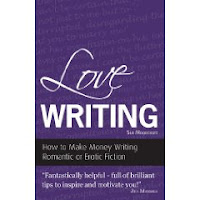
How would you describe Love Writing: How to Make Money Writing Romantic or Erotic Fiction?

The title says it all, really.

We chose a title like that so that it would show up well in searches on-line. Readers of ‘how to’ books tend to search using phrases that describe the content of the book.

The book brings together many of the areas I work in:I’d also written courses for the London School of Journalism, so had some experience of assessing what would be useful to the reader and arranging it coherently.

Having writing colleagues who had utilised their abilities in writing books on the craft of writing, it had occurred to me that, at some time, I might do the same.

Then two things coincided: I went through something in my personal life that made me find long fiction too emotionally demanding to write -- and I was invited out to a dinner at which Hazel Cushion of Accent Press would be present. Accent Press already published a selection of "how to write" books.

I told Hazel my idea and she asked to see a proper book proposal, after, in time-honoured fashion, we had roughed out some ideas on the back of an envelope. A few weeks later she accepted the proposal and offered a contract.

How long did it take you to write the book?

About seven months. Because I critique the work of distance learning students in the mornings, that would be afternoons. But I was also writing short stories and a serial and working on the edits for my novel, Starting Over.

You have to be versatile, in my game.

The proposal was where all the planning took place.

I began with chapter headings, which I played with until the order seemed logical, and then broke each one into sub-headings. That was pretty much the layout of the finished book, although I did consolidate a couple of chapters as they developed.

The publisher asked me to use my contacts in the world of romantic fiction to get input from other writers and industry professionals and I also collected some questions, mainly from unpublished writers. Getting these answered was a reasonable way of establishing what readers wanted to know.

I had to do a lot of research and that was really enjoyable -- reading on-line articles or debates, talking to speakers at conferences and so on.

I knew the wordcount that Accent Press wanted and I knew the ground that I wanted to cover. When I got to the end of the first draft of my planned subjects I had about 4,000 words too many. That was ideal, because I always cut quite hard when I’m polishing, which I feel creates pace. So I ended up bang on the money with the wordcount and about 15 days ahead of deadline.

Which were the most difficult aspects of the work that went into the book?

I was diffident about a couple of aspects of Love Writing.

The first was asking for quotes and input from published writers and industry professionals. However, I found that nobody seemed to mind being approached. A few refused nicely and said it wasn’t for them, a few just didn’t reply so I took that as a ‘no’. But the vast majority of them were happy to quote and, professionals that they are, went to great pains with their contributions. I’m grateful to them because their insight is gold dust.

My second reservation was whether I could write convincingly about areas I don’t write in, myself, such as speculative romance or hot erotica. But I discovered that it was possible to research these areas and canvass opinion, just like much non-fiction. I had a couple of segments read by writers in the relevant field and they okayed them, which gave me confidence.

What did you enjoy most?

Non-fiction is more black and white than fiction. There are answers to be found to questions. In that respect, it’s easier to write than grappling with the endless possibilities of fiction.

Love Writing is completely different to my other books, which were all novels, but I’d written ‘how to’ articles for writing magazines as well as two courses and a supplement for the London School of Journalism, so I felt Love Writing was a progression. A development.

I have an idea for another ‘how to’ book and Hazel at Accent is interested -- but I have to make certain that the material isn’t going to clash with another book they publish, before I write the proposal.

And I have another novel to finish, first…

Resources:Possibly related books:

,,

Related article:
  • Sue Moorcroft [Interview: 1 of 3], Conversations with Writers, March 10, 2009
  • Sue Moorcroft [Interview: 3 of 3], Conversations with Writers, February 26, 2010
  • Dave and Lillian Brummet [Interview: 1 of 2], Conversation with Writers, October 19, 2009

Monday, December 28, 2009

[Interview] Joan Metelerkamp

Award-winning South African poet, Joan Metelerkamp's poetry collections include Towing The Line (Carrefour, 1992); Stone No More (Gecko, 1995) and Into the Day Breaking (Gecko, 2000).

She is also the author of Floating Islands (Mokoro, 2001); Requiem (Deep South, 2003); Carrying the Fire (substancebooks, 2005) and Burnt Offering (Modjaji, 2009).

In this interview, Joan Metelerkamp talks, among other things, about the vacuum that exists on the South Africa poetry scene:

Do you write everyday?

For periods I have written every day, but not recently. In theory, I’ve wanted to. But I tell myself that fallow periods, periods of waiting, also happen. I don’t like it, and also I think the more out of a rhythm I get the worse the not-writing becomes. I lose heart in my own process, and doubt my own task. (My own poems remind me of this tension between simply “being” and “making”). The less energy I have, the less I seem to generate.

It’s not only that I’m impatient but I like rhythm and structure… of course I like most the ecstatic moments of “fine delight that fathers thought” and find it hard to be “the widow of an insight lost”.

In the past, writing has begun at any time on scraps of paper or notes… it’s sometimes proceeded by sitting down at my table, usually after breakfast, and giving up by lunch time.

How many books have you written so far?

I’ve written seven.
  • Burnt Offering, 2009, Modjaji.
  • Carrying the Fire, 2005, substancebooks. It’s a three part sequence of poems, followed by a fourth, prose, short-story like, part. It’s about love, desire, art, poems… it’s like Jacob wrestling with the angel, or (the image of the last section) a mutual seduction between Mary and the angel…
  • Requiem, 2003, Deep South. This sequence is structured by the requiem mass -- I had in mind the many musical versions, not just the liturgical. It was written after my mother’s suicide.
  • Floating Islands, 2001, Mokoro. This is a long narrative but also dramatic sequence of poems; each poem written from the perspective of one of three main characters -- a 60 something mother living in Knysna, and her two grown daughters: one a potter living in Bristol, and one an English academic teaching in Durban. It’s also something of an essay or discussion about Ruth Miller and Dorothy Wordsworth. It’s an experiment in forms since many of the single poems take specific fixed-form shape.
  • Into the Day Breaking, 2000, Gecko. A collection of lyrical and discursive poems, some quite long, some short; most written after our move from Durban to this area in the Southern Cape.
  • Stone No More, 1995, Gecko. poems
  • Towing The Line, 1992, Carrefour. poems
How long did it take you to write Burnt Offering?

My latest book, Burnt Offering, took four years to write. It has a central sequence of poems based on the work of the alchemists, the various stages or processes in their chemical experiments. I take that Jungian view of alchemy being a metaphor for work on the psyche, so also a metaphor for any “task”: the task of becoming what one chooses and works at becoming.

It was published this June by Modjaji Books in Cape Town. I didn’t really choose the publisher, it was more a question of what was possible. Modjaji is a new independent publisher of women’s writing, and fortunately Colleen Higgs agreed to publish my manuscript. She’s taken the risk on poetry which few publishers are prepared to do.

Which were the most difficult aspects of the work you put into the book?

Finding the structure for the middle section was difficult; throwing away reams of material that came to nothing was also hard; working through the humiliation and despair the central section starts with was difficult… the anxiety that the whole book might not see the light of day, or that, like Carrying the Fire, it wouldn’t be distributed was the next difficulty.

I dealt with the difficulties by dealing with them -- I haven’t got an answer to this!

Which aspects of the work did you enjoy most?

I liked writing the last twenty-page poem the most; by then I had a commitment from Colleen Higgs to publish the book, so although I was faintly anxious she might not want to include it, as it developed I became more certain that it was the appropriate end poem for the volume.

The poem involved going away with my daughter for two weeks to the low-veld, just outside the Kruger Park. She worked on a philosophy thesis and I began the poem -- it was a marvelous time and, at the risk of sounding pretentious, something of a transformative experience -- the writing and the journey and the writing afterwards.

What sets Burnt Offering apart from other things you've written?

The second poem is a long meditation on poetry called “points on poems”. It’s a playful, sometimes silly, sometimes catty, essay -- it does shift tone from point to point; I think it stands out as something new for me.

What would you say has been your most significant achievement as a writer?

Keeping going; believing I may be a poet.

When did you start writing?

Like most poets, no doubt, I started writing soon after I could physically do cursive writing -- which is to say I wrote the first “verse” (or one I still have a vague memory of) when I was about nine years old.

I wrote off and on through my school years, but I only decided that poetry was my calling after I had already been at university for four years and then had had a short-lived three year career as an actor; and also after I had accumulated 10 unpublished short stories. (I didn’t ever try to have these stories published though I did read some of them to various members of my family -- my brothers and my mother).

It was only after I had done some stints of teaching at the University of KwaZulu-Natal (UKZN) and the University of the Western Cape (UWC), and was married, and had two young children, and was in the last re-writing of a master’s thesis on the poetry of Ruth Miller, that I began to re-shape and put together what would become my first volume of poems.

What happened was that I saw an advertisement for the SANLAM literary award -- which in the 90’s were prizes given every three years for volumes of poetry: one of which was for a debut collection. (I don’t know if these prizes still exist).

I decided it was worth entering the competition simply because it was an incentive to get the poems together into what I hoped might be publishable shape. (I had read the occasional poem at an English department conference before this, and had had at least one poem published in a feminist journal called Stir, and one in Lionel Abrahams’ journal Sesame, but I hadn’t had the courage really to send my work out).

Very fortunately I was a joint winner of the prize and my first collection was published, together with the collections of the other two winners by the long-since defunct Carrefour Press. So it wasn’t really an independent first “book”; but it was enough to boost my confidence hugely, and from then on I started sending out new poems, particularly to New Coin.

How would you describe the writing you are doing?

At the moment, I’m really struggling to write anything at all. I’m waiting for the next poems: I’ve got some vague ideas about them, I’ve got hundreds of jottings, I’ve got two full note-books, but I’m a bit lost.

I’ve just told you about winning that first prize, and, to continue the story, I was lucky enough to win the Sydney Clouts prize for the central poem in my second volume. That helped to affirm the sense that I hadn’t just published a one-off first book.

I needed a sense of external validation to write more; but after a while, and as the years passed and I’d been the editor of New Coin, and then a judge of precisely such prizes (I’ve judged the Ingird Jonker and DALRO prizes), and I began to get more sense of how the networks and politics of this tiny group of poets and readers of poems functions in South Africa, I began to have a quite different feeling about recognition and affirmation.

What we lack completely in this country is any critique of poetry: even within the institutions which supposedly support it (like universities -- admittedly I’ve been out of an academic world for twelve years, but even in the late 90s poetry was being squashed right out of English department syllabi and from what I gather it’s not better now). The press is ridiculous when it comes to careful and considered critique, and to get someone to write a review for a poetry journal is an up-hill struggle second to none. I’ve tried!

So South Africa is not a country which fosters or cares for the kind of poetry I’m interested in: in that asphyxiating atmosphere it’s very difficult to keep going: in a vacuum of any debate about poetry or poetics. If “form” is spoken about at all, it is spoken about as opposed to “free verse” or “performance” poetry… There is almost no published discussion on the hows and whys of what makes specific poems or specific bodies of poetry in specific places work. So it’s difficult to feel that you’re developing or reaching anyone.

Which brings me to:

Who is your target audience?

I’m in total contradiction about this: I could say paradox if I were kinder to myself, perhaps.

On the one hand, I think it’s impossible to write for an audience -- as soon as you do that (remember [W. B.] Yeats?) you write rhetoric instead of poetry.

On the other hand, without any sense of connection with an audience, without some sense that there are anonymous readers or listeners out there, I find it extremely hard to write at all. Without the sense that one’s poems are somehow collective, what is the impetus to keep making artifacts? Even though I lead a fairly hermit-like life, I’m not a Jesuit priest (I’m thinking of [Gerard Manley] Hopkins who chose not to publish) nor do I have the extraordinary and constantly developing sense of self, nor the technical proficiency, nor the strength and faith in posthumous publication, of Emily Dickinson.

I wish for my work to be meaningful for, to resonate with, someone else -- who that is, I don’t know! I have to remind myself how similar our dreams are -- I’m speaking literally, our literal night-time dreams, so, since poems come from a similar place why shouldn’t they find resonance with someone.

Which authors influenced you most?

At the moment I’m reading contemporary American poetry, so I suppose this will have an influence… this year I’ve read the most amazing works -- Campbell Mcgrath, C. D. Wright, Sharon Olds, W. S. Merwin

but the old influences are still there.

There’ve been different influences at different times, all of which have something to do with what writing I’m doing (or not doing!). [Percy Bysshe] Shelley, [Samuel Taylor] Coleridge, [John] Keats

[Walt] Whitman, [Thomas] Hardy, Hopkins, Yeats, [D. H.] Lawrence...

Stevie Smith; Dorothy Wordsworth; Ruth Miller…

then local contemporary poets: Lesego Rampolokeng (for the clamour of his music and extraordinary bending of language to his own needs), Mxolisi Nyezwa (for the other-end-of the-scale kind of music: his dream-like images, his vison), Robert Berold (for his precision, the intense narrative within image, the way metaphor explodes -- expands and contracts: now you see it, now you don’t)…

[Elizabeth] Bishop, [Muriel] Rukeyser, [Amy] Clampitt, [Adrienne Cecile] Rich

and on to contemporary American poets I’m exploring now.

How have your personal experiences influenced your writing?

I write from myself, and I also have, though this might change, always written about the immediate: the process of writing itself has often been part of the “subject”.

I don’t know how I would write if not from personal crisis or self questioning.

What are your main concerns as a writer?

If by “concerns” you mean issues that I tackle in the poems themselves, I would say: existential questions. Balancing futility and simply being; the choice of a life task and the sense that it has been given; fear of meaninglessness and the attempt to make meaning; who I am, am I on the “right” path, where I fit in in my country and its history, my family, the world!

… how I deal with these concerns is as the specifics dictate! I don’t know -- I ask the questions, I look for the answers, the poem sometimes shows me I’m asking something else, really, and most often that I can’t find any answer…

What are the biggest challenges that you face?

The challenge is to keep going. What will be (Yeats again) “the singing master of my soul”?

My challenge is real conversation about poems; but also to silence the real critical voices (and I’m not here talking about careful poetic critique) which have urged me not to publish, or have said that my poems give back nothing to “South Africa”, or that the real value is in meditative silence and acceptance rather than wrestling through language, or that my work is too convoluted, involuted, self-in-turning…

In fact the only challenge that matters is the recurrent one -- what form will the next poem find, how will I do it? The challenge is to stop asking “why” and to find an answer to “how… this exact issue comes up in a poem in my last collection.

Possibly related books:

,,

Related article:

Ulysses Chuka Kibuuka [Interview], Conversations with Writers, October 28, 2009