Sunday, May 24, 2009

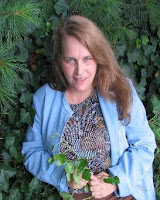
[Interview] Kathy-Diane Leveille

Author Kathy-Diane Leveille is a former broadcast journalist with the Canadian Broadcasting Corporation (CBS) and is a member of Sisters in Crime; International Thriller Writers; Kiss of Death RWA and Crime Writers of Canada.

Her short story collection, Roads Unravelling (Sumach Press, 2003) was published to critical acclaim. A selection from its pages, "Learning to Spin", was adapted to radio drama for CBC’s Summer Drama Festival while "Showdown at the Four Corner’s Corral" was revised for the stage and performed by New City Theater in Saint John.

Her work has also been published in anthologies that include Water Studies: New Voices in Maritime Fiction (Pottersfield Press, 1998) and New Brunswick Short Stories (Neptune, 2003) as well as in a number of literary journals, among them, Grain; Room of One's Own; The Oklahoma Review; Pottersfield Portfolio and The Cormorant.

Let the Shadows Fall Behind You (Kunati, 2009), is her first novel.

In this interview, Kathy-Diane Leveille talks about her writing.

When did you start writing?

I wrote my first poem when I was in Grade 1:

Oh Father Dear, I’m glad you’re here
So we can celebrate this day, with a Doran’s beer.

Of course I didn’t understand why my teacher’s eyes rounded with horror when she read it. That was my first lesson in discovering that not everyone will welcome the truth in what you write.

My mother sewed paper together for me so I could write books when I played library, but I really didn’t have any desire to write until I was in Grade 6. I was secretly in love with our new teacher from Toronto, Miss Matthews. (Yes, she was the inspiration for the character, Miss Matthews, in Let the Shadows Fall Behind You.)

One day Miss Matthew glided to my desk, scarf fluttering, and delicate cologne filling my nostrils. She announced she loved the story I’d written, and that it would make a great radio play.

I was stunned.

I had no idea that the words I scribbled like mad would actually elicit such a strong and positive response in someone else. It was my first inkling that words were powerful.

I wrote and produced a few radio dramas that year, and also wrote and directed the class Christmas play.

When did you decide you wanted to be a published writer?

I’m a former broadcast journalist with CBC radio.

Seventeen years ago, when I was home on maternity leave with my youngest son, I dug out an old file of story ideas and started scribbling. By the time the date arrived when I was supposed to return to work, I had already decided that I didn’t want to keep putting my dream of writing fiction on the back burner.

Since then I’ve done different jobs, including being a janitor and typing medical transcription, to give me the time and energy to pursue my passion.

My first book Roads Unravelling, a collection of short stories set on the Kennebecasis River where I live, was published a few years ago. Let the Shadows Fall Behind You, released this spring, is my first novel.

Who is your target audience? And, what motivated you to write for this audience?

Anyone who loves a good psychological suspense story.

I tend to discover a new author in the genre and compulsively read every single thing they’ve written. Lately, I’ve been devouring the works of Nicci French, a husband and wife British team. Maybe I’m just intrigued that this collaboration continues without self-combusting. I can’t imagine my husband and me surviving a writing project long enough to type THE END.

I really like sophisticated screen thrillers, too, like Fatal Attraction and Wall Street, and have watched both quite a few times. I just love the mechanics of the plot paired with superb characterizations. I think every movie I watch and book I read informs my writing to some degree, because when the story transports me, I am always curious as to why and try hard to nail it down. Hopefully, I’ve done it with Let the Shadows Fall Behind You.

How have your personal experiences influenced your writing?

Working in the field of journalism offered valuable training in discipline. You’re working to a deadline to produce stories whether you like it or not. There were many times I sat down at the computer with absolutely no idea of where to go. You learn in journalism to have faith in the process, that you can start with nothing and eventually something will take shape and grow. It was a tremendous mentorship in the art of research, fact checking and honing the 5 W’s.

What are your main concerns as a writer?

The most difficult thing about writing is returning to the page when the initial excitement over a story idea has worn off and I’m riddled with doubts about my ability to translate the vision to the reader. However, I’ve learned through the years that I must keep going back, that eventually the doubts fade and something sparks and I fall in love with my characters all over again. It is that moment, ironically, that is the most exciting about writing because I always learn something from my character’s journey.

I believe writer’s block comes with the territory. At first, I despair, convinced whatever I’m working on should be tossed. But usually after reflection, a long walk or a trip to the library, I realize I need a break from the writing. For me writer’s block comes because the well is dry. I need to get out and enjoy life. It usually takes one or two days before suddenly a window opens in the block (when I’m doing something totally mundane like having my tooth drilled), and suddenly I’m antsy to be set free to grab a pen and paper.

What are the biggest challenges that you face?

Rejection of the work you’ve spent so much time on is always a blow. The only cure for my disappointment has always been writing. Before you know it, I’m caught up in the characters and the mystery of their journey. Sometimes it helps to work on a completely different project. If anything, I figure I must have learned something by now to make this one come closer to the mark.

Do you write everyday?

I have a large chair that could fit three people in its lap. It allows me to keep lots of books, pads of paper and pens by my side. Directly across from the chair is a large picture window three-quarters sky and one-quarter river that is constantly shifting in light and color.

I usually start with a pen and pad for the inspiration stage, then move to the computer for the perspiration stage. When I get to a place where I’m uncertain as to how to proceed, I always go back to pen and paper. I think there’s some mechanism in that tactile exercise that frees the right brain to soar.

I usually begin by simultaneously visualizing a situation that causes an upheaval in life, and hearing a character’s voice emote their reaction to it. It’s a very strange process and definitely has my husband worried some days; especially when he dusts the books on my research shelf: Handbook of Poisons and Crime Scene Investigation.

How many books have you written so far?

My first book, Roads Unravelling, is a collection of short stories set on the river where I live on the east coast of Canada. It was published by Sumach Press in 2002 to critical acclaim when "Learning to Spin" was adapted to radio drama and aired on the CBC Summer Drama Festival.

My second book Let the Shadows Fall Behind You is a suspense novel published in the spring of 2009 by Kunati Books.

How long did it take you to write Let the Shadows Fall Behind You?

It took about five years to write Let the Shadows Fall Behind You from the initial idea stage to publication. Partly, it was because I had so much to learn about novel writing; but I’m a slow writer. I need to do a draft and then set it side before digging it out again.

Ultimately, Let the Shadows Fall Behind You is a story about coming to terms with the past and letting it go.

The truth is people disappear from our lives all the time; the fiction is the belief in our control to bring them back.

Let the Shadows Fall Behind You celebrates the strength of women’s friendship.

What did you find most difficult when you were working on the book?

I think when you write mystery novels, constructing the murder scenes is always difficult. The theme of suspense is positive not negative. When you get to the last page, the story is about the triumph of good over evil. Those short times I, as a writer, have to step inside a psychopath’s mind are always a bit grizzly.

What did you enjoy most?

Turn to the opposite side of the coin, which is the protagonist who is flawed and human, but still contains the kind of heroism, hope and strength I admire.

What sets this book apart from other things you've written?

I absolutely love the freedom a novel provides in comparison to a short story. The canvas is so much larger, and there is so much opportunity to stretch your creative muscles.

Tackling a novel was a steep learning curve for me. I had to write three or four in order to learn the many elements involved, and I’m still learning. I can remember that feeling of breaking through, however, when I knew that I was finally juggling all the balls of character, setting, plot, theme, pacing and not dropping any. It was, and is, tremendously satisfying.

What will your next book be about?

My next suspense novel, In Cold Storage, is about finding the courage to believe in yourself.

What would you say has been your most significant achievement as a writer?

Having my own books displayed on the shelves at the library. When I was growing up, the library was my sanctuary and source of inspiration and grace.

There is no feeling comparable to having my books published and joining the authors who opened new worlds and ideas to me. Picture the arrival of Christmas morning, the thrill of hearing a newborn baby’s cry and the rush of your first kiss all rolled into one. My husband and I do the happy-happy joy dance. He’s my number one cheerleader and gets more excited than I do!

However, he does get nervous when I start digging plots in the garden, and discussing ideas for a new character who murders her spouse.

Possibly related books:

,,

Thursday, May 21, 2009

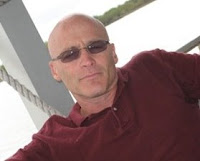
[Interview] E. R. Fussell

Lawyer and author, E. R. Fussell was born in Peru to American citizens and moved back to the United States at the age of five.

He received his law degree from Loyola Law School in Los Angeles and began practicing law in California. Since 1972, he has practiced law in his hometown of LeRoy, New York.

In this interview, E. R. Fussell talks about the life and work of his grandfather, Joe Fussell, author of Unbridled Cowboy (Truman State University Press, 2008).

Who is Joe Fussell?

Joseph B. Fussell was born in Tyler, Texas in 1879 and was the son of a cowboy and buffalo hunter. At fourteen, he quit school, ran away from home and trekked across the Southwest working as a cowboy and livery stable operator.

At 27, he married and began a family.

Ten years later, when Mexico was in the throes of civil war, he travelled to Vera Cruz to check on the suitability of some land for oil drilling.

After a stint as an undercover Texas Ranger, he began a new career in Arizona as Yardmaster and Librarian for the Santa Fe Railroad. During this time, he became politically active and started writing compelling letters to politicians and newspapers.

After retiring from the Santa Fe in 1945, he moved to California to be near his daughter and family and wrote Unbridled Cowboy, a riveting memoir about real life in the West at the turn of the century.

He died in 1957.

How would you describe Joe's writing?

His writing is autobiographical in the authentic spoken language of Texas and the American Southwest at the turn of the century.

He was writing for a broad audience -- anyone interested in Southwestern life during his era. He was motivated by the fact that he'd led an exciting life that he wanted to share, especially because his early years were spent in an era that had vanished by the time he began writing.

Do you know what Joe's main concerns as a writer were?

His main concern was to convey an accurate picture of life in the American Southwest during the years he lived there.

His personal experiences are his entire body of work.

His biggest challenge was to convey his story in the clearest, most understandable manner possible.

How would you describe Joe's writing process?

Joe wrote at home, but we don't know much else about his writing process.

The book was published by a small university press in 2008. I was offered a publishing contract for the book by Truman State University Press after I had met the publisher at a Western History Association meeting in the fall of 2006.

Unbridled Cowboy is a riveting firsthand account of a defiant hell-raiser in the wild and tumultuous American Southwest in the late 1800s. At the age of fourteen, Joe Fussell hopped trains to escape from school and the authority he scorned. Joe became a roving cowpuncher across the Texas territory, tilling the land, wrangling cattle, and working in livery stables, moving on whenever his feet began to itch.

In a time and place with no law, the young cowboy exacted revenge on those who trespassed against him or those who abused authority.

Joe recounts tales of cowboy adventures, narrow escapes, and undercover work as a Texas Ranger.

Even after marriage, a spark of his wild cowboy spirit remained during the rise of the railroads in the Southwest when he worked as a switchman and yardmaster.

Joe's unadorned prose is as exposed and simple as the wide open Texas plains. His unpretentious and unique voice embodies the spirit of the Wild American West.

Considering the limited resources that most small presses have, Truman State University Press has been outstanding to work with and extremely cooperative with the book's independent publicist.

Which are the most difficult parts of the book?

The stories about his revenge trip to Mexico and his descriptions of his work as an undercover Texas Ranger have to be the most difficult because he committed serious crimes in both instances.

He was neither proud nor ashamed of his behavior.

What would you say is Joe's most significant achievement as a writer?

If Joe were alive today, he'd say that being able to tell his story in his own words was a significant achievement.

Possibly related books:

,,

Monday, May 11, 2009

[Interview] Anonymous, author of 'worlds undone'

In this email interview, the anonymous author of the blog novel, worlds undone talks about her concerns as a transgendered lesbian, a feminist and a writer:

When did you start writing?

Writing fiction is a new endeavor for me, something I impulsively dove into five months ago. Heretofore, my writing was mostly of life experiences, or interacting with others in the lesbian community. Coming out for me was a daunting and destructive experience, shattering about everything and everyone around me.

PTSD resulted; in therapy for years now, I sensed a need to do more. The first step was to embrace Reiki, something that empowered me in self-healing, and in giving me a way to reach out to others around me who might wish to receive healing energy. The next step was fiction, and both of these things -- Reiki and writing fiction, sprung forth after leaving a therapy session, which I attend once a month.

How would you describe your writing?

More than anything, it is a story of life, of people embracing their love and a need to change the world around them. As a feminist and lesbian, these elements are inherent to the story, safe space for women and for women who love women. The characters are strong, and the characters defy our stereotypes.

There is an element of science fiction, necessary to bridge to story segments, but I really do not find pleasure in writing these elements. My best writing comes from feeling, touching, and embracing the emotions I feel are called forth by the protagonists.

These elements flow from my soul, from deep within, from my community. And I write without assigning race to the characters, because I would like people to read the story and find themselves in the characters, and not feel as though the story is written in a way that excludes them. The lgbt community transcends skin colour, the lesbian community is among the most accepting one can find, and I like the idea of inclusion.

Who is your target audience?

Given the story carries a central feminist and lesbian theme, that is an obvious conclusion for a target audience. More than anything, I write to soothe my soul, write to give voice to those of us who self-identify as feminist and lesbian, but it would be nice to one day reach beyond and share some of this community with those beyond the community.

My motivation was decidedly selfish; to self-heal, to share how I see the world, to offer my voice from this not often heard from place. Learning to share what was within is relatively new in terms of the length of my life. Too often, what lie inside was hidden away, leaving me to live in fear of others learning or suspecting of the truth.

In the writing that you are doing, which authors influenced you most?

Hard to say, though I can think of one strong influence -- Miranda Beverly-Whittemore, specifically the novel, The Effects of Light. Aside from this specific citation, my favourites are Kate Mosse, Rita Mae Brown (earlier work), Anita Diamante, Sue Monk Kidd, Elizabeth George, and many others.

How have your personal experiences influenced your writing?

Absolutely. This is a story that formed in my head through a lifetime of closeted feelings. Coming out, learning to share what was within, my overall idealist and optimistic nature finds its way into the story. If I can touch a story, if I can feel the story, it will work well in the writing. If I am disconnected, so too would be any resulting work.

Part of my coping came through music -- a major part of coping. And music more than any other external source, influences my writing.

What are your main concerns as a writer?

Staying true to the story I wish to convey.

Writing on a blog, with each posting comprising a rough draft story element, it is easy to veer off on tangents. This can be good, and it can be bad. For instance, a recent report found domestic violence was increasing due to current economic conditions. That night I built a story element addressing the issue.

On the other hand, other tangents have gone nowhere in the story and in my ability to take them forward; on a second draft, I would remove them.

A second concern is my overall lack of formal training and grammatical skill. I compensate in other ways, through emotion, through feel.

What are the biggest challenges that you face?

Falling into dysfunction, totally and completely for a thirty month period of time. As a transgendered lesbian, coming out shattered the world around me, and almost took me out right along with it.

Pulling myself back together, almost an hour by hour, day by day, week by week, month by month undertaking, taught me much, and I wish to learn much more, can stand to learn much more.

Do you write everyday?

I do. Most often, the story element forms during the day, and I set to writing at night. On weekends, I have a goal to write two elements each day. Each blog element is roughly 5-8 book pages.

There is a rough framework in my mind of where the story is at a given point in time, but then I look for inspiration to see me to the next element.

How many books have you written so far?

This is my first effort; it will not be my last. This work is worlds undone (intentionally uncapitalised) and is a story of two women who overcome extreme obstacles and end up changing two worlds.

In five months, I have written 191 blog posts or story elements, equating to roughly 575 book pages. This is a first draft, and at some point would move to a second stage. 109 story elements remain in this book.

Choosing a blog format was no choice at all. As a novice, with a story burning within, with three years of experience sharing my life on a blog, it was a natural outlet. Wordpress worked, as opposed to TypePad (where my regular blog is) because of an excellent category framework. This allowed me to use categories to reference story characters -- readers can look up every story element involving that character or where they are named.

Using pages, I structured a list of story element, the equivalent of chapter navigation with a click of a mouse.

Which were the most difficult aspects of the work that you put into the novel?

Keeping the story consistent through each story element. Using categories helped me reference prior elements that involved an aspect of a story that is again referenced, or the last actions of a character.

Another problem arose with generating names that would give a reader the sense of being of another world. Adding a pronunciation list hopefully offered assistance to readers.

What did you enjoy most?

Definitely writing on the human element, of someone facing a life issue or issues, contemplating the love of another, or interacting with another as they find their way through. I live to write these elements, and grudgingly write elements that bridge from one place to another. These elements flow easily from my mind.

What sets worlds undone apart from other things you've written?

This is my first attempt at fiction. Even a year ago I would scoff at the notion of my attempting to write and share a story fabricated in my mind. Now it is a part of me I will never relinquish.

All of my previous writing focused on my experiences, my condition, my observations in life.

Both carry a decidedly human element, and both reflect elements of my life, of me, of my community.

What will your next book be about?

The next will take the current story, and take it toward facing the prejudices of a world that seemingly abhors diversity. The characters will face judgment and misjudgment, some will grow frustrated, some will work for change. Questions might get asked that carry no easy solution, but I remain hesistant to write something quite that dark.

What would you say has been your most significant achievement as a writer?

Actually finding the courage to write and place it in front of others. Through much of my life, this simple act was unthinkable. In my college years, I ran like the wind from any classroom presentation. My life was largely trying to exist on the periphery of anyone's attention, to be unnoticed.

Second is getting this far into a story, and third is the love of writing fiction that now dwells inside of me.

Possibly related books:

,,

Related article:

[Interview] Dora McAlpin, author of 'Promises Divined', Conversations with Writers, April 24, 2009

Monday, May 4, 2009

[Interview] Margay Leah Justice

Novelist Margay Leah Justice lives in Hudson, Massachusetts.

At various stages in her life, she has worked as a waitress, an aerobics instructor, a paralegal and as an administrative assistant in a computer company.

Nora's Soul (Second Wind Publishing, 2008) is her first novel.

In this interview, Margay Leah Justice talks about her writing:

When did you start writing?

I think I started writing the first time I ever picked up a pencil. I can't remember a time when I didn't write. As to when I decided to publish what I wrote, that came later, probably when I was in high school and realized that this might be a good career for me. But a lot of life has happened between that realization and my achieving my dream. I actually was approached by a friend I made in a writing contest about his desire to start a press and to publish the stories he enjoyed reading in the contest. So of course I said yes.

I don't write in one genre. I write whatever story comes to me at the time. So I have some that have paranormal themes and others that are more mainstream and I am working on one that is a combination of contemporary and historical with paranormal elements. But they all center around romance.

Who is your target audience?

I write for whoever wants to read my writing, but I suppose my main audience would be women.

I started writing the type of books I wanted to read, books that would make me think or see things differently or just escape from my daily life for a while into a fantastic world. So that is who I write for - women like me.

Which authors influenced you most?

Well, I read as widely as I write, so it's a difficult task trying to pinpoint influences.

Some of my favorite authors are Julia Quinn, Luanne Rice, Meg Cabot, all very different writers.

How have your personal experiences influenced your writing?

A lot of my personal experiences find their way into my writing, in one form or another. They usually become the basis for plots, characters, themes.

What are your main concerns as a writer?

My main concerns as a writer are trying to deliver the best book I can to the public. The way I deal with it is to just write from the heart and hope that the readers embrace it.

Ironically, my biggest challenges are of the personal nature. Not only am I dealing with a diagnosis of Multiple Sclerosis, but one of my daughters suffers from bipolar disorder and Asperger's Syndrome. The only way to deal with them is to meet them head-on and not allow them to beat you down, which can be difficult at times. The secret is pacing and not to try to take on too much at one time.

Do you write everyday?

I try hard to write every day, but sometimes the demands of everyday life and my illness or my daughter's illnesses does interfere with my efforts.

Usually, I get up early to get my email out of the way in between getting my daughters off to school.

When I get home, I start in on whatever I have in the works at the time whether it's something new or rewrites, and I usually write for most of the day.

I stop in the early afternoon to pick up my daughters and then I have to give up the computer for homework assignments, but I do try to sneak in more writing sessions around their assignments.

How many books have you written so far?

Although I have several books in the pipe, Nora's Soul is my first published book. It was published on November 12, 2008 by Second Wind Publishing, LLC and is available on Amazon.com.

It is about a woman who lost her faith in all things angelic years ago with the death of her beloved brother. Now, as an adult, she finds herself in another crossroads in her life where her beliefs are tested once again. Along the way, she becomes locked in a battle between a dark angel and a light angel with the ultimate prize being her soul.

How did you chose a publisher for the book?

Nora's Soul took more than a decade to write because I would put it aside in favor of a new idea or get frustrated with the way it was going.

The publisher actually chose me. We met during a writing competition and he decided to start a small press and asked me to submit the story from the competition, which was Nora's Soul. I had entered the story in the contest to test its merit, to see if it was worth pursuing and he obviously thought so.

What advantages or disadvantages has this presented?

Well, the disadvantage is that it's a new press, so it's small and hasn't made a name for itself. But that can also be an advantage because I was able to have more input in the book and the cover design, and the whole experience has taught me a lot about self-confidence in believing in myself.

You really have to believe in yourself and what you do to generate the buzz for your own book. The way I deal with this is to seek out places on the internet to talk about my book and the writing process and I promote not only my book but the publishing company, too. If it's a success, I will be, too.

What did you find most difficult when you were working on Nora’s Soul?

I think exposition is the hardest part for me. Striking the right balance between too much detail and not enough is always tricky for me. But that's the beauty of rewrites - you can always go back and decide where you need to pump it up or tone it down. I usually seek advice from critique partners to help me in this area.

What did you enjoy most?

Dialogue. I love writing scenes where the exchange is rapid-fire and witty (I hope). I love the dialogue from old movies of the 30s and 40s and the television show Gilmore Girls and that is what I try to bring to my stories.

What sets Nora’s Soul apart from other things you've written?

Well, for one thing, it's about angels and I never wrote about that before. But it is also the first book I ever wrote with paranormal elements to it, which has opened up a whole new arena for me.

Funny thing is, when I first started to seriously write, I did mostly historicals, then I slowly got into writing contemporaries, now paranormals!

At its core, Nora’s Soul is about love and the way people interact with one another. It's about the same issues anyone might face in their life - faith, desire, and what we truly believe in.

What will your next book be about?

I will be continuing the story of the two angels in forthcoming books, which I am working on now. Plus, I have stories based upon different things that have happened in my life or things that have effected my life (bipolar disorder, for instance).

What would you say has been your most significant achievement as a writer?

So far, that would have to be getting my first book published.

Related books:

,,

Related articles:

Tuesday, April 28, 2009

[Interview] Shelley Blake: poet and freelance writer

Shelley Blake has been writing from a very early age. Some of her work has been published in magazines that include The Program Melbourne; Inpress Magazine; The Skinny; and, The Ranfurly Review.

In 2006, her poem, "Hidden" was runner-up in the Poetry Category of the Amnesty International and Sydney Pen, Freedom Writer's Awards. Two years earlier, she had been awarded membership with Golden Key International Honour Society based on results of the work she did in her Bachelor of Media Studies with LaTrobe University.

In this interview, Shelley Blake talks about her writing:

When did you start writing?

I began writing from a young age, around 15. I was always fascinated with song lyrics, from artists like Jeff Buckley, Thom York and Nick Cave. The first poetry I read was from Australian writer Luke Davies, who is still one of my favourite writers.

I always wanted to work in environmental science, but when I was around 14 I realised I wasn't inclined to the 'sciences'. I begun writing at around this age which lead me to study literature and journalism at university.

I began writing for arts publications in Melbourne and working for environmental groups after university, so in this was able to blend my two passions.

I don't know if it was a conscious decision to become a published writer as such, but writing is better shared then kept too close to ones self.

How would you describe your writing?

I am really experimenting with short prose poetry at the moment. I have been quite transient in the past 12 months, travelling through Europe and parts of England and Scotland.

My current work has been inspired by the changing landscape, complex human struggle and relationships and the idea of contentment.

Who influenced you most?

I don't know if it's the 'who' so much as 'what' ... relationships, humans, nature, peace, questioning, love, struggle.

I think there is poetry is everything, it's just everywhere.

What are your main concerns as a writer?

My main concerns I think are universal when it comes to writing and the arts in general. The financial struggle and the need to balance your art with surviving and paying the bills.

What part of the work do you enjoy most?

I enjoy the free flow, the creative process, it is so necessary to me, it's just like breathing.

Who is your target audience?

I don't know that I have a target audience.

Related articles:

"Shelley Blake, poet and freelance writer", New Writing International, April 28, 2009.

Possibly related books:

,,

Friday, April 24, 2009

[Interview] Dora McAlpin

Award-winning author, Dora McAlpin has a Bachelor of Arts degree in Journalism from the University of North Carolina at Chapel Hill.

She writes under a number of different names which include D. L. McAlpin, Ivey Banks, and Z. D. Zeeks.

Her first novel, Out of the Dark won first place in the 2006 TheNextBigWriter Novel Contest, and, in 2008 another novel of hers, The Keeper of the Sparrows was a semi-finalist in the Amazon Breakthrough Novel Award.

In this interview, Dora McAlpin talks about her writing.

When did you start writing?

I was five the first time the writing frenzy took me. Not having pen and paper handy, I wrote my story in crayon on the wall of my bedroom. I was eight when I wrote my first manuscript. It was supposed to be a short story for a school project. Once I started writing it, I couldn't stop. I called it "Rascal, the Little Red Devil of Cherry Lane."

How did you decide you wanted to get published?

I can't remember ever wanting to be anything but a writer. I have notebooks full of stories, poems, songs, essays, and half-crafted novels from my growing-up years. Most of them, no one else has ever seen. I wrote them for me. The concept of 'being published' was never as important as the writing process itself. I've said often that I'd write cereal boxes for a living if that was the only kind of writing job available. Fortunately, it hasn't come to that.

I went to the University of North Carolina, Chapel Hill, and majored in journalism. I did some newspaper and magazine work and then found my professional calling as an analyst for the Department of Defense. I've got an exciting and satisfying career there.

I've continued writing fiction in my free time. Through my writing, I explore various psychological, philosophical and societal themes -- as well as purging a few personal demons along the way. It's driven by elements of my psyche that aren't necessarily consistent with my family or world personas or even my own concept of self. When I write, I do it solely for me. Kind of like a person's diary, I guess. Early on, I shared bits and pieces with my sister, Karen, and a couple of my trusted friends, but limited it to the less controversial of the works. I largely built my body of work as a secret collection. Always, my plan was to burn it all before I died or my kids shipped me off to a nursing home and found it.

In my thirties, I had to face the very real possibilitity that, given the volume of my work and the nature in which it's spread throughout my real-life and virtual homes, I might not have sufficient lead time to destroy it all. Not having it in me to destroy it then, I came to the bitter conclusion that I needed to confess so people who loved me wouldn't discover these secrets after I was gone, when it was too late for them to ask questions. At least this way, I could put the stuff in context. Still, it took a long time for me to actually get up the nerve to do it.

I started with Barry, who at that time was my boyfriend. I thought I could live with things if he hated it. After all, boyfriends aren't usually permanent, anyway. Worst-case scenario, we'd break up. He read Promises To Keep -- and loved it. He wanted me to expand the story to tell a little more about David's background. I didn't want to do that because it was already a pretty lengthy manuscript.

I wrote another manuscript detailing David's childhood ... then another ... then another. Two years and six books later, David had a fully documented childhood. And I had a husband. One of the foundations of our marriage was that he accepted me for who I am. He's never resented the hours I spend banging away at the keyboard.

The other person I shared the manuscripts with was Karen. A tell-it-like-it-is kind of person, she'd let me know if it was time to light the bonfire. She loved my stories. She read one and then another and another.

I was working my way up to my mother. I was sure she'd be mortified.

My phone rang.

"I read your book," my mother said.

My world tilted. Obviously, she'd gotten hold of one of the ones I gave Karen. I held the phone in a death grip, waiting for what might come. "Wh-wh-which one?"

"There's more than one?"

"Uh-huh." There were about fifteen by then.

"Promises To Keep," she answered. "You need to get this published. But first, there's some wording you need to fix on page 68. And I found a missing 'e' on page 109."

After some more editing and style suggestions, she asked me to send her another one. I took a deep breath and sent her Out of the Dark. And she didn't hate it!

I had a Sally Field moment. "You like me! You really like me!"

Based on this positive feedback, I slowly expanded my circle of readers. Since many of them said they thought I should try to get published, I decided I needed to find out how to go about that.

I knew the first step was to make my work as polished as it could be. I was a nonfiction writer by training and profession and a fiction writer only by instinct, so I needed to learn some of the rules for fiction. In addition to reading several books and conducting massive online reading, I joined a writers' critique group at TheNextBigWriter. I've learned a great deal there. As a bonus, I've made some wonderful online friends. I won the site's novel contest in 2006. That significantly bolstered my faith in myself as an author with the potential to be published.

I've made a few submissions. The rejections have been encouraging. Some of the editors have taken the time to provide suggestions for improvement. Thanks to them and others who care enough to help, my work keeps getting better.

While seeking publication for some of my manuscripts, I believe the right approach for a few may be to publish them myself. Though they're stories I believe need to be told, they're not the types that would attract readers in sufficient numbers to be appealing to publishers. I don't have any problem with that. Publishing is a business. The companies need to make a profit or they die and so it's understandable they need to focus their resources on the manuscripts they deem most likely to boost the bottom line.

Fortunately, my livelihood doesn't depend on finding huge markets for my work. For many of my stories, all I really want is to share them and hope a few readers passionately love them.

This also means I have a large collection of supplemental material. If one of my novels is published and a reader doesn't want the story to end, he or she will be able to visit me online to read more about the characters and their stories -- something I always want to do when I finish reading a book I really love.

Right now, I'm in the process of analyzing and sorting my works, deciding which might be suitable for submission and which I should publish independently. By the end of the year, I hope to have submission packages put together.

How would you describe the writing you are doing?

Intense.

Who is your target audience?

My manuscripts' potential audiences run across the demographics. Some will appeal largely to women while others are likely to attract male readers as well. I've written one young adult novel and am working on another. I don't really want to settle on a particular genre because I want to maintain the freedom to write whatever is most compelling to me at any given time.

At the same time, I don't want to disappoint readers who liked one of my stories and, based on that faith, decide to try another. I've organized the work into several series and collections, which should help. To further make the distinction for readers, I'm exploring the use of pseudonyms. Right now, I've got stories or excerpts on the web under my full name as well as D. L. McAlpin, Ivey Banks, and Z. D. Zeeks. I'm considering a couple others.

I'm not trying to fool anyone. I associate each name with the mood or mindset I was in when I wrote the stories. So the books with the same author name are all within the same genre and should appeal to the same readers.

Who influenced you most?

Karen. She's very creative in her own right. I can call her any time of day or night and she'll talk about my stories with me. When I'm at a crossroads and don't know which direction a story should take, I throw ideas her way. When I'm depressed because I've just had to kill off a character I really liked, I call her. So she's great for holding my hand through the writing itself. Then, when the manuscript's done, she switches the kid gloves to boxing ones and really lets me have it.

I wish every struggling writer could have a sister like Karen.

How have your personal experiences influenced your writing?

My writing always is a psychological and emotional journey. Every major life event is transformed in some way and written into the stories. I don't necessarily do it consciously. As often as not, it's only when the writing's done that I realize how much of me is really in there.

What are your main concerns as a writer?

As a personal writer, my biggest concern is that I've got way more stories in my head than I'll ever have time to set down in writing. Only one life, and so many words to write.

As a writer who shares my work, my biggest concern is that I'll gain a reader's faith only to lose it. I know it's unavoidable. Sharing more stories with more people exponentially increases the chances that I'll disappoint someone the way a few of my favorite authors have disappointed me.

I can't really fix either of those things, the time or the disappointment factor, and so I just do the best I can ... and hope for the best.

What are the biggest challenges that you face?

The only real challenge I face is in trying to keep the writing in perspective within my life.

Along with other obsessive-compulsive tendencies, I have hypergraphia, which is an overwhelming need to write or produce documentation. That obsession serves me well in both my established career as a nonfiction writer and editor and in my evolving career as a fiction writer. If I don't exercise control, though, it seriously gets in the way of my interpersonal relationships.

The most important thing in my life is my family. I want to make sure I give my children all the time and attention they need. We only have our children in our homes for a brief few years. There's so much I want to share with my children. And so I establish rules for myself about the writing so it doesn't get in the way of raising my children.

Do you write everyday?

I write something every day, but sometimes it may only be a few words scribbled onto a napkin. I really don't have rituals or set schedules. I write in the same way that many people watch TV, go online to chat, or go out dancing. It's my way of unwinding and amusing myself.

Basically, a time arrives in my daily life when nothing else requires doing, and I run for the computer. I type frantically until something makes me stop. Usually, that something is the word 'Moooooooooommmmm!'

How many books have you written so far?

Here's a list of the titles. None of them have been 'officially published', though excerpts from several are available on the web.

THE ARMAGEDDON LOST SERIES
Out of the Dark
Into the Light
Into the Daybreak
Through the Dawn
At High Noon
Beneath the Clouds
Within the Mist
Beyond the Fog
Beneath the Blue
Within Sacred Light

THE BROKEN SPARROWS SERIES
The Keeper of the Sparrows
The Fallen
The Eagle

THE PROMISES SERIES
Promises Foreshadowed
Promises To Make
Promises Pretended
Promises Reclaimed
Promises To Keep
Promises Foretold
Promises Avowed
Promised Embedded
Promises Invoked
Promises Exacted
Promises Retrieved
Promises Foresaken
Promises Unbound
Promises Fulfilled
Promises Divined (in progress)

THE ETERNALS SERIES
Tales of the Gods
Tales of the Spirits
Tales of the Spirit Walkers (in progress)

THE PUBLIC DEFENDER SERIES
The Doppelganger Scenario
Lost and Found
A Simple Matter (in progress)

ROGUE WORKS
Strangers With Candy
Laughing Out Loud
A Turn of the Page
Angels Fear (needs final edit)
Only Time Will Tell
Time and Again
The Best of Me
A Secret Worth Telling (in progress)
Holding On (in progress)
Show Me the Way (in progress)
Shades of Gray (in progress)
The Collector (in progress)
With Every Beat of My Heart (in progress)

SCREENPLAYS
Double Take
Desperate Arms

What is your latest book about?

My latest book is Promises Divined. I'm posting it in installments on a blog. I started on the first of September and expect to finish by the end of October.

Basically, I've written this story as an introduction to The Promises Series. Of all my works, that series is the biggest and most complex. Though I experimented with various ways to begin it, I finally decided the best place to start this particular story was in the middle, at the confluence of The Promises Series and The Eternals Series. This story introduces many of the main characters and serves as a bridge between the ancient times detailed in the early books and the 19th century, which is the focus of the later books.

Promises Divined tells the story of the eternal soul Adanata. He is the Keeper of the Spirit Walkers, a line of Cherokee men with supernatural powers dating back more than 5,000 years. The Spirit Walkers have a single mission -- to journey to The Cavern of the Spirits and unlock The Spirit of Knowledge from the prison to which she's been confined since the time of The Great Flood. More than a thousand men have died in the quest.

As the 19th century begins, the Spirit Walkers face new challenges as encroachment by whites increasingly threatens their people and their homeland. Adanata recognizes an even bigger threat hurtling toward Earth from a place beyond the stars. Only The Spirit of Knowledge can save the planet -- and time is running out.

Adanata has little faith in David McAllister of Early Sun Village, the current Spirit Walker and the most frustrating human to ever draw breath. But there is no time to make another. David must succeed or Earth will perish.

That's the basic gist of Promises Divined. By reading it first, someone could jump back to one of the stories that details how all this came to be or progress forward to see how David does. Because of its function as a bridge, it's a rather complicated story; I try to tell it in a way that will help the reader make sense of all the other books.

I know I'm taking a risk by putting it online because some traditional publishers might choose not to publish the series because of that history. At the same time, though, I really wanted to get feedback from readers in order to know what does and doesn't work about this manuscript. My hope is that the improved quality I can achieve from that feedback will result in a manuscript that's worthy of formal publication.

Which aspects of the work you put into the book did you find most difficult?

I think the hardest part of my writing is knowing when to stop. I struggle with that every day of my life.

I think a manuscript is almost right. I go in to make a few minor adjustments and, the next thing I know, the story has carried me off on a whole new tangent. This can be really frustrating when the story's part of a series; effects of those new events being written now have to be worked into the other stories in order to maintain consistency.

That has been my single greatest barrier to publication. It's difficult to polish a manuscript for submission when it keeps wanting to change itself.

I'm becoming a little better at setting hard end points for myself now in terms of deadlines. And I don't let myself go into my finished works very often because I know I'll only end up in the taffy pull again. I lock them down, create covers for them (all amateurish; I am not a graphic artist), and call them done.

What did you enjoy most?

Promises Divined is the first book I've written in The Promises Series in several years. So for me, writing this one was like going back and visiting old friends.

I love all my manuscripts, but Promises To Keep was the first I ever completed, so that story and its series will always be special to me. I loved being in that world again.

What sets the book apart from other things you've written?

This is the only book that I've actually written with a set purpose. I don't deal with outlines or anything like that for my fiction. For most of my work, I just write what feels right and then go back later to fix it up.

Promises Divined has a specific function -- to serve as the start point for a reader of The Promises Series. For that reason, I've had to maintain a little more control over the story evolution than I normally would. Otherwise, I could well finish it without accomplishing what I set out to do.

In what way is it similar?

This story shares characters and events with other books from The Promises Series.

On a broader scale, I would say that all my books are similar in that they are character-driven plots in which the 'why' and the 'how' are as important as the 'who, what, where, when' stuff.

What will your next book be about?

Oh, gosh, that's hard ... I have to finish all the ones I've already started.

I think my next one will be one of the Public Defender stories. I'll spend some time on that contemporary stuff and then move back into the fantasy realm to finish editing Angels Fear. It's about a fallen angel, now a demon, and his struggles to get back into God's good graces.

Then again, a whole new story could call me. If it does, I'll go where it leads.

What would you say has been your most significant achievement as a writer?

I think the most significant achievement was making the decision to share my stories with other people. From that, I've gotten rewards I never would have imagined.

Among my greatest moments are the ones in which a reader says, "You inspired me to ..." I can't imagine any greater gift a writer could receive.

Related books:

,,

Related article:

[Interview] L. Lee Lowe, author of 'Mortal Ghost', Conversations with Writers, November 3, 2008

Monday, April 20, 2009

[Interview] Sally Spedding

Crime and mystery author, Sally Spedding was born in Wales and trained in sculpture in Manchester and at St Martin's, in London.

She is also an award winning poet and short story writer.

Her books include the crime mystery novels, Wringland (Pan Macmillan, 2001); A Night With No Stars (Allison&Busby, 2005) and Come and Be Killed (Severn House, 2007) as well as the collection of crime short stories, Strangers Waiting (Bluechrome, 2008).

In this interview, Sally Spedding talks about her writing.

When did you start writing?

I began writing as a 10 year-old whilst staying with my Dutch grandparents in their amazing house on a mountainside in Wales, where the rows were constant. The tensions from leaving occupied Holland still very raw. I'd hide away in the attic and write and illustrate comic strips and stories, not fully understanding the tragedies they'd left behind.

I like blurring the edges between genres. Crime is too much of a pigeon-hole. I use horror, the supernatural (as I have experienced unbelievable things) and my first novel Wringland actually ended up being marketed as Sci-Fi.

Who is your target audience?

My target audience is me. I write to deal with what interests me, and to unpeel layer upon duplicitous layer to reach the truth.

I'm pleased to see a good many younger male readers at my gigs/talks etc. I am not writing for your archetypal over-60's female who live in Okehampton and enjoy 'cosy' crime. I want to stir things up. Give readers a fright.

Which writers influenced you most?

The late Friedrich Durrenmatt's The Pledge -- a brilliant study in obsession.

I prefer European writers to British ones (apart from Daphne du Maurier) especially Pierre Magnan, Philippe Claudel and Karin Fossum.

Have your own personal experiences influenced your writing in any way?

Certainly, places I've been to have played an important part in the creation of the books and short stories. Wales, France, the Malvern Hills, the Highlands of Scotland and the eerie east coast of Lincolnshire and Norfolk.

I create the setting first, then decide who has already been, maybe died there/and who will risk everything by arriving there ...

How many books have you written so far?

  • Wringland (Pan Macmillan, 2001). A vengeful spirit threatens the lives of those on Black Fen.
  • Cloven (Pan Macmillan, 2003). Two lives from different centuries entwine in a chilling climax.
  • A Night With No Stars (Allison&Busby, 2005). Lucy Mitchell should never have left London for rural Rhayader, but like evryone, she has a dream ...
  • Prey Silence (Allison & Busby, 2006). Set in a backwater near Cahors in SW France, where a cruel veal farmer awaits the unwary young family from Surrey.
  • Come and Be Killed (Severn House, 2007). Frankie Holt is the perfect carer, with murder on her mind ...
  • Strangers Waiting (Bluechrome, 2008). My first collection of crime short stories, set mostly in France.
How did you decide you wanted to be published?

By accident more than design.

As an art student, I'd worked in an underground mushroom farm in the Peak District, where the crops were grown in dried pigs' blood. I'll never forget that smell. I wrote a short story based on this, and it won the Nottingham Festival's International Short Story Competition.

I was then approached by an agent who encouraged me to write a novel.

Do you write everyday?

I do. I also am a published and award-winning poet, and I find the necessary economy of words and the search for the one right word is a great way to hopefully avoid 'lazy' over-writing.

I write the first draft in longhand then begin editing when typing up. I start mid-morning and keep going. The best days are free from clutter. Very precious. I usually take the MS up to bed at night so I can take a look first thing in the morning.

What are your main concerns as a writer?

To get the structure and flow right. To edit and re-edit until -- well, does one ever reach perfection?

I deal with these concerns by working at them.

What are the biggest challenges that you face?

The challenges are external.

The demands of agents/editors/ accountants for a product that will keep selling. I find this so different from the world I inhabited as a sculptor and illustrator.

What is your latest book about?

My latest finished book is set in rural Argyll in 1851 at the time of the Clearances. There are two main points of view and the alternating chapters reinforce this. It's gothic, there's horror, but like much of my work, it deals with betrayal.

I have just begun a part-historical thriller set near where I have a bolt-hole in the Pyrenees. Collaboration was rife during WWII and there are terrible secrets to be kept hidden ...

My agent is reading them now.

How did you choose a publisher for your latest published book? And, what advantages or disadvantages has this presented?

My latest published book resulted from the publisher at bluechrome seeing one of my short stories in the CWA's Best British Mysteries anthology (ed Maxim Jakubowski.) He asked to see more, and was very keen to make a collection.

He also published The Cool EP -- a really neat idea of three of us writers, in a unique format. Sadly, despite a promise, he forgot to enter the book for the CWA Short Story Award this year, and I found this frustrating to say the least.

Publishing is full of disappointments, but joy too.

Smaller publishers are more willing to take risks than the big outfits. I feel the future lies with them, and this gives me hope.

What was the hardest part of the work you put into the book?

I found getting the balance of themes right the hardest thing. It was crucial to have variety, but judging by the reviews, all seems well.

I enjoyed seeing these stories collated into a very handsome, creepy-looking book!

Because it's my first short story collection. Many of the stories have won awards, including the H. E. Bates Prize, but having them together in this way, adds, I feel to the impact.

What would you say has been your most significant achievement as a writer?

That my parents lived long enough to see my fist books get published.

Related books:

,,

Related articles:

Tuesday, April 14, 2009

[Interview] Rai Aren

Rai Aren lives in Calgary, in the province of Alberta, Canada.

She made her debut as an author with the publication of Secret Sands (RFS Publications, 2007), a novel she co-wrote with Tavius E.

The novel has been described as "fast, furious and absolutely mindblowing."

In this interview, Rai Aren talks about her concerns as a writer.

When did you start writing?

I have always loved writing; I started by writing my own Nancy Drew stories (early fan fiction) when I was 10. Throughout school, I always had a very easy time with essays, any kind of written question.

Then, about seven years ago, my co-author and I started talking about how we wanted to do more with our lives than just earn a living, we wanted to create something larger than life, to follow in the footsteps of the epic stories that we love.

From conversations we had over the course of a year, and a program I saw on the Discovery Channel came the inspiration for Secret of the Sands.

How would you describe your writing?

These stories are mystery/alternate historical fiction/speculative sci-fi tales.

The trilogy that we have planned, starting with Secret of the Sands, is like a combination of Indiana Jones meets The Mummy (the ancient part at the beginning of the movie) meets National Treasure. There’s the camaraderie of the main characters, the mystery at the heart of the story, and an exploration of a fictional past that is woven into actual historical events and monuments.

Who is your target audience?

Our target audience is people interested in adventure novels, especially those who are interested in Egypt’s ancient past. This series is suitable for anyone, ages 12 and up.

We write for this audience because these are our favorite books. Secret of the Sands is the type of story that we absolutely love and would scoop up in a heartbeat.

Who influenced you most?

For me, I would say that the movies, Raiders of the Lost Ark and Star Wars, are my big influences. Those stories captured my imagination so completely, so wonderfully when I was a kid, and they have stayed with me. Their popularity is directly linked to the heart at the core of those movies.

The story of the Lord of the Rings is also a big influence because of the stakes the characters face, how they handle it, how things are not perfect. There is tremendous personal courage at play, but also terrible loss and doubt.

How have your personal experiences influenced your writing?

It flavors every major character and conflict that I write. Literally. It imbues the characters and situations with life, with emotions that I feel and have experienced.

For the setting of Secret of the Sands, it is dealing with subject matter, Egyptology, which I have been fascinated with since I was in grade three.

For the solo novels I have planned, they are all exploring aspects of our society that I feel passionately about. They come from my observations of, and strong opinions, about our world.

What are your main concerns as a writer?

Just to be widely accepted and appreciated.

I am very clear on what I write, why, and how to go about it. I just want it to mean something to the world at large, in addition to myself, and those I am close to.

What are the biggest challenges that you face?

On one hand, it’s the seemingly endless waiting to hear back from agents and publishers.

On the other hand, it’s how to manage all of the ideas I have for novels, figuring out the balance to life that is needed for personal responsibilities to others, book promotion, and writing time.

When did you decide you wanted to be a published writer?

I decided that about twenty years ago. It was one of the things I wanted to achieve in my life, to be a novelist. It’s just something I respect deeply and am fascinated by.

When my co-author and I started talking about writing a story together, getting it published was one of our main goals. We want it to be out there, we want people to read and enjoy it, so we started sending it out to publishers, but the wait is long.

After getting a handful of rejections, we sat down and seriously re-worked the story, edited and whittled it down from about 173,000 words. We felt we had a winner at that point, so we decided to self-publish it and start building a readership base.

That has turned out extremely well, so we are actively seeking a publisher for a mass-market paperback edition of Secret of the Sands. We’d love to have a hard-cover special edition released one day too.

Do you write everyday?

I do something for the books every day, either writing or promoting. I just start as soon as my personal responsibilities allow, and only stop when I must, either I am falling asleep or duty calls. It’s the thing I love doing most.

How many books have you written so far?

One finished (Secret of the Sands), the sequel to it is over half-finished, and I have one solo novel, also about half done.

Which aspects of the work that you put into Secret of the Sands did you find most difficult?

For me, personally, it’s letting go of things that I have written.

I write tons more than makes it into the final draft, so there is always a lot that needs to be edited out. It’s deciding what the essential core is, and allowing the rest to be edited out. I dream about one day releasing the rest of the story, a la Tolkien’s Unfinished Tales

Which aspects of the work did you enjoy most?

Getting into the ‘zone’ -- where I am writing, but then it’s no longer just me sitting there trying to write a story, the story takes on a life of its own. That is so exciting, so rewarding. It’s what I call my ‘magic carpet ride’ -- where I am not thinking it up ahead of time, when scenes and characters just spring to life. The way I describe it is like reading a story you love, but it’s way more intense, you are experiencing it, feeling it come alive, and it surprises you. Quite enchanting.

What sets the book apart from the other things you've written?

This is a collaboration, and as such, I really feel it is much more than the sum of its parts, more than either of us would have achieved on our own with this story. There were many more things to consider with this, because both of us had to be satisfied and agree on the final draft.

In what way is it similar to the others?

It’s subject matter that I love, and will never grow tired of.

What will your next book be about?

The sequel Destiny of the Sands, carries on from where Secret of the Sands leaves off.

We also have a third instalment planned.

Each story gets progressively darker, the stakes grow higher and no one is safe.

What would you say has been your most significant achievement as a writer?

Finishing the first novel and having it be something I am incredibly proud of.

I have re-read it many times for editing purposes, and I never grew tired of it. I think we created something to last.


Related books:

,,

Related articles:

Friday, April 10, 2009

[Interview] Petina Gappah

Zimbabwean lawyer and author Petina Gappah has been writing from an early age.

Some of her work has been published in anthologies that include Laughing Now (Weaver Press, 2008), Women Writing Zimbabwe (Weaver Press, 2008) and One World: A global anthology of short stories (New Internationalist, 2009) .

Her debut collection of short stories, An Elegy for Easterly (Faber and Faber, April 2009) has been described as "a stunning portrait of a country in chaotic meltdown".

In this email interview, Petina Gappah talks about her concerns as a writer.

When did you start writing?

Like most writers, I started writing as a child.

I was not, however, as precocious as some that I have read about who started writing at age 5 or 3 or even before they were born. I started writing at about 10 or 11, and my first published anything was a story in the St. Dominic’s Secondary School magazine when I was 14.

I started writing seriously in May 2006. I joined the Zoetrope Virtual Studio, a story I posted there caught the attention of an editor at the online journal Per Contra, I entered some stories in competitions, I did well in one competition, and when I was sufficiently confident, I looked for an agent who looked for a publisher on my behalf.

Becoming a published writer was not so much a decision as it was the consequence of my writing.

How would you describe your writing?

I write literary fiction. There are various kinds of writing within this broad genre, for instance, I recently came across the term hysterical realism, which I thought was a wonderfully apt description for a certain type of contemporary fiction. I will leave it to critics and others to further categorise my writing within literary fiction, but I am disappointed to say it is not hysterical realism.

Which authors influenced you most?

I never really know how to answer the question about influences, so I will say I have enjoyed reading many writers, and have been influenced by any number you can think of in different ways, from David Lodge to Charles Mungoshi, from J. M. Coetzee to Ian McEwan, from Toni Morrison to Paul Auster.

What writers write is as important to me as how writers live, the writers that I am trying to emulate are those who manage to combine writing with a full time, unrelated occupation, writers like John Mortimer who very sadly died recently, and P. D. James.

How have your personal experiences influenced your writing?

Most of what I write is based on something that happened to me, to someone I know, or something I overheard or read.

What are your main concerns as a writer?

My main concern, which is probably not as lofty as this question assumes, is to write every day, to finish whatever I am working on at the time, and to find time and space for the next bit of writing.

As I have a full time job as a lawyer, and I also have a young son, my biggest challenge is to find time to write. The solution I have found is to sleep as little as I possibly can.

Do you write everyday?

I try to write every morning before I go to work, I stop when I have to get my son up and prepare him and myself for school and work.

I work directly on my computer, sometimes transcribing from notebooks. When I revise, I find it easier to do so in longhand.

How many books have you written so far?

I have written one book, An Elegy for Easterly, which is published by Faber in April 2009 in the U. K. and Commonwealth and June 2009 in the United States.

It will also be published in France, Finland, Italy, The Netherlands, Norway and Sweden.

Easterly is a short story collection about what it has meant to be a Zimbabwean in recent times, it attempts to particularize through the stories of ordinary people what it has meant, on a day-to-day basis, to be part of a crisis that has gripped the attention of the world.

How long did it take you to write the book? And, how did you find a publisher for it?

I wrote the stories over a period of about one and a half years. They were written at different times, I had no idea I was writing a book, I was busy working on my novel. Then my wonderful agent Clare sent out the stories together with some chapters of the novel, Lee Brackstone and Mitzi Angel, two editors at Faber absolutely loved them, so the decision was made to go with them before the novel.

Why Faber? When they made the offer, I had no hesitation. In fact, I felt more than a little dizzy at the prospect of being a Faber author: Faber is just about the last of the great independent literary houses.

I received a very warm welcome from Stephen Page, Faber’s publisher, and the whole team has just been absolutely fantastic. The most wonderful thing about being published by Faber has been working with my two editors who are both committed, gifted and brilliant. If my stories hummed before, they sing operatic arias now.

The only disadvantage is that Faber is the house of T. S. Eliot and William Golding, of Ted Hughes and Ezra Pound, of Paul Auster and Orhan Pamuk. To paraphrase Stephen Page, the weight of the ghosts of Faber’s past is more than a little daunting. I can only hope that I will not disappoint.

What sets An Elegy for Easterly apart from other things you've written?

This is the first book that I have published, so unlike the other “novels” and book ideas in my head, notebooks or computer, it is word made solid, corporeal, concrete.

What will the next one be about?

My next book is called The Book of Memory. If all goes well, it will be published in August 2010. It is set in Salisbury/Harare between 1960 and 2000.

That is as much as I will say as I do not want to jinx it by waxing lyrical prematurely. The last novel I talked about enthusiastically died from all the exposure.

Who is your target audience?

I do not have a target audience. My work is for anyone who enjoys reading.

What would you say has been your most significant achievement as a writer?

I would say it is being published by Faber. Oh, and being read, and approved, by J. M. Coetzee. That is a huge achievement.

Related resources:
Get your copy of An Elegy for Easterly at Amazon.com or Amazon.co.uk

Possibly related books:

,,

Related article:

[Interview] Zvisinei Sandi, Conversations with Writers, March 15, 2009

Sunday, April 5, 2009

[Interview] Brett L. Abrams

Brett L. Abrams was born in Newark and South Brunswick, NJ. He lived in Wisconsin, Philadelphia, and Boston before settling in Washington, DC where he earned a doctorate in U.S. History.

His interest in gender, sexuality and culture in the media of the late nineteenth and early twentieth centuries led to the publication of his first book, Hollywood Bohemians: Transgressive Sexuality and the Selling of the Movieland Dream.

His second book, Capital Sporting Grounds: A History of Stadium and Ballpark Construction in Washington, DC focused on the rationale and controversy surrounding the construction of stadiums in Washington.

In this interview, Brett L. Abrams talks about his writing.

What are the biggest challenges that you face?

One challenge involves needing to be an acrobat. I want to strike a balance between including stories that are amusing and entertaining with analysis that shows links between where the culture was and where it is today.

Then there’s the challenge of creating a public presence for the book. How does an author find a niche for his book let alone reach a large number of the history reading public?

Do you write everyday?

Yes, but I’m not at all scheduled about writing. I tote my notes, pad and pens around and take them out when I feel inspired. I shut down as quickly as I start up.

How many books have you written so far?

Two.

Hollywood Bohemians: Transgressive Sexuality and the Selling of the Movieland Dream (McFarland, 2008) describes images of gay, lesbians and adulterers who appeared in Hollywood promos to titillate audiences and promote the location as unique during the 1920s and 1930s.

Capital Sporting Grounds: A History of Stadium and Ballpark Construction in Washington, DC (McFarland, Jan 2009). Economic development as a rationale for building a stadium is only a recent phenomenon. Stadium advocates have used a variety of reasoning for needing new stadiums -- from bringing the Olympic Games to Washington to memorializing Thomas Jefferson. The book captures those efforts and the wild political atmospheres in which they occurred.

How different are the two books from each other?

Unlike the first book which focused on images that appeared in publications, Capital Sporting Grounds contains plans that never materialized.

The book is a cultural history that features people and businesses who promoted images and plans in an attempt to shape the development of their city.

In what way are they similar?

The efforts of the studios to give Hollywood a wild image and of politicians to make Washington a sports city both aimed to garner attention for the city and broaden the city’s appeal to tourists.

Which aspects of the work that you put into the book did you find most difficult?

I struggle with writing as clearly as I would like to. I edit my own work three or four times.

When did you decide you wanted to be a writer?

It was through journalism.

I started a school newspaper in junior high and then later on wrote about our student hockey league for the local paper. I completed a journalism degree but soon found the field was not for me. I worked in business and then decided that I could resume writing by getting an advanced degree in history.

After getting my doctorate, I wrote articles for journals and newspapers on a variety of subjects, ranging from labor strife to the late Jerry Falwell’s labeling of Teletubby Twinky Winky. I turned my dissertation into a book for a broader audience. Then I wrote a book sparked by the controversy over spending taxpayer money to build a baseball stadium where I live in Washington, DC.

How would you describe your writing?

I write history for the reading public. The stories are usually sparked by current events. I try to look for an angle that hasn’t been covered and see if the documents exist to support my perspective.

There is a large reading public interested in history. Many of these readers seek to connect life today with the past. I hope to contribute to the great US intellectual tradition that began during the mid-twentieth century, providing background and context for events of the day.

I want an active and informed citizenry shaping our world. Historical articles help frame issues that are raging today for the body politic. These stories also help readers see the development of current perspectives as well as the alternatives that might have been or could be.

In the writing you are doing, who influenced you most?

I enjoy Tom Wolfe’s ability to exhibit real life personalities within an equally vibrant yet informative context. The Electric Kool Aid Acid Test told me so much about the Grateful Dead and the hippie movement in a very memorable way.

How have your personal experiences influenced the direction of your writing?

I write history because I love learning about people and their actions. I’m gay, which sparked my interest in examining the gay and lesbian imagery I describe in Hollywood Bohemians.

What will your next book be about?

I am researching the descriptions of Washington, DC as a travel location over its two centuries of existence. The book will show both perceptions of the US capitol and changes in the development of the travel industry.

I enjoy researching through source materials because I am a ferret who loves to dig into things. The more digging I do, the greater the chance for uncovering a gem that can become the centerpiece of a chapter.

What would you say has been your most significant achievement as a writer?

I enable readers to learn about things they take for granted and hopefully inspire them to be more inquisitive.

Possibly related books:

,,

Possibly related articles: