Ugandan writer, Ulysses Chuka Kibuuka has written and published three books: a thriller, For the Fairest (Fountain Publishers, 1991); a collection of short stories, Pale Souls Abroad (Fountain Publishers, 2004); and a novel, Saints and Scarecrows (Fountain Publishers, 2007).
His first novel, For the Fairest, won the 1993 Uganda Publishers and Booksellers Association (UPABA) Award for best fiction and was reviewed by The New Vision and Radio Uganda, among others.
In this interview, Ulysses Kibuuka talks about religion, writing and the state of publishing in Uganda:
When did you start writing?
I started writing when I was a kid in p4 (Uganda) but first got published 1991 even though I had written For the Fairest in 1980.
Uganda had a real hell of a time and education and all that goes with it went to the dogs -- hence the deficit in publishers or enthusiasts. The difference is not much today -- not in terms of security but in terms of respect for literature, writing, etc.
With the coming of the current administration into state power -- I was part of the guerrilla detail that captured the city Kampala and still serve in the armed forces aged 56! -- it was relatively easy to get a publisher. Fountain Publishers are new having began in 1990. I am their first (fiction) published writer.
What are the biggest challenges that you face?
The challenges a writer in Uganda must face are poverty -- inability to afford paper or, worse still, a computer. The worst is that our publishers, very well and perhaps rightly knowing the difficulty in marketing fiction, only encourage us to write as long as we don't expect them to handle our manuscripts with any iota of urgency.
I wrote Fairest in 1981 and only got it published in 1991 after a lot of beseeching and cajoling the publishers. I am sure the print run of nearly 2,000 copies isn't sold out so many years down the road!
Who is your target audience?
I never targeted any specific audience. All readers of books were in my mind as I penned down my words.
I -- wrongly, of course -- believed there were many readers in Uganda and that there was money to be made from writing a thriller.
Because I loved what I wrote, I believe it would be loved by everybody, it was almost as if I expected them to know my book was sweet even before they opened it!
Who influenced you most?
I was influenced by early books I read as a child in primary school.
Henry Rider Haggard's Montezuma's Daughter, The Black Arrow and Treasure Island by R. L. Stevenson, Typee by Herman Melville and much later Alistair MacLean's and Mickey Spillane's thrillers helped sharpen my whodunit sense of the thriller.
MacLean greatly influenced my Fairest.
Have your personal experiences influenced your writing in any way?
Yes, my personal experiences can be found in much of my writing. Some I've been unable to conceal!
What are your main concerns as a writer?
My concerns as a writer are plenty. I hate organised religion, for instance, and know Africa might never get over the damage these 'faiths' have done to our spiritual and even moral fibre(s). In Saints and Scarecrows, I vent my anger at this and give my reasons which I am 100% sure nobody can dispute to win over me.
I am motivated to write by looking at all the wrongs we as man do fellow man unnecessarily. I see apartheid practiced amongst us Africans in extents nearly, if not as bad, as the Boers did in South Africa.
Do you write everyday?
I don't write everyday. I even spend months without noting down anything. The reasons for this are many but one of them is that I've been disillusioned with writing.
However, I have more than 20 books projected in my head! Writers' block? Maybe.
I want to try my hand at screenplay writing. There is money there.
How would you describe your latest book?
My latest (last) book is Of Saints and Scarecrows which came out in 2001.
I always find it easy to write on the subjects I choose. Of course, I put in a lot of research. I don't see any aspects of my book(s) that I don't find enjoyable.
My last book is a novel that touches on carnal love between a Ugandan Muslim trader and a Munyarwanda (Rwandan) Catholic nun exiled in Uganda. I can say I started that book two decades before the Rwanda genocide, but I cannot prove that I predicted most of the causes since my publishers only accepted it long after the horrors.
If you do decide to continue writing, what will your next book be about?
I have projected four novels. One is to be titled The Dekabusa Autopsy and is a thriller involving a Ugandan secret agent operating in Nairobi who uncovers a plot by a group of post-apartheid South African supremacists who want to use East African politicians to bring back a sort of colonial rule.
The second novel, Flight of the Termites takes place during the last days in power of Field Marshal Idi Amin Dada. The war that ousts him starts in Tanzania and enters southern Uganda. In a southern Ugandan town, an Arab man has left behind nearly a ton of gold and several precious stones. He hires an Idi Amin army deserter to collect together a number of men to pick this stuff from the deep south and bring it to Kampala before it crumbles...
Possibly Related Books:
,,
Related Interview:
[Interview] Gisela Hoyle, author of 'The White Kudu', Conversations with Writers, October 3, 2009
Wednesday, October 28, 2009
Thursday, October 22, 2009
[Interview: Part 2 of 2] Dave and Lillian Brummet
In the first part of this interview, Dave Brummet talked, among other things, about how most writers today are also having to play a bigger role in promoting and marketing the work that they are producing.
Lillian Brummet now gives her views on the work she and Dave are doing. Together they have written and published two "how-to" books, Purple Snowflake Marketing: How to make your book stand out in a crowd (2nd edition, BookLocker, 2009) and Trash Talk: Learn how you can impact the planet (PublishAmerica, 2004) as well as Towards Understanding (PublishAmerica, 2005) a collection of 120 poems on society, the environment and overcoming trauma.
They also host two online radio programmes, Conscious Discussions talk radio show and Authors Read radio program.
How would you describe your writing?
I began with the Trash Talk column because I really believe in the individual’s power to impact the health of the planet with really simple actions. The success of this column, and later the book that Dave and I wrote, was the fuel that got us going on the road we are traveling now.
For me, writing is about leading others by showing them just how easy it is to create a more peaceful, healthy world. Each of us has a legacy to leave behind and we already have the tools to do it, what we need is some inspiring, positive information that will urge us to get out of the rut of apathy and become more proactive in life. That is my passion, when it comes to writing. Our first two published books and most of our articles reflect this passion. The most recent book is a slight diversion from this focus in that we have provided a marketing plan development guide for fellow authors.
When you were thinking about Purple Snowflake Marketing, which authors would you say had the most influenced you?
Initially it was conversations on writer’s forums that got us thinking about releasing a book like Purple Snowflake Marketing. People were constantly asking us questions on how we were able to build the name recognition we have and how to go about each step of the marketing process.
As book reviewers and self-education enthusiasts we had ready access to writer’s resource materials, and from this we saw several areas that were really lacking in providing the key skills that help a writer develop a plan that suits their particular situation. We made note of any area we felt was lacking in other resource materials and made a great effort to create a well-rounded resource for writers, one they can use indefinitely to promote each piece they create.
We cover emotions, writer’s block and even how to handle the responses from the family and friends in our lives. Every writer we’ve ever met, either in person or Online, has been an influence in this regard.
What are your main concerns as a writer?
Time management is a real biggie for me. There is always so much to do. Someone wants a banner ad, another radio show needs a promo ad, there’s guests to book on the radio show and outlines for their interviews to create… writing the column for Poetic Monthly Magazine, and articles for newsletters or blogs… emails popping in every few minutes for an interview, or networking opportunity.
Keeping records of all of this and making sure that everyone has been followed up on, while finding new contacts, new opportunities to reach an audience that has not yet heard of our work -- this can eat up a lot of time.
Part of the struggle is keeping up with the new technologies, each of these takes a little time to become accustomed to.
New book releases are the most time-constraining for writers, we need to find patience through this busy time and know that there will be time for writing again soon enough. Besides being patient, keeping good records is essential to ensuring nothing is left behind along the way.
How many books have you written so far?
To date we have three books available to the public.
Trash Talk discusses the 4-R’s of waste management and the proper order for them. This being Refuse, Reduce, Reuse Then Recycle… before we even consider sending the item to the trash bin. Trash Talk focuses on the third R, Reuse – which also saves people a lot of money (through reduced shopping, reduced utility bills...) and provides a way to make a real and measurable contribution towards a healthier planet - enabling readers to feel more positive in life and leave a lasting legacy. Trash Talk is currently available in both paperback & hardcover formats.
Towards Understanding’s revised edition is a collection of 125 non-fiction poems written in chronological order. It is a true story of a young pre-teen female growing up on her own, struggling to survive, breaking the chains of inner demons and finally growing towards understanding of her value & purpose in life -- but not quite reaching it. Thus the title… Towards Understanding.
The original version of this book is still available in paperback & hardcover. This new revised edition offers 5 new poems, creating an ending the author is more comfortable with, and updated author information – and is available through booklocker.com.
Purple Snowflake Marketing: How to make your book stand out in a crowd, is a reference guide for self-marketing authors who want to be noticed in a snowstorm of writers. This book provides reassurance to authors along with ample advice for avoiding pit-falls and setting a pace for marketing endeavors.
Which were the most difficult aspects of the work you put into Purple Snowflake Marketing?
I turn to Dave (she laughs). It is true! You see -- the benefit of our working relationship is his skills take over where mine falter, my abilities rise where his are not so strong, his talents shine where mine are listless. When he is feeling tired, I take over -- and vise-versa. I don’t think there is one thing that our office produces that hasn’t had both of us working on it in some way -- whether or not both our names are in the by-line.
What sets the book apart from the other things you've written?
Purple Snowflake Marketing, although it is a self-help, how-to book -- it is quite different from the other products we’ve produced in the past. This is a book geared for a specific audience -- writers… rather then a general audience of individuals looking for inspiration.
What would you say has been your most significant achievement as a writer?
Getting published (she grins)! Winning all these amazing awards is pretty cool, all the acknowledgments from leading environmental and writer-education organizations continues to be a huge honor -- getting thanked by the Premier of BC for our environmental efforts was really amazing. But honestly when you strip all this away, the real addiction to this drug we call writing is the fact that it offers both Dave and I an avenue to leave a real legacy behind.
Now, let me clarify here that I don’t mean having our name in print and being ‘known’ or famous. When I say the word legacy I mean this -- answering questions like: Why we exist in this moment… What is the value of our life… How did this world benefit from our existence? These are the questions we hope to answer through our writing.
Possibly related books:
,,
Related resources:
Lillian Brummet now gives her views on the work she and Dave are doing. Together they have written and published two "how-to" books, Purple Snowflake Marketing: How to make your book stand out in a crowd (2nd edition, BookLocker, 2009) and Trash Talk: Learn how you can impact the planet (PublishAmerica, 2004) as well as Towards Understanding (PublishAmerica, 2005) a collection of 120 poems on society, the environment and overcoming trauma.
They also host two online radio programmes, Conscious Discussions talk radio show and Authors Read radio program.
How would you describe your writing?
I began with the Trash Talk column because I really believe in the individual’s power to impact the health of the planet with really simple actions. The success of this column, and later the book that Dave and I wrote, was the fuel that got us going on the road we are traveling now.
For me, writing is about leading others by showing them just how easy it is to create a more peaceful, healthy world. Each of us has a legacy to leave behind and we already have the tools to do it, what we need is some inspiring, positive information that will urge us to get out of the rut of apathy and become more proactive in life. That is my passion, when it comes to writing. Our first two published books and most of our articles reflect this passion. The most recent book is a slight diversion from this focus in that we have provided a marketing plan development guide for fellow authors.
When you were thinking about Purple Snowflake Marketing, which authors would you say had the most influenced you?
Initially it was conversations on writer’s forums that got us thinking about releasing a book like Purple Snowflake Marketing. People were constantly asking us questions on how we were able to build the name recognition we have and how to go about each step of the marketing process.
As book reviewers and self-education enthusiasts we had ready access to writer’s resource materials, and from this we saw several areas that were really lacking in providing the key skills that help a writer develop a plan that suits their particular situation. We made note of any area we felt was lacking in other resource materials and made a great effort to create a well-rounded resource for writers, one they can use indefinitely to promote each piece they create.
We cover emotions, writer’s block and even how to handle the responses from the family and friends in our lives. Every writer we’ve ever met, either in person or Online, has been an influence in this regard.
What are your main concerns as a writer?
Time management is a real biggie for me. There is always so much to do. Someone wants a banner ad, another radio show needs a promo ad, there’s guests to book on the radio show and outlines for their interviews to create… writing the column for Poetic Monthly Magazine, and articles for newsletters or blogs… emails popping in every few minutes for an interview, or networking opportunity.
Keeping records of all of this and making sure that everyone has been followed up on, while finding new contacts, new opportunities to reach an audience that has not yet heard of our work -- this can eat up a lot of time.
Part of the struggle is keeping up with the new technologies, each of these takes a little time to become accustomed to.
New book releases are the most time-constraining for writers, we need to find patience through this busy time and know that there will be time for writing again soon enough. Besides being patient, keeping good records is essential to ensuring nothing is left behind along the way.
How many books have you written so far?
To date we have three books available to the public.
Trash Talk discusses the 4-R’s of waste management and the proper order for them. This being Refuse, Reduce, Reuse Then Recycle… before we even consider sending the item to the trash bin. Trash Talk focuses on the third R, Reuse – which also saves people a lot of money (through reduced shopping, reduced utility bills...) and provides a way to make a real and measurable contribution towards a healthier planet - enabling readers to feel more positive in life and leave a lasting legacy. Trash Talk is currently available in both paperback & hardcover formats.
Towards Understanding’s revised edition is a collection of 125 non-fiction poems written in chronological order. It is a true story of a young pre-teen female growing up on her own, struggling to survive, breaking the chains of inner demons and finally growing towards understanding of her value & purpose in life -- but not quite reaching it. Thus the title… Towards Understanding.
The original version of this book is still available in paperback & hardcover. This new revised edition offers 5 new poems, creating an ending the author is more comfortable with, and updated author information – and is available through booklocker.com.
Purple Snowflake Marketing: How to make your book stand out in a crowd, is a reference guide for self-marketing authors who want to be noticed in a snowstorm of writers. This book provides reassurance to authors along with ample advice for avoiding pit-falls and setting a pace for marketing endeavors.
Which were the most difficult aspects of the work you put into Purple Snowflake Marketing?
I turn to Dave (she laughs). It is true! You see -- the benefit of our working relationship is his skills take over where mine falter, my abilities rise where his are not so strong, his talents shine where mine are listless. When he is feeling tired, I take over -- and vise-versa. I don’t think there is one thing that our office produces that hasn’t had both of us working on it in some way -- whether or not both our names are in the by-line.
What sets the book apart from the other things you've written?
Purple Snowflake Marketing, although it is a self-help, how-to book -- it is quite different from the other products we’ve produced in the past. This is a book geared for a specific audience -- writers… rather then a general audience of individuals looking for inspiration.
What would you say has been your most significant achievement as a writer?
Getting published (she grins)! Winning all these amazing awards is pretty cool, all the acknowledgments from leading environmental and writer-education organizations continues to be a huge honor -- getting thanked by the Premier of BC for our environmental efforts was really amazing. But honestly when you strip all this away, the real addiction to this drug we call writing is the fact that it offers both Dave and I an avenue to leave a real legacy behind.
Now, let me clarify here that I don’t mean having our name in print and being ‘known’ or famous. When I say the word legacy I mean this -- answering questions like: Why we exist in this moment… What is the value of our life… How did this world benefit from our existence? These are the questions we hope to answer through our writing.
Possibly related books:
,,
Related resources:
Monday, October 19, 2009
[Interview: Part 1 of 2] Dave and Lillian Brummet
 Canadian authors, Dave and Lillian Brummet have written and published two "how-to" books, Purple Snowflake Marketing: How to make your book stand out in a crowd (2nd edition, BookLocker, 2009) and Trash Talk: Learn how you can impact the planet (PublishAmerica, 2004) as well as Towards Understanding (PublishAmerica, 2005) a collection of 120 poems on society, the environment and overcoming trauma.
In addition to writing, the Brummets host two online radio programmes, Conscious Discussions talk radio show and Authors Read radio program.
In this, the first of two interviews, Dave Brummet talks about the work they are doing:
When did you start writing?
I’ve been writing all my life.
I decided to become published around 1999 after taking a writing course and learning, most importantly, how to present one's self to a publisher. I just felt that writing was my calling and wanted to “follow my bliss” (from Joseph Campbell) -- so to speak. I also educated myself on the business and politics side of writing in order to query in a professional manner.
Who is your target audience?
Our target audience, with Purple Snowflake Marketing, is any writer -- because every writer needs the knowledge to be able to promote their work.
These days, as a writer, publishing companies expect authors to be willing to market themselves and their work, often with their own resources. We realized that there is a huge void in the information available for us, as writers, to do this.
How have your personal experiences influenced your writing?
Because we like to write about the things we love in life, for example gardening, cooking and outdoor recreation, these experiences become a part of each and every story. Even if it is a how-to article, I try to relay through the writing how I learned myself, as a first-timer, thus connecting with the reader.
I tend to write as if I am speaking to a person, often with some humor, rather than a textbook dictation-like approach. This seems to come across as more reader-friendly this way.
Do you write everyday?
Ideally I would like to write everyday but unfortunately editing, graphics, web maintenance, ads, radio promos, voiceovers, interviews (he laughs)… and life in general all have to maintain a balance as well.
When I do write I begin with outlines and well-thought out plans, I then extrapolate from there and size the article accordingly to the specified word count.
After the initial writing, an article or a book will need edits (often over and over) and the writers must take the time to get away and let their minds recover -- to come back to a piece fresh and proofread it.
At some point you have to stop editing because, with our ever-flexible English language, you could go on for forever. You need to trust in your talent and believe that it is going to be good enough for your market.
How would you describe your latest book?
Purple Snowflake Marketing: How to make your book stand out in a crowd, is our most recent release. The first edition was put out in 2007 and within 18 short months it had made the recommended reading list of a dozen writing courses.
We’ve created this new revised edition with updated information, hundreds of new resources and several new sections -- which is now available through booklocker.com We compiled it from our own market plans for our articles and books, which started back in 2004 with our first book Trash Talk.
We chose to create this project as an e-book specifically because writers are already at their computers and they benefit from the live links that link them to promotional opportunities and well-researched resources with the click of a mouse.
Which aspects of your work do you enjoy most?
I like the creative process of writing -- crafting a sentence out of nothing in order to convey what you want the reader to get out of the piece. To me this is the true art of writing, the reason why I got into it at first… this creative aspect of writing.
I also now enjoying the graphics and creative design of book covers, bookmarks, ads, business cards, radio promotion blurbs -- everything a writer needs to promote. I love the fact that we have more control and save a lot of money by doing this in-house. Graphic design work is not cheap.
What will your next book be about?
We have a series of garden, cookbook, animal rescue and landscaping books that we are currently working on.
As a musician and a drum-maker, I also have plans to share my years of knowledge and experience in these rather unique fields. I’ve repaired and refurbished a wide variety of instruments, built drums and taught students for 25 years -- this has given me a unique insight into the trade that I feel is worth sharing with readers.
Which one is next is a good question!
Related resources:
Possibly related books:
,,
Saturday, October 3, 2009
[Interview] Gisela Hoyle
 Poet and novelist Gisela Hoyle was born in Barkly-West, in the Northern Cape of South Africa.
She attended Kimberley Girls High School and graduated with an MA in English from Rhodes University.
She taught at Rhodes University and then at various schools in South Africa. Currently, she lives and works in the UK.
The White Kudu (Picnic Publishing, 2010) is her first novel.
In this interview, Gisela Hoyle talks about her writing:
When did you start writing?
I have been writing since I was a child -- mostly poetry and mostly for occasions in the family or at school (I am a teacher).
I decided to get published about 18 months ago now -- because I had written my first complete novel, The White Kudu.
I took my manuscript to a Writers’ Clinic, where it was positively received, and I got some good advice on how to approach publishers; which I did.
How would you describe your writing?
Well I don’t think I’m a genre writer. I just write and let other people put it into categories.
The White Kudu has been described as both an Indiana Jones type of adventure story and a literary novel. I suppose this is because the plot follows this young geologist and his discoveries. These lead him to the local mythology -- which is what always seems to happen to Indiana Jones; and then the literary side, I suppose, has come from readers finding several layers of meaning in it, and perhaps the way it is written, I’m not sure. Also, because it is a story about stories and the role of narrative in defining identities, in the interaction between people and places.
Who is your target audience?
I don’t really write with a particular audience in mind -- I think ‘audiences’ are commercial categories for publishers, rather than real people. I’d like to think my writing would appeal to those -- of any age or gender or nationality.
What are the biggest challenges that you face?
Writing about South Africa’s past is a challenge. I want to do that compassionately and truthfully.
South Africa’s past (and present still) was fraught with conflict and violence -- brought on by deliberate injustice. There are so many stories and versions of stories and they each will have some element of truth, but they will each also be utterly subjective and almost inevitably biased.
When I was growing up there, everything you said, the most ordinary daily details -- like what you had for breakfast -- were politicised; placed you in a camp, somehow. It was extraordinarily tense and loaded. So, how can one speak about it clearly, fairly, objectively? I think this is what the Truth and Reconciliation Hearings were trying to address -- speaking about such a past is always a risk: it risks being unfair, it risks being misunderstood and yet if there is to be a future, it must be done and done in a spirit of reconciliation. It was abused, of course it was, but it was an astonishingly brave thing, too.
For me, writing about it now, from another country means risking rose-coloured spectacles and nostalgia on the one hand, and dramatisation on the other; both of which will skew the real, the human story. I have tried to focus on individuals within such a situation of strong group identification and the resulting violence -- what does it mean to live your life, and live it decently, in such a world?
In the writing you are doing, which authors influenced you most?
Probably mostly South African authors, such as Marguerite Poland, Andre Brink and Etienne van Heerden, who all share an interest I think in the mythology of South Africa and the relationship of various people (coloniser and native, missionary, shaman and farmer) to the land and the landscape.
How have your personal experiences influenced your writing?
Well, The White Kudu is set in the place where I grew up: a farm in the Northern Cape of South Africa. The place is a mission farm in an area, where land ownership was deeply contested -- and the questions of who the land belongs to, whether it can belong to anyone ; or whether it is not rather a question of people belonging to the land have always interested me. Also because of my own hybrid nationality. The time is the mid to late 90s -- so early post-Apartheid South Africa.
What are your main concerns as a writer?
I am interested in language: its role in defining our identities and how that works in multi-cultural or more specifically hybrid societies.
It is, I think, especially through stories that we achieve an understanding of ourselves and our societies. So The White Kudu is really a novel about stories -- their power over us, their beauty and their danger. But also their power to connect people and to help with understanding history.
You make reference to "hybrid nationality” and "hybrid societies". What do you mean by this?
I mean people and societies which are not defined by a single culture and that have been so for a time long enough to feel that they belong to both -- so, more than just multi-cultural.
I grew up in a German-speaking family with very close ties to Germany, as my parents worked for the Berlin Mission Society; but I also grew up in South Africa, went to South African schools, am ‘at home’ in South Africa. I belong to both. I think it is best expressed by a kind of ‘both and’; rather than ‘either/or’ approach to life -- it is always looking from two angles at once, and being OK with that.
Do you write every day?
I do try to write every day -- this is not always possible, especially during very busy times of term.
I get up early and write between 4 and 6 o’clock in the morning -- before school or anyone else in the family is even up. I love the quietness of that time.
I simply made a decision that a day in which I have not written is a day wasted and so I get up make a cup of tea and write.
At times I set myself a word target or just aim to get a certain scene or poem written. It ends because the rest of the day starts and I have to get to work.
How many books have you written so far?
The White Kudu is my first novel to be published.
It is the story of a young geologist, who is posted to a farm in the fairly remote rural area of the Northern Cape. He encounters there the legend of a white kudu as well as the story of his predecessor’s scandal. During his search for mineral wealth he uncovers an ancient skeleton, which adds another dimension the land claims battle raging in the area at the same time.
How did you choose a publisher for the book?
I chose Picnic Publishers because they stated very clearly that they were interested in the writing, the story or the poetry and not in the biography of the author. It is a small independent publisher, which is great as one stays far more involved in the entire process of publishing than I imagine one would with a bigger publisher.
Which were the most difficult aspects of the work that you put into the book?
There is quite a lot of anthropology in the novel -- that was an interesting challenge to work into the story. It was important for understanding the resolution, but it is not the sort of conversation people outside universities have much. So, I needed not to get too involved in that -- but it was very tempting, because it is so interesting.
What did you enjoy most?
I really enjoyed ‘reliving’ many of the stories of my childhood -- also doing the research on them and finding them to be a part of the authentic mythology of San people of South Africa. So the most difficult was also the most enjoyable, really.
What sets The White Kudu apart from other things you've written?
The strong mythological content makes it very different to many other books. The only other work I published is poetry, so as a novel it is very different. As a story it is also very closely linked to very specific places in the world -- poetry is not like that, or my poetry is not.
In what way is it similar?
The interest in language, in the power of naming things is present in all my work and the power language has to make connections: between people and the place in which they live, between people. The way shared language can create a sense of belonging -- but also the power of language to confuse and alienate.
Questions around who owns the land and who the land belongs to are contentious in many parts of Africa. Do you see a time when these questions will be resolved?
Yes, land ownership is very contentious, because it goes to the heart of the injustice of South Africa’s existence. When I was growing up, it was something constantly looming over our lives. The Nationalist government at the time did not trust the Berlin Mission at all and were constantly threatening to appropriate the land. So I grew up knowing that ‘home’ did not belong to us -- we were outsiders, from all sectors of South African society, but that did not prevent the feeling of belonging to the place. And I think that is perhaps a useful distinction: people belonging to the land and the land belonging to people.
People, for various reasons, have a right to live in a certain land: politically in South Africa the white farmers as a group had no right, because they had come by that land unjustly. But then, when you consider a farmer individually, who has worked the land, has got to know the land, has loved the land and taken care of it, perhaps even suffered for it -- what does that mean for ownership?
On the other hand, there are traditional claims to land ownership, there are blood-ties to land -- and the facts of stealing and war and conquest in history remain, too.
The farm I grew up on had been ‘given’ by the queen to the Mission Society as a refuge for those Black people, who had become Christian and were being persecuted by their people for it. So it occupies an interesting, ambiguous place in that history: it was both taken from the people but also being used for the people. The descendants of these communities still live there and the process of establishing their ownership of it is underway.
I have no answer to these problems but think that if history is so intractable, why can we not think about it practically -- what would be best for the land? I do not think that individual people owning an unworkably tiny piece of land as restitution for the past is a practical solution or is even fair in any real sense of the word.
The more I think about it, the more I find the concept of owning a piece of the earth strange. Perhaps we should only own time on the land, rather than the land itself?
What will your next book be about?
My next book is a coming of age story. It is also set in South Africa, but in the Knysna Forest in the Western Cape and further back in time -- still in the Apartheid era.
What would you say has been your most significant achievement as a writer?
I think it is very much too early to tell.
Possibly Related Books:
,,
Related Interview:
[Interview] Jason Blacker, author of "Black Dog Bleeding", Conversations with Writers, September 30, 2009
Wednesday, September 30, 2009
[Interview] Jason Blacker
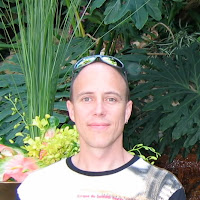 South African author, Jason Blacker was born in Cape Town but grew up in Johannesburg. He moved to Vancouver, Canada when he was 18 years old and currently lives in Calgary.
He spent some time at art college before getting a degree in English Literature. He has worked, among other things, as a police officer, a privacy analyst, a school bus driver and a Starbucks Store Manager.
His first novel, Black Dog Bleeding (Lulu, 2008) explores South Africa's apartheid era and the personal cost paid by individuals who found the policy abhorrent and resisted it.
In this interview, Jason Blacker talks about his writing:
When did you start writing?
I started writing as soon as I could pick up a crayon. In the early days, kindergarten, I started off drawing and exploring colours before learning to write letters and and words.
I think, for me, writing was a natural evolution from drawing. I love drawing and took a couple of years at art college. But to write words that are transformed into images in the reader's mind is a great thrill. Especially if you get that poetic turn-of-phrase.
In grade 7 or 8 I wrote a poem about a man looking into a mirror and the poem was written as a mirror-image of itself. My teacher loved it, gave me an "A" and wrote some really generous comments. It was that experience that really turned on the light bulb for me. My A-ha moment where I thought: "Wow, people can really enjoy this thing I do with words just for fun." And that was the beginning of my journey to being a published and financially successful author. Prior to that, I had just messed around scribbling my own comics -- in the vein of spiderman and star wars. Huge fan of both. I'd do the drawings and writing and just dunk myself deeply into those imaginary worlds. Still today, there is nothing I like better than getting immersed in the story of my characters.
In university I took an undergrad in English Literature to explore some of my favourite authors. One class was on mystery fiction and we had the option of writing our own story. I did this and the professor loved it. She gave me another "A" and encouraged me to publish [the story]. It was at this time that I decided to write my first novel. Up to this point I had written poems and short stories.
My first novel, Black Dog Bleeding, was born during these days. It has been self published and is available at Lulu.com. It was important for me to write it. It deals with the life of someone like Stephen Biko who I greatly admire. Although fictitious, I needed to come to understand the sacrifice and courage of the heroes -- both men and women, black and white of the apartheid resistance. And I wanted to share that with the world.
How would you describe your writing?
My writing is informed by my poetic experience. And what I mean by that is that because I started out writing poetry in its various forms, poetry infuses my prose. I'm very interested in imagery and metaphors. And I love finding that phrase that captures an image in a poetic and original way. Some of my influences would be the poets -- Dylan Thomas, e. e. cummings, [Charles] Bukowski and Walt Whitman to name a few.
Some of the writer's I've enjoyed would be [John] Steinbeck, [Ernest] Hemmingway, [Chuck] Palahniuk and Dashiell Hammett. I think all of these folks have influenced my writing to degrees.
Who is your target audience?
This is an interesting question, as I have two answers to it. I started out writing literary fiction and wrote stories that I wanted to tell. I had no real audience in mind. These stories were character-driven. Based on characters that came to me and wrestled with me like a monkey on my back. I had to tell their tales without much thought to who would read them. But if I was pressed I'd say my stories focus on the theme of the triumph of the human spirit under duress. I write about the hopeful and optimistic potential of humanity. Although my stories are infused with suffering. I guess my audience would be those seeking more understanding of the human condition, and what it means to live this human existence.
On the other hand, I have started to write hard boiled detective novels too. My audience there is certainly for detective fiction fans. Especially those who are more interested in character than tricky story development.
You mentioned a number of authors who influenced you most. In what ways did they influence you?
The poets, as mentioned above, influenced me not only in their wonderfully fresh and innovative imagery but also in their understanding and compassionate take on life. I think, that is, the most influencing flavour is the writer's understanding and ability to relate, through his characters, the struggles of what it means to be human.
I love to be entertained too. And for me being entertained is enjoying the writing and the characters. The style the author has. These, too me are more important than tricky plots or clever red herrings.
With Hammett, he infused in me an abiding love of the hard boiled detective genre, escalating to the level of literary fiction, in my opinion. Also, I have yet to find many others who can write dialogue as forcefully and ironically as he does.
A couple of others I should mention are Nadine Gordimer, J. M. Coetzee and Alan Paton. All three being South African writers and their styles and empathy and my affinity for them as a fellow South African expat draw me into their works. A fourth South African writer deserves separate mention. K. Sello Duiker, a bright flame extinguished too soon showed great promise and is a sad loss to the global literary scene.
What are your main concerns as a writer?
My main concerns as a writer are what I would hope concern any caring and compassionate creative person. I am deeply concerned with the human condition. Especially the inequities and inequalities rampant even to this day within society. These affect me deeply and are what flavour most of my writing.
My goal in writing is one of uplifting the human spirit to greater heights, if that is possible, through writing -- which I hope and believe it is. I deal with my concerns through my artistic endeavours. Be they art, poetry or prose.
The concerns for my fellow man drive me in the pursuit of more generosity, more compassion and more equality as themes in my novels.
How have your personal experiences influenced your writing?
Well, as a first generation, white South African I have been affronted by the glaring disparities forced upon my countrymen. And both white South Africans as well as black South Africans were, I believe fractured by this disjoining. And to this day it creates difficulties that South Africa is confronted with and struggling to fix.
For me, even now living in Canada, I rage daily against these unacceptable disparities and they continue. I find solace in this sad state through the struggles my characters go through in their day-to-day lives.
Perhaps writers are mirrors to which society can see its faults and hopefully remove them.
What are the biggest challenges that you face?
On a professional level, the biggest challenges faced are trying to find publishers and agents. The road at times is long and the incline terribly steep. This is likely the biggest challenge to most emerging writers.
On the personal level, it is finding the time and energy to continually stay focused on a daily basis. Especially when there are multiple distractions and expectations attached to me. My family and employment income are challenges that continually need to be juggled in order to find the motivation and time to write.
Do you write everyday?
When I have a book on the go I do write every day except for weekends. But if I'm in the groove I'll write then too. I just sit down with my laptop to write and I review the previous day's writing and make very brief edits. I'm just looking for spelling and grammar mostly. Doing this review gets me into the character and it is easy to start up again.
Once I've done that I just start writing away on my laptop with the goal of 1,000 words. I use words rather than time as I occasionally will drift off. So some days it may take me an hour and others it might take two. I will write at least 1,000 words and I find I like to stop when I'm really into the story and things are going along smoothly. It is then easier the next day to pick up again if I've left off when I would have liked to continue on.
How many books have you written so far?
I have written three so far. The first Black Dog Bleeding is self-published through lulu.com. I published it in 2008.
As mentioned above, Black Dog Bleeding is a fictitious account of what I imagined the life of Stephen Biko might have been like. It follows my protagonist (Steven Bankulu), same initials on purpose, as he deals with immense personal loss but yet even in the midst of all of this finds a way to fight for the justice of all South Africans. Even though he ends up in jail on trumped up charges of treason. The novel is set in the 70's and 80's in South Africa.
Livid Blue is my second novel. It is not yet published though I continue to seek publishers and representations. It is a novel that follows two protagonists. The first is Janko who is dying from complications related to AIDS. The second is Michael, the psychiatrist who spends many sessions with Janko in order for him to come to terms with his difficult childhood in order to prepare for a peaceful death.
Janko carries a lot of anger and resentment having been abandoned by his mother and not knowing who his father is.
The novel explores different types of relationships and the validity of them. Why are blood relations seen as so strong when in fact they are often the weakest and most antagonistic? These are the kind of questions the novel deals with.
First Feature is a hard-boiled detective novel and has also not been published. Anthony Carrick is the main protagonist who is an ex-LAPD homicide detective now working on his own. He has been hired to find out who killed a high-powered Holllywood producer.
All is not as it seems in pristine Beverly Hills. And Anthony's employer (the production company) are eager to find out any skeletons before the mass media have a chance to feed on them. This novel follows Anthony through drug-adled Echo Park, a hippie vegetarian restaurant with the coroner and a fashionable gay bar all for the sake of solving a murder.
An interesting tidbit about this novel is that Anthony is named after my father and Carrick in Ireland where my ancestry is from.
What is your latest book about?
I'll talk about my fourth book, Red Reign, which I am in the process of writing. It will likely take me about a year for the first draft. Six months, if I could focus on it full time. And perhaps another six months to do all the edits where I feel it is well-dressed and presentable to the public. And the public in this case being agents and publishers.
I would likely choose a publisher based on a number of factors. Most often how well I get along with their representative I am dealing with. Oftentimes money will also be a factor as well as some of the other authors they publish too.
Which are the most difficult aspects of the work you put into your books?
The most difficult aspects of my books for me is the researching. I usually start a novel with a character and they will present their story to me and I head off under the bunker and start writing.
I research as I find it necessary to do so. But the major drawback of this is the break of continuity and rhythm that occurs when this happens. I deal with this by stubbornly sticking to only the research I need to do and ignoring any drifting or extraneous research that might catch my eye.
What do you enjoy most?
I enjoy really getting into the story of my characters. I enjoy the times when the writing flows and time stand still. It is at times like this when the character's really take on a life of their own and it is as if I am getting to know real people. When this happens it is magic. And I'm at the top of my game.
What sets Red Reign apart from other things you've written?
I'm getting better at writing all the time. My writing feels more fluid and the character more palpable.
What sets this book apart is also the fact that it takes place under more current political conditions. It deals with terrorism and corporate greed.
It [is similar to the others in that it] deals with the similar themes that infuse all my writing. That is human suffering and indifference and lack of compassion. But also the overcoming of these things to a spiritual salvation if you will.
After Red Reign, what will you work on next?
I will return to my hard boiled detective novel. It will be called Second Fiddle and will have intrigue, death, perhaps some romance and, of course, greed and fear.
What would you say has been your most significant achievement as a writer?
Just to be able to keep going under difficult circumstances. To keep it up after hundreds of rejections and many personal difficulties and changes in personal environments. To keep going at it while so many things rail against me. To not go gently into that good night as Dylan Thomas would say. And in the end... frankly, I'm just a stubborn bugger.
Possibly Related Books:
,,
Related Interview:
[Interview] Jennifer Armstrong, author of 'Minus the Morning', Conversations with Writers, September 27, 2009
Sunday, September 27, 2009
[Interview] Jennifer Armstrong
 Zimbabwean author, Jennifer Armstrong has worked as a martial arts journalist.
Her memoir, Minus the Morning (Lulu, 2009) explores what it was like to grow up in a white, Christian, Rhodesian family.
She is also the author of three e-books: Dambudzo Marechera (Lulu, 2009), which explores the link between Zimbabwean writer, Dambudzo Marechera, and shamanism; father, son, holy ghost (Lulu, 2009), which has been described as "a story of Oedipal knowledge and realisation, in Africa"; and, Skydive on Zimbabwe (Lulu, 2009), a poem in freeform verse. All three e-books are available to download free from Lulu.
Currently, Jennifer Armstrong lives in Perth, Australia.
In this interview, she talks about her writing:
When did you start writing?
The medium I had the most natural affinity for, at school, was art. When I begun to grow up, I had no idea what I wanted to be, so I gravitated towards the visual arts, only to find that I got much more of a thrill when explaining the concept of my art to others, as compared to actually making the art. That pointed me in the direction of philosophy and theory. It was my natural arena for questioning and developing ideas.
I began writing as an undergraduate in the humanities. Then I sprang into martial arts journalism.
I was still finding my feet as a writer and as a migrant from the Third World to the First World when my own, personal world came crashing down. I was bullied at work because of who I was, because of where I was from (Zimbabwe). That was when I first began to write as if I really meant it, as if something was at stake.
I wrote in order to figure out what was true and what wasn’t. To understand the world around me accurately was my greatest imperative. I wanted to know things accurately and not merely impressionistically, like before. So I began writing my memoir, but it was full of gaps that indicated that my knowledge of the world was still incomplete. I couldn’t make sufficient sense of my own narrative to write in a way that would have led to a swift completion of the memoir, because I had been brought up in a bubble of innocence -- innocent of politics and what that meant for me and the people around me (white and black), innocent of the ideologies and psychological torment that had been afflicting my father, I have very little conception of the world around me as a child growing up in Rhodesia (later Zimbabwe).
It seems that my culture had conspired to raise me as a Victorian child-woman, who would marry my rightful master, probably in all innocence about the biological intricacies of sex and gender roles.
Upon migration to the more sophisticated -- but more cynical and often mean-spirited First World -- I was totally at a loss as to what to make of almost everything around me. Nothing rang a bell. Everything was cold and life was seemingly driven by forces I couldn’t reckon with.
After enduring the workplace bullying incident (which had been driven by xenophobia, but also by a misplaced notion of political correctness -- that it was perfectly moral to bring a “white African” down a peg or two), I had to try to restore my physical health. It meant a lot of waiting around, and trying to build up the strength of my digestive system again. I had difficulty eating solids without my belly swelling up with air. (Even today, my digestive system has not fully recovered from that trauma.)
I had to wait twelve years for the bits and pieces of knowledge and the ability to conceptualise my experiences came together. The last pieces of the puzzle arrived in my consciousness late last year, and I was able to drop them into place.
After that, I was keen to publish the manuscript immediately, to get it out there, and out of my system.
How would you describe your writing?
I would say it is very difficult to describe the writing I am doing. It overlaps somewhat with my PhD interests, which is to study the psychology of one Dambudzo Marechera in the light of contemporary knowledge about shamanistic consciousness.
So, I am very interested in how people think, and why, and what enlightened thinking looks like.
What interests me a lot is to think about how we make unconscious assumptions about people, and act upon them. Where do these assumptions come from that are unconscious? They can be very racist or sexist assumptions, but somehow we often do not know we have them. So, I am thinking very much about identity, and how our views of our own or others’ identities do not seem to relate to rational processes very much, if at all.
Who is your target audience?
Ultimately, I've had so much negativity from some right wing trolls on the Internet -- (those who try to correct my thinking because it is not in tune with a narrow and obnoxious ideology of social conformity) -- that I decided to direct my writing to a non-populist level, to intellectuals and fellow artists.
In other words, I don’t want to direct my ideas to an audience who will only half swallow my thinking, to vomit up that which they have understood incompletely. I’m directing my writing towards intellectuals and academics of all sorts -- those who have a background of sufficient rigour to give my writing the consideration it deserves.
At the same time, I think there is a lot that can be readily ingested in my recently published memoir. There are some more difficult sections in it, but for the most part, anyone who has an appreciation for good literature should be able to read -- (and hopefully enjoy!!) -- my humble (but not-so-conformist) memoir.
Which authors influenced you most?
Of course Dambudzo Marechera would have to come to the top of my list.
I’m interested in other experimental writers like James Joyce. I really love philosophers like Friedrich Nietzsche and Georges Bataille.
There is a lot of quasi-Freudian influence in my memoir, but I do not love [Sigmund] Freud or his later adherents and interpreters as much because they are prone to produce theories that are only narrowly psychological, rather than more complex and taking into account other dimensions of life like social and cultural conditioning, history and politics.
There is a strong feeling of an affinity with ‘Nature’ as a powerful force of inspiration in my life. I am beholden to [William] Wordsworth and Percy Shelley.
How have your personal experiences influenced your writing?
As one whose identity was uprooted (after my family’s emigration from Zimbabwe in 1984), I have been exceedingly intrigued with the idea of identity, how identity is created, and how it can be undermined or destroyed at an emotional level.
I think identity is really a political formulation, but what is not so well known is that it can come under attack at any moment in a way that really is akin to the underhand way that spies and other ‘dark forces’ go about their business.
There are all sorts of indirect forms of coercion that work on our emotions at an unconscious level. Why are some identities considered more desirable than others? Why is it more difficult, in general, for someone who is female or who has black skin to get ahead in the world than for a white male to do so? What are the unconscious psychological forces that get us to treat these kinds of people differently, without necessarily even realising that we are doing it?
Dambudzo could not have a black, Rhodesian identity that had any self-determining qualities to it, since “black Rhodesian” and “self-determining” were contradictory qualities during the era of Ian Smith -- thus his anguish. Similarly, there are those who attribute rationality as being a quality pertaining to males, and not by any means to females. So there are members of my own family that are unable to consider me rational, despite the fact that I am doing a PhD and conduct myself with a level of bearing that is appropriate to my greater degree of knowledge and educational levels. In fact, my father is unable to recall what degree I’m doing, despite the fact that I have now been at if for several years. He wills himself not to know, because it contradicts his idea of womanhood that a female could be doing anything important.
What are your main concerns as a writer?
I’m concerned with understanding the real influences on human behaviour -- not what people claim to be influenced by, but what is really driving them to do what they do, and more importantly, what is also driving them not to do whatever it is they do not do.
I think there are broad as well as narrow political and historical currents that shape the characteristics of any people, in terms of their time and place in the global discourse. The degree to which we are not shaped by our conscious choices, but by the choices made for us by historical and social chance -- this largely goes unrecognised.
I think most people assume that we give ourselves our personal characteristics by the conscious, moral and political choices that we make. However, I couldn’t disagree with that notion more strenuously. I don’t think that’s the way it works at all!
My challenge as a writer is to try to convey that there are whole different mechanisms at work influencing our outlooks and behaviour, other than those that we would take to be rational. I take a look at the ‘pre-oedipal” or unconscious emotional dynamics that govern the way we relate politically to others in our social spheres. I use more than one authorial voice to get across this idea.
What are the biggest challenges that you face?
My biggest challenge is that I am not speaking to an audience that is a ready-made demographic. My writing has yet to seek out and discover an audience for itself.
I eschew identity politics, and writing for a ready-made demographic, because I have been so damaged by it.
I cannot speak precisely for the “ex-Rhodies”, many of whom might have been quite normal conservatives in the past, but have since turned to the extreme right, in my view. I could try to speak for black Zimbabweans perhaps… but I am white! Yet, much of my way of thinking was influenced by black Zimbabwean culture, as I have belatedly discovered. Perhaps those irreverent cultural aspects to my character were what brought on the workplace abuse? They are certainly not typically ‘feminine’!
I spent the first sixteen years of my life in Zimbabwe, and the last four years we were assimilated, blacks and whites, at my high school, Oriel Girls.
My thinking is also somewhat off-kilter in relation to that of Australian, middle-class whites. I don’t relate to their materialist middle-class aspirations at all. I don’t relate to their submissiveness and laissez-faire attitude to social ethics. They are not involved enough in their own lives, and seem to allow others to direct their views of what it right or wrong too much.
It is all very perplexing!
I try to deal with this situation I find myself in by writing in a way that can reach different people at different levels -- although, unlike the one who ended up carrying a donkey on his back, because he wanted to please all his critics, I’ve decided to draw a line (at least in my mind) against trying to please all.
Do you write everyday?
I write every day. It really depends on how much I’ve been reading, and whether I’ve allowed enough time for ideas (that I’ve been exposed to) to percolate in the subconscious mind. Suddenly, the subconscious ideas will be ready, and I will begin to experience a mood of general agitation, which doesn’t stop until I’ve written everything that was in me down.
It must be like the biological process of giving birth -- something I never hope to replicate in a concrete sense.
Sometimes I write huge amounts, sometimes only little. But I write every day.
How many books have you written so far?
Just one book so far, I’m afraid! It’s Minus the Morning, published by Lulu (Amazon is selling an earlier version, due to my mistake). It was released in early 2009. It’s kind of an “out of Africa” memoir, concerning the first three decades of my life.
Of course, it has to do with the issue of identity, from an experiential and philosophical point of view.
How did you choose a publisher for the book?
I decided to go the self-publishing route, via Lulu, just since, as I explained before, I don’t have a ready-made demographic of readers -- which might be necessary to lure a commercial publisher into accepting me.
Also, there are things I want to say which are not for everybody’s ears. I am critical of institutionalised abusiveness, for instance. This is not something everybody wants to hear, and it has the potential to make some people -- those who are prone to untoward behaviour and ideological sniping -- very uncomfortable.
Furthermore, I’m not trying to seduce my reader with my lyrical prose, like the excellent Alexandra Fuller. I’m not writing in a traditional feminine way at all -- I’m trying to speak directly to two parts of the readers’ minds: their own innate sense of what it means to belong or not to belong on an emotional level, and their intellect!
Lulu is a very efficient and exciting publisher, from my point of view. I can get any number of my books ready at hand, just by ordering them and paying for them on the basis of need. Of course, marketing is a problem when you have to do it by yourself, but I’m simply happy to make the book available online. It’s great technology that is available to writers at last -- in the 21st Century.
Which were the most difficult aspects of the work that you put into Minus the Morning?
The hardest part, for me, was writing about the hidden psychological dynamics that operate behind the dysfunctional relationship I have had (and probably still do) with my father. It was very hard because I didn’t know enough about his background, until much later, to be able to make sense of some of it.
There were a few family skeletons in the closet, which I have chosen not to reveal very much about, because my writing of this book has not been to cause people shame, but to elucidate my own responses to the situation of being brought up in a white, Rhodesian family, with a Christian ideology.
Which aspects of the work did you enjoy most?
I’ve enjoyed finishing it the most -- and seeing it in paperback. The whole thing took me more than a decade to write! It was a great relief to see it not as ether (something still in my mind) or as converted bits and bytes on a computer screen, but in a solid form -- in ink and paper!
Truly, it has been painful to finish in some ways, too. When I began writing it, I thought that if I made an exposé of some of the injustices in the world, that people would at least sit up and take notice. Nowadays, I thoroughly doubt that this is true or that it will happen.
Looking deeply into Dambudzo’s work, you can see that it is all about the injustice of having to accept an arbitrary social and political identity -- but people these days are still struggling to find that sort of meaning in his work. It is a difficult message to put across.
What sets Minus the Morning apart from other things you've written?
Merely that the other books do not exist as yet.
I do want to write a book that analyses the perversity of right wing consciousness, however.
I want to look into the psychology of bigotry and why bigots can be so efficacious at convincing others to get on their side and walk in lockstep with them. There is never a bully in this world except that he has those who take his side.
What would you say has been your most significant achievement as a writer?
Not resorting to compromising with the truth, or giving in to my impatience to get the work done. I waited and checked everything, until after more than twelve years, I knew that what I had was really psychologically accurate.
In Minus the Morning, I tell the truth about what it is like to grow up as a white Rhodesian (and later Zimbabwean) in a family that later turned to the right.
Possibly related books:
,,
Related Interview:
[Interview] Esther David, author of 'Shalom India Housing Society', Conversations with Writers, August 25, 2009
Tuesday, September 15, 2009
[Interview] J. R. Reardon
 Novelist J. R. Reardon is a Boston native; Suffolk University Law School alum, and former partner of Saltzman & McNaught LLP.
She has practiced law in many areas including civil and criminal litigation. She is active in several legal associations in both Massachusetts and the District of Columbia and is admitted to practice in the federal and state courts of Massachusetts, the District of Columbia Court of Appeals, and the U.S. Supreme Court.
In addition, she has also taught insurance law and is published in the Suffolk University Law Review.
Her first novel, Confidential Communications (Xlibris, 2008) has been described as "...a compelling read that will keep you turning page after page, hoping that justice will prevail."
In this interview, J. R. Reardon talks about her writing:
When did you start writing? And, how did you decide you wanted to get published?
My mother encouraged my siblings and I to read early on, and we took regular trips to the library as children. I suppose that is one of the reasons why I have always had such an active imagination.
I began writing in grammar school -- a short story here, a short story there… and then when I was old enough to babysit I would tell stories to the children I was sitting at night.
My latest novel, Confidential Communications was written well over a decade ago. I was fresh out of law school, new to court appearances and had some down time. One night, the idea popped into my head and I found myself typing away feverishly at the computer. I printed out an 80-page draft for a very select group of people, had it copy-written, and then put it away in an old file cabinet. The story was well received, but life took over, my cases increased, and I became extremely busy.
In the fall of 2003, I married my husband David and moved from Massachusetts to Washington, D.C. In January, we learned that we were expecting our daughter. Instead of taking on a job in the District, Dave suggested that I sit back and enjoy my pregnancy. I had been a partner in my own law firm for quite some time and it was the perfect time to relax, sit back and smell the proverbial roses. During that time, Dave also suggested that I revisit the book (he was one of the few to have received a copy and he truly enjoyed it -- having seen first-hand for years what a critical eye he has with books he has read, I trusted his instincts).
After reading Confidential Communications for the first time in years, I decided “why not?” The original program was so old however, that I was unable to convert it to Word. So, I re-typed it and began the process of expanding it. With another decade of life under my belt, I was able to add some depth to the characters, as well as a few more scenarios. Some of the areas Dave and I had actually visited, and a few we thought would be fun to visit, so I did some research online and included those as well.
Once we were happy with the final version, off it went to print. New to the industry, I had circulated some query letters around, but stumbled upon Xlibris upon the recommendation of a college in Pennsylvania while I was writing my law review articles. At that point, I decided, “It’s done -- why wait?” The positive reviews on Amazon and Goodreads [make me] sure glad I didn’t, and am excited for the upcoming release of the sequel.
How would you describe your writing?
That is a great question. I have always lived life with an open mind, curious about everything that is going on around me. One of the best things and most difficult things I had to deal with when practicing law was my uncanny ability to put myself into other people’s shoes. Doing so, I could better understand other people’s perspectives. I could argue cases easier in court, settle cases easier out of court, and truly empathize with the feelings of others, no matter what side they were on.
I try to do the same with my writing. I put myself into the character’s shoes and try to see what they see, feel what they feel, hear what they hear, think what they think and react how they may react. That way, I can make the reader feel, see, and hear what they need to in order to fully enjoy the story.
Who is your target audience?
When I first wrote Confidential Communications, I honestly didn’t have a target audience. In fact, I still don’t “target an audience.” I write my story, release it into the world and let the audience find it.
I enjoy telling stories and sharing them with others. It is a means of escape -- whether it be to another state, another country, another setting, another life. In a crazy world if I can help someone to escape for at least a little while, I have done my job.
Which authors influenced you most?
I can’t really say that I have been influenced by other authors in my writing. I have enjoyed many an author’s writing in the course of my life, and now that I have more time to read, I am enjoying more and more. The books I choose to read depend on my mood.
If I want something that is for me, a quick, easy read… perhaps someone who has chapters I can breeze through at breakfast or lunch, I may pick up a Robert Parker book. If I want more detail but still escape to Boston, I may read something by Dennis Lehane. And if I’m cleaning out the old Tupperware tubs, I may pick up an old Beverly Gray mystery book that I had never read before just to see how people saw the world in the ‘50s. Lately I have read a lot of extremely talented indie authors.
I will say that my husband, my parents, teachers I had in grammar school, high school, college or law school, as well as judges and insurance adjusters -- were those who influenced my writing the most. I am forever thankful to them for that. Those people actually have read my writing and either commented, graded, or simply understood my position. They made me explain myself fully -- again, I put myself in their shoes so that they may understand what I am saying, even if it is as difficult as explaining someone else’s position -- i.e. my client.
Have your personal experiences influenced your writing in any way?
The story and the characters of Confidential Communications are all fictional, although I will admit that by the end, the character, Joshua, has a little of my husband David (who is also an attorney) in him. Also, Justice McNaught is based in part on my late grandfather who sat on the Federal District Court for the District of Massachusetts. He was the person who originally inspired me as a child to pursue a degree in law and took ethics extremely seriously. I figured, heck, why not “tip my hat” as a little thank you to him and make him a Justice of the United States Supreme Court?
The character Rebecca Lawson also is extremely ethical. As an attorney, I have always strived to be such an ethical person as my grandfather, and other members of the bar who I have met, that still do. There should be more. I hate the fact that I get such mixed reactions when people find out my profession, and hate more the number of legal insults that are out there due to the inappropriate actions of a select few. It is my hope that someday people will see the legal profession as it was made to be: a group of ethical leaders who we can look up to, to make a positive difference in our community.
What are your main concerns as a writer?
I think I have always been concerned with the quality of my writing: is there anything I missed in the editing process? Have the editors missed anything? Have I described something enough or too much? I don’t want to read anything boring or that is riddled with mistakes, and certainly wouldn’t want to subject anyone else to that either.
I am also sometimes concerned with people reading too much into my work. It is after all, a work of fiction. Many family/friends naturally thought that the character Rebecca Lawson was based on me, and my personal experiences. Not so, although I did fall under a firetruck in law school. There were also other characters who family and friends were convinced were based on people I hadn’t even thought of in years. Part of the fun in reading a book is picturing a character, and it has been extremely fun for me to hear how others see one of my characters, whether it be based on an actor/actress or someone I perhaps knew as a child.
What are the biggest challenges that you face?
There is not enough time in the day to do everything that I want to do.
Becoming a published author seemed to fall into place at the right time. I have met incredible people along the way and learned an incredible amount about the publishing process, marketing and promotion. Not long after Confidential Communications was published, I found myself typing away at the computer again with the sequel, and I’d love to share it with the world right now. But Confidential Communications hasn’t even been out a year yet and it has picked up so much steam that I’m doing a lot of promoting and answering fan mail from all over the world. Many fans are looking for the sequel already and I’m excited!
Do you write everyday?
I do write a little every day in addition to my daily emails, tweets, facebook, forums, blogs, etc.
Some days I write more than others.
Perhaps I only have time to jot a few notes on some stickies as I clean the house or take my daughter out somewhere, or it may be handwriting a 20-page chapter out on a legal pad during the course of a week to be typed into the computer later on a weekend.
My family always comes first. Writing is just a way to keep my mind fresh. But it is addictive. I am grateful that I type quickly.
How many books have you written so far?
I have written Confidential Communications, published by Xlibris in June of 2008, available through Xlibris, Amazon, Barnes and Noble, Borders and a number of other retailers. It is available in hardcover, softcover and now ebook versions.
The sequel to Confidential Communications is called Dishonored. It is expected to be released later this year.
While I was in the process of editing Confidential Communications, I was busy editing my first law review article with the Suffolk University Law Review. The title for that article is “Selecting Supreme Court Justices: Preserving the System, Protecting with Professionalism” and can be found in Volume 40, Book 4.
Which were the most difficult aspects of the work you put into Confidential Communications?
I think writing scenes which shock the reader are difficult, and there are a few in Confidential Communications. There were times that I worried my family and friends would over-analyze it, thinking they were true stories, or perhaps some reader would read it and not enjoy, but I just thought about all the other books out there with shocking twists and turns and just let it go.
It was also hard for me to take the original 80 pages of the book and re-type it, only to expand it and add things when I hadn’t done that type of project before. There is something to be said for finishing a piece of work. When you hit “save” and “print”, you want it to be perfect and done. After a while with the editing I had to take a break -- I was able to recite the first chapter and unable to find anything to change after a while. Taking breaks is highly recommended!
Then there was the difficulty of editing with my daughter at my side. She wanted my attention when I was working and I, of course, made time for her. There were many times I had to collect stickies at the end of the day where I’d jot down ideas or lines so that I wouldn’t forget to add them later.
What did you enjoy most?
I think I enjoyed shocking my husband when he took his first round of editing it once I took a break. He had read the original version and it was fun to have him tell me “I didn’t see that coming!”
I also love hearing the wonderful comments from my readers.
It was also fun seeing my daughter coloring at the table with me, pretending to “do her work” or “write a book like Mommy.”
Publishing a book was always on my “to do list”, although it is surreal to actually hold it and see people buying it… Here’s my philosophy in life: I don’t want to turn around at age 80 and say “I wish I had done that…” David and I want our daughter to live her life to the fullest in the same way. The world is a great place as long as you see it that way. If you hit any bumps in the road, maybe it’s a sign for you to slow down, open your eyes and your mind, and look at life in yet one more creative way.
What sets Confidential Communications apart from other things you've written
Well, writing a book is certainly different from filing a motion in court. A motion is based on facts and how the law applies to those facts, while this book is fiction.
My law review article also is based on law, public policy, civil procedure and legal history. Definitely a more serious type of work.
Are there any similarities?
Writing Confidential Communications, I was able to use a legal concept, and craft a realistic story around it, which ended up being scarily similar to stories on the news today. Like other legal thrillers, it involves ethical choices but I am told by many that it has a different perspective of the behind-the-scenes action that goes on in the legal world.
What will your next book be about?
As I stated above, my newest novel is called Dishonored, and is expected to be released later this year.
The synopsis is as follows: Federal Court Judge Rebecca Tameron seemed to have it all… a loving family, a prestigious career and the respect of her community -- that is, until her world falls apart.
Implicated in the disappearance of a Supreme Court Justice, and the shooting of a Federal agent, Tameron scrambles to uncover the truth. The problem is, each investigative avenue she pursues only leads to more questions, and every investigative avenue leads back to her. How can she clear her name?
While exploring the reaches, limits and dangers of our increasingly security-conscious and interconnected world, Dishonored questions the faith we place in both strangers and friends, and reminds us just how perilous our techno-savvy life can be.
What would you say has been your most significant achievement as a writer?
That is a tough question. Being published, being recognized, receiving fan mail and emails from all over the world, having the book sell well… the list goes on and on. And it hasn’t even been released a year yet.
I’ve received requests for signed copies and held book signings in the Mall. There is something new every day that I seem to be blessed with.
I will say that I loved seeing my daughter’s face when the first completed copy arrived at my house and she said “Mommy! That’s you on the back of that book!”
Related resources:
Author's website
Author's page, Xlibris
Possibly related books:
,,
Thursday, September 10, 2009
[Interview: Part 5 of 5] John Miller, author of '2012: Kin Bin Tin Nah'
Speculative fiction author John Miller has talked about how he started writing and the people and experiences that have influenced him. He also discussed some of his concerns as a writer and shed some light on the circumstances surrounding the publication of his novella, 2012: Kin Bin Tin Nah (Sonar4 Publications, 2009).
In the final part of this interview, John Miller talks about his achievements as a writer:
Which were the most difficult aspects of the work that you put into 2012: Kin Bin Tin Nah?
The most difficult aspect of this book was tying in the main bad guy (the evil Mayan priest) with the worldwide calamities. Why did he need Cal’s psychic employees? For what ends did he need them? And what type of spirit did he employ in his evil and priestly powers?
For me the answers came after a couple days of writer’s block. It wasn’t a creativity problem; it was a problem with the plot—making it as realistic and viable as possible for the readers as well as myself. If I didn’t believe in it, then I knew the reader wouldn’t, either. And I had to create motivation with the evil Mayan priest, and give him the power to destroy the world in a believable manner. To do this, I had to create a new type of spirit called Dark Alux. An Alux is similar to a nature spirit known to Mayans; a Dark Alux is something I created. This made the transitions between scenes easier, brought motivation to the evil priest and a sense of realism. The destruction of the world was already going to happen; the evil priest figured out a way to make time slip, like seismic plates in the earth’s crust, and bring what awaited the world in 2012 to manifest in 2010.
So the most difficult aspect was the evil Mayan priest’s abilities to do this in a manner allowing readers to suspend their belief, and nail the priest’s motivation down: why would he wish to do this? I couldn’t figure it out on my own, and it took some false starts and rewriting until inspiration’s wow! moment came. And it was such a relief when it came, because I knew that I knew that it was right. After I wrote it into the story, I felt a sense of satisfaction and I knew the reader would feel it, too.
Which aspects did you enjoy most?
Two parts:
This is the largest thing I’ve written that has been published. I have written other novellas, and there is a lot of potential in those works, but this is the longest published work I’ve written.
Apart from that, 2012: Kin Bin Tin Nah touched on so many more emotions and affects the reader more powerfully than the other stories I’ve published in various anthologies and publications. The main character loses his friend and employee of longstanding, Psychic Gladys St.Clare, and the angst of that, coupled with the terror of worldwide calamities and being chased by blue zombies, creates a creepy sense of dread and grief. But the way it ends, on such a triumphant high-note, gives readers something I’ve never done in any other story: a dark fantasy of terror and epic proportions ends (hopefully) delivering a smile to the dear reader.
In what way is the novella similar to other things you've written?
It’s similar in that it takes dark fantasy threads and runs with them, pulling the reader along a (hopefully) fantastic ride and leaving them breathless.
It starts fast like all my stories, and it ends decisively with all questions answered. There is no ambiguity in 2012: Kin Bin Tin Nah. The reader isn’t left to figure things out on their own. While I enjoy reading books like that, because of the complicated mythos of the Mayan People, I grab the reader by the hand and shout, “Go!” Then we jump in together for a crazy ride.
What will your next book be about?
I have two novellas I’m working on.
One is about the factions of the Frankenstein Family and the monstrosities they create. The other is about an environmental group in Alaska that becomes a pack of werewolves. Both center on human relationships and depth of character, detailing the evolutionary process of change as the characters muddle through fast-hitting plots.
I haven’t decided upon titles.
What would you say has been your most significant achievement as a writer?
Liquid Imagination is my baby. I love it. Editor Kevin Wallis and Poetry Editor Chrissy Davis have really helped me shape it into something special, in my opinion. And it led my buddy and friend, Karl Rademacher, to start up Silver Blade. This led to my work as General Manager of 2M Magazine. These are significant accomplishments, I will admit. And watching young writers bud and grow, and knowing I have something to do with directing them, is tremendously satisfying. I love helping new writers.
Apart from that, I must say I am most proud of 2012: Kin Bin Tin Nah. I tried to convey the growth and depth of Calvin Thomas as he frantically tries to save the world, to show his growing relationship with Linda Orteganaldo at his side, but it is the ending I am most proud. I feel when I ask the reader to walk with me into the darkest night, I should at least have the courtesy to lead them into the light at the journey’s end. I believe I have done this with 2012: Kin Bin Tin Nah.
Related resources:
Author’s page, Edit Red Writing Community
Author’s page, Sonar4 Publication
Interviews
,,
In the final part of this interview, John Miller talks about his achievements as a writer:
Which were the most difficult aspects of the work that you put into 2012: Kin Bin Tin Nah?
The most difficult aspect of this book was tying in the main bad guy (the evil Mayan priest) with the worldwide calamities. Why did he need Cal’s psychic employees? For what ends did he need them? And what type of spirit did he employ in his evil and priestly powers?
For me the answers came after a couple days of writer’s block. It wasn’t a creativity problem; it was a problem with the plot—making it as realistic and viable as possible for the readers as well as myself. If I didn’t believe in it, then I knew the reader wouldn’t, either. And I had to create motivation with the evil Mayan priest, and give him the power to destroy the world in a believable manner. To do this, I had to create a new type of spirit called Dark Alux. An Alux is similar to a nature spirit known to Mayans; a Dark Alux is something I created. This made the transitions between scenes easier, brought motivation to the evil priest and a sense of realism. The destruction of the world was already going to happen; the evil priest figured out a way to make time slip, like seismic plates in the earth’s crust, and bring what awaited the world in 2012 to manifest in 2010.
So the most difficult aspect was the evil Mayan priest’s abilities to do this in a manner allowing readers to suspend their belief, and nail the priest’s motivation down: why would he wish to do this? I couldn’t figure it out on my own, and it took some false starts and rewriting until inspiration’s wow! moment came. And it was such a relief when it came, because I knew that I knew that it was right. After I wrote it into the story, I felt a sense of satisfaction and I knew the reader would feel it, too.
Which aspects did you enjoy most?
Two parts:
- the relationship between the two main characters, Calvin Thomas and Linda Orteganaldo, as they work side-by-side and grow, not only as characters, but into each other; and
- the ending in which both Calvin and Linda, at the conclusion of the story, climb hand-in-hand up an ancient pyramid in Mexico, and the secret carved in stone waiting for them at the top. The ending is triumphant, echoing the resiliency of humankind as well as supporting the mysticism behind the Mayan calendar.
This is the largest thing I’ve written that has been published. I have written other novellas, and there is a lot of potential in those works, but this is the longest published work I’ve written.
Apart from that, 2012: Kin Bin Tin Nah touched on so many more emotions and affects the reader more powerfully than the other stories I’ve published in various anthologies and publications. The main character loses his friend and employee of longstanding, Psychic Gladys St.Clare, and the angst of that, coupled with the terror of worldwide calamities and being chased by blue zombies, creates a creepy sense of dread and grief. But the way it ends, on such a triumphant high-note, gives readers something I’ve never done in any other story: a dark fantasy of terror and epic proportions ends (hopefully) delivering a smile to the dear reader.
In what way is the novella similar to other things you've written?
It’s similar in that it takes dark fantasy threads and runs with them, pulling the reader along a (hopefully) fantastic ride and leaving them breathless.
It starts fast like all my stories, and it ends decisively with all questions answered. There is no ambiguity in 2012: Kin Bin Tin Nah. The reader isn’t left to figure things out on their own. While I enjoy reading books like that, because of the complicated mythos of the Mayan People, I grab the reader by the hand and shout, “Go!” Then we jump in together for a crazy ride.
What will your next book be about?
I have two novellas I’m working on.
One is about the factions of the Frankenstein Family and the monstrosities they create. The other is about an environmental group in Alaska that becomes a pack of werewolves. Both center on human relationships and depth of character, detailing the evolutionary process of change as the characters muddle through fast-hitting plots.
I haven’t decided upon titles.
What would you say has been your most significant achievement as a writer?
Liquid Imagination is my baby. I love it. Editor Kevin Wallis and Poetry Editor Chrissy Davis have really helped me shape it into something special, in my opinion. And it led my buddy and friend, Karl Rademacher, to start up Silver Blade. This led to my work as General Manager of 2M Magazine. These are significant accomplishments, I will admit. And watching young writers bud and grow, and knowing I have something to do with directing them, is tremendously satisfying. I love helping new writers.
Apart from that, I must say I am most proud of 2012: Kin Bin Tin Nah. I tried to convey the growth and depth of Calvin Thomas as he frantically tries to save the world, to show his growing relationship with Linda Orteganaldo at his side, but it is the ending I am most proud. I feel when I ask the reader to walk with me into the darkest night, I should at least have the courtesy to lead them into the light at the journey’s end. I believe I have done this with 2012: Kin Bin Tin Nah.
Related resources:
Author’s page, Edit Red Writing Community
Author’s page, Sonar4 Publication
Interviews
- [Interview: Part 1 of 5] John Miller, author of ‘2012: Kin Bin Tin Nah’, Conversations with Writers, August 31, 2009
- [Interview: Part 2 of 5] John Miller, author of ‘2012: Kin Bin Tin Nah’, Conversations with Writers, September 2, 2009
- [Interview: Part 3 of 5] John Miller, author of ‘2012: Kin Bin Tin Nah’, Conversations with Writers, September 4, 2009
- [Interview: Part 4 of 5] John Miller, author of ‘2012: Kin Bin Tin Nah’, Conversations with Writers, September 7, 2009
,,
Subscribe to:
Posts (Atom)
-
 Lauri Kubuitsile writes romances novels; crime fiction; books and stories for children and teenagers; and, literary fiction. She was shor...