Friday, February 26, 2010

[Interview_3] Sue Moorcroft

Romance author and creative writing tutor, Sue Moorcroft's novels include Starting Over (Choc Lit, 2009), Family Matters (Robert Hale, 2008) and Uphill All the Way (Transita, 2005).

She is also the author of a non-fiction book, Love Writing: How to Make Money Writing Romantic or Erotic Fiction (Accent Press Ltd, 2010).

Her short stories have been featured in anthologies that include Sexy Shorts for Christmas (Accent Press Ltd, 2003) and Scary Shorts for Hallowe'en (Accent Press Ltd, 2004).

In this interview, Sue Moorcroft talks about her latest novel, Starting Over:

What would you say the novel is all about?

Starting Over is about Tess Riddell who, whenever she has a problem in her life, just moves on and starts over somewhere new. It’s a strategy that family and friends have problems with and, eventually, Tess finds a strong enough reason to tough things out.

How did the idea behind the novel come about?

The central male in the book, Ratty (Miles Rattenbury), came to me first. I was watching Kevin Kline as the Pirate King in a film of The Pirates of Penzance, my favourite Gilbert & Sullivan operetta. He was so swashbuckling, joyful and energetic … and that’s how Ratty entered my imagination. I like Ratty because he likes cars and so do I.

In Tess, I wanted quite a flawed heroine. One who had to really learn a lesson by the time the story concludes. She struggles with facing up to things for the whole book and it brings about a stormy finale when Tess forces herself to face up to something but goes about it all the wrong way.

These characters really captured my imagination and the combination of their two quite different personalities was bound to produce sparks. What interested me was whether they could work things out. Or whether they’d bother.

How long did it take you to write the novel?

I began this book a long time ago -- about eight or nine years. It wasn’t right, then, although it got me an agent.

Later, I heard about the publisher, Choc Lit, and when I saw that they wanted a strong hero with part of the book written from his point of view, I felt the time had come to revisit the book and see if I could see what was wrong.

Time gave me objectivity and I re-wrote sections, particularly at the beginning. A book’s content can age quite rapidly -- mobile phones had gone from a luxury item to a commonplace one, for example. It’s surprising what a difference that can make to the logic of the plot.

How would you describe the process that went into creating and producing the book?

Initially, I just began to write and let the plot take care of itself. (This isn’t an effective way of plotting, for me!) Then I went back and took out everything I realised wasn’t impacting directly on the thrust of the book. Then I explored the function of Olly, Tess’s ex-fiancĂ©, a little more thoroughly. This brought the book into shape. I saw that having him only off-stage, as he once was, was illogical.

Stopping a relationship book is reasonably straightforward -- you have to decide whether the characters will get together or be ripped apart and then you do that, in a decisive manner. The temptation is to try and stay with them too long but I was quite stern about leaving Tess and Ratty at the conclusion to the story. Well … except for a short epilogue just to check up on them!

And giving Ratty a little cameo role in the next book …

When you’ve spent a long time with lovely characters it can be hard to let them go.

Which were the most difficult aspects of the work that went into the book?

I have to say that I enjoyed writing this book and also the re-writing that went into it. I understood comparatively late that something was wrong with the first chapter and, when I had that in shape, I had a really good feeling about the whole.

There is a scene in the book where Olly tries to bring Tess into line by insisting that her friend’s child, Jenna, is Tess’s (and, therefore, Olly’s) born in the interval between Olly backing out of their engagement and returning to seek Tess out some time later.

For a long time, I felt that Olly might actually have whisked Jenna away to use as a weapon against Tess. Finally, I saw that it wasn’t appropriate. Kidnapping -- which is what it amounted to, although you’d have a hard time convincing Olly of that -- belongs in a book that explores different issues to Starting Over. Kidnapping needs to be the focus of a story, not a sub-plot. So, I modified the situation and now I think it’s an impactful scene rather than a segment that’s out of keeping with the rest.

What did you enjoy most?

What I always enjoy -- polishing and editing.

Getting the first draft down is always the most difficult part.

How similar and/or different is it to the other books you have written?

It’s different to Uphill All the Way and Family Matters in that the central characters are a little younger and there is a focus on two characters, Tess and Ratty rather than four.

Starting Over is also a touch more humorous then the first two -- in fact, it’s categorised as a romantic comedy. The book that I hope will be published in 2010, All That Mullarkey, will be, too.

When I sold Uphill All the Way and Family Matters, there were openings for middle-aged heroines with ‘issues’ to address. That’s what some publishers were looking for, so that’s what I gave them. But Starting Over and All That Mullarkey are what I write from my heart -- the same kind of stuff as I like to read, with an involving central relationship and a few smiles along the way.

Resources:
Possibly related books:

,,

Related article:
  • Sue Moorcroft [Interview: 1 of 3], Conversations with Writers, March 10, 2009
  • Sue Moorcroft [Interview: 2 of 3], Conversations with Writers, January 4, 2010

Wednesday, February 24, 2010

[Featured Author] Magdalena Ball

A Voice in the Wilderness
By Alexander James

Author and poet Magdalena Ball left behind the concrete canyons of New York and the sleepy spires of Oxford to find her voice in the rural mountains of Australia.

And with wombats and kangaroos for neighbours, she’s producing the best work of her life.

In the past five years alone, she’s seen wide publication of short fiction and poetry, non-fiction book, The Art of Assessment, her Quark Soup poetry anthology and, her debut novel, Sleep Before Evening.

With work underway on two other books, 42-year old Magdalena even finds time to run her bustling review site, The Compulsive Reader -- and look after her children, Dominic (10), Oliver (7) and Genevieve (4).

She said:
It’s hard to believe that we’re only an hour’s drive from Sydney. It’s very rural here and, as I type, the lyrebirds are singing, kookaburras laughing, bellbirds tinkling. Chickens are tearing up the lawn looking for grubs, and I really do need to follow-up on those fox baits

It couldn’t be more different from the New York I grew up in. There’s anonymity in the country that is actually similar to that in a big city. You’re surrounded by sound and bustling activity, but completely unnoticed. I like that. It makes me feel both ‘in the midst of’ and yet absolutely alone.

In some ways Sleep Before Evening is an extended love letter to a city I can never go back to except as a tourist. What I looked for when I came here, with my British husband, Martin, and we grew into a family, was Ithaca (in the Homeric sense of the word). And I’m not entirely sure why I had to be so far away from my roots to find it. To a certain extent a door just opened and, young an unencumbered, I walked through it.

The home I have here is exactly what I always wanted as a child: stable, rooted, safe: two parents, strong ideals, three regular meals on the table -- stability.

Magdalena Ball’s critically acclaimed new novel -- released by BeWrite Books -- tells the story of a middle class teenager cast adrift by the sudden death of her brilliant grandfather-mentor and her struggle against a self-centred artist mother, a succession of drive-by stepfathers and her desperate escape into a nightmare of drugs and sexual degradation.

Set in and about New York, the gritty, relentless tale unfolds with the same cool detachment that motivates the central character to peel back the layers of her life and expose the painful scalding within. There are lonely vigils in city parks and subway journeys to oblivion. In the city she meets Miles, a hip musician busking the streets and playing seedy venues with a rock band.

Her new, exciting, dissolute world challenges Marianne’s preconceptions about art and life. Here, in contrast to her prescribed upbringing, she finds anarchic squalor, home-grown music and poetry, substance abuse, sex and crushing disappointment and fear; but above all, exhilarating personal freedom.

Addictions -- of all kinds -- and the redemptive power of art and music, love, loss and beauty are all explored in a young girl’s difficult journey from sleep to awakening. The book draws on Magdalena’s own rich life-experience, as a daughter and a mother, to bring Marianne startlingly to life.

Magdalena said:
But Sleep isn’t autobiographical at all -- I’m happy to say! It’s pure fiction. It’s set in a real time and place where I lived when I was Marianne’s age, and there are flashes of characterisation, dialogue and situations that came from memory rather than pure imagination. There are many reasons for that -- the key one being my lack of inventiveness. I need something clear and visual to work with as a writer, and it helped to ground the characterisation in a specific place and time where it seemed to fit.

The other reasons are that, like Marianne, my mother and stepfather were going through an ugly break-up during that period of my life and there was tamped tension and unresolved pain that I was able to use for verisimilitude by setting the book in that particular time and place.

And, of course, like most writers, I do tend to be a magpie and have taken all sorts of observations, memories and experiences to put into the fictional situation. For example, I did like to go into NYC from Long Island when I was a teen, and like Marianne, could never find someone brave enough to come along, so tended to go alone.

I also attended a few of those poetry sessions Marianne goes to, including a gorgeous all-nighter on New Year’s Eve with [Allen] Ginsburg, Jim Carroll, Lou Reed, Anne Waldman, Richard Hell, etc, at the St Marks Church.

I even remember listening to a harmonica player under the arch at Washington Square Park and talking to him afterwards, but I never ended up in Marianne’s situation, falling in love with him. There was a little bit of my brother’s mother, an artist and writer, in Marianne’s mother, Lily, and a little bit of my stepfather in Marianne’s stepfather, Russell. And there are plenty of places in the book I remember being in myself and things I remember seeing, but the overall story is completely made up.

Having said that, I was worried that my mother would see herself in Lily but instead she identified with Marianne, and reminding me that she lived through something very similar indeed, as she did have a brief dalliance with heroin addiction. So perhaps instinctively, because I never really knew my mother’s full story -- it all happened when I was a baby and I was mostly out of the situation, safe with my grandmother -- I knew and understood something of my mother’s pain and put it in there. She tells me it’s uncanny, but it was entirely unintentional.

I think there are aspects of me in every character, from Grandfather Eric to stepfather Russell, to mother Lily and to Miles, to the boy in the park. They all have something of me in them and something of other people I knew in them, but ultimately the resemblance to both people and places was only a starting point. Once the story became strong, it took on its own life, and the characters developed their own imperative which was completely unique to this particular story and these particular characters.

The road from New York to the outback and writing success was a winding one.

She said:
When I was an English major at CCNY, a counsellor suggested I apply for a Rhodes Scholarship. I didn’t get it, but in the process, I became enamoured of the idea of going to Oxford, especially since I’d just finished studying Jude the Obscure and those spires were as appealing and seemingly distant to me as they were to Jude, so I applied anyway and got in. I went, but the college I got into (St Cross) didn’t have any permanent accommodation for me so I had to find a place to live.

I did find something at Crowley; a cute house which was being sublet by an even cuter guy with round glasses like John Lennon, and who, despite his gentle demeanour, was wearing black leather trousers and had some amazing looking motorbikes parked outside the door. It didn’t take us too long to fall in love. When I moved in, Martin had just quit his DPhil in Philosophy to do a PGCE teaching certificate and then did some teaching of French and History. His BA was in French and Philosophy.

I was totally awed by Oxford and had the silly idea that I could write something new about James Joyce, Virginia Woolf and W. B. Yeats. The bulging bookshelves already full of theses on these authors, as well as my own lack of linguistic capability made it quickly clear to me that I was off-track. But I knew I wanted strongly to write about the limits of language and how these three authors were able to move beyond those limits. Although I passed my qualifying exams and a VIVA -- the little thesis I wrote for that was pretty much all I was able to do on the topic using academic prose. I tried a few different supervisors but it was clear that I had nothing more to add to an already bulging canon so I left.

I was also working at a language school, waitressing (research for Sleep perhaps, though I didn’t know it at the time) at a restaurant called The Crypt, and eventually got a secretarial position at a biotechnology company. And there was my advancing relationship with Martin, who was an active member of Oxford University Motorcycle Club. We had a reasonably strong social life, so leaving the university wasn’t that difficult. It just began to assume less and less of a role in my day-to-day life until I decided there was no point continuing to pay fees.

Though I hate not finishing something I’ve started -- my thesis topic is, in a way, covered by the themes in Sleep, so I feel like I’ve now finished it. I even sent a note to my old supervisor telling him. Being a Yank, I’ve never had much notion of protocol.

So we were bumbling around in Oxford. Martin was teaching and I was doing secretarial work, both no longer tied to the university, and we decided to get married. After the wedding and a wonderful honeymoon in Brittany, we knew we wanted to buy a house, but house prices in the UK were high.

As Martin’s folks had migrated to Australia some eight years prior, and Martin had just returned from a long visit when I met him, and loved the place, we decided to apply for migration. I had never been to Australia, but what the heck -- I was young and adventurous. It sounded remote and exciting.

It took over a year, though, for the application to be processed, points tallied, qualifications assessed, so we decided to try our luck in the US for a bit first, ending up in North Carolina, which completely cured me of any desire to return to the US permanently. It’s hard to go back. When the Australian migration came through, we went, staying initially with Martin’s parents who are still within walking distance from where we currently live.

And now this is home and our three children were born here. They’re all gifted; charming, gorgeous, challenging, and outrageously and sometimes terrifyingly intelligent (I’m not exactly objective). My daughter, for example, yesterday asked me to explain to her how liquid nitrogen could be ‘boiling cold’ -- and she was only satisfied when I looked it up on the Internet and gave her the appropriately specific scientific answer. My eldest son has been reading her passages from Sophie’s World and he asked her if she understood it. She said, ‘I understand all the words you’re saying and can picture the scene and the girl, but I don’t quite get all the rubbish about existence.’

My children are certainly my biggest inspiration as a writer. Dom is a pianist and he was practising Dvorak’s Largo while I was writing Sleep -- which is exactly why I used the music in the book.

One of the things I love about Martin is how engaged in the family he is because my parents were divorced so early in my life; before I was one year old. The whole missing father thing in the novel is a key element in my life, although my own dad has always been around -- seeing me on weekends, taking me to the zoo, planetarium, etc -- all that paternal stuff Marianne’s grandfather took her to.

But Martin has, on occasion, criticised me for being a wee bit secretive about my writing -- doing it on the sly and not talking about it much. I guess I’m conscious of it being something of an indulgence (maybe having a novel out will change that -- giving me a mandate), and also conscious of the juggling act in my life. I try to focus on whatever I’m doing at the time and not let anything suffer too much from the diversity of my roles. And I’m still turning a buck at a steady day job. I kind of like to hedge my bets on the Hopeville thing -- doing it while earning at something that has no element of hope in it.

I do have to combine writing heart wrenching life or death scenes with ironing. I do sometimes burn dinner because I’ve had to write something down. My typical afternoon could easily involve the following simultaneous activities: breaking up fights between my children, making dinner, writing a scene from novel number two, working on a poem for a competition, fixing up a spreadsheet error for my day job, assessing someone’s manuscript, and talking on the phone to the rural lands department about the fox that keeps eating the chickens.

I court busyness and I do suffer from guilt when anything goes wrong or if I feel I’ve been neglecting the children by working too much. There are a lot of balls in the air. I chose to be a juggler so I’m not complaining. But sometimes someone throws one extra in there and they all fall.

I could build my Ithaca anywhere now -- having my family with me makes anywhere a home. Australia feels safe -- clean air, space, peace -- I can let my children go out and play and not fear for them (except for the snakes and spiders -- another story!).

Even out in the wilds, Maggie feels part of a sophisticated literary community.

She said:
I’ve been surprised at the support, both emotionally and financially that I’ve received from The Hunter Writers Centre -- a local committee of writers which has a reasonable amount of government funding. People still complain about the low level of arts funding here, but the truth is that it is higher than in the US, and there are many opportunities for writers and artists to do some fairly avant garde things with their work that aren’t at all about commercialism.

Of course writing isn’t the only thing I do, and it may be true that most of the other mothers who I meet while taking my kids to soccer or attending the parents’ meetings at school are not literary. But the mother in me has plenty in common with those people too, and I find all character interesting -- god knows where the next victim (I mean protagonist or antagonist) might come from. Most of the people I know are intelligent, generally well-educated, interesting, and insightful. So I’m not a fish out of water.

My oldest boy, Dom, reads very well indeed. Once, being the little poseur that he is, he took my copy of Finnegans Wake to school with him. He had no trouble reading it at all, at least until he became bored. And he very much wants to read Sleep. It’s a bit of an issue for me as I don’t think it’s suitable for anyone under about 17. I just don’t want him to have to go where Marianne goes -- even virtually -- so I’ve discussed it quite candidly with him and told him I’d give him a copy but wouldn’t let him read it until he was much older. He seemed to understand.

My other son, Oliver, likes Harry Potter but isn’t nearly so obsessive about reading as my older son is, so I don’t have to keep as close an eye on his reading matter. He likes Jackie French books, funny stuff like Terry Denton and anything about chickens.

My daughter has a steady stream of picture book review copies, but lately she’s been into longer books like Enid Blyton and Emily Rodda’s The Fairy Realm. We’re both partial to anything by Dr Seuss, Tohby Riddle and Pamela Allen.

My husband, being English, tends to be more private than I am. I don’t have much input into his work as a lawyer, other than to keep him as sane as possible. I often have no idea what he does at the office and although I find it reasonably interesting, I can understand that, at the end of the day, it isn’t something he likes to talk about much. I’m fairly calm, mostly, and I think I help him keep perspective.

He has plenty of input into my work. but I’m not sure he always wants to. I’m the kind of awful wife that, in the midst of an argument, will say something like, ‘Oh, that’s good -- I can use that. Can you say that again?’ Actually though, he’s unbelievably clear thinking and his editorial input is something that I both fear (I don’t like to show him work too early) and admire greatly (he never misses an error and his aesthetic sense is pretty close to perfect). He keeps my feet on the ground. And he’s an absolutely wonderful, committed father, who will do things like take the kids out for the day to let me get on with the mountain of stuff waiting my attention.

Magdalena’s aunt, Susan Gordon Lydon, was the well-known author of Take the Long Way Home. Her story of heroin addiction helped Magdalena get under an addict's skin for Sleep Before Evening. Uncle Ricky Ian Gordon, who read her angst ridden but powerful poetry before she could put together a sentence, is a famous composer; his recent opera of The Grapes of Wrath is receiving serious critical attention. Also Audible founder, Don Katz' Home Fires was written about Maggie’s family.

She said:
I'm in it -- real names used -- my maiden name is Magdalena Shapiro and Katz was taken with the unusual combination, so cites the name in full every time he mentions me.

Her mother plays both piano and guitar, and her father plays mandolin, guitar and a mean game of chess.

Magdalena opened her popular Compulsive Reader website five years ago to provide the kind of in-depth serious reviews found in top review sources like The Observer or SMH, but online and for a mixture of books including small presses and new authors, primarily literary fiction.

She said:
I've been writing for as long as I've been reading, which is roughly from age four. In many ways, reading and writing are flip sides of a coin to me, especially with things like reviews, where the process of writing is almost like a second, more in-depth and more analytical reading.

When I need a break from the big, bloodletting that writing a novel is, I turn to nonfiction like reviews, articles, and even parenting pieces fairly regularly.

Prolific Magdalena’s advice to developing authors is:
First and foremost, to turn up. That may sound trite, but like any other art/craft/skill, writers need to work at their craft. Inspiration hardly comes into it. If you aren't putting words on the paper, you aren't growing as a writer, no matter how bright you may be and no matter how much potential you have. You just have to get to work -- give yourself a real goal like pulling together a chapbook, writing a story for a particular deadline or competition, or even writing a novel, and then get on with it.

Secondly, a good writer is a good reader. It’s instantly apparently to me as a manuscript assessor when a writer hasn't read much in the area they are writing in. Being a good reader doesn’t necessarily make you a good writer, but if you don't read, you won’t have that all critical writer’s ear, where you know what works and what doesn’t, and you know what quality work sounds like. Good writers have to read a lot in whatever genre they want to work in. It not only expands your vocabulary, it expands your sense of what you can and might be able to do with language. It's key.

Although my website isn’t specifically related to my creative writing work as such, what it has done for me is to build a following of like-minded readers. In other words, I have a ready market of ideal readers who know me like a friend. In a way, this is ideal because people visit me because they share my enthusiasm, and therefore will very likely want to read the kind of book I write. I have 7,000 subscribers to my monthly newsletter and these are all heavy readers who will hopefully have similar tastes to me.

I also write and publish on other sites on the Internet quite a lot so I have a strong Google presence and think a reasonably good name recognition. Living in such a rural area of Australia, my market without the Internet would be small. Now it’s huge, so I see the Internet as critical. I think in future that multimedia, ebooks, audio books and network sites like myspace and Book Place will be increasingly important and interesting for writers and their careers.

Right now, I’m working on my second novel, Black Cow, about a seachange; The Good Life set in Double Bay Sydney and Tasmania, and I also want to pull together another full length poetry book. Then there’s that literary cookbook I want to finish up, a million more reviews, articles, and stories, a novel about my grandmother set in the Catskills during the 1940s, and hopefully a few interesting collaborations on the way. I'm not great at saying no, so anything can happen!

I’m also just starting a new radio show of my own at Blog Talk Radio. The Compulsive Reader radio show will feature reviews, author interviews, readings and book talk (kind of like an audio blog), and is going to be an extension of what we do at The Compulsive Reader. I’m looking forward to playing with multimedia a little.

I also do a lot of online and in-person networking (I’m a member of the Hunter Writers Group) and it helps to hear what others are doing and what does, and doesn’t work. I get to interview a lot of writers, which also helps but probably the biggest source of learning for me is in reading the best of what others are doing in my genres. I’m always reading poetry and fiction, and great writers tend to keep the synopses firing. They expand the limits of what’s possible. The more I read the more I realise just what words can do.

Related resources:
Possibly related books:

,,

Related articles:

Saturday, February 20, 2010

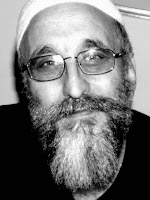
Interview _ Siobhan Logan

Siobhan Logan is a teacher, a trade unionist, a poet and a storyteller.
Her first published book, Firebridge to Skyshore: A Northern Lights Journey, (Original Plus, 2009) weaves together the science, myths, legends and folk stories behind the aurora borealis.

The book gives a unique and near magical perspective of life under the Northern Lights.

In this interview, Siobhan Logan talks about her writing:

When did you start writing?

Well, I wrote as a child, of course. I remember making up plays for my siblings and friends in the school playground. My sister tells me I was always making things up for them. And bedtime stories. So oral storytelling probably came first. Then later, poems, stories, songs.

But I had fallen out of the habit of writing when I came back to it more seriously in my mid-thirties, realising I needed an alternative life to my busy teaching job and all the union/political activism. I needed that interior space of writing, the imagined landscape and voices other than my own muttering away in my head. And, for a few years, that's what it gave me.

I set about writing first a collection of short stories, to see if I could write and what about. Then I worked through two novels, and got to the point of sending the second one, Northlands, out to publishers. This featured the fairytale, The Snow Queen, in a modern narrative about a daughter whose Irish mother has gone missing.

I knew absolutely nothing about the industry but somehow I got an Irish independent publisher interested in reading more. It didn't come to anything. But at that point, I did a short course at the Writing School Leicester, and joined Leicester Writers' Club. This was a huge leap forward because I began to learn about both the craft of writing and how to engage with the industry of agents, publishers etc. Being part of this community of writers not only helped my sense of purpose but for the first time, gave me an audience for my writing. Which really does transform your writing, I think.

How would you describe the work you are doing?

These days I think of myself as a writer, rather than a poet or aspiring novelist. I often describe myself as a storyteller because performance has become very important in my work and I think storytelling underpins everything I do. Just like that child in the playground. And I'd like to try other forms too -- I definitely want to have a go at Radio plays when I can. And then a major part of my first book, Firebridge to Skyshore: A Northern Lights Journey, was the prose. I enjoyed researching and writing articles about the mythology and science of the Northern Lights and travelogue feature there too, along with the poems that I am most known for.

Audiences have been very diverse. This subject, the aurora borealis, has such a pull and brings in people who would never come to a traditional 'poetry event'. So far they've included astronomers, Women's Institute members, local radio listeners, museum visitors and primary school children, and I love that mix. But I've also published poetry and stories in the small press literary magazines. You could say I hop between page and stage.

Do you write everyday?

I do write everyday. I'm usually into my study by 6.30 am and that's my best time for writing. Before my head is filled with the clutter of the day, when I'm still close to that underworld of dream that writers tap into. I have a couple of hours of just being wrapped in the writing, 'rapt' even, when it's good.

The one day a week I don't teach mostly gets filled up with the 'business' of being a writer; e-mails, blogging, meeting people to plan new projects, rehearsals, networking, all of that. But I'm a great organiser so I like that multi-faceted aspect of the job. One minute I'm designing a flyer or webpage, the next I'm editing a poem or researching a topic. It's all creative.

Which concerns inform the writing you are doing at present?

In my book, Firebridge to Skyshore, I was exploring the myths and science behind the Northern Lights. This started as a commission where I was asked to write about the legends of the lights for the visual artist/ writer, Jackie Stanley.

Ancient stories have always fascinated me. They have a different shape, even a different morality, to our modern narratives, being often highly symbolic, probably because they've arisen out of an oral storytelling culture.

I was very drawn to studying the indigenous peoples of the Arctic. Despite all the pressures to modernise, there is a remarkable continuity of culture in pockets of these northern countries. The Saamis, for instance, have lived in Northern Scandinavia since the end of the last Ice Age. The family of the reindeer herder I met still lived an existence very bound up with the annual migrations of mass reindeer herds. Traditionally, all of these Arctic peoples lived quite nomadic lives and I was interested to learn how they coped with colonisation, often quite repressive, by the nation-states which moved into their territories.

What would you say connects the various aspects of the work you are doing?

I find a big overlap emerging in my latest writing project. In this, I am looking at themes around migration, hoping to draw together memories of my own family coming over from Northern Ireland when I was six, with accounts from archaeology of the ancient migration of our species out of Africa across the continents, and also stories of modern migrants and refugees. People on the move, displaced, resilient, incredibly adaptive.

It's early days in this writing but already I'm finding myself reflecting on how essentially human all these activities are: walking, travelling, cooking, sewing, singing, storytelling, making marks in the landscape, rooting down in new places.

Place is often a starting-point for me, especially the North, so I was thrilled to visit the Arctic as part of my research for the Northern Lights book. But when I arrived in Tromso, North Norway, I found the snow and ice I'd imagined as a child, had been swept away by unseasonal heavy rains. In December 2007, they were experiencing more like summer temperatures. So the story of my journey included the immediate impact of global warming on this landscape. I think that's a subject I will certainly return to, especially as I am now teaming up with another writer/performer, Susan Richardson, to form the Polar Poets.

We plan to offer events, talks and workshops to audiences across the country, focusing on themes around the Arctic, including exploration, wildlife and climate change. I am really looking forward to this collaboration.

We are starting with science festivals and science is also a strong feature of my Northern Lights work. I find the scientific narrative of the aurora borealis every bit as wondrous as the legends of the northern tribes: the journey of sun-dust through the far reaches of space into our atmosphere to end in this collision of light and colour, the aurora.

Which were the most challenging aspects of the project?

One of the great challenges of the work was to find a language that could realise the physics involved whilst fusing that with the mythological response. My interest in the science of the skies was deepened when I met with physicists from the Radio & Space Plasma Physics Group, at the University of Leicester. This relationship began as one of sponsorship as they helped me to visit the Arctic, including an auroral research base in the mountains near Tromso. But it has led to some exciting collaborations.

Dr Darren Wright joined me for an evening about the aurora at London Science Museum's Dana Centre, where we moved between poetry, physics and the wonderful 3-D films of Brian McClave. This proved such a popular event that it was reprised in September 2008 and we are now bringing this Northern Lights Spectacular to the National Space Centre in Leicester February 2010.

I'm thrilled to appearing in this museum with its rockets and space exhibits. Space travel crept into the imagery of my auroral poems and is a theme I'd like to write more about.

Darren and I have also been booked to appear at the Ledbury Poetry Festival 2010, so the pairing of poetry and physics continues to appeal.

Appearing to a packed audience at the Science Museum has definitely been a highlight of my career as a performer. As has staging my own full-length show, Stories Drummed to Polar Skies, at the Richard Attenborough Centre in Leicester. This allowed me to realise my dream of giving the stories and poems a theatrical treatment where I could use music, lights, images and even costume, to bring these Arctic voices to life.

But, as a writer, the biggest achievement has been to find a publisher who has faith in the work and is prepared to invest hard-earned resources in it. Poetry, especially from a new writer, tends to rely on the small press.

How did you find a publisher for the book?

I was very lucky to stumble across Sam Smith of Original Plus. He published a number of my Northern Lights poems first in his magazine, The Journal, and then in the summer of 2009, brought out my collection of prose and poetry, Firebridge to Skyshore: A Northern Lights Journey.

From what I understand, it's unusual for me to have been able to have so much say in the book, from cover design to the inclusion of footnotes and illustrations. I was able to commission my sister, Dolores Logan, to produce these wonderful woodcuts and the distinctive monoprint on the cover.

And I know this combination of prose, poetry, travelogue and illustrations has made the book much more appealing to a readership that don't usually pick up poetry.

Original Plus is a very small press -- just Sam and his computer -- and it was always clear that the book would be sold largely through face-to-face contact with audiences at my events. That approach seems to be working well though I also need to promote it more online, too. The traditional bookshop route is a non-starter as they don't stock small-press poetry generally.

How have these experiences affected you as a writer?

All of that means that my understanding of what it is to be a writer has changed radically.

I need to cover the roles that an agent, a designer, a marketing person might usually perform. I'm learning the skills of a producer and stage manager and performer. And now I'm a blogger, regularly writing in this new genre too, and networking on-line. So the challenge is to wear all these hats and still keep the creative writing, in whatever form, at the heart of it.

Did I mention I also spend four and a half days a week on the 'day job' -- teaching English A-Levels at Leicester College? That's how I pay the bills and fund all the writing activities. But however hectic it gets sometimes, I consider myself very lucky indeed to have writing in my life. To have the space to be creative. And when I meet people at events who are excited by the Northern Lights or the poetry and the science, or I hear some feedback from a reader, then the circle is joined. That's what it's all about.

Related resources:
Related article:

Interview _ Siobhan Logan, Conversations with Writers, June 4, 2007

Wednesday, February 17, 2010

Short Story _ The Bracelet

By Ambrose Musiyiwa*

We were both in the kitchen when I first saw the bracelet.

Sharai had just come home from school and was having tea with sandwiches. With one hand, she was stirring some sugar into her tea, and with the other hand, she was fingering the bracelet.

“What’s that?” I asked.

“It’s a bracelet,” she said.

“Can I see it?”

She handed it to me.

The bracelet was made of gold and looked like something that had come from Argos or H.S. Samuel.

“Where did you get it?” I asked.

“A friend from school gave it to me,” she said.

“Why?”

“Because he likes me.”

“And what are you going to give to him in return?” I asked.

“Nothing,” she said.

“When you go back to school tomorrow, please return the bracelet. Tell the boy who gave it to you that I won’t let you keep it.”

“That’s not fair, Dad,” Sharai protested.

“You are taking it back tomorrow.”

“I want it. I want the bracelet. Mum knows about it and she says I can keep it.”

“It’s either you take it back or I do it for you. The choice is yours,” I insisted.

Sharai stormed out of the kitchen and she stormed out of the lounge, slamming all doors behind her. She locked herself in her room and would not come down for supper with her mum and I.
*

“You know about the bracelet Sharai got from some boy in her class?” I asked Maidei after supper when she was watching TV.

“Yes. And it’s not some boy. It’s Jason. They're in the same class and they've been dating for over a year now.”

“Sharai is 12 years old. Isn’t that a bit too early to be thinking about things like dating?”

“She had her first boyfriend when she was 8 years old.”

I was getting sidetracked.

“We're talking about the bracelet,” I said.

“Yes. What about it?”

“I’ve asked Sharai to return it when she goes to school tomorrow.”

“You shouldn’t have done that. I’ve already told her she can keep it,” Maidei said.

“You should've told me.”

“What’s the problem, exactly?” Maidei asked.

“Did you see the bracelet?”

“Yes.”

“It’s not something you give to a 12-year-old girl.”

“It’s just a bracelet. There’s not harm in her keeping it.”

“And what is she going to give Jason?”

“I don’t know,” Maidei said. “Nothing, I suppose."

“Presents like these teach acquisitiveness, which can destroy relationships and ruin lives.”

“I’ve heard what you said. Now I want to watch TV. Do whatever you feel you have to do,” Maidei said.
*

I was cleaning Sharai’s room, several days later, when I found the bracelet. It was on the floor, next to her bed, among the dirty clothes, rolled up pieces of tissue paper, shoes, pencils, books and photo albums.

I picked it up, put it in my pocket and finished cleaning the room. When Sharai came back from school and she’d had her sandwiches, I asked her, “You didn’t return the bracelet did you?”

“No,” she replied.

“And the reason for that was?”

“Mum said I could keep it.”

“Since you won’t return the bracelet yourself, I’m going to do it for you.”

“Dad, you’re being horrible.”

“No, Sharai. I’m not being horrible. You shouldn’t be accepting presents like these from people who are not close relatives. And this isn’t just about Jason. It’s about people in general. Today, they’ll give you a bracelet; tomorrow, a mobile phone; next week they’ll give you that camcorder you’ve always wanted. What if, after some time, and after some more presents, they start asking for favors in return? What would you do? What would you give them? How far would you go?" I asked.

“And what were you doing in my room, anyway?”

“I was cleaning it… which, again, is something you should be doing yourself but aren’t.”

“I hate you. You should get a job and stop spying on us,” Sharai said.
*

“Sharai didn’t return the bracelet last week?” I told Maidei. She was sitting in her chair watching TV.

“No, she didn't. I told her she could keep it.”

“Even after I’d explained to you how I felt about it?”

“I see no harm in her keeping it if she wants it.”

“If you think she should have jewellery like this, then you should buy it for her. Not Jason.”

“It’s not right that you should be interrogating me like this,” Maidei said. “You’ve been home all day, sleeping and doing nothing. I’ve just come back from a 12-hour shift.”

“This isn’t an interrogation and you know it. You knew how I felt about the bracelet. You knew I’d told Sharai to return it and yet, behind my back, you told Sharai she could keep it. What you are doing is not right.”

Tina Turner was on TV singing Simply the Best. Maidei turned up the volume until the wall of the house were shaking. She didn’t want us to talk anymore. I was being dismissed.
*

I went to Feerick Primary, the next morning.

I asked to see Sharai’s teacher and I explained to her that Sharai had received this bracelet from Jason. I didn’t think the bracelet was an appropriate gift or present for a 12-year-old girl. I wanted to return it and I also wanted to ask Jason and his dad not to give Sharai any more presents.

“Would it be possible for you to be there while I do this?” I asked.

“Jason and his dad should be here by now,” Miss Marsh said.

We went outside.

“There they are.”

Jason and his dad were standing just outside the school gate.

“Morning Miss Marsh,” Jason said.

“Good morning, Jason,” she replied.

Jason’s dad smiled and nodded at Miss Marsh.

“Mr Banner, can I see you for a moment?” Miss Marsh said.

“Yeah, sure,” he said.

We went to Miss Marsh’s classroom.

“This is Sharai’s dad,” she said.

“Yes. I know,” Jason’s dad said.

“Some weeks ago, Jason gave Sharai a bracelet,” she said.

“Yes. Jason said he wanted a present for Sharai so we went to Argos and he picked this bracelet. I paid for it. Jason and Sharai seem to be very happy with it.”

"I'm returning the bracelet," I said. "I’d appreciate it very much if you could take it back. I'd also appreciate it if you and your son don’t give Sharai anymore presents.”

“I don’t understand,” Jason's dad said.

“Please just take the bracelet back and don’t let your son talk you into buying anymore presents for Sharai.”

The whistle went. School had begun. Children started entering the classroom. I thanked Jason’s dad and Miss Marsh and left.
*

Much later, when I thought the incident about the bracelet had been forgotten, I asked Sharai, “What job does Jason’s dad do?”

“He’s a photographer.”

“What newspaper does he work for?”

“No, dad,” Sharai said. “He’s not that kind of a photographer. He’s a freelancer. He works from home and for many different people and groups.”

“He seems to be doing well.”

“Jason says most of his money comes from photos he does for a number of websites.”

“Has Jason seem any of these sites?”

Sharai shrugged.

“I don’t know,” she said. “Maybe he has. Maybe he hasn’t.

“Mum says when my birthday next comes around, we’re going to go to Jason’s house. Jason’s dad is going to take many photos. I’m going to be just like a model. Mum and me will select the best photos and Jason’s dad will print them out for us.”

About the author

*Ambrose Musiyiwa studies Law at De Montfort University in Leicester. He has worked as a freelance journalist and a teacher. His short stories has been featured in anthologies that include Writing Now (Weaver Press, 2005) and Writing Free (Weaver Press, 2011). Currently he is working on another story.

Possibly related books:

,,

Tuesday, February 9, 2010

[Featured Author] Daniel Abelman

Sheer Magic
By Alexander James

Daniel Abelman was sixteen when he stumbled upon the battered corpse of a murdered black man at the side of a remote dirt road in South Africa.

He called the police who swung the body onto the back of a dusty pickup truck.

"Don’t you want my statement … you know … for your investigation?" Daniel asked.

The boss cop’s reply numbed him: "Investigation? Are you bloody mad, kid? It’s just another kaffir."

That’s when young Daniel decided to leave what had been the Beloved Country -- and the adventure began.

Daniel had been born in the busy South African shipping city of Port Elizabeth on the coast of the Indian Ocean in 1958. It was also the body-surfing capital of the world, and as a tot, he learned to swim long before he could walk.

Later, unknowingly, he started to play the illusion game that became his life and fueled his bitingly satirical novel of skullduggery, Allakazzam!

He said:
It was a pleasant four-mile downhill freewheel on my pushbike to the beach. But after a day’s surfing and swimming, the prospect of pedaling back, uphill and in the summer heat, wasn’t so appealing. So I’d let the air out of one of my tyres to fake a puncture and sit, looking thoroughly miserable, at the side of the road until some kind-hearted driver was fool enough to load my bike into the back of his car and take me home in style. Never failed.

When I arrived home -- invariably late for supper -- I’d blame the ‘puncture’ and the family would feel sorry for me and heap my plate. I guess that’s when I first learned about the power of illusion: my first step toward becoming a professional magician, and a writer. Mastery of illusion is vital in both art forms.

Conjuring is the plausible demonstration of the implausible. The audience is spoon-fed with only what they have to know; nothing more and nothing less if the demonstration is to be plausible. There are techniques in building a workable magic routine, and I use the same tricks of the trade when composing a story. The reader gets all the information they need; nothing more and nothing less. The outcome is a believable story, no matter however outrageous and impossible the concept might seem. The catch is that conjurors are made and not born -- with writers, it’s pretty well the opposite.

Daniel’s Jewish Lithuanian grandparents and uncle fled to Johannesburg from their home country in fear for their lives. With the outbreak of the Boer War, the Jewish community was transferred en masse to Port Elizabeth, yet again in fear for their safety. Enthusiastic and prolific breeders, the Abelman clan waxed with the years and did well for themselves as dairy farmers and wholesale merchants.

Daniel admits:
How they got their hands on the farms is shrouded in mystery. All I am prepared to say is that we come from a long line of renowned Lithuanian horse thieves and, by all accounts, grandpa and company made it onto the boat to Africa by the skin of their teeth -- with a posse of irate, horseless Cossacks hot on their tails.

Grandpa and Great Uncle Isaac would schlep their products from door to door in hessian bags, taking orders from farmers on the way so as so stock up with supplies for the return journey. They’d spend the night on the back of their donkey cart, snuggled up in sack cloth sleeping bags.

Later they opened a general store in Selborne. On Thursdays, my mother – a ten-year-old then – would run down to Rabbi Bloch, the ritual slaughterer, with a shilling and a hen. On Fridays she ran down to the Port Elizabeth train station with kosher cooked chicken and baked hallot loaves for the Sabbath, which she gave to the guard on the train. The guard, in turn, handed it over to Uncle Isaac on the Selborne platform.

Runaway horse thieves and rogues they may have been, but you’ve got to admit, they were good, kosher runaway horse thieves and rogues.

Writing was in the family from as long as Daniel could remember. His father was the community’s scribe, penning letters in Yiddish to the old country and reading replies from home.

The multilingual household, shelves stocked with books, was a literary incubator. Family time was spent with Daniel’s father reading to the company. Balzac and Herman Charles Bosman, the Yiddish literary greats, and running commentaries from Pa had the household moved to tears or howling with laughter.
Our edition of Balzac’s droll stories was illustrated and, as the level in Pa’s brandy bottle lowered, so did the Old Man’s guard, letting us peep at the naughty succubi and incubi pictures. Then Pa would decide it was time for bed and Ma would decide he was too drunk for that. The advent of TV and Ma’s distaste for Pa’s over-imbibing during story-telling sessions is probably what put an end to our family nights ... and what brought on the birth of the twins.

Now with five siblings, making up a total of seven souls in the family unit, and with three library cards per family member, the weekly trip to the public library was accomplished with the help of a giant wicker basket and a strong back.
We lived on 2nd Avenue and the library was way up on 5th. There is a lot a youngster can do traversing those few blocks, even when weighed down with a basked stuffed with books and a pair of flip-flops (the librarian wouldn’t let us in without some form of footwear). You could stop and mix with the mice (white) in the pet shop, or jive with the petrol station attendants (black). Great care was to be taken to resist the temptation of a rest on the bench in the 4th Avenue Park and make a start on the reading. It would invariably result in trouble when, once again, arriving home late for supper.

There was always something to read in the house. Daniel’s only complaint was that fate had left him as the middle child in a big family.
With a rich blend of shtetl and farmers’ blood flowing through our veins, nothing went to waste in our household. Hand-me-down was the name of the game. Via numerous cousins and finally off the back of my elder brother, my wardrobe was a motley collection of short pants and tee-shirts. When I joined the school soccer team, I remember being given a pair of old rugby boots that laced up past the ankle. The bulbous metal-reinforced toe cap was out of date even back then. But they came in handy for giving the ball, mostly in the wrong direction, a hefty kick whilst positioned at left-back.

The up side of being the middle pip was that my best friends were also my siblings, and that meant I was always surrounded by friends, some older, some younger. The close bonds of childhood remain to this day. My sisters married wisely and live in Johannesburg. The brothers, who married for love and nothing much else, now live in Israel. We’ve all done pretty well for ourselves.

The school where Daniel studied far from home had the reputation of being one of the best high schools in the southern hemisphere. Only one student had ever failed matriculation examinations. Young Daniel Abelman was the stain on an otherwise unblemished record.
They don’t invite me to school reunions. It’s no skin off my nose -- I hated school, I hated the teachers (that was probably mutual), I hated the curriculum ... and I probably would hate going to a reunion, too. The day I left school, I never looked back. I lost contact with teachers and schoolmates, most of whom I had sat with on the same school bench for 12 years. I did hear a rumour circulating that I was clinically insane.

I explained to my parents my motives for failing matriculation, that it was no accident. After a while, it was water under the bridge and they got over it. I think they might even have quietly approved.

The school was by no means rank with perves and paedophiles like the school described in Allakazzam! But it did have two of them who stood out like sore thumbs, seen but inexplicably ignored. The headmaster was aware of what was happening and, for his own personal reasons and agenda, did nothing about it.

This malpractice and social injustice had to be brought to an end, and it seemed it was up to me. I deliberately failed my incredibly easy matriculation exams and so tarnished the school’s clean record that the head was fired by the board of directors.

I remember coming out of those exams. The headmaster was waiting, anxious to find out how things had gone. It was a real pleasure to lie and say that the exam was as easy as pie and that I had done marvellously, knowing that he would carry the can. Without the head’s support, the paedophiles were soon got rid of.

About a year ago, I managed to establish contact with the old headmaster via email. We traded a message or two that were surprisingly genial. I sent him the first chapter of Allakazzam! His feedback was wonderful and I asked if he’d like to read more. When he said he would, I sent him the fictionalised schooldays chapter from deeper into the book. I never heard from him again. A bit of a belated twist of the knife, what?

Daniel later walked through his national matriculation certificate at another school of, he says, low esteem.

Then came the day at childhood’s end when he abruptly learned what the hateful South African apartheid system was all about -- when it hit him in the face in the shape of a murdered black man and a racist Afrikaans-speaking white cop.

He took to the road and travelled around Africa doing odd jobs and often living off the land. Eventually winning a grub stake in a card game, he left for Europe where the cruel climate took him unawares.

Eventually, the voices of his ancestors called out to him from Israel -- were he eventually landed up via a circuitous root that saw him working as a juggler, a tightrope walker, a fire eater, a magician ... and even a snake charmer.

When he got to the Levant, much to Abelman’s chagrin after successfully avoiding the South African national military service conscription, he soon found himself drafted into Israeli Defense Force. After many years of active service, slipping in and out of Lebanon, both in the regular army and in the reserves, he was honorably discharged with the towering rank of private. His military memoir has been published as the short story, "No Medals & No Mentions".

He said:
We were all Zionists in our family and supported Israel. There was no shortage of books on Judaism and related subjects in the house, both religious and secular.

One of the first games I can remember playing was ‘Germans and Jews’. In a draped, darkened dining room, the table was covered with blankets skirting down to the floor. The ‘Jews’ would hide under the table with a little reading lamp. When they heard a sound outside, they had to turn the lamp off and sit silently until a ‘German’ yanked up the blankets with a yell -- ‘Juden raus!’ -- giving a scare to the cowering ‘Jews’. I must have been three.

Jews in the Diaspora live dual lives. Outside the house we were proud South Africans and Jews, inside the house we were proud Zionist Jews and South Africans. My father’s name was Abraham, and rather than contend with the split personality of Diaspora life, I decided to move to the land of Abraham, where you can be yourself both inside and out.

My brother had made the move some years earlier so the way was paved for me. With a single suitcase, I left South Africa -- ‘coincidentally’, a week before induction into the South African Defence Force -- not to return until 15 years later, by which time the military police had stopped inquiring as to my whereabouts.

Military discipline in Israel didn’t come as too much of a shock -- I knew it existed. There are rules and regulations, but as long as you take your training seriously (and you’re stupid if you don’t because you can find yourself at war quicker than you expected over here) and do your job as directed, the Israeli Defence Force is a happy-go-lucky place to be; compared to other armies that is.

At a loose end after his army service, Daniel soon found employment as a professional performing artist. As thrice winner, in successive years, of the Israeli National Magic Competition, it paved the way to success. His hat trick set him off, traveling the country, performing up north in the Golan Heights and as far as the southern resort town of Eilat.

He said:
The performing arts can be a hot, sticky and, at times, filthy business. A tight rope walker may make a living with three ten minute acts a day -- but it’s not something I would recommend anyone trying. Artists spend more time waiting around for the show to begin then they actually do performing. It’s a boring, nerve racking and dangerous way to make a living.

Daniel married a rabbi’s daughter, Joani, and after the birth of their third child, it dawned on him that seasonal work as a performer wasn’t the best way to provide for a growing family and that long periods away from home wasn’t the best way to enjoy it. So he hung up his wand when the Intifada that followed the Israeli Scud War (into which he was drafted for three months) discouraged tourists, and the performing arts job became even more precarious.

He became a licensed electrician, a competent plumber and, for a while, built wooden frame houses.

But his beautiful wife’s outstanding success as a prenatal educator and childbirth assistant, a field in which she attained near guru status, decided Daniel to become the primary care-giver parent in the family, leaving Joani to spend more time on her career.

By the time Daniel became a house husband, there were four children. And between hectic breakfasts in the morning and brushing teeth before beddie-bies, was when he began to write in earnest. Mornings, with the young Abelmans at school, were his most productive hours. It was during these mini breaks from the bedlam of so many kids in a home of just sixty square yards, that Allakazzam! took shape.

Said Daniel:
Contrary to popular belief, kids have to be fed on a regular basis and tucked into bed on a regular basis. Hungry and tired kids are ratty kids. The quickest cooked meal to prepare is corn-on-the-cob with a sliced tomato for salad. Being a ‘fun-father’ we would sometimes do the outrageous; breakfast for supper! ‘Cereal for supper tonight!’

But kids aren’t stupid. They won’t put up with such dismal parenting for long. I really had to work hard at the job. It’s like tight rope walking, fire eating and juggling all in one ... and all sheer magic.

Then, of course, there’s the eternal battle as to whose turn it is on the computer. Mostly I have to write things on scraps of paper and then transcribe them into the computer when the kids decide it’s my turn. Out of school time, if I managed two good paragraphs a day on Allakazzam!, I was happy with the output ... and don’t forget there’s a wife who appears at the most ungodly of hours and who demands to be fed and given some love and attention, too.

When people ask Daniel how he ever got Allakazzam! finished, though, he doesn’t tell them about the late nights, the early mornings, the entire finished sentences and paragraphs carefully filed away in his head, the lifetime of research through experience, adventure, diversity and astute and compassionate people-watching, or the decades of practicing and mastering the writer’s skills to supplement an inborn talent -- and the years spent carefully polishing Allakazzam! to a perfect shine.

After all, it’s a poor magician who reveals all the secrets of his tricks.

This interview first appeared in Twisted Tongue Magazine

Possibly related books:

,,

Related interview:

The Low Down on High Fantasy: An interview with John Grant, By Alexander James, Conversations with Writers, January 28, 2010

Saturday, February 6, 2010

[Interview] Lawrence Hoba

Lawrence Hoba was born in 1983 in Masvingo, Zimbabwe.

His debut short story collection, The Trek and Other Stories was shortlisted in the 2010 Zimbabwean National Arts Merit Awards (NAMA).

His short stories and poems have also appeared in the Mirror; the magazine of the Budding Writers Association of Zimbabwe, and in anthologies that include Writing Now (Weaver Press, 2005) and Laughing Now (Weaver Press, 2007).

In this interview, Lawrence Hoba talks about his writing:

When did you start writing?

I started writing before I went to school. (I always enjoy this response from many artists.) I started writing fiction as a pastime around 1999.

The decision to become a published writer came much later on, around 2002, when I became a serious member of the Budding Writers Association of Zimbabwe (BWAZ), under the Chiredzi Chapter, where I attended writing skills workshops and met other aspiring and established writers who helped fuel the motivation to get published.

Getting to meet people like Charles Mungoshi in 2001 and Memory Chirere in 2002 made me begin to realise that nothing was impossible. Suddenly I wanted to get my name there among them and other writers.

How would you describe your writing?

Difficult question. I have never really understood the technical stuff critics and scholars use to describe writings so don’t expect any technical words from me.

I write short stories that I hope make people laugh, cry, smile and, at the end, learn a thing or two about other people.

Who is your target audience?

I write for the adult audience. I think it takes much more to be able to communicate effectively with children. The choice was never made deliberately but it became apparent from story to story that the way I expressed myself was more for the adult audience than for children.

Which authors influenced you most?

I have always liked Ernest Hemingway, D. H. Lawrence, Charles Mungoshi, Shimmer Chinodya, Gabriel Marquez, Ines Arredondo, Maxim Gorky, Carribean, Russian and African literature. The list is almost endless starting and includes the Bigglesworth Series which I read when I was nine.

I read almost everything that came my way but I liked those stories in which the basics of humanity were the core detail of the story. And my stories try to do that. Explore all aspects of human life.

Do you write everyday?

I don't write everyday. I do read everyday.

When I am writing, I always start with about a paragraph or so to get the ideas on paper. But then sometimes I hit blanks and I just leave it all. I get back to the story when it wants to write itself. Then, I usually finish the story in one sitting.

I can write at any time of the day, but I prefer to write when I am alone because this enables me to listen to each character speak and argue their case.

How many books have you written so far?

The Trek and other Stories (Weaver Press, 2009) is my first complete work. These are ten short stories which focus on the experiences of the ordinary people who went onto the farms hoping to make their lives better, only sometimes to find that things were not as rosy as they thought they would be. They are stories about the people’s successes and failures as new farmers.

I have also appeared in two Weaver Press short story anthologies edited by Irene Staunton: Writing Now (2005) and Laughing Now (2007).

Another of my stories was published in Exploding the Myths about Zimbabwe’s Land Reform, a journal by the Budding Writers Association of Zimbabwe in 2004. In addition to that, a number of my stories have also been published in the now defunct Mirror newspaper.

How long did it take you to write the stories that appear in The Trek?

The Trek and Other Stories is about the experiences of the people on the farms during the early days of land invasions. The stories in the book span from around 2003 to 2009. That makes it about six years. The short story collection was published in Harare, Zimbabwe in 2009.

Having been in a largely farming community in Chiredzi, Zimbabwe during the time of the early land invasions around 2001 meant that I got to experience things first hand. I was also lucky to have been assigned as a relief teacher in 2003 to a farm school where the new Black farmers were living side by side with a white farmer. I witnessed the despair, anger, humanity, stupidity and so on that came as a result of the tensions brought about by their co-existence, which, at the time, was a most awkward arrangement. It was these experiences that influenced the short story collection.

It almost became natural that I would choose Weaver Press for the project since they had had confidence in my work before. Besides, I admire their work ethics and thoroughness. The relationship with my publisher is superb. I am happy. They have excellent marketing outside the country and you are guaranteed that your book will at least be heard about outside the country. So far, The Trek has been submitted for consideration in the Zimbabwean National Arts Merit Awards (NAMA) and, as I write this, I am listening to the news and hear that it has made it onto the NAMA shortlist. The short story collection has also had a lot of international exposure.

Which were the most difficult aspects of the work you put into the book?

Trying to get the stories which were written separately and at different times to link with each other and read like one complete story was very difficult. I almost gave up. But I soldiered on.

This may sound crazy, but then I haven't claimed to be sane ... but the things that gave me the most problems were the same things that gave me the most joy. I enjoyed the way the stories could all read like one whole story and yet have each story stand on its own feet.

What sets The Trek apart from other things you've written?

The book is not different from the other things I have written. It contains most of the things I have written.

The next project, which I am currently working on, contains snippets of a child’s recollections of their childhood growing up in a new democracy just coming out of a war. It will all be short stories again, and hopefully with a bit of poetry.

What would you say has been your most significant achievement as a writer?

Getting published while still a young author, age-wise, and then within two months have the book generate so much interest in the country and beyond.

Possibly related books:

,,

Related Interview:

[Interview] Christopher Mlalazi, Conversations with Writers, January 13, 2010

Thursday, January 28, 2010

[Featured Author] John Grant

The Low Down on High Fantasy
By Alexander James

When it comes to fantasy and science fiction, Paul Barnett has both feet planted firmly on the ground.

And as a lifelong champion of literary quality under the pen name, John Grant, his stance against humdrum and gender-driven books has earned him a place at the top, with over 60 best sellers under his belt, both fiction and non-fiction.

Among the latter are two standard authorities in their fields: Encyclopedia of Walt Disney’s Animated Characters and, with John Clute, The Encyclopedia of Fantasy, for which he received the Hugo, Locus, Eaton, Mythopoeic Society and World Fantasy awards. He has also received a rare British Science Fiction Association Special Award and been shortlisted for the British Fantasy Society Award and Bram Stoker Award.

Two-time Hugo winner for his trailblazing science fiction/fantasy work, his novels include Albion and The World. For younger readers he has written the 12 novels in the Legends of Lone Wolf series, tied to the gamebooks by Joe Dever, as well as retellings of Frankenstein and Dr. Jekyll and Mr. Hyde.

His most recent books are Enchanted World: The Art of Anne Sudworth, Perceptualistics: Art by Jael and Masters of Animation and his quasi-mythology Dragonhenge. And in a courageous move from giant publishers to a small independent house, John published his new fantasy, Far Enough Window through BeWrite Books; his Sci Fi adventure Hundredfold Problem and re-released Earthdoom with David Langford – who with 24 Hugo Awards, has the largest arsenal of these rocket trophies outside the USA and the second largest in the world.

No-nonsense workaholic John has since become Consultant Editor (Sci Fi and Fantasy) with BeWrite and has introduced other mainstream authors to the UK-based house in a bid to break the restraints of mainstream houses he believes hold back writers by demanding that they work to an established commercial formula.

John was born in Aberdeen, Scotland but has lived for many years in the New Jersey countryside with his wife, Pamela D. Scoville, owner of the Animation Art Guild. Apart from his own books, he has lost count of those he’s ghosted and edited … certainly well over a thousand!

His rise to fame came when losing his job as senior commissioning books editor at a major UK publisher back in 1980 turned out to be a blessing in disguise.

He said:

I was living in Exeter – a long way from London, which was where most of the UK publishing jobs were – and I had no money and a wife and young daughter to support. Because of the young daughter, I didn’t anyway much want to move back to London; better, I thought, that she should spend her childhood away from the big city. So my only option was freelance work – either as an editor or as a writer, or, nervously backing both horses.

At the time I’d published a couple of books under the house name I’d created especially for those, John Grant. It seemed sensible to launch my fledgling writing career using a name that already had a couple of books under its belt. Now, of course, I wish I’d not taken that decision; it causes a fair amount of confusion, and anyway ‘John Grant’ is a lousy name for a writer, because it lacks any … hmm … memorability. But I’m stuck with it, especially since winning awards under that name.

Of course, the original idea was that, once I’d worked out which of the two horses was going to win the race, I’d jump onto it and regard the other as merely an ancillary ride, as it were. But I’ve never yet quite managed the trick. So I now have a full-time career as Paul Barnett the editor and another full-time career as John Grant the writer. It makes for a busy life, and often a complicated one; and it can make me pretty difficult to work with, too, I guess. Yet I myself still feel that my more important work is what I’ve done as a writer, and more specifically as a fantasy writer.
Of his fantasy work, top US reviewer Lou Anders said:

Each story from John Grant is like a single facet of a larger jewel. Just as the surrealist Salvador Dali utilized the repetition of certain images and themes across his body of work, so Grant weaves characters, gods and images through all of his novels and stories – each part of a brilliantly conceived cosmology that rivals in richness the work of famous fantasist Michael Moorcock and HP Lovecraft.
John broke new ground with his Legends of the Lone Wolf series with its game tie-in. But it wasn’t his first venture into the fantastic.

He said:

I’d actually made a few minor contributions. I’d edited, Aries 1 and I’d written two humorous sf/fantasy-sort-of fiction books, Sex Secrets of Ancient Atlantis and The Truth About the Flaming Ghoulies, not to mention the parody disaster novel Dave Langford and I had done together, Earthdoom. So I wasn’t a complete virgin.

However, I was a bit startled when I was asked to write this series of novels – initially four of them, in the end 12 – because this type of high, fighting fantasy wasn’t the sort of fantasy I’d hitherto been much interested in. Indeed, I’ll go further than that: at the time I wasn’t much interested in fantasy at all, because too much of what I’d read was the kind of generic crap that still, sadly, constitutes most of what’s published in the field. It seemed to me that fantasy, as a literary form, was a dead end; all the good stuff had already been done by people like C.S. Lewis and George Macdonald and Alan Garner and Lewis Carroll and Mervyn Peake and Diana Wynne Jones.

In short, I was a bit ignorant, and hadn’t realized the possibilities within fantasy. I’ve since become a complete convert, to the point that I will argue at great length to anyone prepared to listen that fantasy is the single most important form of literature the human species has ever invented and, as such, is one of the most important means of expression available to us.

The novels started off as mere tie-ins, but I had the advantage of having a publisher who was completely ignorant of fantasy and completely uninterested in learning anything about it. The first half-dozen or so of the novels were marked by constant arguments, and a couple of them were butchered before publication; but thereafter the publisher got bored and more or less left me to do as I pleased. Which was great!

What I was able to do was, with only a couple of exceptions, make each of the novels different from each other in tone, atmosphere, “feel”, construction, style, you name it, so that I could get away from that awful tie-in drabness you so often see and produce novels that were actually, you know, novels. I always remind people that, if they properly want to understand what I’m up to as a fantasist, they should read The Birthplace, which was #7 in the series, plus a couple of the others, notably The Rotting Land (#12).

There’s a nice postscript to the story. I’ve recently been in touch with an Italian publisher who wants to reissue the whole series in four three-novels-apiece volumes, with me ‘reconstituting’ the texts the way they ought originally to have been published – and at the same time allowing me, in the earlier novels, to quietly amend some of my more egregious deficiencies as a quasi-youthful writer. It’s going to be a vast amount of work, of course; but once I have the ‘real’ texts set in order for them I’ll be able to hawk the books around publishers in the English-language market as well.
John’s Albion and The World crystallize his idea of a ‘polycosmos’ and he rates The World as among his most ambitious and important works of fantasy.

He said:

The stuff I was up to in the Lone Wolf books had convinced me that there was a lot that could be done with High Fantasy, something I’d not have credited before. Also, though by this time I was being allowed quite a lot of creative freedom in the Lone Wolf books, there were some things – including ridiculously trivial things, like using the word ‘shit’ – that I wasn’t allowed to do before. So Albion represented for me something of an unfurling of the wings, an exploring of the freedoms I’d discovered existed within fantasy that weren’t being explored by most of the other kids in the playpark.

Even at the time I thought that first flight wasn’t a frightfully successful one, but the critics disagreed and, far more importantly, so did my publisher, who was I think appalled when I turned in the manuscript of The World to her. (The book ended up being published in the middle of December, doom time for any book, so that by the time the generally astonishingly good reviews started coming in the book was halfway to the remainder tables.) It was supposed to be a nice, cozy bit of formulaic High Fantasy, and yet here was me bringing in stuff from quantum mechanics, telling bits of the story in a vaguely Damon Runyonesque style, switching between one reality and another, smashing universes together, and so on and so on and so on.

The structure of the book mimicked that of a black hole, with the first part as the accretion disk, the second as the plummet from the event horizon to the singularity, and the third the emergence into the fresh ‘elsewhere’; I tried to get some of that into the various writing styles I used, too. There was lots of other stuff in there as well. I’m still amazed by my ambitions in writing that book, and even more amazed that – in my entirely objective judgment, you understand – I pulled it all off. Much of the time I was writing the book it was as if I were simply sitting in front of the screen letting my fingers dart around the keyboard, as surprised as anyone else by the way the story unfolded.
In many of his stories, John – now in his mid-50s – mixes hard science with fantasy.

He said:

There seems to have grown up this notion that the boundaries of fantasy should for some unknown reason be strictly limited – you know, wizards, dragons, unicorns, elves, berserkers, virgin princesses, pigboys-who-shall-be-king. All that sort of stuff is within the remit of fantasy, as are Native American spirits in modern cities and so on, but outer space isn’t. It’s as if you were to tell someone: yes, it’s all right for you to use your imagination, but not too much – rather like the Soviets repressed so much fantasy literature because they thought it was dangerous. That was the biggest compliment ever paid to fantasy, of course, because fantasy should be dangerous, and (in the broadest sense of the term) subversive and threatening to the status quo of the reader’s mind.

In the West, of course, we have very much the same sort of censorship of fantasy in place, only because it’s a commercially motivated one (and in commercial terms misguided, in my opinion) we don’t call it ‘censorship’ but instead say it’s ‘market forces’, or some such.

My very strong feeling is that fantasy should be allowed to do anything it damn well pleases, should explore every possible venue, should be as unconstrained as it wants to be. The fantasy writer’s playground should be one with infinitely distant boundaries.

So when I take my fantasy into the kinds of territories more commonly associated with science fiction, I don’t feel I’m ‘mixing’ anything – all I’m doing is going into a rather unpopulated part of fantasy’s natural playground. There was a fantasy story of mine called "The Glad Who Sang a Mermaid In from the Probability Sea" that was published in Interzone. Before offering it to Interzone I had offered it to a couple of fantasy-anthology editors over here and been told very firmly that it wasn’t fantasy, it was science fiction – just because it was set in large part in between our Galaxy and the Andromeda spiral. It didn’t have a mermaid in it (well, sort of didn’t …), despite the title, but it was a full-blooded fantasy nevertheless. In fact, I discovered some time after the award had gone to someone else that the story had been shortlisted for a British Fantasy Award, so clearly someone recognized what I was up to.

Similarly, a short fantasy novel of mine called Qinmeartha and the Girl-Child LoChi (soon to be published as half of a ‘double’ book, the other half being Colin Wilson’s The Tomb of the Old Ones) was widely bounced by fantasy editors on the grounds that it was ‘obviously horror’ just because I’d drawn on the werewolf archetype for a small part of the story – not even werewolves, just the idea of them!

So I guess you could say that I’m one of those rare members of the Fantasy Liberation Front! Fortunately I’m not the only one, but it gets pretty lonely nevertheless …
It was John’s fierce defense of open-minded fantasy literature that led him to test the waters with a smaller independent publisher offering more scope with its less commercial focus. And that’s how his beautifully illustrated The Far Enough Window: A Fairy Tale For Grownups of All Ages, saw the light of day.

He said:

When I was a kid I used to be devoted to reading in bed (anywhere else as well, but Bed Woz Best), and what I loved above all were the fantasies by people like George Macdonald and Rudyard Kipling and Lewis Carroll and H.G. Wells and Robert Louis Stevenson and C.S. Lewis and … you can fill in the rest of the long list for yourself. Thing is, I suddenly realized a while back that as an adult I still liked those books – I still thought, leaving aside my sheer pleasure while reading them, that they were excellent fantasies. Furthermore, I gained enormous, almost ecstatic pleasure just from remembering that glow I felt as a kid tucked up in bed reading one of them. I put all this together among my slowly jostling brain cells and let it fester for a while.

What I wanted to do was write a shortish novel that would encapsulate all these feelings for me: it would take the form of a children’s fairy tale like Macdonald’s At the Back of the North Wind (one of my all-time favorite novels) or The Princess and the Goblin, but would be for grown-ups – ‘for grown-ups of all ages’, as we put it on the cover – and have a definitely late-20th-century riff to it.

Then along came a time when I actually had a couple of weeks to myself – a publisher had let me down badly on a signed contract – and I thought, ‘Well, here’s the chance to write that novel.’ Trouble was, I knew the ‘feel’ of the book but I hadn’t yet got a plot for it. I went to bed that night and, before I went to sleep, just set my mind free to wander where it wanted to. By the following morning the character Joanna had entered my mind, and from there on she took care of the plot for me. But I had only those two weeks before the next slodge of work was due to come in, so essentially I had to enter a sort of trance state for a fortnight to write the book.

I gave it to my agent and told him it wasn’t a genre fantasy and should be offered to mainstream editors … so he offered it to all the genre-fantasy editors, who naturally turned it down flat – a couple of them, friends of mine, mentioned that they’d been puzzled it had been sent to them. I wasn’t sure if I was puzzled or furious, because the agent had done exactly what I’d told him not to. As far as he was concerned, he’d offered it to half a dozen editors who all hadn’t liked it, so obviously it was a lousy book.

Once I’d moved to the States I asked my new agent to take it on, but he just said it was a lousy book and he’d never be able to sell it. Then, for various reasons too complicated to discuss here, I came across this new small press called BeWrite Books. Pity about the name, but I was mightily impressed by what they were doing – unlike so many small presses, they seemed really professional about what they were doing and planning, and the books they’d so far published looked good. I asked their editorial supremo, Neil Marr, if he’d be open to a submission; he said yes, and less than a week later he came back to me saying he adored the book and very, very much wanted to publish it. Sure enough, Neil’s a mainstream editor …

Right from the start I’d wanted my ol’ buddy Ron Tiner to illustrate it – all the best of those children’s fantasies had had nice black-and-white illustrations in them, and thus so should this one, to help sustain the effect I was after. Ron had been a sounding-board when I was initially thinking the novel over and he knew precisely what I was after with it – he had exactly the same emotions as I had about those childhood times of being in bed with a good book. Luckily Ron was free to do the illustrations, and he’s done a stunning job – they’re truly lovely.
One reviewer pointed out:

There seems to be just a hint of sublimated sexuality in The Far Enough Window. I admit that is something that can be said of quite a few of the traditional children’s fantasies, but Alice in Wonderland never had anything like Ron Tiner’s illustrations of Joanna lying butt-naked on the grass.
John explained:

Only the one illustration! And it’s perfectly innocent, at that. This is, after all, a novel for ‘grown-ups of all ages’. That said, I did tease Ron something rotten about always making sure he got tits into the picture somehow … I’m not in the slightest worried about any kids who read the book being traumatized by the picture; it’s always struck me that certain sections of society throw up their arms in horror at the very idea that a child might see a naked body, when any child can see a naked body by the simple means of going and looking in a mirror.

I didn’t feel any constraints at all. I knew what I wanted the book to do, and I knew what I wanted from it myself; I just sort of sat back and wrote it, guv. The whole process was utterly natural. I guess if I’d been thinking, ‘Wow, I’m doing something a bit different here’ I might have become a bit self-conscious and felt restricted in some way by the form of the novel, but as I’ve said I don’t think any longer about fantasy in those terms: as far as I was concerned, I was simply having the time of my life writing a new fantasy novel, which was something I hadn’t done in a while.
After the success of The Far Enough Window, BeWrite Books brought back to life two of John’s earlier SF/Fantasies – The Hundredfold Problem and the disaster novel to end all disaster novels, the spoof, Earthdoom, with fellow science fiction author David Langford.

John Grant’s The Hundredfold Problem started life as a commissioned novel and part of the famous Judge Dredd series. It had an interesting history before being published by BeWrite Books – with stunningly sexy exclusive cover art by well known European artist, AudrÄ—.

He explained:

Way back when, the UK publisher Virgin bought the novelization rights in Judge Dredd, they expected the upcoming movie to be a smash hit. Of course, the movie was a lead balloon. Another UK publisher, Boxtree, had bought the book rights in the movie, and issued just about every tie-in you could think of – I don’t know if they did 101 Judge Dredd Knitting and MacramĂ© Tips, but I’d not be surprised. It was much like the saturation of the market by Dorling Kindersley of Star Wars: The Phantom Menace books a few years later.

Of course, when the movie bombed all these Boxtree books flooded the remainder tables, and in so doing they crushed the humble little Virgin series, which would probably have continued doing perfectly healthily if there’d never been a movie.

Virgin had commissioned me to write one in the series. Unable to keep my eyes open for more than a paragraph at a time while trying to read the Judge Dredd Manual they’d sent me, and always having had difficulty reading comic books (I don’t know why), I hit on the stratagem of having a plot that would take Dredd right out of his usual environs and away from his usual associates, so I set virtually the whole tale inside a Dyson sphere that had been, billennia before, set around our sun’s hypothetical red dwarf companion star. Then, well, I just had fun writing a romp that also, er, dabbled quite a lot in theological philosophy and other light-hearted hijinks. I think – as of course I would – that a lot of the jokes are very funny, and indeed the book as a whole. Oh, yes, and you see another aspect of the Girl-Child LoChi as well …

Anyway, with the demise of the series, I got the rights back in the book. Most of the series’ authors – including my pal Stephen Marley, who wrote a couple of really good pieces for it – were kind of stuck, because of course they didn’t hold the copyright in the Judge Dredd elements of their books. I’d always been very fond of The Hundredfold Problem, though, and I didn’t like to see it lost forever. It was comparatively simple for me to remove the specifically Judge Dredd references, and – bingo! – I had a novel that was all my own.

I didn’t actually think of getting it published until Sean Wallace of Cosmos – for some reason I don’t recall – expressed interest. So I flogged it to him, but then problems with Wildside caused publication to be interminably delayed. After a couple of years, Sean kindly let me have the rights back and again Neil Marr at BeWrite happily seized it.
John soon became consultant SF/Fantasy editor with the blossoming new publisher … Consultant Editor with a mission.

He said:

The Consultant Editor bit came later. As I said, I was mightily impressed by the BeWrite Books operation from the outset, and this appraisal of them actually grew as they began publishing The Far-Enough Window – even though the whole enterprise is very much run on a shoestring at the moment. Neil asked me at some point why the big boys hadn’t been fighting to get hold of the novel.

I pointed out that this was not the only example I knew of a fine piece of fantasy that the big boys wouldn’t touch with a barge-pole; I came across others from time to time during the natural course of my life, and it was frustrating to me that I couldn’t do anything to help them get into print, as they so richly deserved to be. Out of that conversation emerged the notion that I should have this occasional relationship with BeWrite Books which we dignified by the title Consultant Editor.

By odd coincidence, just a few days later a writer called Chris Thompson, to whose self-published story collection Games Dead People Play I’d given a deservedly highly favorable review in Infinity Plus, contacted me out of the blue to say he’d written a novel which he was pretty certain nobody would like: as I’d been the only reviewer who’d seemed to understand what he was up to in Games Dead People Play, would I like to read his novel and see what I thought. Well, I took a look, and I discovered it was this utterly superb noir fantasy – a truly lovely piece of work. So that was the first book I took on for BeWrite. C.S. Thompson’s A Season of Strange Dreams. I’m proud to have been associated with it.
Since then John has brought other authors to the BeWrite Books stable with cross-genre books bigger, commercially driven houses fight shy of.

With his wild hair and bushy beard, John himself could be mistaken for a character from the pages of his own books. But any perceived similarity is unintentional to the 16-hours-a-day wordsmith who refuses to be typecast.

Carefully avoided reference to Harry Potter, he said:

I think that, finally, published fantasy may be recovering the ground it has so catastrophically lost in the past few decades to generic fantasy – a bizarre branch of the romantic novel whose published exemplars very often bear very little relation to genuine fantasy at all.

When Tolkien created the otherworld of Middle-Earth or Lewis the otherworld of Narnia – and, of course, Macdonald before them in his tales for grown-ups like Phantastes and Lilith – that was exciting, that was imaginative, that was fantasy, because they were genuinely exercising their imaginations to reify lands that had never existed. The vast bulk of their imitators – in reality, Tolkien’s imitators, because I reckon many of them haven’t read the other authors – aren’t doing that. Instead, they’re setting otherwise pretty mundane tales in a shared quasi-medieval otherworld that has become so familiar to us it might as well be Poughkeepsie or Bermondsey.

If I came along to you and said that I’d written a novel that was fantasy because I’d set it in Poughkeepsie you’d look at me like I was a lunatic – well, even more of a lunatic than usual, anyway! – but that’s in effect what a good many writers of generic ‘fantasy’ are doing.

Please don’t take this to mean that all writers of High Fantasy are just regurgitators or new incarnations of Barbara Cartland. There are some very fine fantasists who work with High Fantasy; if I had to put my hand on my heart to name the best of them, I’d probably say Terry Pratchett, because Terry’s Discworld books are – most of them – superb pieces of genuine fantasy, and would remain so even if you stripped all the jokes out of them. Myself, I prefer them with the jokes, especially since humor and fantasy are fine bedfellows – just look at how outright funny some parts of Peake’s Gormenghast books are – but that’s just me.

Anyway, to get back to the point about the current success real fantasy is having in making its comeback against the floods of generic fantasy: I think it’s coming about in large part because of the small presses. One of my many part-time jobs is as US Reviews Editor of Infinity Plus, and this has meant that over the past couple of years I’ve been reading a heck of a lot of books that almost certainly wouldn’t ordinarily have come my way. This includes rafts of small press publications, and even a few self-publications, because IP has the policy of giving all books a level playing-field, regardless of the fame or obscurity of the author and the size and prominence of the publisher.

What has really impressed me is that perhaps eighty per cent of the true fantasies I’m reading are coming from the small, even microscopic presses. Vera Nazarian’s recent book Dreams of the Compass Rose, published by Wildside, is a fine example of what I mean: it’s a High Fantasy, sort of, but because of its construction, its use of language and above all its fabulous strangeness it’s hard to imagine it having been published by one of the big boys.

Naturally, some of the small press books are real stinkers (especially since few of the small presses seem ever to edit or proofread, leaving these tasks to the author), but exactly the same is true of a good proportion of the fantasy output of the big conglomerates, too. What so many of these obscure presses are doing is allowing their authors to … well, ‘dare to dare’ is probably the best way of describing it. The result is some truly exhilarating fantasy. And it seems to be what the readers actually want, because these books sell in healthy numbers despite the fact that they’re given no publicity and – shamefully – no support at all by the established book trade, notably the book stores and most especially of all the literary editors of the broadsheet newspapers.

I think this resurgence of true fantasy is beginning, slowly at the moment but still very hopefully, to percolate upwards. I’ve been enormously cheered by the success of China Mieville; when I first started reading his novel The Scar – I’ve not yet got to Perdido Street Station – I was leaping around the room with delight, because here at last from a major publisher was a supremely intelligent piece of High Fantasy. Del Rey, who publish Mieville in the USA, may well be groundbreakers here, because I was mightily impressed by the intelligence of another High Fantasy they published last Fall, Alice Borchardt’s The Dragon Queen. A pity Del Rey publishes so much other stuff, really …

Anyway, that’s where I see the current state of the fantasy genre right now – in transition, with all the early signs that the patient is not dead but can be expected, although there’s a long way to go as yet, eventually to make a full recovery.

I hope so. I believe firmly in the importance of fantasy as one of the most central expressions of our humanness – possibly the most important. It would be really good to see that significance properly recognized once more.

(With thanks for additional material from Lou Anders)

Possibly related books:

,,

Related article:

[Interview] L. Lee Lowe, Conversations with Writers, November 3, 2008