Friday, May 16, 2008

[Interview] David S. Grant

David S. Grant lives and works in New York City.

His books include Corporate Porn, written in 2005, and published by Silverthought Press in 2006. His double novel Bleach/Blackout will be published through Offense Mechanisms, and imprint of Silverthought Press in 2008.

Two more books are also due to be published in 2008 through Brown Paper Publishing. These are the novel, The Last Breakfast, and short story collection Emotionless Souls.

In this interview, David Grant talks about his writing.

When did you start writing?

To some degree I’ve been writing since I was in elementary school, short stories, and essays for the most part.

I started taking fiction seriously in the late nineties when I was in my twenties. This is when I wrote my first novella Suicide Squeeze, my novel Bleach followed shortly after that.

Corporate Porn was published in 2005 by Silverthought Press. My current book, a collection of short stories titled Emotionless Souls was just published by Brown Paper Publishing.

How did you make the transition from writing to becoming a published author?

I never set out to be a published writer, instead focused on the writing, not worried whether or not my work would ever be read. Eventually it’s natural to want to have your work published.

For Corporate Porn, I queried a combination of agents and publishers; this went on for over a year. During this time I also wrote short stories and had them published at various online and literary journals. One of the short stories, "Tease Inc", (part of my new book Emotionless Souls) detailed an ex-stripper at a job interview. This story led to Silverthought Press publishing my novel Corporate Porn.

How would you describe your writing?

Satirical with lots of humor.

Also, a lot of people will associate the genre “Transgressive Fiction” to my work as I do often touch on taboo areas in my writing. In the story "Lucy’s Place" (from Emotionless Souls) a morally corrupt man overdoses on heroin and wakes up in Idaho, where he must figure out whether he is in Heaven or Hell.

Being fair and truthful to my characters is very important to me. If someone deserves to be hit or told to fuck off, then this is the story told.

Who is your target audience?

Hung over college students, bored mothers, and death row prisoners who enjoy Quentin Tarantino movies.

I’ve never wrote for a particular audience. I enjoy reading dark and funny stories so this is what I write.

Who would you say has influenced you most?

A combination of many writers. Bret Easton Ellis and Chuck Palahniuk's books are two favorites of mine and my writing style, embracing minimalism. Both BEE and CP have taken chances with their writing, not creating the same book over and over. Both genius satirical writers of our time, they are great authors to study the balance of shock and black comedy with light scenes and humorous dialogue.

How have your personal experiences influenced your writing?

Many of my characters are composites of people I know, have met, or heard stories about. Mood of my fiction is directly related to what is happening in my life. If things are good, there is definitely a lighter tone, if not, the anger comes through my pen onto the paper. Bleach/Blackout, a double novel to be published in 2008 is good example of this. The tagline for Bleach is “Life at its most jaded” and for Blackout, “This is a story about living”. Not one story is more dark or angry than the other; it’s just the way you look at a scene, or a situation. You can find yourself in either a challenging place, or complete shit storm, a lot of that is really up to you.

Do you write everyday?

I do not write every day. Sometimes I may not write for weeks, then binge, barely taking breaks, finishing initial drafts in weeks.

On a daily basis I do take notes and work on outlines for my new novels.

Taking time away from writing a novel to focus on a short story or two is a good way for me to step back when I’m stuck or am not happy with where the story is leading.

What is your latest book about?

Emotionless Souls is a collection of short stories published through Brown Paper Publishing.

Both Emotionless Souls and my novella The Last Breakfast were published through BPP in March 2008. Brown Paper Publishing had published a short story titled "The Dublin Trip" (in Emotionless Souls) in their literary journal, Predicate. From there they approached me about some of my other work and agreed to work together on these projects.

Brown Paper Publishing has been fantastic to work with.

Which aspects of the work you put into the book did you find most difficult?

Given my book is a collection of short stories, it was challenging to find the right stories to compliment each other. If one story tells the tale of a stripper murdered by a financial analyst, the next probably shouldn’t be a story about a murdered stripper, unless of course the book is a collection of dead stripper stories. Something I’ve been kicking around in my head for a while.

Which did you enjoy most?

The writing of the initial stories. Regardless of whether any of my work had ever made it to print I will always be writing. I entertain myself with my stories, which I do realize sounds selfish, but that’s not the point, writing is very therapeutic for me.

What sets the book apart from other things you've written?

I’ve published three novels, this is my first short story collection.

Given the length of the tales, there is a more definitive edge to the writing as I get right to the point. “White Christmas” is a story of a man who believes a co-worker has stolen his cocaine and the piece details his walk across the room to confront the accused. Because this was a short the story needs to keep the focus of what is happening despite the distractions that are incurred as he makes it across the room. Similar to “White Christmas”, the story “Boardroom Romance” answers the age old question of what happens when you mistake Ecstasy for Aspirin and it hits you while in a boardroom meeting.

In what way is it similar?

In a twisted way, my characters are similar in that they’re typically down, then get lower (and sometimes even lower), eventually finding redemption, in the oddest of ways, in the end. In the story “Money Shot” redemption is in the form of shock, the main character committing suicide in order to preserve his space in the adult movie industry. For “Open Mic” where a comic gets laughs in a non-conventional way by adding hallucinogen mushrooms to the food the crowd is eating. My characters from both my novels and short stories always seem to follow this arc in my stories.

What will your next book be about?

My next book is my drug and rock fueled double novel Bleach/Blackout through Offense Mechanism, an imprint of Silverthought press.

Bleach opens during the last sixty seconds of 2003 in a bathroom where Jeremy, our jaded navigator through the endless repulsiveness of the world, watches a girl lay dying. Before diving into an explanation of what the hell is going on, Jeremy doubles back eight days. The entire story builds up to the climax of Sharon Winkler’s infamous annual New Year’s Eve party, where all the men are dressed as prostitutes, all the women look like pimps, decadence and debauchery dictate the rules, and the next guy through the door is sure to have a gun.

Written in a cynical voice that rings true with today’s young business class, Bleach is a story that encompasses the sentiments of a generation while examining the meaning of life in a world driven by greed.

Blackout begins in Las Vegas, where Stoner and friends celebrate his bachelor party in a blur of strippers, crack cocaine, a little Thai, and Nic Cage. The next morning in Los Angeles brings an unwelcome surprise when Stoner’s friends Chip and Jeremy wake to find police officers and a dead body for which they are allegedly responsible. Chip is charged with murder and his trial is being fast-tracked... What would Steven Tyler do?

Beneath the stories of hangovers and death, this is a story about living for the moment and having a story to tell. Blackout is a fast-paced ride that will leave you wanting more—and maybe a cold beer.

What would you say has been your most significant achievement as a writer?

Anytime a writer completes the first draft of a manuscript I think this is a major achievement.

For me, finishing my first novel was significant for me. The ability to put down my ideas through characters and have a story completed from start to finish was very fulfilling to me.

Thursday, May 15, 2008

[Interview] Susan Alvis

Susan Alvis is a Tennessee native.

She has several books out with various publishers. Writing under her own name as well as two pen names, she is an author covering several genres with numerous titles in fiction and non-fiction.

Her books include the novel, Friends Unlikely (Amira Press, 2007) and the non-fiction titles, How to Buy Real Estate Without a Down Payment in Any Market (Atlantic Publishing, 2006); The Complete Guide to Purchasing a Condo, Townhouse or Apartment (Atlantic Publishing, 2007); How to Become a Million Dollar Real Estate Agent in Your First Year (Atlantic Publishing, 2007) and How to Creatively Finance Your Real Estate Investments and Build Your Personal Fortune (Atlantic Publishing, 2007).

In this interview, Susan Alvis talks about her writing.

When did you decide you wanted to be a writer?

All of my life, I’ve heard, “You can’t change who you are.” So to answer your question, I didn’t decide. Somewhere along the way, it was already decided. As a child, I wanted to be a writer but as an adult, I worked against it for whatever reason.

Life moves so fast and mine really took a totally different loop than what I had initially planned. I tried to fit into the role everyone thought I should pursue determined to fall in line with the dreams that others had for me. When I realized that it wouldn’t make me happy, I did a lot of soul-searching and writing seemed to be right in front of me.

As a child, I sent off some short stories to Crown Publishing and some other publishers for consideration. In fact, my daughter and I have been going through some old things from my childhood home trying to find them so I can post them on my website. It’s safe to say that I’ve been a writer all my life. Even as an adult pursuing other career interests, I still wrote short stories and articles (some of which are being published now).

How would you describe your writing?

That’s tough.

I write primarily in three genres now. Young Adult, Suspense/Mystery and Adult Romance. However, I still have several non-fiction titles slated for release in 2007 and 2008 so I can’t say I’m working in one genre more than another.

Who is your target audience?

Considering the variety… everyone!

What motivated you to start writing?

For non-fiction, it was feast or famine and I’m not kidding. Since I had children approaching the teenage years, I wanted to be home more and since I had an outside sales job, it was increasingly difficult to be available when I needed to be available. Still, I had to work. I didn’t marry into wealth and my husband expects me to carry my own weight and help provide for our family. So, I found a few online writers’ forums, and a few freelance jobs. From there, I went into a lot of ghost writing branching out into other freelance opportunities. While I still have a booked calendar with ghost writes in 2007, I primarily write my own books and short stories now.

Who has influenced you most?

I would have to say my family either directly or indirectly.

How have your personal experiences influenced your writing?

I have a book coming out that will probably answer this much better. My own life experiences have influenced a lot of what I write. I’ve been a troubled soul at times with very real life catastrophes, just like many other people. However, when a family is hit with the same problems and crisis, it often leaves each member feeling powerless. I didn’t have anywhere to turn except to my writing and it has been a great source of empowerment because it has allowed me to cope with traumatic events and devastating situations. Plus, by writing about some more sensitive issues, I was forced to research. The knowledge I gained is something I will take with me into various projects.

My personal experiences are evident in my non-fiction titles specifically. Even the upcoming work about Tunica, Mississippi casinos is directly related to my life because I’ve spent a great deal of time in Mississippi and the casinos!

What are your main concerns as a writer?

There are a lot of concerns for writers. However, I don’t focus on them too much. I just write what I want to write and submit it. I often forget about it until I hear back one way or the other. I have an agent working with me on a project that’s very close to my heart so I guess the biggest concern I have right now is finishing it so he can see if he has a market for it or not!

What would you say are the biggest challenges that you face?

It’s hard to get used to bad reviews. While I can accept a bad review or rating and most authors can, I think we all have to be sure the reviews are coming from people within the industry or from those who are really trying to critique the written word.

I had a recent review that was very pointed and obviously written with the intent to personally attack so we had to have it removed because it was more or less slanderous and didn’t necessarily pertain to the book in question. Still, I’ve received a mountain of outstanding reviews both in fiction and non-fiction. I have to keep it all in perspective regardless if they are bad, good or even outstanding. The reviews (in most cases) are nothing more than one person’s opinion. In many cases, a reviewer will review books as a hobby and most of the time, they are presented with the right objective but not always.

I believe all writers have to have thick skin which I developed long before entering this business. Still, when you’ve worked 18-hour days to try and develop a story that you’re passionate about, you want someone to look at it and critique it with professionalism. The biggest challenge many writers face is coping with the fact their work is under constant scrutiny by reviewers.

How do you deal with these challenges?

I just keep in mind, it’s one person’s opinion.

How many books have you written so far?

Total short stories and books combined, including upcoming anthologies, I’m not even sure and the reason is because I’m writing under three names and have several projects going as ghost writes. I’m writing and someone else is managing what I write for the time being.

In non-fiction, I think it’s seven total now and in fiction, I have a lot. The books under my name are found on Amazon, Barnes and Noble and other store fronts such as Wal-Mart and Target. Online, one of the pen names I use lists my titles on Fictionwise.

Current titles on Amazon include: How to Buy Real Estate Without a Down Payment in Any Market; The Complete Guide to Purchasing a Condo, Townhouse or Apartment; How to Become a Million Dollar Real Estate Agent in Your First Year and How to Creatively Finance Your Real Estate Investments and Build Your Personal Fortune. All of these are published by Atlantic Publishing.

Coming soon titles include: Murder Games; Growing Up On Sunday; Holding Hands with Oxy and Meth and Tunica Mississippi: The Choice Gaming Destination of the South as well as others.

Do you write everyday?

Yes, I write seven days a week!

I hope to cut down on writing time. Right now, I write far more than I should. I’m waiting on writer’s block to hit me with a vengeance! I’d like to cut back to eight or ten hour days but I have too many deadlines to meet right now for that!

How long did it take you to write Friends Unlikely?

Friends Unlikely has taken about two months to complete. I consistently work on three or four titles simultaneously but sometimes, I’ll have one or two short stories and only one novel working so it makes it a bit easier.

I would say, it takes about two months for me to completely finish a manuscript. Then, there’s editing and promotional work to plan which I still have my hand in (to an extent).

Amira Press is publishing Friends Unlikely. I am thrilled they accepted it. I pitched it to Yvette Lynn at Amira first in hopes she would accept it and when she did, I nearly fell over. I wanted to keep it with a smaller publisher who would share the same or similar vision I had for the book.

Since the “shelf life” of a novel isn’t always as long as writers would like, I wanted Friends Unlikely to be in the hands of a smaller publisher who will allow me to use my vision for the project.

Which aspects of the work that you put into the book did you find most difficult?

Friends Unlikely is fiction but it touches on some very real issues. Poverty, wealth, HIV, drug addiction… it’s all there and there are some aspects of the book that will disturb the reader.

Since my target audience will be young adults, they will probably read the book and have questions. One of the characters in the story is a drug addict. When he’s in the throes of his addiction, he’s violent, mean and unmanageable. He hears and sees things that are non-existent but it portrays the true reality of his particular addiction. It was hard to write some of the scenes because I knew when I wrote it that many people were going through the very things I described.

Which did you enjoy most?

There are some light-hearted scenes in the book and I enjoyed writing them.

What sets the book apart from other things you have written?

It’s my first book specifically targeted for a young adult audience.

In what way is it similar?

I’ve written some articles on HIV and I have a book coming soon about drug addiction. Both topics are included in Friends Unlikely.

What will your next book be about?

(smiles) Which one? Murder Games has been pitched to one of my publishers but I haven’t written much on it yet. I’ve been working on two non-fiction titles for well over a year but I haven’t turned those “out” for consideration. One publisher knows I have one of them and has asked to see a partial but I can’t let it go as it is -- at least not yet.

Several romance titles are coming soon as well.

What has been your most significant achievement as a writer?

My first non-fiction title found its way to the top 1-2% in Amazon sales and has stayed there consistently since its release which is exciting. In fiction, one of my short stories for adult suspense/romance made one of the prestigious Preditors and Editors 2006 Readers Poll Nominations. It didn’t win but it finished high nonetheless.

However, beyond any review or nomination or even high rankings, I would say the most significant achievement is just being able to do what I love to do.

How did you get there?

A lot of late nights and a lot of determination.

This article has also been featured on Associated Content.

Sunday, April 27, 2008

[Interview] Shani Greene-Dowdell

Shani Greene-Dowdell lives in Opelika, Alabama with her three children and husband. She has always been fascinated by creative writing and started writing poetry as a young girl.

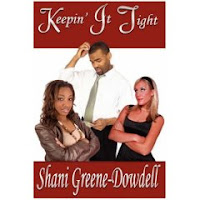
Her debut novel, Keepin' It Tight was released in May 2007.

The novel was inspired by African American fiction and its message of self-love and black love. Through the novel, Shani Dowdell seeks to weigh in on race and relationships and the temptation and deception that tears so many marriages apart.

In this interview, she spoke about her writing.

When did you decide you wanted to be a writer?

I am a reader first, so whenever I would read a great article or a good book, I would think, "I wish I could be a writer for this magazine. I wish I could write a book like this. I have a story to tell..." But I never answered my internal voices. I pushed them to the side and kept druging it out on my 9 to 5, and taking care of my children.

As a young girl, I saw myself doing great things with my life and I was always told that I could be or do whatever I wanted in life; however, it was not until 2004 when I took a close look at my life and knew there was more to Shani than working a 9 to 5 and taking care of home, even though I enjoy both imensely. With my children older and me more focused on on making my dreams come true, I started writing my first novel.


How would you describe the genre in which you do most of your writing?

Romance and drama.

Who is your target audience?

Anyone who can relate to issues women go through in relationships.

My first novel, Keepin' It Tight, addresses how a black woman feels when her marriage is threatened by a woman of a different race. If your spouse is unfaithful it shouldn’t matter the race of the woman he/she cheated with, but the book challenges the idea that society is colorblind.

What motivated you to start writing in this genre?

I am a sucker for a love story. I love to see the struggles a couple goes through and then the resolution.

Who would you say has influenced you the most?

In the beginning it was authors Darrien Lee and Jacquelyn Thomas by reading their works. Since I have become friends with Naiomi Pitre I have been influenced by her work.

What does this 'pushing the envelope' and 'staying true to one's self' involve?

Writing about subjects that are taboo or that may not be welcomed by the masses. For example, when I first presented the storyline for Keepin' It Tight to an internet group that I belong to, a couple of my white friends were offended that the woman who was trying to sabatoge the marriage of the main black characters in Keepin' It Tight was white. Their response was that race didn't matter...and my response to them is then why does it matter that the woman is white? I consider pushing the envelope writing about topics that will incite debate and will involve some issues that will not be popular with everyone.

Staying true to one's self is simple...if as a writer you have a message that you want to get out there, do not change it just because it is unpopular because at the end of the day it's your name on the by line. I struggled with this in the beginning because I have Christian upbringing, yet I like to write erotica and romance that involves premarital sex. My book is not preachy, but it does have Christian undertones; I think found a nice blend of my sensual and religious sides.

What are your main concerns as a writer?

How others will perceive my work and judge my character based on it. I have a bad habit of not wanting to ruffle any feathers, but it's entirely impossible to be true to yourself and your characters when you are worrying about how one audience or another will react to it. It is impossible to please all of the people all of the time, so I've learned to just write for me.

How have your personal experiences influenced the direction of your writing?

They have caused me to seek the paper and pen to express how I feel, and to speak up for those who will not. Of course, I write from things I have seen, heard, and in a few instances things I have experienced. I learn something new everyday as a result my writing prospers.

What would you say are the biggest challenges that you face?

Being self-published, there will always be challenges, but the beauty is overcoming them. I would say the biggest challenge I face now is breaking into this business on a low budget.

How do you deal with these challenges?

I stay prayed up and ready for the next challenge. I have found inexpensive methods of promotion i.e., newsletters, raffles, internet, and I rely heavily on word of mouth.

How many books have you written so far?

My self-published debut novel, Keepin' It Tight. In this story Lela James finds love and loses it when she catches her fiancĂ© cheating on her with a white woman. Then when she picks up the pieces, moves on and finds the man of her dreams, his white colleague, Amanda, becomes the next thorn in her side. Lela is not going to let another woman walk off with her man, but Amanda is a piece of work and when she finishes shattering Lela’s world it will take a miracle to pick up the pieces.

Do you write everyday?

I am working on my second novel entitled Secrets of a Kept Woman, at least 3-4 days a week. I'm a blog addict, so I do write blogs on myspace and/or comment daily in my friends blogs.

How long did it take you to write your latest book?

It took me a year and four months to write the book. It's self published through lulu.com.

Which aspects of the work that you put into the book did you find most difficult?

I wrote one scene that was similar to when my son was resuscitated from a near drowing at a waterpark when he was four. The scene was similar, but not exact to the events of that day and I have a hard time reading that chapter because it brings that day vividly back to me. I wrote it so that maybe it will bring awareness to the importance of water safety, and if it touches one person then it was worth sharing the experience.

Which did you enjoy most?

Building the relationship with Lela and her best friend Tonya. We moved a lot when I was a child, so I was not blessed with a sistah-girl BFF as a young girl. I built their relationship on bits and pieces of memories that I have from my friends at different points of my childhood.

What will your next book be about?

Secrets Of a Kept Woman is a street fiction novel. In Secrets of a Kept Woman, Layla Wilson is married to the biggest drug dealer in town. Their lifestyle is lavish, but the flames are all but dead in their relationship. Titus married Layla because of her beauty and innocence and he treats her like a trophy. All of that is fine and good to Layla, but she is in dyer need of attention, love and affection -- SEX. One day when their gardener, Antonio, shows up for work to do some routine pool maintenance work, the attraction he and Layla have for each other can't be denied. Once Layla gets a taste of Antonio, there is no turning back, BUT the secrets of a kept woman can be deadly if revealed.

What would you say has been your most significant achievement as a writer?

I haven't even tipped the iceburg on what I see myself accomplishing as a writer, but for right now it is typing the last letter in my first manuscript. That was a good feeling.

How did you get there?

Hard work, persistence, and determination.

*This conversation with Shani Greene-Dowdell took place between February 22 and June 9, 2007

Friday, April 25, 2008

[Interview] Dr Barbara Becker Holstein

Dr Barbara Becker Holstein is a positive psychologist in private practice, licensed in the states of New Jersey and Massachusetts.

She has done extensive research on adult development focusing on how to overcome obstacles and bring pleasure into one’s life while living a life of meaning and purpose. Based on that research and on her experiences working with women who had internalized negative messages they received as children, Dr Holstein has written and published five books which, among other things, help people develop more positive emotions while understanding how to cope with daily living.

Her books include The Enchanted Self, A Positive Therapy (Routledge, 1997); Recipes for Enchantment, The Secret Ingredient is You! (1st Books Library, 2000); Delight (AuthorHouse, 2005); The Truth (I'm ten, I'm smart and I know everything) and The Truth (I'm a girl, I'm smart and I know everything) (The Enchanted Self Press, 2008).

In this interview, Dr Barbara Becker Holstein talks about her writing.

When did you start writing?

I started writing when I was nine. My first efforts were my diary which I faithfully kept three days late for three years. I misspelled tons of words, but persisted and that 'secret' experience really got the juices rolling for me to become a writer.

How and when did decide you wanted to be a published writer?

This happened in various stages. I wrote a Master's Thesis with two other women for my Masters in Education and loved sharing the writing. Then I wrote a workbook based on our research with one of the two gals, Toby Levien, that I had written the thesis with. This workbook was published by Synectics, Inc. a creative thinking company based in Cambridge. The workbook was geared to 4-6th graders, teaching them creative thinking and writing. I really loved this project. However, I was aghast when our names did not appear as authors and realized in one blow how tough the publishing field can really be!

For those interested, the series of workbooks was called, Making It Strange. I was listed as a research associate, which certainly didn't feel like what I was doing -- writing the actual text week after week in the summer of 1965. Ah -- you see how long ago it was.

Then came my doctoral dissertation, again using the Synectics metaphorical ways of thinking to teach creative writing to children. I published a couple of articles based on my dissertation and then gave in to the pressures of life. I worked in the schools for many years as a school psychologist, raised two kids, got my license as a practicing psychologist in New Jersey and kept writing.

Fast forward, in the last 12 years I have published four books, two with two versions each, and also helped my mother publish her first and only book.

My first book is The Enchanted Self, A Positive Therapy. It was published in 1997. My second is Recipes for Enchantment, The Secret Ingredient is You! was published in 2001. The third, in two editions is Delight. This was published in 2005. One edition in paperback and one as a CD-rom with music, art, my voice and the written words. Then came my mother's book, Feel Good Stories, and last, The Truth in two versions. The version for women is The Truth (I'm ten, I'm smart and I know everything), 2007. The edition for girls, tweens, teens and their moms is The Truth (I'm a girl, I'm smart and I know everything), published in 2008.

How would you describe your writing?

All of my writing is designed to be inspirational and uplifting. I want to help people access more joy and pleasure in their lives and be able to find purpose and meaning in daily living. To that end, as a positive psychologist, I have written with slightly different intentions.

My first book, The Enchanted Self, A Positive Therapy is geared to help women and therapists actually go on a positive journey of self discovery. The case studies and suggested paradigm shifts are put in to really change the way therapists practice the art of psychotherapy and to help the reader actually change her perceptions of herself and her life. My self revelations and the exercises at the end of this chapter are all for this purpose. My second and third books use inspirational stories and exercises at the end of each story for the same purpose.

In Recipes for Enchantment, the stories are from real life, including long ago. Many of the stories are mine, but seven other authors contributed stories. In Delight, again stories are the method used. They are all mine and involve spiritual and emotional experiences I have had coming back to my origins as a Jewish woman. The exercises are designed for any woman, regardless of her background.

My mom's book, Feel Good Stories is also inspirational, but very funny, taking the reader from the day my mom was born to her retirement escapades.

And The Truth, well that is a whole new journey for me. Both editions are pure fiction with embedded positive psychology truths. What fun! I can't wait to finish up the second in the series of The Truth books! Of course they have introductions and reader's questions geared to the inspirational nature of the books.

For The Truth (I'm a girl, I'm smart and I know everything) my target audience is girls, tweens and teens and their moms, grandmas, teachers, guidance counselors and of course those interested dads.

Who would you say has influenced you most?

For my new book, The Truth (I'm a girl, I'm smart and I know everything) I would say that the writers of my childhood such as Laura Ingalls influenced me the most. Authors who have know how to capture a pure voice and create a vivid atmosphere.

For my first book, The Enchanted Self, A Positive Therapy I would say that psychologists from the feminist tradition such as Carol Gilligan influenced me the most.

How have your personal experiences influenced your writing?

I must challenge you in this question and encourage you to read The Enchanted Self, A Positive Therapy, as I intimately and fully reveal in that book how my personal experiences have affected my growth as a woman, a psychologist and, of course, as a writer.

In a chapter, titled "Singing The Song Of One's Soul", I explain how we tap into our true purpose and finally emerge doing what we are meant to do. For me, part of that is being a writer.

What are the biggest challenges that you face?

Currently one of the biggest challenges I face is helping my aging mother. It is very hard to see someone slipping away and always having some pain and other issues to contend with. Staying centered while realizing the fragility of life is a challenge!

Another challenge is bringing my new book, The Truth to the public. It is very hard work. I want to just fly with this book and yet everyday I have to take the time to plod along. For example, right now I am looking for schools were I can go in and actually work with the kids around the concepts in the book such as having a crush, being teased, bullies, growing up physically, parents fighting, etc.

Do you write everyday?

I go in spurts. Right now I am not writing every day, but I will again soon as I finish up the second book in The Truth series which takes the 'girl' from age 11 1/2 to almost 14.

I've got the ending already in my mind and just have to get back to daily writing.

I've been back and forth with the second book in The Truth series, as at the same time I've been working on a version for China which has more school vignettes in it than the American version. It has already been translated into Chinese and my translator is a professor in China. This has been very exciting.

How long did it take you to write The Truth (I'm a girl, I'm smart and I know everything)?

I wrote it over a year in spurts. It is published by the Enchanted Self Press and distributed by Blu Sky Media Group.

I wanted to control all aspects of this book, as it is the first in a series and after a lot of advice decided it was most important to find a distributor -- which I did. I'd love to have a major publishing house publishing the book, but then I wouldn't have as much control.

Which aspects of the work that you put into the book did you find most difficult?

The most difficult is the editing and proofing. The easiest part is the rough draft. I had two women help me with the editing and proofing. That really helped.

I like writing the rough draft. I guess because it is pure inspiration.

What sets the book apart from others you've written?

This is my first fiction. It has a purity, almost like poetry, that I really love about it, yet as great poetry, there is so much depth to each page.

It is similar to my others in that it inspires and teaches at the same time.

What will your next book be about?

The 'girl' growing older and having a ton of adventures that will strike a chord in most of us. They are universal and yet unique to her.

What would you say has been your most significant achievement as a writer?

My first book, The Enchanted Self, A Positive Therapy, as a pathfinder book in the field of positive psychology, and this book, as I believe the first fiction in the field of positive psychology.

Thursday, April 24, 2008

[Interview] Gabriella Goddard

Gabriella Goddard worked in international marketing and branding before setting up her own business, Goddard International Ltd., which develops and offers personal development products and where she works as an executive coach and speaker.

Her clients include senior executives in FTSE100 companies, TV presenters, authors, journalists and entrepreneurs.

Goddard is also the author of Gulp!: The 7 Day Crash Course to Master Fear and Break Through Any Challenge (Bantam, 2007) as well as three audiobooks, among them, 10 Ways to Fast Track Your Career (audible.com, 2007).

In this interview, Gabriella Goddard talks about her writing.

When did you start writing?

As a child I loved writing and I used to write poems and short stories for the school newsletter. At the tender age of seven, I even wrote the school play. But all of that disappeared as I got older and veered towards doing the sensible thing of studying maths and science so I’d “never be out of a job.”

That was until about 30 years later when I received a wake up call.

How did decide you wanted to be a published writer?

A few years ago I had the traumatic experience of going through a breast cancer scare. It was a massive wake up call and a crucial turning point in my life. Faced with the possibility of dying, something flipped inside me and that’s when I reconnected to my childhood dream of being a writer. After all, if not now…then when?

And that’s when I began to write again.

How would you describe your writing?

The books I’m currently writing are non-fiction personal development and “how to” guides which tie in with my role as an executive coach and motivational expert.

Plus, I’ve just started shaping my first novel which has been very exciting. It’s also been a big challenge from a creative perspective -- but I’m ready for it now. I’ve blocked out some time in August this year to really get stuck into it and I can’t wait!

Who is your target audience?

For my self-help and personal development books the target audience is women and men who are interested in personal growth and self–improvement. Often they’re going through a period of change in their life or facing issues in their career, relationships or life direction. And what they’re looking for is inspiration, insight, practical steps, action plans and most of all “hope.”

It made sense to write for this audience because as an executive coach and motivational expert, I’ve worked with thousands of people to help them make transformational changes in their life. Plus I’ve been through a fair few myself. So I have the theoretical and practical know-how to really help people who find themselves in a bit of a pickle. And by putting all this into a book like Gulp!, it means I can help so many more people.

Who would you say has influenced you most?

There are some amazing authors in the self-help genre. People like Paolo Coelho, Deepak Chopra and Marianne Williamson are three of my favorites. Reading their books really encouraged to be open, honest and authentic as a writer. I’m also a huge fan of Jodi Picoult and I love the way she really draws you into her stories.

What are your main concerns as a writer?

What concerns me most about being a writer is how difficult it can be to earn a living from it. You have to be really motivated to keep it up and develop a thick skin to cope with the rejection letters. It’s no wonder that so many people give up. But these days, with the advent of digital technology, there are many alternative routes to getting published, for example, self-publishing print on demand, audio books and eBooks for Amazon Kindle.

What I’ve done is to self-publish a number of short audio books to compliment Gulp! and because I own the rights, 100% of the net profit comes back to me. Plus I have a couple of eBooks coming out on Amazon Kindle later this year. I’ll still be pitching my next self-help book to the major publishers, but thankfully this is no longer the only route to the reader's bookshelf.

What are the biggest challenges that you face?

One of the biggest challenges I face is “distraction” (or possibly procrastination?). When I was writing Gulp! I’d spend hours doing research on Google. The problem was that by the end of the day I would have only written a few pages!

Another challenge I face is the frustration around the time it takes to get words typed out. In my ideal world I’d be able to telepathically transmit all my thoughts onto a Word document. But until that happens, I’ll just have to sit down and spend hours typing.

And finally, perhaps the greatest challenge I face is trying to sort out all the amazing ideas buzzing around in my head.

How have your personal experiences influenced the direction of your writing?

My personal experiences have been pivotal in shaping my writing. They say that when you write a book, you’ll either write about what you’ve been through or write about what you’re going to go through. Underpinning Gulp! is my personal journey of coping with a breast cancer scare and finding the confidence and courage to follow my dream to be a published author. In fact, the 7-day roadmap is based on the process I went through to cope with these challenges.

How many books have you written so far?

My first book, Gulp!: The 7 Day Crash Course to Master Fear and Break Through Any Challenge has just come out in the U.S.

Gulp! is a personal development book aimed at people who have reached a crossroads in their life or are going through a big change. It provides them with a 7-step roadmap, practical tools and techniques and action plans as well as inspirational stories and motivational quotes.

I’ve also written and recorded three audio books which are available on iTunes and Amazon internationally. They are:

Power Up Brand YOU -- which is all about how to build a powerful personal brand and stand out in the crowd; ideal if you’re looking to change jobs or go for a promotion.

10 Ways to Fast Track Your Career -- which is all about how you can work smarter in your job and covers ten effective and practical strategies to get ahead at work.

Say Goodbye to Fear Forever -- which is an extract from Gulp! and covers ten powerful ways that you can overcome fear and turn it from a brake that holds you back into a propeller that moves you forward.

Do you write everyday?

Oops…you’ve just reminded me that I need to start my “daily ramblings” again.

Writing is a like muscle, and you do need to exercise it to keep it in good shape. When I do sit down and write, I have a little routine. First of all the desk has to be cleared of all papers and any junk. Secondly, I make a cup of tea in my favorite “lucky writer’s cup”. Thirdly, I make sure my two cats are settled on their cushions on my desk. And finally, I light a candle or some incense to create a relaxing vibe. Then I wait for divine inspiration. And if that doesn’t come, I go and make another cup of tea.

How long did it take you to write Gulp!?

Gulp!: the 7 Day Crash Course to Master Fear and Break Through Any Challenge is a personal development guide for people who want to face their fears, step outside their comfort zone and make fundamental changes in their life. “Gulp!” stands for “Give Up Living Passively!”

I only had about five months to write “Gulp!” from the date I signed the contract. For the first two months I suffered from “writer’s procrastination” and did everything BUT write the book. It was only when I realized that I had three months to write 60,000 words, that the panic set in and I pretty much dedicated the whole three months to writing, editing and finishing my manuscript. Luckily I made the deadline.

Gulp! was published in the U.K. by Penguin and we had a fabulous launch party in their penthouse suite overlooking the River Thames in London. What I liked about Penguin was how quickly they “got” me and got the concept of “Gulp!” As a first-time author, they took a big risk on me, which is something I’ll never forget.

Not long afterwards Bantam Dell snapped up the U.S. rights to Gulp! and it has just been launched. Once again it was a huge honor to be published by such a reputable New York publisher.

The major advantage of being with a big publisher is the distribution opportunities and the media contacts that they have. If anyone is going to get your career off the ground, it’ll be them. The main disadvantage is that you’re a small fish in a big pond and you might not get the individual attention that comes from being with a smaller publisher.

Which aspects of the work that you put into the book did you find most difficult?

When my first contract arrived, it was one of the scariest moments of my life. After all that dreaming, there, right in front of me on the kitchen table, was a contract. Now all I had to do was write 60,000 words -- and make ‘em good ones. It was a real moment and it was this experience which motivated me to explore fear in such detail when I was writing Day 2 of Gulp! I tried all the techniques out on myself first -- and thankfully they worked.

Another big challenge for me as a first time author was finding my own “writing rhythm.” After much trial and error I discovered that I wrote better in the mornings and evenings. So I used to go to the gym in the afternoon.

I really enjoyed doing the research and conducting interviews. It made what I was doing feel very real and really motivated me to keep going.

Another part that I enjoyed was the editing process.

When I’d written a huge chunk of copy, I’d head off to Starbucks with a red pen and put my “editor’s hat” on, crafting it, shaping it and tightening it up. It was like being an archeologist dusting off the top soil to reveal the ancient gems below.

What sets Gulp! apart from other things you've written?

Gulp! is my first book and in many ways it has become my benchmark for everything that follows. I feel so much more confident now about sitting down and writing the next book. I’ve found my writer’s voice. And I’ve discovered my writer’s rhythm.

There are some things I’m definitely going to do differently. One thing is to leave at least two weeks for the final manuscript to “marinade” before going through the final edits. And another thing is to ban anything containing chocolate from the house!

What will your next book be about?

My next books is going to be a career guide for people who really want to accelerate their success and find a greater sense of fulfillment. I can’t go into too much detail about it, but basically it will be an easy to read, insightful and practical self-coaching guide that will help people make fundamental shifts in who they’re being, what they’re doing and how they’re performing.

What has been your most significant achievement as a writer?

My most significant achievement as a writer was to actually get published. I’m originally from New Zealand which is a small country “down under” with only 4 million people. So to have been commissioned and published in the U.S. and the U.K. is a big achievement, especially given how many great writers there are out there.

I’m hoping this will be the first of many books to get published!

How did you get there?

If you’ve ever seen the New Zealand rugby team, cricket team or sailing team in action you’d have seen an immense amount of discipline, focus and determination. So I guess some of that “Kiwi zeal” has rubbed off on me too!

Tuesday, April 22, 2008

[Interview] Don Miles

Donald W. Miles has a Bachelors in Education from the State University of New York at New Paltz and a Masters in Journalism and Communications from the University of Florida.

He has worked as a news director for radio stations in New York City, Connecticut, Florida, Nebraska and Texas. He has also served on the Board of Directors for Florida’s A.P. Broadcasters and has judged broadcast news contests for UPI Rhode Island.

In addition to this, Miles has taught at the Universities of Florida and Nebraska, at St. Edward’s University in Austin, Texas, and at elementary schools in New York, Connecticut and Texas.

His books include Broadcast News Handbook (H.W. Sams & Co, 1975); Broadcast Newswriting Stylebook (University of Florida, 1977) and Cinco de Mayo: What is Everybody Celebrating? (iUniverse, 2006).

In this interview, Don Miles talks about his writing.

When did you start writing?

I wrote a small booklet entitled The Little King when I was in second grade. My uncle was an artist for Disney, so he provided the illustrations. There was only one copy, but I was very proud of it.

In third grade, I came out with a weekly mimeographed newspaper for a couple of months, but a competitor whose dad owned a printing company came out with a very slick product which eventually put me out of business.

When did you decide to become a published writer?

I had been a radio news director for a number of years in the 1960’s and early 70’s, and I found myself writing memos to the staff at each station about what we should -- or should not -- be doing on the air and in the newsroom. In New York City, it became necessary to fire a newscaster, and I found myself at arbitration hearings having to define exactly what makes a good broadcast journalist. There were few or no books published on such a topic at that time, so I decided that somebody had to write one. I appointed myself as that somebody.

I had saved many of the memos I had been writing over a number of years, and I had made notes after each session of the hearing about the firing, so I organized them into an outline and just kept adding thoughts and examples as they occurred to me.

How would you describe the writing you are doing now?

It’s totally different!

My current books are about Mexican history -- a far cry from anything having to do with broadcast news. I have one edition out in English, with a Spanish edition for students and a bilingual coffee table edition with maps and photographs to follow within the next couple of years. I also have written a novel based on the nonfiction history of Mexico in the 1860’s. That will also come out in both English and Spanish within the next few years.

Who is your target audience and what motivated you to write for this audience?

My target audience is school teachers and principals who should know better! Next to them, I’m getting very positive responses from universities, museums and libraries.

What triggered this book was a school principal who was wrong and didn’t want to admit it, much less correct her mistake. Mexican Independence Day is September 16th, but she came on the P.A. system on May 5th and said, “This is Mexican Independence Day, boys and girls. It’s just like our Fourth of July.” When I went to her office to correct that, she told me, “Well that’s the way we’ve always taught it, so don’t make trouble.”

I looked in libraries and bookstores everywhere to find a book that would prove her wrong. There were 56 children’s books on the market, but nothing at the adult level. In the children’s books, most of them have the French army show up and lose the Battle of Puebla on May 5, 1862. Then, you turn the page, and it says something like, “Now, here’s how to make a piñata for your classroom party!” There’s nothing about why the French were there, what they wanted, or what happened next. That’s when I said to myself, “Somebody’s got to write this book!”

In the writing that you are doing, who influenced you most?

In the fall of 1961, a lovely, smiling señorita approached my table in the cafeteria at college and said, “Hi. I’m one of the foreign students. May I sit here?”

Well, of course. It was the cafeteria, right?

She sat down and said, “I’m from Mexico City, and my name is Señorita Profesora Magdalena Minerva Gonzalez Angulo Amozurrutia.”

I replied: “Hi. I’m Don Miles.”

We both thought that was kind of funny, and we started hanging out together. As the school year came to a close, we got married by a justice of the peace near the campus, and twice more in Mexico City -- one for the civil authorities and another at the church where her uncle was the pastor.

For 44 years, we visited Mexico often, traveling as family. We raised a daughter and a son who are now both married college graduates with families of their own. My wife Minerva became a U.S. citizen and earned a Bachelors, a Masters and a Ph.D. She taught at the University of Nebraska, St. Edward’s University in Austin, Texas, and Texas State University in San Marcos.

Minerva suddenly came down with Lymphoma on New Year’s Day of 2006. Many complications developed over the next few months, and she died on May 28 of that year. She was not only the greatest influence on my book, but on my entire life. I will always be grateful for the time that I was privileged to share with her.

How have your personal experiences influenced your writing?

My personal experiences have included many years of writing radio news stories “on the run,” with a deadline often just seconds away. At times, I was forced to gather my thoughts while I was already speaking “live” on the air -- without writing anything -- as a story unfolded before my eyes. That’s a lot like play-by-play sports announcing. In both situations, there’s no such thing as writer’s block. You just do it -- now!

The other crucial experiences to writing all of my current Mexican history books include 44 years of marriage to an outstanding and supportive spouse who grew up in Mexico and traveled with me all over that country. We also spent untold hours in the stacks of libraries in both the U.S. and Mexico to be sure that we were getting the facts straight.

What are your main concerns as a writer?

My main concerns are about getting a publisher who can handle not only Spanish-language translations of my book, but of one who can also handle, promote and sell a bilingual coffee table edition with color photos and maps plus English and Spanish editions of a novel.

I deal with these concerns with a high degree of patience. It’s like waiting in a very long line, but unless you’re already famous you can’t “cut in.” I’ve been working with two translators and three translation editors on the Spanish editions, and with an award-winning designer on a new cover for the entire five-book series. Just researching and writing a book isn’t good enough anymore. There’s a lot of hand-holding involved. You practically have to become the publisher to see it in print and selling.

Do you write everyday?

I would like to write every day, but I’m in a stage now where getting the five books published and on the market is the top priority. Both the nonfiction book and the novel have been written and are being translated into Spanish. I’ve got to get them off my desk before I can go back to writing.

When I was writing, there was really no set pattern to it. My wife was still alive, and our time together came first. The writing was just a hobby, not a paycheck. Very often I would write for two or three hours in the evening, and stop when it was bedtime. There were no deadlines, so it was a lot of fun. I enjoyed every minute of it, and the comments from reviewers tell me that this is reflected in the writing.

What is your latest book about?

Cinco de Mayo: What is Everybody Celebrating?
is the real story behind the holiday which has become so popular in the United States that it’s celebrated here more than in Mexico.

It tells how fleeing conservatives emptied the Mexican treasury in a civil war that took place there in 1858-60, and how the incoming liberal government was unable to meet its debts. The emperor of France -- Napoleon III -- decided that this would be a great opportunity to take over Mexico and then help the American Confederates win their own civil war against the United States.

The Mexicans were just as surprised as the French that they won the upset victory on May 5, 1862, but Napoleon III sent wave after wave of reinforcements and occupied Mexico City within the following year. It took five years to get the last French soldier out of Mexico, and then several months to finally capture and execute Maximilian, the puppet “emperor” whom they had installed. My book describes the five-year struggle, including the effects it had upon the United States.

The U.S. celebrations now include all Hispanics -- not just Mexicans -- and they occur on May fifth, a more convenient time for teachers to celebrate with their children near the end of the school year. The American festivities also attract eager participation and sponsorship from most of the major beer companies. Ask participants what they’re celebrating, and most will just say, our heritage.

How long did it take you to write the book?

It took me five years.

It was published in November of 2006 by iUniverse, a publisher in Lincoln, Nebraska.

I sent a query letter about my novel to more than 40 agents over a year’s time. Almost all of them either rejected it outright or didn’t answer at all. One agent wrote on the rejection slip that he’d like to see a nonfiction version of the topic. I wrote one, and he took me on. After a year of approaching more than 30 publishers, he threw in the towel.

At that point, I was tired of filling out questionnaires as though it were just an idea for a book, much less a manuscript. I wanted to see a real book on the table, so that we could raise the level of discussion.

That process has worked. Reviewers, academicians and educators love the book. That’s something I’ll eventually be able to take to the bank. When I mentioned to a seminar at Book Expo America in New York last summer that I would like to see it sell better in mainstream bookstores, one panelist suggested that I change the title to The Secret Diary of Anna Nicole Smith. Oh, sure. Now that we have the great reviews and have better identified the target market, I’m optimistic about the future success of all five books in the series.

Which aspects of the work that you put into the book did you find most difficult?

Everything with the vanity publisher -- iUniverse -- had to be done online, and with an intermediary “receptionist” person at the other end. I never got to talk directly with an editor or cover designer. Many of my instructions were misunderstood or totally ignored. It was like standing in a long line at McDonald’s, asking for “no cheese” with your hamburger, and getting the cheese anyway. They wanted to charge me for correcting some of their mistakes, after I had paid them hundreds of dollars to do the proofreading and indexing.

The advantage is that now we’re talking about a real book, not a manuscript. I’m dealing with all the negatives by putting that process behind me and moving on.

Which aspects of the work did you enjoy most?

I have really enjoyed breaking new ground on this topic. Almost all of the books about Cinco de Mayo and the French intervention had been written in the late 1800’s and early 1900’s, and -- except for children’s books -- almost all of them were out of print. The reactions I get from readers is “Wow! I never knew that!” That’s because there hasn’t been a book about this topic in decades.

The rejections from mainstream publishers were absolutely silly. Many of them wrote vague letters saying something like, “not much is known about this topic, and that’s why we don’t want to know about it, either!” It feels good to get past these self-appointed gatekeepers. Given the right market -- and effective marketing -- I’m sure all of my Cinco de Mayo books will succeed.

What sets the book apart from other things you’ve written?

I had the advantage of traveling in Mexico with my family and as an insider. It reflects the warmth and the wonderful heritage that my late wife has not only given to our daughter and son, but to me as well. This is something that can never be captured by research alone.

In what ways is it similar?

All of the books fill a need. The need back in the 1960’s was for good books about the rapidly growing field of broadcast journalism and news writing style. The current Cinco de Mayo series is to recapture the details and the accuracy of an important era in Mexican history which otherwise would fade away for lack of attention.

What will your next book be about?

The next two books will be a Spanish-language edition for students and a bilingual coffee table edition of the current book, with maps, charts and color photographs.

Following those, my novel about Cinco de Mayo is based on a fictional family in Veracruz which owns stagecoach and freight lines between the port of Veracruz and the capital of Mexico City. They have a contract to run secure mail service for the United States embassy, and while they run their wagons and coaches by day, they are guerilla fighters against the French by night. The novel has already been written and rewritten, and will come out in both English and Spanish around 2010.

What would you say has been your most significant achievement as a writer?

It has been a cumulative achievement, actually. First, it was several years of writing news on radio stations in upstate New York, Connecticut, and finally New York City. Then, it was writing a handbook on news coverage and a stylebook on how to write it. I used both of those books to teach news writing at the college level. Finally, when I won “Best Newscast” and my news team from Lincoln won more Associated Press awards than all of the other stations in Nebraska combined, I thought to myself, “I must be doing something right!”

It wasn’t very hard to get from there to just writing -- with no deadlines and no pressure -- something I really enjoyed. As I’ve already mentioned, the most valuable motivator all along was my wife -- that señorita from Mexico City who first met me in the cafeteria at college. When you ask me “how did I get there?” if it were not for her, I wouldn’t even be close to where I am now.

Saturday, April 12, 2008

[Interview] H. Peter Nennhaus,

H. Peter Nennhaus grew up in Berlin and graduated from medical school in Frankfurt in 1955.

He became an American citizen in 1961 and trained at various Chicago hospitals. He was board certified in surgery and thoracic surgery and practiced in Chicago. He began writing after retirement.

So far, he has published two books: Boyhood, The 1930s and World War II, Memories, Comments, and Views from the Other Side (Chandler House Press, 2002) and Quo Vadis, Israel? (Outskirts Press, Inc., 2007).

In this interview, Peter Nennhaus talks about his concerns as a writer.

When did you start writing?

My first unsuccessful attempt was in the 1970s when I was in my early forties. I am a bit of a philosopher and was investigating how one could give reason and good sense more political and constitutional power. It was highly intellectual but of course amateurish and, to no surprise, I found no takers.

Another casual attempt followed in the mid-seventies. My notes were not intended for the publisher but rather for my young son. The divorce brought it about that he was influenced against his father’s German origin. I began to write down some of my childhood memories in Berlin during the war. He was to read them once he was older and thus learn that he came from a very nice family indeed. These early anecdotes became the core of a book I published in 2002.

About the same time I was a university-affiliated surgeon. In that position publishing research papers was almost obligatory and that’s what I did and enjoyed the art of writing. But my real temptation to publish did not come about until my semi-retirement in the low 1990s when at last I had leisure time available and, more importantly, when we got our first computer.

I unearthed my childhood anecdotes for the sole purpose of practicing word processing. My new, wonderful wife urged me to publish them and so it was she who more or less inveigled me into writing. That project, however, involved years of research into the history of Europe during the early century, resulting in a considerable delay for that book to come out.

How would you describe your writing?

I guess, the way nature made me, I am a non-fiction and issue-related writer. There has to be a message and it has to be done in a scholarly way.

Also, I am a bit of an artist, painting landscapes and portraits. Influenced in that way, I attempt to make the narrative artistic in a way or pleasing.

Who is your target audience?

My first book was intended for the general public. The story takes place in WW II and it is both entertaining and informative and is a good read for an intelligent audience.

My present book, Quo Vadis, Israel?, could also interest the general public, but more specifically people who are concerned about anti-Semitism and in particular about the ongoing conflict in the Middle East. Here again, my investigation is issue-related and carries a message, i.e. a potential solution. It is thus directed to the widely scattered audience of those who share my distress at the ongoing tragedy in the Holy Land.

Who influenced you most?

That question has several answers.

There are fortunate people in this world who master the English language in an admirably beautiful way, one that makes you think you are listening to a concert. I own many of their books. I will never equal them, but they do inspire.

But it is not so much who inspired me as what.

If you have lived through much of the turmoil of the 20th century and survived it with your morality and common sense intact, you may feel as though having visited the wounded in a field hospital or even an insane asylum. You are never left without the desire to cure the disease, whatever its name. Of course, the desire to help the suffering is universal, but in my case there is another aspect.

As a physician, I have been trained not to judge and punish, but rather to make the correct diagnosis and find the right cure. As an example, for a physician, the rational way to deal with the terrorists is not to club them to death because they are evil, but to detect the source of their rage and remove it. Looking at the world the way it is operating in reality causes persistent frustration and it is that frustration, which is a powerful stimulus to explore and write.

What are your main concerns as a writer?

To a minor degree, in both of my books I was swimming against the stream of popular thinking, some may even mistakably think, against political correctness.

I am certain many of my readers, even well-meaning and friendly readers, will initially look up in surprise and say, “You’re kidding, aren’t you?”

Many have come back and said, “This was an eye opener, thank you for writing it!” but I am still under pressure to produce a text, which is flowing easily, is beckoning to read further, is conveying my sense of good-will and, above all, which is written convincingly.

How have your personal experiences influenced your writing?

That is easy to understand, once you know about the early beginnings of my life. If you lived through World War II as a European, that war and its destruction, killing and destitution is never far away from your thoughts.

It is similar to almost all of the Jewish folks I know: For them, the image of the Holocaust is always present, it will never go away. But for me as well, even though the Holocaust did not touch my personal life, Auschwitz and anti-Semitism has been a persistent focus of wondering and soul searching, has to be, I guess, if you come from Germany.

Consequently, observing the fate of the State of Israel has almost been a personal matter for me. You want it to succeed, you want peace and normality to enter the Holy Land. My mounting concern that such will never come about was the reason for writing my latest book, Quo Vadis, Israel?

What are the biggest challenges that you face?

There are two of them.

One challenge is that English is my second language. Believe me, even after half a century, your fluency and the breadth of your vocabulary will never equal that of your mother tongue. Listen to Henry Kissinger or Zbigniew Brzezinski, two eminently erudite English speakers: you always know they are speaking in their second language.

A more serious challenge is the fact that years ago I suffered a stroke that left me aphasic. The recovery of my speech was miraculous, but perhaps only up to 95 percent. The last gloss, the old eloquence, they are still missing as is the automaticity of word finding. I know, that is a common problem for everyone, when we can’t remember a name or expression.

In the same manner, I know the word is there, I can almost smell it and, yet, it won’t come up. But for me, it is more of an impediment than for others and so often it makes me feel, while writing, as though I was slugging through rain-soaked pastures. The thesaurus is usually by my side.

Do you write everyday?

Yes, time permitting, I write every day. But remember, years passed between writing the two books. In that sense, I am not a professional writer who does this for a living.

I would write only when I think I have something worthwhile to say and then, as mentioned before, the writing starts only after months of collecting the facts. Once I am engaged in it, it is similar to cautiously jumping into treacherous water where I search carefully for a spot to safely jump in.

Usually it starts with making an outline, which may get changed several times. The actual writing begins only mentally, as several passages go through my mind during my daily activities until I finally gather all my courage together and start putting something down.

After that valiant move it proceeds more rapidly, just like you start swimming after you have plunged into the water. Nonetheless, progress is slow. There have been days when I wrote three pages before I give up, but often it is less than that. Even at that pace, that’s not the end of it. I will keep reviewing the text many times for weeks and still make improvements. I guess it is similar to painting the Sistine Chapel -- it takes a long time.

How many books have you written so far?

There are two books, or perhaps we can say, two and a half.

I mentioned my first book. Its title is Boyhood, The 1930s and the Second World War, Memories, Comments, and Views from the Other Side (Chandler House Press, 2002). It describes my youth in Berlin until the end of the war in 1945, at which time I was sixteen years old. It also contains numerous short chapters of political and historical background as an aid to today’s readers unfamiliar to the issues of that era. Frequently, public opinion among ordinary Germans is described and an entire part deals with the history of anti-Semitism and the Holocaust.

My second book was published November 30, 2007 by Outskirts Press, Inc. Its title is Quo Vadis, Israel? (Quo Vadis is Latin and means, where are you going? It picks up from the famous book Domine, Quo Vadis by Nobel prize winning Polish author Henryk Sienkievicz of 1896. Adopted into many languages, it is an expression that has been used to inquire about an uncertain future.)

In addition, I have extensively edited and expanded Boyhood. It is currently being considered by publishing houses for possible publication. Its new title is The Shipwreck of a Nation, German Memories.

How long did it take you to write Quo Vadis, Israel??

So that you don’t think I am out my mind creating such an outlandish concept, I have to tell you how the writing of Quo Vaidis, Israel? came about.

A cousin of mine traveled to a piece of land by the Baltic Sea presently called the Kaliningrad Territory. It caught my attention because during my childhood it was still part of Germany. It is the northern part of East Prussia and was annexed by Stalin after Germany’s defeat in 1945.

My cousin’s report was appalling. The land is stricken with all the social, economic, and criminal calamities you can think of. It is a “failed state”. There was even a rumor that the Kremlin wanted to palm it off to the EU. A sudden thought flashed through my mind: Imagine how prosperous that beautiful land would be, had, in 1948, the State of Israel been created here and not in Palestine.

The next day the thought came back: Could one bring Israel up there now? In spite of my dismissing such an absurd thought time and again, it came back day after day. Finally I said, okay, do a little research. That will prove that you are a fool and will kill the silly idea once and for all.

My research lasted eight months and to my utter surprise it showed the feasibility of such a land transfer and the huge, unimaginable benefits that would arise from it for all concerned. I decided, instead of casting the idea into the wastebasket I should at least publish it and then let the readers accept or dismiss it.

It took another three months to write the manuscript and after that over ten months of being turned down by all the publishers in the world. Finally, in July 2007, I heard about a print-on-demand publisher by the name Outskirts Press in Denver. There are other POD publishers but I did not bother to investigate, this one was fine.

It cost me $1,000 to get Quo Vadis, Israel? expertly printed with much advice and different options. There were subsequent costs related to promotion but it is still less than $2,000 altogether. Their advice and assistance for promoting the book was marvelous and keeps on coming. I wish I had a POD publisher available in 2001, when my Boyhood book was brought out by what was then called a subsidy publisher.

Which aspects of the work you put into the book did you find most difficult?

It seems the writing was the easy part. It was collecting the data that was hard but the internet is of immense help. I was disappointed with passing the manuscript around among friends for their critique. They don’t have the time or interest, trail off into trivial matters or are too polite to speak the truth. I found I was pretty much on my own.

Which aspects did you enjoy most?

The creation of the narrative, that’s it. It is similar to painting a picture when, after much effort and numerous corrections and improvements, you finally say, “Yep, this is it!” There is tremendous satisfaction.

What sets Quo Vadis, Israel? apart from other things you've written?

The subject matter.

Discussing the future outlook of the State of Israel in the 21st century is, of course, a world away from my childhood memories in a Berlin air raid shelter or from trying out my high school English on the first G.I. I met, still wearing a belt buckle displaying a swastika.

Yes, there were similarities. Both subjects share the sadness, the tragedy, the burial of goodwill under the rubble of violence, the bravery displayed on the battlefields of a wrong war, the rule of passion and the failure of the Ten Commandments, and there is so much more.

What will your next book be about?

Nice thought, a new book. There are no plans. Maybe I will find a subject that will intrigue not only me but everybody else as well.

What has been your most significant achievement as a writer?

My trophy shelf is not exactly overcrowded, but there is a stack of correspondence pertaining to Boyhood where you find unsolicited praise and gratitude for a story about the Second World War so different from what is generally known.

Perhaps the greatest satisfaction I received came from a Jewish audience some years back to whom I had spoken about my childhood experiences in the 1930s and 1940s as described in the book. They were “mesmerized”, I was told, and deeply moved. Many came forward with deep emotion to shake my hand and to say thank you. Not bad, for a German in a synagogue.

How did you get there?

Heavens, if I know. Just be yourself, I guess, and honest.

Friday, April 11, 2008

[Interview] Lyne Marshall

Lyne Marshall is a contemporary Australian artist who has exhibited extensively in Australia and overseas.

Her book, Gleaner or Gladiator: the struggle to create is a result of over five years' research into the creative processes that artists encounter. It is also a personal narrative of her own struggle to step into the creative flow and it showcases some of her contemporary landscape paintings and photography.

In this interview, Lyne Marshall talks about some of the factors that motivated her to write Gleaner or Gladiator.

When did you start writing?

I have always been creative, but I am primarily an artist, mainly painting in acrylics, and this consumes most of my time. I didn’t see myself as a writer until it was suggested to me, a few years ago, that I write a book about the creative process, based on my experiences.

I had begun to research this topic, a subject that intrigued me greatly, back as early as 2000, after a positive but challenging experience at a workshop run by a Canadian artist/tutor. I began to read a lot of books on creativity and began to collect bits and pieces of my writing into a series of folios. It was the personal incidents that happened during this time, and before, which interested me.

How did you make the transition from researching to publishing your book?

After giving it some thought, I began to consciously, but spontaneously, document experiences in the studio, with a book in mind. This is how the first chapter in my book, "Energy and Action", came about. I wrote it almost un-edited, which hasn’t really happened since. I felt it captured things so well and it was strong. I knew then I could go on to write a book.

I wanted to illustrate the book myself, with my own paintings, as they were perfect examples of how the creative process was working for me. So I set out to produce a body of art work at the same time. I also posted off a lot of proposals to publishers but in the end I self-published. I designed the book myself in Adobe In Design and used one of my paintings, which I had experienced a sort of spiritual encounter with previously, on the cover. I certainly had a lot more freedom in self-publishing.

How would you describe your writing?

My writing is intuitive and has a lot of synchronicity attached to it. I am finding I am getting better at expressing what I want to say as I work more. I write what is factual, which needs research, and I have no interest in writing fiction. Writing doesn’t come easy but neither does painting at times.

Who is your target audience?

I have always been aware of who my audience would be, but I thought the general public would also be interested in the creative process.

It turns out that other artists, in particular those wanting to go beyond the mediocre, really are inspired by my book. I guess this is what I set out to achieve when I began to write, but the response and some of the feedback has amazed me. It has been this feedback that encourages me to write more books.

In the writing that you are doing, who has influenced you most?

My experiences within the creative process, that have shaped my art, have also shaped my writing. I find Asian art and writing very poetic and contemplative. Also the works of Australian writers and painters can seem to have a raw edge, yet be refined at the same time.

My writing is all about personal experiences and is influenced by my own journey. So in this way my life influences why and how I write. I live in rural isolation on a farm, and this also gives me the freedom and time to write.

What are your main concerns as a writer?

My book is about an elusive process, based in factual experiences, and I want it to be seen as an art book and valuable to the industry. However it has been categorized and interpreted by a few as self-help and new age, which is a little disconcerting. I think this is because I am writing on the spiritual in art, which is concerned with profound thought, that which moves us away from mediocrity.

There can be a lack of understanding at times. But these are isolated cases and I try not to worry about it all too much.

What are the biggest challenges that you face?

I want to write another book that goes deeper into the spiritual aspects of creating. I am not sure what form it will finally take. I guess in some ways I am back where I was seven years ago, collecting experiences and data. However, my career in art is pleasantly time-consuming. I exhibit at major art fairs with Art Clique and I have to juggle all my creative pursuits. I have decided I won’t force my next book, but let it evolve in its own time.

How many books have you written so far?

Gleaner or Gladiator: the struggle to create is the first book I have written although I have had my art published in several coffee table books, with poetry which was not my own.

Art Clique Projects published my book in 2007, with the help of a Regional Arts Development Grant to illustrate it.

Gleaner or Gladiator is an art book with a difference in that it explains the process behind creating art. It examines topics like motivation, influences, inspiration and synchronicity. It offers ways to step into creative flow and deal with the issues of everyday life for a creative professional.

Do you write everyday?

I find I do write a little a day, but not always on my new book. I write profiles for my art, and exhibitions, and articles to help publicize my book. I recently wrote an article for a two-page magazine spread.

I always write in the morning and paint in the afternoon. I stop when I have had enough or I want my work proofed before I continue. I am fortunate that my husband had some training as a proof editor and he always challenges me to expand on something that is not clear to him. I try not to think of all my projects, and time issues, so I don’t become overwhelmed. I just make sure I allow enough time for deadlines and keep tapping away at it all.

How long did it take you to write the book?

Gleaner or Gladiator: the struggle to create took about a year to write but followed on from about five years of ongoing research. It was printed in Brisbane, Australia, and launched in February 2007. Although I was initially disappointed that I had to self-publish, as the book wasn’t picked up by a publisher, it was in the end, the best thing that could have happened.

It was an expensive book to print, being 80-page full colour, but it has well and truly paid for itself as sales are ongoing. In producing the book my art has grown tremendously, and this combined with the book itself has moved my career as an artist forward. So in the end it was a good career move for me to go ahead even without a publisher.

I market the book myself and have managed to get it in quite a few bookshops. I find it sells well in Public Art Galleries and Art Supply Shops. Some of these venues are constantly restocking. Marketing is time consuming and bookkeeping ongoing and it does eat into my creative time. I try to prioritize all my projects and allow adequate time for writing and painting. I do plan to have a publisher for my next book to reduce this ongoing level of activity that comes with distribution.

Which other aspects of the work you put into the book did you find most difficult?

To write a factual book about the creative process, I had to write in the first person. It was hard writing about myself, using 'me' and 'I', and giving away things that are not only personal but hard-earned. I just said to myself ‘get over it’. I think what you give out comes back and I like the fact I might help someone else on their creative journey.

Which aspects did you enjoy most?

This book is an honest account and I like that aspect. I like being honest and I also like a challenge. Deciding how to lay the book out was certainly that, and it was exciting seeing it come to fruition. I remember collecting the book from the printer and looking at the finished article for the first time. I said, rather stupidly, but in awe, ‘It’s a book’. I don’t know what else I was expecting.

What sets the book apart from other things you've written?

It is my first book. Everything else I have written has been for an exhibition or a project. This is much bigger than anything else I had ever attempted to do before. It was also the design aspects of the book that were different and a huge learning experience.

In what way is it similar?

I have always written factual statements. This is just a more convoluted version of other writing and an extension of writing about my art. It is easy writing about something you are passionate about. What is not easy is keeping the momentum going.

What will your next book be about?

I am writing on a similar topic, and it is still formulating in my head. It will be on a larger scale I believe and may encompass interviewing other artists and asking them similar questions I asked myself when writing Gleaner or Gladiator.

What would you say has been your most significant achievement as a writer?

Self-publishing this book. It seemed a pipe dream for so long, but came together very quickly in the end, and I think very professionally. I know so much more now about the process of designing a book and distributing it. But I still have a lot to learn, especially about writing, and I think writing will become more significant than my art as I grow older.