59 articles were posted on Conversations with Writers in 2010.
That year the site received 10,765 visitors.
The busiest day was February 23 which saw 85 readers viewing the site. The most popular post that day was [Interview] Siobhan Logan.
The 5 most popular articles in 2010 were:
Showing posts with label blogging. Show all posts
Showing posts with label blogging. Show all posts
Sunday, January 2, 2011
Wednesday, July 7, 2010
[Interview] Danie Nel
 South African commercial photographer and a writer, Danie Nel has some poems that have been featured in the poetry anthology, The Colors of Life (Watermark Press, 2003).
Currently he is working on Notsoreallifestory, a blog novel he describes as "a take on the alter ego interaction storyline, but with a different slant and angle on it."
In this interview, Danie Nel talks about his writing:
When did you start writing?
I realized I enjoy writing in primary school as part of our creative writing assignments and, having been an avid reader since I could read, I suppose that has always fuelled the fires of creativity for me.
I’ve been writing songs, and lyrics, since I was 18, and have penned a few poems. However, working as a professional photographer has put me in contact with writers, journalists and novelists, and their enthusiasm for their craft has rubbed off on me.
Only my poems have been published in a collection of works called The Colors of Life, and was included after I entered a competition.
As for my creative writing, I only recently really started writing again, and decided that the blog-model works for me, and I’d rather earn my money through advertising programs, and focus on writing what I want, how I want to, and when I want to, without publisher’s demands. I also use the comments section to get readers to interact with me, and rather have the end-user influence my writing, and not the money man!
How would you describe your writing?
Free, quirky, strong storyline, suspense and humour is a must. It would probably fall into the category of humorous drama.
Who is your target audience?
Anyone with a sense of irony, who loves reading easily and loves to chuckle at life. I’m like that.
Which authors influenced you most?
Stephen King’s humour and limitless imagination. Also, he has amazing flow.
Michael Cunningham is just poetic and has the most beautiful writing style.
Bryce Courtenay for sheer story. Koos A Kombuis for his humour, descriptive ability and flow. Bill Bryson, for knowing how to communicate the oddities that we all notice, just don’t seem to remember.
Have your personal experiences influenced your writing in any way?
Probably. We can only put out versions of information we ourselves have gathered and processed.
What are your main concerns as a writer?
That I will bore the reader with obvious plots, obvious humour and no surprises. I try and surprise myself.
What are the biggest challenges that you face?
Time to write.
Do you write everyday?
I write weekly. I normally write late at night, after the family’s gone to bed. It ends when I fall asleep!
How many books have you written so far?
None.
I’m writing a story called Notsoreallifestory, in the blog format. It’s about a man who wakes up to a voice in his head one day. It’s a take on the alter ego interaction storyline, but with a different slant and angle on it.
Which aspects of the work do you find most difficult?
Dialogue.
Dialogue is a spontaneous process, and recreating proper and good dialogue is difficult.
I repeat the dialogue aloud to myself, and if it seems fake, or makes me cringe, I change it.
Which do you enjoy most?
Reading my story.
When writing flows, and I re-read my efforts, it’s amazing to see that I’ve opened up doors in my imagination that I haven’t noticed before. Or I realize I think differently about things than I thought I do.
What sets Notsoreallifestory apart from other things you've written?
I’ve never attempted a series blog before, and all my pieces have been short, concise and normally limited to a couple of pages.
In what way is Notsoreallifestory similar to the other things you've written?
My sense of irony is deeply embedded in how I communicate, also, I veer from cliché’s.
What will your next piece of writing be about?
Probably a musician. Not sure what he’s going to do yet. I just love music and would like to explore that possibility.
Possibly related books:
,,
Related articles:
- Blog Novels [Lists], Conversations with Writers, November 27,2008
- Ezekiel Es’kia Mphahlele [Obituary], by Shola Adenekan, The New Black Magazine, November 8-9, 2008
- Writer: Niq Mhlongo [Interview], by Laura Arenschield, a.magazine, May 8, 2008
Saturday, June 5, 2010
[Interview] Thomas D'Arcy O'Donnell
Canadian script writer, Thomas D'Arcy O'Donnell is the author of Diamond Walker, a blog novel about an 18-year-old shaman baseball player.
The novel's protagonist, Jimmy Walker, is a provocative anti-hero who brings a fresh and disturbing capability to America’s Game. He is a cutting-edge warrior and a throwback to old-school modes and values who swims with killer whales and seems to project grace and brightness wherever he goes.
In this interview, Thomas O'Donnell talks about his writing:
When did you start writing?
Diamond Walker started off (in my head) as an idea for a film.
I had the idea that if I could create a 'property' or story based in Vancouver, British Columbia, I could come back some day and, instead of working for someone else as a waiter or bartender, I could go to the places that amazed me and the work I did would be making the film that was in my head.
Through a strange turn of events, year later, I decided to write the story as a novel, after a synopsis for the film disappeared during the Pitch This competition at the Toronto International Film Festival.
All conspiracy theories aside (who took the synopsis and why?), I also realized it would be a very expensive film to make, so why not create it as a novel?
How would you describe your writing?
The stories, Diamond Walker, particularly, tend to be action or adventure with an ecological basis.
Nature and the environment are always in play and the principal characters are either for or against nature and the environment. The 'good guys' are highly in tune with nature, the 'bad guys' are completely oblivious and/or destructive regarding nature.
Who is your target audience?
I write for a very broad general audience ... all ages.
I like the idea of people reading about good ideas, good actions and characters (exemplars) who have the right ideas and values and know how to go about life with actions that reflect this accordingly.
On the converse side, I really don't see the value in slasher or mangle horror titillation, i.e. Bad (Fear) triumphs over Good. Though I see it has been a very successful theme for many writers.
So, in a way, I could say I write to present 'positive' alternatives to 'negative' stories.
Which authors influenced you most?
I've read thousands of books.
It's very hard to single out influence but I'll admit it's inevitable.
I've read every John D. MacDonald book, including the Travis McGee series; every Louis L'Amour book (westerns); the True History of The Kelly Gang (Peter Carey) blew me away and made me realize that prose or literary form did not have to conform to my perceptions just as the original Huckleberry Finn by Mark Twain should have taught me.
The Horse Whisperer (Nicholas Evans) certainly inspired me and I hope my 1st book touches similar themes of man/creature/environment.
How have your personal experiences influenced your writing?
Nat Bailey is known as the grandfather of baseball, in Western Canada. While staying in his home (I had worked with his grandson in Banff, Alberta), he told me of his youth and selling peanuts and popcorn during semi pro baseball games. At his suggestion, I visited the stadium named after him, stood on the infield grass one morning and the idea (for Diamond Walker) poured into me as I looked up at an eagle riding an updraft overhead.
It was a magical morning.
The baseball diamond was like a jewel of green, set in an urban environment and Nat's words and storytelling from the night before were floating with the eagle ... yet in my head as well.
What are your main concerns as a writer?
Getting the ideas out of my head, filtered through my clumsy fingers, onto paper (or text file) and then refining or resolving those primal ideas into prose or literary form and being satisfied, is really the challenge.
My only concerns as a writer are satisfying myself ... and that means there should be ideas of merit ... and if there's going to be conflict, crisis or resolution, my lead characters should be exemplars. They should define 'Winners'.
I can't in any way control what a reader of my work thinks ... though I hope they enjoy reading it. I hope they find values they can embrace ... or that make them feel good.
Do you write everyday?
I can only write when it comes to me. It either flows or it doesn't.
I don't see it as writer's block, I see it as a gift that comes to me, often via happenstance or intermittently.
At the same time, I do believe there's a laziness, mixed with self-doubt, to my writing. It's that smidgen of belief and creativity that keeps the small flame alive ... and so ... I write.
How many books have you written so far?
Diamond Walker is my only completed novel and its unpublished.
Keep in mind, that Diamond Walker came into my head ... before there was an 'internet' and I wrote on sheets of paper, then in spiral notebooks, or on napkins in bars or restaurants ... then as text files, eventually even as emailed memos to myself.
I sent queries and sample chapters to publishers, agents etc ... and finally decided to put the entire novel online as a blog novel ... It's kind of apropos actually, since it was written in fits and starts ... intermittently ... over the years.
I think my talent lies in writing. It certainly does not lie in effective contact with literary agents or publishers, though I've tried mightily, to pour effective effort into that Catch 22 endeavor.
Without complaint I can truly say, that an unpublished author in Canada faces an extreme uphill climb and I've constantly tried to reach outside of Canada for representation or interest. Others have succeeded and I'll always keep trying.
I'm self published ... I migrated the book to Wordpress as a blog novel. It's now driven mainly by serendipity, though I utilize its presence on the web via continued queries to the literary or publishing world and of course alternatives such as Conversations with Writers.
Which aspects of the work you put into the book did you find most difficult?
I remember one day when I was writing Diamond Walker and I was creating dialogue and the thoughts of a 45-year-old woman. I was almost overcome with doubt, thinking, 'Who am I to create the thinking process of a woman ?'
The same thing occurred one day when I was writing a treatment for a children's TV program and I was writing dialogue for a 6-year-old girl, but it was more of a feeling inside me of, 'Where the heck is this coming from?'
What will your next book be about?
My next book will likely be a sequel focusing on Hunter Walker (Jimmy 'Diamond' Walker's father).
I like the idea of a hunter, tracker Navajo, based in British Columbia who tracks missing or abducted people in wild or urban environments, and can deal with adverse weather, environments or dangerous adversaries.
What would you say has been your most significant achievement as a writer?
Getting Diamond Walker finished. Uploading it to the web, as a blog novel was a huge milestone for me. But, as I mentioned earlier, satisfaction comes from feeling I've met, or come close to what I believe are necessary levels of creativity, competence and merit.
I wrote a poem, in support of a documentary project I'm developing, and I'd never undertaken a long poem before. Seeing that poem online within my research/development blog for Ann Harvey really made me feel good. Kind of that creatively exhausted satisfaction and, I guess, I should say that the whole process of trying to breath life into a documentary about a historical event, i.e. the attempt to write eloquently about an amazing story that actually happened, but is little known, is a pretty special challenge and opportunity.
Possibly related books:
,,
Related articles:
The novel's protagonist, Jimmy Walker, is a provocative anti-hero who brings a fresh and disturbing capability to America’s Game. He is a cutting-edge warrior and a throwback to old-school modes and values who swims with killer whales and seems to project grace and brightness wherever he goes.
In this interview, Thomas O'Donnell talks about his writing:
When did you start writing?
Diamond Walker started off (in my head) as an idea for a film.
I had the idea that if I could create a 'property' or story based in Vancouver, British Columbia, I could come back some day and, instead of working for someone else as a waiter or bartender, I could go to the places that amazed me and the work I did would be making the film that was in my head.
Through a strange turn of events, year later, I decided to write the story as a novel, after a synopsis for the film disappeared during the Pitch This competition at the Toronto International Film Festival.
All conspiracy theories aside (who took the synopsis and why?), I also realized it would be a very expensive film to make, so why not create it as a novel?
How would you describe your writing?
The stories, Diamond Walker, particularly, tend to be action or adventure with an ecological basis.
Nature and the environment are always in play and the principal characters are either for or against nature and the environment. The 'good guys' are highly in tune with nature, the 'bad guys' are completely oblivious and/or destructive regarding nature.
Who is your target audience?
I write for a very broad general audience ... all ages.
I like the idea of people reading about good ideas, good actions and characters (exemplars) who have the right ideas and values and know how to go about life with actions that reflect this accordingly.
On the converse side, I really don't see the value in slasher or mangle horror titillation, i.e. Bad (Fear) triumphs over Good. Though I see it has been a very successful theme for many writers.
So, in a way, I could say I write to present 'positive' alternatives to 'negative' stories.
Which authors influenced you most?
I've read thousands of books.
It's very hard to single out influence but I'll admit it's inevitable.
I've read every John D. MacDonald book, including the Travis McGee series; every Louis L'Amour book (westerns); the True History of The Kelly Gang (Peter Carey) blew me away and made me realize that prose or literary form did not have to conform to my perceptions just as the original Huckleberry Finn by Mark Twain should have taught me.
The Horse Whisperer (Nicholas Evans) certainly inspired me and I hope my 1st book touches similar themes of man/creature/environment.
How have your personal experiences influenced your writing?
Nat Bailey is known as the grandfather of baseball, in Western Canada. While staying in his home (I had worked with his grandson in Banff, Alberta), he told me of his youth and selling peanuts and popcorn during semi pro baseball games. At his suggestion, I visited the stadium named after him, stood on the infield grass one morning and the idea (for Diamond Walker) poured into me as I looked up at an eagle riding an updraft overhead.
It was a magical morning.
The baseball diamond was like a jewel of green, set in an urban environment and Nat's words and storytelling from the night before were floating with the eagle ... yet in my head as well.
What are your main concerns as a writer?
Getting the ideas out of my head, filtered through my clumsy fingers, onto paper (or text file) and then refining or resolving those primal ideas into prose or literary form and being satisfied, is really the challenge.
My only concerns as a writer are satisfying myself ... and that means there should be ideas of merit ... and if there's going to be conflict, crisis or resolution, my lead characters should be exemplars. They should define 'Winners'.
I can't in any way control what a reader of my work thinks ... though I hope they enjoy reading it. I hope they find values they can embrace ... or that make them feel good.
Do you write everyday?
I can only write when it comes to me. It either flows or it doesn't.
I don't see it as writer's block, I see it as a gift that comes to me, often via happenstance or intermittently.
At the same time, I do believe there's a laziness, mixed with self-doubt, to my writing. It's that smidgen of belief and creativity that keeps the small flame alive ... and so ... I write.
How many books have you written so far?
Diamond Walker is my only completed novel and its unpublished.
Keep in mind, that Diamond Walker came into my head ... before there was an 'internet' and I wrote on sheets of paper, then in spiral notebooks, or on napkins in bars or restaurants ... then as text files, eventually even as emailed memos to myself.
I sent queries and sample chapters to publishers, agents etc ... and finally decided to put the entire novel online as a blog novel ... It's kind of apropos actually, since it was written in fits and starts ... intermittently ... over the years.
I think my talent lies in writing. It certainly does not lie in effective contact with literary agents or publishers, though I've tried mightily, to pour effective effort into that Catch 22 endeavor.
Without complaint I can truly say, that an unpublished author in Canada faces an extreme uphill climb and I've constantly tried to reach outside of Canada for representation or interest. Others have succeeded and I'll always keep trying.
I'm self published ... I migrated the book to Wordpress as a blog novel. It's now driven mainly by serendipity, though I utilize its presence on the web via continued queries to the literary or publishing world and of course alternatives such as Conversations with Writers.
Which aspects of the work you put into the book did you find most difficult?
I remember one day when I was writing Diamond Walker and I was creating dialogue and the thoughts of a 45-year-old woman. I was almost overcome with doubt, thinking, 'Who am I to create the thinking process of a woman ?'
The same thing occurred one day when I was writing a treatment for a children's TV program and I was writing dialogue for a 6-year-old girl, but it was more of a feeling inside me of, 'Where the heck is this coming from?'
What will your next book be about?
My next book will likely be a sequel focusing on Hunter Walker (Jimmy 'Diamond' Walker's father).
I like the idea of a hunter, tracker Navajo, based in British Columbia who tracks missing or abducted people in wild or urban environments, and can deal with adverse weather, environments or dangerous adversaries.
What would you say has been your most significant achievement as a writer?
Getting Diamond Walker finished. Uploading it to the web, as a blog novel was a huge milestone for me. But, as I mentioned earlier, satisfaction comes from feeling I've met, or come close to what I believe are necessary levels of creativity, competence and merit.
I wrote a poem, in support of a documentary project I'm developing, and I'd never undertaken a long poem before. Seeing that poem online within my research/development blog for Ann Harvey really made me feel good. Kind of that creatively exhausted satisfaction and, I guess, I should say that the whole process of trying to breath life into a documentary about a historical event, i.e. the attempt to write eloquently about an amazing story that actually happened, but is little known, is a pretty special challenge and opportunity.
Possibly related books:
,,
Related articles:
- Unemployed Harvard Man Auctions Baseball Novel for $650,000, By Philip Boroff, Bloomberg.com, March 31, 2010
- 'Blockade Billy' by Stephen King [Book Review], By Wayne C. Rogers, Las Vegas Review-Journal, May. 25, 2010
- Alma Kroeker [Interview], Conversations with Writers, April 24, 2010
Saturday, April 24, 2010
[Interview] Alma Kroeker
In this interview, Alma Kroeker talks about her blog novel, In the Absence of White Rabbits:
When did you start writing?
I would say that I started writing as a child, but this particular work began about four years ago. I was lucky enough to have a day-job that allowed me to work on the novel.
I didn’t want to be overly poetic with the writing which is why I decided to make half the novel dialogue.
Publication was simply a means to having the story out there, for anyone who might be interested.
Who is your target audience?
I worked in a hospital and was witness to some of the issues and people, surrounding the field of psychiatry.
I wanted to write something that would incorporate both sides, doctor and patient, of the experience of being mentally ill. As such, the novel is probably of most interest to those people, though others have also enjoyed it.
How have your personal experiences influenced your writing?
I think we’ve all, at times, on a spectrum of intensity, felt the pressures of life and looked for ways to escape or alleviate that stress.
What are your main concerns as a writer?
That there is something helpful in my novel and that no one will be able to access that information.
Do you write everyday?
I tend to write at least a little bit each day. It depends on how inspired I am.
There are also times where I feel pressed by the characters to tell their story and I will write for hours.
How many novels have you written so far?
Just the one – In the Absence of White Rabbits (2009).
The novel examines a woman’s deteriorating psychosis and her relationship with her doctor.
Why did you decide to release the novel as a blog?
The process of obtaining a publisher is difficult for any new writer.
It was most important to me that the novel be made available to the public. A blog is a forum where people can easily, and without cost, access the novel as well as contribute criticism. However, getting the site recognised is a difficult process (html formatting can also drive me crazy).
It is my hope that the novel's first year online will see a dramatic increase in readers.
Which were the most difficult aspects of the work you put into the novel?
The main character experiences a great deal of turmoil; I found it difficult to write for lengthy periods of time while being submersed in her world.
Which aspects of the work did you enjoy most?
The end. I wrote the last sentence and thought I was done when out of nowhere another sentence was put down which completely changed the tone of the story.
What would you say has been your most significant achievement as a writer?
I wrote a story and people read it.
Possibly related books:
,,
Related articles:
When did you start writing?
I would say that I started writing as a child, but this particular work began about four years ago. I was lucky enough to have a day-job that allowed me to work on the novel.
I didn’t want to be overly poetic with the writing which is why I decided to make half the novel dialogue.
Publication was simply a means to having the story out there, for anyone who might be interested.
Who is your target audience?
I worked in a hospital and was witness to some of the issues and people, surrounding the field of psychiatry.
I wanted to write something that would incorporate both sides, doctor and patient, of the experience of being mentally ill. As such, the novel is probably of most interest to those people, though others have also enjoyed it.
How have your personal experiences influenced your writing?
I think we’ve all, at times, on a spectrum of intensity, felt the pressures of life and looked for ways to escape or alleviate that stress.
What are your main concerns as a writer?
That there is something helpful in my novel and that no one will be able to access that information.
Do you write everyday?
I tend to write at least a little bit each day. It depends on how inspired I am.
There are also times where I feel pressed by the characters to tell their story and I will write for hours.
How many novels have you written so far?
Just the one – In the Absence of White Rabbits (2009).
The novel examines a woman’s deteriorating psychosis and her relationship with her doctor.
Why did you decide to release the novel as a blog?
The process of obtaining a publisher is difficult for any new writer.
It was most important to me that the novel be made available to the public. A blog is a forum where people can easily, and without cost, access the novel as well as contribute criticism. However, getting the site recognised is a difficult process (html formatting can also drive me crazy).
It is my hope that the novel's first year online will see a dramatic increase in readers.
Which were the most difficult aspects of the work you put into the novel?
The main character experiences a great deal of turmoil; I found it difficult to write for lengthy periods of time while being submersed in her world.
Which aspects of the work did you enjoy most?
The end. I wrote the last sentence and thought I was done when out of nowhere another sentence was put down which completely changed the tone of the story.
What would you say has been your most significant achievement as a writer?
I wrote a story and people read it.
Possibly related books:
,,
Related articles:
- From Blog to Book Deal: How 6 Authors Did It, By Brenna Ehrlich, Mashable, December 17, 2009
- Blog Novels [List] Conversations with Writers, November 27, 2008
- The Blooker Prize
Tuesday, November 17, 2009
[Interview] Jonathan Vining
Jonathan Vining is the author of Diary of a First Year Grad Student, a work-in-progress which he describes as a novel about "the absurdities of academic life".
In this interview, Vining talks about what his concerns as a writer.
Is Jonathan Vining your real name or a pseudonym?
It’s a pseudonym.
Why are you using a pseudonym?
Like other books, mine will primarily be met either with praise, criticism, or indifference. Since the latter two possibilities would not exactly enhance my academic reputation and career, I prefer that Jonathan receive them instead of me.
Seriously, I think there is a non-trivial possibility that if Diary of a First Year Grad Student gets much attention, it could lead to the sort of needless academic brouhaha described in it. Some of my colleagues have been caught up in these, and they are not pleasant. So using a pseudonym here is intended as pro-active damage control.
Under what conditions would you reveal your true identity?
I might do so if the blog novel, by some miracle, receives a lot of praise -- or perhaps even if it receives only a little. I will decide whether or not to reveal my true identity when I post the last installment of the blog -- which will be in September 2010.
When did you start writing?
I started writing in 1971, shortly after the start of my last year in high school. My father had just died and our family finances declined sharply. We had to sell our home quickly. At a time when life was in chaos, what I wrote or typed on a sheet of paper was one of the few things that I could control. I valued that immensely. I wanted to publish what I wrote, but I soon found, of course, that that wasn’t so easy. None of my early writing was accepted by a publisher -- for good reason, I am sure.
How would you describe your writing?
I do different kinds of writing: academic, journalistic, and creative. The creative includes essays, travel narratives, and fiction.
My academic writing is targeted at specialists. My journalistic writing is targeted at a broader audience concerned with policy issues. I do creative writing just to please myself -- though I hope it will please others too.
Which authors influenced you most?
When I was younger, I loved what I thought of as the classic comic authors: [Miguel de] Cervantes, [François] Rabelais, [William] Shakespeare’s comedies, Moliere, Jonathan Swift, Voltaire’s Candide, [Edmond] Rostand’s Cyrano de Bergerac, and the like.
Later, I came to appreciate how George MacDonald Fraser weaved comedy with a deep knowledge of history in his Flashman series. I also love too many Irish comic authors to name, but especially Brendan Behan and Roddy Doyle.
More recently, I have come to appreciate some of the great 19th century English female authors: Jane Austen, all three Bronte sisters, and George Eliot. What I like about all these books is how the protagonist in each of them was able to overcome difficult circumstances partly by having a sense of humor.
How have your personal experiences influenced your writing?
My fiction is based mainly on my personal experience with the many absurdities of academic life.
What are your main concerns as a writer?
My main concern is not having as much quiet time as I need to write. I deal with it by writing when and where there is opportunity to do so.
The biggest challenge I face at present is that it is far easier for me to publish my academic and journalistic writing than my creative writing -- especially my fiction. Despite the absurdities of academic life that I alluded to earlier, one thing I appreciate about it is that if one’s academic writing is good, it is highly likely to be accepted for publication somewhere. Writing good fiction, by contrast, is not good enough to get it published. This is because, I believe, academic publishing is far less concerned about profitability than commercial publishing.
Do you write everyday?
Life is hectic, so I write when I can for as long as I can. I don’t have a set routine.
How many books have you written so far?
I am the author of five academic books and the editor of three more. I don’t want to talk about them here, though.
What is your latest book about?
My latest book is the blog novel that I am now posting: Diary of a First Year Grad Student. It is about the absurdities of academic life -- some of their own making -- that even what Americans call grad students (and Britons call post-graduates) can face. It only took about three months to write, but I never succeeded in finding a publisher for it -- which is why I am now publishing it as a blog novel.
The main advantage of this format is that since it is free, it is clearly accessible to anyone with an internet connection who wants to read it. The disadvantage, of course, is that blog novels don’t pay royalties (at least, not as far as I know). I am far more interested, though, in its getting some (hopefully positive) attention.
Which were the most difficult aspects of the work you put into Diary of a First Year Grad Student?
Two aspects of life in academia that my book deals with are, I believe, serious and sensitive issues.
One is how the concern that some academics express for the plight of minorities is based less on actual concern for them and more on a desire to use this issue for manipulative purposes, including discrediting others.
Another is how those charged with enforcing sexual misconduct rules at universities sometimes do not follow these rules themselves.
Which aspects of the work did you enjoy most?
As other fiction writers have reported, I enjoyed how the characters I created took control of the narrative as I wrote it. After a certain point, I felt that I was merely the instrument of their will. This helped make the writing process go by easily.
What sets Diary of a First Year Grad Student apart from other things you've written?
What sets it apart is that it is a work of fiction; what I mainly write and (more importantly) publish is non-fiction.
There really isn’t any similarity between writing academic non-fiction on the one hand and fiction on the other. Writing academic non-fiction requires a knowledge of what others have written. But fiction -- at least, the way I write it -- does not.
What will your next book be about?
I have written another novel about the trials and tribulations of the tenure process. I don’t think, however, that this one would lend itself to the blog novel format.
I started another novel about the hypocrisy of democratization efforts in the Middle East, but did not finish it. I was discouraged at not succeeding at publishing the other two novels, and distracted by increasing demand for my academic writing. If my Diary of a First Year Grad Student manages to receive positive attention, then perhaps I’ll finish it.
What would you say has been your most significant achievement as a writer?
That’s for others to judge.
Possibly related books:
,,
Related article:
[Interview] Bryce Beattie, author of 'Oasis', Conversations with Writers, July 6, 2009
In this interview, Vining talks about what his concerns as a writer.
Is Jonathan Vining your real name or a pseudonym?
It’s a pseudonym.
Why are you using a pseudonym?
Like other books, mine will primarily be met either with praise, criticism, or indifference. Since the latter two possibilities would not exactly enhance my academic reputation and career, I prefer that Jonathan receive them instead of me.
Seriously, I think there is a non-trivial possibility that if Diary of a First Year Grad Student gets much attention, it could lead to the sort of needless academic brouhaha described in it. Some of my colleagues have been caught up in these, and they are not pleasant. So using a pseudonym here is intended as pro-active damage control.
Under what conditions would you reveal your true identity?
I might do so if the blog novel, by some miracle, receives a lot of praise -- or perhaps even if it receives only a little. I will decide whether or not to reveal my true identity when I post the last installment of the blog -- which will be in September 2010.
When did you start writing?
I started writing in 1971, shortly after the start of my last year in high school. My father had just died and our family finances declined sharply. We had to sell our home quickly. At a time when life was in chaos, what I wrote or typed on a sheet of paper was one of the few things that I could control. I valued that immensely. I wanted to publish what I wrote, but I soon found, of course, that that wasn’t so easy. None of my early writing was accepted by a publisher -- for good reason, I am sure.
How would you describe your writing?
I do different kinds of writing: academic, journalistic, and creative. The creative includes essays, travel narratives, and fiction.
My academic writing is targeted at specialists. My journalistic writing is targeted at a broader audience concerned with policy issues. I do creative writing just to please myself -- though I hope it will please others too.
Which authors influenced you most?
When I was younger, I loved what I thought of as the classic comic authors: [Miguel de] Cervantes, [François] Rabelais, [William] Shakespeare’s comedies, Moliere, Jonathan Swift, Voltaire’s Candide, [Edmond] Rostand’s Cyrano de Bergerac, and the like.
Later, I came to appreciate how George MacDonald Fraser weaved comedy with a deep knowledge of history in his Flashman series. I also love too many Irish comic authors to name, but especially Brendan Behan and Roddy Doyle.
More recently, I have come to appreciate some of the great 19th century English female authors: Jane Austen, all three Bronte sisters, and George Eliot. What I like about all these books is how the protagonist in each of them was able to overcome difficult circumstances partly by having a sense of humor.
How have your personal experiences influenced your writing?
My fiction is based mainly on my personal experience with the many absurdities of academic life.
What are your main concerns as a writer?
My main concern is not having as much quiet time as I need to write. I deal with it by writing when and where there is opportunity to do so.
The biggest challenge I face at present is that it is far easier for me to publish my academic and journalistic writing than my creative writing -- especially my fiction. Despite the absurdities of academic life that I alluded to earlier, one thing I appreciate about it is that if one’s academic writing is good, it is highly likely to be accepted for publication somewhere. Writing good fiction, by contrast, is not good enough to get it published. This is because, I believe, academic publishing is far less concerned about profitability than commercial publishing.
Do you write everyday?
Life is hectic, so I write when I can for as long as I can. I don’t have a set routine.
How many books have you written so far?
I am the author of five academic books and the editor of three more. I don’t want to talk about them here, though.
What is your latest book about?
My latest book is the blog novel that I am now posting: Diary of a First Year Grad Student. It is about the absurdities of academic life -- some of their own making -- that even what Americans call grad students (and Britons call post-graduates) can face. It only took about three months to write, but I never succeeded in finding a publisher for it -- which is why I am now publishing it as a blog novel.
The main advantage of this format is that since it is free, it is clearly accessible to anyone with an internet connection who wants to read it. The disadvantage, of course, is that blog novels don’t pay royalties (at least, not as far as I know). I am far more interested, though, in its getting some (hopefully positive) attention.
Which were the most difficult aspects of the work you put into Diary of a First Year Grad Student?
Two aspects of life in academia that my book deals with are, I believe, serious and sensitive issues.
One is how the concern that some academics express for the plight of minorities is based less on actual concern for them and more on a desire to use this issue for manipulative purposes, including discrediting others.
Another is how those charged with enforcing sexual misconduct rules at universities sometimes do not follow these rules themselves.
Which aspects of the work did you enjoy most?
As other fiction writers have reported, I enjoyed how the characters I created took control of the narrative as I wrote it. After a certain point, I felt that I was merely the instrument of their will. This helped make the writing process go by easily.
What sets Diary of a First Year Grad Student apart from other things you've written?
What sets it apart is that it is a work of fiction; what I mainly write and (more importantly) publish is non-fiction.
There really isn’t any similarity between writing academic non-fiction on the one hand and fiction on the other. Writing academic non-fiction requires a knowledge of what others have written. But fiction -- at least, the way I write it -- does not.
What will your next book be about?
I have written another novel about the trials and tribulations of the tenure process. I don’t think, however, that this one would lend itself to the blog novel format.
I started another novel about the hypocrisy of democratization efforts in the Middle East, but did not finish it. I was discouraged at not succeeding at publishing the other two novels, and distracted by increasing demand for my academic writing. If my Diary of a First Year Grad Student manages to receive positive attention, then perhaps I’ll finish it.
What would you say has been your most significant achievement as a writer?
That’s for others to judge.
Possibly related books:
,,
Related article:
[Interview] Bryce Beattie, author of 'Oasis', Conversations with Writers, July 6, 2009
Monday, July 6, 2009
[Interview] Bryce Beattie
 Novelist Bryce Beattie describes himself as a pulp addict, a programmer, a husband and a father.
He is also the author of Oasis (CreateSpace, 2008), a novel that focuses on small town nurse, Corbin St. Laurent as he desperately tries to find a cure to a virus that is turning the inhabitants of his town into zombies.
The novel first appeared as a serial on the blog, Oasis: a Zombie novel before it was released as a paperback.
In this interview, Bryce Beattie talks about his concerns as a writer:
When did you start writing?
I wrote little stories here and there my whole life. I really decided to start writing regularly a few years ago after I discovered the works of Edgar Rice Burrows and Robert E. Howard. Their writing just has so much fun and energy, it was infectious to me.
How would you describe your writing?
Action adventure fiction in the pulp tradition.
My target audience is me, and other folks who were born about 70 years too late. Folks who like The Shadow, seedy jazz music, Doc Savage, old time radio shows, and good, clean fun.
Which authors influenced you most?
Edgar Rice Burrows and Robert E. Howard got me going. Kenneth Robeson (Lester Dent) as well as many hardboiled detective writers like Robert Leslie Bellem and Raymond Chandler. More modern influences include Ray Bradbury and Gregg Taylor from Decoder Ring Theatre.
Do you write everyday?
I try to write everyday. I don't really have a set writing rituals like a lot of writers. I just squeeze it in whenever I can. The session usually ends when my wife or daughter ask me to do something.
How many books have you written so far?
Just one so far. It's called Oasis, and it's a sci fi, action, adventure, pulp, zombie book. I self-published it through CreateSpace, only to have a small publisher contact me the day after it went live on Amazon. They weren't interested in a reprint at the time, so I missed out. More info about it can be found at Oasis: a Zombie Novel.
Oasis is the story of an E. R. nurse who is trapped in a small desert town that has been quarantined following a terrorist release of a horrible virus. A virus that siezes control of the infected person's mind.
I also had a short story published in Astonishing Adventures Magazine, a modern day pulp.
How long did it take you to write Oasis?
Oh, man. Forever. It took like two and a half years. I only really worked on it steadily the last year or so.
It was published just before Christmas last year.
I found it hard to edit the novel to a point where I could really feel satisfied that it had turned out the way I wanted. Eventually I just had to say, "Look, self, do you want this thing published, or do you just want to work on it forever?"
Which aspects of the work did you enjoy most?
I wrote it serially on my blog, and I really enjoyed the interaction with readers after every chapter.
What sets the book apart from other things you've written?
Well, it's long and I finished it. Nothing else I've written meets both those criteria ...
What will you be publishing next?
The book I'm working on now is a sequel to Oasis. It's more sci-fi pulpy action. This time the hero has to deal with aliens.
The book after that is going to be a more mainstream political thriller
What are your main concerns as a writer?
I am constantly striving to make my writings have more energy and be more engrossing.
I've read a lot of books on writing, and I read a ton of fiction. After folks finish reading one of my stories, I want them to say, "That was a ride."
Someday, I'd like them to say, "It's sad that that book is over. It was a fun ride, but it also made me think."
One step at a time, I suppose.
As far as challenges to my writing go, right now time concerns are the biggest. I'm busy with work, family, and my church. There just aren't enough hours in the day to do everything I want to do.
How do I deal with it?
I try to cut out activities that don't really matter. Reading with my daughter matters, watching American Idol doesn't.
Related books:
,,
Related article:
[Interview] Anonymous, author of 'worlds undone', Conversations with Writers, May 11, 2009.
Monday, May 11, 2009
[Interview] Anonymous, author of 'worlds undone'
In this email interview, the anonymous author of the blog novel, worlds undone talks about her concerns as a transgendered lesbian, a feminist and a writer:
When did you start writing?
Writing fiction is a new endeavor for me, something I impulsively dove into five months ago. Heretofore, my writing was mostly of life experiences, or interacting with others in the lesbian community. Coming out for me was a daunting and destructive experience, shattering about everything and everyone around me.
PTSD resulted; in therapy for years now, I sensed a need to do more. The first step was to embrace Reiki, something that empowered me in self-healing, and in giving me a way to reach out to others around me who might wish to receive healing energy. The next step was fiction, and both of these things -- Reiki and writing fiction, sprung forth after leaving a therapy session, which I attend once a month.
How would you describe your writing?
More than anything, it is a story of life, of people embracing their love and a need to change the world around them. As a feminist and lesbian, these elements are inherent to the story, safe space for women and for women who love women. The characters are strong, and the characters defy our stereotypes.
There is an element of science fiction, necessary to bridge to story segments, but I really do not find pleasure in writing these elements. My best writing comes from feeling, touching, and embracing the emotions I feel are called forth by the protagonists.
These elements flow from my soul, from deep within, from my community. And I write without assigning race to the characters, because I would like people to read the story and find themselves in the characters, and not feel as though the story is written in a way that excludes them. The lgbt community transcends skin colour, the lesbian community is among the most accepting one can find, and I like the idea of inclusion.
Who is your target audience?
Given the story carries a central feminist and lesbian theme, that is an obvious conclusion for a target audience. More than anything, I write to soothe my soul, write to give voice to those of us who self-identify as feminist and lesbian, but it would be nice to one day reach beyond and share some of this community with those beyond the community.
My motivation was decidedly selfish; to self-heal, to share how I see the world, to offer my voice from this not often heard from place. Learning to share what was within is relatively new in terms of the length of my life. Too often, what lie inside was hidden away, leaving me to live in fear of others learning or suspecting of the truth.
In the writing that you are doing, which authors influenced you most?
Hard to say, though I can think of one strong influence -- Miranda Beverly-Whittemore, specifically the novel, The Effects of Light. Aside from this specific citation, my favourites are Kate Mosse, Rita Mae Brown (earlier work), Anita Diamante, Sue Monk Kidd, Elizabeth George, and many others.
How have your personal experiences influenced your writing?
Absolutely. This is a story that formed in my head through a lifetime of closeted feelings. Coming out, learning to share what was within, my overall idealist and optimistic nature finds its way into the story. If I can touch a story, if I can feel the story, it will work well in the writing. If I am disconnected, so too would be any resulting work.
Part of my coping came through music -- a major part of coping. And music more than any other external source, influences my writing.
What are your main concerns as a writer?
Staying true to the story I wish to convey.
Writing on a blog, with each posting comprising a rough draft story element, it is easy to veer off on tangents. This can be good, and it can be bad. For instance, a recent report found domestic violence was increasing due to current economic conditions. That night I built a story element addressing the issue.
On the other hand, other tangents have gone nowhere in the story and in my ability to take them forward; on a second draft, I would remove them.
A second concern is my overall lack of formal training and grammatical skill. I compensate in other ways, through emotion, through feel.
What are the biggest challenges that you face?
Falling into dysfunction, totally and completely for a thirty month period of time. As a transgendered lesbian, coming out shattered the world around me, and almost took me out right along with it.
Pulling myself back together, almost an hour by hour, day by day, week by week, month by month undertaking, taught me much, and I wish to learn much more, can stand to learn much more.
Do you write everyday?
I do. Most often, the story element forms during the day, and I set to writing at night. On weekends, I have a goal to write two elements each day. Each blog element is roughly 5-8 book pages.
There is a rough framework in my mind of where the story is at a given point in time, but then I look for inspiration to see me to the next element.
How many books have you written so far?
This is my first effort; it will not be my last. This work is worlds undone (intentionally uncapitalised) and is a story of two women who overcome extreme obstacles and end up changing two worlds.
In five months, I have written 191 blog posts or story elements, equating to roughly 575 book pages. This is a first draft, and at some point would move to a second stage. 109 story elements remain in this book.
Choosing a blog format was no choice at all. As a novice, with a story burning within, with three years of experience sharing my life on a blog, it was a natural outlet. Wordpress worked, as opposed to TypePad (where my regular blog is) because of an excellent category framework. This allowed me to use categories to reference story characters -- readers can look up every story element involving that character or where they are named.
Using pages, I structured a list of story element, the equivalent of chapter navigation with a click of a mouse.
Which were the most difficult aspects of the work that you put into the novel?
Keeping the story consistent through each story element. Using categories helped me reference prior elements that involved an aspect of a story that is again referenced, or the last actions of a character.
Another problem arose with generating names that would give a reader the sense of being of another world. Adding a pronunciation list hopefully offered assistance to readers.
What did you enjoy most?
Definitely writing on the human element, of someone facing a life issue or issues, contemplating the love of another, or interacting with another as they find their way through. I live to write these elements, and grudgingly write elements that bridge from one place to another. These elements flow easily from my mind.
What sets worlds undone apart from other things you've written?
This is my first attempt at fiction. Even a year ago I would scoff at the notion of my attempting to write and share a story fabricated in my mind. Now it is a part of me I will never relinquish.
All of my previous writing focused on my experiences, my condition, my observations in life.
Both carry a decidedly human element, and both reflect elements of my life, of me, of my community.
What will your next book be about?
The next will take the current story, and take it toward facing the prejudices of a world that seemingly abhors diversity. The characters will face judgment and misjudgment, some will grow frustrated, some will work for change. Questions might get asked that carry no easy solution, but I remain hesistant to write something quite that dark.
What would you say has been your most significant achievement as a writer?
Actually finding the courage to write and place it in front of others. Through much of my life, this simple act was unthinkable. In my college years, I ran like the wind from any classroom presentation. My life was largely trying to exist on the periphery of anyone's attention, to be unnoticed.
Second is getting this far into a story, and third is the love of writing fiction that now dwells inside of me.
Possibly related books:
,,
Related article:
[Interview] Dora McAlpin, author of 'Promises Divined', Conversations with Writers, April 24, 2009
When did you start writing?
Writing fiction is a new endeavor for me, something I impulsively dove into five months ago. Heretofore, my writing was mostly of life experiences, or interacting with others in the lesbian community. Coming out for me was a daunting and destructive experience, shattering about everything and everyone around me.
PTSD resulted; in therapy for years now, I sensed a need to do more. The first step was to embrace Reiki, something that empowered me in self-healing, and in giving me a way to reach out to others around me who might wish to receive healing energy. The next step was fiction, and both of these things -- Reiki and writing fiction, sprung forth after leaving a therapy session, which I attend once a month.
How would you describe your writing?
More than anything, it is a story of life, of people embracing their love and a need to change the world around them. As a feminist and lesbian, these elements are inherent to the story, safe space for women and for women who love women. The characters are strong, and the characters defy our stereotypes.
There is an element of science fiction, necessary to bridge to story segments, but I really do not find pleasure in writing these elements. My best writing comes from feeling, touching, and embracing the emotions I feel are called forth by the protagonists.
These elements flow from my soul, from deep within, from my community. And I write without assigning race to the characters, because I would like people to read the story and find themselves in the characters, and not feel as though the story is written in a way that excludes them. The lgbt community transcends skin colour, the lesbian community is among the most accepting one can find, and I like the idea of inclusion.
Who is your target audience?
Given the story carries a central feminist and lesbian theme, that is an obvious conclusion for a target audience. More than anything, I write to soothe my soul, write to give voice to those of us who self-identify as feminist and lesbian, but it would be nice to one day reach beyond and share some of this community with those beyond the community.
My motivation was decidedly selfish; to self-heal, to share how I see the world, to offer my voice from this not often heard from place. Learning to share what was within is relatively new in terms of the length of my life. Too often, what lie inside was hidden away, leaving me to live in fear of others learning or suspecting of the truth.
In the writing that you are doing, which authors influenced you most?
Hard to say, though I can think of one strong influence -- Miranda Beverly-Whittemore, specifically the novel, The Effects of Light. Aside from this specific citation, my favourites are Kate Mosse, Rita Mae Brown (earlier work), Anita Diamante, Sue Monk Kidd, Elizabeth George, and many others.
How have your personal experiences influenced your writing?
Absolutely. This is a story that formed in my head through a lifetime of closeted feelings. Coming out, learning to share what was within, my overall idealist and optimistic nature finds its way into the story. If I can touch a story, if I can feel the story, it will work well in the writing. If I am disconnected, so too would be any resulting work.
Part of my coping came through music -- a major part of coping. And music more than any other external source, influences my writing.
What are your main concerns as a writer?
Staying true to the story I wish to convey.
Writing on a blog, with each posting comprising a rough draft story element, it is easy to veer off on tangents. This can be good, and it can be bad. For instance, a recent report found domestic violence was increasing due to current economic conditions. That night I built a story element addressing the issue.
On the other hand, other tangents have gone nowhere in the story and in my ability to take them forward; on a second draft, I would remove them.
A second concern is my overall lack of formal training and grammatical skill. I compensate in other ways, through emotion, through feel.
What are the biggest challenges that you face?
Falling into dysfunction, totally and completely for a thirty month period of time. As a transgendered lesbian, coming out shattered the world around me, and almost took me out right along with it.
Pulling myself back together, almost an hour by hour, day by day, week by week, month by month undertaking, taught me much, and I wish to learn much more, can stand to learn much more.
Do you write everyday?
I do. Most often, the story element forms during the day, and I set to writing at night. On weekends, I have a goal to write two elements each day. Each blog element is roughly 5-8 book pages.
There is a rough framework in my mind of where the story is at a given point in time, but then I look for inspiration to see me to the next element.
How many books have you written so far?
This is my first effort; it will not be my last. This work is worlds undone (intentionally uncapitalised) and is a story of two women who overcome extreme obstacles and end up changing two worlds.
In five months, I have written 191 blog posts or story elements, equating to roughly 575 book pages. This is a first draft, and at some point would move to a second stage. 109 story elements remain in this book.
Choosing a blog format was no choice at all. As a novice, with a story burning within, with three years of experience sharing my life on a blog, it was a natural outlet. Wordpress worked, as opposed to TypePad (where my regular blog is) because of an excellent category framework. This allowed me to use categories to reference story characters -- readers can look up every story element involving that character or where they are named.
Using pages, I structured a list of story element, the equivalent of chapter navigation with a click of a mouse.
Which were the most difficult aspects of the work that you put into the novel?
Keeping the story consistent through each story element. Using categories helped me reference prior elements that involved an aspect of a story that is again referenced, or the last actions of a character.
Another problem arose with generating names that would give a reader the sense of being of another world. Adding a pronunciation list hopefully offered assistance to readers.
What did you enjoy most?
Definitely writing on the human element, of someone facing a life issue or issues, contemplating the love of another, or interacting with another as they find their way through. I live to write these elements, and grudgingly write elements that bridge from one place to another. These elements flow easily from my mind.
What sets worlds undone apart from other things you've written?
This is my first attempt at fiction. Even a year ago I would scoff at the notion of my attempting to write and share a story fabricated in my mind. Now it is a part of me I will never relinquish.
All of my previous writing focused on my experiences, my condition, my observations in life.
Both carry a decidedly human element, and both reflect elements of my life, of me, of my community.
What will your next book be about?
The next will take the current story, and take it toward facing the prejudices of a world that seemingly abhors diversity. The characters will face judgment and misjudgment, some will grow frustrated, some will work for change. Questions might get asked that carry no easy solution, but I remain hesistant to write something quite that dark.
What would you say has been your most significant achievement as a writer?
Actually finding the courage to write and place it in front of others. Through much of my life, this simple act was unthinkable. In my college years, I ran like the wind from any classroom presentation. My life was largely trying to exist on the periphery of anyone's attention, to be unnoticed.
Second is getting this far into a story, and third is the love of writing fiction that now dwells inside of me.
Possibly related books:
,,
Related article:
[Interview] Dora McAlpin, author of 'Promises Divined', Conversations with Writers, April 24, 2009
Friday, April 24, 2009
[Interview] Dora McAlpin
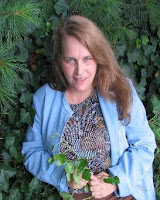 Award-winning author, Dora McAlpin has a Bachelor of Arts degree in Journalism from the University of North Carolina at Chapel Hill.
She writes under a number of different names which include D. L. McAlpin, Ivey Banks, and Z. D. Zeeks.
Her first novel, Out of the Dark won first place in the 2006 TheNextBigWriter Novel Contest, and, in 2008 another novel of hers, The Keeper of the Sparrows was a semi-finalist in the Amazon Breakthrough Novel Award.
In this interview, Dora McAlpin talks about her writing.
When did you start writing?
I was five the first time the writing frenzy took me. Not having pen and paper handy, I wrote my story in crayon on the wall of my bedroom. I was eight when I wrote my first manuscript. It was supposed to be a short story for a school project. Once I started writing it, I couldn't stop. I called it "Rascal, the Little Red Devil of Cherry Lane."
How did you decide you wanted to get published?
I can't remember ever wanting to be anything but a writer. I have notebooks full of stories, poems, songs, essays, and half-crafted novels from my growing-up years. Most of them, no one else has ever seen. I wrote them for me. The concept of 'being published' was never as important as the writing process itself. I've said often that I'd write cereal boxes for a living if that was the only kind of writing job available. Fortunately, it hasn't come to that.
I went to the University of North Carolina, Chapel Hill, and majored in journalism. I did some newspaper and magazine work and then found my professional calling as an analyst for the Department of Defense. I've got an exciting and satisfying career there.
I've continued writing fiction in my free time. Through my writing, I explore various psychological, philosophical and societal themes -- as well as purging a few personal demons along the way. It's driven by elements of my psyche that aren't necessarily consistent with my family or world personas or even my own concept of self. When I write, I do it solely for me. Kind of like a person's diary, I guess. Early on, I shared bits and pieces with my sister, Karen, and a couple of my trusted friends, but limited it to the less controversial of the works. I largely built my body of work as a secret collection. Always, my plan was to burn it all before I died or my kids shipped me off to a nursing home and found it.
In my thirties, I had to face the very real possibilitity that, given the volume of my work and the nature in which it's spread throughout my real-life and virtual homes, I might not have sufficient lead time to destroy it all. Not having it in me to destroy it then, I came to the bitter conclusion that I needed to confess so people who loved me wouldn't discover these secrets after I was gone, when it was too late for them to ask questions. At least this way, I could put the stuff in context. Still, it took a long time for me to actually get up the nerve to do it.
I started with Barry, who at that time was my boyfriend. I thought I could live with things if he hated it. After all, boyfriends aren't usually permanent, anyway. Worst-case scenario, we'd break up. He read Promises To Keep -- and loved it. He wanted me to expand the story to tell a little more about David's background. I didn't want to do that because it was already a pretty lengthy manuscript.
I wrote another manuscript detailing David's childhood ... then another ... then another. Two years and six books later, David had a fully documented childhood. And I had a husband. One of the foundations of our marriage was that he accepted me for who I am. He's never resented the hours I spend banging away at the keyboard.
The other person I shared the manuscripts with was Karen. A tell-it-like-it-is kind of person, she'd let me know if it was time to light the bonfire. She loved my stories. She read one and then another and another.
I was working my way up to my mother. I was sure she'd be mortified.
My phone rang.
"I read your book," my mother said.
My world tilted. Obviously, she'd gotten hold of one of the ones I gave Karen. I held the phone in a death grip, waiting for what might come. "Wh-wh-which one?"
"There's more than one?"
"Uh-huh." There were about fifteen by then.
"Promises To Keep," she answered. "You need to get this published. But first, there's some wording you need to fix on page 68. And I found a missing 'e' on page 109."
After some more editing and style suggestions, she asked me to send her another one. I took a deep breath and sent her Out of the Dark. And she didn't hate it!
I had a Sally Field moment. "You like me! You really like me!"
Based on this positive feedback, I slowly expanded my circle of readers. Since many of them said they thought I should try to get published, I decided I needed to find out how to go about that.
I knew the first step was to make my work as polished as it could be. I was a nonfiction writer by training and profession and a fiction writer only by instinct, so I needed to learn some of the rules for fiction. In addition to reading several books and conducting massive online reading, I joined a writers' critique group at TheNextBigWriter. I've learned a great deal there. As a bonus, I've made some wonderful online friends. I won the site's novel contest in 2006. That significantly bolstered my faith in myself as an author with the potential to be published.
I've made a few submissions. The rejections have been encouraging. Some of the editors have taken the time to provide suggestions for improvement. Thanks to them and others who care enough to help, my work keeps getting better.
While seeking publication for some of my manuscripts, I believe the right approach for a few may be to publish them myself. Though they're stories I believe need to be told, they're not the types that would attract readers in sufficient numbers to be appealing to publishers. I don't have any problem with that. Publishing is a business. The companies need to make a profit or they die and so it's understandable they need to focus their resources on the manuscripts they deem most likely to boost the bottom line.
Fortunately, my livelihood doesn't depend on finding huge markets for my work. For many of my stories, all I really want is to share them and hope a few readers passionately love them.
This also means I have a large collection of supplemental material. If one of my novels is published and a reader doesn't want the story to end, he or she will be able to visit me online to read more about the characters and their stories -- something I always want to do when I finish reading a book I really love.
Right now, I'm in the process of analyzing and sorting my works, deciding which might be suitable for submission and which I should publish independently. By the end of the year, I hope to have submission packages put together.
How would you describe the writing you are doing?
Intense.
Who is your target audience?
My manuscripts' potential audiences run across the demographics. Some will appeal largely to women while others are likely to attract male readers as well. I've written one young adult novel and am working on another. I don't really want to settle on a particular genre because I want to maintain the freedom to write whatever is most compelling to me at any given time.
At the same time, I don't want to disappoint readers who liked one of my stories and, based on that faith, decide to try another. I've organized the work into several series and collections, which should help. To further make the distinction for readers, I'm exploring the use of pseudonyms. Right now, I've got stories or excerpts on the web under my full name as well as D. L. McAlpin, Ivey Banks, and Z. D. Zeeks. I'm considering a couple others.
I'm not trying to fool anyone. I associate each name with the mood or mindset I was in when I wrote the stories. So the books with the same author name are all within the same genre and should appeal to the same readers.
Who influenced you most?
Karen. She's very creative in her own right. I can call her any time of day or night and she'll talk about my stories with me. When I'm at a crossroads and don't know which direction a story should take, I throw ideas her way. When I'm depressed because I've just had to kill off a character I really liked, I call her. So she's great for holding my hand through the writing itself. Then, when the manuscript's done, she switches the kid gloves to boxing ones and really lets me have it.
I wish every struggling writer could have a sister like Karen.
How have your personal experiences influenced your writing?
My writing always is a psychological and emotional journey. Every major life event is transformed in some way and written into the stories. I don't necessarily do it consciously. As often as not, it's only when the writing's done that I realize how much of me is really in there.
What are your main concerns as a writer?
As a personal writer, my biggest concern is that I've got way more stories in my head than I'll ever have time to set down in writing. Only one life, and so many words to write.
As a writer who shares my work, my biggest concern is that I'll gain a reader's faith only to lose it. I know it's unavoidable. Sharing more stories with more people exponentially increases the chances that I'll disappoint someone the way a few of my favorite authors have disappointed me.
I can't really fix either of those things, the time or the disappointment factor, and so I just do the best I can ... and hope for the best.
What are the biggest challenges that you face?
The only real challenge I face is in trying to keep the writing in perspective within my life.
Along with other obsessive-compulsive tendencies, I have hypergraphia, which is an overwhelming need to write or produce documentation. That obsession serves me well in both my established career as a nonfiction writer and editor and in my evolving career as a fiction writer. If I don't exercise control, though, it seriously gets in the way of my interpersonal relationships.
The most important thing in my life is my family. I want to make sure I give my children all the time and attention they need. We only have our children in our homes for a brief few years. There's so much I want to share with my children. And so I establish rules for myself about the writing so it doesn't get in the way of raising my children.
Do you write everyday?
I write something every day, but sometimes it may only be a few words scribbled onto a napkin. I really don't have rituals or set schedules. I write in the same way that many people watch TV, go online to chat, or go out dancing. It's my way of unwinding and amusing myself.
Basically, a time arrives in my daily life when nothing else requires doing, and I run for the computer. I type frantically until something makes me stop. Usually, that something is the word 'Moooooooooommmmm!'
How many books have you written so far?
Here's a list of the titles. None of them have been 'officially published', though excerpts from several are available on the web.
THE ARMAGEDDON LOST SERIES
Out of the Dark
Into the Light
Into the Daybreak
Through the Dawn
At High Noon
Beneath the Clouds
Within the Mist
Beyond the Fog
Beneath the Blue
Within Sacred Light
THE BROKEN SPARROWS SERIES
The Keeper of the Sparrows
The Fallen
The Eagle
THE PROMISES SERIES
Promises Foreshadowed
Promises To Make
Promises Pretended
Promises Reclaimed
Promises To Keep
Promises Foretold
Promises Avowed
Promised Embedded
Promises Invoked
Promises Exacted
Promises Retrieved
Promises Foresaken
Promises Unbound
Promises Fulfilled
Promises Divined (in progress)
THE ETERNALS SERIES
Tales of the Gods
Tales of the Spirits
Tales of the Spirit Walkers (in progress)
THE PUBLIC DEFENDER SERIES
The Doppelganger Scenario
Lost and Found
A Simple Matter (in progress)
ROGUE WORKS
Strangers With Candy
Laughing Out Loud
A Turn of the Page
Angels Fear (needs final edit)
Only Time Will Tell
Time and Again
The Best of Me
A Secret Worth Telling (in progress)
Holding On (in progress)
Show Me the Way (in progress)
Shades of Gray (in progress)
The Collector (in progress)
With Every Beat of My Heart (in progress)
SCREENPLAYS
Double Take
Desperate Arms
What is your latest book about?
My latest book is Promises Divined. I'm posting it in installments on a blog. I started on the first of September and expect to finish by the end of October.
Basically, I've written this story as an introduction to The Promises Series. Of all my works, that series is the biggest and most complex. Though I experimented with various ways to begin it, I finally decided the best place to start this particular story was in the middle, at the confluence of The Promises Series and The Eternals Series. This story introduces many of the main characters and serves as a bridge between the ancient times detailed in the early books and the 19th century, which is the focus of the later books.
Promises Divined tells the story of the eternal soul Adanata. He is the Keeper of the Spirit Walkers, a line of Cherokee men with supernatural powers dating back more than 5,000 years. The Spirit Walkers have a single mission -- to journey to The Cavern of the Spirits and unlock The Spirit of Knowledge from the prison to which she's been confined since the time of The Great Flood. More than a thousand men have died in the quest.
As the 19th century begins, the Spirit Walkers face new challenges as encroachment by whites increasingly threatens their people and their homeland. Adanata recognizes an even bigger threat hurtling toward Earth from a place beyond the stars. Only The Spirit of Knowledge can save the planet -- and time is running out.
Adanata has little faith in David McAllister of Early Sun Village, the current Spirit Walker and the most frustrating human to ever draw breath. But there is no time to make another. David must succeed or Earth will perish.
That's the basic gist of Promises Divined. By reading it first, someone could jump back to one of the stories that details how all this came to be or progress forward to see how David does. Because of its function as a bridge, it's a rather complicated story; I try to tell it in a way that will help the reader make sense of all the other books.
I know I'm taking a risk by putting it online because some traditional publishers might choose not to publish the series because of that history. At the same time, though, I really wanted to get feedback from readers in order to know what does and doesn't work about this manuscript. My hope is that the improved quality I can achieve from that feedback will result in a manuscript that's worthy of formal publication.
Which aspects of the work you put into the book did you find most difficult?
I think the hardest part of my writing is knowing when to stop. I struggle with that every day of my life.
I think a manuscript is almost right. I go in to make a few minor adjustments and, the next thing I know, the story has carried me off on a whole new tangent. This can be really frustrating when the story's part of a series; effects of those new events being written now have to be worked into the other stories in order to maintain consistency.
That has been my single greatest barrier to publication. It's difficult to polish a manuscript for submission when it keeps wanting to change itself.
I'm becoming a little better at setting hard end points for myself now in terms of deadlines. And I don't let myself go into my finished works very often because I know I'll only end up in the taffy pull again. I lock them down, create covers for them (all amateurish; I am not a graphic artist), and call them done.
What did you enjoy most?
Promises Divined is the first book I've written in The Promises Series in several years. So for me, writing this one was like going back and visiting old friends.
I love all my manuscripts, but Promises To Keep was the first I ever completed, so that story and its series will always be special to me. I loved being in that world again.
What sets the book apart from other things you've written?
This is the only book that I've actually written with a set purpose. I don't deal with outlines or anything like that for my fiction. For most of my work, I just write what feels right and then go back later to fix it up.
Promises Divined has a specific function -- to serve as the start point for a reader of The Promises Series. For that reason, I've had to maintain a little more control over the story evolution than I normally would. Otherwise, I could well finish it without accomplishing what I set out to do.
In what way is it similar?
This story shares characters and events with other books from The Promises Series.
On a broader scale, I would say that all my books are similar in that they are character-driven plots in which the 'why' and the 'how' are as important as the 'who, what, where, when' stuff.
What will your next book be about?
Oh, gosh, that's hard ... I have to finish all the ones I've already started.
I think my next one will be one of the Public Defender stories. I'll spend some time on that contemporary stuff and then move back into the fantasy realm to finish editing Angels Fear. It's about a fallen angel, now a demon, and his struggles to get back into God's good graces.
Then again, a whole new story could call me. If it does, I'll go where it leads.
What would you say has been your most significant achievement as a writer?
I think the most significant achievement was making the decision to share my stories with other people. From that, I've gotten rewards I never would have imagined.
Among my greatest moments are the ones in which a reader says, "You inspired me to ..." I can't imagine any greater gift a writer could receive.
Related books:
,,
Related article:
[Interview] L. Lee Lowe, author of 'Mortal Ghost', Conversations with Writers, November 3, 2008
Thursday, November 27, 2008
Lists _ Blog Novels
Updated March 24, 2010
A growing number of writers are using blogs as a way of making their literary efforts accessible to others. Below are links to some blog novels that we've been able to find. If you know of others, please do send us links and we'll include them here as well.
A growing number of writers are using blogs as a way of making their literary efforts accessible to others. Below are links to some blog novels that we've been able to find. If you know of others, please do send us links and we'll include them here as well.
- About Ben Adams by Nora
- A Change in the Weather by Robert Gould [Interview]
- a fucking awful weekend by Albert
- a million penguins, a collaborative novel by various authors
- All Saints’ Day Novel (Super-Natural Heroes) by Patricia Herlevi
- Anonymous Lawyer by Jeremy Blachman
- Bartlett House by Patricia J McLean & Duane Poncy
- Beasts of New York by Jon Evans
- Blog Love Omega Glee by Wred Fright
- Brutus Weaver by A. Chatfield
- Bull City-in-Wonderland by Mel & Al
- Chaos Fighters by William
- Chaos Fighters: Cyber Assault by William
- Colony: Alchibah, a group sci-fi blog novel
- Corvus, by L. Lee Lowe [Interview]
- County Road by Parker Pruett
- Dark Inspectre by Jason Kahn
- Diamond Walker's Blog by Thomas D'Arcy O'Donnell
- Diary of a First Year Grad Student by Jonathan Vining [Interview]
- Diary of an Asylum Seeker by Ambrose Musiyiwa
- El Adán de metal [Mechanical Adam] by Edward Lancaster
- Escape the Beast by Colin Cohen
- Five Idiots You Meet in Heaven by Chris McElwain
- Flight Paths: a networked novel, with encouragement from Kate Pullinger and Chris Joseph
- Frauds, Thieves and other Podvodniks by Colin Cohen
- Frostbite by David Wellington
- Gold Medal Murder by Cheryl Hagedorn
- Good People in Bad Times by Alex Sarmiento
- High Frequency by Nicole/Bill(?)
- House of Kidz by Colin Cohen
- imperfect seven: a romance of sins by 13
- In the Absence of White Rabbits by Alma Kroeker
- John John by Sam Smith [Interview]
- Letters To My Mother by Rebecca Heath
- Le Spirale Fantastique by Rohit Gupta
- Love After Marx by Stephen Gow
- Marionette by Timothy Sparklin
- Monster Island by David Wellington [Interview]
- Monster Nation by David Wellington
- Monster Planet by David Wellington
- Mortal Ghost by L. Lee Lowe [Interview]
- Mortal Happiness by H Z Hanssen
- My Walk by Rob Carr
- NotsoRealLifeStory by Danie Nel
- Only Begotten by Gary Glass
- PeaceMaker: a Thriller by Dan Ronco
- Plague Zone by David Wellington
- plan b by Diego Doval
- Privateers by Frank Martin
- Promises Divined by Dora McAlpin [Interview]
- Rebirth by Scott McKenzie
- Redeemer's Law by Dan Jolley
- Simon of Space by Cheeseburger Brown
- Single Mother on the Verge by anon
- So It Was Cancer by Frank Indiana
- Staying Single by Alison Norrington
- Sunset by Timothy Sparklin
- The Adventures of Rocket Boy and Lotus by Sally Warren
- The Book of the Enemy by David Wildman
- The Circle of Light by Jack Dillon
- The Fat White Woman by Clive Collins [Interview]
- The Ghost Danced by Emma Lee [Interview]
- The Grimmery by Tamyrlin Ink
- The Human Hoax by Mark Alexander
- The Meening of Life by G. R. Klein
- The Rising by Scott McKenzie
- The Tapestries of Oquis Book One: Tangled Threads by Big Mama
- The Satan Maneuver by Mark Alexander
- Thirteen Bullets by David Wellington
- Times Square by Colin Cohen
- Tread by Clayton Lindemuth
- Worlds Undone by llhaesa [Interview]
- You Might As Well Live by Carmen
Monday, November 3, 2008
[Interview] L. Lee Lowe
Short story writer and novelist, L. Lee Lowe holds an M.A. in English Literature and Linguistics from the University of Heidelberg.
She publishes her short stories on the blog, Into the Lowelands.
Her debut novel, Mortal Ghost, is also available in a variety of formats online. Readers have the added options of being able to listen to podcasts of the novel or to download it as a PDF file or e-book.
Lee Lowe was born in the United States but now lives in Germany. Before that, she spent 18 years in Zimbabwe. Currently she is working on a second novel, Corvus.
In this email interview, she talks about her concerns as a writer.
Do you write every day?
I write every day unless ill, or when family events make it impossible.
I begin with checking my email and a few blogs, then reading a new or favourite poem and one entry from an etymological dictionary.
After that, I revise what I've written the day before, sometimes more, then write till I've at least reached my daily quota, which at the moment stands at 500 words. I never stop unless I know what I'm going to try to write the next morning and will often break off in the middle of a sentence so I don't have to face a blank page, so to speak.
I'm a slow and painstaking writer and cannot just let the words flow, but rewrite and revise each sentence obsessively.
How long did it take you to write Mortal Ghost?
Mortal Ghost is the story of a homeless lad with certain uncanny gifts and a past which he's trying to escape.
It took me two years to write it, after which time I cut it to less than half its original length on the advice of my former agent. When we couldn't agree any further, I decided to publish it online, which I've not regretted. Though there's a stigma attached to this sort of literary endeavor, and the disadvantage of not having an editor, I find myself quite happy with my independence. No one tells me what to write! Undoubtedly the novel is flawed, but the flaws are at least my own, and I hope to become better at self-editing in time.
The other major disadvantage to this form of publishing is developing a readership. I don't have a publisher or publicist behind me and am obliged to do all my own 'marketing' -- not easy for someone like myself, who dislikes any form of self-promotion.
How many books have you published so far?
I'm not a published writer in the conventional sense of the word, since my fiction is only available online. I prefer to leave writing careers to those who are younger. And as far as I'm concerned, the only real satisfaction is in the process, not in number of books sold or prizes collected or dollars earned.
My young adults' fantasy novel, Mortal Ghost is available online.
With the help of theatre student, Bill Uden, and the staff of Carmarthenshire College in Wales, the novel is also being podcast as an audiobook.
What did you find most difficult when you were working on the novel?
I'm weak at plotting, since I don't plan my novel in detail -- only a few scenes and a general narrative arc -- before I begin to write.
With my second novel, Corvus -- I've tried to plot more carefully, but it seems that I can't write this way. So I now look at my first draft as a beginning and rewrite from there. Very inefficient, but the characters and their concerns need to grow in some sort of organic fashion. And I find that I like to live with them for a long time.
What did you enjoy most?
Honing phrases and sentences. I enjoy playing with words, and there is no high like the high of getting it right!
What will your next book be about?
Corvus is a science fiction/fantasy hybrid set in a slightly alternate future in which the minds of teen offenders are uploaded into computers on the pretext of rehabilitation -- a form of virtual wilderness therapy. The novel is part thriller, part love story, part riff on the nature of consciousness.
The first chapter, subject to revision, is available online.
When did you start writing?
I've been writing off and on since childhood -- poems, school plays, stories -- but only began to work in a disciplined manner when my children were starting to leave home.
I had taken a job in public relations at the University of Bonn, which I detested. It soon struck me that it was a 'now or never' situation -- either fulfill my lifelong dream to write properly or see 'office drone' carved on my tombstone.
How would you describe your writing?
I write fiction, both short stories and novels. If I had a true poetic sensibility, I would love to write poetry.
Who is your target audience?
Though I have termed my first novel a young adult fantasy, it's a category I'm uncomfortable with. I don't ever think of my readers when writing, just the text itself.
Genre is more about marketing than literature.
Who influenced you most?
In my personal life, I'd have to say my father -- and not necessarily in a positive sense. It's very difficult to grow up the child of a brilliant and impatient man.
In terms of writers, there are too many to list, though at the moment I'm particularly fascinated by the work of Breece D'J Pancake, Amy Hempel, and poet Ron Slate. Next month you'll probably get a different answer!
Also, living overseas -- in self-imposed exile, so to speak -- means that I have neither home nor language in which I'm entirely comfortable. Who am I? Where do I belong? Which English is truly mine? are questions that underlie all my attempts to find an authentic fictional voice.
What are your main concerns as a writer?
Writing beautiful and authentic sentences.
How do you deal with these concerns?
Read and read and read; write and rewrite.
The biggest challenge, of course, is to write well, but I find it very difficult to battle envy -- not of material success, but of the skill and gifts of others. I'm easily depressed by the huge gap between how I'd like to write and how I actually do. And I'm lazy as well!
How do you deal with these challenges?
Discipline has been hard-won, mostly by viewing my writing as a job and setting myself daily goals: so many words before I leave my study.
A sense of inadequacy is far more difficult to cope with, and my husband and children are very supportive in this regard. Still, I'm often frustrated and depressed.
More at OhmyNews International.
Related article:
[Interview] Robert Gould, Conversations with Writers, September 19, 2008
She publishes her short stories on the blog, Into the Lowelands.
Her debut novel, Mortal Ghost, is also available in a variety of formats online. Readers have the added options of being able to listen to podcasts of the novel or to download it as a PDF file or e-book.
Lee Lowe was born in the United States but now lives in Germany. Before that, she spent 18 years in Zimbabwe. Currently she is working on a second novel, Corvus.
In this email interview, she talks about her concerns as a writer.
Do you write every day?
I write every day unless ill, or when family events make it impossible.
I begin with checking my email and a few blogs, then reading a new or favourite poem and one entry from an etymological dictionary.
After that, I revise what I've written the day before, sometimes more, then write till I've at least reached my daily quota, which at the moment stands at 500 words. I never stop unless I know what I'm going to try to write the next morning and will often break off in the middle of a sentence so I don't have to face a blank page, so to speak.
I'm a slow and painstaking writer and cannot just let the words flow, but rewrite and revise each sentence obsessively.
How long did it take you to write Mortal Ghost?
Mortal Ghost is the story of a homeless lad with certain uncanny gifts and a past which he's trying to escape.
It took me two years to write it, after which time I cut it to less than half its original length on the advice of my former agent. When we couldn't agree any further, I decided to publish it online, which I've not regretted. Though there's a stigma attached to this sort of literary endeavor, and the disadvantage of not having an editor, I find myself quite happy with my independence. No one tells me what to write! Undoubtedly the novel is flawed, but the flaws are at least my own, and I hope to become better at self-editing in time.
The other major disadvantage to this form of publishing is developing a readership. I don't have a publisher or publicist behind me and am obliged to do all my own 'marketing' -- not easy for someone like myself, who dislikes any form of self-promotion.
How many books have you published so far?
I'm not a published writer in the conventional sense of the word, since my fiction is only available online. I prefer to leave writing careers to those who are younger. And as far as I'm concerned, the only real satisfaction is in the process, not in number of books sold or prizes collected or dollars earned.
My young adults' fantasy novel, Mortal Ghost is available online.
With the help of theatre student, Bill Uden, and the staff of Carmarthenshire College in Wales, the novel is also being podcast as an audiobook.
What did you find most difficult when you were working on the novel?
I'm weak at plotting, since I don't plan my novel in detail -- only a few scenes and a general narrative arc -- before I begin to write.
With my second novel, Corvus -- I've tried to plot more carefully, but it seems that I can't write this way. So I now look at my first draft as a beginning and rewrite from there. Very inefficient, but the characters and their concerns need to grow in some sort of organic fashion. And I find that I like to live with them for a long time.
What did you enjoy most?
Honing phrases and sentences. I enjoy playing with words, and there is no high like the high of getting it right!
What will your next book be about?
Corvus is a science fiction/fantasy hybrid set in a slightly alternate future in which the minds of teen offenders are uploaded into computers on the pretext of rehabilitation -- a form of virtual wilderness therapy. The novel is part thriller, part love story, part riff on the nature of consciousness.
The first chapter, subject to revision, is available online.
When did you start writing?
I've been writing off and on since childhood -- poems, school plays, stories -- but only began to work in a disciplined manner when my children were starting to leave home.
I had taken a job in public relations at the University of Bonn, which I detested. It soon struck me that it was a 'now or never' situation -- either fulfill my lifelong dream to write properly or see 'office drone' carved on my tombstone.
How would you describe your writing?
I write fiction, both short stories and novels. If I had a true poetic sensibility, I would love to write poetry.
Who is your target audience?
Though I have termed my first novel a young adult fantasy, it's a category I'm uncomfortable with. I don't ever think of my readers when writing, just the text itself.
Genre is more about marketing than literature.
Who influenced you most?
In my personal life, I'd have to say my father -- and not necessarily in a positive sense. It's very difficult to grow up the child of a brilliant and impatient man.
In terms of writers, there are too many to list, though at the moment I'm particularly fascinated by the work of Breece D'J Pancake, Amy Hempel, and poet Ron Slate. Next month you'll probably get a different answer!
Also, living overseas -- in self-imposed exile, so to speak -- means that I have neither home nor language in which I'm entirely comfortable. Who am I? Where do I belong? Which English is truly mine? are questions that underlie all my attempts to find an authentic fictional voice.
What are your main concerns as a writer?
Writing beautiful and authentic sentences.
How do you deal with these concerns?
Read and read and read; write and rewrite.
The biggest challenge, of course, is to write well, but I find it very difficult to battle envy -- not of material success, but of the skill and gifts of others. I'm easily depressed by the huge gap between how I'd like to write and how I actually do. And I'm lazy as well!
How do you deal with these challenges?
Discipline has been hard-won, mostly by viewing my writing as a job and setting myself daily goals: so many words before I leave my study.
A sense of inadequacy is far more difficult to cope with, and my husband and children are very supportive in this regard. Still, I'm often frustrated and depressed.
More at OhmyNews International.
Related article:
[Interview] Robert Gould, Conversations with Writers, September 19, 2008
Tuesday, October 7, 2008
[Interview] David Wellington
 David Wellington was born in Pittsburgh, Pennsylvania but currently lives in New York City.
He holds a Master of Fine Arts degree in creative writing from Penn State as well as a masters degree in Library Science from Pratt Institute.
He has written eight novels, among them Monster Island (Thunder’s Mouth Press, 2006), 13 Bullets (Three Rivers Press, 2007), Frostbite (online serialization) and Plague Zone (online serialization).
His short stories have also been featured in anthologies that include The Undead: Zombie Anthology (Permuted Press, 2005) and The Undead: Skin and Bones (Permuted Press, 2007).
In this email interview, Dave Wellington talks about his concerns as a writer
When did you start writing?
I started writing when I was six years old. I didn't publish my first book until almost thirty years later. It took a lot of practice to get it right.
How did you decide you wanted to be a published writer?
I've always believed that a writer has to be read to know if he's any good or not, and the only way to get people to read your books is to publish them. Unfortunately, that's often the hard part.
I spent a lot of time sending manuscripts to various publishers and getting very little feedback. It has become very rare that a major publisher even reads an unsolicited submission -- they just don't have the time.
What finally worked for me was putting my work on the Internet. I thought I might get a few readers who would provide me with some much needed feedback.
The results were surprising -- so many people read and enjoyed my first online novel, Monster Island, that a publisher actually approached me and asked to buy the book. I feel extraordinarily lucky.
How would you describe your writing?
I write action horror novels. Typically there are monsters involved, and people who have to fight those monsters.
Sometimes I like to try something different. My next book online doesn't have any monsters in it, for example, though some of the people are very scary. I suppose that technically makes it a thriller.
Who is your target audience?
My target audience is anyone who reads and enjoys a good story!
I write the kind of books I enjoy reading. They're fun, they're fast, and they have good solid endings.
Who influenced you most?
My main influences are the great pulp writers of the 1920s-1950s. Robert E. Howard and Clark Ashton Smith. Edgar Rice Burroughs, certainly.
More recently I've been inspired by Neil Gaiman and Terry Pratchett.
How have your personal experiences influenced your writing?
My books tend to be about fantastic subjects that are beyond normal human experience. Yet I like to give them some level of realism to keep the reader grounded.
Often I'll put in things I know about firsthand. One of my books was about an employee of the United Nations; I worked for the UN at the time I wrote it. While I was in library school, I had a book whose hero was a librarian.
What are your main concerns as a writer?
When you publish a book you establish an expectation that you'll only ever write very similar books. I love writing about monsters but I want to do other things as well. Luckily I can publish one kind of book in print and put a completely different book on the Internet, so I have the opportunity to experiment with different styles and different genres without having to worry about who will publish a given project.
What are the biggest challenges that you face?
The toughest part of writing is the first word. The blank screen is very intimidating.
Oh, and titles are very difficult, too!
Do you write everyday?
I write all day, every day. However I do take lots of breaks.
I find I write best a little at a time, a few paragraphs here, maybe another paragraph an hour later. I work a regular business day, from nine o'clock in the morning until six o'clock in the evening.
How many books have you written so far?
I have published five books so far, with a sixth due out in October, 2008. They are as follows:
- Monster Island (Thunder's Mouth Press, 2006). Zombies destroy the world, and a UN weapons inspector must travel to New York City to retrieve vital medical supplies.
- Monster Nation (Thunder's Mouth Press, 2006). In the American west, a young woman with amnesia must survive in the midst of a growing zombie epidemic. She quickly realizes that she, herself, is a zombie, although one that has retained her intelligence... and somehow gained other powers as well.
- Monster Planet (Thunder's Mouth Press, 2007). The characters of Monster Island and Monster Nation return twelve years later to battle for the future of humanity.
- 13 Bullets (Three Rivers Press, 2007). A state trooper in Pennsylvania uncovers evidence that vampires, long thought extinct, are still around and causing havoc. She must learn how to fight them with the aid of a crusty and very unlovable federal agent, the world's last, living, vampire hunter.
- 99 Coffins (Three Rivers Press, 2007). More vampires are uncovered, in fact one hundred of them, under the battlefield at Gettysburg, Pennsylvania. Soon our heroine finds herself fighting an army of vampires bent on destroying the town.
- Vampire Zero (Three Rivers Press, 2008). The heroine of 13 Bullets and 99 Coffins must confront a vampire who knows all of her secrets, and stop him from killing off his own family one member at a time.
How long did it take you to write your latest book?
My latest book, Vampire Zero, is a third volume in my vampire trilogy. It took me approximately six months to write it.
It will be published by Three Rivers Press in October, 2008.
I've worked with this publisher before and have a good relationship with them. So far I've been very lucky -- everyone there is wonderful and very easy to work with.
Which aspects of the work you put into the book did you find most difficult?
The hardest part of writing this book was finding a place to do it. Normally I work out of my home but I could not do so with this book because there were too many distractions. I found office space where I could, or worked in libraries.
What did you enjoy most?
I enjoy the whole writing process.
I love coming up with new ideas and playing with them, and also I love the actual writing when words just seem to flow and shape themselves.
What sets Vampire Zero apart from other things you've written?
This is a much more psychological book than my previous works, which were just pure action.
This one has plenty of action as well, but it also gets deeper into the minds of the characters.
In what way is it similar?
This is the third volume of a trilogy and all the characters I love come back for this one, though some of them come back very much changed from how they appeared in 99 Coffins...
What will your next book be about?
My next book will be another vampire novel. The plot of this one is a secret!
After that I'll be publishing two books about werewolves.
What would you say has been your most significant achievement as a writer?
The most exciting moment for me was when I got my first book contract. I had been working for nearly thirty years to get to that point with nothing to show for it! Suddenly I was a published writer.
My parents were extremely proud of me.
This article has also been featured on OhmyNews International.
Related books:
,,
,,
Subscribe to:
Posts (Atom)
-
 Lauri Kubuitsile writes romances novels; crime fiction; books and stories for children and teenagers; and, literary fiction. She was shor...