Showing posts with label alice lenkiewicz. Show all posts

Thursday, October 13, 2011

[Interview_4] Alice Lenkiewicz

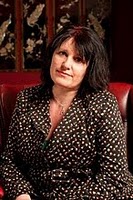
Alice Lenkiewicz is an artist and a writer. She lives in Liverpool in the United Kingdom.

Her books include the novella, Maxine (bluechrome Publishing, 2005) and the collection of poems, Men Hate Blondes (original plus, 2009).

She also publishes and edits Neon Highway, a poetry magazine that supports emerging and established poets.

In this interview, Alice Lenkiewicz talks about her concerns as a writer:

Do you write everyday?

I go through phases of writing and then not writing.

At the moment I am trying to write a little each day. I like to research.

My session usually begins with brainstorming, so I jot ideas down quite quickly. I have an idea about what I would like to write and then I set about deciding which technique I will use. What kind of format will suit the work I am writing? This usually develops after working with free verse for a while and then once I get the feel of what I am going to do I decide how structured I am going to be. It could develop in many ways.

I have just started writing a book of poems about my father and my memories of him, combining personal memories of my own and that of others. so it is kind of a memoir and poems combined.

At present there are just fleeting thoughts. You are welcome to look at my blog.

As I start to write, after a while I will begin to research certain poetry techniques and look at ways of editing my work to make it more significant. I usually continue on until I feel the piece is finished. I usually don’t plan how I will end until I have a lot more work. It’s quite a long process and takes me a while before I am satisfied with the final result.

How many books have you written so far?

I’ve had poems published in magazines and two books published.

My first book, Maxine, is a postmodern novella about a woman who slips in and out of the present and the past. Her encounters with artists and poets helps her to assess her own life and her failing marriage. The book is illustrated by myself.

My first collection of poems, Men Hate Blondes was published recently by Sam Smith from Original Plus. The book is a collection of prose and poems that revolve around memories and influences from my past.

I’ve written and illustrated a book of short fairytales, Shadows and Furore which I am now in the process of editing. I will be seeking a publisher for these stories.

I have also written and illustrated a children’s story called The Moon Angel.

I am currently developing and writing a series of poems based on a short story, "Journey of the Bride", a story exhibition that I will be exhibiting in September here in Liverpool. I will also be organising a poetry reading for the event. You can find the ongoing poems on the blog above and the images on YouTube.

I have written two complete plays: St Catherine, a play about the life of St Catherine of Alexandria and, Wrappers, a play about a middleclass couple who end up losing all their money and then are living on a council estate.

How long did it take you to write Men Hate Blondes?

It took me about a year to write Men Hate Blondes and another two years to finally get round to publishing.

The book was published in 2009 by Sam Smith from Original Plus.

Why I chose Sam Smith was based around what I had explored in terms of publishers of poetry. I had a list of publishers that I had written to in the past and who said they would look at my work at some point and this was what happened with Sam. I finally sent him my work and he said he liked it and would publish it.

It’s not easy to choose a publisher for poetry. I would possibly have looked further afield but I think if you have someone who is bothered to take time to read and discuss your entire collection then that should never be undermined. It is not easy to turn this kind of offer down especially if you are not paying a penny.

The disadvantages are that many small presses are not doing well on the financial front and mass distribution is not on the cards, more likely books are printed when ordered to avoid publishers being lumbered with a large bill due to lack of large sales. For instance, my first novella, Maxine, is now out of print due to financial problems of the publisher. This can be very time consuming and also it is not what you need but you have to accept that these things happen.

Another disadvantage is that you sometimes don’t get a commission on each book you sell. The publisher sells directly from them and gets the buying price from the customer. So, basically to get any profit off it yourself you would need to buy your books at a discount price from the publisher and then sell them as signed copies to customers for the standard price in order to receive your commission. I just have no time to do this although you do have to remember that there is very little money involved with poetry publishing anyway.

The advantages are that you are working with familiar territory, one poet to another poet/publisher and also someone you may have heard read in the past and someone who has read your work and knows of you, someone who you trust. This helps with communication and makes the ride a lot less stressful.

Another advantage is that when you read the contract you may want to consider how easily you can pull out. If this is a simple process that also takes a big burden away.

Just remember, if you are not paying any money then you are not being ripped off. Don’t ever mistake small press publishing for vanity publishing. It is not the same thing in any way at all and you should never pay to have your work published. If they want you to pay to be published then they basically don’t appreciate your work.

Which were the most difficult aspects of the work you put into Men Hate Blondes?

You have to take care and make sure you edit well although some poets see editing as destroying their work. It is all what you are trying to achieve. You have to remember that once it is in print, it is difficult to go back and correct those mistakes, so, a lot of thought and consideration should go into your final piece.

The main thing, I feel, is to find the incentive to let go of your work and seek a publisher. I personally can’t see the point in keeping your poetry hidden away but some do disagree.

Which aspects of the work did you enjoy most?

Sound and imagery are very important for me in my work as well as overall composition, so, I spent much time working on my sound combinations in certain poems. If I was to perform these how would they sound?

I read my poems out loud to get an idea on how they come across and if this is not the way I want it then it has to change. Sometimes a poem will be more visual so it is important that it looks right on the page. It is such fun to combine a variety of sounds together.

Here is an example of a sound poem from Men Hate Blondes. This is a poem that is designed to be read out loud. It is called "Blacestonia" and is a chant where I play and experiment as well as create my own language..
Blacestonia

A Chant For the Abused Woman
(Text in bold to be read by two people at the same time)

Glances reserved sequined wings span centuries
Orion’s tilted belt
Soft grey light Infirm of purpose
Swift lute

Demalian interdem
Kalera demeto kachina ingletterra
Glamus Autocumulus

Mask of cloud and chaser
Droplets descending
Oration gathered to city levellers
Spiritualised desire acts

Demalian interdem
Kalera demeto kachina ingletterra
Glamus Autocumulus
An earth ressurrection

Does it come from the centre
State of shock

Shooting live subjects in pictures
They intersect in chaos
Lest our old robes turned wild
To those who appear the born

Demalian interdem
Kalera demeto kachina ingletterra
Glamus Autocumulus
Children of darkness

She weeps, she bleeds and each new day
A gash is added to her wounds
For this wild rage and furious cruelty

Demalian interdem
Kalera demeto kachina ingletterra
Glamus Autocumulus
You lack the season of all natures sleep

Plercution whatever the subject
Tidal sister
An indecisive flutter
When moon began to flow
I dream half a dream
Ragling nightling cloudling

Demalian interdem
Kalera demeto kachina ingletterra
Glamus Autocumulus
Saveel blacestonia

Absorbing shapes of rain and shine
Between here and the blue folder
Sometimes I like to write very simple poems based around incidents that have hidden meanings as in this poem about a vampire.
maybe it’s true

a child wanted to know
why it kept him away so
we tied some together
hung it over the door…
but nothing happened.

i saw nothing but she did
she said it was him so i clutched
her to me tightly and we both
stared out the window
at the invisible bat.
What sets Men Hate Blondes apart from other things you've written?

It is a visionary and diverse collection of works that I feel probably sums up my best writing to date, not discounting St Catherine, which I enjoyed writing.

Men Hate Blondes is a poetry collection while Maxine is a novella and a story with a plot. I am pleased with Maxine as it was my final MA Creative Writing thesis that I managed to get published as a book in its own right. I put two years of hard work into that book, much study and learning. If I could edit it again, I would probably make a few more changes but overall I am proud of that book.

The only similarities between the two books are that each book contains my illustrations and artwork.

This next book is quite straight forward and could possibly develop into a children’s book.

I am writing a short book of poems, ‘Journey of the Bride’ based on a woman who runs away on her wedding day, travels abroad and has an adventure. She bumps into a fairy prince who takes her to his kingdom of peace and beauty. She eventually returns home and reunites with her jilted bridegroom and they do get married only she wakes up to discover it was all just a dream. The story developed from a series of twenty drawings. The drawings have now been accepted to be exhibited in Liverpool in September so I am now thinking of writing poems to go with the drawings and organising a poetry reading about journeys for the private view.

After that I will work on the poems about my father that I feel I need to complete.

What would you say has been your most significant achievement as a writer?

At the end of the day I am happy about Neon Highway and offering poets a chance for publication.

I am happy that I have had my work published, that I curate events and that I have produced my first full poetry collection. This was always an ambition of mine and it has now been achieved. I just keep going.

The mystery of it all keeps me inspired.

This article is based on an email interview with Alice Lenkiewicz which took place in January 2010

Related books:

,,


Related articles:

Thursday, August 25, 2011

[Interview_3] Alice Lenkiewicz

Alice Lenkiewicz is an artist, a writer and a poetry and art magazine editor.

She is also the author of a collection of poems, Men Hate Blondes (origional plus, 2009) and a novella, Maxine (Bluechrome Publishing, 2005).

In earlier interviews, she spoke about the series of events that led to her setting up Neon Highway, the magazine she edits with Jane Marsh and about some of the ways in which she approaches her work as a writer.

In this interview, Alice Lenkiewicz talks about the factors that inform her writing:

In the writing you are doing, which authors influenced you most?

This is not an easy question. I have read a number of authors who inspire me in various ways. However, I think there are certain authors who write in such a way that the impression they leave on you never quite diminishes.

For instance, Nadja by Andre Breton was always interesting to me for its semi-autobiography, its non-linear structure and references to Paris surrealists and their preoccupations and attitude toward everyday life while exploring notions of love and physical passion.

I admire Margaret Atwood. Her novel, The Handmaid’s Tale impressed me as well as Marge Piercy’s Woman on the Edge of Time. I have always engaged with the idea of women’s struggle to survive and achieve.

I am interested in the idea of victim and matron. The Handmaid's Tale provides strong imagery and reference to the idea of male dominance but also female dominance. I am always very aware of the female ‘matron’. I think this idea has been misinterpreted and undermined in our society. The idea of female gaolers. I have been a victim of male dominance as well as female power and it is not a pleasant experience. Atwood writes this well along with Marge Piercy who also draws attention to society’s prescriptive attitudes towards female madness.

This leads to my other interest, the Victorian novel and Jane Eyre, one of my favorite books along with Wide Sargasso Sea, its sequel by Jean Rhys. The Yellow Wallpaper by Charlotte Perkins Gilman is another novel that also explores the idea of Victorian female madness and Kate Millets’s The Loony Bin Trip is a fascinating read.

I am also interested in the outsider. Camus and his novel The Outsider along with Kafka’s novel, The Trial fascinates me because of the looming authority and unfairness of society and how it can falsely misjudge people.

Anais Nin interests me. I find her work, although primarily sexual also fascinating for its freedom and references to her travels and unusual experiences.

I lived in New Mexico for a year and it was there that I absorbed a new culture and read a variety of books from Latin America and the US such as Isabelle Allende and Toni Morrison. I also enjoy Angela Carter’s interpretation of the traditional fairytales. Throughout this time I lived in Los Cerrillos, New Mexico with my future husband (although I did not realize he was at the time). We camped in the canyon lands, through Utah, Nevada, on the edge of the Great Basin desert. We travelled through Seattle, Oregon and went to live in Idaho. These were all fascinating and existential experiences for me where I dropped all my links with everyday normal living and went to live in a very free and natural way without any rules or schedules. I just painted and wrote every day. It was here that I wrote my fairytales that I am now editing as well as painting many images based on the Virgin of Guadalupe.

Icons and the Virgin Mary have always been a fascination to me, their healing and the idea of beauty and compassion are powerful elements in influencing my work.

These books and experiences have all influenced me because they are about life, travel, emotions, struggles, violence and love . They make you see other cultures, other lives, other communities, suffering happiness.

It is this subject matter that interests me. I draw this into my poems and use a variety of techniques to convey my ideas. Usually I use either free verse or prose poetry. Sometimes I create more formulaic poetry depending on the kind of effect I am interested in. Men Hate Blondes, my first full collection of poems is a mixture of prose, formulaic and free verse.

How have your personal experiences influenced your writing?

I was brought up in an unusual family. My father was an artist, the Plymouth artist, Robert Lenkiewicz and his attitude to parenting was somewhat . . . different. I had a close friendship with him and he inspired me a great deal. Everything he introduced me to while I grew up was interesting. Looking back he gave me a gift and that gift was to love life and to try to make my life as interesting as possible. He was a magical person and looking back I feel very honoured to have had this kind of experience as a child, to be painted, to be tutored, to be shown an array of artistic opportunities and skills. I used to watch him paint. He used to like talking while he painted so often he would give a kind of unplanned commentary on his working process. I used to love listening to him talk about colour and tone, moods and allegory in painting. He was a very clever man, he knew what he was doing. His main love was to collect antique books and he used to show me the spells, some of which were centuries old. I used to bind his books and we talked for hours about art and our lives.

I was brought up originally in Cornwall. Robert and my mother Mouse rented a cottage. Life changed, they divorced and Robert formed his studio on the Barbican. We moved to Plymouth. My mother was poor and we lived quite a rough and meagre lifestyle moving from one flat to another. I think they were desperate times for my mother.

She and my father had both come from middleclass upbringings, my mother from Maidenhead with her own boat and parties and my father brought up in Golders Green in a hotel for Jewish refugees. My mother had come from a simple world to a bohemian whirl of misfits and now she and my dad were left to pick up the pieces. My mother did not do so well. It was difficult for her with three children and a single mum in the late 60s and early 70s. She needed support but didn’t find this for a long time.

We lived in Plymouth in a council house in a posh area which was kind of strange but life changed for the better and we made many friends who used to drop by for cups of coffees and tea before the days of internet and mobile phones. We all socialised, watched old movies and went for long walks and had our dreams.

I met my first proper boyfriend when I was 17 and moved out of home. We found a flat in a big house in Plymstock near the beach. It was beautiful there.

We drove to Cornwall often in John’s open top car. They were fun times. He was into film and often we would climb Cornish hilltops with equipment dressed very avant-garde and then he would film me in an old ruin or church, that sort of thing. We loved each other but most first loves don’t last. We moved to London and our relationship became rocky.

I had a few violent incidents in London that affected the rest of my life. I had just moved away from London with John to Brighton. Things were still a bit up in the air so we arranged to meet in London for the day and talk. Things happened that day that created a strange fate that I won’t go into but I ended up alone and wandered to my old flat in Harlesden. I was only 19 and had no idea how to look for places properly. I was attacked by a stranger when I visited my old flat badly, dragged into a room and raped and beaten. I almost died had it not been for a neighbour who heard me scream and decided to call the police.

I spent some time in counselling. For a while it ruined my life. I remember asking Robert what I should do. I said I could not forget it. I remember him turning round to me and saying, “You must forget it Alice, you must!’. I remember the look in his face and it gave me strength. I enrolled on to a kung fu course, Wu Shu Kwan Chinese boxing group in Burgess Hill. I was taught by a good man called Nurul from Bangladesh. He and his brother had started the group to help defend others who had suffered from violence. It was kind of a hobby for me at first but became more important as time went on. I trained for four years and became very fit. I passed my black belt after doing my exam in London under the examination of Mr Chang and his wife, Trish. My anger had become manageable and I was finally free to be myself again. I have them to thank for that.

Different cultures have always interested me. I have always loved to travel and meet people from all over. When I first moved to London to Harlesden, I met Anita who shared my flat. She was the same age as me about 17 and from Ghana. She and her friends opened up a new world for me. They took me to parties and cooked for me. It was great fun. She introduced me to a new world of people in London.

Later, when I lived in Lewes, East Susses outside Brighton I also met Valerie and Christine who were French. We had many years of fun in our early 20s where we travelled and were creative. I worked in the Anne of Cleves Museum in Lewes. My life was idyllic. Valerie and I would dress up and go to parties and clubbing in Brighton. We walked across the Sussex Downs and I would paint and life was really wonderful.

One day my sister, Valerie and I were sitting on Brighton beach. We decided to go to America. I had wanted to go to Russia but we ended up in the US. We started off in New York, went to Boston and down to Chicago, over to Dallas, down to New Orleans, and then up to the Grand Canyon. However our lives were changing and we ended up going our separate ways. Suddenly our differences became magnified and we all wanted different things.

Valerie went to Florida, Becky went to San Francisco and I got on a coach and decided to go where fate took me. It was very exciting. I ended up getting off the Greyhound in Santa Fe, New Mexico. This was the beginning of a new era for me in terms of how it affected my whole life. New Mexico was a magic portion creatively. I fell in love with the area and it inspired me for many years.

What are your main concerns as a writer?

This is a difficult one and it is a mixture of a few things.

In general I am quite happy with the way I am going. I enjoy the freedom I have with my work. I can write when I want and how I want to. I enjoy publishing other writers and providing other writers with a chance to be published. Some of the writers I have published are doing some great things and now have their own collections out etc so that is a really good feeling and makes me realise just how important Neon Highway has been in contributing to help poets climb the publishing ladder.

I think if I have any concerns then it is sometimes a sense of exhaustion, in terms of the aftermath of my work. Poetry needs publicity but it is not the easiest of things to publicize. Poetry is a difficult genre to get out there. I feel few people outside the small press scene know who I am so often there is sometimes a sense of where do I go next and what is it I want? Do I want to aim to publish beyond the small press and why?

When I first began writing, the idea of being a successful writer was always associated in my mind with the big publishers but having been part of the small presses and spoken to so many talented writers and critics involved with the small press scene over the years, these two boundaries have blurred for me. You start to see a very different side of writing and publishing when you produce a magazine. Small press is not about amateur writing. I have read some exceptional poetry and prose. Small presses are there to provide an opening for poets to be heard and read and if they were not there it would be very difficult for poets to find this opportunity, as poetry is kind of a closed world and is not always the easiest genre to be accepted in.

Basically, there are just so many unknown poets who deserve to be interviewed and published. I feel there needs to be more support and opportunities for up and coming poets, more radio station opportunities and far more variation in people’s level of understanding in this day and age of what constitutes poetry because poetry is fun and it’s there for everyone to enjoy and learn.

I want to carry on publishing poets and writing and illustrating my own work. Neon Highway is not only a poetry magazine serving a function to publish but it is also an art performance. It is part of my poetics. Jane Marsh, my assistant editor (my fictional alter ego) provides the link of poetry into art and of creating an ongoing timeline of poets, art and prose in print. The printed magazine is the beauty of it all, especially in this day and age where printed matter is so unfashionable.

The main challenge I face is that I am both an artist and a poet. I also curate and edit and I am a mother of two children. I have to find time to devote my energies into these areas..

Some people have suggested I work towards getting an agent but then Jane Marsh is already my agent. Sometimes I feel we both may need an extra helping hand but it’s not vital.

Related articles:

Saturday, January 29, 2011

[Interview_2] Alice Lenkiewicz

Alice Lenkiewicz is the author of Men Hate Blondes (origional plus, 2009), a poetry collection; and, Maxine (Bluechrome Publishing, 2005), a novella.

In addition to being a writer and a poet, she is also an artist and a poetry and art magazine editor.

In an earlier interview, she spoke about the series of events that led to her setting up Neon Highway, the magazine she edits with Jane Marsh.

Below, Alice Lenkiewicz talks about some of the ways in which she approaches her work as a writer:

How would you describe your writing?

I have found that what I read and how I write are different things. When creating a process of writing poetry and fiction I am quite interested in the ‘cut up’ method and using various techniques that are considered postmodern, such as playing and challenging the traditional idea of linear text, creating a variety of discourses, mixing different genres, taking note of the voice and the author and how this will affect the overall viewpoint. I enjoy challenging the idea of singular identity with inter-textual references.

Postmodern theory opened up a new ways of seeing the world and provided me with interesting ways of experimenting with language and plot. I experimented with this in my novella, Maxine, the idea of multiplicity and ‘self’. Identity and place were important parts of this book, drawing attention to the idea of metafiction.

I also experimented with the idea of fact and fiction, prescriptive versus descriptive language, the authoritative voice and the subversive voice, the idea that nothing is finite, the displacement of self, identity and place, the various ways of interpreting time.

Maxine was my final MA thesis and was written in context with the Writing Studies course I was on, that focused on theorists such as Foucault and Roland Barthes.

I am also interested in Surrealism, reinterpreting the dream and the subversive nature of fairytales and the sublime.

When it comes to poetry I am quite diverse. Sometimes I write in traditional forms and sometimes I will go outside the norms playing and experimenting with the language yet again in multiple ways. .

I read a variety of works, both traditional and alternative. I enjoy the Victorian novel and poetry such as Keats and Donne, Emily Dickinson and Sylvia Plath. I also enjoy reading works by Gertrude Stein, Albert Camus, Kafka and Carlos Williams as well as more contemporary poets such as A.C. Evans, and poets from my own magazine, Neon Highway.

I have come to appreciate language as a tool for understanding and enquiry. Language can be about sound and exploring the visual. It does not always have to make immediate sense. It’s a complex subject. But I think a variety of techniques are necessary to explore in order for writers to gain the most out of understanding their own writing process and also to find out what it is they actually enjoy.

Who is your target audience? And, what motivated you to start writing for this audience?

I am very open with the idea of my audience. I enjoy variety and I don’t celebrate the idea of being instructive or factual in my approach. I find that once you label yourself a certain kind of writer with a certain technique then people find it harder to approach your work. For instance, at one point I was known for being an ‘experimental poet’ which can get in the way of people’s thought processes and there have been times when people have said they didn’t understand what I had written when in fact it had been a traditional sonnet following traditional rhythm and metre, so it can lead to some surprisingly awkward and confusing situations.

I don’t mind people saying they don’t understand something but it needs to be for the right reasons. Also, I like to think that people can make their own minds up and therefore I feel it is up to the audience how they interpret and read my work.

On a more general level, my work could be seen as more feminist or for those who enjoy reading poetry or illustrated works, as I tend to illustrate and provide artwork and write about women’s submission and empowerment as part of my theme. But, again, it is up to the reader how they would interpret this.

Possibly related books:

,,

Possibly related articles:

Thursday, January 21, 2010

[Interview] Alice Lenkiewicz

Artist and writer Alice Lenkiewicz lives and works in Liverpool.

Her books include a poetry collection, Men Hate Blondes (origional plus, 2009) and a novella, Maxine (Bluechrome Publishing, 2005).

She also publishes and edits Neon Highway, a poetry magazine that supports emerging and established poets.

In this interview, Alice Lenkiewicz talks about the series of events that led to Neon Highway:

When did you start writing?

From a young age, I have always enjoyed writing. It was something that felt quite natural. I used to write poems as a little girl and journals and went on to become interested in writing plays.

When I was in my early 20s, I wrote my first play and went on to write two more. My first ever official positive response came after I wrote a play about Saint Catherine for a writing competition for the Oxford Touring Theatre Company. I remember feeling happy to receive a letter from them saying that it was short-listed. They sent me a very constructive, positive response. It was a lovely feeling and set me on a more focused, positive path. I wanted to continue with writing plays as a career.

I was also writing poems but I was quite reserved about reading them to anyone

How did you balance the art and the writing?

My life was always full of activity. I was creating artworks and writing as well as bringing up my children. I have always loved being a mother but it has been difficult to be a mother and artist at the same time, not just because of the work involved but because it is difficult sometimes for people to take you seriously if you are a mother as well as serious about carving out a career in art and writing but I never allowed it to hinder me. I just decided that I had chosen both and that I enjoyed both and that was it.

Art and writing have taken different rungs on the ladder throughout my life. They are each as important as the other and in many ways are now merging into one. I exhibit my work and write for publication. These are the two most important aspects of my work.

You also have a Bachelor of Arts degree in English, Art and Design as well as a Master of Arts degree in Writing Studies. How did you manage to fit studying into what was an already busy schedule?

It was later in my life, after I had travelled and had my children as well as worked on my art that I decided to go on to study for a degree. I don’t remember being introduced to the academic system in a positive light as a child. School was never top priority on my childhood list of memories or experiences. I just went, learnt what was thrown at me and swiftly left on the last day. It was just not the right kind of environment for me but I coped and got on with it.

So, having left school, continued on to an Art Foundation, which I was quite lucky to get into, considering I only had about three O-levels at the time, and proceeding onwards to live quite a reckless lifestyle in London and Brighton thereafter, I decided to begin my academic training in a new light, and get a good job.

I studied with the Open University in Sussex, at the same time studying bookbinding at Brighton Polytechnic while also studying a City & Guilds in Library and Information all of which landed me a permanent library assistant full time job at Oxford Brookes University.

I had my children in Oxford and went and did my nine to five work which, to be honest, did not make me happy. I was not suited to this kind of routine. Eventually, I could not cope any longer and I decided to go on and take my degree in English and Art at Edge Hill University in Ormskirk.

I was heavily pregnant at the time so little time for me to worry about where I was going to study. I just said “yes” and decided to look no further.

I am glad I made that choice. The college opened up new doors for me at the time. It was the lecturer and poet, Robert Sheppard who threw a creative writing lifeline to me. I was interested in the way I was being taught about poetry and that was what I needed in order to find my own voice in writing. Suddenly, I felt, I had landed in the right place, surrounded by people who interested me.

It was on the BA that I learnt about the traditions of poetry as well as other more experimental ways of expressing and writing poetry and that was the path I followed, eventually setting up my own poetry magazine, Neon Highway and providing me with the opportunity to publish and support other writers.

Possibly related books:

,,

Related articles:
  • Maxine [Book Review], by Sue Hunter,  Catalyst Reviews
  • Shelley Blake [Interview], Conversations with Writers, April 28, 2009 
  • Robert Sheppard [Featured Poet], Eyewear, October 22, 2010