Showing posts with label small press publishers. Show all posts

Monday, March 19, 2012

[Transcript] The Future of the Book Industry

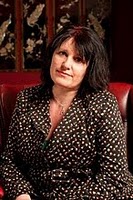
In an interview that was conducted during at the States of Independence fare which was held at De Montfort University in Leicester on March 17, 2012, David A. Bowman (Bluewood Publishing) talks about the books his company publishes and about where he sees the book publishing industry going:


Hi, I'm David Bowman. I'm one half of Bluewood Publishing. We are an international small press publisher. My business partner is actually in Christchurch, New Zealand. We publish genre fiction in ebook and print. We've been around for about two and a half years. We have about 150 titles currently available as ebooks, 32 of which are now in print.

When you say 'genre fiction', what do you mean?

Genre fiction is popular fiction as opposed to literary fiction. For example, we have alternative history, romance, western romance, fantasy, science fiction, thriller and, dark fantasy... i.e. the vampire type stories.

We also have one non-fiction title but that was because that was just such a brilliantly written manuscript we couldn't turn it down.

You use a combination of print and ebook...

Yes. We actually started in ebook rather than in print. Simply, it was a mechanism that worked for us and then we expanded into print.

Why is that? I get the impression that people are actually moving from print to ebook.

I think that's because when we formed, we had a blank canvas. Most people are coming from a background of print. We were coming from a background more as authors than as print [publishers] and, as a result, it was a manner of working that worked for us. So, we started with an ebook and then moved through into print, from that direction. So, we are going against the tide but we are going with the tide because, obviously, ebook sales continue to grow and grow and grow. In many respects, paperback sales are relatively flat. There is not growth in that market as there has been in the past.

What do you see happening to the industry? Where do you see it going?

I have both sat on panels and seen the panel [on the future of the book and the book industry] here today. I don't think there is a simple answer to that question. Ebooks are taking over and TESCOs, I think, sold 225,000 kindles in the run-up to Christmas, which is an enormous amount for a supermarket to sell. Ebooks are selling and selling and selling.

Essentially, you have two wins with an ebook.

Firstly, your ebook reader is a light device. You can carry around your entire library in your handbag or in your back-pocket.

The second is ecological. You haven't destroyed a tree to print an ebook. There is an element of people that, of course, say the ebook reader itself has taken rather more than just a tree to be produced but ebooks have a better cost profile, obviously. It costs a lot of money to print a book, particularly on a short run. If you print millions of books, you can do it a lot better. But, for a small press like ourselves, it takes a lot of investment to actually produce the printed version of the book.

Which takes us back to the question we discussed earlier... Why switch from ebooks to print?

It's not a switch. We always intended to do both but we started with the ebook because that was, for us, the easier way to do it... and then we moved through to print... but all of the print books are available as ebooks. It's just that there are a lot of ebooks we published that are a lot shorter which makes for not such an economic model for print.

One of the things that I heard today was that ebooks present a problem in the sense that a lot of ebooks that are being published are self-published and the quality is not very good and that, potentially, this has the potential of...

This is a problem. As the technology gets easier, more people get onto that technology and some of them don't understand the importance of the various steps that a publisher takes.

We copy edit and proofread every book before it is published and the author gets corrections twice, at least. We go through a third set of edits before it actually goes into print because changes to a print book after it has been printed are, obviously, both practically and financially, a lot. The consequences are a lot higher.

The ebooks people are self-publishing... it's very, very easy to do these days... all you need is, basically, a copy of Word. You don't need anything else in terms of software to be able to get out to virtually all of the major retailers... people like Amazon, people like Apple, people like Barnes and Noble in America. It's very easy to get the books out there.

What happens is that [some of the people who are self-publishing], they don't follow the methodology of publishers because they don't actually get everything printed... they don't get it all edited... they don't get it all formatted properly... and the whole thing goes. You end up with a sub-standard product and then that brings down the value of those that actually do [follow the methodology of publishers].

Did we talk about the challenges you face as publishers?

Not yet.

[Laughs]. Alright.

[Laughs]. The problem is always, we are small press... That means we are not well-known... That means our authors are not well-known... So, therefore, getting exposure, getting publicity for them is a much fight.

You know, if I had a Stephenie Meyer on my books, I wouldn't be a small press publisher. You are always looking for a book that will come along in those terms. But, in terms of [small press publishing], you have to work that much harder for each copy that you sell.

Where do you see yourself, let's say, in five years' time, as a publisher?

Hopefully with a table about 10 times this size with piles of books. [Laughs]. But, no, seriously... it's very difficult, at the moment, to work out what's going to happen in the industry. And, the advantage that we have by being a small company, is, we are nimble. We can change with the industry. So, as ebooks evolve into more complex things rather than just simply pure text, we can probably keep up with that and be ahead of the less nimble organisations such as the mainstream publishers.

Related books:

,,

Related articles:

Thursday, October 13, 2011

[Interview_4] Alice Lenkiewicz

Alice Lenkiewicz is an artist and a writer. She lives in Liverpool in the United Kingdom.

Her books include the novella, Maxine (bluechrome Publishing, 2005) and the collection of poems, Men Hate Blondes (original plus, 2009).

She also publishes and edits Neon Highway, a poetry magazine that supports emerging and established poets.

In this interview, Alice Lenkiewicz talks about her concerns as a writer:

Do you write everyday?

I go through phases of writing and then not writing.

At the moment I am trying to write a little each day. I like to research.

My session usually begins with brainstorming, so I jot ideas down quite quickly. I have an idea about what I would like to write and then I set about deciding which technique I will use. What kind of format will suit the work I am writing? This usually develops after working with free verse for a while and then once I get the feel of what I am going to do I decide how structured I am going to be. It could develop in many ways.

I have just started writing a book of poems about my father and my memories of him, combining personal memories of my own and that of others. so it is kind of a memoir and poems combined.

At present there are just fleeting thoughts. You are welcome to look at my blog.

As I start to write, after a while I will begin to research certain poetry techniques and look at ways of editing my work to make it more significant. I usually continue on until I feel the piece is finished. I usually don’t plan how I will end until I have a lot more work. It’s quite a long process and takes me a while before I am satisfied with the final result.

How many books have you written so far?

I’ve had poems published in magazines and two books published.

My first book, Maxine, is a postmodern novella about a woman who slips in and out of the present and the past. Her encounters with artists and poets helps her to assess her own life and her failing marriage. The book is illustrated by myself.

My first collection of poems, Men Hate Blondes was published recently by Sam Smith from Original Plus. The book is a collection of prose and poems that revolve around memories and influences from my past.

I’ve written and illustrated a book of short fairytales, Shadows and Furore which I am now in the process of editing. I will be seeking a publisher for these stories.

I have also written and illustrated a children’s story called The Moon Angel.

I am currently developing and writing a series of poems based on a short story, "Journey of the Bride", a story exhibition that I will be exhibiting in September here in Liverpool. I will also be organising a poetry reading for the event. You can find the ongoing poems on the blog above and the images on YouTube.

I have written two complete plays: St Catherine, a play about the life of St Catherine of Alexandria and, Wrappers, a play about a middleclass couple who end up losing all their money and then are living on a council estate.

How long did it take you to write Men Hate Blondes?

It took me about a year to write Men Hate Blondes and another two years to finally get round to publishing.

The book was published in 2009 by Sam Smith from Original Plus.

Why I chose Sam Smith was based around what I had explored in terms of publishers of poetry. I had a list of publishers that I had written to in the past and who said they would look at my work at some point and this was what happened with Sam. I finally sent him my work and he said he liked it and would publish it.

It’s not easy to choose a publisher for poetry. I would possibly have looked further afield but I think if you have someone who is bothered to take time to read and discuss your entire collection then that should never be undermined. It is not easy to turn this kind of offer down especially if you are not paying a penny.

The disadvantages are that many small presses are not doing well on the financial front and mass distribution is not on the cards, more likely books are printed when ordered to avoid publishers being lumbered with a large bill due to lack of large sales. For instance, my first novella, Maxine, is now out of print due to financial problems of the publisher. This can be very time consuming and also it is not what you need but you have to accept that these things happen.

Another disadvantage is that you sometimes don’t get a commission on each book you sell. The publisher sells directly from them and gets the buying price from the customer. So, basically to get any profit off it yourself you would need to buy your books at a discount price from the publisher and then sell them as signed copies to customers for the standard price in order to receive your commission. I just have no time to do this although you do have to remember that there is very little money involved with poetry publishing anyway.

The advantages are that you are working with familiar territory, one poet to another poet/publisher and also someone you may have heard read in the past and someone who has read your work and knows of you, someone who you trust. This helps with communication and makes the ride a lot less stressful.

Another advantage is that when you read the contract you may want to consider how easily you can pull out. If this is a simple process that also takes a big burden away.

Just remember, if you are not paying any money then you are not being ripped off. Don’t ever mistake small press publishing for vanity publishing. It is not the same thing in any way at all and you should never pay to have your work published. If they want you to pay to be published then they basically don’t appreciate your work.

Which were the most difficult aspects of the work you put into Men Hate Blondes?

You have to take care and make sure you edit well although some poets see editing as destroying their work. It is all what you are trying to achieve. You have to remember that once it is in print, it is difficult to go back and correct those mistakes, so, a lot of thought and consideration should go into your final piece.

The main thing, I feel, is to find the incentive to let go of your work and seek a publisher. I personally can’t see the point in keeping your poetry hidden away but some do disagree.

Which aspects of the work did you enjoy most?

Sound and imagery are very important for me in my work as well as overall composition, so, I spent much time working on my sound combinations in certain poems. If I was to perform these how would they sound?

I read my poems out loud to get an idea on how they come across and if this is not the way I want it then it has to change. Sometimes a poem will be more visual so it is important that it looks right on the page. It is such fun to combine a variety of sounds together.

Here is an example of a sound poem from Men Hate Blondes. This is a poem that is designed to be read out loud. It is called "Blacestonia" and is a chant where I play and experiment as well as create my own language..
Blacestonia

A Chant For the Abused Woman
(Text in bold to be read by two people at the same time)

Glances reserved sequined wings span centuries
Orion’s tilted belt
Soft grey light Infirm of purpose
Swift lute

Demalian interdem
Kalera demeto kachina ingletterra
Glamus Autocumulus

Mask of cloud and chaser
Droplets descending
Oration gathered to city levellers
Spiritualised desire acts

Demalian interdem
Kalera demeto kachina ingletterra
Glamus Autocumulus
An earth ressurrection

Does it come from the centre
State of shock

Shooting live subjects in pictures
They intersect in chaos
Lest our old robes turned wild
To those who appear the born

Demalian interdem
Kalera demeto kachina ingletterra
Glamus Autocumulus
Children of darkness

She weeps, she bleeds and each new day
A gash is added to her wounds
For this wild rage and furious cruelty

Demalian interdem
Kalera demeto kachina ingletterra
Glamus Autocumulus
You lack the season of all natures sleep

Plercution whatever the subject
Tidal sister
An indecisive flutter
When moon began to flow
I dream half a dream
Ragling nightling cloudling

Demalian interdem
Kalera demeto kachina ingletterra
Glamus Autocumulus
Saveel blacestonia

Absorbing shapes of rain and shine
Between here and the blue folder
Sometimes I like to write very simple poems based around incidents that have hidden meanings as in this poem about a vampire.
maybe it’s true

a child wanted to know
why it kept him away so
we tied some together
hung it over the door…
but nothing happened.

i saw nothing but she did
she said it was him so i clutched
her to me tightly and we both
stared out the window
at the invisible bat.
What sets Men Hate Blondes apart from other things you've written?

It is a visionary and diverse collection of works that I feel probably sums up my best writing to date, not discounting St Catherine, which I enjoyed writing.

Men Hate Blondes is a poetry collection while Maxine is a novella and a story with a plot. I am pleased with Maxine as it was my final MA Creative Writing thesis that I managed to get published as a book in its own right. I put two years of hard work into that book, much study and learning. If I could edit it again, I would probably make a few more changes but overall I am proud of that book.

The only similarities between the two books are that each book contains my illustrations and artwork.

This next book is quite straight forward and could possibly develop into a children’s book.

I am writing a short book of poems, ‘Journey of the Bride’ based on a woman who runs away on her wedding day, travels abroad and has an adventure. She bumps into a fairy prince who takes her to his kingdom of peace and beauty. She eventually returns home and reunites with her jilted bridegroom and they do get married only she wakes up to discover it was all just a dream. The story developed from a series of twenty drawings. The drawings have now been accepted to be exhibited in Liverpool in September so I am now thinking of writing poems to go with the drawings and organising a poetry reading about journeys for the private view.

After that I will work on the poems about my father that I feel I need to complete.

What would you say has been your most significant achievement as a writer?

At the end of the day I am happy about Neon Highway and offering poets a chance for publication.

I am happy that I have had my work published, that I curate events and that I have produced my first full poetry collection. This was always an ambition of mine and it has now been achieved. I just keep going.

The mystery of it all keeps me inspired.

This article is based on an email interview with Alice Lenkiewicz which took place in January 2010

Related books:

,,


Related articles:

Wednesday, September 7, 2011

[Interview_2] John Eppel

John Eppel is a teacher, an award-winning poet, short story writer and novelist.

His books include the poetry collections, Spoils of War (The Carrefour Press, 1989) and Songs My Country Taught Me (Weaver Press, 2005) as well as the novels, Hatchings (amaBooks, 2006) and Absent: The English Teacher (Weaver Press, 2009).

In this interview, John Eppel talks about Together (amaBooks, 2011), his latest book:

How would you describe Together?

My latest book, Together, is a joint affair, combining poems and short stories by Julius Chingono and me; so it’s our latest book – a poignant phrase since Julius did not live to see it in print.

I wrote my portion of the book in 2008. Since I was earning almost nothing as a teacher, I applied for a year’s leave, and wrote three books: a novel, Absent: the English Teacher, a collection of short stories, White Man Walking, and a collection of poems, Landlocked. I sent them to Weaver Press who accepted the novel but rejected the poems and short stories. It was from these rejected items that my contribution to Together was made.

I sent Landlocked to three other publishers, Snailpress (Cape Town), Bloodaxe (UK), Carcanet Press (UK), all of whom rejected it.

Then Julius and I met with Brian Jones and Jane Morris of amaBooks, and we decided to bring out a joint volume. The title was suggested by Brian, and the project was generously supported by the Zimbabwe Culture Fund Trust. Dr Drew Shaw of Midlands State University agreed to write an introduction, and it wasn’t long before the University of New Orleans Press and the University of Kwazulu-Natal Press agreed to co-publish.

What advantages and/or disadvantages has your choice of publishers presented?

amaBooks of Bulawayo would have been my first choice for all my books, but they seldom have the wherewithal to finance a publication; that is largely because they have the commitment (and courage) to promote new Zimbabwean writing, including poetry, which almost nobody buys. Indeed, more people write poetry than read it!

An obvious disadvantage with a small, underfunded publisher like amaBooks, is distribution; and the sort of promotion you get with big publishers, like book-signings at major retail outlets, appearances on radio and television etc.

A huge advantage for a writer like me, who has a tiny readership, is that small publishers, who are more committed to promoting literature than to profiteering, will accept my books. My most recent, still unpublished novel, The Boy Who Loved Camping, spent more than seven months with Penguin South Africa before it was rejected on the grounds that the publishers did not think they could make a commercial success of it.

One significant way amaBooks has dealt with these problems, in the case of Together, has been to persuade publishers from two other countries to co-publish. That can only benefit the distribution and the promotion of the book.

Which aspects of the work you put into the book did you find most difficult?

I didn’t find anything difficult. The publishers, on the other hand, were particularly disturbed by one of my stories, “Of the Fist”, set during the run-up to the 2008 Presidential elections, which they asked me to omit. It’s a very violent story about political rape and murder, based on a real incident. Come to think of it, most of my stories and poems in this anthology are based on real incidents. We replaced “Of the Fist” with a harmless satirical sketch called “The CWM”.

For most of my writing life, I have thought of my predicament as someone who is neither African nor European to be a disadvantage; as if, somehow, I had slipped through a crack; but now that my years as a Zimbabwean have caught up with my years as a Rhodesian, the crack has metamorphosed into a threshold, a magical place where opposites merge, where contradictions become paradoxes. Now I don’t have the bitter thought that I am neither African nor European; I have the sweet sensation that I am African and European. And it is this aspect of my work that I have enjoyed most. I can imagine cutting-edge experts in postcolonial literature snorting at these sentiments, but I’m too old now to care.

What sets Together apart from other things you've written?

The potent symbolism of two elderly Zimbabweans from different cultures, races, regions… coming together and sealing a fissure. It’s a pity one of us isn’t a woman!

In what way is it similar to the others?

It is steeped in irony, which can so easily be misread.

It is frequently funny in the way that a cartoon is funny. When Ranka Primorac said, in an essay entitled “Poised for Literature’s Last Laugh”, that “There is remarkably little laughter resonating across the history of Zimbabwean literature”, she swept Julius Chingono and me under the carpet.

How many books have you written so far?
  • Spoils of War, 1989 (The Carrefour Press, Cape town), poetry.
  • DGG Berry’s The Great North Road, 1992 (The Carrefour Press, Cape Town and Hippogriff, Johannesburg), novel.
  • Hatchings, 1993 (The Carrefour Press, Cape Town), novel. [re-published by amaBooks in 2006]
  • The Giraffe Man, 1994 (Queillerie, Pretoria), novel
  • Sonata for Matabeleland, 1995 (Snailpress, Cape Town and Baobab, Harare), poetry.
  • Selected Poems 1965-1995, 2001 (Childline).
  • The Curse of the Ripe Tomato, 2001 (amaBooks, Bulawayo), novel.
  • The Holy Innocents, 2002 (amaBooks, Bulawayo), novel
  • The Caruso of Colleen Bawn, 2004 (amaBooks, Bulawayo), poems and short stories.
  • Songs My Country Taught Me, 2005 (Weaver Press, Harare), poetry.
  • White Man Crawling, 2007 (amaBooks, Bulawayo), poems and short stories.
  • The Boy Who Loved Camping, 2008 [awaiting a publisher], novel.
  • Absent: The English Teacher, 2009 (Weaver Press, Harare and Jacana, Johannesburg) novel.
  • Together, with Julius Chingono, 2011 (amaBooks, Bulawayo and UNO, New Orleans and UKZN, Durban), poems and short stories.
What would you say has been your most significant achievement as a writer?

I think, the way I have learned to fuse, mainly through parody, prosody with socio-political commentary.

In my poems in Together, you will find examples of the Blues, the sestina, the haiku, the ballad, the sonnet, the Sapphic, vers libre, dramatic monologue, pure lyric... I even invented a new form, which I (no longer secretly) call duodecadina. It is called “Yet another Flower Poem” and it consists of two ten-line stanzas. Each line consists of fifteen syllables, and the end words of the first stanza are repeated exactly in the end words of the second stanza. If you don’t notice all these details when you read it (with enjoyment!) it succeeds. It is an attempt at the art which conceals art. Of course, a lot of this has to do with healthy self-mockery.

Do you write every day?

I write during school holidays and occasionally over the weekends.

With poetry I get an image or a rhythmic cluster of words, almost never an idea. The moment of inspiration is passive, like a flower awaiting pollination. With prose (most of the time), it’s the other way round, a bee looking for a flower to pollinate.

In a sense, my writing never ends - it stops.

Photo credit: Ben Williams, Books LIVE

Related books:

,,

Related articles:

Thursday, August 25, 2011

[Interview_3] Alice Lenkiewicz

Alice Lenkiewicz is an artist, a writer and a poetry and art magazine editor.

She is also the author of a collection of poems, Men Hate Blondes (origional plus, 2009) and a novella, Maxine (Bluechrome Publishing, 2005).

In earlier interviews, she spoke about the series of events that led to her setting up Neon Highway, the magazine she edits with Jane Marsh and about some of the ways in which she approaches her work as a writer.

In this interview, Alice Lenkiewicz talks about the factors that inform her writing:

In the writing you are doing, which authors influenced you most?

This is not an easy question. I have read a number of authors who inspire me in various ways. However, I think there are certain authors who write in such a way that the impression they leave on you never quite diminishes.

For instance, Nadja by Andre Breton was always interesting to me for its semi-autobiography, its non-linear structure and references to Paris surrealists and their preoccupations and attitude toward everyday life while exploring notions of love and physical passion.

I admire Margaret Atwood. Her novel, The Handmaid’s Tale impressed me as well as Marge Piercy’s Woman on the Edge of Time. I have always engaged with the idea of women’s struggle to survive and achieve.

I am interested in the idea of victim and matron. The Handmaid's Tale provides strong imagery and reference to the idea of male dominance but also female dominance. I am always very aware of the female ‘matron’. I think this idea has been misinterpreted and undermined in our society. The idea of female gaolers. I have been a victim of male dominance as well as female power and it is not a pleasant experience. Atwood writes this well along with Marge Piercy who also draws attention to society’s prescriptive attitudes towards female madness.

This leads to my other interest, the Victorian novel and Jane Eyre, one of my favorite books along with Wide Sargasso Sea, its sequel by Jean Rhys. The Yellow Wallpaper by Charlotte Perkins Gilman is another novel that also explores the idea of Victorian female madness and Kate Millets’s The Loony Bin Trip is a fascinating read.

I am also interested in the outsider. Camus and his novel The Outsider along with Kafka’s novel, The Trial fascinates me because of the looming authority and unfairness of society and how it can falsely misjudge people.

Anais Nin interests me. I find her work, although primarily sexual also fascinating for its freedom and references to her travels and unusual experiences.

I lived in New Mexico for a year and it was there that I absorbed a new culture and read a variety of books from Latin America and the US such as Isabelle Allende and Toni Morrison. I also enjoy Angela Carter’s interpretation of the traditional fairytales. Throughout this time I lived in Los Cerrillos, New Mexico with my future husband (although I did not realize he was at the time). We camped in the canyon lands, through Utah, Nevada, on the edge of the Great Basin desert. We travelled through Seattle, Oregon and went to live in Idaho. These were all fascinating and existential experiences for me where I dropped all my links with everyday normal living and went to live in a very free and natural way without any rules or schedules. I just painted and wrote every day. It was here that I wrote my fairytales that I am now editing as well as painting many images based on the Virgin of Guadalupe.

Icons and the Virgin Mary have always been a fascination to me, their healing and the idea of beauty and compassion are powerful elements in influencing my work.

These books and experiences have all influenced me because they are about life, travel, emotions, struggles, violence and love . They make you see other cultures, other lives, other communities, suffering happiness.

It is this subject matter that interests me. I draw this into my poems and use a variety of techniques to convey my ideas. Usually I use either free verse or prose poetry. Sometimes I create more formulaic poetry depending on the kind of effect I am interested in. Men Hate Blondes, my first full collection of poems is a mixture of prose, formulaic and free verse.

How have your personal experiences influenced your writing?

I was brought up in an unusual family. My father was an artist, the Plymouth artist, Robert Lenkiewicz and his attitude to parenting was somewhat . . . different. I had a close friendship with him and he inspired me a great deal. Everything he introduced me to while I grew up was interesting. Looking back he gave me a gift and that gift was to love life and to try to make my life as interesting as possible. He was a magical person and looking back I feel very honoured to have had this kind of experience as a child, to be painted, to be tutored, to be shown an array of artistic opportunities and skills. I used to watch him paint. He used to like talking while he painted so often he would give a kind of unplanned commentary on his working process. I used to love listening to him talk about colour and tone, moods and allegory in painting. He was a very clever man, he knew what he was doing. His main love was to collect antique books and he used to show me the spells, some of which were centuries old. I used to bind his books and we talked for hours about art and our lives.

I was brought up originally in Cornwall. Robert and my mother Mouse rented a cottage. Life changed, they divorced and Robert formed his studio on the Barbican. We moved to Plymouth. My mother was poor and we lived quite a rough and meagre lifestyle moving from one flat to another. I think they were desperate times for my mother.

She and my father had both come from middleclass upbringings, my mother from Maidenhead with her own boat and parties and my father brought up in Golders Green in a hotel for Jewish refugees. My mother had come from a simple world to a bohemian whirl of misfits and now she and my dad were left to pick up the pieces. My mother did not do so well. It was difficult for her with three children and a single mum in the late 60s and early 70s. She needed support but didn’t find this for a long time.

We lived in Plymouth in a council house in a posh area which was kind of strange but life changed for the better and we made many friends who used to drop by for cups of coffees and tea before the days of internet and mobile phones. We all socialised, watched old movies and went for long walks and had our dreams.

I met my first proper boyfriend when I was 17 and moved out of home. We found a flat in a big house in Plymstock near the beach. It was beautiful there.

We drove to Cornwall often in John’s open top car. They were fun times. He was into film and often we would climb Cornish hilltops with equipment dressed very avant-garde and then he would film me in an old ruin or church, that sort of thing. We loved each other but most first loves don’t last. We moved to London and our relationship became rocky.

I had a few violent incidents in London that affected the rest of my life. I had just moved away from London with John to Brighton. Things were still a bit up in the air so we arranged to meet in London for the day and talk. Things happened that day that created a strange fate that I won’t go into but I ended up alone and wandered to my old flat in Harlesden. I was only 19 and had no idea how to look for places properly. I was attacked by a stranger when I visited my old flat badly, dragged into a room and raped and beaten. I almost died had it not been for a neighbour who heard me scream and decided to call the police.

I spent some time in counselling. For a while it ruined my life. I remember asking Robert what I should do. I said I could not forget it. I remember him turning round to me and saying, “You must forget it Alice, you must!’. I remember the look in his face and it gave me strength. I enrolled on to a kung fu course, Wu Shu Kwan Chinese boxing group in Burgess Hill. I was taught by a good man called Nurul from Bangladesh. He and his brother had started the group to help defend others who had suffered from violence. It was kind of a hobby for me at first but became more important as time went on. I trained for four years and became very fit. I passed my black belt after doing my exam in London under the examination of Mr Chang and his wife, Trish. My anger had become manageable and I was finally free to be myself again. I have them to thank for that.

Different cultures have always interested me. I have always loved to travel and meet people from all over. When I first moved to London to Harlesden, I met Anita who shared my flat. She was the same age as me about 17 and from Ghana. She and her friends opened up a new world for me. They took me to parties and cooked for me. It was great fun. She introduced me to a new world of people in London.

Later, when I lived in Lewes, East Susses outside Brighton I also met Valerie and Christine who were French. We had many years of fun in our early 20s where we travelled and were creative. I worked in the Anne of Cleves Museum in Lewes. My life was idyllic. Valerie and I would dress up and go to parties and clubbing in Brighton. We walked across the Sussex Downs and I would paint and life was really wonderful.

One day my sister, Valerie and I were sitting on Brighton beach. We decided to go to America. I had wanted to go to Russia but we ended up in the US. We started off in New York, went to Boston and down to Chicago, over to Dallas, down to New Orleans, and then up to the Grand Canyon. However our lives were changing and we ended up going our separate ways. Suddenly our differences became magnified and we all wanted different things.

Valerie went to Florida, Becky went to San Francisco and I got on a coach and decided to go where fate took me. It was very exciting. I ended up getting off the Greyhound in Santa Fe, New Mexico. This was the beginning of a new era for me in terms of how it affected my whole life. New Mexico was a magic portion creatively. I fell in love with the area and it inspired me for many years.

What are your main concerns as a writer?

This is a difficult one and it is a mixture of a few things.

In general I am quite happy with the way I am going. I enjoy the freedom I have with my work. I can write when I want and how I want to. I enjoy publishing other writers and providing other writers with a chance to be published. Some of the writers I have published are doing some great things and now have their own collections out etc so that is a really good feeling and makes me realise just how important Neon Highway has been in contributing to help poets climb the publishing ladder.

I think if I have any concerns then it is sometimes a sense of exhaustion, in terms of the aftermath of my work. Poetry needs publicity but it is not the easiest of things to publicize. Poetry is a difficult genre to get out there. I feel few people outside the small press scene know who I am so often there is sometimes a sense of where do I go next and what is it I want? Do I want to aim to publish beyond the small press and why?

When I first began writing, the idea of being a successful writer was always associated in my mind with the big publishers but having been part of the small presses and spoken to so many talented writers and critics involved with the small press scene over the years, these two boundaries have blurred for me. You start to see a very different side of writing and publishing when you produce a magazine. Small press is not about amateur writing. I have read some exceptional poetry and prose. Small presses are there to provide an opening for poets to be heard and read and if they were not there it would be very difficult for poets to find this opportunity, as poetry is kind of a closed world and is not always the easiest genre to be accepted in.

Basically, there are just so many unknown poets who deserve to be interviewed and published. I feel there needs to be more support and opportunities for up and coming poets, more radio station opportunities and far more variation in people’s level of understanding in this day and age of what constitutes poetry because poetry is fun and it’s there for everyone to enjoy and learn.

I want to carry on publishing poets and writing and illustrating my own work. Neon Highway is not only a poetry magazine serving a function to publish but it is also an art performance. It is part of my poetics. Jane Marsh, my assistant editor (my fictional alter ego) provides the link of poetry into art and of creating an ongoing timeline of poets, art and prose in print. The printed magazine is the beauty of it all, especially in this day and age where printed matter is so unfashionable.

The main challenge I face is that I am both an artist and a poet. I also curate and edit and I am a mother of two children. I have to find time to devote my energies into these areas..

Some people have suggested I work towards getting an agent but then Jane Marsh is already my agent. Sometimes I feel we both may need an extra helping hand but it’s not vital.

Related articles:

Thursday, January 28, 2010

[Featured Author] John Grant

The Low Down on High Fantasy
By Alexander James

When it comes to fantasy and science fiction, Paul Barnett has both feet planted firmly on the ground.

And as a lifelong champion of literary quality under the pen name, John Grant, his stance against humdrum and gender-driven books has earned him a place at the top, with over 60 best sellers under his belt, both fiction and non-fiction.

Among the latter are two standard authorities in their fields: Encyclopedia of Walt Disney’s Animated Characters and, with John Clute, The Encyclopedia of Fantasy, for which he received the Hugo, Locus, Eaton, Mythopoeic Society and World Fantasy awards. He has also received a rare British Science Fiction Association Special Award and been shortlisted for the British Fantasy Society Award and Bram Stoker Award.

Two-time Hugo winner for his trailblazing science fiction/fantasy work, his novels include Albion and The World. For younger readers he has written the 12 novels in the Legends of Lone Wolf series, tied to the gamebooks by Joe Dever, as well as retellings of Frankenstein and Dr. Jekyll and Mr. Hyde.

His most recent books are Enchanted World: The Art of Anne Sudworth, Perceptualistics: Art by Jael and Masters of Animation and his quasi-mythology Dragonhenge. And in a courageous move from giant publishers to a small independent house, John published his new fantasy, Far Enough Window through BeWrite Books; his Sci Fi adventure Hundredfold Problem and re-released Earthdoom with David Langford – who with 24 Hugo Awards, has the largest arsenal of these rocket trophies outside the USA and the second largest in the world.

No-nonsense workaholic John has since become Consultant Editor (Sci Fi and Fantasy) with BeWrite and has introduced other mainstream authors to the UK-based house in a bid to break the restraints of mainstream houses he believes hold back writers by demanding that they work to an established commercial formula.

John was born in Aberdeen, Scotland but has lived for many years in the New Jersey countryside with his wife, Pamela D. Scoville, owner of the Animation Art Guild. Apart from his own books, he has lost count of those he’s ghosted and edited … certainly well over a thousand!

His rise to fame came when losing his job as senior commissioning books editor at a major UK publisher back in 1980 turned out to be a blessing in disguise.

He said:

I was living in Exeter – a long way from London, which was where most of the UK publishing jobs were – and I had no money and a wife and young daughter to support. Because of the young daughter, I didn’t anyway much want to move back to London; better, I thought, that she should spend her childhood away from the big city. So my only option was freelance work – either as an editor or as a writer, or, nervously backing both horses.

At the time I’d published a couple of books under the house name I’d created especially for those, John Grant. It seemed sensible to launch my fledgling writing career using a name that already had a couple of books under its belt. Now, of course, I wish I’d not taken that decision; it causes a fair amount of confusion, and anyway ‘John Grant’ is a lousy name for a writer, because it lacks any … hmm … memorability. But I’m stuck with it, especially since winning awards under that name.

Of course, the original idea was that, once I’d worked out which of the two horses was going to win the race, I’d jump onto it and regard the other as merely an ancillary ride, as it were. But I’ve never yet quite managed the trick. So I now have a full-time career as Paul Barnett the editor and another full-time career as John Grant the writer. It makes for a busy life, and often a complicated one; and it can make me pretty difficult to work with, too, I guess. Yet I myself still feel that my more important work is what I’ve done as a writer, and more specifically as a fantasy writer.
Of his fantasy work, top US reviewer Lou Anders said:

Each story from John Grant is like a single facet of a larger jewel. Just as the surrealist Salvador Dali utilized the repetition of certain images and themes across his body of work, so Grant weaves characters, gods and images through all of his novels and stories – each part of a brilliantly conceived cosmology that rivals in richness the work of famous fantasist Michael Moorcock and HP Lovecraft.
John broke new ground with his Legends of the Lone Wolf series with its game tie-in. But it wasn’t his first venture into the fantastic.

He said:

I’d actually made a few minor contributions. I’d edited, Aries 1 and I’d written two humorous sf/fantasy-sort-of fiction books, Sex Secrets of Ancient Atlantis and The Truth About the Flaming Ghoulies, not to mention the parody disaster novel Dave Langford and I had done together, Earthdoom. So I wasn’t a complete virgin.

However, I was a bit startled when I was asked to write this series of novels – initially four of them, in the end 12 – because this type of high, fighting fantasy wasn’t the sort of fantasy I’d hitherto been much interested in. Indeed, I’ll go further than that: at the time I wasn’t much interested in fantasy at all, because too much of what I’d read was the kind of generic crap that still, sadly, constitutes most of what’s published in the field. It seemed to me that fantasy, as a literary form, was a dead end; all the good stuff had already been done by people like C.S. Lewis and George Macdonald and Alan Garner and Lewis Carroll and Mervyn Peake and Diana Wynne Jones.

In short, I was a bit ignorant, and hadn’t realized the possibilities within fantasy. I’ve since become a complete convert, to the point that I will argue at great length to anyone prepared to listen that fantasy is the single most important form of literature the human species has ever invented and, as such, is one of the most important means of expression available to us.

The novels started off as mere tie-ins, but I had the advantage of having a publisher who was completely ignorant of fantasy and completely uninterested in learning anything about it. The first half-dozen or so of the novels were marked by constant arguments, and a couple of them were butchered before publication; but thereafter the publisher got bored and more or less left me to do as I pleased. Which was great!

What I was able to do was, with only a couple of exceptions, make each of the novels different from each other in tone, atmosphere, “feel”, construction, style, you name it, so that I could get away from that awful tie-in drabness you so often see and produce novels that were actually, you know, novels. I always remind people that, if they properly want to understand what I’m up to as a fantasist, they should read The Birthplace, which was #7 in the series, plus a couple of the others, notably The Rotting Land (#12).

There’s a nice postscript to the story. I’ve recently been in touch with an Italian publisher who wants to reissue the whole series in four three-novels-apiece volumes, with me ‘reconstituting’ the texts the way they ought originally to have been published – and at the same time allowing me, in the earlier novels, to quietly amend some of my more egregious deficiencies as a quasi-youthful writer. It’s going to be a vast amount of work, of course; but once I have the ‘real’ texts set in order for them I’ll be able to hawk the books around publishers in the English-language market as well.
John’s Albion and The World crystallize his idea of a ‘polycosmos’ and he rates The World as among his most ambitious and important works of fantasy.

He said:

The stuff I was up to in the Lone Wolf books had convinced me that there was a lot that could be done with High Fantasy, something I’d not have credited before. Also, though by this time I was being allowed quite a lot of creative freedom in the Lone Wolf books, there were some things – including ridiculously trivial things, like using the word ‘shit’ – that I wasn’t allowed to do before. So Albion represented for me something of an unfurling of the wings, an exploring of the freedoms I’d discovered existed within fantasy that weren’t being explored by most of the other kids in the playpark.

Even at the time I thought that first flight wasn’t a frightfully successful one, but the critics disagreed and, far more importantly, so did my publisher, who was I think appalled when I turned in the manuscript of The World to her. (The book ended up being published in the middle of December, doom time for any book, so that by the time the generally astonishingly good reviews started coming in the book was halfway to the remainder tables.) It was supposed to be a nice, cozy bit of formulaic High Fantasy, and yet here was me bringing in stuff from quantum mechanics, telling bits of the story in a vaguely Damon Runyonesque style, switching between one reality and another, smashing universes together, and so on and so on and so on.

The structure of the book mimicked that of a black hole, with the first part as the accretion disk, the second as the plummet from the event horizon to the singularity, and the third the emergence into the fresh ‘elsewhere’; I tried to get some of that into the various writing styles I used, too. There was lots of other stuff in there as well. I’m still amazed by my ambitions in writing that book, and even more amazed that – in my entirely objective judgment, you understand – I pulled it all off. Much of the time I was writing the book it was as if I were simply sitting in front of the screen letting my fingers dart around the keyboard, as surprised as anyone else by the way the story unfolded.
In many of his stories, John – now in his mid-50s – mixes hard science with fantasy.

He said:

There seems to have grown up this notion that the boundaries of fantasy should for some unknown reason be strictly limited – you know, wizards, dragons, unicorns, elves, berserkers, virgin princesses, pigboys-who-shall-be-king. All that sort of stuff is within the remit of fantasy, as are Native American spirits in modern cities and so on, but outer space isn’t. It’s as if you were to tell someone: yes, it’s all right for you to use your imagination, but not too much – rather like the Soviets repressed so much fantasy literature because they thought it was dangerous. That was the biggest compliment ever paid to fantasy, of course, because fantasy should be dangerous, and (in the broadest sense of the term) subversive and threatening to the status quo of the reader’s mind.

In the West, of course, we have very much the same sort of censorship of fantasy in place, only because it’s a commercially motivated one (and in commercial terms misguided, in my opinion) we don’t call it ‘censorship’ but instead say it’s ‘market forces’, or some such.

My very strong feeling is that fantasy should be allowed to do anything it damn well pleases, should explore every possible venue, should be as unconstrained as it wants to be. The fantasy writer’s playground should be one with infinitely distant boundaries.

So when I take my fantasy into the kinds of territories more commonly associated with science fiction, I don’t feel I’m ‘mixing’ anything – all I’m doing is going into a rather unpopulated part of fantasy’s natural playground. There was a fantasy story of mine called "The Glad Who Sang a Mermaid In from the Probability Sea" that was published in Interzone. Before offering it to Interzone I had offered it to a couple of fantasy-anthology editors over here and been told very firmly that it wasn’t fantasy, it was science fiction – just because it was set in large part in between our Galaxy and the Andromeda spiral. It didn’t have a mermaid in it (well, sort of didn’t …), despite the title, but it was a full-blooded fantasy nevertheless. In fact, I discovered some time after the award had gone to someone else that the story had been shortlisted for a British Fantasy Award, so clearly someone recognized what I was up to.

Similarly, a short fantasy novel of mine called Qinmeartha and the Girl-Child LoChi (soon to be published as half of a ‘double’ book, the other half being Colin Wilson’s The Tomb of the Old Ones) was widely bounced by fantasy editors on the grounds that it was ‘obviously horror’ just because I’d drawn on the werewolf archetype for a small part of the story – not even werewolves, just the idea of them!

So I guess you could say that I’m one of those rare members of the Fantasy Liberation Front! Fortunately I’m not the only one, but it gets pretty lonely nevertheless …
It was John’s fierce defense of open-minded fantasy literature that led him to test the waters with a smaller independent publisher offering more scope with its less commercial focus. And that’s how his beautifully illustrated The Far Enough Window: A Fairy Tale For Grownups of All Ages, saw the light of day.

He said:

When I was a kid I used to be devoted to reading in bed (anywhere else as well, but Bed Woz Best), and what I loved above all were the fantasies by people like George Macdonald and Rudyard Kipling and Lewis Carroll and H.G. Wells and Robert Louis Stevenson and C.S. Lewis and … you can fill in the rest of the long list for yourself. Thing is, I suddenly realized a while back that as an adult I still liked those books – I still thought, leaving aside my sheer pleasure while reading them, that they were excellent fantasies. Furthermore, I gained enormous, almost ecstatic pleasure just from remembering that glow I felt as a kid tucked up in bed reading one of them. I put all this together among my slowly jostling brain cells and let it fester for a while.

What I wanted to do was write a shortish novel that would encapsulate all these feelings for me: it would take the form of a children’s fairy tale like Macdonald’s At the Back of the North Wind (one of my all-time favorite novels) or The Princess and the Goblin, but would be for grown-ups – ‘for grown-ups of all ages’, as we put it on the cover – and have a definitely late-20th-century riff to it.

Then along came a time when I actually had a couple of weeks to myself – a publisher had let me down badly on a signed contract – and I thought, ‘Well, here’s the chance to write that novel.’ Trouble was, I knew the ‘feel’ of the book but I hadn’t yet got a plot for it. I went to bed that night and, before I went to sleep, just set my mind free to wander where it wanted to. By the following morning the character Joanna had entered my mind, and from there on she took care of the plot for me. But I had only those two weeks before the next slodge of work was due to come in, so essentially I had to enter a sort of trance state for a fortnight to write the book.

I gave it to my agent and told him it wasn’t a genre fantasy and should be offered to mainstream editors … so he offered it to all the genre-fantasy editors, who naturally turned it down flat – a couple of them, friends of mine, mentioned that they’d been puzzled it had been sent to them. I wasn’t sure if I was puzzled or furious, because the agent had done exactly what I’d told him not to. As far as he was concerned, he’d offered it to half a dozen editors who all hadn’t liked it, so obviously it was a lousy book.

Once I’d moved to the States I asked my new agent to take it on, but he just said it was a lousy book and he’d never be able to sell it. Then, for various reasons too complicated to discuss here, I came across this new small press called BeWrite Books. Pity about the name, but I was mightily impressed by what they were doing – unlike so many small presses, they seemed really professional about what they were doing and planning, and the books they’d so far published looked good. I asked their editorial supremo, Neil Marr, if he’d be open to a submission; he said yes, and less than a week later he came back to me saying he adored the book and very, very much wanted to publish it. Sure enough, Neil’s a mainstream editor …

Right from the start I’d wanted my ol’ buddy Ron Tiner to illustrate it – all the best of those children’s fantasies had had nice black-and-white illustrations in them, and thus so should this one, to help sustain the effect I was after. Ron had been a sounding-board when I was initially thinking the novel over and he knew precisely what I was after with it – he had exactly the same emotions as I had about those childhood times of being in bed with a good book. Luckily Ron was free to do the illustrations, and he’s done a stunning job – they’re truly lovely.
One reviewer pointed out:

There seems to be just a hint of sublimated sexuality in The Far Enough Window. I admit that is something that can be said of quite a few of the traditional children’s fantasies, but Alice in Wonderland never had anything like Ron Tiner’s illustrations of Joanna lying butt-naked on the grass.
John explained:

Only the one illustration! And it’s perfectly innocent, at that. This is, after all, a novel for ‘grown-ups of all ages’. That said, I did tease Ron something rotten about always making sure he got tits into the picture somehow … I’m not in the slightest worried about any kids who read the book being traumatized by the picture; it’s always struck me that certain sections of society throw up their arms in horror at the very idea that a child might see a naked body, when any child can see a naked body by the simple means of going and looking in a mirror.

I didn’t feel any constraints at all. I knew what I wanted the book to do, and I knew what I wanted from it myself; I just sort of sat back and wrote it, guv. The whole process was utterly natural. I guess if I’d been thinking, ‘Wow, I’m doing something a bit different here’ I might have become a bit self-conscious and felt restricted in some way by the form of the novel, but as I’ve said I don’t think any longer about fantasy in those terms: as far as I was concerned, I was simply having the time of my life writing a new fantasy novel, which was something I hadn’t done in a while.
After the success of The Far Enough Window, BeWrite Books brought back to life two of John’s earlier SF/Fantasies – The Hundredfold Problem and the disaster novel to end all disaster novels, the spoof, Earthdoom, with fellow science fiction author David Langford.

John Grant’s The Hundredfold Problem started life as a commissioned novel and part of the famous Judge Dredd series. It had an interesting history before being published by BeWrite Books – with stunningly sexy exclusive cover art by well known European artist, AudrÄ—.

He explained:

Way back when, the UK publisher Virgin bought the novelization rights in Judge Dredd, they expected the upcoming movie to be a smash hit. Of course, the movie was a lead balloon. Another UK publisher, Boxtree, had bought the book rights in the movie, and issued just about every tie-in you could think of – I don’t know if they did 101 Judge Dredd Knitting and MacramĂ© Tips, but I’d not be surprised. It was much like the saturation of the market by Dorling Kindersley of Star Wars: The Phantom Menace books a few years later.

Of course, when the movie bombed all these Boxtree books flooded the remainder tables, and in so doing they crushed the humble little Virgin series, which would probably have continued doing perfectly healthily if there’d never been a movie.

Virgin had commissioned me to write one in the series. Unable to keep my eyes open for more than a paragraph at a time while trying to read the Judge Dredd Manual they’d sent me, and always having had difficulty reading comic books (I don’t know why), I hit on the stratagem of having a plot that would take Dredd right out of his usual environs and away from his usual associates, so I set virtually the whole tale inside a Dyson sphere that had been, billennia before, set around our sun’s hypothetical red dwarf companion star. Then, well, I just had fun writing a romp that also, er, dabbled quite a lot in theological philosophy and other light-hearted hijinks. I think – as of course I would – that a lot of the jokes are very funny, and indeed the book as a whole. Oh, yes, and you see another aspect of the Girl-Child LoChi as well …

Anyway, with the demise of the series, I got the rights back in the book. Most of the series’ authors – including my pal Stephen Marley, who wrote a couple of really good pieces for it – were kind of stuck, because of course they didn’t hold the copyright in the Judge Dredd elements of their books. I’d always been very fond of The Hundredfold Problem, though, and I didn’t like to see it lost forever. It was comparatively simple for me to remove the specifically Judge Dredd references, and – bingo! – I had a novel that was all my own.

I didn’t actually think of getting it published until Sean Wallace of Cosmos – for some reason I don’t recall – expressed interest. So I flogged it to him, but then problems with Wildside caused publication to be interminably delayed. After a couple of years, Sean kindly let me have the rights back and again Neil Marr at BeWrite happily seized it.
John soon became consultant SF/Fantasy editor with the blossoming new publisher … Consultant Editor with a mission.

He said:

The Consultant Editor bit came later. As I said, I was mightily impressed by the BeWrite Books operation from the outset, and this appraisal of them actually grew as they began publishing The Far-Enough Window – even though the whole enterprise is very much run on a shoestring at the moment. Neil asked me at some point why the big boys hadn’t been fighting to get hold of the novel.

I pointed out that this was not the only example I knew of a fine piece of fantasy that the big boys wouldn’t touch with a barge-pole; I came across others from time to time during the natural course of my life, and it was frustrating to me that I couldn’t do anything to help them get into print, as they so richly deserved to be. Out of that conversation emerged the notion that I should have this occasional relationship with BeWrite Books which we dignified by the title Consultant Editor.

By odd coincidence, just a few days later a writer called Chris Thompson, to whose self-published story collection Games Dead People Play I’d given a deservedly highly favorable review in Infinity Plus, contacted me out of the blue to say he’d written a novel which he was pretty certain nobody would like: as I’d been the only reviewer who’d seemed to understand what he was up to in Games Dead People Play, would I like to read his novel and see what I thought. Well, I took a look, and I discovered it was this utterly superb noir fantasy – a truly lovely piece of work. So that was the first book I took on for BeWrite. C.S. Thompson’s A Season of Strange Dreams. I’m proud to have been associated with it.
Since then John has brought other authors to the BeWrite Books stable with cross-genre books bigger, commercially driven houses fight shy of.

With his wild hair and bushy beard, John himself could be mistaken for a character from the pages of his own books. But any perceived similarity is unintentional to the 16-hours-a-day wordsmith who refuses to be typecast.

Carefully avoided reference to Harry Potter, he said:

I think that, finally, published fantasy may be recovering the ground it has so catastrophically lost in the past few decades to generic fantasy – a bizarre branch of the romantic novel whose published exemplars very often bear very little relation to genuine fantasy at all.

When Tolkien created the otherworld of Middle-Earth or Lewis the otherworld of Narnia – and, of course, Macdonald before them in his tales for grown-ups like Phantastes and Lilith – that was exciting, that was imaginative, that was fantasy, because they were genuinely exercising their imaginations to reify lands that had never existed. The vast bulk of their imitators – in reality, Tolkien’s imitators, because I reckon many of them haven’t read the other authors – aren’t doing that. Instead, they’re setting otherwise pretty mundane tales in a shared quasi-medieval otherworld that has become so familiar to us it might as well be Poughkeepsie or Bermondsey.

If I came along to you and said that I’d written a novel that was fantasy because I’d set it in Poughkeepsie you’d look at me like I was a lunatic – well, even more of a lunatic than usual, anyway! – but that’s in effect what a good many writers of generic ‘fantasy’ are doing.

Please don’t take this to mean that all writers of High Fantasy are just regurgitators or new incarnations of Barbara Cartland. There are some very fine fantasists who work with High Fantasy; if I had to put my hand on my heart to name the best of them, I’d probably say Terry Pratchett, because Terry’s Discworld books are – most of them – superb pieces of genuine fantasy, and would remain so even if you stripped all the jokes out of them. Myself, I prefer them with the jokes, especially since humor and fantasy are fine bedfellows – just look at how outright funny some parts of Peake’s Gormenghast books are – but that’s just me.

Anyway, to get back to the point about the current success real fantasy is having in making its comeback against the floods of generic fantasy: I think it’s coming about in large part because of the small presses. One of my many part-time jobs is as US Reviews Editor of Infinity Plus, and this has meant that over the past couple of years I’ve been reading a heck of a lot of books that almost certainly wouldn’t ordinarily have come my way. This includes rafts of small press publications, and even a few self-publications, because IP has the policy of giving all books a level playing-field, regardless of the fame or obscurity of the author and the size and prominence of the publisher.

What has really impressed me is that perhaps eighty per cent of the true fantasies I’m reading are coming from the small, even microscopic presses. Vera Nazarian’s recent book Dreams of the Compass Rose, published by Wildside, is a fine example of what I mean: it’s a High Fantasy, sort of, but because of its construction, its use of language and above all its fabulous strangeness it’s hard to imagine it having been published by one of the big boys.

Naturally, some of the small press books are real stinkers (especially since few of the small presses seem ever to edit or proofread, leaving these tasks to the author), but exactly the same is true of a good proportion of the fantasy output of the big conglomerates, too. What so many of these obscure presses are doing is allowing their authors to … well, ‘dare to dare’ is probably the best way of describing it. The result is some truly exhilarating fantasy. And it seems to be what the readers actually want, because these books sell in healthy numbers despite the fact that they’re given no publicity and – shamefully – no support at all by the established book trade, notably the book stores and most especially of all the literary editors of the broadsheet newspapers.

I think this resurgence of true fantasy is beginning, slowly at the moment but still very hopefully, to percolate upwards. I’ve been enormously cheered by the success of China Mieville; when I first started reading his novel The Scar – I’ve not yet got to Perdido Street Station – I was leaping around the room with delight, because here at last from a major publisher was a supremely intelligent piece of High Fantasy. Del Rey, who publish Mieville in the USA, may well be groundbreakers here, because I was mightily impressed by the intelligence of another High Fantasy they published last Fall, Alice Borchardt’s The Dragon Queen. A pity Del Rey publishes so much other stuff, really …

Anyway, that’s where I see the current state of the fantasy genre right now – in transition, with all the early signs that the patient is not dead but can be expected, although there’s a long way to go as yet, eventually to make a full recovery.

I hope so. I believe firmly in the importance of fantasy as one of the most central expressions of our humanness – possibly the most important. It would be really good to see that significance properly recognized once more.

(With thanks for additional material from Lou Anders)

Possibly related books:

,,

Related article:

[Interview] L. Lee Lowe, Conversations with Writers, November 3, 2008

Friday, November 27, 2009

[Interview] Brick Marlin

Horror and science fiction author, Brick Marlin lives in Jeffersonville, Indiana.

His short stories have been featured in a number of print and online magazines, among them, Blood Moon Rising, Necrotic Tissue, MicroHorror and Sand: A Journal Of Strange Tales.

His books include Dark Places of Rest (Sonar 4 Publications, 2009); Saturated and Crimson (Publish America, 2009) and The Darkened Image (Publish America, 2007).

In this interview, Brick Marlin talks about his concerns as a writer:

When did you start writing?

I started writing at a very young age, back when I was in sixth grade. It was a few days before Halloween and our teacher gave us an assignment to make up a scary story. Most of the kids in class wrote about ghosts, pumpkins with smiling faces, and Frankenstein-like monsters, but I wrote one up about a serial killer murdering children for fun. (Yeah, I know, I'm a little disturbed) And, if I'm not mistaken, my teacher had a long talk with my parents afterward.

When did you decide wanted to get published?

A few years ago. Being published, I think, is a great achievement in itself. It takes a lot of hard work to not only come up with creative tales that will be of interest to an editor, but to make sure that your grammar and spelling is written well.

I started sending in short stories back in 2001, and was really not serious with it until 2006 arrived. Mainly, [I was] just happy to have a tale published.

How would you describe the writing you are doing?

Mostly dark fiction. I used to say I wrote in the horror genre, but I mix sci-fi and fantasy into my work.

Lately, I have been writing for a wider audience, not only for adults, but for the kids too.

What motivated you to start writing for this audience?

I would have to say Ray Bradbury, one of my all time favorite writers.

Which authors influenced you most?

Ray Bradbury, Stephen King, Clive Barker, Neil Gaiman and Terry Pratchett [because of] multiple reasons. Their creativity, their great writing, the chill along the spine, and what lies beyond the imagination.

How have your personal experiences influenced your writing?

I would say how people react to others. Some are nice and pleasant to talk with; while others still haven't grasped the fact to treat people as they would like to be treated.

What are your main concerns as a writer?

To write the very best that I can and hope that my readers enjoy my work. Right now I've collected a small group of fans in tow and I do hope that it'll becomes larger during time.

How do you deal with these concerns?

Read and write as much as I can. I think that is the key.

What are the biggest challenges that you face?

Writers block. It's rather odd, but sometimes ideas are fed to me one after the other; while sometimes I think the writing demons have a sick sense of humor, making me starve for words.

Do you write everyday?

I try and cough up about a minimum of a thousand words five days a week in between working 40 hours a week and, now, returning to playing music; though sometimes it doesn't work out that way, such as having the dreaded disease of writer's block.

How many books have you written so far?

I've written about eight. I have three published and two forthcoming.

Here's a list:
The Darkened Image, Saturated and Crimson, and Dark Places of Rest are all part of a series. It's my idea of an apocalyptic world where aliens have taken over the planet, murdering humans one by one, while keeping a small group around to enslave them to build a new alien world on the planet. Later, the humans form a Rebellion and begin sending warriors back in time to eliminate serial killers. They believe that if they can rid their terrifying history, the world's population will be larger before the arrival of the aliens, larger to fight against their race. What they don't realize is that the aliens are onto their plans, sending their own race back in time, possessing humans, turning them into serial killers...

Raising Riley is about a boy who is thrown into an abusive world with his father and the bullies at school. Not to mention what lurks inside his closet...

An Ensanguined Path is about a werewolf hunter who hunts down the lycanthrope. At a very young age her parents were slaughtered by the beasts and now, as a member of the Krimson Alliance, she takes revenge on their race...

How long did it take you to write Dark Places of Rest?

In this book, I explain how the aliens possess the humans of the past. It took about three weeks to write, trying to research a few things to make sure that the facts would be clear.

Dark Places of Rest was published through Sonar 4 Publications, and I chose this publisher because I had already published a few short stories through the web zine as well as having the opportunity to collaborate with the editor and two other writers on a fun project.

And I think the editor has done exceptional work on promoting me.

Which were the most difficult aspects of the work that you put into Dark Places of Rest?

Originally the story called for me to research how to embalm a corpse, which I had to consult with a very good friend of mine who is a mortician. I was lucky he was around.

I loved the chill of the tale because some things that I write, then go back and re-read, gives me a bit of a scare.

What sets Dark Places of Rest apart from other things you've written?

Not really a whole lot. It still stays with the sci-fi genre.

What will your next book be about?

Well, I've already written a few more to add to the list, still not published, but I think I may dive back into the world of my werewolf hunter.

What would you say has been your most significant achievement as a writer?

I would have to say the enjoyment of hearing my small group of fans tell me how much they love my work.

Possibly related books:

,,

Related article:

[Interview] Andrew Hook, author of 'Residue', Conversations with Writers, August 1, 2007