Harry Hughes is an award winning song writer, a professor of psychology and an author.
His first novel, The Bait Shack was published by BeWrite Books in October 2008.
Hughes is also the subject of the National Book Critics Circle Award nominated book, Home Fires: An Intimate Portrait of One Middle-Class Family in Postwar America (Harper Collins Press, 1992), by Donald Katz.
In this email interview, Harry Hughes talks about his writing:
When did you start writing?
In 7th grade, at the age of 12, I was struck by a desire to both read and write fiction. The book that started it all for me was Sir Arthur Conan Doyle’s The Lost World. But the writer who really grabbed me and refused to let go was Edgar Allan Poe.
My father had bought me an LP record on the Vanguard label of Nelson Olmstead reading six highly abridged stories by Poe. I played it so many times that my parents were on the verge of breaking it over my head.
I then staring reading Poe’s works at full-throttle. Still 12 years old, I started writing short stories in dreadful penmanship on school notebook paper. Of course, they were terrible. They were speciously derivative of Poe, filled with gore but totally lacking in any sense of poetic prose. Yet, I persisted.
How would you describe the writing you are doing now?
Currently, I’m in a modern noir kind of groove that relies heavily on what I call the two eyes, irony and irreverence. But that could change.
I don’t write to a particular audience. But because I am of the so-called “baby-boomer” generation in the USA, the many references to that cohort’s culture in my works probably invite people of my age to be drawn to my fiction. But I certainly hope, that is not strictly the case. I, like most writers, would appreciate a wide readership.
What motivated you to write in this genre?
If I said that I wasn’t necessarily motivated to write in any genre, that would only be partly true. My personal experiences and favorite authors drew me to a style of writing that is best expressed in that genre, but I hope to expand.
Who influenced you most?
Almost everything I write derives from some personal experience, even if not directly. I believe firmly in the old adage, “Write what you know about.” When I violate that principle, I sense a palpable fakery in my work.
Without doubt, the two living authors who have most influenced me are Thomas McGuane and Don DeLillo, and other writers of the same generation who seem eager to shed the overly introspective style of the past’s great authors and instead pursue crisp narratives whose most salient feature is an underlying sense of irony and brooding menace. These authors seemed to be saying more with less words. And, I feel as though they are speaking directly to me.
My early Poe obsession did not carry over into my adult writing.
What are your main concerns as a writer?
Quite honestly, my main concern is for my books to sell by the busload. Having said that, however, when my readers finish one of my works, I would like them to feel that the time spent doing so was well worth the effort.
No doubt, the biggest challenge is recruiting a loyal following in an age when cut and paste, word processing devices allow anybody, talented or not, to cobble a farrago of paragraphs that might qualify as a “novel” in the loosest interpretation of that word.
How do you deal with this?
There is only one way of dealing with that challenge that I can think of. Just keep plugging away. Try to make each book or story better than the last one.
Even if one spends a year writing something that turns out to be less than what one’s standards dictate, don’t try to get it published. Dump it or rewrite the thing.
Do you write everyday?
My ability to write fiction arrives in spurts. When I’m on a roll, then yes, I’m tapping away on the keyboard every day. But I cannot force inspiration. It needs to develop naturally, usually from an interesting event or idea that sort of pours through me instantly. Then I become a man possessed.
Books or stories need to end themselves. I once started a novel that I felt others would find very funny, but I couldn’t stretch the tale into a whole novel without diluting the humor, so the work became an 81-page novella. If I had pushed it beyond its natural ending, the result would have amounted to an exercise in contrivance.
How many books have you written so far?
Before I seriously turned to writing fiction, I was a scientist (now I’m a college professor). So, I had been published only in hard-core science journals.
In 1998, Barbara Stone, editor of a monthly volume of short stories titled Hampton Shorts was looking for new material. I submitted "A River too Distant" and it was accepted for publication along with works by Joseph Heller and Albert Albee in Hampton Shorts, Volume 3, 1998.
My debut novel, The Bait Shack was published by BeWrite Books in October 2008.
How long did it take you to write The Bait Shack?
The first draft of The Bait Shack took nine weeks to complete. But multiple drafts of the manuscript followed until I felt it was publishable. Writing these subsequent drafts consumed much more time than the nine weeks of the first draft.
How did you chose a publisher for the book?
I signed a contract with BeWrite Books on February 21, 2008.
BeWrite had been favorably referred to me by a very dear and close individual who had already published a novel with them. I find the BeWrite team to be amazingly supportive and have yet to come upon any regrets for signing with them.
Which aspects of the work you put into the book was most difficult?
As a first-time, unknown author, the most difficult aspect of the whole writing process was to find an agent even willing to consider the manuscript.
My spirits were lifted temporarily when a literary agency in Dallas, Texas (Karen Lewis & Company) liked the manuscript enough to take me on as a client. But, they couldn’t find a publisher for me.
Truthfully, I wasn’t surprised. I knew that the book still needed some serious revisions. After making those revisions, and knowing that I now had something of value to submit, I considered an e-publisher for the reasons stated above so as not to undergo the whole agent excavation project again.
What did you enjoy most?
The most enjoyable part of the writing process was creating a circuit that began with ideas, then choosing the right words to express them, then watching the words appear on the screen as I typed, then having these words feed back into my mind, which lastly created a visual “movie” of the book in my head as it went along. If you know you are on to something good, then the circuit I’ve just described results in a feeling like no other.
What will your next book be about?
My next book is already finished and ready to go. The title is Horseshoes, which is the novella that I spoke of above. With it are five (long) short stories, one of which is "A River Too Distant" that was published by Hampton Shorts as noted above.
Horseshoes is a comic novella about an aeronautical engineer's mid-life crisis precipitated by one too many trips to the drawing board. His irrational fugue state carries him from East Hampton to Dallas to New York City with relentless irony shredding the seat of his pants.
How would you describe the other short stories in the collection?
In "Swoop", two U.S. Marine combat veterans concoct an outrageous plan to keep a young surfer from being shipped to Viet Nam.
In "A Dollar Twenty-Five Per Mile", a Long Island night-shift hacker eyes the beautiful day driver Althea from an immeasurable distance. One morning, he cashes in and drops to the back seat of her taxi. "California," he tells her.
"A River Too Distant" is about an African-American repo man who reclaims the Honda Civic of a white southerner abruptly fired from his job at the lumberyard. But Duck and his chainsaw are ready for him.
"Hector's Drunken Buddha" tells the story of an aimless, underachieving Latino who rediscovers his self-worth following a nightmarish weekend of migraine headaches, prescription drug abuse and the death of two close friends.
And in "Fry Cook", a North Carolinian woman named Marnee tells the story of her otherwise gentle husband’s grotesque plan for revenge and its inevitable execution, an act that is both unnerving yet strangely reasonable.
More at OhmyNews International.
Possibly related books:
,,
Monday, November 10, 2008
Friday, November 7, 2008
Interview _ Group Captain Peter Petter-Bowyer
Peter Petter-Bowyer was born in 1936 in Salisbury, Southern Rhodesia (now Harare, Zimbabwe).
He joined the Royal Rhodesian Air Force in 1957 and was a senior operational pilot during Zimbabwe's war of independence. He was also instrumental in designing and producing a range of aeronautical weapons systems that were used in the conflict. In 1980, with the advent of President Robert Mugabe’s rule, Petter-Bower retired as group captain.
His autobiography, Winds of Destruction (30° South Publishers, 2008) has been described as "a unique account" of service in the Rhodesian Air Force.
In this email interview, Group Captain Peter Petter-Bowyer talks about the concerns which informed his writing.
When did you start writing?
In 1984, I started recording the story of my life for my family. However, in 2000, friends read what I had written and persuaded me to expand the information as nobody had yet written an autobiography that covered the Rhodesian post-WW2 story of the Rhodesian forces and the political issues leading to the Zimbabwean era.
I ignored all the work I had previously recorded and, in January 2001, simply started from the beginning of my life in 1936 and kept going until the time I left Zimbabwe in 1983.
Why did you leave?
Having fought communism for 13 years, I had no desire to remain in a Marxist one-party state.
I moved to South Africa in early 1983 because my air weapons development work and operations knowledge were needed there. Settling in was not difficult because I was working and living amongst Rhodesians and English South Africans (i.e. not Apartheid Afrikaners).
What sets your book apart from the writings of others who grew up and lived in the same environment?
Mine was a unique situation. However, the big difference is that I made a record whereas others did not.
What were the biggest challenges that you faced?
All my diaries had been destroyed so I was almost wholly reliant upon my own memory.
I realized that some details may have been corrupted by time and that my own recall of any particular situation might differ from others. Nevertheless, I knew the essence of my story to be honest and correct — so I simply told of things the way I remembered them.
How and why were the diaries destroyed?
Upon gaining power, Robert Mugabe and his ZANU PF cohorts became paranoid about the security of their personal positions. This led to the implementation of laws that ensured white Zimbabweans were denuded of personal weapons, military paraphernalia and any Rhodesian documentation that might be used against ZANU.
Having handed in my own weapons in 1980, I took the precaution of destroying all my diaries. My book reveals some of the reasons why such hasty action was taken but I have lived to regret dumping 20 diaries into the septic tank of our Harare (then Salisbury) home. In hindsight, I realise that I should have buried them deep for later recovery. Nonetheless, the consequence of my error is that my book is, for the most part, written from memory.
Do you write everyday?
I wrote almost every day during working hours (my own business) and in the evening. Probably averaging six hours per day.
Which aspects of the work you put into Winds of Destruction was most difficult?
Memory was the most difficult aspect, particularly in remembering names and dates.
If it took too long to run through the alphabet to recall a name, I simply ran a dotted line … to be dealt with later. This worked fine.
What did you enjoy most?
I enjoyed the fact that I was able to remember my life in an amazingly ordered sequence. I also enjoyed sharing amusing stories along the way.
What would you say has been your most significant achievement as a writer?
Receiving thanks and complements for the quality of my story from diverse individuals from all over the world (including Russia). This let me know that I was right to expose Rhodesia for what it really was.
Who is your target audience?
Primarily I wrote for Rhodesians. However, my book has attracted a great deal more interest from politicians and historians than I expected.
Given that Rhodesia no longer exists, who are the Rhodesians? Where are they? What are their hopes and dreams?
Believe me, Rhodesians are very much alive. I was born, raised and served as a Rhodesian. Like me, those who came from any place in the world and accepted that they were Rhodesians have continued to call themselves Rhodesians. The country’s name changed but not the fact of our nationality and patriotism.
Today Rhodesians are spread throughout the world and most who are able to work are doing well for themselves. Yet, almost without exception, their memories dwell on the joys of the life they experienced in Rhodesia.
Many black people who are old enough to remember also hanker for the days before Mugabe when jobs were plentiful, stomachs were full and their families were healthy and well provided for with proper schools and good medical services.
What are your views on what is happening in Zimbabwe at present? Do you think the situation will improve?
We fought a war to prevent precisely what is happening now. Admittedly, it took almost 20 years to occur whereas I thought it would take 10.
Mugabe was well-schooled in Marxism and has followed strictly the line “gain power then hold it forever by all means whether fair and foul”. He knows the world will not act against him and only fears that his armed forces may turn against him and his junta. Hence his militia thugs and Chinese Army forces sited north of Harare.
The [main opposition, Movement for Democratic Change] MDC can do absolutely nothing by following their democratic line. Only a disgruntled army can dislodge the present government. Rising levels of starvation and death have no effects on the fat cats in power. But the underpaid army is often hungry and soldiers hate the suffering of their families. I see this as the only hope of removing Mugabe and his junta, other than the death of Mugabe. But in that case the Junta may very well take over government in its present form.
How would you describe your writing?
Winds of Destruction is an autobiography which is the vehicle I used to tell of my involvement as an operational pilot with the Rhodesian Air Force, army, special forces and police and also to explain the political issues as they appeared to me.
I wanted to record the Rhodesian situation as I knew it. In so doing, I sought also to counter world-wide misconceptions of Rhodesia as created by British politicians and the media which, in turn, had been heavily influenced by world conditions arising from the Cold War.
What was the Rhodesia situation?
We wanted to retain government in responsible hands. Colour of the government was expected but at a sensible pace.
What were some of the misconceptions about the situtation? And, how did they come about?
Communist propaganda was amazingly effective during the Cold War. Added to communist propaganda were the socialist leanings of the British Labour party and its liberal media.
The world was persuaded that Rhodesians were racist supremacists dedicated to the retention of power in white hands. This was induced communist and socialist propaganda. Anyone who knows that we were governed by the 1961 Rhodesian Constitution will know that we desired to abide by the entrenched clauses that bound us to ‘unimpeded progress to majority rule’.
We knew that it was essential to retain government in responsible hands as we moved cautiously and sensibly to an eventual government majority of educated and experienced black people. The failure of African governments to our north was all too obvious. But our whole outlook was totally different to South Africa’s Apartheid system which we detested.
Yet, the USSR persuaded the west and its media to think otherwise. They did this to induce forced majority rule rather than allow a progressive move towards black government because that would destroy their need for broken down governments quickly. Their solution was to induce in their surrogates the need for ‘Immediate majority rule’. The British government extended this in Rhodesia’s case by demanding NIBMAR (No Independence Before Majority Rule)
As in all its actions to gain world power, the communists used other people to fight and bleed for them. In all situations, they knew that they were promoting unsuitable people to take power by force so as to destroy western and Islamic influence (in our case to destroy Britain’s colonies). In particular, they recognised that those countries overrun by their surrogate allies would ruin their countries through greed, inefficiency and corruption. This the communists welcomed because it would facilitate a bloodless take over when things got out of hand.
Well, Africa moved in the direction the USSR had hoped, but their form of communism failed and broke up even what they had achieved. In the meanwhile, the patient Chinese communist style continues in working slowly and quietly to bring about Chinese control of Africa. By 2050, they need to have found space for over 300 million Chinese people. This will be achieved by the surreptitious and progressive assumption of power from useless black politicians.
I have been saying, for over 40 years, that all of Africa will become a major component of the Chinese Empire. This can be seen already and will have full effect before 2050. Already the Chinese have gained control of some of Zambia’s copper mines and imported Chinese workers rather than use black workers. They ignore protests of the blacks who have lost their jobs and only pay the Chinese workers half of what the blacks would expect. In Zimbabwe, Mugabe has already given away mines and land which the Chinese will man with their own people at low cost. Similar things are occurring in Zaire and other African countries. The writing is on the wall but the blacks cannot see what is coming. Real racist oppression is on its way to the poor ordinary black folk.
This article was first published by OhmyNews International.
He joined the Royal Rhodesian Air Force in 1957 and was a senior operational pilot during Zimbabwe's war of independence. He was also instrumental in designing and producing a range of aeronautical weapons systems that were used in the conflict. In 1980, with the advent of President Robert Mugabe’s rule, Petter-Bower retired as group captain.
His autobiography, Winds of Destruction (30° South Publishers, 2008) has been described as "a unique account" of service in the Rhodesian Air Force.
In this email interview, Group Captain Peter Petter-Bowyer talks about the concerns which informed his writing.
When did you start writing?
In 1984, I started recording the story of my life for my family. However, in 2000, friends read what I had written and persuaded me to expand the information as nobody had yet written an autobiography that covered the Rhodesian post-WW2 story of the Rhodesian forces and the political issues leading to the Zimbabwean era.
I ignored all the work I had previously recorded and, in January 2001, simply started from the beginning of my life in 1936 and kept going until the time I left Zimbabwe in 1983.
Why did you leave?
Having fought communism for 13 years, I had no desire to remain in a Marxist one-party state.
I moved to South Africa in early 1983 because my air weapons development work and operations knowledge were needed there. Settling in was not difficult because I was working and living amongst Rhodesians and English South Africans (i.e. not Apartheid Afrikaners).
What sets your book apart from the writings of others who grew up and lived in the same environment?
Mine was a unique situation. However, the big difference is that I made a record whereas others did not.
What were the biggest challenges that you faced?
All my diaries had been destroyed so I was almost wholly reliant upon my own memory.
I realized that some details may have been corrupted by time and that my own recall of any particular situation might differ from others. Nevertheless, I knew the essence of my story to be honest and correct — so I simply told of things the way I remembered them.
How and why were the diaries destroyed?
Upon gaining power, Robert Mugabe and his ZANU PF cohorts became paranoid about the security of their personal positions. This led to the implementation of laws that ensured white Zimbabweans were denuded of personal weapons, military paraphernalia and any Rhodesian documentation that might be used against ZANU.
Having handed in my own weapons in 1980, I took the precaution of destroying all my diaries. My book reveals some of the reasons why such hasty action was taken but I have lived to regret dumping 20 diaries into the septic tank of our Harare (then Salisbury) home. In hindsight, I realise that I should have buried them deep for later recovery. Nonetheless, the consequence of my error is that my book is, for the most part, written from memory.
Do you write everyday?
I wrote almost every day during working hours (my own business) and in the evening. Probably averaging six hours per day.
Which aspects of the work you put into Winds of Destruction was most difficult?
Memory was the most difficult aspect, particularly in remembering names and dates.
If it took too long to run through the alphabet to recall a name, I simply ran a dotted line … to be dealt with later. This worked fine.
What did you enjoy most?
I enjoyed the fact that I was able to remember my life in an amazingly ordered sequence. I also enjoyed sharing amusing stories along the way.
What would you say has been your most significant achievement as a writer?
Receiving thanks and complements for the quality of my story from diverse individuals from all over the world (including Russia). This let me know that I was right to expose Rhodesia for what it really was.
Who is your target audience?
Primarily I wrote for Rhodesians. However, my book has attracted a great deal more interest from politicians and historians than I expected.
Given that Rhodesia no longer exists, who are the Rhodesians? Where are they? What are their hopes and dreams?
Believe me, Rhodesians are very much alive. I was born, raised and served as a Rhodesian. Like me, those who came from any place in the world and accepted that they were Rhodesians have continued to call themselves Rhodesians. The country’s name changed but not the fact of our nationality and patriotism.
Today Rhodesians are spread throughout the world and most who are able to work are doing well for themselves. Yet, almost without exception, their memories dwell on the joys of the life they experienced in Rhodesia.
Many black people who are old enough to remember also hanker for the days before Mugabe when jobs were plentiful, stomachs were full and their families were healthy and well provided for with proper schools and good medical services.
What are your views on what is happening in Zimbabwe at present? Do you think the situation will improve?
We fought a war to prevent precisely what is happening now. Admittedly, it took almost 20 years to occur whereas I thought it would take 10.
Mugabe was well-schooled in Marxism and has followed strictly the line “gain power then hold it forever by all means whether fair and foul”. He knows the world will not act against him and only fears that his armed forces may turn against him and his junta. Hence his militia thugs and Chinese Army forces sited north of Harare.
The [main opposition, Movement for Democratic Change] MDC can do absolutely nothing by following their democratic line. Only a disgruntled army can dislodge the present government. Rising levels of starvation and death have no effects on the fat cats in power. But the underpaid army is often hungry and soldiers hate the suffering of their families. I see this as the only hope of removing Mugabe and his junta, other than the death of Mugabe. But in that case the Junta may very well take over government in its present form.
How would you describe your writing?
Winds of Destruction is an autobiography which is the vehicle I used to tell of my involvement as an operational pilot with the Rhodesian Air Force, army, special forces and police and also to explain the political issues as they appeared to me.
I wanted to record the Rhodesian situation as I knew it. In so doing, I sought also to counter world-wide misconceptions of Rhodesia as created by British politicians and the media which, in turn, had been heavily influenced by world conditions arising from the Cold War.
What was the Rhodesia situation?
We wanted to retain government in responsible hands. Colour of the government was expected but at a sensible pace.
What were some of the misconceptions about the situtation? And, how did they come about?
Communist propaganda was amazingly effective during the Cold War. Added to communist propaganda were the socialist leanings of the British Labour party and its liberal media.
The world was persuaded that Rhodesians were racist supremacists dedicated to the retention of power in white hands. This was induced communist and socialist propaganda. Anyone who knows that we were governed by the 1961 Rhodesian Constitution will know that we desired to abide by the entrenched clauses that bound us to ‘unimpeded progress to majority rule’.
We knew that it was essential to retain government in responsible hands as we moved cautiously and sensibly to an eventual government majority of educated and experienced black people. The failure of African governments to our north was all too obvious. But our whole outlook was totally different to South Africa’s Apartheid system which we detested.
Yet, the USSR persuaded the west and its media to think otherwise. They did this to induce forced majority rule rather than allow a progressive move towards black government because that would destroy their need for broken down governments quickly. Their solution was to induce in their surrogates the need for ‘Immediate majority rule’. The British government extended this in Rhodesia’s case by demanding NIBMAR (No Independence Before Majority Rule)
As in all its actions to gain world power, the communists used other people to fight and bleed for them. In all situations, they knew that they were promoting unsuitable people to take power by force so as to destroy western and Islamic influence (in our case to destroy Britain’s colonies). In particular, they recognised that those countries overrun by their surrogate allies would ruin their countries through greed, inefficiency and corruption. This the communists welcomed because it would facilitate a bloodless take over when things got out of hand.
Well, Africa moved in the direction the USSR had hoped, but their form of communism failed and broke up even what they had achieved. In the meanwhile, the patient Chinese communist style continues in working slowly and quietly to bring about Chinese control of Africa. By 2050, they need to have found space for over 300 million Chinese people. This will be achieved by the surreptitious and progressive assumption of power from useless black politicians.
I have been saying, for over 40 years, that all of Africa will become a major component of the Chinese Empire. This can be seen already and will have full effect before 2050. Already the Chinese have gained control of some of Zambia’s copper mines and imported Chinese workers rather than use black workers. They ignore protests of the blacks who have lost their jobs and only pay the Chinese workers half of what the blacks would expect. In Zimbabwe, Mugabe has already given away mines and land which the Chinese will man with their own people at low cost. Similar things are occurring in Zaire and other African countries. The writing is on the wall but the blacks cannot see what is coming. Real racist oppression is on its way to the poor ordinary black folk.
This article was first published by OhmyNews International.
Monday, November 3, 2008
[Interview] L. Lee Lowe
Short story writer and novelist, L. Lee Lowe holds an M.A. in English Literature and Linguistics from the University of Heidelberg.
She publishes her short stories on the blog, Into the Lowelands.
Her debut novel, Mortal Ghost, is also available in a variety of formats online. Readers have the added options of being able to listen to podcasts of the novel or to download it as a PDF file or e-book.
Lee Lowe was born in the United States but now lives in Germany. Before that, she spent 18 years in Zimbabwe. Currently she is working on a second novel, Corvus.
In this email interview, she talks about her concerns as a writer.
Do you write every day?
I write every day unless ill, or when family events make it impossible.
I begin with checking my email and a few blogs, then reading a new or favourite poem and one entry from an etymological dictionary.
After that, I revise what I've written the day before, sometimes more, then write till I've at least reached my daily quota, which at the moment stands at 500 words. I never stop unless I know what I'm going to try to write the next morning and will often break off in the middle of a sentence so I don't have to face a blank page, so to speak.
I'm a slow and painstaking writer and cannot just let the words flow, but rewrite and revise each sentence obsessively.
How long did it take you to write Mortal Ghost?
Mortal Ghost is the story of a homeless lad with certain uncanny gifts and a past which he's trying to escape.
It took me two years to write it, after which time I cut it to less than half its original length on the advice of my former agent. When we couldn't agree any further, I decided to publish it online, which I've not regretted. Though there's a stigma attached to this sort of literary endeavor, and the disadvantage of not having an editor, I find myself quite happy with my independence. No one tells me what to write! Undoubtedly the novel is flawed, but the flaws are at least my own, and I hope to become better at self-editing in time.
The other major disadvantage to this form of publishing is developing a readership. I don't have a publisher or publicist behind me and am obliged to do all my own 'marketing' -- not easy for someone like myself, who dislikes any form of self-promotion.
How many books have you published so far?
I'm not a published writer in the conventional sense of the word, since my fiction is only available online. I prefer to leave writing careers to those who are younger. And as far as I'm concerned, the only real satisfaction is in the process, not in number of books sold or prizes collected or dollars earned.
My young adults' fantasy novel, Mortal Ghost is available online.
With the help of theatre student, Bill Uden, and the staff of Carmarthenshire College in Wales, the novel is also being podcast as an audiobook.
What did you find most difficult when you were working on the novel?
I'm weak at plotting, since I don't plan my novel in detail -- only a few scenes and a general narrative arc -- before I begin to write.
With my second novel, Corvus -- I've tried to plot more carefully, but it seems that I can't write this way. So I now look at my first draft as a beginning and rewrite from there. Very inefficient, but the characters and their concerns need to grow in some sort of organic fashion. And I find that I like to live with them for a long time.
What did you enjoy most?
Honing phrases and sentences. I enjoy playing with words, and there is no high like the high of getting it right!
What will your next book be about?
Corvus is a science fiction/fantasy hybrid set in a slightly alternate future in which the minds of teen offenders are uploaded into computers on the pretext of rehabilitation -- a form of virtual wilderness therapy. The novel is part thriller, part love story, part riff on the nature of consciousness.
The first chapter, subject to revision, is available online.
When did you start writing?
I've been writing off and on since childhood -- poems, school plays, stories -- but only began to work in a disciplined manner when my children were starting to leave home.
I had taken a job in public relations at the University of Bonn, which I detested. It soon struck me that it was a 'now or never' situation -- either fulfill my lifelong dream to write properly or see 'office drone' carved on my tombstone.
How would you describe your writing?
I write fiction, both short stories and novels. If I had a true poetic sensibility, I would love to write poetry.
Who is your target audience?
Though I have termed my first novel a young adult fantasy, it's a category I'm uncomfortable with. I don't ever think of my readers when writing, just the text itself.
Genre is more about marketing than literature.
Who influenced you most?
In my personal life, I'd have to say my father -- and not necessarily in a positive sense. It's very difficult to grow up the child of a brilliant and impatient man.
In terms of writers, there are too many to list, though at the moment I'm particularly fascinated by the work of Breece D'J Pancake, Amy Hempel, and poet Ron Slate. Next month you'll probably get a different answer!
Also, living overseas -- in self-imposed exile, so to speak -- means that I have neither home nor language in which I'm entirely comfortable. Who am I? Where do I belong? Which English is truly mine? are questions that underlie all my attempts to find an authentic fictional voice.
What are your main concerns as a writer?
Writing beautiful and authentic sentences.
How do you deal with these concerns?
Read and read and read; write and rewrite.
The biggest challenge, of course, is to write well, but I find it very difficult to battle envy -- not of material success, but of the skill and gifts of others. I'm easily depressed by the huge gap between how I'd like to write and how I actually do. And I'm lazy as well!
How do you deal with these challenges?
Discipline has been hard-won, mostly by viewing my writing as a job and setting myself daily goals: so many words before I leave my study.
A sense of inadequacy is far more difficult to cope with, and my husband and children are very supportive in this regard. Still, I'm often frustrated and depressed.
More at OhmyNews International.
Related article:
[Interview] Robert Gould, Conversations with Writers, September 19, 2008
She publishes her short stories on the blog, Into the Lowelands.
Her debut novel, Mortal Ghost, is also available in a variety of formats online. Readers have the added options of being able to listen to podcasts of the novel or to download it as a PDF file or e-book.
Lee Lowe was born in the United States but now lives in Germany. Before that, she spent 18 years in Zimbabwe. Currently she is working on a second novel, Corvus.
In this email interview, she talks about her concerns as a writer.
Do you write every day?
I write every day unless ill, or when family events make it impossible.
I begin with checking my email and a few blogs, then reading a new or favourite poem and one entry from an etymological dictionary.
After that, I revise what I've written the day before, sometimes more, then write till I've at least reached my daily quota, which at the moment stands at 500 words. I never stop unless I know what I'm going to try to write the next morning and will often break off in the middle of a sentence so I don't have to face a blank page, so to speak.
I'm a slow and painstaking writer and cannot just let the words flow, but rewrite and revise each sentence obsessively.
How long did it take you to write Mortal Ghost?
Mortal Ghost is the story of a homeless lad with certain uncanny gifts and a past which he's trying to escape.
It took me two years to write it, after which time I cut it to less than half its original length on the advice of my former agent. When we couldn't agree any further, I decided to publish it online, which I've not regretted. Though there's a stigma attached to this sort of literary endeavor, and the disadvantage of not having an editor, I find myself quite happy with my independence. No one tells me what to write! Undoubtedly the novel is flawed, but the flaws are at least my own, and I hope to become better at self-editing in time.
The other major disadvantage to this form of publishing is developing a readership. I don't have a publisher or publicist behind me and am obliged to do all my own 'marketing' -- not easy for someone like myself, who dislikes any form of self-promotion.
How many books have you published so far?
I'm not a published writer in the conventional sense of the word, since my fiction is only available online. I prefer to leave writing careers to those who are younger. And as far as I'm concerned, the only real satisfaction is in the process, not in number of books sold or prizes collected or dollars earned.
My young adults' fantasy novel, Mortal Ghost is available online.
With the help of theatre student, Bill Uden, and the staff of Carmarthenshire College in Wales, the novel is also being podcast as an audiobook.
What did you find most difficult when you were working on the novel?
I'm weak at plotting, since I don't plan my novel in detail -- only a few scenes and a general narrative arc -- before I begin to write.
With my second novel, Corvus -- I've tried to plot more carefully, but it seems that I can't write this way. So I now look at my first draft as a beginning and rewrite from there. Very inefficient, but the characters and their concerns need to grow in some sort of organic fashion. And I find that I like to live with them for a long time.
What did you enjoy most?
Honing phrases and sentences. I enjoy playing with words, and there is no high like the high of getting it right!
What will your next book be about?
Corvus is a science fiction/fantasy hybrid set in a slightly alternate future in which the minds of teen offenders are uploaded into computers on the pretext of rehabilitation -- a form of virtual wilderness therapy. The novel is part thriller, part love story, part riff on the nature of consciousness.
The first chapter, subject to revision, is available online.
When did you start writing?
I've been writing off and on since childhood -- poems, school plays, stories -- but only began to work in a disciplined manner when my children were starting to leave home.
I had taken a job in public relations at the University of Bonn, which I detested. It soon struck me that it was a 'now or never' situation -- either fulfill my lifelong dream to write properly or see 'office drone' carved on my tombstone.
How would you describe your writing?
I write fiction, both short stories and novels. If I had a true poetic sensibility, I would love to write poetry.
Who is your target audience?
Though I have termed my first novel a young adult fantasy, it's a category I'm uncomfortable with. I don't ever think of my readers when writing, just the text itself.
Genre is more about marketing than literature.
Who influenced you most?
In my personal life, I'd have to say my father -- and not necessarily in a positive sense. It's very difficult to grow up the child of a brilliant and impatient man.
In terms of writers, there are too many to list, though at the moment I'm particularly fascinated by the work of Breece D'J Pancake, Amy Hempel, and poet Ron Slate. Next month you'll probably get a different answer!
Also, living overseas -- in self-imposed exile, so to speak -- means that I have neither home nor language in which I'm entirely comfortable. Who am I? Where do I belong? Which English is truly mine? are questions that underlie all my attempts to find an authentic fictional voice.
What are your main concerns as a writer?
Writing beautiful and authentic sentences.
How do you deal with these concerns?
Read and read and read; write and rewrite.
The biggest challenge, of course, is to write well, but I find it very difficult to battle envy -- not of material success, but of the skill and gifts of others. I'm easily depressed by the huge gap between how I'd like to write and how I actually do. And I'm lazy as well!
How do you deal with these challenges?
Discipline has been hard-won, mostly by viewing my writing as a job and setting myself daily goals: so many words before I leave my study.
A sense of inadequacy is far more difficult to cope with, and my husband and children are very supportive in this regard. Still, I'm often frustrated and depressed.
More at OhmyNews International.
Related article:
[Interview] Robert Gould, Conversations with Writers, September 19, 2008
Monday, October 27, 2008
[Interview] Patricia Fry: editorial consultant, publisher and freelance writer
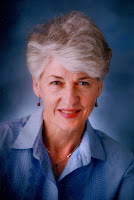 Patricia Fry is an editorial consultant, a publisher and a freelance writer. She is also president of the Small Publishers, Artists and Writers Network (SPAWN).
In 1983, she set up her own publishing company, Matilija Press and went on to publish over 28 books, among them, Over 75 Good Ideas for Promoting Your Book (Matilija Press, 2000); The Successful Writer’s Handbook (Matilija Press, 2003) and The Right Way to Write, Publish and Sell Your Book (Matilija Press, 2007).
Patricia Fry talks about her writing and the work she is doing with authors who want to break into the publishing industry:
When did you start writing?
I was married with small children when I discovered that I loved to write. I wrote endless letters, stories for my three daughters and poetry for greeting cards. I knew that someday I wanted to write for magazines and I began studying writers’ magazines and the publications for which I wanted to write. But I didn’t start my writing career until my daughters were teenagers.
In 1973, I set up a small desk in a corner of my bedroom, borrowed a manual typewriter and wrote my first magazine article. They say to write about what you know. Our family was involved with horses, at the time, and my first article sold to a magazine called, Horse and Horseman.
I wrote several more articles for a variety of horse magazines and then decided to write a book.
In 1978, Hints For the Backyard Rider was accepted by A. S. Barnes, a publisher with offices in New York and London.
I’ve spent the last 35 years writing articles for all variety of magazines: business, animal/pet, parenting, lifestyle, religious/spiritual, writing, health/fitness, travel, regional, specialty and others. My writing has supported me for the last 20 years.
I established my own publishing company in 1983 before it was fashionable. I did so in order to produce a 360-page local history book, The Ojai Valley, An Illustrated History. I’ve since published several additional books through my company, Matilija Press.
How would you describe the writing you are doing now?
I continue to write non-fiction articles for magazines, newsletters and the web, only most of them relate to writing and publishing. I also have 28 published books, 11 of them related to writing and publishing. My hallmark book is The Right Way to Write, Publish and Sell Your Book (Matilija Press, 2007)
But mainly, I work as a mentor/consultant, teacher, lecturer and editor for freelance writers and authors who want to break into the highly competitive publishing business.
I also write an almost daily publishing blog and I teach online courses on book promotion, writing a book proposal, freelance article writing and self-publishing.
As a teacher, workshop leader, national speaker, book promoter and president of the Small Publishers, Artists and Writers Network(SPAWN), a 12-year-old networking organization, I meet a lot of disillusioned, disgruntled and broke authors. They tell me, in so many words, “If only I had known my options before getting involved in publishing and if only I’d known the possible consequences of my choices…” Most of them don’t even understand that it is up to them (the author) to promote his or her book. When I realized that most of these authors fail (and there are statistics to prove this) and it is basically due to their ignorance, I began gearing practically all of my writing efforts toward the hopeful and struggling author.
My goal is to educate and inform them so they make the right choices on behalf of their particular projects.
What are the biggest challenges that you face?
I think the biggest challenge for most writers and authors is promotion -- getting known, attracting an audience. And it is no different for me. Like most writers and authors, I want to write. But I find that I must spend more hours in marketing mode than I can spend writing. Unfortunately, most writer types aren’t exactly “built” to advertise themselves. We want to create, not promote. This challenge is, indeed, universal.
And that’s why I include several chapters in my book, The Right Way to Write, Publish and Sell Your Book, on promotion. And my book, Over 75 Good Ideas for Promoting Your Book is number 13 on a short list of most popular books on book promotion. I was surprised to discover this week that this little book beat out books by some well-known professionals within the book promotion realm.
Do you write every day?
I do write (or at least work in my home office) everyday. I support myself through my writing and editorial work with clients. So, of course, I must put in the time.
When I’m not writing or working with a client, I am promoting which includes scheduling workshops, writing articles for writing/publishing-related publications or sites, sending press releases, etc.
I come to work here in my home office around 5 every morning and work until around 4 each afternoon. I break for a morning walk everyday and to run a quick errand or two. Otherwise, I am generally in work mode.
How did you choose a publisher for your latest book?
One question I get often is, “What is the best publishing option?”
I always respond with this: “It depends on you and it depends on your project.”
I chose to self-publish (through my own publishing company) all of my writing/publishing books because I figure I have a strong platform (my following -- my way of attracting the appropriate audience) and because I don’t want to share the profits. I actually had a traditional publisher ready to produce my book, The Right Way to Write, Publish and Sell Your Book and decided to fire him and publish it myself. It turned out to be a wise decision.
What are the advantages in this case? I got to keep my title and nothing important got edited out. I set the price and I am free to work with and negotiate with distributors, wholesalers, booksellers, etc. I have no problem getting books when I need them for a signing, book festival or such. And I get to keep all of the profits. This is not the case with some other publishing options.
Which aspect of the work you put into the book did you find most difficult?
For a non-fiction book of the scope and depth of The Right Way to Write, Publish and Sell Your Book, it takes a lot of research and fact-checking. That, along with the fine-tuning of the book, was probably the most difficult aspect.
What did you enjoy most?
I think most writers enjoy the writing the most. Yes, that is what I enjoyed most -- that, and the organizing of it. I enjoy organizational tasks such as creating an index and organizing text into chapters.
What would you say has been your most significant achievement as a writer?
Probably the number and range of books I’ve produced and the scope of writing I’ve done.
I also pride myself for the work I seem to be able to do naturally to assist other writers along the competitive and bumpy road to publishing success.
My primary goal is to help writers produce quality work, of course, but more than that, they must understand that publishing is not an extension of their writing. In other words, they cannot expect to shift easily from writing mode into the world of publishing. It takes a transition from right to left brain thinking. In order to succeed, hopeful authors and, even freelance writers, must truly comprehend that writing is a creative endeavor, but publishing is definitely a business.
More at Ohmynews International.
Possibly related books:
,,
Monday, October 20, 2008
[Interview] Mary Arensberg
Award-winning novelist Mary Katherine Arensberg grew up in rural Ohio in the United States. She attended Utica High and the Ohio State University.
Her debut novel, Willa (Xlibris, 2007) received first prize in the novel category of the Arizona Press Women’s 2008 Communicator’s Competition. The novel also received second prize in the 2008 National Federation of Press Women’s competition.
Willa was followed by Woman of the Wind (Xlibris, 2007); Naomi of the Arizona Territory (Xlibris, 2008) and Miracle from the Mountain which is due out late October 2008.
In this email interview, Mary Arensberg talks about why she decided to self publish.
When did you start writing?
I started writing with the idea of publishing in 1993. I knew I wanted to become an author in high school and was encouraged by several of my teachers, but as often happens, life gets in the way. I married and had four children and I happily traded my goals for them. The youngest graduated in 1995 and I could devote my efforts towards writing.
I began by writing my first novel, Willa and found I had a well spring of stories tucked away in my brain. Once the story was finished I let a friend read it and she loved it, said I was as good as Jude Deveraux (one of my personal favorites.)
With the knowledge that I could produce a story people liked, I sought an agent. I checked out books from the library on agents; picked one and sent off the first 50 pages. I received a mimeographed rejection letter with every item checked as to why my work was bad! Right then I realized I had to learn about the publishing business as well as the business of writing.
How would you describe your writing?
I write good stories, nice to read with happy endings. I believe there is a place for good, nice and happy.
So far, all my novels are historical fiction with women of character, honor and a sense of duty as the main characters. They are set through the United States in varying time periods and range over cultures, nationalities and ethnicities.
Who is your target audience?
I write for mature women, women with experience in life, women who have out-grown the breathless romance novels and want to read about women of substance.
Don’t get me wrong -- I read romance novels for years but when I neared my fifties I wanted something different and when I couldn’t find any I decided there were thousands of ‘women of age’ who might be looking for just the stories I wanted to write.
Who influenced you most?
I was most influenced by my upbringing, my mother and father. They were ordinary farm people who lived, loved, laughed and gave me a wonderful childhood.
As I look back, I realize that while to a child my life seemed ordinary, it was very exotic to a kid who lived in a big city. That’s what I liked about Mark Twain, Nathaniel Hawthorne, even Edgar Allan Poe... their characters seem fantastic to modern day readers, but they actually knew people like they wrote about.
How have your personal experiences influenced your writing?
I believe that every writer puts a piece of themselves into their stories. For me, it’s the "What would it have been like to live during the civil war?", "How would I have dealt with the social mores of the 1880’s?" or "How hard it would have been living on an isolated mountain?" I have beliefs that I adhere to.
What are your main concerns as a writer?
My main concern is writing the way I want to write. I’m not sensational, spiced up with sex or outrageous. I write good, nice stories with happy endings!
My biggest challenges have always been the fear of success! I take it hard if I send a press release out and no story comes from it and this after winning a national award!
Do you write everyday?
Writing is work. I took several writing seminars to help me realize this.
I do not write everyday. I work on more than one novel at a time, but when the deadline approaches I settle on the next to be published.
I write in the afternoon, I put on my headphones, shut out the world and time travel to the setting of story. I make an outline, gather my research material and have them and my encyclopedias at hand. I write until I run out ideas. I find my brain must keep the story true to the character and if I slow down, I re-read the manuscript.
I try to write at least a thousand words at each sitting and have, on a good day, accomplished 6,000 words.
How long did it take you to write your latest book?
My latest book is Miracle from the Mountain and I love this story. It was joy to write and I finished it in six weeks. It is in the process of being published and will be released in late fall 2008.
I chose to self publish [because] I had an agent who represented me for three years, all my novels were viewed at the publishing houses they were represented to and all were rejected: too long, too short, already have a similar one, don’t do that genre. Never once were they rejected because they were not good stories.
I decided to self publish and researched the industry thoroughly.
What made you decide to publish your books through Xlibris?
Xlibris was recommended by another author. This is why I chose Xlibris: They are a print on demand, no huge investment up front. Packages range from under a thousand dollars to over fifteen thousand dollars. They deliver what they promise.
They have an online bookstore and my books never go out of print and are always available. They use Ingram book distributors and my books are available at Amazon, Barnes and Noble, Borders, Target and MSN shopping online outlets as well as small bookstores. My books are sold internationally through Amazon U.K. and in Germany.
They provide copyright and Library of Congress service and ISBN. The royalty payments are better than traditional publishers. They provide me with 10 to 20 free paperbacks and 5 to 10 hardcovers and when I hand sell those I make enough to pay for the publishing package.
They also have marketing and publicity packages, including AP Newswire, Online listings and direct emails.
What advantages or disadvantages has this presented?
The advantage to this is that I own my work, it is never pulled from the shelf and I have complete control over the content. I look at this opportunity as my business. I will get out of it what I put into it.
The disadvantage is that self publishing is still looked upon as a vanity and many opportunities are denied in the traditional world of books and that’s not fair to readers who are looking for new stories in their favorite genre.
I believe self publishers like Xlibris will become the way of the future.
What did you find most difficult about the work you put into Miracle from the Mountain?
I find editing the most difficult. I have very poor eyesight. I can direct the story straight from my brain and through the keyboard into reality, but I can’t see those darned small letters!
When the manuscript is finished I run it through spell check and then print it out. I spend a week reading it and marking typos and errors and then make the changes in the saved file and then I print it out again and read it aloud to my husband where I catch another 20 to 30 mistakes, I correct those and burn it to a disc.
What did you enjoy most?
I love the characters in my stories, they are like meeting new friends, and they take on a life of their own and balk when I try to reshape them.
How different is Miracle from the Mountain from other novels you've written?
While all of my books are historical fiction they are set in different times and locales, the heroines are different ages and social backgrounds. Miracle from the Mountain is a semi-mystery. It’s a little spooky, a cross between Poe and Twain.
What is your most significant achievement as a writer?
My most significant achievement was when my first book Willa won first place in the novel category of the Arizona Press Women’s 2008 Communicator’s Competition and then going on to win second place at the National Federation of Press Women’s competition.
Related article: Mary K. Arensberg, AllTheseBooks.com.
More at OhmyNews International.
Possibly related books:
,,
Her debut novel, Willa (Xlibris, 2007) received first prize in the novel category of the Arizona Press Women’s 2008 Communicator’s Competition. The novel also received second prize in the 2008 National Federation of Press Women’s competition.
Willa was followed by Woman of the Wind (Xlibris, 2007); Naomi of the Arizona Territory (Xlibris, 2008) and Miracle from the Mountain which is due out late October 2008.
In this email interview, Mary Arensberg talks about why she decided to self publish.
When did you start writing?
I started writing with the idea of publishing in 1993. I knew I wanted to become an author in high school and was encouraged by several of my teachers, but as often happens, life gets in the way. I married and had four children and I happily traded my goals for them. The youngest graduated in 1995 and I could devote my efforts towards writing.
I began by writing my first novel, Willa and found I had a well spring of stories tucked away in my brain. Once the story was finished I let a friend read it and she loved it, said I was as good as Jude Deveraux (one of my personal favorites.)
With the knowledge that I could produce a story people liked, I sought an agent. I checked out books from the library on agents; picked one and sent off the first 50 pages. I received a mimeographed rejection letter with every item checked as to why my work was bad! Right then I realized I had to learn about the publishing business as well as the business of writing.
How would you describe your writing?
I write good stories, nice to read with happy endings. I believe there is a place for good, nice and happy.
So far, all my novels are historical fiction with women of character, honor and a sense of duty as the main characters. They are set through the United States in varying time periods and range over cultures, nationalities and ethnicities.
Who is your target audience?
I write for mature women, women with experience in life, women who have out-grown the breathless romance novels and want to read about women of substance.
Don’t get me wrong -- I read romance novels for years but when I neared my fifties I wanted something different and when I couldn’t find any I decided there were thousands of ‘women of age’ who might be looking for just the stories I wanted to write.
Who influenced you most?
I was most influenced by my upbringing, my mother and father. They were ordinary farm people who lived, loved, laughed and gave me a wonderful childhood.
As I look back, I realize that while to a child my life seemed ordinary, it was very exotic to a kid who lived in a big city. That’s what I liked about Mark Twain, Nathaniel Hawthorne, even Edgar Allan Poe... their characters seem fantastic to modern day readers, but they actually knew people like they wrote about.
How have your personal experiences influenced your writing?
I believe that every writer puts a piece of themselves into their stories. For me, it’s the "What would it have been like to live during the civil war?", "How would I have dealt with the social mores of the 1880’s?" or "How hard it would have been living on an isolated mountain?" I have beliefs that I adhere to.
What are your main concerns as a writer?
My main concern is writing the way I want to write. I’m not sensational, spiced up with sex or outrageous. I write good, nice stories with happy endings!
My biggest challenges have always been the fear of success! I take it hard if I send a press release out and no story comes from it and this after winning a national award!
Do you write everyday?
Writing is work. I took several writing seminars to help me realize this.
I do not write everyday. I work on more than one novel at a time, but when the deadline approaches I settle on the next to be published.
I write in the afternoon, I put on my headphones, shut out the world and time travel to the setting of story. I make an outline, gather my research material and have them and my encyclopedias at hand. I write until I run out ideas. I find my brain must keep the story true to the character and if I slow down, I re-read the manuscript.
I try to write at least a thousand words at each sitting and have, on a good day, accomplished 6,000 words.
How long did it take you to write your latest book?
My latest book is Miracle from the Mountain and I love this story. It was joy to write and I finished it in six weeks. It is in the process of being published and will be released in late fall 2008.
I chose to self publish [because] I had an agent who represented me for three years, all my novels were viewed at the publishing houses they were represented to and all were rejected: too long, too short, already have a similar one, don’t do that genre. Never once were they rejected because they were not good stories.
I decided to self publish and researched the industry thoroughly.
What made you decide to publish your books through Xlibris?
Xlibris was recommended by another author. This is why I chose Xlibris: They are a print on demand, no huge investment up front. Packages range from under a thousand dollars to over fifteen thousand dollars. They deliver what they promise.
They have an online bookstore and my books never go out of print and are always available. They use Ingram book distributors and my books are available at Amazon, Barnes and Noble, Borders, Target and MSN shopping online outlets as well as small bookstores. My books are sold internationally through Amazon U.K. and in Germany.
They provide copyright and Library of Congress service and ISBN. The royalty payments are better than traditional publishers. They provide me with 10 to 20 free paperbacks and 5 to 10 hardcovers and when I hand sell those I make enough to pay for the publishing package.
They also have marketing and publicity packages, including AP Newswire, Online listings and direct emails.
What advantages or disadvantages has this presented?
The advantage to this is that I own my work, it is never pulled from the shelf and I have complete control over the content. I look at this opportunity as my business. I will get out of it what I put into it.
The disadvantage is that self publishing is still looked upon as a vanity and many opportunities are denied in the traditional world of books and that’s not fair to readers who are looking for new stories in their favorite genre.
I believe self publishers like Xlibris will become the way of the future.
What did you find most difficult about the work you put into Miracle from the Mountain?
I find editing the most difficult. I have very poor eyesight. I can direct the story straight from my brain and through the keyboard into reality, but I can’t see those darned small letters!
When the manuscript is finished I run it through spell check and then print it out. I spend a week reading it and marking typos and errors and then make the changes in the saved file and then I print it out again and read it aloud to my husband where I catch another 20 to 30 mistakes, I correct those and burn it to a disc.
What did you enjoy most?
I love the characters in my stories, they are like meeting new friends, and they take on a life of their own and balk when I try to reshape them.
How different is Miracle from the Mountain from other novels you've written?
While all of my books are historical fiction they are set in different times and locales, the heroines are different ages and social backgrounds. Miracle from the Mountain is a semi-mystery. It’s a little spooky, a cross between Poe and Twain.
What is your most significant achievement as a writer?
My most significant achievement was when my first book Willa won first place in the novel category of the Arizona Press Women’s 2008 Communicator’s Competition and then going on to win second place at the National Federation of Press Women’s competition.
Related article: Mary K. Arensberg, AllTheseBooks.com.
More at OhmyNews International.
Possibly related books:
,,
Tuesday, October 7, 2008
[Interview] David Wellington
 David Wellington was born in Pittsburgh, Pennsylvania but currently lives in New York City.
He holds a Master of Fine Arts degree in creative writing from Penn State as well as a masters degree in Library Science from Pratt Institute.
He has written eight novels, among them Monster Island (Thunder’s Mouth Press, 2006), 13 Bullets (Three Rivers Press, 2007), Frostbite (online serialization) and Plague Zone (online serialization).
His short stories have also been featured in anthologies that include The Undead: Zombie Anthology (Permuted Press, 2005) and The Undead: Skin and Bones (Permuted Press, 2007).
In this email interview, Dave Wellington talks about his concerns as a writer
When did you start writing?
I started writing when I was six years old. I didn't publish my first book until almost thirty years later. It took a lot of practice to get it right.
How did you decide you wanted to be a published writer?
I've always believed that a writer has to be read to know if he's any good or not, and the only way to get people to read your books is to publish them. Unfortunately, that's often the hard part.
I spent a lot of time sending manuscripts to various publishers and getting very little feedback. It has become very rare that a major publisher even reads an unsolicited submission -- they just don't have the time.
What finally worked for me was putting my work on the Internet. I thought I might get a few readers who would provide me with some much needed feedback.
The results were surprising -- so many people read and enjoyed my first online novel, Monster Island, that a publisher actually approached me and asked to buy the book. I feel extraordinarily lucky.
How would you describe your writing?
I write action horror novels. Typically there are monsters involved, and people who have to fight those monsters.
Sometimes I like to try something different. My next book online doesn't have any monsters in it, for example, though some of the people are very scary. I suppose that technically makes it a thriller.
Who is your target audience?
My target audience is anyone who reads and enjoys a good story!
I write the kind of books I enjoy reading. They're fun, they're fast, and they have good solid endings.
Who influenced you most?
My main influences are the great pulp writers of the 1920s-1950s. Robert E. Howard and Clark Ashton Smith. Edgar Rice Burroughs, certainly.
More recently I've been inspired by Neil Gaiman and Terry Pratchett.
How have your personal experiences influenced your writing?
My books tend to be about fantastic subjects that are beyond normal human experience. Yet I like to give them some level of realism to keep the reader grounded.
Often I'll put in things I know about firsthand. One of my books was about an employee of the United Nations; I worked for the UN at the time I wrote it. While I was in library school, I had a book whose hero was a librarian.
What are your main concerns as a writer?
When you publish a book you establish an expectation that you'll only ever write very similar books. I love writing about monsters but I want to do other things as well. Luckily I can publish one kind of book in print and put a completely different book on the Internet, so I have the opportunity to experiment with different styles and different genres without having to worry about who will publish a given project.
What are the biggest challenges that you face?
The toughest part of writing is the first word. The blank screen is very intimidating.
Oh, and titles are very difficult, too!
Do you write everyday?
I write all day, every day. However I do take lots of breaks.
I find I write best a little at a time, a few paragraphs here, maybe another paragraph an hour later. I work a regular business day, from nine o'clock in the morning until six o'clock in the evening.
How many books have you written so far?
I have published five books so far, with a sixth due out in October, 2008. They are as follows:
- Monster Island (Thunder's Mouth Press, 2006). Zombies destroy the world, and a UN weapons inspector must travel to New York City to retrieve vital medical supplies.
- Monster Nation (Thunder's Mouth Press, 2006). In the American west, a young woman with amnesia must survive in the midst of a growing zombie epidemic. She quickly realizes that she, herself, is a zombie, although one that has retained her intelligence... and somehow gained other powers as well.
- Monster Planet (Thunder's Mouth Press, 2007). The characters of Monster Island and Monster Nation return twelve years later to battle for the future of humanity.
- 13 Bullets (Three Rivers Press, 2007). A state trooper in Pennsylvania uncovers evidence that vampires, long thought extinct, are still around and causing havoc. She must learn how to fight them with the aid of a crusty and very unlovable federal agent, the world's last, living, vampire hunter.
- 99 Coffins (Three Rivers Press, 2007). More vampires are uncovered, in fact one hundred of them, under the battlefield at Gettysburg, Pennsylvania. Soon our heroine finds herself fighting an army of vampires bent on destroying the town.
- Vampire Zero (Three Rivers Press, 2008). The heroine of 13 Bullets and 99 Coffins must confront a vampire who knows all of her secrets, and stop him from killing off his own family one member at a time.
How long did it take you to write your latest book?
My latest book, Vampire Zero, is a third volume in my vampire trilogy. It took me approximately six months to write it.
It will be published by Three Rivers Press in October, 2008.
I've worked with this publisher before and have a good relationship with them. So far I've been very lucky -- everyone there is wonderful and very easy to work with.
Which aspects of the work you put into the book did you find most difficult?
The hardest part of writing this book was finding a place to do it. Normally I work out of my home but I could not do so with this book because there were too many distractions. I found office space where I could, or worked in libraries.
What did you enjoy most?
I enjoy the whole writing process.
I love coming up with new ideas and playing with them, and also I love the actual writing when words just seem to flow and shape themselves.
What sets Vampire Zero apart from other things you've written?
This is a much more psychological book than my previous works, which were just pure action.
This one has plenty of action as well, but it also gets deeper into the minds of the characters.
In what way is it similar?
This is the third volume of a trilogy and all the characters I love come back for this one, though some of them come back very much changed from how they appeared in 99 Coffins...
What will your next book be about?
My next book will be another vampire novel. The plot of this one is a secret!
After that I'll be publishing two books about werewolves.
What would you say has been your most significant achievement as a writer?
The most exciting moment for me was when I got my first book contract. I had been working for nearly thirty years to get to that point with nothing to show for it! Suddenly I was a published writer.
My parents were extremely proud of me.
This article has also been featured on OhmyNews International.
Related books:
,,
,,
Friday, September 19, 2008
[Interview] Robert Gould
 Robert Gould is an author, an art editor and a freelance web developer.
His blog novel, A Change in the Weather centers around Scarlet and Thomas who move from the city to start a new life in a small English village. The brother and sister soon find that things are not as they seem, and that the nearby Bracken Wood holds a secret which is about to be revealed.
In this email interview, Robert Gould talks about his concerns as a writer.
When did you start writing?
My first proper attempt at writing started at school when I was 12 years old. Thankfully it was never finished.
About three years ago, I had a few ideas for a novel I wanted to sketch out. I remember I used an old iBook, and it was a science fiction story, but I eventually relegated that to a folder and forgot about it. It's still on my laptop somewhere, and I'll probably go back to it when my current project is finished.
I started writing A Change in the Weather directly after that, when the ideas were just flowing and wouldn't stop. I got mid-way through it and then stopped for about six months (primarily because my baby daughter came along and I had my hands full for quite a while!) Then I decided to transfer the story to WordPress, and publish it chapter-by-chapter online as a blog novel.
How would you describe your writing?
Third person, multiple points of view, modern fairy tale, blog novel, with lots of fantasy and mystery thrown in for good measure.
I remember my own childhood, and my friends and I would play in the fields near our home, explore the graveyard and along the local steam railway line or go for long summer hikes in the country. We'd have the greatest of times, and it was this sense of adventure that I wanted to get across in my writing, because sometimes kids these days just don't know what they're missing.
Who is your target audience?
I don't really consider myself to have a target audience, although young adults may find A Change in the Weather more to their liking than, say, 'older' readers.
What motivated me is an altogether harder question. I suppose one aspect was my childhood, which involved lots of reading and escaping into fantasy worlds from authors such as Roald Dahl, Enid Blyton, Lloyd Alexander and Ursula K. Le Guin.
I'll also admit to playing a bit of Dungeons & Dragons too -- so Gary Gygax was a big inspiration. Role-playing was all about escapism and exploring imaginary worlds. I liked the fact that anything was possible.
Who influenced you most?
If you're talking about authors there are quite a few. In particular J. R. R. Tolkien, Neil Gaiman, Mervyn Peake, Terry Pratchett, Alan Moore, Jorge Luis Borges, H. G. Wells, George Orwell, Jules Verne. The list goes on. But mostly Tolkien though. His world-building and detail he managed to cram into The Lord of the Rings cycle was phenomenal. The races, the languages, the history, the myths, the locations, the maps; it was quite an achievement.
What are your main concerns as a writer?
Not being able to write, being stuck, or writing yourself into a corner that in order to get out of, you find that entire chapters need to be re-written. To go back and re-write whole passages that you spent a long time crafting is the worst part.
Needing to write an idea down when you're in the car or some other place where you can't actually write is a big frustration. Trying to remember it afterwards can be a pain too...
Do you write everyday?
My goal is to write everyday, although that isn't always practical -- especially where family life and writing overlap.
I also have a full-time job as an art editor and freelance web developer so I tend to relegate my writing to the night time, snatching some writing time as and when. Needless to say, it is a very slow process, and it isn't always the best solution, but I'd rather take my time than rush it.
How many books have you written so far?
There's only one at the moment, and that isn't finished.
I've written roughly 100,000 words, over 65 chapters so far. My target is 100 chapters or so. The first act of the book covers 50 chapters, and another 50 is my goal for the second act.
What is your book about?
A Change in the Weather centers around the life of a brother and sister -- Scarlet and Thomas -- as they move from the hustle and bustle of the city to start a new life in a small village hidden away in the English countryside. Soon it becomes apparent that things are not as they seem, and they find that the nearby Bracken Wood holds a secret ready to be discovered.
I’m currently looking for a publisher, but as the novel is still being updated, I suppose this will have to wait until it is completed. I would dearly love to write full-time, but at the moment I'm quite happy to continue in this way.
Which aspects of the work did you find most difficult?
When I began, I had trouble getting inside the character's heads, although as I continued to write, this became easier and easier and each character took on a distinct personality.
What did you enjoy most?
Definitely all the aspects of building the world; the maps, the locations, the myths, the characters, their motivations. Everything about creating the world was enjoyable, and this is a process that is continuing even as I write. Sometimes I'll go back to chapters and re-write them slightly, or elaborate on certain parts of the plot -- the fact that it’s a blog novel makes it a very elastic medium. The important part is making the descriptions believable.
What sets the book apart from other things you've written?
Definitely the fact that this work will get finished. The others just didn't feel 'right' and so I lost interest in them eventually. A Change in the Weather is different in that it has spawned so many ideas and plot directions.
What will your next book be about?
Once A Change in the Weather is completed, I'll be working on a prequel to it, set against the turbulent times of the last crusade in 1291 when the city of Acre fell.
In addition, I've got a prequel to the prequel planned, and this is set two thousand years before present and deals with events that are only hinted at in the current story.
What would you say has been your most significant achievement as a writer?
The fact that I always wanted to write a novel and never thought I would.
They say that everyone has a story to tell, you just have to dig your heels in and make sure it gets written.
More at OhmyNews International.
Possibly related books:
,,
Related article:
[Interview] Clive Collins, author of 'Misunderstandings',Conversations with Writers, September 5, 2008
Thursday, September 18, 2008
Interview _ C. Y. Gopinath

His books include Travels with the Fish (Harper Collins, 1999) and the novel, Book of Answers.
In this email interview, C. Y. Gopinath talks about his writing.
When did you start writing?
44 years ago. I was twelve, living in Delhi, and I wrote a James Bond spoof for a national youth magazine called JS. After college, I went to work for JS as a traveling reporter, won a national award at 19 for Best Indian Journalist under 35. I’ve been writing since then, but journalistically. Fiction is a new bend in my road.
I never really thought I’d be a novelist, although I’ve toyed with the seed of the idea of my first book for nearly 20 years -- a man who doesn’t want to make the world a better place, just wants to be left alone.
Here’s how I got yanked into novel writing, by a young man I’d never met: In 1998, a collection of my travel writing was published in India by Harper Collins, and enjoyed critical acclaim as well as some moderate sales. In 2004, the copyright reverted to me, and thinking that the book had a little more life in it than 2,000 copies, I sent a chapter out to some 700 American literary agents. No one bit, of course, though a few were kind enough to murmur words of encouragement.
But one day in 2005, I received mail, and then a call, from a young literary agent called Nathan Bransford, to whom someone had forwarded my chapter. He’d liked it, and wondered if I had any plans to write fiction. I’d just come out of angioplasty and was feeling quite fragile those days.
I told him I probably could not write fiction, but over some weeks, Nathan persuaded me to try. That’s really how I wrote this opus. Nothing like someone who believes in you to put some wind in your sails.
How would you describe your writing?
They say an author’s first book is autobiographical.
To the extent that I have woven together themes and melodies that have been part of my life, it is autobiographical. But this book, to me, uses social satire to lay bare the absurdity of where we, as a species, have brought this planet and ourselves.
Through the eyes of a man who’s trying his best not to get involved in the madness, we see how ridiculous we’ve become.
Who is your target audience?
Your question presupposes a rational process that wasn’t really there. I’m more of the tell-a-joke-and-see-who-laughs school.
I know that my parody will resonate with a certain kind of person, both in India and outside.
As a writer, though, I am focused on my words, not on my readers.
Who influenced you most?
If you mean which writers have influenced me, that is a difficult question, because one is always watched by a panel of one’s muses. In my case, it’s [Vladimir] Nabokov, John le Carré, and Gerald Durrell, as unlikely a chamber orchestra as you could put together.
If you meant which human being has influenced me the most in this writing, I’d say without hesitation that it’s this 27-year-old literary agent whom I’d never met and who, for some reason, devoted sizable chunks of his time and persuasive powers on a remote writer. He really kept the faith for me till I began to feel it.
How have your personal experiences influenced your writing?
The dominant themes in the Book of Answers have of course emerged from my work and life. For example, the importance of questions has somehow been a recurring theme, one that has acquired increasing depth and meaning over the years.
When much younger, I used to write a satirical column in India called Dr Q, who was this hot-air scholar of false erudition. The questions were made up mostly, but the poker-faced answers, both technical and profound, were entirely made up.
In my work in development in Kenya, questions took on greater value and we developed several tools and processes to deepen the quality of people’s enquiry. I developed a framework called the Continuum of Enquiry, which suggested how people’s questions and information needs change as their sense of proximity to HIV increases.
It seems somehow climactic and fitting that my first fiction work is about a sealed book with answers to all the world’s important questions.
Do you write everyday?
Writing the Book of Answers has been a great discovery for me of how language, memory, imagination and meaning interact.
I write often but it has not been a daily discipline. Let’s say my work permits me to write in stolen packets of time -- in transit lounges, late at night at home, in taxis, and so on.
I separate writing time from thinking time, and have noticed that my characters and storylines develop most energetically when I am walking, something I do every day. The characters then seem to take on a life of their own -- they walk, they talk, they interact, say unexpected things to each other, and suggest developments.
It’s a strange feelings, to be an onlooker while my own characters tell me where to take their story.
The sessions have become easier over the three years the story took to develop.
It took me a long time to find my writer’s voice, perhaps most of two years. But once I found it, the story and the details began to flow.
Story-telling is a fractal process -- the level of details one needs seems not to be different whether you are looking at a chapter or a paragraph -- or even a sentence. That has been a wonderful thing to realize.
How many books have you written so far?
My only other book, published in 1997 by HarperCollins India, is called Travels with the Fish. It is a tongue-in-cheek travelogue of my mishaps and discoveries in diverse countries all over the world, as narrated to the Fish, a skeptical armchair traveler whose main knowledge of the world comes from the National Geographic.
What is your latest book about?
The Book of Answers took me just about exactly three years to write, starting around March 2005. It’s my first fiction work, but its provenance goes back deep into my life and my work and thought.
It’s the story of an Indian man -- half Bengali, half Keralite -- called Patros Patranobis who inherits a locked metal-bound book with, purportedly, answers to all the world’s pressing current problems: wars, inequities, suffering, corruption etc. But Patros, in common with about 99% of humanity, does not think one man can make any great difference to anything. Besides, all he wants is a quiet life with his partner, Rose Jangry. He sells the book off within days to a junk store. And that’s how the story gets going.
It’s about how a locked book turns into a deadly weapon in the hands of a corrupt politician and a self-appointed godman.
While Patros watches, helpless, the country is riven by a series of Orwellian legislations. The more Patros tries to rectify the harm he has unwittingly caused, the more he is targeted by the new draconian laws.
The Book of Answers will hopefully be out later this year. It is right now in the submissions stage, and my literary agency, Curtis Brown Ltd, is handling the process.
Which aspects of the work you put into the book did you find most difficult?
The trickiest bit was finding the voice.
In my first draft, I used the first person voice, but began to review that after several people told me that the writing sounded too flowery and verbose. Perhaps, I thought, I was trying too hard to sound ‘literary’ in my eagerness to appear authorly rather than journalistic. With just over 150 pages done, I went back and rewrote the book in the third person.
This got me an earful from my literary agent, who said that I had ‘killed’ my voice, the one thing, in his view, that set my writing apart from others’ he’d seen. “Anyone can write journalistically,” he wrote to me. “But you had a unique and compelling voice. That’s gone now.”
At that time, I was moderating a meet-up group of writers in Bangkok, and sought their opinion on first versus third person. Apparently, they agreed with Nathan. So I went back and rewrote the entire book -- close to 270 pages by now -- again in the first person.
I think this painful process became the one that polished my writing with every iteration.
In the first person, you can only write about what you see, hear and think. There is no God’s-eye-view, you are not omniscient as in the third person. I had to jettison huge tracts of my third person writing, and figure out new ways to reveal those details to the reader. This entire process was probably the most difficult part of doing this book.
What did you enjoy most?
To realize that the process of writing fiction generates its own facts was a wonderful discovery.
Of course, the details always emerge from one’s own life, and to that extent, most of the times I can pinpoint where I borrowed narrative from my life experience. But the magical moments are when you suddenly see a bit of story that is not in the least bit familiar to you from your own life story -- and you realize that something fundamentally creative has happened there.
Another wonderful aspect of this process for me has been watching the story play itself out in my head. My mind is most active when I am in motion, so my evening walks are among the most fecund periods of my day.
There was a stage when my characters acquired a personality and life of their own, literally ‘enacting’ entire scenes in my head, seemingly with no help from me. This was always a thrilling time -- it was as though the characters were telling me what they should do next.
I remember Thomas Harris, author of the Hannibal Lecter books, saying something like this when explaining why he had written yet another book, this one on the childhood of the cannibalistic protagonist. At that time, I remember laughing and thinking, This man was just exploiting the franchise with a new book, giving the lemon one more squeeze. How can characters dictate [a] story to the author? But I must say that I am [now] a little less skeptical of this process.
What sets the Book of Answers apart from other things you've written?
The fact that it is fiction, for one. My only other book, Travels with the Fish, was a rollicking travelogue that compiled traveler’s tales from my many years of quixotic traveling. It was, in a sense, easy writing.
Humor is quite effortless for me, and I could draw all the facts I needed from my personal experience. More wickedly, I could fabricate my own life story where the details were murky, and no one would be the wiser.
To counter this, I set up a skeptical listener, the one I was telling the stories to, the so-called Fish. The Fish was an armchair traveler who matched my accounts with what his readings of the National Geographic had told him the story should have been.
It was a useful device: I wrote with forked tongue and had the Fish to alert the reader when I was crossing the thin line between fact and fiction.
In the Book of Answers, the problem was the reverse: I had to avoid any semblance of reality even though I was drawing upon it. Events and personalities had to be viewed through a distorting lens so that their original details could not be discerned by any reader.
What will your next book be about?
There are several ideas. One book, provisionally titled The Book of Maltruism or perhaps just The Maltruist, builds itself on the theme of unintended harm caused by intended good when people with ideas and notions of how the world ought to be set about ‘improving other people’s lives’.
Another theme is about a person so overwhelmed by the bottomless abundance of knowledge in today’s world, and so deeply frustrated that he will never know it all, and that you could go through your entire life without meeting a single other person who knows the things that you know -- that he begins to fill his ignorance with false erudition. He makes up knowledge, becoming a poseur, a professor of punk wisdom. I have the character -- I am yet to develop the story.
More at OhmyNews International.
Related articles:
- “A printed book gives you something a digital one does not — a sense of a journey.”- Interview with C.Y. Gopinath, By Voicu Mihnea Simandan, simandan.com, January 25, 2012
- Finding relief in fiction [Interview], By Nikhil Varma, The Hindu, November 14, 2011
- The Book of Answers [Book Review], By Collin Piprell, collinpiprell.com, July 19, 2011
Monday, September 15, 2008
[Interview] C. M. Barons
 C. M. Barons was born in Rochester, New York.
He studied journalism at SUNY New Paltz and graduated with a BA in Communication Arts.
An extract from his first novel, In the Midst Of (New Age World Publishing, 2008) is available on the Leicester Review of Books.
When did you start writing?
I wrote my first short story while in grade school. It wasn't until high school -- by way of two especially inspiring educators that I began to write on a regular basis. In my senior year I became active with the student newspaper, initially as photographer, however my interest quickly shifted to writing.
I continued my interest in journalism through college, majoring in Communication Arts. After graduation I was employed as sports editor for a small-city newspaper.
I think the newspaper experience fueled my eagerness to be in print. I don't see it as ego-gratification; it's a matter of completeness. In the same sense as music requires performance -- stories need to be told.
What did you do to achieve this end?
Writing my novel was a four-year project. Once it was complete, I sampled a handful of trusted readers who assured me that my manuscript was worthy of publication. At that point I sought publishers that accepted unsolicited manuscripts. Three publishers were afforded a look at it. The third publisher agreed to publish.
Primarily -- I took my 520 page first draft and mercilessly excised every unnecessary word. The final draft weighed in at 359 pages. One, essential skill-set I possess comes from having been an editor. Being able to distance oneself from one's writing and accede to the reader's perspective is invaluable. To the best of my knowledge the publisher's editor altered two sentences in my manuscript.
How would you describe your writing?
I categorize my writing as "literary fiction". My disposition toward imaginative plot elements and devices that interrupt chronology and employ motifs both mythical and literary seem to confirm my placement.
Who is your target audience?
I don't know as I differentiate my audience. I recognize that my novel is not going to appeal to everyone. On the same note, I refuse to condescend to readers in general. I do not talk down to children, and I certainly wouldn't talk down to an adult.
One reader commented that they kept a dictionary on-hand when they read my work. It wasn't a criticism, and the vocabulary did not impede finishing the book. I do not aim to inflate my writing with "big words" nor do I intend to restrict myself to a sixth grade vocabulary.
Who influenced you most?
Richard Brautigan is undoubtedly my greatest influence. His ability to encapsulate a complex idea in a simple manner -- especially his tendency to do so in a surprising manner never fails to impress me.
Brautigan was a poet, story-teller and novelist. He moved transparently between mediums because he could transform a mundane event into a literary event without appearing the charlatan.
How have your personal experiences influenced your writing?
I am a very tolerant individual. I revel in meeting new people who confirm that variety is indeed the spice of life. That lends a certain latitude to my writing -- I can like my heroes and demons, alike.
My ability to embrace human strength and weakness abets my ability to project multidimensional characters that stand above the stereotyped good-guy/bad-guy shallowness.
Experience also feeds my imagination and lends the potential for a richness in painting my storyboards.
What are your main concerns as a writer?
My three concerns are honest characters, true-voice dialogue and challenging scenarios.
I think the easiest part of writing is theme development. The labor begins as characters become animated. The writer must not only keep the characters vital, distinct and maturing -- they must be challenged and in turn challenge the reader while exemplifying the theme. A tricky business that I am still perfecting.
What are the biggest challenges that you face?
I think the greatest challenge is keeping "me" out of my stories. I have no desire to proselytize and my books are not autobiographical.
Sometimes I simply manufacture a character that is diametrically opposite of myself. Most often I maintain a pure personality for my characters. In my mind I can see them, recognize their voices and predict their behavior based on "their" values -- not "my" values.
Do you write everyday?
I write everyday. It is often not a manuscript. I contribute to numerous blogs, websites and letters columns, etc.
How many books have you written so far?
Currently I have one title in print: In the Midst Of (New Age World Publishing, 2008).
What is the book about?
In the Midst Of is a coming of age piece. It is written in retrospective: a middle-aged man focusing on a lost friend from his college days.
The setting is the 1970s. The themes involve friendship, bonding, balance in lopsided relationships. The book features numerous literary, musical and cultural allusions.
Which aspects of the work did you find most difficult?
The difficulty was presenting the narrator, Brian -- his backward glance is dominated by a more powerful personality, Hollis.
Hollis is influential, especially upon Brian who is impressionable.
Since Hollis only exists in the past, it is Brian who must grow from the experience of revisiting the past. Modifying his feelings vis-a-vis Hollis requires modulation of devotion that corrodes with time and scrutiny.
How did you deal with this?
It was particularly difficult because not all of the novel is chronologically presented. Individual scenes required a sophisticated timing that I tinkered with throughout.
Which aspects did you enjoy most?
Writing dialogue did not come easily to me. Once I could "hear" my characters voices, that all changed. I had to tell some of them to shut up!
What sets the book apart from other things you've written?
It is the largest, fictional piece I've written.
In what way is it similar?
It reflects the same leanness that is my signature.
What will your next book be about?
I'm toying with a thriller.
What would you say has been your most significant achievement as a writer?
Overcoming the inertia -- the writer's hymen is an idea that one hasn't the ____ (fill in the blank) to complete a lengthy work. Once that myth is dispensed with, it's like a sailor with only red skies at night.
This article has also been featured on OhmyNews International.
Possibly related books:
,,
Subscribe to:
Posts (Atom)
-
 Lauri Kubuitsile writes romances novels; crime fiction; books and stories for children and teenagers; and, literary fiction. She was shor...