Friday, July 13, 2012

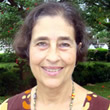
[Interview] Jennifer McBride

Jennifer McBride has written and published books that include Touching the Trees (2011); Cape of Leaves (2012); Basement Daisies (2012) and Child Less Parent (2012).

In this interview, she talks about her concerns as a writer:

When did you start writing?

I began writing a few years after I began to read. My first "produced" work was in 2nd grade. I was around seven or eight years old and I wrote a play that my teacher allowed me to make into a classroom production. At around the same time, I wrote a story that my uncle read aloud to a large family reunion. I was hooked after that.

What made you decide you wanted to be a published writer?

I resisted the urge to be published because I thought it was too difficult to achieve but once self-publishing became an option, I explored this avenue and found that I really enjoyed being involved in every aspect of the publishing process.

I majored in writing in college, but didn't do much with that for almost 15 years. Then I began taking writing classes at the Loft Literary Center in Minneapolis and knew I wanted to work at being a published author. More interesting, though, is that about six years ago I made a conscious decision to not write. I was trying to find a way to stay in a relationship and I knew writing was going to lead me to find myself... and lead me away from the sad comfort of that situation. So, I sat in a bar in Saint Paul, Minnesota, and announced "I will not be a writer."

In that funny way life has of changing one's mind, though, it wasn't three months later that the urge and desire and calling to write became overwhelming and I began taking classes again. I haven't stopped writing since.

Needless to say, I'm not in that relationship anymore.

How would you describe your writing?

It's funny you ask that. I'm kind of a Kelly Clarkson writer. I dabble in many genres... nonfiction, essay, blogging, poetry, and fiction... just like she's able to sing in many different ways: country, pop, soul, rock, etc. I am, however, primarily a non-fiction writer right now.

Who is your target audience?

My target audience has been slightly different for each book I've written.

Overall, my audience is women and men who have had to make significant changes in their lives, whether it's because of relationships, job transitions, illness, etc. I became motivated to write for this audience when I became divorced and in search of an identity other than "wife" and "carpooler."

In the writing you are doing, which authors influenced you most?

Mary Oliver and Billy Collins have influenced my poetry. I try to write accessible poems that express deep emotions. Mary Oliver's poetry sung to me and I heard Billy Collins speak in Minneapolis many years ago and I thought, "Wow. I really like his poetry. I should try writing some."

For my non-fiction, I'm inflenced by Elizabeth Gilbert and Anna Quindlen. Both women are frank, unashamed, and witty. I long to write like them!

For fiction, my "mentors" are Janet Evanovich and Jonathon Kellerman. I'm trying to find a balance between murder mystery, humor, and societal issues.

Have your own personal experiences influenced your writing in any way?

That's all they do! I write nonfiction "self-help" because I needed help and finally feel I can share what I've learned with others.

When I was getting divorced, I thought there had to be a better way to "do" the incredible changes that come from such a traumatic life experience. I didn't want my divorce to be in vain... I wanted to be a better, stronger, more alive person because of it.

One of my books is in reaction to finding out more about Parental Alienation Disorder and how un-noticed and un-handled it is in the family court system. One book was written as a series of affirmations for my father-in-law, who is/was going through cancer treatment. The book I'm working on now is all the things I wish I could tell my teenagers (if only they could hear me!).

In addition, I may be the most unknown writer to have a stalker, but because of that, I've had to make very conscious decisions to ignore the fear and threats and keep writing. Many times it would have been easier to power down the laptop (and I have shut down five different blogs because of this), but I can't let that person or uncertainty stop me. Not now. I do try to be a little more careful with what I write and have chosen an entirely different name for my fiction writing, but those are the only two concessions I'll make.

What are your main concerns as a writer?

My biggest concern is being able to make a living being a writer. I deal with this concern by producing quality work at a brisk pace. I network, seek out new venues, and make connections. Mostly, I believe that I'll reach my goal of self-sufficiency through writing and then I don't have to worry about it!

The biggest challenges I face are finding the right audience and convincing that audience that they want to read my work. I deal with this challenge by learning all I can about marketing, audience desires, and trends. I work on positioning my work, both in timing and content, to have the biggest impact on the market.

Do you write everyday?

I write about five days a week. Each session starts with poking around on the internet, checking email, Facebook, Twitter, etc. Once that's all done (or I'm irritated with myself for procrastinating), I pull up the piece I'm working on and re-read just a little before where I'm picking it up.

I learned during NANOWRIMO 2008 (National Novel Writing Month) that the best way to move forward in a piece is to keep going back to re-do what's already been written. And it's true. When I get busy editing the first part, I don't always get around to writing the next part.

My writing sessions end when I have to be somewhere, the kids come home, I'm exhausted, or I've reached a good stopping point. I've been known to write for five or six straight hours with almost no breaks. I always wonder where those days have gone!

How many books have you written so far?

I've written six books so far:
  • Child Less Parent: "Snapshots" of Parental Alienation: a primer, with photos, of what Parental Alienation is, how to prevent it, how to correct it, and (if all else fails) how to have hope that life will go on. Written with input from members of the Parental Alienation Awareness Organization. Published in April, 2012 by my company, CCS Communications.
  • Basement Daisies: a book of thirteen affirmations and accompanying photos for people who need hope. Originally published with the blessing of the Multiple Myeloma Research Foundation, Basement Daisies was a fundraiser to honor my father-in-law. Now it's available to all. Published in October, 2011 by CCS Communications.
  • Cape of Leaves: a compilations of poems about relationships and identity. I feel they are similar in style to Mary Oliver's work. Published in February, 2011 by CCS Communications.
  • Touching the Trees: a motivational memoir about finding identity through crisis. This book is a series of metaphors/stories that highlight all the changes one has to go through to find an authentic voice and life. Publishing in December 2010 by CCS Communications.
  • The Parents' Guide to Boys' Lacrosse: written under the name Jenni Lorsung, this book is a parent guide to understanding the sport of youth lacrosse. Published in January 2009 by CCS Communications.
  • The Parents' Guide to Girls' Lacrosse: written under the name Jenni Lorsung. This book is the companion guide to girls' youth lacrosse. Published in January 2009 by CCS Communications.
How would you describe the books you are working on at the moment?

My latest book is non-fiction and focuses on the ways I think "being" and "not being" are vital to a healthy life. For instance, in this case I'm "being" forthright in sharing my story with you!

I'm also concurrently working on a novel about a reporter who has great struggles in his relationship with his ex-wife and daughter while also chasing down a serial killer. I'm working on "not being" anxious about getting it done soon!

I'm still working on these two books.

Generally, how long does it take you to finish writing a book?

Child Less Parent and Basement Daisies each took about 4-6 months to write. My other books took over a year each.

For my longer non-fiction books, I allot about a year to do research, write, edit, and produce.

I self-publish all of my titles. I don't do this because I'm a control freak. Instead, I chose self-publishing so I could have tangible work product and potential income as soon as possible. I use CreateSpace as my production company because of their link to Amazon and (especially now that I've used them so much) their ease of developing a book. I also use Kindle as my exclusive e-book distributor. The disadvantage is that I have to do all the marketing myself, which is not my strength.

Which were the most difficult aspects of the work that went into the books you have published so far?

In Touching the Trees, I found it extremely difficult to be honest and vulnerable. I'd come from many years of silenced feelings and it felt very frightening to put all those feelings out in the world for anyone and everyone to see.

As I suspected, my family (current and ex) wasn't all crazy about some of what I wrote, but I believe that I have a right and an obligation to tell the story truthfully. Based on reactions to the book, it was the right decision to stare that fear down and write it anyway.

Which aspects of the work do you enjoy most?

I enjoy the beginning and the end of the book-writing process.

I love having the brainstorms and squirting out thousands of words a day getting a book started. At the end, once the editing is complete, I really like designing the interior and the cover and planning a marketing strategy.

The middle part... editing... is hard for me.

What sets Touching the Trees apart from other things you've written?

I try to bring a sense of hope and trust to all of my work. I don't want my audience put-off by proclamations, so I write to be disarming and compassionate.

Touching the Trees is the most autobiographical book I've written. The others, with the exception of Cape of Leaves, are more objective non-fiction. Touching the Trees gets to my core.

What are your plans for the future?

My next really big project will be about a place in Northern Minnesota that hosts very old inns and has great histories of dynamic, eccentric innkeepers. I see so much potential in this book and have begun interviewing people and visiting the inns.

What would you say has been your most significant achievement as a writer?

My most significant achievement as a writer is that I've been able to touch lives in ways I didn't know I could.

It's not the awards or the accolades that mean the most to me. It's the honestly... or hesitantly... written emails and comments that show me that my words have found a way to lodge themselves in someone else's soul and have made a positive difference. I always knew words had that effect on me... I just never realized I had the power to use my own to have an effect on others.

It's a privilege to be read.

Related books:

,,

Related articles:

Sunday, July 8, 2012

Interview [3] _ Mark Adam Kaplan

School teacher and screenwriter Mark Adam Kaplan has written and published two novels, A Thousand Beauties (Bewrite Books, 2009) and Down (Bewrite 2012) as well as an illustrated picture book, Monsters Do Ugly Things (BookBaby, 2011).

In this interview, he talks about his latest novel:

How would you describe Down?

Down is a contemporary, urban, YA thriller about a 15-year old trying to stay out of lock up. Leon Mendoza starts the school year with an ankle monitor and an upcoming court date. He's determined to stay out of trouble. But how can he with the pending charges against him, his P.O. breathing down his neck, a father in jail, a mother in deep depression, and even his home boys pressuring him to quietly take the rap?

Will the attention of an attractive school girl, the support of a few teachers and a part-time job make a difference to Leon? Or is he destined to follow in his father's footsteps, and spend his life in and out of jail?

How did the idea behind the novel come about?

I teach middle school in East Los Angeles, I have seen how disconnected from pleasure reading most of my students are. Reading for their classes is not just a chore for some of them, it is torture. A surprising number of middle school students in the inner cities in the United States have never read a complete book. A good number of them haven’t read any books since the third grade.

But I was lucky enough to come across Townsend Press, and their Bluford Series. These books offered adult, urban themes about teenagers at a very accessible reading level. Paul Langan, Anne Schraff, and John Langan have done a remarkable job creating high-interest books for urban teens. As a teacher, I assigned the Bluford books to my students, and I cannot count the number of formerly non-reading students who read not just one book of the series, but several.

Then one of my students, a 15-year old eighth grader, handed me Sapphire’s Push, which was turned into the movie “Precious”, and I saw further proof of these students’ needs.

Twenty years ago, in “For Colored Girls Who Considered Suicide When the Rainbow Wasn’t Enough, Ntozake Shange said something like, “The New York TImes never said nothin’ to me.” She repeats it over and over.

That sentiment is still true.

Regardless of the advances so-called “minorities” have made in the political arena, urban kids today are inundated not with personally empowering works, or slice-of-life stories designed with respect for the audience. They are bludgeoned with senseless violence, or idiot humor - the Saw series, Scarface, American Me, Blood In Blood Out, any Adam Sandler film, SpongeBob, etc. The only other outlet they are afforded is sports, and many of them have parents who don’t let them out in the neighborhood to play sports because the area is dangerous.

As I looked into what else is available, I discovered Street Lit, and realized that I wanted to be a part of this movement. Although my life was blessed compared with some of my students’, I faced my own issues as a teenager, including getting thrown out of both a middle school and a high school (both public).

I realized how much I wanted to write a book for my students who are struggling readers. My personal writing process led me somewhere between Bluford and Precious, and I believe that Down will speak to a wider audience than those for whom I wrote it.

How long did it take you to write the novel?

The book gestated in my mind for a couple of years before I put it down on paper. But from the time I sat down to write until its publication this past May took about 22 months.

Did you write everyday?

I teach full-time, have two small children and a marriage that requires my attention. We home school our girls, so that is an additional demand on my time. I write when I can, where I can. Some times I don’t get to write for a week or two. Other times I can get a good three days in a row.

What happens most often is that I get time to write between 11.00pm and 1.00am. On a good day, I‘ll get in an hour or two before dinner.

As a teacher, I have periodic vacations, and my most productive times are usually then.

Which aspects of the work you put into the book did you find most difficult?

By far most of my difficulties have surrounded creating a genuine voice for Leon. The slang was not the problem, nor the tone, nor the inflection. What I found particularly difficult was being consistent with Leon’s syntax, and maintaining an appropriate grade-level vocabulary.

Early on, I decided that Leon’s voice would be confined to his speaking, but his thinking might operate at a higher level. But in conversations with my editor, Hugh McCracken, it became clear to me that the whole thing was in Leon’s voice, so I have to adjust all of the prose to be delivered with a third- or fourth-grade vocabulary. This insight engendered an enormous amount of work, and its efficacy continues to haunt me.

Which aspects of the work did you enjoy most?

I have been a teacher, on and off, since 1989. The best part of the book, for me, has always been the knowledge that I am writing something for struggling readers that might interest them enough so that they will finish it. I also enjoyed working with the character of Mr. Chong. Playing up the dynamic between Leon and Mr. Chong was really fun for me.

What sets the book apart from other things you've written?

This book is different from my other published work because it was written with a focus on maintaining an accessible reading level. I enjoy the interplay of words, and take pride in my prose. A Thousand Beauties is truly a beautifully written book. Down contains prose that is much more raw. The play of ideas is limited because Leon’s thinking is limited and Leon delivers this book.

There are similarities in that both Down and A Thousand Beauties are realistic, contemporary explorations of societal expectations, mores, and values. Both Leon (Down) and Ruskin (A Thousand Beauties) pressure themselves to perform well under immense duress. Both make terrible mistakes. Both characters are imperfect and multifaceted, and both try to maintain lives spiraling out of control. There are other similarities, but these, I think, are the important ones.

How did you choose a publisher for Down?

The novel was published by Bewrite Books, Canada, May 25, 2012, and is available in all digital formats.

Bewrite Books published my first novel, and I enjoyed (and benefited from) their editorial process. I have relationships with Neil and the people at Bewrite. They know me as more than the author of this one book. Their editorial process is enjoyable, and is designed to produce the best product possible. The disadvantage is that they no longer offer hard copies of the book.

What will your next book be about?

My next book is a historic, romantic farce set in Southern California around the turn of the last century. That’s about all I can say about it right now.

Related articles:

Saturday, June 30, 2012

[Interview_2] Julius Sai Mutyambizi-Dewa

Julius Sai Mutyambizi-Dewa is the author of Preaching to Priests (Timeless Avatar, 2007); Candid Narratives (i-Proclaim Books, 2010); and, Two Faces One Woman (i-Proclaim Books, 2011):

In this interview, Mutyambizi-Dewa talks about his latest play:

How would you describe Two Faces One Woman?

The story I tell in Two Faces One Woman touches on contemporary post-colonial societies, especially the crossroads that Zimbabwe finds herself in post-2000. In approaching the topic, I had to set aside my own political affiliations and sympathies and approached the topic from the position of an innocent bystander. I liked the whole idea of a Debbie Scott, a young white Zimbabwean, being the chief defender of the black government where Takubona Mapembwe, the son of a war veteran, comes out as black Zimbabwe’s chief antagonist.

What motivated you to take this approach?

I have this thing in mind that tries to get the races seeing beyond race and I believe writers have a role to play.

Readers will notice that my writing, especially where it regards the whole point of the liberation struggle and the post-colonial Zimbabwe, will be approached from this philosophy. I want to see a stronger Zimbabwe emerge which is not painted in colour and which is based on merit. We have to demistify this thing of race war in Zimbabwe. There were more blacks in the Rhodesia National Army than there were whites and we have white Zimbabweans who died fighting for the liberation cause. We also have people like Rob Monro, Professor O.T. Ranger, Jeremy Brickhill, A.V.M. Welch and others who suffered in one way or the other during UDI in Zimbabwe. Post-independence we have people like Ian Kay, Roy Bennett etc who helped black farmers in their neighbourhoods.

I am driven by this philosophy, to tell a story of integration... white, Indian, black, Kalanga, Shona, Venda, Ndebele, Tonga etc... we are all a mix of villains and saints but unfortunately we have created a society where the villains and saints are identified by race, tribe and creed not deeds. This therefore sets Two Faces One Woman apart from any story I have told so far.

The issue of racial, ethnic and religious integration will continue to define my characterisation and writing for the forseeable future.

In what way is Two Faces One Woman similar to other things you have written?

It is similar to other work that I have published and that I will publish in future because I am that same writer who never took an English literature class in high school. I believe I am original and I do not have so many literary influences speaking to me as I write. I enjoy this aspect so much as well.

How did you choose a publisher for Two Faces One Woman?

All my books are self-published. I write in genres that are very difficult to place with mainstream publishers... poetry and plays... and this has meant I have to self-publish.

I started Two Faces One Woman in 2010 and finished writing it in 2011. I then sent it to Penguin in South Africa but although they expressed interest in the idea be book, they advised that they did not publish plays as there is no market for plays. After trying two more publishers and they too expressing some doubts about a market for plays, I abandoned the project and started writing the story in the form of a novel. But something wasn’t coming out even as I tried, the idea had been a play originally and to change it would kill off the very qualities I want to maintain. I then decided to self-publish and bring the story out that way.

Some colleagues have said they will be serialising the play in an online newspaper, which, to me is welcome news.

What are your plans for the future?

I have already finished my next book, Ndimirwa, a play about a Lozwi/Rozvi heroine.

I think I have written my last play for now as I am now concentrating on the novel form.

My previous work with Mapupo Theatre Group, a drama group that I founded in 1991 in Zimbabwe may explain why I have this love for plays. However, my first piece of writing was a novel in Shona which I wrote in 1988. Those days it was very difficult to get published. It was also very difficult to self-publish. So, members of the Budding Writers Association of Zimbabwe decided that performing our work was the only way we were going to be heard and that’s why we had Albert Nyathi, Cynthia Mungofa, Nhamo Mhiripiri, Titus Motsebi and many others becoming dub-poets. To me drama and plays became a natural choice as I tended to write more stories than poems.

Related books:

,,

Related articles:

Monday, June 11, 2012

Interview _ The Coffin Factory Folks

In this interview, Laura Isaacman and Randy Rosenthal talk about The Coffin Factory, a magazine that has been described as "a nexus between readers, writers, and the book publishing industry."

How would you describe The Coffin Factory?

The Coffin Factory is the magazine for people who love books.

We acquire stories, essays, and poems from at least a handful of more-recognizable authors and publish their work alongside those of lesser-known writers, whose work we believe is as compelling and thrilling to read.

The high-quality design and content from writers and artists from around the world signals to our readers that each issue is worth reading cover to cover, just as they would a book.

What role do you play in the magazine?

We are publishers, editors, art directors, and we do the design of both the print magazine and website.

What are the most challenging aspects of the work that you do?

Publishing a printed, visually engaging magazine that features some of the best authors and artists in the world on virtually no budget.

How do you deal with these challenges?

We keep our chin up.

What do you like most about the magazine?

The white space. There's tons of it.

When was the magazine set up?

The idea for the magazine began in April of 2011. The first issue was in stores in October.

Why was it set up?

We believe that quality literature and art are essential for the existence of an intelligent society, and we want to perpetuate an intellectually engaged culture.

Who was involved in setting up the magazine?

Both of us. We also have two wonderful Managing Editors who helped to develop the idea as it grew from a baby into a toddler.

What was the nature of their involvement?

They converted us from Scotch to Bourbon.

Are all the people who were involved at the beginning still there?

Yes. Because they share the same passion for literature as we do. And we have a fun time putting an issue of our favorite authors together, and being able to share that with readers.

What were the most challenging aspects of the work that went into setting up the magazine?

Entering the publishing business without any experience in the publishing business.

Why do you think this was so?

Because we had no experience in the publishing business.

How did you deal with these challenges?

We're still learning the publishing business.

How has it been received?

Very well.

Who is your target audience?

People with good taste.

How do you find them?

They find us.

Where are your contributors coming from?

From all over the world. We're pretty sure we have the most diverse list of authors and artists in any North American magazine.

What would you say about the range and quality of submissions you are receiving at present?

We receive a lot of submissions. And the writers that are familiar with the magazine's particular aesthetic taste submit very good work.

What is The Library Donation Project?

The Library Donation Project is our effort to introduce young readers to the world's most exciting contemporary writers. We are donating 1,000 magazines to universities across the country, with a goal to raise $3,000 to help cover the cost of shipping.

What motivated The Coffin Factory's involvement in the project?

We hope that the next generation of readers will know that it's cool to be smart. It's important to try and save the younger generation from participating in the degeneration of language, which, sooner or later, will affect the level of our nation's intelligence. Can't be a superpower if you're super stupid.

Related articles:


Saturday, April 14, 2012

[Interview] Virginia W. Dike

Virginia W. Dike is Professor of Library and Information Science at the University of Nigeria where she specialises in school libraries, children's literature and library services.

She is also one of the founders of The Children's Centre, a comprehensive educational and recreational facility for children and young people that includes a model children's library.

In addition to that, she is a director with the Libraries for Literacy Foundation, a non-governmental organisation that works to extend library services to schools, communities and prisons and to generate local learning resources.

Her books include Library Resources in Education (Abic, 1993) and the children's non-fiction books, Birds of Our Land: A Child’s Guide to West African Birds (2nd ed. Abuja, Nigeria: Cassava Republic, 2011) and Why We Need Trees (Cassava Republic, Forthcoming).

In this interview, Virginia Dike talks about her writing and about the state of Nigerian children's literature:

When did you start writing?

I began writing during my teenage and college years, with journals containing my thoughts and experiences, a little poetry, and long letters to friends. This was writing just to express myself and communicate with others. Writing became especially important as a means of expression during the two years I spent in Tanzania after graduating from college. I was living in a small village where no one spoke English, only Swahili and KiBena - so I relied on letters home to articulate my experiences and keep my English, even.

Having said that, I now remember childhood beginnings - in second and third grade we wrote compositions, with a drawing, of an experience we’d had each week. It was pretty rudimentary (mine usually ending with “We had fun.”), but I took great pride in it. In the middle grades, I wrote an episodic chapter book about two girls’ primary school adventures and a musical play of medieval romance (perhaps inspired by Robin Hood and Ivanhoe movies), performed in my neighbourhood and on a visit to family friends. Those were my last forays into fiction.

In adulthood, most of my writing has been academic, as a lecturer in library and information science, until I started writing for children.

Looking at this background, I wonder if young people today have the same opportunities to develop writing craft. Education in Nigeria, as I’ve known it through my children’s experiences and my work with primary school pupils, often lacks these kinds of writing opportunities, both in creative and expository writing, as well as the copious voluntary reading on which writing skills are based. And looking at the world generally, others have as well commented on the decline in thoughtful journal and letter writing in an age of e-mail and text message communication, and the implications of this for writing craft, as well as for historical records.

I think we have much to do to encourage writing and the development of written communication skills.

How did decide you wanted to be a published writer?

I don’t remember deciding that I wanted to be a published writer. What happened was that I came to Nigeria and fell in love with the beautiful and fascinating birds I discovered here. I wanted a book that would allow me to share this excitement over West African birds with my children - and I couldn’t find such a book. This was about 1979, the International Year of the Child. Conversations with a friend, Miriam Ikejiani-Clark, about the possibility of our teaming up to write books on birds and trees for IYC led to contact with her cousin Arthur Nwankwo, the owner of a local publishing house. Fourth Dimension had just embarked on publication of a picture book series, and the first edition of my bird book, Birds of Our Land, eventually became part of this series.

It was a long process at that. I had to do considerable lobbying for the book, even though my friend Judith Osuala was their very knowledgeable and committed children’s editor at the beginning of the process. After Judith left to join the University of Nigeria, the publishers tried to veer it toward being more like a textbook and for a higher level. In response, I added a brief guide for parents and teachers, which turned out to be a good idea retained in the new edition. But due to their lack of conviction about a market, few copies were printed and the book almost immediately went out of print, without reaching the intended audience, this even though there were indications of high demand.

The other problem had to do with illustration. A picture book, and a guide to birds at that, absolutely depends on illustrations of the highest quality and appeal. I was left to find an illustrator. My observation was that most Nigerian artists are more inclined to abstract or impressionistic art, rather than the naturalistic style required for a book off this nature. I was fortunate to locate a budding landscape painter, Robin Gowen, a young American woman visiting her parents in Nsukka that year. She had grown up in Nigeria and loved birds, so it was a perfect match. However, the publishers did not see the role of the illustrator as we did, as an equal partner in creating a picture book, which is a holistic blend of text and illustration. In spite of all our protestations, Robin’s name did not appear on the title page, nor was she given copyright to the illustrations. I am happy to report that these problems did not re-occur with the new edition, also illustrated by Robin and published by Cassava Republic.

How would you describe the writing you are doing?

Nonfiction literature for children.

While I very much enjoy fiction for all levels, I have not felt inclined to write fiction or felt that I have a gift for it. I began writing for children as the result of the need I saw for a particular book, a guide to West African birds. Then in 1994 I participated in a workshop organized by the International Board on Books for Young People (IBBY), Nigerian Section to create nonfiction literature for children, which had been identified as a major need. For that I produced manuscripts on the uses of trees and the West African seasons.

More recently I have written on flowers. Natural history then seems to be my niche in writing, which is interesting since my background is history and social studies.

Long after I started writing, I began to read more about nonfiction literature for children as a genre - its importance as well as its under-valuation, the observations and insights of writers specializing in nonfiction literature - and so to place my writing in a larger context.

Who is your target audience?

Children from about 3 to 12 years.

My areas of specialization within library and information science are school librarianship and children’s literature and library services, so I am concerned with literature for this age-group in my teaching future librarians and teachers.

Most of my experience in sharing literature is also with this age group - first with my five children - then through the Children’s Centre Library I helped develop at the University of Nigeria and my work with local primary schools.

There is also a great need for Nigerian children’s literature at this level. It is ironic that the ages that need local literature most have the least. From the beginnings in the 1960s, the emphasis in Nigeria has been on fiction for pre-adolescents and secondarily for adolescents. There have only been a handful of picture books over the years. Yet these should be a child’s first books, since they build up an association between reading and pleasure, develop language skills essential for reading, and foster personal development in all areas.

Three major gaps in Nigerian children’s literature that impact particularly on younger children are locally based picture books, nonfiction literature, and books in Nigerian languages. I have tried to contribute to meeting the need in the first two areas by writing nonfiction picture books introducing the local natural environment.

As a writer, which authors influenced you most?

I read general literature before I came to writing for children. I believe the aspect that influenced me most in terms of my own writing style was the poetic prose found in some novels. Among those that made a deep impression were the opening of Charles Dickens Tale of Two Cities (“It was the best of times...”) and for African novels, the description of goldsmithing in Camara Laye’s African Childhood and the opening passage of Alan Paton’s Cry, the Beloved Country. Then there was poetry, including the descriptive poetry of the Bible, as found, for example, in the books of Job, Psalms and Isaiah.

More directly, in the course of sharing books with children, I came across many picture books that made such wonderful expressive use of language. One from my own childhood is The Littlest Angel, by Charles Tazewell, with such wonderful words as “precipitous,” “vociferously,” and “disreputable” - no controlled vocabulary there!

A few of the many examples I could mention, especially where the prose has a poetic quality, are Tomie de Paola’s The Legend of the Bluebonnet and The Clown of God; William Steig’s Sylvester and the Magic Pebble; James Riordan’s The Three Magic Gifts; and Gail. E. Haley’s A Story, a Story. There are so many others, including humorous stories in rollicking verse, like Horton Hatches an Egg by Dr. Seuss and The Duchess Bakes a Cake by Virginia Kahl. What I learned from these is that literature for children can be of the highest literary quality. It can help develop a sense of beauty in language, as the illustrations can also do in terms of art.

How have your own personal experiences influenced your writing?

I grew up attuned to nature wherever I found it, including my childhood home in urban Indianapolis. Then there were family vacation trips to my grandparents’ home in Texas, the Rocky Mountains and Southwest desert, the land-of-a-thousand-lakes in Maine. When I was 1l, my parents bought a vacation home in beautiful northern Michigan - an old one-room schoolhouse overlooking the lake; surrounded by pine woods, meadows and cherry orchards; a land filled with birds, trees and wild flowers. My parents were both enthusiastic birdwatchers and given to long walks down country roads, through the woods, along the lake.

Through my mother and secondary school English literature classes, I was also introduced to poetry, especially romantic poetry describing nature. Towards the end of secondary school, I became very interested in Eastern religions and wrote a term paper on the Chinese religion Taoism, which emphasizes wholeness with nature. I was also drawn to Judeo-Christian traditions that envisioned the inter-connectedness of the whole spiritual, natural and human world, for instance as found in St. Francis of Assisi. This fed into a growing awareness of environmental issues and the need for environmental conservation and biodiversity.

When I moved to Nigeria in 1975, I was immediately taken with the many beautiful and intriguing birds I found there (like the brilliant blue and orange kingfishers and wing-beating flappet lark). I began to keep a journal sketchbook of my observations and consulted guide books in the library to learn more about them. However, when I wanted to share these birds with my children, I discovered there was no children’s book on local birds.

I was also interested in learning more about Nigerian trees and flowers, tasks which proved even more daunting since even adult guides were missing. Again, in the Children’s Centre Library there were numerous books informing about the seasons of the temperate zone (winter, spring, summer and fall), but nothing about tropical rainy and dry seasons.

I also found that many children as well as adults lack an appreciation of nature and the need for a healthy environment.

All these helped lead to my choice of nature books for young children as the focus of my writing.

What would you say are your main concerns as a writer?

As a writer of nonfiction literature for young children, specifically books in the area of science, my concern is to find ways of opening the natural world up to children, of exciting and involving them in the world around us. This involves increasing their knowledge about birds or trees or the seasons but also interpreting their prior experience with these in the local environment. It also concerns heightening their powers of observation and analysis. Equally important, I want to encourage certain values and attitudes - appreciation of the value and beauty of the natural world, awareness of the importance of a healthy environment for human welfare, scientific thinking and a sense of inquiry as well as a sense of wonder.

To accomplish this I have to find an approach that will speak to children, an approach that will meet them at a point of their own experience and stimulate their imagination and curiosity to explore further. I also need to find the words and mode of expression that will communicate effectively to children at their own level.

What are the biggest challenges that you face?

The biggest challenges are two. One is getting and verifying the information I need in areas where there are few authoritative and accessible sources, even for adults. And these are in areas of science where I am not an expert but am learning as well. After all, I began this journey to answer my own questions.

I have tried to deal with this challenge by consulting experts in the field, for instance botanists; by broadening my search to materials on other tropical areas in Africa and the Caribbean; by consulting children’s books on these topics written in other countries; and by making informed use of the many sources now available on the Internet.

The second challenge is communicating what I have found in a way that will speak to young children. The concepts have to be expressed in simple and concrete terms that children can understand. This is a challenge often cited by well known writers of science books for children, like Millicent Selsam, since scientific ideas are often complex and abstract. Moreover, these must be expressed in simple language, simple in terms of both vocabulary and sentence structure. This can be a serious constraint. One must always strive to achieve a balance between saying things in the way that best describes or expresses a thought in literary or scientific terms and being understood by the children reading it. Having said that, I believe that reading good literature expands children’s powers of expression, both in terms of language expression generally and vocabulary, and that it’s better to err on the side of style than to produce writing that is ordinary and mundane.

Do you write every day?

Since my primary assignment is university teaching and administration, writing for children, while growing out of my area of specialization, is something I do on the side.

With the bird book, ideas often came on my morning walks - like the day I saw chattering weavers zooming back and forth carrying fronds from some palms to the tree where their nests were, and began playing with words and phrases to capture this sight for children. I can mull over passages in the course of daily life - walking; cooking lunch; driving on the highway; listening to music.

Since I’m writing nonfiction, once I get an idea the next step is usually research. In writing about birds, this was a combination of fieldwork (observing the birds directly and recording notes and sketches) and library research (checking the guide books and, in a few cases, the Internet).

In preparing to write about trees in the early 1990s, I discovered a wonderful series of old articles on economic uses of trees in Nigeria Magazine, like from colonial days. The problems were that many of the names given to the trees were no longer in use and information had to be updated, since uses of tree products have changed over time. I couldn’t find a satisfactory guide to Nigerian trees, but more recently I found a great source in the Internet, especially in getting details of some specific species. For flowers, I took a lot of photographs on morning walks, then consulted with a botanist friend to identify the flowers by name and pick up any interesting facts. I’ve also been to the Internet for specific species and consulted numerous American children’s books on flowers and plants.

Along with the research, I try to develop a focus, a central idea that will organize the content. This was relatively straightforward for Birds of Our Land, since it was organized as a guide to 25 West African birds, beginning with an introduction and ending with an activities section. However, several themes ran across the various entries - adaptation, classification, the interdependence of different forms of life, observation as a method for collecting information.

The book on trees posed a greater challenge in this regard. Information on individual species was less available and aside from economic trees, there were few common English names to easily identify them. I also felt that children, and most people, have a greater affinity for birds, which have so much in common with us (behaviour, social interaction, family life, movement), than for trees and other plants. For these reasons, I decided to focus on what connects trees to us - the uses of trees, both in terms of their role in the environment and products we get from trees. So the book is organized in terms of uses, the various environmental uses and the many types of tree products - artefacts, food, medicine, industrial products, etc. When this was getting a bit dry, I took my editors’ suggestion of including portraits of a few individual species as detailed examples. So the baobab is featured as an example of trees offering homes and food to animals, ebony as an example of numerous wood products, from chess pieces to piano keys, the shea nut tree as an example of foods, oils and medicines from trees.

Flowers presented even more of a problem than trees in terms of identification and human connections. I looked at a number of children’s books on plants, flowers and trees and found such a variety of approaches. Some were general guides to trees or wildflowers, for instance one in which children talked about their favourite tree. Some took up a particular group, like poisonous or medicinal plants. Others focused on a particular species; one I especially liked was on the banyan tree as the centre of an Indian village. Still others looked at the life of a tree, why we need trees, the role of flowers in plant reproduction, pollination, and the role colour plays in pollination. I decided to focus on colour as a way of introducing flowers to young children, with more detailed portraits of a few familiar or unique flowers. I also became interested in the socio-cultural role of flowers, as brought out so effectively in the book about the banyan tree. All this is preliminary to the actual writing.

How many books have you written so far?
  • Library Resources in Education (Enugu, Nigeria: Abic, 1993). A university-level textbook in three sections: the first discussing the relationship between modern education and school libraries; the second on various types of resources, nonfiction, literature, and audiovisual resources; and the third on the role of the library in promoting readings habits and skills, developing information skills, and expanding learning resources.
  • Birds of Our Land: A Child’s Guide to West African Birds (1st ed. Enugu, Nigeria: Fourth Dimension, 1986; 2nd ed. Abuja, Nigeria: Cassava Republic, 2011). An introduction to West African birds, including basic features of birds and hints for observation; portraits of 25 memorable birds; and bird watching activities. 
  • Why We Need Trees (Cassava Republic. Forthcoming). Focuses on the uses of trees, first in helping create a healthy environment and then in providing products of so many kinds, from furniture to musical instruments, from foods to art, from medicines to varnishes. Finally, a conclusion on how to save trees and activities involving trees.
Also books on flowers and seasons and perhaps more, all part of a nature series for children.

How did you find a publisher for your latest book?

My latest book, and also my first children’s book in a new edition, is Birds of Our Land: A Child’s Guide to West African Birds, published by Cassava Republic Press of Abuja in 2011, but just out. The name indicates the content: the new edition features 25 familiar or notable birds of West Africa. I wrote the original edition about 1980-1981, based on my observations of Nigerian birds carried out from about 1978.

The new edition developed out of my meeting with Bibi Bakare-Yusuf of Cassava Republic at a seminar organized by the Spanish Embassy in 2009. There was little additional editorial work: I added seven new birds and an activities section to the new edition, made more inquiries about names of birds in the three major Nigerian languages, and conferred with the illustrator in creating all new illustrations.

In this case, the publisher found me. Bibi was attracted to my book, which I used as an example during the seminar. It was just the kind of book she had been seeking for a new nature series of picture books that Cassava Republic wished to bring out. She immediately proposed they publish a new edition of my bird book.

What advantages or disadvantages did this present?

I already knew of Cassava Republic from their novels, which impressed me greatly both in terms of literary and production quality.

From everything said, it was apparent we shared a common philosophy about children’s books and a fruitful partnership was born. We agreed on the crying need for local nonfiction literature for Nigerian children. We likewise agreed on the importance of quality in every aspect of the work, including illustration and physical production, and on the need to acknowledge the crucial role of the illustrator in creating a picture book. I have also appreciated the very thorough editing of my proposed book on the uses of trees and the team of critics who helped to improve the work.

Any disadvantages have been due to Cassava Republic’s status as a new, small and yet to be fully established company. There have been delays in production - due to efforts to find sponsorship to support the work; due to locating a printer with the best balance of quality and cost and, as a result, relating to one in faraway India; and due to other unforeseen circumstances, like the January general strike over fuel price increases.

Marketing is also a major challenge for Nigerian publishers, especially those aiming at innovation and quality. But the need is so great, as are the possibilities: I feel Nigeria is where I can make a meaningful contribution.

What will your next book be about?

Three books in the nature series are at various stages - the one on uses of trees has been edited and is at the stage of layout and illustration, those on flowers and the seasons have been accepted.

Ideas for future books include small mammals and reptiles, insects, fish, foods... there is no end to possibilities.

What would you say has been your most significant achievement as a writer?

I think it is too early to talk of significant achievement. However, I believe I have created a beautiful book that can open the world of West African birds to children, and even adults. (Actually, many of the same or very similar species occur in East and Southern Africa as well.)

I believe that the three of us working in cooperation - I as writer, the illustrator and publisher - have created a model for a quality nonfiction picture book based on Nigerian environment. I hope this book will call attention to the need and value of nonfiction literature for children as a way of opening up the world of knowledge and discovering the pleasure and excitement to be found in the natural world. I hope it will help begin to fill this enormous gap in Nigerian children’s literature and lead to more high quality books in the future.

Photo credit: Nigerian School Library Association

Related books:

,,,

Related articles:

Tuesday, March 20, 2012

[Interview] Bunny Suraiya

Bunny Suraiya has worked in the advertising industry, first as a copyeditor and then as creative director.

She has also worked as a freelance writer and has contributed material to magazines that include Illustrated Weekly, JS, Time Out and Khaleej Times.

In this interview, Bunny Suraiya talks about her debut novel, Calcutta Exile (Harper Collins Publishers India, 2011):

When did you start writing?

My first short story was published way back in 1973, by eminent author, Khushwant Singh, when he was the editor of the Illustrated Weekly. After that, I wrote another short story for the iconic Indian youth magazine, JS. Shortly after that, I got into the profession of advertising as a copywriter, ending up finally as Creative Director with JWT and before that Ogilvy & Mather – and the long hours, crazy deadlines and relentless pressure drove all thoughts of writing anything not connected with advertising out of my head.

When I quit full-time advertising and went into freelance mode in the late 90s, I started writing again. Book reviews, travel features, opinion pieces, Delhi happenings for Time Out, London, and a fortnightly column for the weekend magazine of the Khaleej Times published out of Dubai.

I never actually decided I wanted to be a published writer; I just wanted to write this story about a city in which I grew up and which was home to so many communities – Armenians, Jews, Goans (while they were still Portuguese), British, Chinese – and most of all the Anglo-Indians – before it grew so severely alien to them that they felt they had no option but to leave it. As I did. There are so many Calcutta Exiles all over the world today – in Britain, Canada, Australia, America – and of course in the many cities of India where they have settled and frequently meet to reminisce about what was once the greatest city in Asia, the acknowledged second city of the Empire after London.

I woke up one morning in March 2010, and with no fixed plan in my mind, sat down at my laptop and wrote the first sentence: Ayah’s name was Sohag Khatun, but she was never addressed as anything but Ayah by the Ryan family with whom she had worked for nineteen years, first as a nanny to the children, then as a highly-valued cook and general factotum.

After that, the story just spooled out of my mind as if it was writing itself. I wrote every day for two hours – from 11 am to 1 pm – and put down about 1,200 words every session.

What was terribly exciting about writing Calcutta Exile was that the characters just took over the story, and often I would get up from a writing session and go back and read what was on the page and find myself completely surprised by the direction the story had taken thanks to the actions of the characters!

It’s obvious to me now that the story was in my mind at a subconscious level for years, and was just waiting to spring out. The book took me four months to write.

Who is your target audience?

My target audience is everyone. Everyone who enjoys a good story, everyone who has ever felt a sense of rootlessness and alienation from the place they live in, everyone who is unsure of their identity.

In this increasingly globalised and rapidly changing world, where people are either uprooted from their home regions or even where they have remained where they always were only to find that their homes have changed so much as to make them feel isolated, everyone is an exile. Exile is a state of mind more than a physical or geographic displacement; this insight is what motivated me to write this story of Calcutta Exile.

How did you chose a publisher for the book?

I was offered a contract before I’d even written the first word by a publisher who had given my husband, Jug Suraiya, a contract and an advance for his book. But I wanted to go with a different publisher as I didn’t want anyone – least of all myself – to feel that I was being done a favour because my husband is a senior journalist and well-known writer in India. So, when Harper Collins said they liked my novel, I was thrilled and decided to go with them.

The key advantage of going with Harper Collins is that they are owned by one of India’s largest media groups and their weekly newsmagazine, India Today, is very well-read and respected. I felt that there was a very good chance of my novel getting reviewed in India Today (of course, whether reviews turn out to be positive or negative depend on the reviewer), which was a plus. As it turned out, I got a wonderful review in the magazine, which contributed to awareness of the novel.

The disadvantage of going with Harper Collins is that they are very large, and bring out a new book every single day, which means that after the Delhi launch of each of these books, there are no further marketing efforts put in by them for any of their books – it’s on with the next! Luckily, because of my network of friends, all of whom have loved my novel, I was able to organise a series of well-attended launches in Goa, Bangalore and Calcutta, as well as readings at book clubs and other social groups. If you can’t do this, it’s probably better to go with a smaller, more accessible publisher who will work harder on promoting your book instead of leaving it to sink or swim.

Which aspects of the work you put into the book did you find most difficult?

When I first sat down to write, Calcutta Exile, I found the starting very difficult. I had much of the plot in my head, but each time I tried to start, I found the first words far too tame, not engaging enough for a novel.

My advertising background has taught me that if the headline doesn’t grab you, chances are you won’t go on to read the rest of the copy. Similarly with a novel; if the opening words have no oomph, your story is at a disadvantage, particularly with in-store book buyers, who often read the beginning before deciding whether or not to buy a book. Think of great opening lines: Scarlett O’Hara was not beautiful, but men seldom realized it when caught by her charms as the Tarleton twins were. And: Mother died yesterday, or maybe today, I can’t be sure. And: Happy families are all alike; every unhappy family is unhappy in its own way. Each of these openings arouses the reader’s interest, hooks them into the next sentence, and the next, and the next…

Striving for a similar effect, the sentence with which I opened my first chapter establishes rather a lot: It introduces Ayah, one of the key characters in the novel, gives the name of the family who will be introduced in the next sentences, tells the reader about her domestic skills, and offers a time-frame which gives the reader some idea about Ayah’s likely age and the length of her relationship with her employers.

It worked.

I know this because most of the feedback I’ve received from people who’ve read the novel, included the words, “I just couldn’t put it down; I read it virtually in one go.”

I loved every minute of writing Calcutta Exile because I fell in love with the characters – all of them. I enjoyed their daily company so much, that on the day I wrote the last words, I cried. I felt such a sense of loss, I was completely bereft. My characters had become more real to me than most of the people whom I meet on a regular basis.

What sets the book apart from other things you've written?

The kind of feedback I’ve received from reviewers in all the major media – print and television – as well as from readers whom I know as well as total strangers who’ve managed to get my email address or my phone number and contacted me just to tell me how much they’ve enjoyed reading it. I believe this is because of its authentic tone and feel.

As a writer, who or what influenced you most?

I lived in Calcutta for most of my life and the many of the characters in the novel are based on real people I knew, with parts of the story being autobiographical. The schools, streets, restaurants, shops and clubs actually existed and many still do. The story is set in the late 50s and early 60s – with flashbacks going back to the 30s and 40s – and is an interface between the India of the Raj and the new India against the richly textured backdrop of Calcutta in its glorious heyday.

I think the major influences for me in writing Calcutta Exile have been Jane Austen and Alexander McCall Smith. Both of them tell stories about everyday, ordinary people and the way they lead they lives and yet they make their characters so very interesting that the reader is dying to know more about them.

From the reader feedback I’ve received, I think my most significant achievement has been to create characters who are real, and a story that has the ability to move its readers to tears.  I think I have succeeded in that everyone who has read Calcutta Exile inevitably asks: What happens after this? When are you going to write a sequel?

Do you write every day?

I write every day.

I’m a late riser, waking up at 8 am, after which I read the papers with a cup of herbal tea and then (usually) work out for an hour, doing pilates and yoga.

I sit down at my desk at 11 am and start writing. I type very fast, using all my fingers, and have connected a conventional external keyboard to my laptop because I find it easier to use. I go at about 60 words a minute and do not stop until it’s 1 pm and thoughts of lunch drive me to the dining table!

I make no corrections until after I’m done, when I go back and read over what I’ve written and check on typos, etc.

I never write after lunch, because that’s the time reserved for doing the crossword ( I do the cryptic crossword from The Times, London, which is reproduced every day in a local paper I buy only for this reason), followed by reading, a walk when it gets cooler in the evening, and then dinner with a glass of wine and the music on.

What will your next book be about?

I’m not sure. It’s early days yet. But with so many readers of Calcutta Exile asking for a sequel, I just might oblige them – although I fear that most sequels never quite manage to live up to their precursors.

I am currently engaged in the very challenging and stimulating work of converting Calcutta Exile, into a play script for a theatre group that plans to stage it as a play. I have to work closely with the director because he understands stagecraft while I do not, and so the play will not take the linear format of the book; scenes will be sequenced depending on the requirements of stage management. My task is to ensure the story is told in direct speech issuing from the character’s mouths and it’s fascinating, because the novel has quite a bit of interiorisation, which has to now be turned into speech that is plausible and convincing from each of the characters by remaining in accordance with their personalities.

Photo credit: Priyanjali Ghose, MiD Day, December 5, 2011

Related books:

,,

Related articles:

Monday, March 19, 2012

[Transcript] The Future of the Book Industry

In an interview that was conducted during at the States of Independence fare which was held at De Montfort University in Leicester on March 17, 2012, David A. Bowman (Bluewood Publishing) talks about the books his company publishes and about where he sees the book publishing industry going:


Hi, I'm David Bowman. I'm one half of Bluewood Publishing. We are an international small press publisher. My business partner is actually in Christchurch, New Zealand. We publish genre fiction in ebook and print. We've been around for about two and a half years. We have about 150 titles currently available as ebooks, 32 of which are now in print.

When you say 'genre fiction', what do you mean?

Genre fiction is popular fiction as opposed to literary fiction. For example, we have alternative history, romance, western romance, fantasy, science fiction, thriller and, dark fantasy... i.e. the vampire type stories.

We also have one non-fiction title but that was because that was just such a brilliantly written manuscript we couldn't turn it down.

You use a combination of print and ebook...

Yes. We actually started in ebook rather than in print. Simply, it was a mechanism that worked for us and then we expanded into print.

Why is that? I get the impression that people are actually moving from print to ebook.

I think that's because when we formed, we had a blank canvas. Most people are coming from a background of print. We were coming from a background more as authors than as print [publishers] and, as a result, it was a manner of working that worked for us. So, we started with an ebook and then moved through into print, from that direction. So, we are going against the tide but we are going with the tide because, obviously, ebook sales continue to grow and grow and grow. In many respects, paperback sales are relatively flat. There is not growth in that market as there has been in the past.

What do you see happening to the industry? Where do you see it going?

I have both sat on panels and seen the panel [on the future of the book and the book industry] here today. I don't think there is a simple answer to that question. Ebooks are taking over and TESCOs, I think, sold 225,000 kindles in the run-up to Christmas, which is an enormous amount for a supermarket to sell. Ebooks are selling and selling and selling.

Essentially, you have two wins with an ebook.

Firstly, your ebook reader is a light device. You can carry around your entire library in your handbag or in your back-pocket.

The second is ecological. You haven't destroyed a tree to print an ebook. There is an element of people that, of course, say the ebook reader itself has taken rather more than just a tree to be produced but ebooks have a better cost profile, obviously. It costs a lot of money to print a book, particularly on a short run. If you print millions of books, you can do it a lot better. But, for a small press like ourselves, it takes a lot of investment to actually produce the printed version of the book.

Which takes us back to the question we discussed earlier... Why switch from ebooks to print?

It's not a switch. We always intended to do both but we started with the ebook because that was, for us, the easier way to do it... and then we moved through to print... but all of the print books are available as ebooks. It's just that there are a lot of ebooks we published that are a lot shorter which makes for not such an economic model for print.

One of the things that I heard today was that ebooks present a problem in the sense that a lot of ebooks that are being published are self-published and the quality is not very good and that, potentially, this has the potential of...

This is a problem. As the technology gets easier, more people get onto that technology and some of them don't understand the importance of the various steps that a publisher takes.

We copy edit and proofread every book before it is published and the author gets corrections twice, at least. We go through a third set of edits before it actually goes into print because changes to a print book after it has been printed are, obviously, both practically and financially, a lot. The consequences are a lot higher.

The ebooks people are self-publishing... it's very, very easy to do these days... all you need is, basically, a copy of Word. You don't need anything else in terms of software to be able to get out to virtually all of the major retailers... people like Amazon, people like Apple, people like Barnes and Noble in America. It's very easy to get the books out there.

What happens is that [some of the people who are self-publishing], they don't follow the methodology of publishers because they don't actually get everything printed... they don't get it all edited... they don't get it all formatted properly... and the whole thing goes. You end up with a sub-standard product and then that brings down the value of those that actually do [follow the methodology of publishers].

Did we talk about the challenges you face as publishers?

Not yet.

[Laughs]. Alright.

[Laughs]. The problem is always, we are small press... That means we are not well-known... That means our authors are not well-known... So, therefore, getting exposure, getting publicity for them is a much fight.

You know, if I had a Stephenie Meyer on my books, I wouldn't be a small press publisher. You are always looking for a book that will come along in those terms. But, in terms of [small press publishing], you have to work that much harder for each copy that you sell.

Where do you see yourself, let's say, in five years' time, as a publisher?

Hopefully with a table about 10 times this size with piles of books. [Laughs]. But, no, seriously... it's very difficult, at the moment, to work out what's going to happen in the industry. And, the advantage that we have by being a small company, is, we are nimble. We can change with the industry. So, as ebooks evolve into more complex things rather than just simply pure text, we can probably keep up with that and be ahead of the less nimble organisations such as the mainstream publishers.

Related books:

,,

Related articles:

Wednesday, February 22, 2012

[Interview] Agrena Mushonga

Agrena Mushonga trained at Seke Teachers' College in Chitungwiza, Zimbabwe and went on to teach in a number of primary schools in Chitungwiza.

In addition to teaching, she co-ordinated the Chitungwiza Children's Reading Tent Project and, in collaboration with Mbuya Muroyiwa, hosted story-telling sessions on the Zimbabwean children's television channel, KidzNet.

She is also the author of children's books that include Kapitau and the Magic Whistle (Priority Projects Publishers, 2001) and Stories from Africa: Meet Kapitau Junior (Kapitau Publishing Ltd, 2012).

In this interview, Agrena Mushonga talks about her writing:

When did you start writing?

Way back, when I was growing up in my home village of Goneso in Mashonaland East Province in Zimbabwe, in mid-70s. I remember I had this great desire to write even when I was still in 4th grade in primary school. I was 10 years old then. (I started school at the age of seven). I never stopped writing since then.

When did you decide you wanted to be a published writer?

There was an acute shortage of reading materials in primary schools in Zimbabwe around late 90s, particularly at the school where I was teaching. To get around this problem I gathered empty shoe boxes from the local town centre. I made up little summaries of stories, some from the text books and supplementary readers and some which I just made out of my imagination. I drafted a few questions and things to do at the end of each story. Each story ended up being a work card.

Due to large enrolment in the school, we ended up with hot sitting so those reading cum work cards occupied my school pupils until they went into the classrooms. I soon realised a remarkable improvement in my classes’ performance.

I then came up with a bound volume of appropriate registers in Shona after I realised that our Grade 7 pupils were performing badly in examinations in this particular area. I also wrote a collection of Shona stories which, together with the bound volumes, I took to a leading publishing company. After a while I received a very encouraging letter with a lot of advice from one of Zimbabwe’s highly regarded writers today, on how to improve my manuscripts.

I did not do anything about the manuscripts. I put them away and began to write a collection of folktales – some in Shona and some in English. I had a very strong connection with one of the tales, Kapitau and the Magic Whistle. It was perhaps because Kapitau was an orphan and my mother spoke a lot about her life as an orphan. I decided to publish this folktale and when I approached Priority Projects Publishing they agreed to publish the story. My intention was to use the story for reading promotion in our Children’s Reading Tent Project of which I had been chosen as co-ordinator in Chitungwiza. That was in 2001.

How would you describe the writing you are doing now?

Presently I am writing a series of children’s stories.

I like to enter the mind of the young reader when writing for children. I get into their world and explore it.

I also recently completed a novel which will be out soon. I hope it comes out well before the end of 2012. I put myself in the shoes of Nokuthula, the main character in this story. Nokuthula means ‘be still or stay put’. I just don’t know how to disconnect as an author – I am emotionally connected to this story and I just love it. I empathise with the main character.

Who is your target audience?

For the children’s series my target audience is children of about six to 10 years old. I probably enjoy writing for this age group due to the fact that I spent a lot of time with children in my career as a teacher and also because of the fact that I had this tendency of being very observant of the way children grow up and socialise.

The novel is meant for teenagers and young adults but it can also appeal to anyone... say, people in their twenties, thirties or older.

Which authors influenced you most?

My greatest influence never really authored a story in print. That person is my mother, the late Mbuya Sirina Makaita Watyoka Mugaba. The stories she told me orally during evening times in her dung-smeared and grass-thatched hut are still deeply anchored in my mind, several decades after.

Later, as young person, I got really inspired by the works of writers and poets like Modekai Hamutyineyi, Paul Chidyausiku, Charles Mungoshi and Chirikure Chirikure, among others. I respect Yvonne Vera and think she is my role model but I find her writing rather too complicated to comprehend. I feel like I need a Shona dictionary when reading her novels particularly Nehanda. It’s as if she got into a world of her own when writing.

For the children's stories, I get a lot of inspiration from the works of Charles Mungoshi and Michael Morpurgo. Mary Higgins Clark, on the other hand, inspires me to write novels.

I also tend to idolise Jane Austin for having written Pride and Prejudice as well as William Shakespeare for Macbeth and Gorge Orwell for Animal Farm. The value of these books was added by my high school Literature in English teachers who were so good in their act.

How have your own personal experiences influenced your writing?

Pretty much so. I could not write from a vacuum. Writing is about experiences and observations and socialisation. Think of how you could come up with a character without drawing from somewhere or from experience. You have to relate to something.

What are your main concerns as a writer?

There is very little money to be earned in writing as far as I understand unless you become big and very popular. That makes the writing field a rather scary market to venture into. You work so hard and get very little in writing and you question yourself. Is it worth it at the end of the day?

Unfortunately or fortunately, for me the answer is still "Yes" because, to be honest, I am not only in it for money. There are so many ways of making money, more money but I still choose writing because I do not know how to live my life without writing. It’s like I was born to write.

Do you write every day?

No, everything varies. I write as and when I feel inspired. I can’t just sit in front of the computer in the morning when my mind is blank – nothing happens definitely nothing. But when inspired, my mind bubbles with thoughts. I can feel the adrenalin, it’s like my chest is full and I want to empty it, it’s like being pregnant with thoughts and you want to give birth. It’s hard to control that feeling. I write with a lot of emotion – particularly in novels. It’s the children’s stories that I usually write casually.

So far I have written several books. Of these, only two have been published, namely, Kapitau and the Magic Whistle, published by Priority Projects Publishers, 2001 and Stories from Africa: Meet Kapitau Junior, published by Kapitau Publishing Ltd, 2012.

I have an upcoming novel also to be published by Kapitau Publishing Ltd soon.

I am now merging some of the stories I wrote ages ago into my new writings. Not everything that I have written in the past is publishable: I have to be very honest with myself as a writer; I still have a few of my old manuscripts though and I cherish them. I sometimes have a good laugh and say to myself, “What was I thinking writing this?” At the end of the day you realise how far you have come and realise how mature you have become as a writer but again you never cease to learn new things.

Related books:

,,

Related articles:

Sunday, January 29, 2012

[Interview] Elizabeth Wood

Elizabeth Wood - head of digital publishing at Worldreader, a non-profit organization dedicated to promoting literacy in the developing world by bringing books to all using e-books - talks about how authors and publishers are making e-books available to readers in rural Africa:

What motivates Worldreader?

As you know, many people in rural parts of Africa have limited access to books. Using new technology (e-books, e-readers, mobile phones, etc), we can provide people in the developing world with access to hundreds of thousands of books and stories.

Worldreader currently has e-reader programs in schools in Ghana and Kenya. This week, we began an e-reader program in Uganda, and soon we kick off in Rwanda.

If efforts to find new ways to bring more books to more people, Worldreader is testing a reading application for mobile phones, that will work on almost any mobile phone thanks to our partner biNu’s technology that turns feature phones into smart phones. As mobile penetration continues to grow in the developing world, this could be a way for millions of folks to have access to books.

Where are the e-books you are making accessible in this manner coming from?

Many international publishers and authors are donating the use of their e-books to our e-reader programs. These publishers include Random House and Penguin. Recently Puffin in the UK decided to allow our kids access to Roald Dahl's brilliant e-books - a huge win for us and for our kids!

We also aim to give people in Africa access to great African writers, both of yesterday and today. We partner with local publishers across Africa, digitizing their books and using them in our programs.

And we partner directly with African authors. We are fortunate to have Chika Unigwe, Meshack Asare, Brian Chikwava, Jackee Batanda and other great African authors donating work to our programs. And we'd love to add more African writers to this list!

If there are writers out there who are are interested in taking part in the programme, what should they do?

One way to get involved would be to contribute one or more short stories - which we would publish digitally and send to the e-readers in our programs. We will pay for conversion costs, which are minimal, so there is no cost to an author. In 4 or 6 weeks' time, we could have our students reading your work!

For example, Chika Unigwe contributed 6 short stories, which we published as a collection of stories. Although the collection of short stories is available to folks in the USA at 99 cents, it is given free of charge to students and teachers in our programs across Africa and will be available free of charge on the book reading application for mobile phones.

In your view, how has this project affected people who have had access to it?

We are passionate about the project and we are already seeing clear proof that our programs are working to improve literacy. The kids in Ghana who have had e-readers for the past year are spending 50% more time reading, and they have improved dramatically in reading fluency and comprehension.

Related books:

,,

Related articles:
Updated: February 9, 2012