Thursday, July 30, 2009

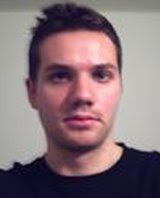
[Interview] Mark Kaplan

Novelist, school teacher and screenwriter, Mark Adam Kaplan was born in Staten Island, NY. He holds a Bachelor’s degree from the University of Michigan and a Masters of Fine Arts from the American Film Institute’s Center for Film and Television Studies.

He has worked as an Associate Editor and then as a public school teacher in New York City before relocating to Hollywood, CA.

His film credits include, A Time to Remember (Tai Seng, 1998) and Echoes of the East: Tibet, 1997.

His writing includes book and music reviews which have appeared in magazines that include Rapport Magazine in Los Angeles; “Date with the Chairman”, a short story which was published in the anthology, Wicked: Sexy Tales of Legendary Lovers (Cleis Press, 2005); and, A Thousand Beauties (BeWrite Books, 2009), his first novel.

In this interview, Mark Kaplan talks about his concerns as a writer:

When did you start writing?

I’ve always written, although I think I made a formal decision to give writing more importance when I was in college. I was directing plays and found myself inspired to speak my mind that way. Several of my own plays were produced in New York and Los Angeles, although nothing took off.

How would you describe your writing?

I do many different kinds of writing at the moment.

I write articles about teaching and education, prose, and screenplays. I find it difficult to stick to one genre (or media for that matter). Some stories are made for the screen, I believe, and some require deeper insight into a character’s thought process. There is room for crossover, of course. But I believe that truly interesting works in one genre do not translate easily into another.

For example, I really do not care what goes on inside of John MacLane’s mind, but I love watching the Die Hard films. On the other hand, I found Snow Falling on Cedars quite moving as a novel and unwatchable as a film. There are exceptions, of course. But I believe the rule generally holds.

I am reminded of an interview I read with Milan Kundera. After having The Unbearable Lightness of Being made into a film he swore that he would never write another novel that could be adapted. After reading his Immortality, I understand what he means.

Who is your target audience?

I do not write with a single target audience in mind. Perhaps that is what impedes my greater success.

Some of my screenplays are written for families, others for young adults. A Thousand Beauties was written without a target audience in mind, but I have found great interest among adults, middle-aged and above. Naturally, the audience is not confined to this age group, but when discussing the book with them, I have seen genuine surprise and interest once I disclose the nature of the story. It is certainly too adult for teenagers.

Who influenced you most?

My mother wrote stories which she read to us as we grew up, and I loved hearing them. She pursued her writing throughout my life and that taught me to keep going regardless of how my work was received.

My father, on the other hand, is not a writer, but always offered his honest opinion, which was sometimes very painful for me to hear. He did, however, keep my feet on the ground and offered me a more pragmatic outlook on life.

I began writing A Thousand Beauties after the death of my paternal grandmother who succumbed to pancreatic cancer. My maternal grandmother died shortly thereafter. I have been fortunate to lose few loved ones during my lifetime. Their passing forced me to stop putting off my novel writing and sit down to work.

What are your main concerns as a writer?

I have many concerns as a writer. I want to touch my readers’ hearts, to entertain them, but I also hope to reveal something they may not have considered.

I am most concerned by what appears to be the approaching disappearance of the casual reader. Computer games and the internet have provided the next generation with such a wealth of hands on, interactive amusement, that I fear the loss of a public that reads books for pleasure.

Young people are reinventing the language with text messages, and their growing need for immediate gratification, (which was a punch line twenty years ago) does not bode well for entertainment that delays satisfaction for two- or three-hundred pages. J. K. Rowlings’ books, and the runaway success of Stephenie Meyer’s Twilight series are encouraging signs. But I fear the tide is turning away from a novel reading public.

How are you dealing with these concerns?

I have seen some books that have generated interest among our disenfranchised young people. Townsend Press puts out The Bluford Series, a number of books set at the same inner-city high school. I have seen kids who have never finished reading a book devour these one after the other. They deal with what used to be adult themes, but are more and more teen issues. The prose itself is accessible, and writers like Paul Langan and Anne Schraff have proven there is still hope.

I am now working on my own young adult novel that deals with teen issues, Dangerous, in the hopes that it has a similar effect on our young people.

Dangerous will be about Leon Mendoza, a young kid coming of age in East Los Angeles who faces the challenges that come with the territory. He’s been arrested for dealing and accused by his homies of ratting them out. Caught between the courts and the streets, Leon fights to survive and escape from the life that fate seems set for him.

What are the main challenges that you face?

For years I tried to write for financial success, with no success. When I started writing, I was all about the creative energy and artistic inspiration that drives most artists. Then suddenly I was 30 years old, and my future livelihood was in question. I turned to screenwriting, hoping to crack into the Business and achieve the financial success that had eluded me. To that end, I came up with “commercial” stories. I honed my craft until the writing was top-notch. But what had suffered were my ideas. I spent nearly a decade working on ideas that were not truly inspired due to my misconceptions about what I thought Hollywood wanted.

I still love much of the work that I did at the time. But none of it was original enough to separate me from the pack. I worked with countless partners on countless projects, none of which have taken off.

A Thousand Beauties was written for nobody’s sake but my own. It is, by far, the best work I have done.

What sets it apart from other things you have written?

A Thousand Beauties is different from anything else I have written not only because of its form, but because of the intimacy with the characters the form allows.

Most of my writing for the past decade has been in screenplay format, where the focus is on meaningful actions. A Thousand Beauties allowed me access to the character’s thoughts and feelings as well as their actions.

This is also the one project that I have spent the longest time developing. The growth from its inception until its present form has taken seven years, far longer than any other project in my repertoire.

It is similar to other things that I have written because I tend to embrace the darker passions, and this work is full of them.

Do you write everyday?

Unfortunately I do not have the time to write everyday. As the father and primary caretaker of two young daughters, a public school teacher and a husband, the demands on my time are extreme.

Whenever I find myself with some free time (which is rarely) I sit at the computer and try to move through whatever I am currently working on (right now, Dangerous has this questionable honor). I usually finish writing sometime after 1:00am, and have to leave for work by 6:00am.

How many books have you written so far?

A Thousand Beauties (Bewrite Books, 2009) is my first full-length book, although I have had short stories published, am an internationally produced screenwriter and of course, have essays on the Internet.

What would you say the novel is about?

A Thousand Beauties is about Rupert Ruskin, a successful but unpopular man who has isolated himself from the world to chase his family’s elusive vision of enlightenment. He believes if he can see a thousand beautiful things in one day he was achieve the perspective of angels and spend the rest of his days in bliss. But his vision-quest is interrupted when his ex-wife, Elaine, bursts back into his life with the news of her cancer. Ruskin figures that if he can help Elaine find a thousand beauties, then perhaps her last days won’t be completely miserable.

I wrote the first draft of A Thousand Beauties in about eight months back in 2002. It sat on the shelf for a while, and I wrote several page one rewrites, cutting out over 150 pages from the original length.

How did you find a publisher for the book?

I sent out submission packets, but they met with little success until I sent it to BeWrite Books, where the editor, Neil Marr responded to one. He requested the full ms, and, after reading it, rejected it. Luckily for me, his rejection came with copious notes on the text. I reviewed his notes and found them clear professional.

I wrote back to ask if he would look at the text again after I worked on it more. Fortunately, he was happy to do, since he loved the premise so much. This rewrite took about five months.

True to his word, Neil reread the ms. This time he accepted it, and we began the process of beating the text down to its shiny core. We worked for several months on the book. Without his insight, honesty, and openness, A Thousand Beauties would not be as good as it is. I was very lucky to find an Editor who actually works as a editor. It was a terrific collaboration and I am grateful for the experience. This was the biggest advantage this publisher offered.

Did the arrangement present any disadvantages?

The disadvantages are that BeWrite is a small European publisher, and I’m in the United States. Also, the company relies on Print-on-Demand technology, which means they do not print a large run and blast sales in the first few weeks. (This is not Publish-on-Demand, or self-publishing. It is an entirely different animal.) Also, they offered no advance against royalties, and due to the nature of their publishing process, the paperbacks are a bit pricey. However, they also offer an e-Book, which positions them well for the future, and is good news to all Kindle users.

The challenges posed by this kind of publishing primarily involve accepting and evaluating their criticism of the work, being open to others’ ideas regarding design of the book and cover, and working collaboratively on a project conceived and executed (until this point) on my own.

Also, without the clout carried by a big house, it is more difficult to obtain reviews by recognizable figures or papers. This is a primary focus of my attention right now.

I am also involved with the promotion of the book far more than I would be should the book have been put out by one of the big publishing houses. Fortunately, the people at BeWrite have a wealth of knowledge about ways to get the word out. It’s a great learning experience for me and a lot of fun.

What did you enjoy most about the whole process?

The most enjoyable part of the process so far has been working with the Editor. I had been looking for feedback such as he provided for years, and had even paid for it at one point. For all of that, no one gave me the specific kind of notes that he did, which I found both useful and refreshing.

Part of the reason why it was so pleasurable is the manner in which the notes came. All were handled with meticulous attention to tone and came in the form of suggestions – which I was free to either accept or reject. This courtesy and professionalism is something I have rarely encountered.

What would you say has been your most significant achievement as a writer?

A Thousand Beauties is definitely my most significant achievement as a writer. Although I am proud of my film work, the quality of this novel, and the difficulty of the work in getting it here have made its release the proudest moment of my professional career.

How did you get there?

It all comes down to hard work, being open to criticism (but not a slave to it), and the luck of finding an editor who shared my vision, and was willing to nurture a novice writer to make it a reality.

Possibly related books:

,,

Monday, July 20, 2009

[Interview_1] Christian A. Dumais

Christian A. Dumais' work has been featured in newspapers and magazines that include the St. Petersburg Times, GUD Magazine and Third Wednesday.

His latest book, Empty Rooms Lonely Countries (CreateSpace, 2009) is a collection of short stories that draws on his experiences as an American living in Poland as well as on his adventures in the United States.

When he is not writing, Dumais works as a university lecturer in Wroclaw, Poland, where he teaches American Literature, as well as Creative Writing and American Pop Culture.

In this interview, Christian Dumais talks about his concerns as a writer:

How would you describe your writing?

I’ve been asked this a few times and I’m still uncertain on how to answer. The category I keep coming across is autobiographical fiction, but I don’t think that’s what I’m out to achieve. The stories in Empty Rooms Lonely Countries are true. The events happened. The conversations are as I remember them. The people are real. However, for the benefit of telling a cohesive and entertaining story, the chronology has been altered at times, separate events have been combined into one, and of course, it’s all filtered through my own experiences. If anything, I’m fortunate to have lived a life with enough events that sound like fiction.

I guess my concern is that I don’t want the book to come across as a memoir full of angst and heartache, the kind you’ve seen a dozen times already. Sure there’s angst and heartache, but there are also monsters, imaginary friends, elves, gnomes, fairies, vampires, cupids, mariachis, pornstars, devils and lots of alcohol. Now that I think of it, it’s a lot like the Bible. How is that for a selling point?

Who is your target audience?

My target audience? This is something I've considered a lot in the last few months of promoting the new book. I know the book as a whole isn't for everyone, but I believe without a doubt that there is a story or two in the book for everyone.

But if I had to be specific, I believe Empty Rooms Lonely Countries is written for people my age (I'm going to be 35) who remember the 80s as the first decade they actively participated in and who remember their history through a massive overload of pop cultural references.

I wouldn't say there was any particular motivation to start writing for this specific audience; if anything, I was writing the kinds of stories I liked to read. The stories written in the 90s were written from my dissatisfaction of the decade and how, as a generation, we were in this bizarre holding pattern. And I'd like to believe that if I was noticing this, that there were plenty of others doing the same, and sometimes it's nice to see your thoughts in someone else's words. Many of the books I've fallen in love with in my life were the ones that appeared to be written just for me, and the joy of the story comes from both the recognition of your thoughts in someone else's words and the satisfaction of knowing you're not alone.

What would you say Empty Rooms Lonely Countries is about?

Empty Rooms Lonely Countries is a collection of 27 short stories. The stories move from Tampa, Florida to Philadelphia, Pennsylvania to London, England to Paris, France and eventually end up in Wroclaw, Poland, with plenty of places in between. The stories jump genres, from horror to humor to romance to drama. Like I said before, there is something for everyone.

The book collects a small amount of the short stories written over the last 12 years. If anything, this book is a nice sampler of the kinds of things I can write, so I can’t really say it stands apart from my other work. I do like how the stories selected for Empty Rooms Lonely Countries work together to tell a much larger story. Even the About the Author works as an epilogue.

What are your main concerns as a writer?

My greatest concern as a writer is to tell an entertaining story that is emotionally honest. I've read thousands of short stories that were amazingly entertaining, but the ones that have stuck with me were the ones with a sincere emotional connection. The details of the stories themselves might have been forgotten, but the way those stories made me feel will not.

As for how I deal with that, I'm always considering the best approach to telling the story. Okay, something interesting happened in my life this week that I believe warrants a story, but unless I can find the emotional hook, it won't be written. For instance, the story "Mad Dogs" is about my evening out with some of the members of the Secret Service in Krakow, and that alone, I believe, is an effective hook. However, if I only used that, the story itself might be entertaining, but it would be empty. By focusing on the displacement of the American agents in Poland, this helped to emphasize my own feelings of alienation, and because of this, I hope that it created something more identifiable for the reader to hold onto as they work through the story.

How have your personal experiences influenced your writing?

My personal experiences are my writing. I think one of the things that helped my writing was to stop pretending I was not writing about myself and stop creating fictional characters that were so overtly me that I may as well have named them Dristian Chumais.

This is one of the things that drew me so heavily to Hunter S. Thompson, this insistence on destroying the reality of Thompson and exploring the myth of Thompson, to the point that a lot of readers continue to have difficulty discerning what's true and what's not. This ambiguity creates a third version of Thompson that is neither true nor false, but rather, a Thompson that's more real than the previous versions could ever be.

I’m not saying I’ve accomplished anything remotely like Thompson, but it's something I consider as I reconcile who I am in real life as opposed to who I am in print.

In terms of the direction of my writing in terms of my experiences, because the stories in Empty Rooms Lonely Countries are based on real documented events, whether it be my aforementioned experience with the Secret Service or the drug conferences I attended as a “pharmacist” from 1997 to 1998, I have an obligation to be honest for those who were there with me, but an even bigger responsibility to translate those experiences and emotions as honestly as I can for the readers.

What are the biggest challenges that you face?

The biggest challenge I’m currently facing is getting the book noticed. It’s hard work trying to be heard on the internet (even with a contest to give away $1,000), especially when there are hundreds of new incredible things arriving every day. I mean, here I am with this little book screaming, “LOOK AT ME! LOOK AT ME! I WANT TO GIVE YOU A $1,000!” and meanwhile everyone is watching a YouTube clip of a slow loris being tickled. And then when that’s done, they are Googling “slow loris” to find out just what the hell it is.

You just can’t compete with a tickled slow loris. It’s tough out there.

How many books have you written so far?

This is my second book. Though, in full disclosure, the first book was a novel and it’s been locked away in a very dark place. Nobody has been able to look at it for over ten years now. There is a rumor that whenever someone reads the novel, a puppy dies. I couldn’t live with that.

How did you choose the publisher for the book?

I went with CreateSpace and self-published Empty Rooms Lonely Countries. A lot of this was done out of impatience, and since many of the stories in the book had been published previously in magazines and journals, I believed that it was time to collect them into one handy package.

Plus, I spent most of last year studying a movement called liberature for my MA work, and one of the things it endorsed was the writer’s active participation in every aspect of the book’s creation. It likened the writer giving the manuscript to a publisher and not being involved in the packaging of the book to a musician creating a score and not stating what kind of instruments are to be used. I really liked the idea of putting the book together, creating the cover and knowing the book inside and out. I know CreateSpace prints my book, but it’s gratifying to know that this book is mine, that it’s precisely how I wanted it to be through my own choices.

Which aspect of the work did you enjoy most?

I just enjoyed going through the stories again and picking out what should and shouldn’t go into the book. Some of the stories made me cringe (and still do) and some of the stories surprised me. I like the memories each story gives me, which is why I’m having a lot of fun now writing commentaries for each of the stories from the book on my website.

What would you say has been your most significant achievement as a writer?

My most significant achievement as a writer on a personal level has been that I’ve kept writing all of these years, even when no one was reading my stories and I wasn’t getting published. The easy thing to do is not write, to turn on a movie or read a book instead, and I’m thrilled to have this large body of work that’s accumulated over the years. I’m really proud of that.

Outside of that, I’m thrilled to have avoided some of the more common traps writers fall in, like shoot themselves in the face or marry their 13-year-old cousin.

What will your next book be about?

The next book will be another collection of short stories -- out sometime in late 2010 -- and it is tentatively titled You Are Going to Die and Other Stories of Hope and Inspiration. After that, I hope I will have finally finished the novel I’ve been threatening to finish for far too long. Or who knows, maybe I’m really a short story writer after all.

Anything else before we go?

I just want to thank everyone who has bought the book. I know I’m not selling huge numbers, but it thrills me to know that there are copies out there in the world being read.

For those who are on the fence, I’m having a contest to give away $1,000 to one of my readers if I manage to sell 1,000 copies of Empty Rooms Lonely Countries by the end of this year.

Possibly related books:

,,

Tuesday, July 14, 2009

[Interview] Clifford Lane Mark

Clifford Lane Mark's first novel, Ecumensus: The Next Vision (IUniverse, 2009) has won a number of awards and has been described as having "an almost supernatural energy of truth around it".

In this interview, C. L. Mark talks about his concerns as a writer:

Do you write every day?

No, I’m a muse-driven writer. When the thoughts and inspirations have accumulated in me over a few days or a few weeks, they come rushing out of me in a torrent and only then can I write.

When I start an inspired writing session it may go on for an hour or two.

I usually return a little later or the next day to what I’ve written so I clean it up, punctuate it, find the most accurate words and make sure it is communicating as precisely as the feelings I had when I was inspired to write it.

I’ve always been a wordsmith of sorts (newsletters, essays, a few poems, industry articles, that sort of thing) but Ecumensus, my first novel, was so involved that it took many years to fully grasp and complete. The story line itself is captivating and unique in premise but it also required that I integrate understandings and insights into the story so that it could be read and understood on a deeper level. Many of these insights and understandings came to me even as I wrote through the years and it then became necessary for them to adhere to a logical progression so they could be easily followed and believed.

Eventually, the novel took on its epic and visionary aspect. It challenged me as a writer and somewhere along the way it taught me how to write.

I was blessed with two good editors as well.

The writing style is being praised in many quarters so, hopefully, the quality of the writing is self-evident.

What compelled you to start working on the novel?

When I started the book in 1995, I had come to believe that the next great frontier to be explored was not outer space or medical advances that result in longer lives or even information technologies that bring the world into closer proximity.

It seemed to me that the next great frontier was the need to better understand the ultimate identity, purpose, and destination of humankind and how to envision a roadmap for all humans that was something more than war, greed, hunger, persecution and competition.

As a political philosophy and history major in college, I had developed an ability and a desire to see past the conflicts and arguments of men to some higher ground or collective common purpose that must be found in order to survive an undeniable trend to higher populations and fewer resources over which we will either fight to the death or learn how to share. This kind of “mind change,” in turn, requires a transformation in our “base” philosophies, tribal traditions and religions that are entrenched in our cultures and have become just as competitive. I thought I knew how to communicate this roadmap -- not through prescription but through a story that engages the emotions as well as the conscious mind.

It was always my hope that I could write such a story and only when the ten “trial readers” were unanimously moved to encourage me to publish the novel did I dare to believe that I had perhaps succeeded.

What would you say Ecumensus is about?

When the seven organizers of the most important event of the next millennium (a black man, an Asian woman, an old Catholic Priest, a blind Muslim boy, a Jewish financier, a young Mexican girl and a Native American Councilman) are informed of their purpose to re-vision the world, they are intrigued but skeptical. When they finally find themselves atop a sacred mesa with the sages and wise ones of our time, they are astounded by the insights and understandings that await them and by the dramatic events that unfold there; events that will inspire the enlightened survival of humankind for the foreseeable future.

It took some 15 years to outline, write, edit and publish the novel. It was published in June of 2008 and has won a 2008 Publishers Choice Award.

How did you choose a publisher for the book?

For some, I suppose, a traditional publisher is a choice but it is an agent-driven process and not one that is friendly to unknown or first-time authors. It’s not like anyone was rushing to my door.

In order to keep some aspect of “control” of the process, especially in terms of timing, I chose a hybrid publishing process called supported self-publishing. I saw an interview on television with the IUniverse CEO and liked what I saw, heard and felt, so I engaged their services.

What advantages or disadvantages has this presented?

The reputation of the “self-published” or “vanity publishers” has been pretty spotty through the last century but the face of publishing has changed greatly since 2000 with the advent of desk-top publishing and other computer advances.

The disadvantage of this previous reputation has made getting reviews from traditional established sources (newspapers, periodicals, radio and television) much more difficult.

The advantage is that there is some control of the timing of the process and, if the book is good enough, there is no requirement to endure the corporate politics or unimaginative mentalities that can be encountered when one is “beholden” to a traditional publisher. If my book provides an experience that enriches reader’s lives on any number of levels, it will get into wider and wider circulation almost on its own. All of us know that word-of-mouth advertising is ultimately the best kind.

In addition, there is still a strong likelihood that a more traditional publisher will express an interest and will choose the book for wider distribution.

Either path is suitable and is just exactly what is meant for this novel.

At some point, the ego of the writer has to get out of the way and the merit of the writing; the value of the reading experience, will find its audience.

Which were the most difficult aspects of the work you put into the book?

In some ways, the length of time it took to create the story was the most difficult because my own impatience kept rearing its ugly head and trying to hurry a process that seemed to have its own timeline -- whether I liked it or not.

Over the last few years I have finally come to accept (almost) that this work has its own pace and, in many ways, I am just a tool of sorts. When I finally began to accept that my ego was not as much in charge as I first thought, everything was much more enjoyable and much more productive.

Why was this so?

A visionary work has hundreds of influences and “ghost writers” if you will. Once I was out of the way and let the stories and characters come to me or through me rather than forcing the action, the novel took on an epic aspect that I never saw coming.

Once the rough draft was complete, the passages that I wrote outside this process needed the most editing and the most revision.

I found that rather enlightening.

What did you enjoy most?

I enjoyed the self-discovery I experienced in writing Ecumensus, for one thing, and I enjoyed the fact of completion.

I told some people when I was done with the rough draft that getting it published was not critical to me at all. Facing the blank page for 15 years and finally typing the words, “The End” carried with it an incredible sense of completion, accomplishment and satisfaction. It was only when the trial readers of the rough draft unanimously encouraged me to publish it that publication became a more important desire for me.

The next most satisfying moments, after publication and presentation to the world, were the following comments of three readers who wrote to tell me that the book was “nothing short of brilliant,” (one reader), “was the most impactful book they had ever read” (another reader), and that it “has an almost supernatural energy of truth to it that cannot be denied” (a third reader).

These experiences are both heady and humbling. Completion is its own reward. Knowing that you’ve reached a reader in a very positive way is gratifying and makes you think maybe the trial readers were right and that a wide audience will eventually enjoy it.

What sets Ecumensus apart from other things you've written?

Longer, more complete and published.

In what way is it similar?

Uniformly good feedback.

In the writing you are doing, which authors influenced you most?

Thinkers like Ram Dass, Alan Watts, and Dan Millman helped to influence my thinking.

Storytellers like James Redfield and others convinced me that there is a market for “visionary storytelling.”

The best measure of a writer is to evaluate whether the words resonate as “true” with the reader. The same is true of all writers I’ve read, i.e. if they resonated with me as true or possible or probable then they had their influence on my development as a person as well as on my development as a writer.

How have your personal experiences influenced your writing?

When one is writing a book for seekers and searchers, one is unable to avoid the separation between their writing and their personal experiences.

My thousands of personal experiences, thoughts, dreams and hopes are on display in the writing I do -- not in my name but in the characters and the thoughts they express.

The novel has the stamp of my person throughout its pages.

That said, it also has the stamp of hundreds of others who have, in their way, influenced me, taught me, showed me, shared with me and tried to enlighten me by offering me their truth.

What are your main concerns as a writer?

My main concern is whether what I’ve written is logical, accurate, moving, well-phrased and fair. I am a stringent “judge” of these standards and am open to any well-stated opinions to the contrary.

I think any self-described visionary writer struggles with the reality that they themselves fall short of their visions. That gap is a constant reminder to continually grow myself into the hopes and visions that have been imagined through me. I pursue that every day in some way or another. Writers are on paths, too, and are not yet everything they would eventually like to become.

How would you describe your writing?

I’ve come to view myself as a trans-religious intuitive thinker and my writing is about religio/socio/political intuitions and future hopes for all of us as seen and told through the eyes of characters who are growing toward the future -- a future that will be continually and wholly different with each passing year.

This future will require all of us as people to grow into renewed visions for the race, renewed optimism for the planet and renewed energy to create growth in ourselves as we learn to negotiate that ever-changing future.

Rather than a prescriptive or instructive writer, I am a teller of stories, parables and allegories that reach an audience emotionally, intellectually and intuitively.

How would you describe your target audience?

The target audience members are seekers, searchers, and folks who know there is more to who they are and are looking for a world we can create together through our thoughts, our words, our actions and our highest dreams for ourselves and the world.

These type people are in every walk of life but are probably educated to some degree, past 30 years of age in most cases and understandably concerned that previous ways of thinking and relating have led us to where we are today. They realize that progressive thinking -- not past beliefs but improved versions of our beliefs -- will better serve us moving forward.

What would you say has been your most significant achievement as a writer?

I’d say that “achievement” it is still ahead of me... I certainly hope that is the case.

Related books:

,,

Monday, July 6, 2009

[Interview] Bryce Beattie

Novelist Bryce Beattie describes himself as a pulp addict, a programmer, a husband and a father.

He is also the author of Oasis (CreateSpace, 2008), a novel that focuses on small town nurse, Corbin St. Laurent as he desperately tries to find a cure to a virus that is turning the inhabitants of his town into zombies.

The novel first appeared as a serial on the blog, Oasis: a Zombie novel before it was released as a paperback.

In this interview, Bryce Beattie talks about his concerns as a writer:

When did you start writing?

I wrote little stories here and there my whole life. I really decided to start writing regularly a few years ago after I discovered the works of Edgar Rice Burrows and Robert E. Howard. Their writing just has so much fun and energy, it was infectious to me.

How would you describe your writing?

Action adventure fiction in the pulp tradition.

My target audience is me, and other folks who were born about 70 years too late. Folks who like The Shadow, seedy jazz music, Doc Savage, old time radio shows, and good, clean fun.

Which authors influenced you most?

Edgar Rice Burrows and Robert E. Howard got me going. Kenneth Robeson (Lester Dent) as well as many hardboiled detective writers like Robert Leslie Bellem and Raymond Chandler. More modern influences include Ray Bradbury and Gregg Taylor from Decoder Ring Theatre.

Do you write everyday?

I try to write everyday. I don't really have a set writing rituals like a lot of writers. I just squeeze it in whenever I can. The session usually ends when my wife or daughter ask me to do something.

How many books have you written so far?

Just one so far. It's called Oasis, and it's a sci fi, action, adventure, pulp, zombie book. I self-published it through CreateSpace, only to have a small publisher contact me the day after it went live on Amazon. They weren't interested in a reprint at the time, so I missed out. More info about it can be found at Oasis: a Zombie Novel.

Oasis is the story of an E. R. nurse who is trapped in a small desert town that has been quarantined following a terrorist release of a horrible virus. A virus that siezes control of the infected person's mind.

I also had a short story published in Astonishing Adventures Magazine, a modern day pulp.

How long did it take you to write Oasis?

Oh, man. Forever. It took like two and a half years. I only really worked on it steadily the last year or so.

It was published just before Christmas last year.

I found it hard to edit the novel to a point where I could really feel satisfied that it had turned out the way I wanted. Eventually I just had to say, "Look, self, do you want this thing published, or do you just want to work on it forever?"

Which aspects of the work did you enjoy most?

I wrote it serially on my blog, and I really enjoyed the interaction with readers after every chapter.

What sets the book apart from other things you've written?

Well, it's long and I finished it. Nothing else I've written meets both those criteria ...

What will you be publishing next?

The book I'm working on now is a sequel to Oasis. It's more sci-fi pulpy action. This time the hero has to deal with aliens.

The book after that is going to be a more mainstream political thriller

What are your main concerns as a writer?

I am constantly striving to make my writings have more energy and be more engrossing.

I've read a lot of books on writing, and I read a ton of fiction. After folks finish reading one of my stories, I want them to say, "That was a ride."

Someday, I'd like them to say, "It's sad that that book is over. It was a fun ride, but it also made me think."

One step at a time, I suppose.

As far as challenges to my writing go, right now time concerns are the biggest. I'm busy with work, family, and my church. There just aren't enough hours in the day to do everything I want to do.

How do I deal with it?

I try to cut out activities that don't really matter. Reading with my daughter matters, watching American Idol doesn't.

Related books:

,,

Related article:

[Interview] Anonymous, author of 'worlds undone', Conversations with Writers, May 11, 2009.

Saturday, June 20, 2009

[Interview_1] Masimba Musodza

Zimbabwean screenwriter and author, Julius Masimba Musodza was born in 1976 and attended Avondale Primary School in Harare, and St Mary Magdalene’s High School in Nyanga.

Some of his early work appeared in school magazines as well as in the young people's newspaper, The New Generation.

After high school, Musodza majored in Screenwriting and Directing at the Vision Valley Film Video & Television Institute. He also studied with Edgar Langeveldt’s Nexus Talent Agency; the African Script Development Fund; the Zimbabwe International Film Festival and the Raindance Institute.

He sold his first screenplay in 2002 and is now working to put some of his own writing to screen as a producer/director.

In this interview, Masimba Musodza talks about his writing.

When did you start writing?

I seem to have taught myself to read and write before I started school and that scared the hell out of my folks!

I tried to get a novel published in the Pacesetters series, but that was when they stopped publishing.

I started my professional writing career around 2000 when I sold my first screenplay. I did the occasional short-story or essay in noe magazine or the other and had novel-length manuscripts piling up. But it wasn't until I came to England, and having to do the rese-rese career that I realised I had to put my name out there now or be another miserable, overworked, overqualified Zimba in London for many years to come. So, I put together some of the stories I had written over the years about the experiences of Rastafarian people in Zimbabwe and published them as an anthology.

How would you describe your writing?

I would describe it as doing the one thing that I am actually good at.

I am a Rastafarian so it is natural that I will come up with main characters who are Rastafarians or see the world with Rastafarian eyes. There is a tendancy to keep us on the periphery, except as amusing eccentrics. I am saying a Rastafarian is a person as good as the next. But I don't want to be remembered as just a Rastafarian writer. I am very mainstream.

Who is your target audience?

Anyone who takes the time to read. I see myself at this stage as writing in the dark - so I cannot define my audience, just yet. I am trying to reach as much of the world as possible, which is why I am working towards getting some of my work translated into other languages.

Of course, I do have the distinguished honour of being a pioneer in Rastafarian Literature. But I reach out to a wider readership.

Which writers influenced you most?

I have been described in one review as "the Rastafarian Hemmingway". But I cite many influences on my website... from our own [Tsitsi] Dangarembga, [M. A.] Hamutyinei... even Wilbur Smith, (though it is not very politically-correct to say that)... to the English and American writers, and the African masters, and most recently Chimamanda Adichie. The list is very long.

What are your main concerns as a writer?

Right now, I have a book being sold illegally on the internet by my former publisher.

How are you dealing with this?

What can I do? It is a small publishing house, but I am even smaller and they know that if I am to try and force them to honour their obligations, whatever it is they cough up will be swallowed by the legal costs I might have to pay. All I can do is appeal to people not to purchase any book from a company calling itself Meadow Books, Exposure Publishing or Diggory Press with my name on it as I am getting nothing for them.

How have your personal experiences influenced your writing?

I think it shows in the writing. It is fiction, but it is based on reality. Take my new detective novel, for instance. I am talking about the greed and materialism of Zimbabwean society, about the Rastafarian people's struggle for recognition as a bona fide religious and cultural community in a multi-cultural Zimbabwe, and about how Zimbabweans living abroad will have a brighter future if they return home.

What are the biggest challenges that you face?

Zimbabwe is in a straight-jacket. I am pushing boundaries on many fields, and that scares the hell out of a lot of people. Then, when you go out there, you find that the world also has deep-seated prejudices about what a Zimbabwean writer ought to be.

Despite institutional censorship in Zimbabwe, I have at my disposal the Internet. I don't have to go mainstream to be a success. Most Zimbabweans have never heard of me, but I have been well-received in Italy and Australia, among other places.

Do you write everyday?

Yes.

I spend the whole day outlining a chapter or a story. Then, after midnight when all is calm, I am at my computer and just sort of put down what I have already written in my head.

Often, I will do a chapter of each of the novels I am working on at the moment. There are always other things to write as well. Then, at around dawn, I will crawl back into bed and wake up in the morning like a normal person. (Should go down well on the first morning of matrimony...)

How many books have you written so far?

The Man who turned in to a Rastafarian, an anthology. First published in 2007 by Exposure Publishing. Republished by Lion Press. A pioneering work of Rastafari-oriented fiction.

Uriah's Vengeance, 2009, Lion Press. The first in a series about Chenai "Ce-Ce" Chisango and her brother Farai of the Dread Eye Detective Agency. They are are assigned by the wife of a wealthy businessman to protect him from a possible attempt on his life by an extortionist. Despite their efforts, the businessman is brutally murdered in one of his homes and they have to find his killer. Clues point to a quest for revenge for a terrible wrong dating back to Zimbabwe's war for independence. However, as the brother and sister duo uncover the past, shocking discoveries suggest a motive much closer to the ethos of contemporary society - sheer avarice.

I wrote the screenplay about a decade ago. At that time, I had just finished film school and it looked like we were going to have a film and TV industry in Zimbabwe. Now, we don't even have an industry of any sort..

Mhuka Huru. Lion Press, Publishing date held back for a few months. A Shona language sci-fi/horror, weaving topical issues such as the environment and sustainable development, the spectre of global famine, the role of global food cartels and their GM crops and the mythology of the Zimbabwean people.

In the novel, villagers living around the River Hacha begin to shun it as word spreads that a mermaid now occupies one of its deep pools. So, there is no one to witness the abnormal growth of the flora and fauna in the vicinity. No one to note that even the animals are scared to go near the river, scared of the dark hulks lurking beneath the surface of the pool…

Which were the most difficult aspects of the work you put into Uriah's Vengeance?

Trying to keep in mind that most Zimbabweans haven't the foggiest about Rastafarian culture. I had to offer explanations without allowing a work of fiction to become a dictionary.

I suppose if you are trying to push down barriers of ignorance and misconception, you have to climb down from yours as well.

What will your next book be about?

Another Shona language horror, this time revolving around the subject of sexual abuse and how our justice system seems to have difficulty in dealing with abuse of this kind.

What would you say has been your most significant achievement as a writer?

My folks finally admitting that writing is as respectable a profession as the ones they had in mind for me!

Possibly related books:

,,

Possibly related article:

[Interview] Petina Gappah, author of 'An Elegy for Easterly', Conversations with Writers, April 10, 2009.

Monday, June 15, 2009

[Interview] Michael Jodoin

Filmmaker and author, Michael Jodoin lives in South Central Kentucky.

His first book, Holy Hell was released from sonar4 publications in March 2009.

Jodoin's work includes a screenplay adaptation of Holy Hell; a vampire story, Love Sucks; and a werewolf tale, The Wolf with the Red Rose.

In this interview, he talks about his concerns as a writer.

When did you start writing?

I suppose I’ve always wanted to be a writer. I wrote short stories as a teenager, but the realities of life and parents who thought writing made a good hobby as long as I pursued a real career first pushed me off the path. I continued to write periodically, placing each completed piece in a drawer for posterity’s sake.

My wife stumbled upon my work about five or six years ago and encouraged me to seriously pursue my dream. Time to write was still at a premium until the day my wife suggested that we were in a position financially that would allow me to stop working full time and devote myself to my writing.

I think everyone who writes wants to be published. I don’t really believe that it’s a conscious decision to be published. It just sort of comes with the territory. How to go about getting published is simple. No, strike that. It isn’t really simple, it just sounds simple. At the end of the day it comes down to getting your work out there. Ideally you’d have an agent, but getting an agent to even consider your work when you’re unpublished is difficult at best. Getting a publisher to look at your work if you’re unrepresented is even harder. It’s a lot like a dog chasing its tail. The upside is that every now and then the dog catches it.

You can’t be thin-skinned. A lot of rejection comes with this gig. I once told a writing class at my stepson’s school that the first step to becoming a writer is to hang around with people who love to criticize you. Just take it on the chin. After that, date people you know are going to dump you sooner or later. Once you can take all that rejection with a grain of salt you’re ready to be a writer.

You can greatly enhance your chances of success by writing the best work possible. My suggestion would be to write what you know about. If what you want to write isn’t something you know about then find out about it. Do all the research you can regarding the subject. Even if you want to write a far-fetched sci-fi story you can find some basis in existing science that you can extrapolate on. When I wrote Holy Hell, I kept a bible on the desk just to make certain I had the right information. I also did a lot of online research.

How would you describe your writing?

The writing I’m currently doing is pretty much the same as what I’ve always done, Horror with a twist. I like to take a standard Horror theme, be it ghosts, or vampires, or werewolves and run it around a corner no one sees coming. Of course at some point in every story I have to throw a little philosophy in.

I’d like to think that audiences of all ages can enjoy my work, but I tend to write for the 18 to 24-year-old audience. Possibly even to the 24 to 34-year-olds. I think they ‘get it’ more. Also I believe they are more willing to question what really is the ‘norm’ even in Horror.

Which authors influenced you most?

OK. This is going to sound really weird, but one of the greatest influences to my writing has been Douglas Adams. I know he didn’t write Horror, but his style is infectious. His work is fun to read, it’s funny and it definitely takes twists and turns that keep the reader off balance.

I guess it was that level of unpredictability that gave it the influence it’s had on my work.

How have your personal experiences influenced your writing?

A writer’s personal experiences are what gives him or her that perspective to see the direction a particular piece should take. I don’t think all of my work necessarily has one direction. I’ve done a lot of different things from being a carpenter to farming to research and development for a plastic company. I’ve gone from the top of the heap to the bottom of the barrel. Your personal experiences give your writing direction, but if they’re varied enough there is no one direction for everything you write.

What are your main concerns as a writer?

I think my main concern is the aforementioned predictability. I never want my writing to become standard fare. The best way to deal with that is to know your genre. If you think hard enough you’ll find a place that no one else has ventured to.

Probably the biggest challenge I face is balancing my writing with every day life. I tend to get like a bulldog with a bone when I start writing something. Putting my work aside to deal with the things that confront all of us daily, even time with the family, is tough for me. Fortunately I have a very understanding wife who has a unique way of bringing me back to reality, even on the most intense of days.

Do you write everyday?

I do try to write every day.

Generally I start by reading the last few pages I wrote the day before. I find it helps to set the mood. I also surround my office with pictures or symbols that represent the essence of the story I’m telling.

I make an effort to end my writing day at a preset time, but if I’m on a roll I tend to keep going till I’ve reached a point that feels comfortable for me to stop. Also the sound of my wife yelling, “You don’t have to write the whole damned thing today,” will bring me to a screeching halt.

How many books have you written so far?

Holy Hell is actually the first book I’ve ever written that has been published. It was published by sonar4 publications and released in March 2009.

I wrote one other book entitled The Wolf with the Red Rose, a werewolf tale, which resides in the drawer that my wife stumbled upon.

I found that I preferred writing screenplays as opposed to books. While I am bound by a confidentiality agreement I can tell you that I have one screenplay, tentatively entitled The Curse of Bootlegger’s Marsh in pre-production at this time and soon to begin principal photography as well as two other screenplays picked up by the same production company.

This is not to say that I’ll never write another book. I fully intend to. Who knows, I may even dust off The Wolf with the Red Rose and have a go at it.

What is your latest book about?

As I said before I write screenplays, but I do have a first draft of the second installment of Holy Hell entitled Holy Hell: Aftermath. I always saw the story of Jackson and Christ as a trilogy. I can’t say how long it took to write because as far as I’m concerned a first draft is just that and the book isn’t finished until I’m completely happy with it.

As for choosing a publisher, you don’t. At least not at first. You can choose who you send it to, but who picks it up is a crap shoot. You can only hope to be as lucky as I and have someone of Shells Walter’s caliber (editor of sonar4 publications) take your work on. She is an unstoppable force of nature.

As for the advantages and disadvantages, the advantages are too numerous to list and I have yet to find a disadvantage. I can only tell you to trust your publisher’s judgment. This is what they do. You write, they publish. It’s as simple as that.

Which aspects of the work you put into the book were most difficult?

I put a lot of myself into the characters in Holy Hell. Some of that wasn’t easy to see or say. Not all of the characters started out as ‘nice guys.’ We all have inner demons we do battle with on a daily basis, but being honest about it, even in a work of fiction, is tough.

However, when it was all said and done, writing Holy Hell was cathartic.

What did you enjoy most?

Telling a story that actually had a point, that made a statement, was very cool. Holy Hell is about change, forgiveness and acceptance. The fact that people get that, judging from the response I’ve gotten, without feeling like they were being preached to is very satisfying.

What sets Holy Hell apart from other things you've written?

It isn’t Horror in the strictest sense. Holy Hell is religious fantasy/horror. It could best be described as The Da Vinci Code meets Hitchhikers Guide to the Galaxy. Nothing like anything else I’ve written.

In what way is it similar?

It has that twist to it, it has a sense of humor, albeit dark in places, and it has characters that you really do care about.

What would you say has been your most significant achievement as a writer?

I’d have to say that my most significant achievement as a writer is that I’ve found myself and the joy of having a job that I love waking up to every morning. That said I would be remiss if I did not acknowledge the fact that I owe a great deal of that to my wife, Donna, for her faith and support.

Possibly related books:

,,

Tuesday, June 9, 2009

[Interview] Christian Ward

In 2006, Christian Ward published The Grammarian and Other Poems (PDF) (Lily Press, 2006). This was followed by five more poetry chapbooks, among them, Goddess & Other Poems (PDF) (Scars Publications, 2007), The Sea (PDF) (Scars Publications, 2007) and Dark Matter Lullabies (Why Vandalism?, 2008).

His latest chapbook, Bone Transmissions was released from Maverick Duck Press in 2009.

His work has also been featured in journals that include Sage Trail, Grasslimb, Sein Und Werden, Envoi and The Emerson Review.

When did you start writing?

I first started writing when I was a child and stopped for a while when I started secondary school, resuming at 24, when I was at university.

Being a writer was a childhood ambition. I remember reading an illustrated version of Robinson Crusoe when I was a boy and wanting to write the same kind of wonderful stories as [Daniel] Defoe did. It wasn’t until I reached my mid-twenties that I started to make it happen.

I sent out pieces to smaller journals such as Iota and Other Poetry to build up a portfolio, giving me the confidence to try larger, more established, journals such as Poetry Wales and The Kenyon Review (US).

I also discovered the internet in a big way. I found that using networking sites such as Myspace and Facebook were a great way to meet new readers and build up a following.

How would you describe your writing?

The poetry I write is based on my experiences and observations in my day to day life. I’ve found William Carlos Williams’ ethos “"No ideas but in things" -- see the world as it is -- to be inspirational and have tried to incorporate that idea in my work.

My literary criticism consists mainly of book reviews and I intend to start writing essays on literature in the near future.

I have also begun to get involved with translating poetry and my translation of Edith Södergran’s, “Stars”, appears in the February issue of elimae.

Who is your target audience?

People who enjoy poetry, as well as those who enjoy a good read.

I try and write for as broad an audience as I can because I want my work to be enjoyed by as many people as possible. If you write within a niche, you not only limit your audience but run the risk of being pigeonholed.

Which authors influenced you most?

Elizabeth Bishop, Sylvia Plath and Tobias Hill have influenced my poetry the most.

Reading Elizabeth Bishop when I first started to write seriously was a revelation. Poems like “The Fish”, for instance, struck me with their intricate level of detail. It made me feel as if I had stepped into the world Bishop had described, becoming part of the landscape.

The novelist Jeannette Winterson once wrote in The Times that she goes to poetry for the same way that “some people grab an espresso; for an energy shot [...]” Sylvia Plath’s poetry, for me, is that hit of espresso. Her poems have such intensity and such powerful metaphors they give me a jolt. Her skill at crafting metaphors has influenced me enormously.

The poet Tobias Hill has a knack for bringing out the extraordinary in the ordinary. Many of his poems are observations of places and things we are familiar with -- shops, subway stations, parks, streets. He takes these things and brings out their hidden qualities, something I’ve tried to do with my own writing.

How have your personal experiences influenced your writing?

Personal experiences have shaped my writing. Putting down these experiences on paper has been incredibly therapeutic. They also allow me to keep memories alive, which I think is important as you get older and the brain starts to deteriorate.

What are your main concerns as a writer?

I have two main concerns: writer’s block and self doubt.

The first is frustrating and I’ve dealt with it by allowing myself to write whatever I want.

The second issue is something we all experience as writers. Sometimes writing can get you down and you start to question your own ability. You become tired of your craft.

I’ve found that it’s helpful to always remember why you’re writing and to spend some time on yourself, doing an activity which relaxes you.

What are the biggest challenges that you face?

Procrastinating. I tend to put off things a lot of the time and deal with it by working to a schedule and making lists.

Do you write everyday?

I write everyday. Each session starts by brainstorming an idea, perhaps something I’ve seen or thought about. I’ll slowly develop this into an outline of a poem before writing a draft. I’ll take a break before editing and will edit the piece a few times before I’m happy to call it a day.

How many books have you written so far?

I’ve written six chapbooks of poetry so far:

Bone Transmissions (Maverick Duck Press, March 2009), Slippage (Erbacce Press, April 2008), Goddess & Other Poems (Scars Publications, 2007), The Sea (Scars Publications, 2007), The Grammarian and Other Poems (Lily Press, 2006), was my first chapbook.

Dark Matter Lullabies (Why Vandalism?, 2008), differs from the others in that it is a chapbook of experimental poetry.

How did you choose a publisher for BoneTransmissions?

My latest chapbook, Bone Transmissions, is a mixture of poems about my experiences and observations about nature and people. The book did not take long to put together but some of the poems took several months to write.

It is being published in March 2009 by Maverick Duck Press. I chose this publisher because they were young and exciting and I wanted to be a part of that.

There is always a risk with some unproven publishers that your work won’t sell or find an audience. This isn’t the case with Maverick Duck Press, which has been growing steadily since it was founded in 2005.

What did you find most difficult about the work you put into the book?

I had a large selection of poems to choose from, and I found it difficult to pick out the ones that I thought would be suitable. There were so many I wanted to include but couldn’t because of the limitations of space.

In the end I decided to choose a selection that had been published in journals and add a few pieces that hadn’t, creating a varied mix of work.

What did you enjoy most?

The brainstorming sessions were pretty fun; I enjoyed looking at the different ways of describing a subject.

What sets Bone Transmissions apart from other things you've written?

The poems in the book are the ones I’m most proud of. They represent a maturity of style which has been developed over a number of years.

In what way is it similar to the others?

It covers similar subjects to my other chapbooks, especially with the poems that are about my experiences.

What will your next book be about?

I’m currently working on a full length poetry collection entitled A Brief History of Electricity, which is named after my poem of the same name that will be appearing in the Indian journal Pratilipi in March.

It will contain new material, as well as older poems.

What would you say has been your most significant achievement as a writer?

Appearing in journals such as The Kenyon Review. The journey to where I am now as a writer has often been difficult and I sometimes doubted my ability to get my work up to a level where it would appear in places like that. It’s a wonderful feeling seeing my name there.

Possibly related books:

,,

Related articles:

Tuesday, June 2, 2009

[Interview] Carol Denbow

In 2006, Carol Denbow self-published her first book, Are You Ready to be Your Own Boss?

She followed this up with Stress Relief for the Working Stiff (Publish America, 2008), A Book Inside: How to Write, Publish, and Sell Your Story (Plain & Simple Books, LLC., 2008), How to Organize a Virtual Book Tour (eBook through Plain & Simple Books, LLC., 2008) and The Writer Within (Plain & Simple Books, LLC., 2008).

In this interview, Carol Denbow talks about her writing:

What are your main concerns as a writer?

The same as every other published author out there -- selling books. Secondly, is my writing good enough?

How I deal with these issues?

For one, I spend three or four hours everyday on the Internet marketing my books and sleepless nights trying to dream up new ways to do that successfully. As far as further developing my writing skills to perfection, I’m just doing the dreaming part of it. Mostly I read good work and try to pull the lessons from it as best I can.

My biggest challenge is one I face everyday -- to keep trying.

With near 300,000 new books released each year in the U.S. alone, there is some fierce competition out there. I think new authors are shocked at how difficult book selling is and how few books they sell -- me included. I try to remind myself daily that books really do sell just one-at-a-time.

Do you write everyday?

I do write everyday -- but not always books. I write articles, blog posts, and tons of emails to keep my titles up-to-date.

Some days, I will wake up with the burning desire to write a new book. When this happens, I take my muse and run with it! I once wrote a book in two days. Another time, when I wanted to try my hand at fiction, I drove up the coast to a beachside hotel and locked myself in silence for four days. During that time, I wrote about a third of an awesome crime novel with a twisted and suspenseful plot. Unfortunately, since then I haven’t had the “quiet time” I feel I need to finish the book -- pity.

How many books have you written so far?

To date, I have written five books and contributed to several other wonderful publications.

My first book, Are You Ready to be Your Own Boss? was released in 2006 through a publishing house I founded, Plain & Simple Books, LLC. I’m thrilled with the feedback I’ve received from this book. Many who have read it, have succeeded in creating very prosperous businesses they enjoy. Others have shied away from their business plans after reading the book; which was probably a good choice for them.

In 2008, Stress Relief for the Working Stiff was released by Publish America, followed by A Book Inside: How to Write, Publish, and Sell Your Story (Plain & Simple Books, LLC.), and How to Organize a Virtual Book Tour (eBook through Plain & Simple Books, LLC.).

My personal favorite and best seller is A Book Inside. That book has helped many a writer complete and publish their books -- that’s exciting for me!

With the help and contributions of several other very talented authors, I released The Writer Within through Plain & Simple Books, LLC. in late 2008. This short eBook is one full of inspirational articles and is offered free for the asking.

What would you say A Book Inside is about?

A Book Inside was out in September 2008. The title tells the content. This book is an accumulation of all I had learned and experienced during my book writing and publishing period of the previous four years. I didn’t submit the manuscript for this book to any traditional publishers. Not because of a fear of rejection, but because my experience with being traditionally published was negative in many ways.

I enjoy the “start to finish” of book publishing as well as the complete do-it-yourself process. In other words, I write, edit (hire out professionally), design and layout, print and sell my own books. It’s possible I am a control freak, but more likely I give myself the opportunity to present a polished and professional book of which I net more money per copy than a traditionally or Pod published author.

Which aspect of the work you put into the book was most difficult?

For non-fiction book writing, research is likely the most difficult aspect in preparation for publishing; that’s no different for me. My note pages for one book can be four inches thick. When you are writing a reference book, it’s extremely important to have your sources correct and organized, as they should be included in the contents of your finished book.

What did you enjoy most?

Even though I expressed, above, the difficulty of accurate research, I still find this part of my projects to be the most interesting and enjoyable; only second to the day I sold my first copy to someone other than a friend or family member.

I love to learn new things and research presents that opportunity.

What sets A Book Inside apart from other things you've written?

What can I say other than it’s quite possibly my best work. I get emails from writers who have ordered my book and they are so excited to finally be on the right track.

My first book was fulfilling in that I was privileged to meet new business owners who were fulfilling their dreams because of my book. But the number of responses from A Book Inside has been overwhelming and even more satisfying to me.

The satisfaction of knowing I’ve helped someone achieve their dream always gives me that warm and fuzzy feeling. I plan to reach for that same goal in my future releases.

What will your next book be about?

The competition for book sales is fierce. My next book is tentatively titled, 101 Ways to Market Your Book For Free (or really cheap). I have never spent a dime on book promotion yet my sales ranking is 200% better than the average author. There are numerous ways to promote for free; authors just need to know how to locate those free resources. I plan to show them in this new book. Respectfully, I’m guessing it will be released within the next two months.

How would you describe your writing?

I hope this doesn’t sound egotistical, but I like to help. I’m a volunteer for Hospice, I teach, train others, and enjoy communicating. All my books are categorized as self-help for the novice. Whether it be business start-up, dealing with the stress that follows, or writing one's own book -- my books are all references to the “best method” of fulfillment.

Writing isn’t something I planned or practiced like many other authors; it just happened one day. I was a self-employed single woman trying to make it in a primarily male dominated business. I struggled with this obvious obstacle as well as the complicated quest all self-employed persons attempt -- business success. Along the journey, I tried to think of how a small business owner could have a better chance to succeed; what would that take? I began to write and soon I was knee deep in my first-to-be book.

After nearly two years, my first writing project was complete. From there, the long and difficult publishing process began. Receiving at least five heart breaking rejection letters from traditional publishers, I made the decision to self-publish the book. Self-publishing requires a tremendous amount of research and planning -- just like the business did.

We all need a kick at some point to take the gamble and reach for our dreams. Had I not kicked myself in the fanny, I would never have accomplished what I have. Who is my target audience? -- the world! Those who dream of achievement, reaching the goal, leaving a legacy.

Which authors influenced you most?

I’d love to join the popular group and say [J. K.] Rowling or [Stephen] King, but I can’t. Influence is a mild word in relation to the inspiration I once (and still do) receive from a rather unknown author. When I was ready to quit, and that was pretty early in this career, it was a lady named Yvonne Perry who boosted my confidence and inspired me to push on. What began as most likely a “hit” to obtain my business (Yvonne is a writing coach, ghost writer, and editor), evolved into a life-long friendship and respect for her. No, she didn’t get my business, but she deserved to.

Have your personal experiences influenced your writing in any way?

Wow, I think I explained part of this in the first question. But influence is defiantly why we all start and complete our writing projects. If the inspiration runs out, we end up with numerous incomplete projects in our closets. My husband watched painfully as I learned the lessons of book publishing by trial and error. After my second book was traditional published, he said, “I really think you should consider sharing all you’ve learned through a new book on writing and publishing.”

Bingo!

My best book was born. I just love that guy -- he’s so smart!

What has been your most significant achievement as a writer?

We all have dreams, and the realistic dreamers like myself shoot for the lower placed stars in the sky. I love being a writer. But the greatest achievement to date is that in the process of book publishing, I have been blessed to have gained the respect and friendship of some very talented and wonderful authors to whom I am grateful. Maybe they are the stars higher up?

Possibly related books:

,,