Monday, January 4, 2010

[Interview_2] Sue Moorcroft

In an earlier interview, creative writing tutor and author, Sue Moorcroft spoke about her main concerns as a writer.

She now talks about her latest non-fiction book:

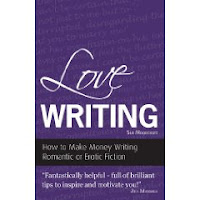
How would you describe Love Writing: How to Make Money Writing Romantic or Erotic Fiction?

The title says it all, really.

We chose a title like that so that it would show up well in searches on-line. Readers of ‘how to’ books tend to search using phrases that describe the content of the book.

The book brings together many of the areas I work in:I’d also written courses for the London School of Journalism, so had some experience of assessing what would be useful to the reader and arranging it coherently.

Having writing colleagues who had utilised their abilities in writing books on the craft of writing, it had occurred to me that, at some time, I might do the same.

Then two things coincided: I went through something in my personal life that made me find long fiction too emotionally demanding to write -- and I was invited out to a dinner at which Hazel Cushion of Accent Press would be present. Accent Press already published a selection of "how to write" books.

I told Hazel my idea and she asked to see a proper book proposal, after, in time-honoured fashion, we had roughed out some ideas on the back of an envelope. A few weeks later she accepted the proposal and offered a contract.

How long did it take you to write the book?

About seven months. Because I critique the work of distance learning students in the mornings, that would be afternoons. But I was also writing short stories and a serial and working on the edits for my novel, Starting Over.

You have to be versatile, in my game.

The proposal was where all the planning took place.

I began with chapter headings, which I played with until the order seemed logical, and then broke each one into sub-headings. That was pretty much the layout of the finished book, although I did consolidate a couple of chapters as they developed.

The publisher asked me to use my contacts in the world of romantic fiction to get input from other writers and industry professionals and I also collected some questions, mainly from unpublished writers. Getting these answered was a reasonable way of establishing what readers wanted to know.

I had to do a lot of research and that was really enjoyable -- reading on-line articles or debates, talking to speakers at conferences and so on.

I knew the wordcount that Accent Press wanted and I knew the ground that I wanted to cover. When I got to the end of the first draft of my planned subjects I had about 4,000 words too many. That was ideal, because I always cut quite hard when I’m polishing, which I feel creates pace. So I ended up bang on the money with the wordcount and about 15 days ahead of deadline.

Which were the most difficult aspects of the work that went into the book?

I was diffident about a couple of aspects of Love Writing.

The first was asking for quotes and input from published writers and industry professionals. However, I found that nobody seemed to mind being approached. A few refused nicely and said it wasn’t for them, a few just didn’t reply so I took that as a ‘no’. But the vast majority of them were happy to quote and, professionals that they are, went to great pains with their contributions. I’m grateful to them because their insight is gold dust.

My second reservation was whether I could write convincingly about areas I don’t write in, myself, such as speculative romance or hot erotica. But I discovered that it was possible to research these areas and canvass opinion, just like much non-fiction. I had a couple of segments read by writers in the relevant field and they okayed them, which gave me confidence.

What did you enjoy most?

Non-fiction is more black and white than fiction. There are answers to be found to questions. In that respect, it’s easier to write than grappling with the endless possibilities of fiction.

Love Writing is completely different to my other books, which were all novels, but I’d written ‘how to’ articles for writing magazines as well as two courses and a supplement for the London School of Journalism, so I felt Love Writing was a progression. A development.

I have an idea for another ‘how to’ book and Hazel at Accent is interested -- but I have to make certain that the material isn’t going to clash with another book they publish, before I write the proposal.

And I have another novel to finish, first…

Resources:Possibly related books:

,,

Related article:
  • Sue Moorcroft [Interview: 1 of 3], Conversations with Writers, March 10, 2009
  • Sue Moorcroft [Interview: 3 of 3], Conversations with Writers, February 26, 2010
  • Dave and Lillian Brummet [Interview: 1 of 2], Conversation with Writers, October 19, 2009

Monday, December 28, 2009

[Interview] Joan Metelerkamp

Award-winning South African poet, Joan Metelerkamp's poetry collections include Towing The Line (Carrefour, 1992); Stone No More (Gecko, 1995) and Into the Day Breaking (Gecko, 2000).

She is also the author of Floating Islands (Mokoro, 2001); Requiem (Deep South, 2003); Carrying the Fire (substancebooks, 2005) and Burnt Offering (Modjaji, 2009).

In this interview, Joan Metelerkamp talks, among other things, about the vacuum that exists on the South Africa poetry scene:

Do you write everyday?

For periods I have written every day, but not recently. In theory, I’ve wanted to. But I tell myself that fallow periods, periods of waiting, also happen. I don’t like it, and also I think the more out of a rhythm I get the worse the not-writing becomes. I lose heart in my own process, and doubt my own task. (My own poems remind me of this tension between simply “being” and “making”). The less energy I have, the less I seem to generate.

It’s not only that I’m impatient but I like rhythm and structure… of course I like most the ecstatic moments of “fine delight that fathers thought” and find it hard to be “the widow of an insight lost”.

In the past, writing has begun at any time on scraps of paper or notes… it’s sometimes proceeded by sitting down at my table, usually after breakfast, and giving up by lunch time.

How many books have you written so far?

I’ve written seven.
  • Burnt Offering, 2009, Modjaji.
  • Carrying the Fire, 2005, substancebooks. It’s a three part sequence of poems, followed by a fourth, prose, short-story like, part. It’s about love, desire, art, poems… it’s like Jacob wrestling with the angel, or (the image of the last section) a mutual seduction between Mary and the angel…
  • Requiem, 2003, Deep South. This sequence is structured by the requiem mass -- I had in mind the many musical versions, not just the liturgical. It was written after my mother’s suicide.
  • Floating Islands, 2001, Mokoro. This is a long narrative but also dramatic sequence of poems; each poem written from the perspective of one of three main characters -- a 60 something mother living in Knysna, and her two grown daughters: one a potter living in Bristol, and one an English academic teaching in Durban. It’s also something of an essay or discussion about Ruth Miller and Dorothy Wordsworth. It’s an experiment in forms since many of the single poems take specific fixed-form shape.
  • Into the Day Breaking, 2000, Gecko. A collection of lyrical and discursive poems, some quite long, some short; most written after our move from Durban to this area in the Southern Cape.
  • Stone No More, 1995, Gecko. poems
  • Towing The Line, 1992, Carrefour. poems
How long did it take you to write Burnt Offering?

My latest book, Burnt Offering, took four years to write. It has a central sequence of poems based on the work of the alchemists, the various stages or processes in their chemical experiments. I take that Jungian view of alchemy being a metaphor for work on the psyche, so also a metaphor for any “task”: the task of becoming what one chooses and works at becoming.

It was published this June by Modjaji Books in Cape Town. I didn’t really choose the publisher, it was more a question of what was possible. Modjaji is a new independent publisher of women’s writing, and fortunately Colleen Higgs agreed to publish my manuscript. She’s taken the risk on poetry which few publishers are prepared to do.

Which were the most difficult aspects of the work you put into the book?

Finding the structure for the middle section was difficult; throwing away reams of material that came to nothing was also hard; working through the humiliation and despair the central section starts with was difficult… the anxiety that the whole book might not see the light of day, or that, like Carrying the Fire, it wouldn’t be distributed was the next difficulty.

I dealt with the difficulties by dealing with them -- I haven’t got an answer to this!

Which aspects of the work did you enjoy most?

I liked writing the last twenty-page poem the most; by then I had a commitment from Colleen Higgs to publish the book, so although I was faintly anxious she might not want to include it, as it developed I became more certain that it was the appropriate end poem for the volume.

The poem involved going away with my daughter for two weeks to the low-veld, just outside the Kruger Park. She worked on a philosophy thesis and I began the poem -- it was a marvelous time and, at the risk of sounding pretentious, something of a transformative experience -- the writing and the journey and the writing afterwards.

What sets Burnt Offering apart from other things you've written?

The second poem is a long meditation on poetry called “points on poems”. It’s a playful, sometimes silly, sometimes catty, essay -- it does shift tone from point to point; I think it stands out as something new for me.

What would you say has been your most significant achievement as a writer?

Keeping going; believing I may be a poet.

When did you start writing?

Like most poets, no doubt, I started writing soon after I could physically do cursive writing -- which is to say I wrote the first “verse” (or one I still have a vague memory of) when I was about nine years old.

I wrote off and on through my school years, but I only decided that poetry was my calling after I had already been at university for four years and then had had a short-lived three year career as an actor; and also after I had accumulated 10 unpublished short stories. (I didn’t ever try to have these stories published though I did read some of them to various members of my family -- my brothers and my mother).

It was only after I had done some stints of teaching at the University of KwaZulu-Natal (UKZN) and the University of the Western Cape (UWC), and was married, and had two young children, and was in the last re-writing of a master’s thesis on the poetry of Ruth Miller, that I began to re-shape and put together what would become my first volume of poems.

What happened was that I saw an advertisement for the SANLAM literary award -- which in the 90’s were prizes given every three years for volumes of poetry: one of which was for a debut collection. (I don’t know if these prizes still exist).

I decided it was worth entering the competition simply because it was an incentive to get the poems together into what I hoped might be publishable shape. (I had read the occasional poem at an English department conference before this, and had had at least one poem published in a feminist journal called Stir, and one in Lionel Abrahams’ journal Sesame, but I hadn’t had the courage really to send my work out).

Very fortunately I was a joint winner of the prize and my first collection was published, together with the collections of the other two winners by the long-since defunct Carrefour Press. So it wasn’t really an independent first “book”; but it was enough to boost my confidence hugely, and from then on I started sending out new poems, particularly to New Coin.

How would you describe the writing you are doing?

At the moment, I’m really struggling to write anything at all. I’m waiting for the next poems: I’ve got some vague ideas about them, I’ve got hundreds of jottings, I’ve got two full note-books, but I’m a bit lost.

I’ve just told you about winning that first prize, and, to continue the story, I was lucky enough to win the Sydney Clouts prize for the central poem in my second volume. That helped to affirm the sense that I hadn’t just published a one-off first book.

I needed a sense of external validation to write more; but after a while, and as the years passed and I’d been the editor of New Coin, and then a judge of precisely such prizes (I’ve judged the Ingird Jonker and DALRO prizes), and I began to get more sense of how the networks and politics of this tiny group of poets and readers of poems functions in South Africa, I began to have a quite different feeling about recognition and affirmation.

What we lack completely in this country is any critique of poetry: even within the institutions which supposedly support it (like universities -- admittedly I’ve been out of an academic world for twelve years, but even in the late 90s poetry was being squashed right out of English department syllabi and from what I gather it’s not better now). The press is ridiculous when it comes to careful and considered critique, and to get someone to write a review for a poetry journal is an up-hill struggle second to none. I’ve tried!

So South Africa is not a country which fosters or cares for the kind of poetry I’m interested in: in that asphyxiating atmosphere it’s very difficult to keep going: in a vacuum of any debate about poetry or poetics. If “form” is spoken about at all, it is spoken about as opposed to “free verse” or “performance” poetry… There is almost no published discussion on the hows and whys of what makes specific poems or specific bodies of poetry in specific places work. So it’s difficult to feel that you’re developing or reaching anyone.

Which brings me to:

Who is your target audience?

I’m in total contradiction about this: I could say paradox if I were kinder to myself, perhaps.

On the one hand, I think it’s impossible to write for an audience -- as soon as you do that (remember [W. B.] Yeats?) you write rhetoric instead of poetry.

On the other hand, without any sense of connection with an audience, without some sense that there are anonymous readers or listeners out there, I find it extremely hard to write at all. Without the sense that one’s poems are somehow collective, what is the impetus to keep making artifacts? Even though I lead a fairly hermit-like life, I’m not a Jesuit priest (I’m thinking of [Gerard Manley] Hopkins who chose not to publish) nor do I have the extraordinary and constantly developing sense of self, nor the technical proficiency, nor the strength and faith in posthumous publication, of Emily Dickinson.

I wish for my work to be meaningful for, to resonate with, someone else -- who that is, I don’t know! I have to remind myself how similar our dreams are -- I’m speaking literally, our literal night-time dreams, so, since poems come from a similar place why shouldn’t they find resonance with someone.

Which authors influenced you most?

At the moment I’m reading contemporary American poetry, so I suppose this will have an influence… this year I’ve read the most amazing works -- Campbell Mcgrath, C. D. Wright, Sharon Olds, W. S. Merwin

but the old influences are still there.

There’ve been different influences at different times, all of which have something to do with what writing I’m doing (or not doing!). [Percy Bysshe] Shelley, [Samuel Taylor] Coleridge, [John] Keats

[Walt] Whitman, [Thomas] Hardy, Hopkins, Yeats, [D. H.] Lawrence...

Stevie Smith; Dorothy Wordsworth; Ruth Miller…

then local contemporary poets: Lesego Rampolokeng (for the clamour of his music and extraordinary bending of language to his own needs), Mxolisi Nyezwa (for the other-end-of the-scale kind of music: his dream-like images, his vison), Robert Berold (for his precision, the intense narrative within image, the way metaphor explodes -- expands and contracts: now you see it, now you don’t)…

[Elizabeth] Bishop, [Muriel] Rukeyser, [Amy] Clampitt, [Adrienne Cecile] Rich

and on to contemporary American poets I’m exploring now.

How have your personal experiences influenced your writing?

I write from myself, and I also have, though this might change, always written about the immediate: the process of writing itself has often been part of the “subject”.

I don’t know how I would write if not from personal crisis or self questioning.

What are your main concerns as a writer?

If by “concerns” you mean issues that I tackle in the poems themselves, I would say: existential questions. Balancing futility and simply being; the choice of a life task and the sense that it has been given; fear of meaninglessness and the attempt to make meaning; who I am, am I on the “right” path, where I fit in in my country and its history, my family, the world!

… how I deal with these concerns is as the specifics dictate! I don’t know -- I ask the questions, I look for the answers, the poem sometimes shows me I’m asking something else, really, and most often that I can’t find any answer…

What are the biggest challenges that you face?

The challenge is to keep going. What will be (Yeats again) “the singing master of my soul”?

My challenge is real conversation about poems; but also to silence the real critical voices (and I’m not here talking about careful poetic critique) which have urged me not to publish, or have said that my poems give back nothing to “South Africa”, or that the real value is in meditative silence and acceptance rather than wrestling through language, or that my work is too convoluted, involuted, self-in-turning…

In fact the only challenge that matters is the recurrent one -- what form will the next poem find, how will I do it? The challenge is to stop asking “why” and to find an answer to “how… this exact issue comes up in a poem in my last collection.

Possibly related books:

,,

Related article:

Ulysses Chuka Kibuuka [Interview], Conversations with Writers, October 28, 2009
Friday, December 18, 2009

[Interview] Jason Bicko

Speculative fiction author, Jason Bicko has worked as a barman, garden labourer, care home kitchen hand, slot machine engineer and bingo caller.

His work includes Alien Inc. which is available as an e-book from Sonar 4 Publications.

In this interview, Jason Bicko talks about his concerns as a writer:

How would you describe the writing you are doing?

Unobtrusive, I would like to say. I don’t go in for literary impact because I don’t like that in the books I read. I want the story to go straight into the reader’s head -- I don’t want them to fight through the prose, constantly reminded that they’re reading a book. One author I find excellent at the subtle prose is Stephen Leather.

I have no target audience other than those who pick stories for what they might want to read at that moment. That’s how I read. I don’t go to the crime section in the library because I fancy a crime novel that day. I pick up various books, read the blurb, and choose the one that I like the sound of. It might be a crime novel or a western -- I never know.

My writing style changes constantly and this is because of the novels I read. For instance, after reading Clive Barker’s Weaveworld, I wanted to structure my stories the way that one was put together, broken down into Books, Parts, Chapters with titles, and sub-chapters marked numerically. After reading Stephen Leather, I began to compose my stories in such a way that chapters didn’t really exist, only one-line breaks. I prefer this format now because it keeps a reader reading. I don’t like chapters because it’s too easy to stop reading at the end of one.

How have your personal experiences influenced your writing?

My emotions and personal experiences don’t figure into my writing much.

For me, writing, or reading, is about escapism. It’s like a little mental holiday when I pick up a book or sit before my keyboard.

If I were to have a car crash, for instance, I wouldn’t let that intrude into my mind enough to filter into my writing. But it might give me an idea for a story about road rage turned deadly. In fact, just talking about it makes me want to write just such a tale.

What are your main concerns as a writer?

My main concern is spinning a decent yarn.

Way back, I used to try to come up with an exciting storyline and then make my version of that story. But I was always concerned that the same idea would be out there.

Take a story like Groundhog Day, in which a guy wakes up in the same day every day and must use his knowledge of what’s going to happen to change things a bit. That story has been done a few times, and since Groundhog Day was kind of the template, all the others are judged by it, I think. To me, that means a story might not live to its expectations, and I find that just wrong. So I gave up going for original storylines and concentrated on (trying to) tell good stories.

If I write a story about a guy trying to rescue his kidnapped wife, I know it isn’t the first of its kind. I just hope mine is better than some of the others out there. I just hope it’s a good tale.

What are the biggest challenges that you face?

Finding time to write is my main hurdle.

Thankfully, I don’t need to sit down in order to plot stories. Once I have an idea for one, I can let it brew like a good cup of tea. Ideas, scenes, twists, they all grow in my head as I live and work. If I hear a good joke, it’s stored in there and will take part in the story one day. When it’s time to sit down and put a synopsis on paper that I will stretch into a longer story, it comes easily. All the ideas I had over the last couple of months, they just come together as if magnetized, then I write.

Do you write everyday?

I don’t write every day, but I always create in my mind. A bit like a musician humming on the bus. I call it plotting. It’s probably more like daydreaming.

How many books have you written so far?

Seven novel-length stories, but these are unpublished. Eight or so short stories that are out there on the Internet. These are all works that came about after I moved cities in 2000.

Before that, I wrote about ten novels, but none of these has survived. My ego hopes they’re preserved somewhere in a bag or box, to be discovered in 50,000 years.

The latest one, Alien Inc. is set for ebook publication by Sonar 4. I fancied doing a gung-ho horror based on that old idea of a bunch of people trapped in one place and hunted by an enemy. I wanted to set the scene, then let it run. There were a few directions I knew it had to take, but I set these as markers and sort of said to my wild imagination, “Do what you want, just hit these checkpoints on the way.” I wrote it in about six months.

Which were the most difficult aspects of the work you put into Alien Inc.?

The hardest part was characters. There were eleven in it, each as strong as the next. That meant keeping track of the emotional make-up of eleven people as they went through the story. Much easier when there are one or two main characters and everyone else is built of a little less substance. It also made the choice of killing them off a bit harder. But that had to be done. Couldn’t have eleven people all survive in this sort of story.

Keeping track of all these people was made easier after the group split into five smaller groups. It became more like writing five short stories at the same time. I would concentrate on one at a time until the group was reunited.

What did you enjoy most?

If you read a Dan Brown book, you see important information on every page. That’s constant attention to telling the tale.

In this story, I mostly got to play. There’s a part where two people are trapped in a carriage on a monorail, hunted by an alien enemy. I just let it go with the flow and didn’t have to think about it or refer to notes. It was fun to write.

What sets Alien Inc. apart from other things you've written?

The horror aspect. I wrote horror as a teenager, because somehow that seemed easier. Setting a story on an alien planet filled with vampires means no wasting time on research. Garlic doesn’t bother my vampires. That’s another story you’re thinking of! I wrote horror because I had no experience of the world, so probably couldn’t have written a courtroom scene or a birth scene realistically. But chopping the heads off virgins came easily.

As I got older, I cast aside horror and wrote thrillers involving real people and realistic events. But maybe I missed the carefree ways of the horror novel.

For me, maybe Alien Inc. was the adult returning to the playground he’d so loved as a kid.

What will your next book be about?

Guy hunting down his lost sister. A good old action thriller set in the murky London underworld. Another chance for me to let the imagination run wild. I don’t often put guns in my stories. I’ll fill this one with them. Can’t wait.

What would you say has been your most significant achievement as a writer?

Having Sonar 4 Publications decide to put the story on their website.

When did you start writing?

I started writing at age 12. My dad had started a creative writing course and I wrote a story to see what he thought. That was the beginning. I had the bug from that day.

I wanted to be published because I wanted my work out there, for all to read. I was young and foolish and didn’t understand how hard and competitive the writing world could be. Pocket money went on photocopying my work and postage costs to send it to the big publishers.

Back then there was no email submissions. I would wait months, get back a rejection letter, and start again. Usually, a rejection letter wasn’t seen as a fail, it was seen as proof that my story wasn’t the one I was destined to be famous for. So rather than tweak that story, I would sit down and do another. I would often send out the first thirty pages as soon as they were completed, knowing that by the time the publisher wrote back to ask for the full manuscript, the story would be finished.

Possibly related books:

, ,

Related article:

[Interview] Allen Ashley, Author of 'Urban Fantastic', Conversations with Writers, September 5, 2007