Showing posts with label contemporary erotica. Show all posts

Monday, September 19, 2011

[Interview] Jess C. Scott

Jess C Scott is a short story writer, a novelist and a poet. She lives in Maine in the United States.

Her work includes the blog novel, EyeLeash (jessINK, 2011); the collection of erotic short stories, 4:Play (jessINK, 2011) and the novel, The Other Side of Life (jessINK, 2011).

In this interview, Jess C Scott talks about her writing:

Do you write everyday?

I don’t write everyday, though I try my best.

I like writing by hand (at least initially), especially when I’m planning things out before a first draft ... there’s just something about seeing the words appear in ink on paper that beats typing (despite the efficiency and convenience of the latter).

If I’m working on a story, it ends when I feel it’s complete (everything has to be “tied together,” there must be some form of resolution, etc.). By that time, I’m usually mostly focused on the next writing project.

I like to challenge myself as an artist and keep improving that way. Stagnating is bad because I think I’d be regurgitating material, if I allowed myself to put in less effort.

How many books have you written so far?

I’ve written novels, anthologies, short stories, and poetry, so here’s a selection. They are all published under jessINK, my burgeoning publishing empire that's committed to producing "authentic, original work ... rather than the same old re-packaged mass-market pulp" (review by Bibrary Book Lust).
  • EyeLeash: A Blog Novel (2009). EyeLeash captures self-discovery in the 2000s, and showcases the colorful, intricate drama in two youths’ relentless search for themselves—and what’s really in their hearts.
  • 4:Play — A contemporary cocktail of erotic short stories (2009). With a scope and style that is fresh and compelling, 4:Play dives into the depths of navigating gender, sexuality, and the lines of desire.
  • The Other Side of Life (2011) . Book #1 (The Other Side of Life): A thieving duo’s world turns upside down when an Elven rogue uncovers the heinous dealings of a megacorporation.
  • And more @ jessink.com/books_genre.htm
What is your latest book about?

My latest book is a non-pornographic BDSM-themed anthology. It’s taken me slightly longer than I expected to finish it (was aiming for a May 2011 deadline; probably will be finished in August 2011). It’s part of my Primal Scream anthology, my second collection of erotic short stories.

On the mainstream, non-erotic side, my latest book is the first installment in an urban fantasy series featuring cyberpunk elves (January 2011). That one probably took at least a year to write (while I was completing my bachelor’s degree).

I’ve self-published my novels since mid-2009. I enjoy the speed and efficiency of indie publishing and see it as a tremendous opportunity for writers everywhere.

Disadvantages include the necessity for constant multi-tasking (I handle the book design, writing, editing, publishing, web design, marketing, publicity, accounting — basically everything, at the moment).

I deal with it all by understanding that this is something I chose to do, that I want to do, and that I’m capable of doing.

Which were the most difficult aspects of the work you put into the books?

I’ll talk about Primal Scream since it’s a pretty big anthology that spans several genres/styles (erotic fiction, erotic literature, “factual fiction” and “contemporary fiction with erotic elements”).

I think the BDSM-themed collection was the most difficult (as I suspected), because of the subtle implicit route I decided to take.

I’ve always felt that BDSM can be a very intimate form of love and affection, a perspective which is heavily compromised when BDSM is presented in a purely pornographic form.

I’ve nothing against porn on the whole, but when people start thinking that pornography is real sex (when it technically isn’t — it’s a business that generates money from graphic depictions of sexual fantasies which stimulate arousal) and how sex should really be all the time ... that’s when I try to do something with my work, to present a more relevant, down-to-earth, insightful perspective on love/life/sex.

Sexuality is a core component of humanity. It should be respected (as it was in ancient times), not feared, exploited, or repressed.

Which aspects of the work did you enjoy most?

Masochistic as this might sound, I enjoyed working through the difficult aspects of the project. As an old saying goes: “There’s no glory without sacrifice.”

What sets Primal Scream apart from other things you've written?

 It’s a little more sophisticated than my earlier work (which was more raw and “in-your-face” at points). It covers less ground in terms of genre, but covers more ground in the internal lives of the characters involved (I think).

In what way is it similar to the others?

The focus is still on the characters and the storyline. That’s the basic thing I never stray too faraway from.

I’ll next be working on an anthology titled Naked Heat (an incubus/succubus-themed anthology). It’ll be an interesting and unique take on the “paranormal romance” genre (one third of it is complete).

After that, I aim to complete the other two parts of my Cyberpunk Elven Trilogy. I’ll consider it an achievement if that one’s completed over 2012.

So far, what would you say has been your most significant achievement as a writer?

Generating an income from my writing. Seeing the dream materialize so that it’s not just a fantasy I play out in my mind, but the life I have always worked towards securing.

When did you start writing?

 I used to write lots of fantasy-themed short stories as a kid. I began to take the craft more seriously when I wrote my first poem (around nine years old; there was a creative writing type course at school). I journalled a lot throughout my teenage years, and someone requested an erotic story from me when I turned eighteen. I started writing my first proper full-length novel when I was around twenty years old.

How would you describe your writing?

Non-conformist and authentic. I don’t tend to follow trends or formulas. I usually aim to write something honest and relevant.

I don’t think I have a specific audience in mind (in terms of a commercial genre label, as is used for marketing/advertising purposes). I always try to include universal themes to appeal to a wide audience (across genders, age groups, lifestyles, etc.).

I think I’ve always been aware of “certain things in the world” which the mainstream media tends not to cover thoroughly or truthfully enough. I’ve never wanted to narrow down my target audience so “it’d be easier to target/market towards a specific niche audience.” That being said, I am aware of the business aspects of publishing, so I do both alternative and mainstream writing (to strengthen my brand on the whole).

Which authors influenced you most?

I think the authors that influence me the most are the ones that I love and hate the most (I’m very intense... no grey areas... when it comes to passion!). I’ve read and love many classic works (books by Vladimir Nabokov, Anais Nin, Roald Dahl, Edgar Allan Poe, Oscar Wilde, etc.), and I’ve read material that I’ve found really superficial and/or shallow.

I try to emulate what I like, and be somewhat of a diametric opposite to what I loathe, and am confident that someone somewhere in the world will appreciate what I do.

How have your own personal experiences influenced your writing?

Hugely! I used to journal voraciously through my teenage years — I recorded every single detail of every thought and feeling down. I journal less nowadays, but I continue to spend a lot of time on the whole self-discovery and self-understanding concept. The things I think about, am frustrated about, wish to see addressed in the world, are all direct influences on my writing.

What are your main concerns as a writer?

One of my main concerns is balancing artistic vision with commercialism (the financial aspect, so that I don’t end up a perpetually starving artist existing in complete obscurity).

It’s a delicate balance, and can sometimes be fraught with wildly differing views of opinion and sentiment (in my personal experience). I usually deal with it by keeping things real — by taking a good, hard look at myself to do my best to align my personal goals with business goals. I like having both personal/artistic integrity and business ethics. I can’t ignore one at the expense of the other.

One of my biggest challenges is cultivating patience (haha). I have a tendency to expect results for my efforts, fast. I can get grouchy or discouraged if things don’t happen as quickly as I’d like. I try to deal with it by telling myself that I am wasting time and energy by fretting about things I cannot control.

I used to draw a lot and meditate during my late teen years, which did help calm my mind down ... I should probably schedule some time for those activities once again.

Related books:

 ,,

Related articles:

Monday, January 4, 2010

[Interview_2] Sue Moorcroft

In an earlier interview, creative writing tutor and author, Sue Moorcroft spoke about her main concerns as a writer.

She now talks about her latest non-fiction book:

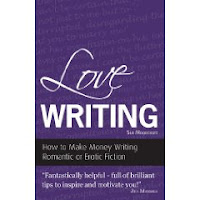
How would you describe Love Writing: How to Make Money Writing Romantic or Erotic Fiction?

The title says it all, really.

We chose a title like that so that it would show up well in searches on-line. Readers of ‘how to’ books tend to search using phrases that describe the content of the book.

The book brings together many of the areas I work in:I’d also written courses for the London School of Journalism, so had some experience of assessing what would be useful to the reader and arranging it coherently.

Having writing colleagues who had utilised their abilities in writing books on the craft of writing, it had occurred to me that, at some time, I might do the same.

Then two things coincided: I went through something in my personal life that made me find long fiction too emotionally demanding to write -- and I was invited out to a dinner at which Hazel Cushion of Accent Press would be present. Accent Press already published a selection of "how to write" books.

I told Hazel my idea and she asked to see a proper book proposal, after, in time-honoured fashion, we had roughed out some ideas on the back of an envelope. A few weeks later she accepted the proposal and offered a contract.

How long did it take you to write the book?

About seven months. Because I critique the work of distance learning students in the mornings, that would be afternoons. But I was also writing short stories and a serial and working on the edits for my novel, Starting Over.

You have to be versatile, in my game.

The proposal was where all the planning took place.

I began with chapter headings, which I played with until the order seemed logical, and then broke each one into sub-headings. That was pretty much the layout of the finished book, although I did consolidate a couple of chapters as they developed.

The publisher asked me to use my contacts in the world of romantic fiction to get input from other writers and industry professionals and I also collected some questions, mainly from unpublished writers. Getting these answered was a reasonable way of establishing what readers wanted to know.

I had to do a lot of research and that was really enjoyable -- reading on-line articles or debates, talking to speakers at conferences and so on.

I knew the wordcount that Accent Press wanted and I knew the ground that I wanted to cover. When I got to the end of the first draft of my planned subjects I had about 4,000 words too many. That was ideal, because I always cut quite hard when I’m polishing, which I feel creates pace. So I ended up bang on the money with the wordcount and about 15 days ahead of deadline.

Which were the most difficult aspects of the work that went into the book?

I was diffident about a couple of aspects of Love Writing.

The first was asking for quotes and input from published writers and industry professionals. However, I found that nobody seemed to mind being approached. A few refused nicely and said it wasn’t for them, a few just didn’t reply so I took that as a ‘no’. But the vast majority of them were happy to quote and, professionals that they are, went to great pains with their contributions. I’m grateful to them because their insight is gold dust.

My second reservation was whether I could write convincingly about areas I don’t write in, myself, such as speculative romance or hot erotica. But I discovered that it was possible to research these areas and canvass opinion, just like much non-fiction. I had a couple of segments read by writers in the relevant field and they okayed them, which gave me confidence.

What did you enjoy most?

Non-fiction is more black and white than fiction. There are answers to be found to questions. In that respect, it’s easier to write than grappling with the endless possibilities of fiction.

Love Writing is completely different to my other books, which were all novels, but I’d written ‘how to’ articles for writing magazines as well as two courses and a supplement for the London School of Journalism, so I felt Love Writing was a progression. A development.

I have an idea for another ‘how to’ book and Hazel at Accent is interested -- but I have to make certain that the material isn’t going to clash with another book they publish, before I write the proposal.

And I have another novel to finish, first…

Resources:Possibly related books:

,,

Related article:
  • Sue Moorcroft [Interview: 1 of 3], Conversations with Writers, March 10, 2009
  • Sue Moorcroft [Interview: 3 of 3], Conversations with Writers, February 26, 2010
  • Dave and Lillian Brummet [Interview: 1 of 2], Conversation with Writers, October 19, 2009

Friday, July 18, 2008

[Interview] Skylar Sinclair

Skylar Sinclair is an award-winning graphic designer and erotic romance author.

Her works includes the eBooks, Rearing Heat (Siren-BookStrand, Inc., 2007), Impassioned Sea (Atlantic Bridge/Liquid Silver Books, 2007), Purr For Me (Phaze, 2007) and The Tome of Unnatural Desires (Tease Publishing LLC, 2007).

Her stories have also been featured in anthologies that include Babes in Toyland II (Aspen Mountain Press, 2007), Lust Bites: Volume Two (Total-e-bound, ____) and Coming Together Under Fire (Phaze, 2007).

In this interview, Skylar Sinclair talks about her work.*

How would you describe your writing?

It is almost a dead heat between fantasy and paranormal. With either, they are truly about make-believe to the point, these worlds and realms that are unlike anything one could dream up. These genres create unique places for the readers to loss themselves in, while getting to know wondrous characters and magical happenings.

Who is your target audience?

I would have to say anyone that finds erotica titillating and love alpha-type characters.

I also write a little on the side of dark and like to write endings that one might not expect. I try to pen very different and unique books.

What motivated you to start writing?

I am an avid reader of fantasy and paranormal, so it seemed to come naturally for me to write in that genre too. We live in the real world, and sometimes it is nice to be taken away from the daily grind, journeying to exotic and otherworldly places dreamed up by an author’s marvelous mind.

Who influenced you most?

When it comes to honing and refining my writing that would be Regan Taylor. From the start, she has been there to encourage, inspire and help me raise the bar on my writing style. I owe her much and appreciate what she has done for me daily.

How have your personal experiences influenced your writing?

Fun thing is, I write very little of myself and/or experiences in my books. I pull almost all plots, dialogues and motivation from newly discovered places each time I take up the proverbial pen to write a story.

What are your main concerns as a writer?

I want my stories/books to entertain and captivate the readers when they read my works. [I deal with this by] writing the best I can each and every time.

What are the biggest challenges that you face?

Waiting for a contract after spending a lot of time writing a story. Then you have to wait again for the reviews to come in. Once more to see how the book sells. Do the reader like it?

It all boils down to learning patience -- a lot of patience.

How do you deal with these challenges?

The best way to learn the lesson of patience is to forget about the finished book and start right away on another. Getting immersed into a new projects works wonders.

Do you write everyday?

Yes, I write daily.

I can write as much as 5,000 words a day to as little as 250. It depends on if my muse is talking and how creative I feel that day.

What is your latest book about?

My last story to be published was Christmas Ink, which also was a top placing story in a Christmas writing contest held at Stardust Press. I ended up contracting it with Mardi Gras publishing. It took me about a week to write then another week to edit.

Which aspects of the work that you put into the book did you find most difficult?

I find moving a story along, while keeping it believable and fresh is hard at times. Also, I find editing one of the least things I like about writing, but it has to be done.

Which did you enjoy most?

To be honest when I write those last few words that complete the story. There is nothing like finishing a book you put all your heart and soul into.

What sets the book apart from the other things you have written?

Each and every book I pen is different and unique unto itself. They all stand on their own merit and premise. Whether they are fantasy, paranormal or contemporary.

In what way is it similar?

They all have alpha-type characters that dominate the pages. And the sexual contents are always hot.

What will your next book be about?

The next book I have coming out is Dream Lord: The Tome of Unnatural Desires. It is a fantasy erotic tale that includes male/male, male/female/male and male/female scenes.

There are three other books in the series, Shadowed Passion and Fallen Angels.

What would you say has been your most significant achievement as a writer?

That my books sale and have been bestsellers, also.

But none of that would have been possible without the readers who support and buy my books. Without them, I would have no one to write for. Without them I am nothing.

*This conversation with Skylar Sinclair took place in February 2007.

Related books:

,,

Monday, March 24, 2008

[Interview] Dana Littlejohn

Romance novelist Dana Littlejohn was born and raised in Brooklyn, New York and has been living in Indianapolis, In. for the past 10 years.

She has been writing since childhood.

The work she has published so far includes the novel, The Yin/Yang Effect; the three novellas which make up The Dioni Chronicles series, Mikhail's Hunt, Jonathan's Bite of the Apple and Sebastian's Surrender; as well as the short stories, "Hot Chocolate on a Cold Day", "The Lover and the Firefly" and "Lover's Brew".

In this interview, Dana Littlejohn talks about her concerns as a writer.*

How would you describe your writing?

I write romances that happen now, in modern day. I have touched on several sub-genres like urban lit, fantasy and shifter, but basically its sensual/erotic contemporary.

I hope to target woman between 18 and over. Some of the love scenes in a few of my books might be a little inappropriate for anyone under 18.

What motivated you to start writing?

I was waking up in the middle of the night driving my husband crazy with the craziness I was dreaming. He suggested that I write it down because if I was going crazy he did not want to go with me. (Laughs.) True story! Since writing was still in my heart I took his advice.

Who would you say has influenced you the most?

I love the writing of Bertrice Small and Jackie Collins. I’d like to be a combination of them.

How have your personal experiences influenced your writing?

I have done stories on topics that I feel strongly about, not necessarily that has happened to me, but I still feel strongly.

When did you decide you wanted to be a writer?

I have always wanted to be a writer, as far back as I can remember, but I let people and life get in the way of my dreams.

What are your main concerns as a writer?

That I don’t repeat myself. I want each one of my books to be unique.

The biggest challenge is to keep going, keep writing quality, unique work.

How do you deal with these concerns?

I try to stay fresh, do something that no one has done before or take a new look at something that has been done.

Do you write everyday?

Yes, I try to write everyday. The amount of time just depends on what’s going on that day. I work full time so during the week I can only do three maybe four hours and on the weekend a little more.

How long does it take you to start and finish a book?

[One of] my latest books, The House, was released in 2007 by Ocean’s Mist Press. It took me about four months to get it from head to paper.

One of the things I found most difficult about the book was I had to ask a few people a lot of questions so that the house would be realistic.

Which did you enjoy most?

The part I liked the most was checking out Atlanta.

What sets the book apart from the other things you have written?

I don’t know. I just wanted to show that true friends are friends through thick and thin even when they get caught up in stuff they have no business doing.

In what way is it similar?

It’s still a romance and everyone’s happy in the end.

What will your next book be about?

I’m working on an urban lit I call The Lover and the Angel. It’s about a member of the Latin Lovers gang who falls in love with a college student and starts to want more from his life. It is still in the works.

What would you say has been your most significant achievement as a writer?

I feel really good when someone contacts me and asks me to do something for them. That feels good and I know they like my work.

How did you get there?

(Laughs.) I have no clue, I’m just happy its happening.

*This article is based on an email interview with Dana Littlejohn which took place in March 2007.

Monday, August 13, 2007

[Interview] Skyler Grey

Erotic romance novelist, Skyler Grey lives off Florida’s west coast with her husband and children.

She has published two novellas, The Feel of Lace (Aphrodite’s Apples Press, 2007) and The Black Rose (LoveStruck Books, 2007) as well as a novel, Chamberlain’s Knight (Mystic Moon Press, 2006).

Her work has also been featured in anthologies that include Masquerade Vol. 1 (Aphrodite’s Apples Press, 2006); Christmas Candy Anthology (Whiskey Creek Press, 2006) and Diary of a House, 413 Remembrance Lane which will be released by Phaze Publishing in August 2007.

In a recent interview, Skyler Grey spoke about her concerns as a writer.

Do you write everyday?

Sadly no, I don’t write everyday although I’d love to. When I do dig in, I usually spend anywhere from three to four hours if not longer. It’s not uncommon for my hubby to get up around three or four in the morning and peek around the corner to ask me, “You coming to bed?”

But I do think it's important to write everyday because it's so easy to get busy and put off your writing for another time. Next thing you know, it's been a week or a month since you looked at your work. So if you can write a little each day then... awesome! If you can't, at least set a goal for yourself and try hard to stick to it.

I have a very busy life: six kids, five grandkids, karate classes, taxi, nurse, maid, teacher, babysitter... All the things most women have to deal with and it keeps me running constantly. Sometimes I'm so tired, at the end of the day, I can't even "create". When I do get to sit and write, I make sure I have NO distractions. Phone's off, door is closed and hubby takes over the house. It's usually easy once I start and hard when I try to stop. Ha... I get on a roll and sometimes I'll look over at the clock and it's suddenly three a.m. Yikes! But when I do stop, it's because my characters let me know it's time to stop.

When did you decide you wanted to be a writer?

I actually started writing stories at the age of nine because I had a teacher, when I lived in Arizona, who had the class write a composition piece every Friday and I loved creating my own stories. I was a huge horror fan... Creature Feature; Dark Shadows; Monster from the Swamp Lagoon... One of the stories from that period was about a witch on a hill.

I have also written several poems over the years, prior to my first novel, one in particular, "The Dying Children," was inspired by Choices of the Heart, a movie based on a true story and which stared Melissa Gilbert from Little House on the Prairie. The movie was about a mission group that went to help nurse and feed the innocents that were caught in the crossfire of war. The story touched me so deeply that I sat bawling while I wrote the poem.

Although I’ve always loved to write, I didn’t get serious about writing until I was in my early thirties. At that time I was a single mom and I had lots of little feet running around the house and it was hard to write as well as work a full-time job. When I did get serious, it involved me getting organized... I simply made it a priority to make time for myself and to write. It took me about six years to come up with my first novel and once I'd finished the novel, I bought The Writers Market from an online bookstore and submitted the novel to tons of publishers but it wasn't until I discovered the e-book world that I finally got my first break with LoveStruck Books.

Do you see a time when more writers will opt to publish ebooks as opposed to ‘the book’?

Yes, definitely. It's a great thing, especially for green writers and authors that might have never gotten their foot in the door otherwise. I have met several authors that love writing e-books as opposed to trade paperback. I think the turn around in getting published is much faster in the e-book industry as opposed to the traditional trade paperbacks. Plus, it doesn't take as long to write a short story or novella as it does to write an actual novel.

I don't think that e-books will ever be as popular as trade paperbacks because most people, including myself, love to hold a book in their hands while reading. But I do think that the e-book industry has come a long way. They're growing in leaps and bounds and are even becoming recognized with some of the bigger house publishers.

How would you describe the genre in which you now do most of your writing?

I love to write in several genres, contemporary, suspense, sci-fi, paranormal, westerns and historical... all erotica. I think this is because I have a wide imagination. I love all kinds of movies and books. So my mind just goes in all different directions constantly.

I've just finished a regency for Aphrodite's Apples that I really enjoyed writing. The one prior to that was a contemporary novella that received an awesome review from Kwips & Kritiques. I've also written a vamp story, a paranormal, a western, a suspense/thriller about a serial killer and am now working on a horror.

What motivated you to start writing in these genres?

I chose writing erotica because of the satisfaction I get by being allowed to go into greater detail. Also, I'm a woman who can't resist an alpha male. I adore a man that is all male but can be tamed by the right woman. I personally feel, incomplete when I read a soft romance. Not to say I don’t enjoy them, but I like to feel my hero’s dominance as well as his tender side.

Who is your target audience?

Definitely eighteen and older.

Although I've written two children’s stories, which I hope to have out soon, my main focus is the mature audience.

Given that you mainly write erotica, how do you think the children’s stories will be received? Won’t there be a ‘conflict of interest’?

No, I don't think there should be any conflict as I write under a pen name.

The two children's stories are similar to Dr. Suess in the sense that they rhyme throughout the story. They are a set. They have the same set of characters and are geared toward young children, from the age of three upwards. One is called The Rainbow's End and the other, A Gloomy Day. I have six children (could be the reason why I love erotica...) and I adore kids. I'll probably have a spot in heaven, in the nursery somewhere there, so I've been told.

Who would you say has influenced you the most?

Romance authors, my first being Johanna Lindsey and Rosemary Rogers. I love those ladies. They took my vision of romance to a whole new level at the age of fourteen. But it was Lucia St. Clair Robson and her book, Ride the Wind that took my breath away and clinched my writing desire forever. The writing was flawless and made me feel as if I was standing right in the middle of everything. My heart was carried away with every emotion the characters went through. To come across an author that can write so smoothly and encase your heart so intensely is a rare find.

How have your personal experiences influenced the direction of your writing?

I’ve lived a very colorful life, some of it not very pleasant.

I think the lessons we learn and experience throughout life influence the way we perceive ourselves, for me especially. Because I have experienced many things, I tend to let my emotions create a fantasy life that I pour out into my writing... which, I think, gives the writing the ability to transfer the emotions of my characters into the reader’s heart smoothly and with ease.

What are your main concerns as a writer?

Honestly I’d have to say, editing and finding a good publisher. Happily, I've been fortunate in both departments.

I’ve several publishers and they have all gone the distance for me and I've also been blessed with the opportunity of working alongside some wonderful authors in the publishing industry... Emma Wildes, Adra Steia, Kayleigh Jamison, Cheri Valmont and Stella Price, to name a few. As well as being fellow authors, they've also become good friends and have helped encourage, guide and gently critique anything I ask. Having friends like these wonderful ladies has been the best blessing in my writing career.

What are the biggest challenges that you face? And, how do you deal with them?

In my personal life... raising and teaching my children to be all they can be... to believe in themselves as much as I believe in them. In writing... creating that one story that has such an impact on people, they'll never forget it but will always keep it close, giving them a warm fuzzy feeling every time they think of it.

With my kids… I've always made sure I instilled confidence and pride in them at a very early age. Praising them in all they do, even when they fail. I teach them the importance of love and respect so that when they go out in life, they handle life’s obstacles with confidence and in a way they can be proud of.

In writing, I try to put such emotion into my characters that the reader feels the characters are a part of their lives, experiencing the emotions themselves as if they were one with the characters.

How easy or difficult is this?

It's sometimes very easy but other times it's very hard. I have to be careful. I have to be able to 'explain' the characters' emotions in such a way that my readers are drawn in gently and then consumed. Sometimes I write and have to rewrite because I know in my head what emotions I want to put out there but my readers don't. So if need be, I'll keep working an area until I feel it's perfect.

How long did it take you to write your latest book?

The Feel of Lace took me a bit longer than normal to write. About four months. I put it on the shelf and almost junked it. I’m glad I didn’t though. Aphrodite's Apples scooped it up and it just recieved one of the best reviews I've gotten yet. Four klovers from Kwips & Kritiques.

The novella is contemporary erotica about a woman, Lacy Kimbel, who just can’t seem to make the right choice when it comes to men. So Aaron, her hairdresser, best friend and roommate, decides to take matters into his own hands by contacting a cousin in Florida, challenging him to a bet. One that poor Lacy has no clue will involve her.

Which aspects of the work that you put into the book did you find most difficult?

Honestly, the one thing I seem to struggle with, are the names of my characters. If the name doesn’t fit, I tend to stumble and freeze up, unable to continue until I find a name that suits their personality perfectly. Some authors can breeze through writing and come up with their characters' names toward the middle to ending of their story. Not me. I have to know them on a first name basis right from the get go.

Which book did you enjoy writing the most?

I’d have to say, Chamberlain’s Knight. I got so attached to Rowan and Chamberlain. I hated letting them go because they were both a part of my life for many years. But now I’ve started another romance novel, a western... and I’m finding myself falling in love all over again with my new hero and heroine!

What sets Chamberlain’s Knight apart from the other things you've written?

It’s a novel for one. Plus, I have several characters I introduced in this book. I’m not a big fan of keeping a story about just the hero and heroine. I like a variety of personalities because I think it makes the book interesting and causes it to stand out among the rest. But when you write a short, it can sometimes be difficult because you’re allotted only a certain word count and I tend to become… well… long-winded.

In what way is it similar?

All my stories have a HEA, (happily ever after) endings.

What will your next book be about?

I have a historical circling the snobs of London’s famous society, the Ton, that's been picked up by Aphrodite's Apples for their, Regency Romp II series. I'm also currently working on two books. One is a western novel, who’s hero is a sexy rancher and half breed Sioux Indian that gets tangled up with a snotty, little English aristocrat. The other is a horror that is really not a romance as much as it is scary. This particular book will actually be a novel and a first non-romance for me.

Where and when is the Western set? And what makes the rancher a half-breed?

It’s set in the Black Hills of Dakota.

The Sioux Indians were one of the tribes that were well-known in that area. When a white man or woman had a child with an Indian , the child was referred to as a half-breed. Meaning their blood was mixed. It was a common name used for children or adults that were not fully white back in the day. Do you remember Cher’s song, "Halfbreed"? I used to LOVE that song.

What would you say has been your most significant achievement as a writer? And how did you get there?

The feeling of confidence that success brought into my life by doing something I’ve always dreamed of but wasn’t sure I could.

I never gave up. No matter what was thrown in my path, I never quit. Not to say that I didn’t think about it. But thanks to some very dear friends who encouraged me when I was feeling my lowest, I hung in there and am I so thankful I did!

This article first appeared on OhmyNews International

Related books:

,,


Related articles:

  • Author of the Week -- Skyler Grey, Inside an author’s mind…., April 23, 2007
  • Skyler Grey is here to seduce us all!, Heart To Heart with Dahlia Rose, March 9, 2007