Shelley Blake has been writing from a very early age. Some of her work has been published in magazines that include The Program Melbourne; Inpress Magazine; The Skinny; and, The Ranfurly Review.
In 2006, her poem, "Hidden" was runner-up in the Poetry Category of the Amnesty International and Sydney Pen, Freedom Writer's Awards. Two years earlier, she had been awarded membership with Golden Key International Honour Society based on results of the work she did in her Bachelor of Media Studies with LaTrobe University.
In this interview, Shelley Blake talks about her writing:
When did you start writing?
I began writing from a young age, around 15. I was always fascinated with song lyrics, from artists like Jeff Buckley, Thom York and Nick Cave. The first poetry I read was from Australian writer Luke Davies, who is still one of my favourite writers.
I always wanted to work in environmental science, but when I was around 14 I realised I wasn't inclined to the 'sciences'. I begun writing at around this age which lead me to study literature and journalism at university.
I began writing for arts publications in Melbourne and working for environmental groups after university, so in this was able to blend my two passions.
I don't know if it was a conscious decision to become a published writer as such, but writing is better shared then kept too close to ones self.
How would you describe your writing?
I am really experimenting with short prose poetry at the moment. I have been quite transient in the past 12 months, travelling through Europe and parts of England and Scotland.
My current work has been inspired by the changing landscape, complex human struggle and relationships and the idea of contentment.
Who influenced you most?
I don't know if it's the 'who' so much as 'what' ... relationships, humans, nature, peace, questioning, love, struggle.
I think there is poetry is everything, it's just everywhere.
What are your main concerns as a writer?
My main concerns I think are universal when it comes to writing and the arts in general. The financial struggle and the need to balance your art with surviving and paying the bills.
What part of the work do you enjoy most?
I enjoy the free flow, the creative process, it is so necessary to me, it's just like breathing.
Who is your target audience?
I don't know that I have a target audience.
Related articles:
"Shelley Blake, poet and freelance writer", New Writing International, April 28, 2009.
Possibly related books:
,,
Tuesday, April 28, 2009
Friday, April 24, 2009
[Interview] Dora McAlpin
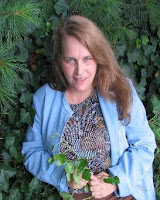 Award-winning author, Dora McAlpin has a Bachelor of Arts degree in Journalism from the University of North Carolina at Chapel Hill.
She writes under a number of different names which include D. L. McAlpin, Ivey Banks, and Z. D. Zeeks.
Her first novel, Out of the Dark won first place in the 2006 TheNextBigWriter Novel Contest, and, in 2008 another novel of hers, The Keeper of the Sparrows was a semi-finalist in the Amazon Breakthrough Novel Award.
In this interview, Dora McAlpin talks about her writing.
When did you start writing?
I was five the first time the writing frenzy took me. Not having pen and paper handy, I wrote my story in crayon on the wall of my bedroom. I was eight when I wrote my first manuscript. It was supposed to be a short story for a school project. Once I started writing it, I couldn't stop. I called it "Rascal, the Little Red Devil of Cherry Lane."
How did you decide you wanted to get published?
I can't remember ever wanting to be anything but a writer. I have notebooks full of stories, poems, songs, essays, and half-crafted novels from my growing-up years. Most of them, no one else has ever seen. I wrote them for me. The concept of 'being published' was never as important as the writing process itself. I've said often that I'd write cereal boxes for a living if that was the only kind of writing job available. Fortunately, it hasn't come to that.
I went to the University of North Carolina, Chapel Hill, and majored in journalism. I did some newspaper and magazine work and then found my professional calling as an analyst for the Department of Defense. I've got an exciting and satisfying career there.
I've continued writing fiction in my free time. Through my writing, I explore various psychological, philosophical and societal themes -- as well as purging a few personal demons along the way. It's driven by elements of my psyche that aren't necessarily consistent with my family or world personas or even my own concept of self. When I write, I do it solely for me. Kind of like a person's diary, I guess. Early on, I shared bits and pieces with my sister, Karen, and a couple of my trusted friends, but limited it to the less controversial of the works. I largely built my body of work as a secret collection. Always, my plan was to burn it all before I died or my kids shipped me off to a nursing home and found it.
In my thirties, I had to face the very real possibilitity that, given the volume of my work and the nature in which it's spread throughout my real-life and virtual homes, I might not have sufficient lead time to destroy it all. Not having it in me to destroy it then, I came to the bitter conclusion that I needed to confess so people who loved me wouldn't discover these secrets after I was gone, when it was too late for them to ask questions. At least this way, I could put the stuff in context. Still, it took a long time for me to actually get up the nerve to do it.
I started with Barry, who at that time was my boyfriend. I thought I could live with things if he hated it. After all, boyfriends aren't usually permanent, anyway. Worst-case scenario, we'd break up. He read Promises To Keep -- and loved it. He wanted me to expand the story to tell a little more about David's background. I didn't want to do that because it was already a pretty lengthy manuscript.
I wrote another manuscript detailing David's childhood ... then another ... then another. Two years and six books later, David had a fully documented childhood. And I had a husband. One of the foundations of our marriage was that he accepted me for who I am. He's never resented the hours I spend banging away at the keyboard.
The other person I shared the manuscripts with was Karen. A tell-it-like-it-is kind of person, she'd let me know if it was time to light the bonfire. She loved my stories. She read one and then another and another.
I was working my way up to my mother. I was sure she'd be mortified.
My phone rang.
"I read your book," my mother said.
My world tilted. Obviously, she'd gotten hold of one of the ones I gave Karen. I held the phone in a death grip, waiting for what might come. "Wh-wh-which one?"
"There's more than one?"
"Uh-huh." There were about fifteen by then.
"Promises To Keep," she answered. "You need to get this published. But first, there's some wording you need to fix on page 68. And I found a missing 'e' on page 109."
After some more editing and style suggestions, she asked me to send her another one. I took a deep breath and sent her Out of the Dark. And she didn't hate it!
I had a Sally Field moment. "You like me! You really like me!"
Based on this positive feedback, I slowly expanded my circle of readers. Since many of them said they thought I should try to get published, I decided I needed to find out how to go about that.
I knew the first step was to make my work as polished as it could be. I was a nonfiction writer by training and profession and a fiction writer only by instinct, so I needed to learn some of the rules for fiction. In addition to reading several books and conducting massive online reading, I joined a writers' critique group at TheNextBigWriter. I've learned a great deal there. As a bonus, I've made some wonderful online friends. I won the site's novel contest in 2006. That significantly bolstered my faith in myself as an author with the potential to be published.
I've made a few submissions. The rejections have been encouraging. Some of the editors have taken the time to provide suggestions for improvement. Thanks to them and others who care enough to help, my work keeps getting better.
While seeking publication for some of my manuscripts, I believe the right approach for a few may be to publish them myself. Though they're stories I believe need to be told, they're not the types that would attract readers in sufficient numbers to be appealing to publishers. I don't have any problem with that. Publishing is a business. The companies need to make a profit or they die and so it's understandable they need to focus their resources on the manuscripts they deem most likely to boost the bottom line.
Fortunately, my livelihood doesn't depend on finding huge markets for my work. For many of my stories, all I really want is to share them and hope a few readers passionately love them.
This also means I have a large collection of supplemental material. If one of my novels is published and a reader doesn't want the story to end, he or she will be able to visit me online to read more about the characters and their stories -- something I always want to do when I finish reading a book I really love.
Right now, I'm in the process of analyzing and sorting my works, deciding which might be suitable for submission and which I should publish independently. By the end of the year, I hope to have submission packages put together.
How would you describe the writing you are doing?
Intense.
Who is your target audience?
My manuscripts' potential audiences run across the demographics. Some will appeal largely to women while others are likely to attract male readers as well. I've written one young adult novel and am working on another. I don't really want to settle on a particular genre because I want to maintain the freedom to write whatever is most compelling to me at any given time.
At the same time, I don't want to disappoint readers who liked one of my stories and, based on that faith, decide to try another. I've organized the work into several series and collections, which should help. To further make the distinction for readers, I'm exploring the use of pseudonyms. Right now, I've got stories or excerpts on the web under my full name as well as D. L. McAlpin, Ivey Banks, and Z. D. Zeeks. I'm considering a couple others.
I'm not trying to fool anyone. I associate each name with the mood or mindset I was in when I wrote the stories. So the books with the same author name are all within the same genre and should appeal to the same readers.
Who influenced you most?
Karen. She's very creative in her own right. I can call her any time of day or night and she'll talk about my stories with me. When I'm at a crossroads and don't know which direction a story should take, I throw ideas her way. When I'm depressed because I've just had to kill off a character I really liked, I call her. So she's great for holding my hand through the writing itself. Then, when the manuscript's done, she switches the kid gloves to boxing ones and really lets me have it.
I wish every struggling writer could have a sister like Karen.
How have your personal experiences influenced your writing?
My writing always is a psychological and emotional journey. Every major life event is transformed in some way and written into the stories. I don't necessarily do it consciously. As often as not, it's only when the writing's done that I realize how much of me is really in there.
What are your main concerns as a writer?
As a personal writer, my biggest concern is that I've got way more stories in my head than I'll ever have time to set down in writing. Only one life, and so many words to write.
As a writer who shares my work, my biggest concern is that I'll gain a reader's faith only to lose it. I know it's unavoidable. Sharing more stories with more people exponentially increases the chances that I'll disappoint someone the way a few of my favorite authors have disappointed me.
I can't really fix either of those things, the time or the disappointment factor, and so I just do the best I can ... and hope for the best.
What are the biggest challenges that you face?
The only real challenge I face is in trying to keep the writing in perspective within my life.
Along with other obsessive-compulsive tendencies, I have hypergraphia, which is an overwhelming need to write or produce documentation. That obsession serves me well in both my established career as a nonfiction writer and editor and in my evolving career as a fiction writer. If I don't exercise control, though, it seriously gets in the way of my interpersonal relationships.
The most important thing in my life is my family. I want to make sure I give my children all the time and attention they need. We only have our children in our homes for a brief few years. There's so much I want to share with my children. And so I establish rules for myself about the writing so it doesn't get in the way of raising my children.
Do you write everyday?
I write something every day, but sometimes it may only be a few words scribbled onto a napkin. I really don't have rituals or set schedules. I write in the same way that many people watch TV, go online to chat, or go out dancing. It's my way of unwinding and amusing myself.
Basically, a time arrives in my daily life when nothing else requires doing, and I run for the computer. I type frantically until something makes me stop. Usually, that something is the word 'Moooooooooommmmm!'
How many books have you written so far?
Here's a list of the titles. None of them have been 'officially published', though excerpts from several are available on the web.
THE ARMAGEDDON LOST SERIES
Out of the Dark
Into the Light
Into the Daybreak
Through the Dawn
At High Noon
Beneath the Clouds
Within the Mist
Beyond the Fog
Beneath the Blue
Within Sacred Light
THE BROKEN SPARROWS SERIES
The Keeper of the Sparrows
The Fallen
The Eagle
THE PROMISES SERIES
Promises Foreshadowed
Promises To Make
Promises Pretended
Promises Reclaimed
Promises To Keep
Promises Foretold
Promises Avowed
Promised Embedded
Promises Invoked
Promises Exacted
Promises Retrieved
Promises Foresaken
Promises Unbound
Promises Fulfilled
Promises Divined (in progress)
THE ETERNALS SERIES
Tales of the Gods
Tales of the Spirits
Tales of the Spirit Walkers (in progress)
THE PUBLIC DEFENDER SERIES
The Doppelganger Scenario
Lost and Found
A Simple Matter (in progress)
ROGUE WORKS
Strangers With Candy
Laughing Out Loud
A Turn of the Page
Angels Fear (needs final edit)
Only Time Will Tell
Time and Again
The Best of Me
A Secret Worth Telling (in progress)
Holding On (in progress)
Show Me the Way (in progress)
Shades of Gray (in progress)
The Collector (in progress)
With Every Beat of My Heart (in progress)
SCREENPLAYS
Double Take
Desperate Arms
What is your latest book about?
My latest book is Promises Divined. I'm posting it in installments on a blog. I started on the first of September and expect to finish by the end of October.
Basically, I've written this story as an introduction to The Promises Series. Of all my works, that series is the biggest and most complex. Though I experimented with various ways to begin it, I finally decided the best place to start this particular story was in the middle, at the confluence of The Promises Series and The Eternals Series. This story introduces many of the main characters and serves as a bridge between the ancient times detailed in the early books and the 19th century, which is the focus of the later books.
Promises Divined tells the story of the eternal soul Adanata. He is the Keeper of the Spirit Walkers, a line of Cherokee men with supernatural powers dating back more than 5,000 years. The Spirit Walkers have a single mission -- to journey to The Cavern of the Spirits and unlock The Spirit of Knowledge from the prison to which she's been confined since the time of The Great Flood. More than a thousand men have died in the quest.
As the 19th century begins, the Spirit Walkers face new challenges as encroachment by whites increasingly threatens their people and their homeland. Adanata recognizes an even bigger threat hurtling toward Earth from a place beyond the stars. Only The Spirit of Knowledge can save the planet -- and time is running out.
Adanata has little faith in David McAllister of Early Sun Village, the current Spirit Walker and the most frustrating human to ever draw breath. But there is no time to make another. David must succeed or Earth will perish.
That's the basic gist of Promises Divined. By reading it first, someone could jump back to one of the stories that details how all this came to be or progress forward to see how David does. Because of its function as a bridge, it's a rather complicated story; I try to tell it in a way that will help the reader make sense of all the other books.
I know I'm taking a risk by putting it online because some traditional publishers might choose not to publish the series because of that history. At the same time, though, I really wanted to get feedback from readers in order to know what does and doesn't work about this manuscript. My hope is that the improved quality I can achieve from that feedback will result in a manuscript that's worthy of formal publication.
Which aspects of the work you put into the book did you find most difficult?
I think the hardest part of my writing is knowing when to stop. I struggle with that every day of my life.
I think a manuscript is almost right. I go in to make a few minor adjustments and, the next thing I know, the story has carried me off on a whole new tangent. This can be really frustrating when the story's part of a series; effects of those new events being written now have to be worked into the other stories in order to maintain consistency.
That has been my single greatest barrier to publication. It's difficult to polish a manuscript for submission when it keeps wanting to change itself.
I'm becoming a little better at setting hard end points for myself now in terms of deadlines. And I don't let myself go into my finished works very often because I know I'll only end up in the taffy pull again. I lock them down, create covers for them (all amateurish; I am not a graphic artist), and call them done.
What did you enjoy most?
Promises Divined is the first book I've written in The Promises Series in several years. So for me, writing this one was like going back and visiting old friends.
I love all my manuscripts, but Promises To Keep was the first I ever completed, so that story and its series will always be special to me. I loved being in that world again.
What sets the book apart from other things you've written?
This is the only book that I've actually written with a set purpose. I don't deal with outlines or anything like that for my fiction. For most of my work, I just write what feels right and then go back later to fix it up.
Promises Divined has a specific function -- to serve as the start point for a reader of The Promises Series. For that reason, I've had to maintain a little more control over the story evolution than I normally would. Otherwise, I could well finish it without accomplishing what I set out to do.
In what way is it similar?
This story shares characters and events with other books from The Promises Series.
On a broader scale, I would say that all my books are similar in that they are character-driven plots in which the 'why' and the 'how' are as important as the 'who, what, where, when' stuff.
What will your next book be about?
Oh, gosh, that's hard ... I have to finish all the ones I've already started.
I think my next one will be one of the Public Defender stories. I'll spend some time on that contemporary stuff and then move back into the fantasy realm to finish editing Angels Fear. It's about a fallen angel, now a demon, and his struggles to get back into God's good graces.
Then again, a whole new story could call me. If it does, I'll go where it leads.
What would you say has been your most significant achievement as a writer?
I think the most significant achievement was making the decision to share my stories with other people. From that, I've gotten rewards I never would have imagined.
Among my greatest moments are the ones in which a reader says, "You inspired me to ..." I can't imagine any greater gift a writer could receive.
Related books:
,,
Related article:
[Interview] L. Lee Lowe, author of 'Mortal Ghost', Conversations with Writers, November 3, 2008
Monday, April 20, 2009
[Interview] Sally Spedding
 Crime and mystery author, Sally Spedding was born in Wales and trained in sculpture in Manchester and at St Martin's, in London.
She is also an award winning poet and short story writer.
Her books include the crime mystery novels, Wringland (Pan Macmillan, 2001); A Night With No Stars (Allison&Busby, 2005) and Come and Be Killed (Severn House, 2007) as well as the collection of crime short stories, Strangers Waiting (Bluechrome, 2008).
In this interview, Sally Spedding talks about her writing.
When did you start writing?
I began writing as a 10 year-old whilst staying with my Dutch grandparents in their amazing house on a mountainside in Wales, where the rows were constant. The tensions from leaving occupied Holland still very raw. I'd hide away in the attic and write and illustrate comic strips and stories, not fully understanding the tragedies they'd left behind.
I like blurring the edges between genres. Crime is too much of a pigeon-hole. I use horror, the supernatural (as I have experienced unbelievable things) and my first novel Wringland actually ended up being marketed as Sci-Fi.
Who is your target audience?
My target audience is me. I write to deal with what interests me, and to unpeel layer upon duplicitous layer to reach the truth.
I'm pleased to see a good many younger male readers at my gigs/talks etc. I am not writing for your archetypal over-60's female who live in Okehampton and enjoy 'cosy' crime. I want to stir things up. Give readers a fright.
Which writers influenced you most?
The late Friedrich Durrenmatt's The Pledge -- a brilliant study in obsession.
I prefer European writers to British ones (apart from Daphne du Maurier) especially Pierre Magnan, Philippe Claudel and Karin Fossum.
Have your own personal experiences influenced your writing in any way?
Certainly, places I've been to have played an important part in the creation of the books and short stories. Wales, France, the Malvern Hills, the Highlands of Scotland and the eerie east coast of Lincolnshire and Norfolk.
I create the setting first, then decide who has already been, maybe died there/and who will risk everything by arriving there ...
How many books have you written so far?
- Wringland (Pan Macmillan, 2001). A vengeful spirit threatens the lives of those on Black Fen.
- Cloven (Pan Macmillan, 2003). Two lives from different centuries entwine in a chilling climax.
- A Night With No Stars (Allison&Busby, 2005). Lucy Mitchell should never have left London for rural Rhayader, but like evryone, she has a dream ...
- Prey Silence (Allison & Busby, 2006). Set in a backwater near Cahors in SW France, where a cruel veal farmer awaits the unwary young family from Surrey.
- Come and Be Killed (Severn House, 2007). Frankie Holt is the perfect carer, with murder on her mind ...
- Strangers Waiting (Bluechrome, 2008). My first collection of crime short stories, set mostly in France.
By accident more than design.
As an art student, I'd worked in an underground mushroom farm in the Peak District, where the crops were grown in dried pigs' blood. I'll never forget that smell. I wrote a short story based on this, and it won the Nottingham Festival's International Short Story Competition.
I was then approached by an agent who encouraged me to write a novel.
Do you write everyday?
I do. I also am a published and award-winning poet, and I find the necessary economy of words and the search for the one right word is a great way to hopefully avoid 'lazy' over-writing.
I write the first draft in longhand then begin editing when typing up. I start mid-morning and keep going. The best days are free from clutter. Very precious. I usually take the MS up to bed at night so I can take a look first thing in the morning.
What are your main concerns as a writer?
To get the structure and flow right. To edit and re-edit until -- well, does one ever reach perfection?
I deal with these concerns by working at them.
What are the biggest challenges that you face?
The challenges are external.
The demands of agents/editors/ accountants for a product that will keep selling. I find this so different from the world I inhabited as a sculptor and illustrator.
What is your latest book about?
My latest finished book is set in rural Argyll in 1851 at the time of the Clearances. There are two main points of view and the alternating chapters reinforce this. It's gothic, there's horror, but like much of my work, it deals with betrayal.
I have just begun a part-historical thriller set near where I have a bolt-hole in the Pyrenees. Collaboration was rife during WWII and there are terrible secrets to be kept hidden ...
My agent is reading them now.
How did you choose a publisher for your latest published book? And, what advantages or disadvantages has this presented?
My latest published book resulted from the publisher at bluechrome seeing one of my short stories in the CWA's Best British Mysteries anthology (ed Maxim Jakubowski.) He asked to see more, and was very keen to make a collection.
He also published The Cool EP -- a really neat idea of three of us writers, in a unique format. Sadly, despite a promise, he forgot to enter the book for the CWA Short Story Award this year, and I found this frustrating to say the least.
Publishing is full of disappointments, but joy too.
Smaller publishers are more willing to take risks than the big outfits. I feel the future lies with them, and this gives me hope.
What was the hardest part of the work you put into the book?
I found getting the balance of themes right the hardest thing. It was crucial to have variety, but judging by the reviews, all seems well.
I enjoyed seeing these stories collated into a very handsome, creepy-looking book!
Because it's my first short story collection. Many of the stories have won awards, including the H. E. Bates Prize, but having them together in this way, adds, I feel to the impact.
What would you say has been your most significant achievement as a writer?
That my parents lived long enough to see my fist books get published.
Related books:
,,
Related articles:
- "Sally Spedding Interview", authortrek.com, August 2007.
- "[Interview] Rod Duncan, author of 'Backlash'", Conversations with Writers, June 13, 2007.
Tuesday, April 14, 2009
[Interview] Rai Aren
 Rai Aren lives in Calgary, in the province of Alberta, Canada.
She made her debut as an author with the publication of Secret Sands (RFS Publications, 2007), a novel she co-wrote with Tavius E.
The novel has been described as "fast, furious and absolutely mindblowing."
In this interview, Rai Aren talks about her concerns as a writer.
When did you start writing?
I have always loved writing; I started by writing my own Nancy Drew stories (early fan fiction) when I was 10. Throughout school, I always had a very easy time with essays, any kind of written question.
Then, about seven years ago, my co-author and I started talking about how we wanted to do more with our lives than just earn a living, we wanted to create something larger than life, to follow in the footsteps of the epic stories that we love.
From conversations we had over the course of a year, and a program I saw on the Discovery Channel came the inspiration for Secret of the Sands.
How would you describe your writing?
These stories are mystery/alternate historical fiction/speculative sci-fi tales.
The trilogy that we have planned, starting with Secret of the Sands, is like a combination of Indiana Jones meets The Mummy (the ancient part at the beginning of the movie) meets National Treasure. There’s the camaraderie of the main characters, the mystery at the heart of the story, and an exploration of a fictional past that is woven into actual historical events and monuments.
Who is your target audience?
Our target audience is people interested in adventure novels, especially those who are interested in Egypt’s ancient past. This series is suitable for anyone, ages 12 and up.
We write for this audience because these are our favorite books. Secret of the Sands is the type of story that we absolutely love and would scoop up in a heartbeat.
Who influenced you most?
For me, I would say that the movies, Raiders of the Lost Ark and Star Wars, are my big influences. Those stories captured my imagination so completely, so wonderfully when I was a kid, and they have stayed with me. Their popularity is directly linked to the heart at the core of those movies.
The story of the Lord of the Rings is also a big influence because of the stakes the characters face, how they handle it, how things are not perfect. There is tremendous personal courage at play, but also terrible loss and doubt.
How have your personal experiences influenced your writing?
It flavors every major character and conflict that I write. Literally. It imbues the characters and situations with life, with emotions that I feel and have experienced.
For the setting of Secret of the Sands, it is dealing with subject matter, Egyptology, which I have been fascinated with since I was in grade three.
For the solo novels I have planned, they are all exploring aspects of our society that I feel passionately about. They come from my observations of, and strong opinions, about our world.
What are your main concerns as a writer?
Just to be widely accepted and appreciated.
I am very clear on what I write, why, and how to go about it. I just want it to mean something to the world at large, in addition to myself, and those I am close to.
What are the biggest challenges that you face?
On one hand, it’s the seemingly endless waiting to hear back from agents and publishers.
On the other hand, it’s how to manage all of the ideas I have for novels, figuring out the balance to life that is needed for personal responsibilities to others, book promotion, and writing time.
When did you decide you wanted to be a published writer?
I decided that about twenty years ago. It was one of the things I wanted to achieve in my life, to be a novelist. It’s just something I respect deeply and am fascinated by.
When my co-author and I started talking about writing a story together, getting it published was one of our main goals. We want it to be out there, we want people to read and enjoy it, so we started sending it out to publishers, but the wait is long.
After getting a handful of rejections, we sat down and seriously re-worked the story, edited and whittled it down from about 173,000 words. We felt we had a winner at that point, so we decided to self-publish it and start building a readership base.
That has turned out extremely well, so we are actively seeking a publisher for a mass-market paperback edition of Secret of the Sands. We’d love to have a hard-cover special edition released one day too.
Do you write everyday?
I do something for the books every day, either writing or promoting. I just start as soon as my personal responsibilities allow, and only stop when I must, either I am falling asleep or duty calls. It’s the thing I love doing most.
How many books have you written so far?
One finished (Secret of the Sands), the sequel to it is over half-finished, and I have one solo novel, also about half done.
Which aspects of the work that you put into Secret of the Sands did you find most difficult?
For me, personally, it’s letting go of things that I have written.
I write tons more than makes it into the final draft, so there is always a lot that needs to be edited out. It’s deciding what the essential core is, and allowing the rest to be edited out. I dream about one day releasing the rest of the story, a la Tolkien’s Unfinished Tales …
Which aspects of the work did you enjoy most?
Getting into the ‘zone’ -- where I am writing, but then it’s no longer just me sitting there trying to write a story, the story takes on a life of its own. That is so exciting, so rewarding. It’s what I call my ‘magic carpet ride’ -- where I am not thinking it up ahead of time, when scenes and characters just spring to life. The way I describe it is like reading a story you love, but it’s way more intense, you are experiencing it, feeling it come alive, and it surprises you. Quite enchanting.
What sets the book apart from the other things you've written?
This is a collaboration, and as such, I really feel it is much more than the sum of its parts, more than either of us would have achieved on our own with this story. There were many more things to consider with this, because both of us had to be satisfied and agree on the final draft.
In what way is it similar to the others?
It’s subject matter that I love, and will never grow tired of.
What will your next book be about?
The sequel Destiny of the Sands, carries on from where Secret of the Sands leaves off.
We also have a third instalment planned.
Each story gets progressively darker, the stakes grow higher and no one is safe.
What would you say has been your most significant achievement as a writer?
Finishing the first novel and having it be something I am incredibly proud of.
I have re-read it many times for editing purposes, and I never grew tired of it. I think we created something to last.
Related books:
,,
Related articles:
- "Author-2-Author Interview: Secret of the Sands", by Christopher L. Vaughn, American Chronicle, June 3, 2008.
- "Rai Aren & Tavius E.", AllTheseBooks.com, March 26, 2008.
Friday, April 10, 2009
[Interview] Petina Gappah
 Zimbabwean lawyer and author Petina Gappah has been writing from an early age.
Some of her work has been published in anthologies that include Laughing Now (Weaver Press, 2008), Women Writing Zimbabwe (Weaver Press, 2008) and One World: A global anthology of short stories (New Internationalist, 2009) .
Her debut collection of short stories, An Elegy for Easterly (Faber and Faber, April 2009) has been described as "a stunning portrait of a country in chaotic meltdown".
In this email interview, Petina Gappah talks about her concerns as a writer.
When did you start writing?
Like most writers, I started writing as a child.
I was not, however, as precocious as some that I have read about who started writing at age 5 or 3 or even before they were born. I started writing at about 10 or 11, and my first published anything was a story in the St. Dominic’s Secondary School magazine when I was 14.
I started writing seriously in May 2006. I joined the Zoetrope Virtual Studio, a story I posted there caught the attention of an editor at the online journal Per Contra, I entered some stories in competitions, I did well in one competition, and when I was sufficiently confident, I looked for an agent who looked for a publisher on my behalf.
Becoming a published writer was not so much a decision as it was the consequence of my writing.
How would you describe your writing?
I write literary fiction. There are various kinds of writing within this broad genre, for instance, I recently came across the term hysterical realism, which I thought was a wonderfully apt description for a certain type of contemporary fiction. I will leave it to critics and others to further categorise my writing within literary fiction, but I am disappointed to say it is not hysterical realism.
Which authors influenced you most?
I never really know how to answer the question about influences, so I will say I have enjoyed reading many writers, and have been influenced by any number you can think of in different ways, from David Lodge to Charles Mungoshi, from J. M. Coetzee to Ian McEwan, from Toni Morrison to Paul Auster.
What writers write is as important to me as how writers live, the writers that I am trying to emulate are those who manage to combine writing with a full time, unrelated occupation, writers like John Mortimer who very sadly died recently, and P. D. James.
How have your personal experiences influenced your writing?
Most of what I write is based on something that happened to me, to someone I know, or something I overheard or read.
What are your main concerns as a writer?
My main concern, which is probably not as lofty as this question assumes, is to write every day, to finish whatever I am working on at the time, and to find time and space for the next bit of writing.
As I have a full time job as a lawyer, and I also have a young son, my biggest challenge is to find time to write. The solution I have found is to sleep as little as I possibly can.
Do you write everyday?
I try to write every morning before I go to work, I stop when I have to get my son up and prepare him and myself for school and work.
I work directly on my computer, sometimes transcribing from notebooks. When I revise, I find it easier to do so in longhand.
How many books have you written so far?
I have written one book, An Elegy for Easterly, which is published by Faber in April 2009 in the U. K. and Commonwealth and June 2009 in the United States.
It will also be published in France, Finland, Italy, The Netherlands, Norway and Sweden.
Easterly is a short story collection about what it has meant to be a Zimbabwean in recent times, it attempts to particularize through the stories of ordinary people what it has meant, on a day-to-day basis, to be part of a crisis that has gripped the attention of the world.
How long did it take you to write the book? And, how did you find a publisher for it?
I wrote the stories over a period of about one and a half years. They were written at different times, I had no idea I was writing a book, I was busy working on my novel. Then my wonderful agent Clare sent out the stories together with some chapters of the novel, Lee Brackstone and Mitzi Angel, two editors at Faber absolutely loved them, so the decision was made to go with them before the novel.
Why Faber? When they made the offer, I had no hesitation. In fact, I felt more than a little dizzy at the prospect of being a Faber author: Faber is just about the last of the great independent literary houses.
I received a very warm welcome from Stephen Page, Faber’s publisher, and the whole team has just been absolutely fantastic. The most wonderful thing about being published by Faber has been working with my two editors who are both committed, gifted and brilliant. If my stories hummed before, they sing operatic arias now.
The only disadvantage is that Faber is the house of T. S. Eliot and William Golding, of Ted Hughes and Ezra Pound, of Paul Auster and Orhan Pamuk. To paraphrase Stephen Page, the weight of the ghosts of Faber’s past is more than a little daunting. I can only hope that I will not disappoint.
What sets An Elegy for Easterly apart from other things you've written?
This is the first book that I have published, so unlike the other “novels” and book ideas in my head, notebooks or computer, it is word made solid, corporeal, concrete.
What will the next one be about?
My next book is called The Book of Memory. If all goes well, it will be published in August 2010. It is set in Salisbury/Harare between 1960 and 2000.
That is as much as I will say as I do not want to jinx it by waxing lyrical prematurely. The last novel I talked about enthusiastically died from all the exposure.
Who is your target audience?
I do not have a target audience. My work is for anyone who enjoys reading.
What would you say has been your most significant achievement as a writer?
I would say it is being published by Faber. Oh, and being read, and approved, by J. M. Coetzee. That is a huge achievement.
Related resources:
- Author's website
- Author's blog
- Author's page, Faber & Faber
- Author's page, Macmillan Books
Possibly related books:
,,
Related article:
[Interview] Zvisinei Sandi, Conversations with Writers, March 15, 2009
Sunday, April 5, 2009
[Interview] Brett L. Abrams
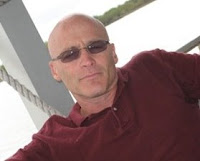 Brett L. Abrams was born in Newark and South Brunswick, NJ. He lived in Wisconsin, Philadelphia, and Boston before settling in Washington, DC where he earned a doctorate in U.S. History.
His interest in gender, sexuality and culture in the media of the late nineteenth and early twentieth centuries led to the publication of his first book, Hollywood Bohemians: Transgressive Sexuality and the Selling of the Movieland Dream.
His second book, Capital Sporting Grounds: A History of Stadium and Ballpark Construction in Washington, DC focused on the rationale and controversy surrounding the construction of stadiums in Washington.
In this interview, Brett L. Abrams talks about his writing.
What are the biggest challenges that you face?
One challenge involves needing to be an acrobat. I want to strike a balance between including stories that are amusing and entertaining with analysis that shows links between where the culture was and where it is today.
Then there’s the challenge of creating a public presence for the book. How does an author find a niche for his book let alone reach a large number of the history reading public?
Do you write everyday?
Yes, but I’m not at all scheduled about writing. I tote my notes, pad and pens around and take them out when I feel inspired. I shut down as quickly as I start up.
How many books have you written so far?
Two.
Hollywood Bohemians: Transgressive Sexuality and the Selling of the Movieland Dream (McFarland, 2008) describes images of gay, lesbians and adulterers who appeared in Hollywood promos to titillate audiences and promote the location as unique during the 1920s and 1930s.
Capital Sporting Grounds: A History of Stadium and Ballpark Construction in Washington, DC (McFarland, Jan 2009). Economic development as a rationale for building a stadium is only a recent phenomenon. Stadium advocates have used a variety of reasoning for needing new stadiums -- from bringing the Olympic Games to Washington to memorializing Thomas Jefferson. The book captures those efforts and the wild political atmospheres in which they occurred.
How different are the two books from each other?
Unlike the first book which focused on images that appeared in publications, Capital Sporting Grounds contains plans that never materialized.
The book is a cultural history that features people and businesses who promoted images and plans in an attempt to shape the development of their city.
In what way are they similar?
The efforts of the studios to give Hollywood a wild image and of politicians to make Washington a sports city both aimed to garner attention for the city and broaden the city’s appeal to tourists.
Which aspects of the work that you put into the book did you find most difficult?
I struggle with writing as clearly as I would like to. I edit my own work three or four times.
When did you decide you wanted to be a writer?
It was through journalism.
I started a school newspaper in junior high and then later on wrote about our student hockey league for the local paper. I completed a journalism degree but soon found the field was not for me. I worked in business and then decided that I could resume writing by getting an advanced degree in history.
After getting my doctorate, I wrote articles for journals and newspapers on a variety of subjects, ranging from labor strife to the late Jerry Falwell’s labeling of Teletubby Twinky Winky. I turned my dissertation into a book for a broader audience. Then I wrote a book sparked by the controversy over spending taxpayer money to build a baseball stadium where I live in Washington, DC.
How would you describe your writing?
I write history for the reading public. The stories are usually sparked by current events. I try to look for an angle that hasn’t been covered and see if the documents exist to support my perspective.
There is a large reading public interested in history. Many of these readers seek to connect life today with the past. I hope to contribute to the great US intellectual tradition that began during the mid-twentieth century, providing background and context for events of the day.
I want an active and informed citizenry shaping our world. Historical articles help frame issues that are raging today for the body politic. These stories also help readers see the development of current perspectives as well as the alternatives that might have been or could be.
In the writing you are doing, who influenced you most?
I enjoy Tom Wolfe’s ability to exhibit real life personalities within an equally vibrant yet informative context. The Electric Kool Aid Acid Test told me so much about the Grateful Dead and the hippie movement in a very memorable way.
How have your personal experiences influenced the direction of your writing?
I write history because I love learning about people and their actions. I’m gay, which sparked my interest in examining the gay and lesbian imagery I describe in Hollywood Bohemians.
What will your next book be about?
I am researching the descriptions of Washington, DC as a travel location over its two centuries of existence. The book will show both perceptions of the US capitol and changes in the development of the travel industry.
I enjoy researching through source materials because I am a ferret who loves to dig into things. The more digging I do, the greater the chance for uncovering a gem that can become the centerpiece of a chapter.
What would you say has been your most significant achievement as a writer?
I enable readers to learn about things they take for granted and hopefully inspire them to be more inquisitive.
Possibly related books:
,,
Possibly related articles:
- "Q & A with author Brett L. Abrams", by Bil Browning, The Bilerico Project, November 26, 2008.
- [Review] "Hollywood Bohemians by Brett L. Abrams", Footnotes & Errata, January 9, 2009.
Sunday, March 15, 2009
[Interview] Zvisinei Sandi
 Zimbabwean writer, academic and civil rights activist, Zvisinei Sandi teaches on politics and literature in Southern Africa at the Center on Democracy, Development and the Rule of Law at Stanford University.
She has also worked as a journalist and was secretary general of the human rights watchdog, the Society for Gender Justice.
Some of her short stories have been published in anthologies that include Creatures, Great and Small (Mambo Press, 2005) and Women Writing Zimbabwe (Weaver Press, 2008).
In this interview, Zvisinei Sandi talks about her writing.
When did you start writing?
I started out as a very little child, at about six, seven years old. I used to make plays about my parents and friends and the colorful years back then -- the last days of Zimbabwe’s liberation war, the Cease Fire, the Assembly Points and the changes in lifestyle for everyone.
When did decide you wanted to be a published writer?
Very early really, in high school, although my parents fought it. They were afraid that my writing would get in the way of my studies. They did all they could to stop me, including taking away my manuscripts and giving me extra chores. When I got the Randalls National Essay Writing Prize in 1990, they were furious with my teachers for encouraging me. However that prize, handed over to the hardly formed seventeen year old girl who never before had been to a city, determined the course of my life. I decided then that I was a writer, and would always be a writer.
How would you describe the writing you are doing?
It’s about the parts of the world I have seen …
Who is your target audience?
The world is my audience.
Every person lives a separate life, and hopes and aspirations and dreams that only they can tell to the rest of the world. I often find that I have a lot to say.
Who influenced you most?
My family has had the biggest influence on me -- they taught me to love my country, and to value everything that is good and beautiful and decent. They taught me to love music and hard work and to dream. And my writing is mostly comprised of these.
How have your personal experiences influenced your writing?
I would say, a great deal. I remember as a little girl, my first, faltering, almost ridiculous attempts at writing, and father telling me that what I really needed at the time was not to bury myself in a manuscript, but to go out there, and learn, get the certificates that would be my passport to the world, and see the world and then, if I still wished it I would have something to write about.
Now, having grown up, passed through grad. school and traveled, I believe I have something to say. I can write about pain, anguish, despair or joy with conviction because I have experienced these things and can talk about them with authority.
What are your main concerns as a writer?
Zimbabwe has had a challenging decade, and in an economic meltdown, the publishing sector is always the first to go. At the moment my main concerns are about finding publishers for all the writing I did while in Zimbabwe. This includes a number of novels, short story and poetry collections.
Do you write every day?
Every night at 2 a.m., I wake up. That’s when my mind is clearest and I sit up to ponder on the dynamics of my world. That is when I do my writing. It’s a pattern I established long ago, as a young girl growing up in the Zambezi Valley, and the days where too full and fast to allow even a single moment of reflection.
How many books have you written so far?
I have written about four books, though I have not yet managed to find publishers for all of them. Two of the books, Through Hararean Mazes, and Tales of the Wild Savanna have been serialized in the weekly newspapers The Southern Times and The Sunday Mail (Namibia and Zimbabwe).
I have also had short stories published in the anthologies Creatures, Great and Small, published by Mambo Press in 2005, as well as Women Writing Zimbabwe, published by Weaver Press in 2008.
Various articles and poetry selections have been published online.
My novels, Vagrant Souls and Flight from the Inferno are still waiting for a publisher.
What is your latest book about?
That would be Flight from the Inferno. It’s a fast-moving adventure story that starts in Harare, in 2000, and makes its way into the crowded market places of Lusaka, and then moves into war-torn [Democratic Republic of Congo] DRC.
The book virtually carves a path through Central Africa. When I started writing it, I had never been to any of the places. Carrying out the research was one of the most challenging jobs I have ever attempted. However, with the help of my college classmates, most of whom are now scattered in various countries across the African continent, it all came out beautifully. And, now that I have travelled the world, and actually seen these countries, I can present them with authority.
Which aspects of the work did you enjoy most?
It was an exciting adventure putting the thriller together, building into it all the energy and color of the incredible Central African environment.
What sets the book apart from other things you've written?
It’s that excitement you find in it -- that zazazu you find in the thrill of fear, and danger and that “Go! Go!” feeling you get when you encounter a life struggle.
What’s similar between this work and all writing, the world over, is the effort that went into it. Yes, you have a powerful story, and a clever way of delivering it, all that would amount to nothing without all those long, grinding hours. In the end, you do have to put in a lot of hard work.
What will your next book be about?
At the moment, I am working on another colorful short story collection, covering all the places I have been to, and the exceptional people I have encountered.
What would you say has been your most significant achievement as a writer?
My most significant accomplishment? Well, that's challenging for me to say, because you know what? It’s still coming. I see myself as just starting out my writing career, and when I am 90, curled up in front of a fire, surrounded by grandchildren and great-grandchildren, then I will close my eyes and -- this I promise you -- I will tell you of my greatest accomplishment ever.
Related books:
,,
Related articles:
- "Zvisinei Sandi: Writer and Political Exile", by Vinita Mohan, Justice, Social Memory and Story-Telling, September 26, 2008.
- "Repression in Zimbabwe and the South Africa Connection: An Interview with Zvisinei C. Sandi" by Russell Berman, Telos Press, May 29, 2008.
- "Zvisinei Sandi", Munyori Literary Journal.
- "Zvinisei Sandi", Poetry International Web -- Zimbabwe
Tuesday, March 10, 2009
[Interview_1] Sue Moorcroft
 Creative writing tutor and author, Sue Moorcroft was born in Germany and spent much of her childhood in Cyprus and Malta.
In addition to teaching creative writing classes, she has written and published five novels, among them, Uphill All the Way (Transita, 2005); A Place To Call Home (Magna, 2007) and Family Matters (Robert Hale, 2008).
Her short stories have been published in anthologies that include Sexy Shorts for Christmas (Accent Press Ltd, 2003) and Scary Shorts for Hallowe'en (Accent Press Ltd, 2004) .
She is also the editor of Loves Me, Loves Me Not, an anthology of short stories by the members of the Romantic Novelists' Association, which seeks to celebrate the RNA's 50th birthday in 2010. The anthology is to be published by Mira Books, in hardback in Autumn 2009 and paperback in February 2010.
In this interview, Sue Moorcroft talks about her writing:
Do you write everyday?
I normally write, or do something associated with writing or teaching writing, from 8 a.m. to 6 p.m., Monday to Friday. But I'm flexible and will sometimes take a day out in the week and work at the weekend.
Sometimes I work all seven days! It depends on what I'm doing and how much work I have on.
I tend to begin each day with e-mails and keeping up with writers' forums because they're valuable in networking and information gathering. Then I move on to students, then to writing.
What are your main concerns as a writer?
Making a living is always a concern. So I work hard and, I hope, with intelligent application, and that seems to bring enough money in, one way or another.
As I indicated at the beginning of the interview, I write in several areas. If I just wrote one novel a year I wouldn't make ends meet unless I miraculously got a wonderful contract, one that has escaped me until now.
Sometimes I find it hard to get going and I have to give myself a talking to, otherwise I'd spend all day writing e-mails and surfing the Net.
In the writing you are doing, who would you say has influenced you most?
Good question. I don't really have an answer to it as I have so many influences upon me: other writers, the wants of my agent or an editor, the state of my bank account ...
How have your personal experiences influenced the direction of your writing?
I like to write about things that mean something to me.
My first published novel, Uphill All the Way, is set partly in Malta. A bit of my heart will always live in Malta because I lived there as a child. I have set other works there and got a good response from editors and readers and I enjoy sending my characters there -- so it seems sensible, as well as enjoyable, to carry on.
And one always draws upon one's own emotions, of course. How can you describe being frightened if you've never had a fright?
On the other hand, what I don't know I research or I imagine. I think I'm quite empathetic and that helps in knowing how my characters will feel in a certain situation. My fiction is always about characters who could be real in situations any of us could find ourselves in.
My second novel, Family Matters, is about the effect that money can have on people. Some people will sacrifice a lot, friends and family, just so they can get their hands on some money. I'm not talking about to have enough money to eat, I'm talking about extra money so that they can have extra things. This happened in my family and gave me a bit of a disdain of people like that. I can see that money is useful to have, of course! But it's not the be all and end all.
What are the biggest challenges that you face?
It's like almost anything -- I work hard. I put the hours in, I pitch work to editors, I do work 'on spec' that may never be bought. I may be lucky in that my response to even a huge emotional incident is to bury myself in work.
Rejection is difficult, of course. If you've done your very best work and it is rejected, that's a horrible feeling. It can sometimes be a challenge to try again. Self-belief is part of my make up, happily.
Who is your target audience?
Most of what I write is for mainstream fiction and probably appeals more to women, although men do read my stuff and enjoy it. I often have male viewpoint characters.
I suppose I write roughly what I like to read and so I write for people roughly like myself.
How many books have you written so far?
I've written a lot more than I've published! Uphill All the Way (Transita, ISBN 978-1905175000) was published in April 2005 and is a book about recovery. In it, Judith has to get over losing her younger lover, her life in Malta and most of her money; Adam from losing three fingers, two homes and one wife. It's about a giant mid-life wobble and that there's life after it.
Family Matters came out in hardback with Robert Hale (ISBN 978-0709085232) in March 2008. It's about money and family and who thinks which is most important. It begins with a helicopter crash, one of the most difficult things I've ever written but it gets a good reaction, and that proves to be the catalyst for many secrets spilled...
A Place To Call Home (Magna, ISBN 978-1842625446) was a serial and it's out now as a large print book and follows the Randle family after they lose their nice life in Germany and have to return to the U.K. It explores how you start all over again when your old life crumbles through no fault of your own. It proves that it can be done!
Between Two Worlds was a serial, too, and it will be coming out as a large print book, but I have no details yet. It explores the modern phenomenon of two people marrying, a second marriage for each of them, and making two families into one. In this case, they come from very different backgrounds and have a lot of adjustment to make.
How did you chose a publisher for your latest book?
My latest published book is Family Matters. It took quite a while to write, maybe 18 months, because I began it four times before I was happy with the way it was going. There was a lot of research involved, too, particularly concerning a young character, Tamsin, who has some emotional and behavioural problems. I enjoyed working with her. I liked the central character, Diane, too, as is someone who will only take so much from people before she loses her cool. She is loyal to her husband for all of their marriage, even though some of his decisions seem to disadvantage her and their daughter, Bryony -- but once he lets her down, all hell breaks loose.
Family Matters was published by Hale in the U.K. in March 2008.
'Choosing' a publisher isn't really an option -- my agent sells my books for me. If she ever had the happy situation of more than one publisher making an offer then I would have a choice to make. But not till then.
Hale produce a great book and is professional to work with. However, the company only produce a hardback and it's difficult to get them to reprint when the first print run sells out, even if it sells out quickly, as mine did.
Which aspects of the work that you put into the book did you find most difficult?
I think it was the scope of the book that troubled me. Initially, it seemed too shallow with just one viewpoint character -- Diane -- and it was when I included viewpoints from Gareth, James and Tamsin that the book began to come alive.
One can only solve a problem like that by thinking it through and maybe talking it over with like-minded friends.
Which aspects of the work did you enjoy most?
Researching helicopters! I like helicopters! And planes and cars...
What sets the book apart from other things you've written?
I think it dealt with quite a hard subject and I'm quite proud that it didn't point the reader at a conclusion. There's room in the book for different attitudes and I think some readers will think that Diane was right in what she did but some will see the point of view of her husband, Gareth. I think it makes a good reading group book, for that reason.
In what way is it similar to the others?
Relationships! I like relationship books.
What will your next book be about?
Actually, it's about an aeroplane ... No, it's about learning to forgive yourself.
I've given Brenna an awful lot of things to contend with, a husband who goes missing, a building project that has gone wrong, losing her job, struggling with her teenaged son and also her older learning-disabled sister, Libby. Brenna feels guilty about Libby as she is convinced she was instrumental in the accident that left Libby with traumatic head injury. (But there really is an aeroplane in the book, the Unforgettable Juliet of the title.)
When did you decide you wanted to be a published writer?
I suppose I wanted to be seen as good enough to be published. I also wanted to earn money as a writer so I didn't have to do a 'proper job'.
It was a slow process.
After the first couple of novels, I began trying short stories because I read that if you had a track record of about 20 short stories with national magazines, a book publisher would take you seriously. This did work for me but I had sold 87 stories before I sold the first book!
I expand my areas of writing all the time. As well as short stories and books, I write articles and profiles for writing magazines and courses for the London School of Journalism. I have ideas for non-fiction articles and a non-fiction book that I haven't yet attempted. But the day will come.
I found building this body of work hard but rewarding and 'doable'. I learnt, through my course, through writing magazines, how-to books, conferences and seminars, how to approach editors, how to study the market and write for it. Then I did it!
I work with students all the time but am certain that only a small number send their work out to editors, agents or competitions. Editors rarely come knocking on the door to ask if you have anything in your desk that they might like to publish and pay for.
I learn about writing and publishing by staying in contact with those in the industry, reading what I need to read and putting it to intelligent use.
How would you describe the writing you are doing?
Hard work but enjoyable.
This week I have finished drafting the final episode of a serial called One Summer Night in Malta for a U.K. magazine, The People's Friend. I have sent that to a writing friend to read before I polish it. I'm not convinced that the ending is yet strong enough and anticipate that there's more work to be done.
I have also drafted a profile of a fiction editor of a new American fiction magazine and got together the visuals and sidebars for that. I've sent out four stories to overseas markets, stories that have been published in the U.K. already and needed some revision to suit the new market (and have sold one of them already).
In the back of my mind is my current novel, Unforgettable Juliet, which is also awaiting revision. But I've had a bereavement this summer and find I don't have the emotional energy for the novel, right now. It can wait.
What would you say has been your most significant achievement as a writer?
Um ... doing it, I suppose. Making it stick. Making a living. It's not a success in the J. K. Rowling category but it's still a success.
*This article is based on an email interview with Sue Moorcroft which took place in September 2008. Since then, the non-fiction book she referred to in the interview, one that was only an idea at the time, is now a reality and will be published in January 2010 by Accent Press as Love Writing: How to Make Money Writing Romantic or Erotic Fiction.
Possibly related books:
,,
Possibly related articles:
- An Interview with ... Sue Moorcroft, by juliemt, Single Titles, April 12, 2008
- The Story Seller, Interview by Myra Kersner
- Sue Moorcroft, Wired Malta (formerly known as Wired Temples), April 15, 2005
- RNA Special Part 2: An Interview with Sue Moorcroft, by Mike Atherton, Great Writing, July 7, 2005
Friday, January 9, 2009
[Interview] Ivor W. Hartmann, author and editor-in-chief of StoryTime
 Ivor W. Hartmann is a Zimbabwean writer, visual artist and literary activist. He is also editor-in-chief of StoryTime, an ezine that seeks to showcase new African writing.
In this email interview, Hartmann talks about the ezine and about how it is being received by emerging African writers.
What is StoryTime all about?
To quote the StoryTime About page mission statement if I may, since I put the effort into re-writing it recently:
The StoryTime African New Fiction FreEzine is all about new African fiction reading and writing. For our readers we provide a free weekly ezine showcasing the works of some of the hottest new African fiction writers. For our writers we endeavour to find them, and then encourage free online fiction publication at ST, as a multi-purpose means to improve writing ability and their exposure.
For the ST readers, my aim is to publish at least one great fiction story every week from an African writer, usually early morning Sunday (+2GMT).
I also do the occasional special edition on days like Valentines, or like the last one on President Robert Mugabe's Birthday. ST featured a cutting edge farcical story written for the occasion by Zimbabwean author Masimba Musodza ("Robin Hood & The President's Birthday Bash").
Also in the works is an annual ST Book Anthology called African Roar, which is set to be published by The Lion Press in early August 2009. It will then be launched at a new Zimbabwean Writers Festival in that same month being organised by The Lion Press.
For the writers, I actively look for new and established talented fiction writers to showcase at ST, and welcome all fiction submissions within the ST guidelines. Once the authors are accepted into ST, I then provide an interactive online home for them and their stories. Firstly, we showcase their stories by publishing them in the ST ezine.
In addition to that, for each ST author, I create a special author bio page that showcases them specifically. This includes an autobiography with their picture, all their stories at ST, and as many related links (I updated them monthly) to good content about the authors and/or their works. It includes, extra to the main ST feed, a specific feed only about them from ST.
The author page also gives them a space and the freedom to communicate with their readers in personal posts at their page, and in comments on the story itself. Taken all together, ST hopes to serve as a promotional interactive conglomerate of their online authorial presence and work.
How did StoryTime come about?
Like most ideas, this one grew out of necessity, or the dearth of good fiction-only magazines, coming out of South Africa and understandably, Zimbabwe. Not that there aren’t any, but they are fewer and far between in comparison to the rest of the world.
Frustrated as a new fiction writer madly writing with so few local outlets for my work, I started thinking about how I could remedy this dire situation.
Being strapped for cash back then (as a new-ish dedicated full-time writer and living in a new country), basically made me realise that a proper print magazine was out of the question to start with. So I took a look at online publishing which led me to Google's Blogger framework, and so the first incarnation of StoryTime was born.
Right from the outset my intention was to use the Blogger framework to publish a real ezine. I also definitely wanted to avoid personal blogging in the ezine and feature only fiction works, even if they were only mine to start with.
How long have you been working on the project?
I published the first ST ezine in June 2007.
Initially, I wanted to create a fiction ezine that would consist of an eclectic collection of world fiction, run directly by its authors for their readers, and create an online home for all the authors involved.
Over time and after gaining a bit of experience in this new field of online publishing, I came to realise what I wanted ST to be. That being, primarily a focus on the poorly represented and yet amazingly rich and diverse, fictional literature coming out of Africa and from the far flung African Diaspora. So I changed the ST emphasis to African writers only and the rest was history.
How do you find contributors?
I actively seek out talented writers and invite them to ST, and constantly look for free ways to promote ST and all our authors by all means at my disposal, on and offline. Then there's the relatively new development of the ST book anthology, African Roar, something I have wanted to do since the very beginning. In this regard I have just put out the call for ST fiction submissions to be published first in the ezine, and thereby gain entry into the selection process for the printed anthology. This came about thanks in no small way to Sarudzayi Barnes at The Lion Press, who secured us the funding to print publish with LP, from the U.K. Arts Council. Though in the long run I'd like the anthology to not only pay for itself, but also offer a decent percentage return for all the authors published in it.
Which writers are you currently working with?
This is a great question and maybe I can also explain something of how ST works. Firstly let me do the honour roll for everyone ST is actively working with:
Igoni Barrett, Adesola Orimalade, Ayesha Attah, Ayodele Morocco-Clarke, Beaven Tapureta, Chris Mlalazi, Colin Meier, Esi Cleland, Emmanuel Sigauke, Masimba Musodza, Nigel Jack and Sarudzayi Barnes.
It is these authors who have made ST what it is by joining, contributing and working with ST. Two members of prime contribution are Emmanuel, who is co-editing the upcoming ST anthology with me, and Sarudzayi, whom I mentioned earlier.
Now when I say our authors work with ST, what I mean is unlike traditional publishing, ST runs under a Creative Commons 3.0 licence (Attribution, Non-derivative, and Non-commercial). This means that in effect, the author joins ST and then together we showcase their work in the ezine, directly under their own names and copyrights. The authors then, forever, have complete access to all their works at ST and can edit them or remove them entirely if they so choose. This I feel is an important part of the capabilities of online publishing, giving the authors direct control over their work.
Hindsight can also be very illuminating, especially as one improves as a writer with each new work. At ST as the author you may make changes, normally reserved for a second revised edition in the print world. So the ST authors are their own editors, and I approve their works for publishing in the ezine as editor-in-chief of ST.
What challenges do you meet and how do you deal with them?
ST always presents many daily challenges which I try and deal with as swiftly as humanly possible. But I suppose the prime challenge from the beginning, has been my choice of the Blogger framework to publish ST for free. In doing so I have had to constantly search for ways to present ST as an ezine and not a generic blog. Luckily though, I am also a visual artist and have tried to make ST on the whole look as un-blog-like as possible. Not to mention the utter helplessness when faced with problems beyond my control, because it’s a free service. However, that's also the good thing about ST in its current form, apart from my own time and that of the authors; it's totally free for us and therefore our readers. This might change in the future, if we can ever afford a dedicated .com domain name and full website etc., which will bring its own set of new challenges no doubt. Though, unless we start printing a magazine solely, I'd like to keep the ST ezine free for the authors and all our readers.
There is also an inherent challenge in letting your authors have complete access to their works. One only has too view MySpace to see how out of hand this can get if left unsupervised. So behind each story I work a bit of hard-learned but simple HTML magic to make sure it complies with the ST layout standards, and doesn't jam the feed readers.
In general though, I have found the ST authors more than willing to help solve any problems that may arise, which makes life a lot easier.
How would you describe the standard of writing at ST?
So far, I think we have maintained a fairly good standard of writing at ST, but I can only believe that this will become even better as ST grows. It is also my intention with the first anthology to raise the bar significantly, by only print publishing the 'eclectic' or very best, of all the works published in the ezine since our beginnings. Subsequent to the first anthology it will be the best of that year.
Who is your target audience?
On the whole I'd say we already have enough variety to satisfy nearly every fiction genre taste, and so this would put us squarely in the fairly broad realm of all those who read fiction/literature magazines and ezines.
Furthermore, with our solid presence on Facebook and by using the Blogger framework, we are introducing ST and our authors to whole new generations of online fiction readers.
Which aspects of the work do you enjoy most?
There are quite a few reasons why I was motivated to start ST, but one of the big ones was to start communicating with my fellow Zimbabwean writing peers in Zimbabwe and those spread throughout the world. I had the idea that together we could do what artists are at least in-part meant to do, and that is being a voice for the voiceless; to bring to the world light, the very real catastrophe of our Zimbabwean situation through our arts, in this case, writing. Therefore, I have slowly but surely opened the lines of communication between several Zimbabwean writers and myself, and together we have achieved some measure of real progress. This is surely what I enjoy most, seeing and being a part of something greater than myself, which actually does cause positive change.
Ultimately, like most Zimbabweans, I have a great desire to return home permanently from what is effectively an economic exile.
What sets ST apart from the other ezines and literary magazines?
It would have to be the complete control the authors have over their work, and the strong sense of close community that ST engenders in both its authors and readers. We like to help each other out where we can, and most of us bring an existing entourage of readers to ST when we join. I believe it is this spirit of openness and community, tempered with real authorial control, which draws readers and serious writers to ST. This, therefore, raises the bar with the addition of each new talented writer, and our growing experience in online and print publishing.
Possibly related books:
,,
Subscribe to:
Posts (Atom)
-
 Lauri Kubuitsile writes romances novels; crime fiction; books and stories for children and teenagers; and, literary fiction. She was shor...