By Alexander James
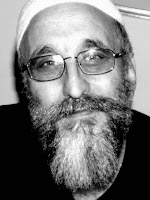 Daniel Abelman was sixteen when he stumbled upon the battered corpse of a murdered black man at the side of a remote dirt road in South Africa.
He called the police who swung the body onto the back of a dusty pickup truck.
"Don’t you want my statement … you know … for your investigation?" Daniel asked.
The boss cop’s reply numbed him: "Investigation? Are you bloody mad, kid? It’s just another kaffir."
That’s when young Daniel decided to leave what had been the Beloved Country -- and the adventure began.
Daniel had been born in the busy South African shipping city of Port Elizabeth on the coast of the Indian Ocean in 1958. It was also the body-surfing capital of the world, and as a tot, he learned to swim long before he could walk.
Later, unknowingly, he started to play the illusion game that became his life and fueled his bitingly satirical novel of skullduggery, Allakazzam!
 He said:
It was a pleasant four-mile downhill freewheel on my pushbike to the beach. But after a day’s surfing and swimming, the prospect of pedaling back, uphill and in the summer heat, wasn’t so appealing. So I’d let the air out of one of my tyres to fake a puncture and sit, looking thoroughly miserable, at the side of the road until some kind-hearted driver was fool enough to load my bike into the back of his car and take me home in style. Never failed.
When I arrived home -- invariably late for supper -- I’d blame the ‘puncture’ and the family would feel sorry for me and heap my plate. I guess that’s when I first learned about the power of illusion: my first step toward becoming a professional magician, and a writer. Mastery of illusion is vital in both art forms.
Conjuring is the plausible demonstration of the implausible. The audience is spoon-fed with only what they have to know; nothing more and nothing less if the demonstration is to be plausible. There are techniques in building a workable magic routine, and I use the same tricks of the trade when composing a story. The reader gets all the information they need; nothing more and nothing less. The outcome is a believable story, no matter however outrageous and impossible the concept might seem. The catch is that conjurors are made and not born -- with writers, it’s pretty well the opposite.
Daniel’s Jewish Lithuanian grandparents and uncle fled to Johannesburg from their home country in fear for their lives. With the outbreak of the Boer War, the Jewish community was transferred en masse to Port Elizabeth, yet again in fear for their safety. Enthusiastic and prolific breeders, the Abelman clan waxed with the years and did well for themselves as dairy farmers and wholesale merchants.
Daniel admits:
How they got their hands on the farms is shrouded in mystery. All I am prepared to say is that we come from a long line of renowned Lithuanian horse thieves and, by all accounts, grandpa and company made it onto the boat to Africa by the skin of their teeth -- with a posse of irate, horseless Cossacks hot on their tails.
Grandpa and Great Uncle Isaac would schlep their products from door to door in hessian bags, taking orders from farmers on the way so as so stock up with supplies for the return journey. They’d spend the night on the back of their donkey cart, snuggled up in sack cloth sleeping bags.
Later they opened a general store in Selborne. On Thursdays, my mother – a ten-year-old then – would run down to Rabbi Bloch, the ritual slaughterer, with a shilling and a hen. On Fridays she ran down to the Port Elizabeth train station with kosher cooked chicken and baked hallot loaves for the Sabbath, which she gave to the guard on the train. The guard, in turn, handed it over to Uncle Isaac on the Selborne platform.
Runaway horse thieves and rogues they may have been, but you’ve got to admit, they were good, kosher runaway horse thieves and rogues.
Writing was in the family from as long as Daniel could remember. His father was the community’s scribe, penning letters in Yiddish to the old country and reading replies from home.
The multilingual household, shelves stocked with books, was a literary incubator. Family time was spent with Daniel’s father reading to the company. Balzac and Herman Charles Bosman, the Yiddish literary greats, and running commentaries from Pa had the household moved to tears or howling with laughter.
Our edition of Balzac’s droll stories was illustrated and, as the level in Pa’s brandy bottle lowered, so did the Old Man’s guard, letting us peep at the naughty succubi and incubi pictures. Then Pa would decide it was time for bed and Ma would decide he was too drunk for that. The advent of TV and Ma’s distaste for Pa’s over-imbibing during story-telling sessions is probably what put an end to our family nights ... and what brought on the birth of the twins.
Now with five siblings, making up a total of seven souls in the family unit, and with three library cards per family member, the weekly trip to the public library was accomplished with the help of a giant wicker basket and a strong back.
We lived on 2nd Avenue and the library was way up on 5th. There is a lot a youngster can do traversing those few blocks, even when weighed down with a basked stuffed with books and a pair of flip-flops (the librarian wouldn’t let us in without some form of footwear). You could stop and mix with the mice (white) in the pet shop, or jive with the petrol station attendants (black). Great care was to be taken to resist the temptation of a rest on the bench in the 4th Avenue Park and make a start on the reading. It would invariably result in trouble when, once again, arriving home late for supper.
There was always something to read in the house. Daniel’s only complaint was that fate had left him as the middle child in a big family.
With a rich blend of shtetl and farmers’ blood flowing through our veins, nothing went to waste in our household. Hand-me-down was the name of the game. Via numerous cousins and finally off the back of my elder brother, my wardrobe was a motley collection of short pants and tee-shirts. When I joined the school soccer team, I remember being given a pair of old rugby boots that laced up past the ankle. The bulbous metal-reinforced toe cap was out of date even back then. But they came in handy for giving the ball, mostly in the wrong direction, a hefty kick whilst positioned at left-back.
The up side of being the middle pip was that my best friends were also my siblings, and that meant I was always surrounded by friends, some older, some younger. The close bonds of childhood remain to this day. My sisters married wisely and live in Johannesburg. The brothers, who married for love and nothing much else, now live in Israel. We’ve all done pretty well for ourselves.
The school where Daniel studied far from home had the reputation of being one of the best high schools in the southern hemisphere. Only one student had ever failed matriculation examinations. Young Daniel Abelman was the stain on an otherwise unblemished record.
They don’t invite me to school reunions. It’s no skin off my nose -- I hated school, I hated the teachers (that was probably mutual), I hated the curriculum ... and I probably would hate going to a reunion, too. The day I left school, I never looked back. I lost contact with teachers and schoolmates, most of whom I had sat with on the same school bench for 12 years. I did hear a rumour circulating that I was clinically insane.
I explained to my parents my motives for failing matriculation, that it was no accident. After a while, it was water under the bridge and they got over it. I think they might even have quietly approved.
The school was by no means rank with perves and paedophiles like the school described in Allakazzam! But it did have two of them who stood out like sore thumbs, seen but inexplicably ignored. The headmaster was aware of what was happening and, for his own personal reasons and agenda, did nothing about it.
This malpractice and social injustice had to be brought to an end, and it seemed it was up to me. I deliberately failed my incredibly easy matriculation exams and so tarnished the school’s clean record that the head was fired by the board of directors.
I remember coming out of those exams. The headmaster was waiting, anxious to find out how things had gone. It was a real pleasure to lie and say that the exam was as easy as pie and that I had done marvellously, knowing that he would carry the can. Without the head’s support, the paedophiles were soon got rid of.
About a year ago, I managed to establish contact with the old headmaster via email. We traded a message or two that were surprisingly genial. I sent him the first chapter of Allakazzam! His feedback was wonderful and I asked if he’d like to read more. When he said he would, I sent him the fictionalised schooldays chapter from deeper into the book. I never heard from him again. A bit of a belated twist of the knife, what?
Daniel later walked through his national matriculation certificate at another school of, he says, low esteem.
Then came the day at childhood’s end when he abruptly learned what the hateful South African apartheid system was all about -- when it hit him in the face in the shape of a murdered black man and a racist Afrikaans-speaking white cop.
He took to the road and travelled around Africa doing odd jobs and often living off the land. Eventually winning a grub stake in a card game, he left for Europe where the cruel climate took him unawares.
Eventually, the voices of his ancestors called out to him from Israel -- were he eventually landed up via a circuitous root that saw him working as a juggler, a tightrope walker, a fire eater, a magician ... and even a snake charmer.
When he got to the Levant, much to Abelman’s chagrin after successfully avoiding the South African national military service conscription, he soon found himself drafted into Israeli Defense Force. After many years of active service, slipping in and out of Lebanon, both in the regular army and in the reserves, he was honorably discharged with the towering rank of private. His military memoir has been published as the short story, "No Medals & No Mentions".
He said:
We were all Zionists in our family and supported Israel. There was no shortage of books on Judaism and related subjects in the house, both religious and secular.
One of the first games I can remember playing was ‘Germans and Jews’. In a draped, darkened dining room, the table was covered with blankets skirting down to the floor. The ‘Jews’ would hide under the table with a little reading lamp. When they heard a sound outside, they had to turn the lamp off and sit silently until a ‘German’ yanked up the blankets with a yell -- ‘Juden raus!’ -- giving a scare to the cowering ‘Jews’. I must have been three.
Jews in the Diaspora live dual lives. Outside the house we were proud South Africans and Jews, inside the house we were proud Zionist Jews and South Africans. My father’s name was Abraham, and rather than contend with the split personality of Diaspora life, I decided to move to the land of Abraham, where you can be yourself both inside and out.
My brother had made the move some years earlier so the way was paved for me. With a single suitcase, I left South Africa -- ‘coincidentally’, a week before induction into the South African Defence Force -- not to return until 15 years later, by which time the military police had stopped inquiring as to my whereabouts.
Military discipline in Israel didn’t come as too much of a shock -- I knew it existed. There are rules and regulations, but as long as you take your training seriously (and you’re stupid if you don’t because you can find yourself at war quicker than you expected over here) and do your job as directed, the Israeli Defence Force is a happy-go-lucky place to be; compared to other armies that is.
At a loose end after his army service, Daniel soon found employment as a professional performing artist. As thrice winner, in successive years, of the Israeli National Magic Competition, it paved the way to success. His hat trick set him off, traveling the country, performing up north in the Golan Heights and as far as the southern resort town of Eilat.
He said:
The performing arts can be a hot, sticky and, at times, filthy business. A tight rope walker may make a living with three ten minute acts a day -- but it’s not something I would recommend anyone trying. Artists spend more time waiting around for the show to begin then they actually do performing. It’s a boring, nerve racking and dangerous way to make a living.
Daniel married a rabbi’s daughter, Joani, and after the birth of their third child, it dawned on him that seasonal work as a performer wasn’t the best way to provide for a growing family and that long periods away from home wasn’t the best way to enjoy it. So he hung up his wand when the Intifada that followed the Israeli Scud War (into which he was drafted for three months) discouraged tourists, and the performing arts job became even more precarious.
He became a licensed electrician, a competent plumber and, for a while, built wooden frame houses.
But his beautiful wife’s outstanding success as a prenatal educator and childbirth assistant, a field in which she attained near guru status, decided Daniel to become the primary care-giver parent in the family, leaving Joani to spend more time on her career.
By the time Daniel became a house husband, there were four children. And between hectic breakfasts in the morning and brushing teeth before beddie-bies, was when he began to write in earnest. Mornings, with the young Abelmans at school, were his most productive hours. It was during these mini breaks from the bedlam of so many kids in a home of just sixty square yards, that Allakazzam! took shape.
Said Daniel:
Contrary to popular belief, kids have to be fed on a regular basis and tucked into bed on a regular basis. Hungry and tired kids are ratty kids. The quickest cooked meal to prepare is corn-on-the-cob with a sliced tomato for salad. Being a ‘fun-father’ we would sometimes do the outrageous; breakfast for supper! ‘Cereal for supper tonight!’
But kids aren’t stupid. They won’t put up with such dismal parenting for long. I really had to work hard at the job. It’s like tight rope walking, fire eating and juggling all in one ... and all sheer magic.
Then, of course, there’s the eternal battle as to whose turn it is on the computer. Mostly I have to write things on scraps of paper and then transcribe them into the computer when the kids decide it’s my turn. Out of school time, if I managed two good paragraphs a day on Allakazzam!, I was happy with the output ... and don’t forget there’s a wife who appears at the most ungodly of hours and who demands to be fed and given some love and attention, too.
When people ask Daniel how he ever got Allakazzam! finished, though, he doesn’t tell them about the late nights, the early mornings, the entire finished sentences and paragraphs carefully filed away in his head, the lifetime of research through experience, adventure, diversity and astute and compassionate people-watching, or the decades of practicing and mastering the writer’s skills to supplement an inborn talent -- and the years spent carefully polishing Allakazzam! to a perfect shine.
After all, it’s a poor magician who reveals all the secrets of his tricks.
This interview first appeared in Twisted Tongue Magazine
Possibly related books:
,,
Related interview:
The Low Down on High Fantasy: An interview with John Grant, By Alexander James, Conversations with Writers, January 28, 2010
