Showing posts with label south african writers. Show all posts

Wednesday, July 7, 2010

[Interview] Danie Nel

South African commercial photographer and a writer, Danie Nel has some poems that have been featured in the poetry anthology, The Colors of Life (Watermark Press, 2003).

Currently he is working on Notsoreallifestory, a blog novel he describes as "a take on the alter ego interaction storyline, but with a different slant and angle on it."

In this interview, Danie Nel talks about his writing:

When did you start writing?

I realized I enjoy writing in primary school as part of our creative writing assignments and, having been an avid reader since I could read, I suppose that has always fuelled the fires of creativity for me.

I’ve been writing songs, and lyrics, since I was 18, and have penned a few poems. However, working as a professional photographer has put me in contact with writers, journalists and novelists, and their enthusiasm for their craft has rubbed off on me.

Only my poems have been published in a collection of works called The Colors of Life, and was included after I entered a competition.

As for my creative writing, I only recently really started writing again, and decided that the blog-model works for me, and I’d rather earn my money through advertising programs, and focus on writing what I want, how I want to, and when I want to, without publisher’s demands. I also use the comments section to get readers to interact with me, and rather have the end-user influence my writing, and not the money man!

How would you describe your writing?

Free, quirky, strong storyline, suspense and humour is a must. It would probably fall into the category of humorous drama.

Who is your target audience?

Anyone with a sense of irony, who loves reading easily and loves to chuckle at life. I’m like that.

Which authors influenced you most?

Stephen King’s humour and limitless imagination. Also, he has amazing flow.

Michael Cunningham is just poetic and has the most beautiful writing style.

Bryce Courtenay for sheer story. Koos A Kombuis for his humour, descriptive ability and flow. Bill Bryson, for knowing how to communicate the oddities that we all notice, just don’t seem to remember.

Have your personal experiences influenced your writing in any way?

Probably. We can only put out versions of information we ourselves have gathered and processed.

What are your main concerns as a writer?

That I will bore the reader with obvious plots, obvious humour and no surprises. I try and surprise myself.

What are the biggest challenges that you face?

Time to write.

Do you write everyday?

I write weekly. I normally write late at night, after the family’s gone to bed. It ends when I fall asleep!

How many books have you written so far?

None.

I’m writing a story called Notsoreallifestory, in the blog format. It’s about a man who wakes up to a voice in his head one day. It’s a take on the alter ego interaction storyline, but with a different slant and angle on it.

Which aspects of the work do you find most difficult?

Dialogue.

Dialogue is a spontaneous process, and recreating proper and good dialogue is difficult.

I repeat the dialogue aloud to myself, and if it seems fake, or makes me cringe, I change it.

Which do you enjoy most?

Reading my story.

When writing flows, and I re-read my efforts, it’s amazing to see that I’ve opened up doors in my imagination that I haven’t noticed before. Or I realize I think differently about things than I thought I do.

What sets Notsoreallifestory apart from other things you've written?

I’ve never attempted a series blog before, and all my pieces have been short, concise and normally limited to a couple of pages.

In what way is Notsoreallifestory similar to the other things you've written?

My sense of irony is deeply embedded in how I communicate, also, I veer from cliché’s.

What will your next piece of writing be about?

Probably a musician. Not sure what he’s going to do yet. I just love music and would like to explore that possibility.

Possibly related books:

,,

Related articles:

Saturday, May 29, 2010

[Interview] Bettina Wyngaard

South African novelist, Bettina Wyngaard made her debut as an author with the publication of Troos vir die gebrokenes (Umuzi, 2009) - a novel about three generations of Afrikaans-speaking black women, dealing with issues like domestic violence, alcohol abuse, and crime.

The novel was subsequently shortlisted for the Jan Rabie Rapport Prize, which is awarded to a debut or early work characterised by fresh and innovative Afrikaans prose.

In this interview, Bettina Wyngaard talks about her writing:

What made you decide you wanted to be a published writer?

I’m not even sure that it was a decision, as much as an urge, a compulsion, if you will, to return to writing.

I write mostly in Afrikaans, but have never really felt comfortable with the Afrikaans literature that is available out there. I felt it did not really reflect my reality, with the result that I read mostly English.

Eventually, I realised that instead of complaining and bemoaning the lack of fiction reflecting my reality, I could be the voice telling those unheard and untold stories. So, I identified a story and a milieu that I could identify with, and that isn’t really portrayed in literature, and started writing.

There is very little fiction written in the sometimes very informal Afrikaans used in Troos vir die gebrokenes, addressing the issues that affect “real” people.

The language in most Afrikaans books is often stilted and formal, so that it leaves the reader uncomfortable, as if something is missing. I found it difficult to relate to those characters.

Why do you think the literature is like that?

At a guess, I would say it is because no one has been prepared to risk doing things differently.

There have always been Afrikaans writers who challenged the status quo and addressed social issues, but the vast majority preferred writing romantic fiction, for which, of course, there probably is a far greater market.

It could also be that the memory of past censorship has made writers more wary of taking risks in their writing.

How would you describe your own writing?

Social commentary, but packaged to appeal to a popular audience.

I shine a spotlight on relevant social issues affecting women in the hopes that I will get readers to think differently about these issues.

I don’t believe that all writers everywhere should only write about social issues. There is a definite place for fantasy and escapist fiction. Having said that, however, social commentary holds up a mirror to society, daring the reader to change their thinking and/or behaviour. I believe this to be a vitally important function of writing.

Who is your target audience?

Afrikaans-speaking adults with a social conscience.

What motivated you to start writing for this audience?

I believe that there is not enough fiction in Afrikaans that address social concerns, and that there is always need for that sort of writing.

Which, would you say, are some of the most pressing issues affecting South Africa today?

Crime, especially corruption and gender based violence, poverty, the ongoing AIDS crisis ...

We, as South Africans, have this tendency to believe that government should fix everything that is wrong, and that we are absolved from doing anything. We need to change that mindset - it is all our responsibility to ensure that our society is held morally accountable.

If we all work together, we can make a difference.

Which authors influenced you most?

I have mostly been influenced by social commentators such as Maya Angelou, Toni Morrison and Alice Walker, as well as the natural philosopher, H. D. Thoreau. They write about issues I’m passionate about, using words as a means of exposing injustice, but doing so in compelling, beautiful prose.

Have your own personal experiences influenced your writing in any way?

I’m not sure that any writer can divorce their writing from their life experiences. Certainly, in my own case, I have found that my writing only ring true if I write about things I know about, or can convincingly imagine.

In order to convince the reader to suspend their disbelief, the writer must be able to authoratively paint a picture of the events, the characters and the world those characters inhabit.

It’s important that my writing is authentic and accurate. As a result, I do quite a lot of research before I start writing. I’ll often interview people, familiarise myself with the environment I’m writing about, and ask loads of questions

What are the biggest challenges that you face?

Finding time to write. I generally set time aside over weekends to do some writing.

When I have a publishing deadline, I’ll write everyday. Otherwise, I write over weekends, but only when I have something to say, or am trying to explore an idea.

Writing is meant to be fun, and trying to force it, takes the joy out of creating characters and the world they inhabit.

When you do write, how does each session start? How do you proceed? How do you know when to stop?

I try not to do any reading for a few days before I start writing - to clear my mind of all clutter. When I write, I only listen to classical music, so no songs with words to interfere with my thinking. I choose the music to go with the mood I want to create in the piece I’m writing.

I always have an outline of what I want to write, even though the actual writing often meanders far away from the outline!

I stop when I lose focus and concentration, or when the plot starts losing interest to me. If I’m not spellbound, neither will the reader be.

How many books have you written so far?

One, an Afrikaans book called Troos vir die gebrokenes, published by Umuzi, an imprint of Random House in July 2009.

Troos vir die gebrokenes is about three generations of Afrikaans speaking black women, dealing with various social issues, such as domestic violence, alcohol abuse, crime, the effect it has on them and how they overcome. It is a story of hope, of the human spirit overcoming affliction.

Given that Afrikaans is a language which a generation or more of black women will have resisted, at one time or the other, is this tension between the language and the people who are using it reflected at all in the novel?

No, I deliberately did not take any stance on the language. The characters deal with issues, like poverty, like gender-based violence, that are far more pressing for them. Adding issues around language would have taken the focus away from the main message, which deals with hope and empowerment of women.

How long did it take you to write it?

From conceptualising to finalisation, about nine months

How did you chose a publisher for the book?

Random House has a reputation as a publisher of excellent material, and I wanted to work with them. It never even occurred to me to send my manuscript elsewhere.

What advantages and/or disadvantages has this presented?

Working with a group of dedicated people who really set the bar high, forces me to constantly evaluate the quality of my own writing. Having an ego, or being possessive of one’s work, is not even an option!

How do you deal with this?

Write, rewrite, and rewrite again until I’m happy with the result.

Which aspects of the work that you put into the book did you find most difficult?

Writing about serious issues without striking a depressive note.

The challenge for me was to put my characters in extremely dark situations, but to have them retain a hopeful outlook.

It is a very delicate balance to maintain in life, and trying to use words to portray it without making your audience feel manipulated, is tricky.

I find that taking a step or two back from the work, and really looking at it critically, helps. Also, getting constant feedback from others.

Which aspects of the work did you enjoy most?

The whole creative process.

Contrary to common perception, writing is a collaborative process, and having a team of talented people co-creating with me, is probably the ultimate buzz - seeing my baby raised by a village, in a manner of speaking!

What sets Troos vir die gebrokenes apart from the other things you've written?

Troos is my first work of fiction, everything else has been factual

It is similar to other things I've written because it has a strong emphasis on gender issues, although it is approached from a different perspective to the more academic writings that I’ve done.

What will your next book be about?

Corrective rape, so it’s again about a gender issue.

I’d rather not divulge more than that - I find the story evolves almost without my input, so the plot I work on now, may no longer be applicable a week from now.

What would you say has been your most significant achievement as a writer?

As a debut writer, I’d have to say getting my first book published by the first publisher I submitted it to!

When did you start writing?

I’ve always written, even as far back as primary school. In fact, my first published piece appeared in our school newsletter in my Grade 8 year. I stopped writing for number of years during tertiary education, and when I started working.

Possibly related books:

,,

Related articles:

Saturday, April 17, 2010

[Interview] Marita van Aswegen

South African author, Marita van Aswegen writes poetry, short stories and novels for both children, young adults as well as adult readers.

Her work has been published Afrikaans, Sesotho and English.

Her books include Dance Thispo, dance (Kwela, 1997); Gavin’s Game (Masterskill Publishers, 2009) and Phapo’s Gift (Knowledge Thirst, 2010).

In this interview, Marita van Aswegen talks about her writing:

When did you start writing?

I wrote my first story when in 1964 when I was fifteen. I sent it to a magazine ... but it was rejected.

It was a love story and I sent it to Sarie. That was the favorite magazine of the sixties.

I was a teenager and my mind was filled with roses and moonshine and the perfect love.

What would you say motivated you to start writing?

As long as I can remember, I always wanted to write a book.

During the years when my children were small, I wrote essays and poems because essays are short and you can complete one in an hour or so. ( Small children do not give you a lot of time to write.) The essays were on subjects like: "Going to the hairdresser" (humorous essay); "We got electricity!"; "The day I put a cheque on the car’s roof and forget about it", etc.

The poems were for small children (through my children’s eyes) and also poems that expressed my own personal feelings. The latter I kept for myself.

Two of the poems for children were published thirty years later in Die nuwe verseboek by Riana Scheepers!

I just had to write things down, I felt happy when I did that.

After all my children went to boarding school, I started to write on a more regular basis.

My first book was published in 1997. I had sent the story to several publishers and got it back six times. But I did not give up. The book was in Afrikaans, but Kwela Publishers also translated it in English and Sesotho. The book was for adults who did not go to school when they were children and they got literacy classes as adults.

The book is about a young postman who has to deliver a letter to an old man who was waiting for a letter from his grandchild. The old man was attacked by a robber and the postman saved his life.

It was easy to write and did not take me long. I kept on resubmitting it because I believed it was a good story. Yes, Kwela translated it into Afrikaans and Sotho too. The book was beautiful, but unfortunately only the Afrikaans and English sold. The Sotho did not sell at all.

How would you describe your writing?

I have been writing for different markets.

The first book was for ABET readers.

After that I wrote Roer jou riete Pampas, a youth book in Afrikaans. It was translated in Sesotho.

I wrote several short stories for teenagers that were included in different books.

I wrote a teenage novel and several stories for the Kroonsteen series.

I also wrote more literary short stories.

How much influence have your personal experiences had on your writing?

I love writing for children age nine to twelve.

Because I work with children from the rural communities who grew up in difficult circumstances, I like to write about them. They have so much courage, they inspire me.

Being a social worker had influenced my writing in the sense that I became more aware of social issues like alcohol abuse, verbal abuse, poverty, etc. Real life had influenced me more than any book ever would.

Which authors have influenced you most?

I appreciate the work of Jacqueline Wilson, the British writer. Her stories soften the disappointments of real life.

It gives hope.

I like that.

What are your main concerns as a writer?

My main concern as a writer is the fact that children in South Africa rather spend time outside than reading books. Whenever I meet with children, I try and motivate them to read.

In the rural area where I stay, most of the parents of children are illiterate. Therefore there is no reading culture in the homes. Children have to walk long distances to farm schools. These children speak Sotho in their homes and then they have to learn English and Afrikaans in school. Reading is for them a nightmare because their mother tongue is neglected in schools.

Farm children do not have the facilities that bigger schools have. There are no libraries, no reading groups, no one who can open the world of reading to them. They should be helped to love their mother tongue and reading in their mother tongue. Writers in their mother tongue should visit schools and motivate children to be proud of their own language.

What are the biggest challenges that you face?

The biggest challenge for me is to write every day. I discipline myself to do that. Even when I do not feel like writing, I go and sit in front of the computer and write something. After a while the ideas just flow. I write till I feel I have completed the specific idea that I am busy with.

I enjoy writing for children the most. But it is not always easy. As a writer you realize that you have an impact on children’s minds and for me this is a great responsibility.

I write mostly in Afrikaans, this is my mother tongue. I love Afrikaans because I grew up with it. I can express myself in one word. The last ten years I also started to speak English quite often, because my children are overseas and I visit them every year. I started to translate my Afrikaans children’s stories into English. I enjoy it.

What would you say Phapo's Gift is about?

My latest book, Phapo’s Gift is about the ten-year-old Phapo who is clever, pretty and happy. But she has a big burden to carry: her father, who she loves very much, is dying from Aids.

All around her, her school friends are getting boyfriends and girlfriends, but Phapo wants nothing more than to make mud cakes under her favourite tree and dream of beautiful dolls.

When the boys start to look at her, her Grandma tells her a very special secret: Phapo has a precious, perfect fruit inside her. She alone has the power to treasure or to destroy that fruit.

It took me about three months to write the story. It will be published during 2010 by Knowledge Thirst.

How did you find a publisher for the book?

I received an email from SCBWI where Knowledge Thirst was asking for stories.

I sent in my story and they accepted.

Since they let me know they want to publish the story, I have been working with professional, punctual people all the way. I enjoy working with them. I enjoyed writing the story, first in Afrikaans and then in English.

I feel the story has something to say for children and might help them to understand the preciousness of sex. What makes this book different is the fact that the publisher kept me informed all the time and I could see how the book was progressing. This was excellent.

What will your next book be on?

My next book is already finished. It is about an orphan in a centre for abused and neglected children.

Every book is an achievement for me.

Possibly related books:

,,

Related articles:

Tuesday, February 9, 2010

[Featured Author] Daniel Abelman

Sheer Magic
By Alexander James

Daniel Abelman was sixteen when he stumbled upon the battered corpse of a murdered black man at the side of a remote dirt road in South Africa.

He called the police who swung the body onto the back of a dusty pickup truck.

"Don’t you want my statement … you know … for your investigation?" Daniel asked.

The boss cop’s reply numbed him: "Investigation? Are you bloody mad, kid? It’s just another kaffir."

That’s when young Daniel decided to leave what had been the Beloved Country -- and the adventure began.

Daniel had been born in the busy South African shipping city of Port Elizabeth on the coast of the Indian Ocean in 1958. It was also the body-surfing capital of the world, and as a tot, he learned to swim long before he could walk.

Later, unknowingly, he started to play the illusion game that became his life and fueled his bitingly satirical novel of skullduggery, Allakazzam!

He said:
It was a pleasant four-mile downhill freewheel on my pushbike to the beach. But after a day’s surfing and swimming, the prospect of pedaling back, uphill and in the summer heat, wasn’t so appealing. So I’d let the air out of one of my tyres to fake a puncture and sit, looking thoroughly miserable, at the side of the road until some kind-hearted driver was fool enough to load my bike into the back of his car and take me home in style. Never failed.

When I arrived home -- invariably late for supper -- I’d blame the ‘puncture’ and the family would feel sorry for me and heap my plate. I guess that’s when I first learned about the power of illusion: my first step toward becoming a professional magician, and a writer. Mastery of illusion is vital in both art forms.

Conjuring is the plausible demonstration of the implausible. The audience is spoon-fed with only what they have to know; nothing more and nothing less if the demonstration is to be plausible. There are techniques in building a workable magic routine, and I use the same tricks of the trade when composing a story. The reader gets all the information they need; nothing more and nothing less. The outcome is a believable story, no matter however outrageous and impossible the concept might seem. The catch is that conjurors are made and not born -- with writers, it’s pretty well the opposite.

Daniel’s Jewish Lithuanian grandparents and uncle fled to Johannesburg from their home country in fear for their lives. With the outbreak of the Boer War, the Jewish community was transferred en masse to Port Elizabeth, yet again in fear for their safety. Enthusiastic and prolific breeders, the Abelman clan waxed with the years and did well for themselves as dairy farmers and wholesale merchants.

Daniel admits:
How they got their hands on the farms is shrouded in mystery. All I am prepared to say is that we come from a long line of renowned Lithuanian horse thieves and, by all accounts, grandpa and company made it onto the boat to Africa by the skin of their teeth -- with a posse of irate, horseless Cossacks hot on their tails.

Grandpa and Great Uncle Isaac would schlep their products from door to door in hessian bags, taking orders from farmers on the way so as so stock up with supplies for the return journey. They’d spend the night on the back of their donkey cart, snuggled up in sack cloth sleeping bags.

Later they opened a general store in Selborne. On Thursdays, my mother – a ten-year-old then – would run down to Rabbi Bloch, the ritual slaughterer, with a shilling and a hen. On Fridays she ran down to the Port Elizabeth train station with kosher cooked chicken and baked hallot loaves for the Sabbath, which she gave to the guard on the train. The guard, in turn, handed it over to Uncle Isaac on the Selborne platform.

Runaway horse thieves and rogues they may have been, but you’ve got to admit, they were good, kosher runaway horse thieves and rogues.

Writing was in the family from as long as Daniel could remember. His father was the community’s scribe, penning letters in Yiddish to the old country and reading replies from home.

The multilingual household, shelves stocked with books, was a literary incubator. Family time was spent with Daniel’s father reading to the company. Balzac and Herman Charles Bosman, the Yiddish literary greats, and running commentaries from Pa had the household moved to tears or howling with laughter.
Our edition of Balzac’s droll stories was illustrated and, as the level in Pa’s brandy bottle lowered, so did the Old Man’s guard, letting us peep at the naughty succubi and incubi pictures. Then Pa would decide it was time for bed and Ma would decide he was too drunk for that. The advent of TV and Ma’s distaste for Pa’s over-imbibing during story-telling sessions is probably what put an end to our family nights ... and what brought on the birth of the twins.

Now with five siblings, making up a total of seven souls in the family unit, and with three library cards per family member, the weekly trip to the public library was accomplished with the help of a giant wicker basket and a strong back.
We lived on 2nd Avenue and the library was way up on 5th. There is a lot a youngster can do traversing those few blocks, even when weighed down with a basked stuffed with books and a pair of flip-flops (the librarian wouldn’t let us in without some form of footwear). You could stop and mix with the mice (white) in the pet shop, or jive with the petrol station attendants (black). Great care was to be taken to resist the temptation of a rest on the bench in the 4th Avenue Park and make a start on the reading. It would invariably result in trouble when, once again, arriving home late for supper.

There was always something to read in the house. Daniel’s only complaint was that fate had left him as the middle child in a big family.
With a rich blend of shtetl and farmers’ blood flowing through our veins, nothing went to waste in our household. Hand-me-down was the name of the game. Via numerous cousins and finally off the back of my elder brother, my wardrobe was a motley collection of short pants and tee-shirts. When I joined the school soccer team, I remember being given a pair of old rugby boots that laced up past the ankle. The bulbous metal-reinforced toe cap was out of date even back then. But they came in handy for giving the ball, mostly in the wrong direction, a hefty kick whilst positioned at left-back.

The up side of being the middle pip was that my best friends were also my siblings, and that meant I was always surrounded by friends, some older, some younger. The close bonds of childhood remain to this day. My sisters married wisely and live in Johannesburg. The brothers, who married for love and nothing much else, now live in Israel. We’ve all done pretty well for ourselves.

The school where Daniel studied far from home had the reputation of being one of the best high schools in the southern hemisphere. Only one student had ever failed matriculation examinations. Young Daniel Abelman was the stain on an otherwise unblemished record.
They don’t invite me to school reunions. It’s no skin off my nose -- I hated school, I hated the teachers (that was probably mutual), I hated the curriculum ... and I probably would hate going to a reunion, too. The day I left school, I never looked back. I lost contact with teachers and schoolmates, most of whom I had sat with on the same school bench for 12 years. I did hear a rumour circulating that I was clinically insane.

I explained to my parents my motives for failing matriculation, that it was no accident. After a while, it was water under the bridge and they got over it. I think they might even have quietly approved.

The school was by no means rank with perves and paedophiles like the school described in Allakazzam! But it did have two of them who stood out like sore thumbs, seen but inexplicably ignored. The headmaster was aware of what was happening and, for his own personal reasons and agenda, did nothing about it.

This malpractice and social injustice had to be brought to an end, and it seemed it was up to me. I deliberately failed my incredibly easy matriculation exams and so tarnished the school’s clean record that the head was fired by the board of directors.

I remember coming out of those exams. The headmaster was waiting, anxious to find out how things had gone. It was a real pleasure to lie and say that the exam was as easy as pie and that I had done marvellously, knowing that he would carry the can. Without the head’s support, the paedophiles were soon got rid of.

About a year ago, I managed to establish contact with the old headmaster via email. We traded a message or two that were surprisingly genial. I sent him the first chapter of Allakazzam! His feedback was wonderful and I asked if he’d like to read more. When he said he would, I sent him the fictionalised schooldays chapter from deeper into the book. I never heard from him again. A bit of a belated twist of the knife, what?

Daniel later walked through his national matriculation certificate at another school of, he says, low esteem.

Then came the day at childhood’s end when he abruptly learned what the hateful South African apartheid system was all about -- when it hit him in the face in the shape of a murdered black man and a racist Afrikaans-speaking white cop.

He took to the road and travelled around Africa doing odd jobs and often living off the land. Eventually winning a grub stake in a card game, he left for Europe where the cruel climate took him unawares.

Eventually, the voices of his ancestors called out to him from Israel -- were he eventually landed up via a circuitous root that saw him working as a juggler, a tightrope walker, a fire eater, a magician ... and even a snake charmer.

When he got to the Levant, much to Abelman’s chagrin after successfully avoiding the South African national military service conscription, he soon found himself drafted into Israeli Defense Force. After many years of active service, slipping in and out of Lebanon, both in the regular army and in the reserves, he was honorably discharged with the towering rank of private. His military memoir has been published as the short story, "No Medals & No Mentions".

He said:
We were all Zionists in our family and supported Israel. There was no shortage of books on Judaism and related subjects in the house, both religious and secular.

One of the first games I can remember playing was ‘Germans and Jews’. In a draped, darkened dining room, the table was covered with blankets skirting down to the floor. The ‘Jews’ would hide under the table with a little reading lamp. When they heard a sound outside, they had to turn the lamp off and sit silently until a ‘German’ yanked up the blankets with a yell -- ‘Juden raus!’ -- giving a scare to the cowering ‘Jews’. I must have been three.

Jews in the Diaspora live dual lives. Outside the house we were proud South Africans and Jews, inside the house we were proud Zionist Jews and South Africans. My father’s name was Abraham, and rather than contend with the split personality of Diaspora life, I decided to move to the land of Abraham, where you can be yourself both inside and out.

My brother had made the move some years earlier so the way was paved for me. With a single suitcase, I left South Africa -- ‘coincidentally’, a week before induction into the South African Defence Force -- not to return until 15 years later, by which time the military police had stopped inquiring as to my whereabouts.

Military discipline in Israel didn’t come as too much of a shock -- I knew it existed. There are rules and regulations, but as long as you take your training seriously (and you’re stupid if you don’t because you can find yourself at war quicker than you expected over here) and do your job as directed, the Israeli Defence Force is a happy-go-lucky place to be; compared to other armies that is.

At a loose end after his army service, Daniel soon found employment as a professional performing artist. As thrice winner, in successive years, of the Israeli National Magic Competition, it paved the way to success. His hat trick set him off, traveling the country, performing up north in the Golan Heights and as far as the southern resort town of Eilat.

He said:
The performing arts can be a hot, sticky and, at times, filthy business. A tight rope walker may make a living with three ten minute acts a day -- but it’s not something I would recommend anyone trying. Artists spend more time waiting around for the show to begin then they actually do performing. It’s a boring, nerve racking and dangerous way to make a living.

Daniel married a rabbi’s daughter, Joani, and after the birth of their third child, it dawned on him that seasonal work as a performer wasn’t the best way to provide for a growing family and that long periods away from home wasn’t the best way to enjoy it. So he hung up his wand when the Intifada that followed the Israeli Scud War (into which he was drafted for three months) discouraged tourists, and the performing arts job became even more precarious.

He became a licensed electrician, a competent plumber and, for a while, built wooden frame houses.

But his beautiful wife’s outstanding success as a prenatal educator and childbirth assistant, a field in which she attained near guru status, decided Daniel to become the primary care-giver parent in the family, leaving Joani to spend more time on her career.

By the time Daniel became a house husband, there were four children. And between hectic breakfasts in the morning and brushing teeth before beddie-bies, was when he began to write in earnest. Mornings, with the young Abelmans at school, were his most productive hours. It was during these mini breaks from the bedlam of so many kids in a home of just sixty square yards, that Allakazzam! took shape.

Said Daniel:
Contrary to popular belief, kids have to be fed on a regular basis and tucked into bed on a regular basis. Hungry and tired kids are ratty kids. The quickest cooked meal to prepare is corn-on-the-cob with a sliced tomato for salad. Being a ‘fun-father’ we would sometimes do the outrageous; breakfast for supper! ‘Cereal for supper tonight!’

But kids aren’t stupid. They won’t put up with such dismal parenting for long. I really had to work hard at the job. It’s like tight rope walking, fire eating and juggling all in one ... and all sheer magic.

Then, of course, there’s the eternal battle as to whose turn it is on the computer. Mostly I have to write things on scraps of paper and then transcribe them into the computer when the kids decide it’s my turn. Out of school time, if I managed two good paragraphs a day on Allakazzam!, I was happy with the output ... and don’t forget there’s a wife who appears at the most ungodly of hours and who demands to be fed and given some love and attention, too.

When people ask Daniel how he ever got Allakazzam! finished, though, he doesn’t tell them about the late nights, the early mornings, the entire finished sentences and paragraphs carefully filed away in his head, the lifetime of research through experience, adventure, diversity and astute and compassionate people-watching, or the decades of practicing and mastering the writer’s skills to supplement an inborn talent -- and the years spent carefully polishing Allakazzam! to a perfect shine.

After all, it’s a poor magician who reveals all the secrets of his tricks.

This interview first appeared in Twisted Tongue Magazine

Possibly related books:

,,

Related interview:

The Low Down on High Fantasy: An interview with John Grant, By Alexander James, Conversations with Writers, January 28, 2010

Monday, December 28, 2009

[Interview] Joan Metelerkamp

Award-winning South African poet, Joan Metelerkamp's poetry collections include Towing The Line (Carrefour, 1992); Stone No More (Gecko, 1995) and Into the Day Breaking (Gecko, 2000).

She is also the author of Floating Islands (Mokoro, 2001); Requiem (Deep South, 2003); Carrying the Fire (substancebooks, 2005) and Burnt Offering (Modjaji, 2009).

In this interview, Joan Metelerkamp talks, among other things, about the vacuum that exists on the South Africa poetry scene:

Do you write everyday?

For periods I have written every day, but not recently. In theory, I’ve wanted to. But I tell myself that fallow periods, periods of waiting, also happen. I don’t like it, and also I think the more out of a rhythm I get the worse the not-writing becomes. I lose heart in my own process, and doubt my own task. (My own poems remind me of this tension between simply “being” and “making”). The less energy I have, the less I seem to generate.

It’s not only that I’m impatient but I like rhythm and structure… of course I like most the ecstatic moments of “fine delight that fathers thought” and find it hard to be “the widow of an insight lost”.

In the past, writing has begun at any time on scraps of paper or notes… it’s sometimes proceeded by sitting down at my table, usually after breakfast, and giving up by lunch time.

How many books have you written so far?

I’ve written seven.
  • Burnt Offering, 2009, Modjaji.
  • Carrying the Fire, 2005, substancebooks. It’s a three part sequence of poems, followed by a fourth, prose, short-story like, part. It’s about love, desire, art, poems… it’s like Jacob wrestling with the angel, or (the image of the last section) a mutual seduction between Mary and the angel…
  • Requiem, 2003, Deep South. This sequence is structured by the requiem mass -- I had in mind the many musical versions, not just the liturgical. It was written after my mother’s suicide.
  • Floating Islands, 2001, Mokoro. This is a long narrative but also dramatic sequence of poems; each poem written from the perspective of one of three main characters -- a 60 something mother living in Knysna, and her two grown daughters: one a potter living in Bristol, and one an English academic teaching in Durban. It’s also something of an essay or discussion about Ruth Miller and Dorothy Wordsworth. It’s an experiment in forms since many of the single poems take specific fixed-form shape.
  • Into the Day Breaking, 2000, Gecko. A collection of lyrical and discursive poems, some quite long, some short; most written after our move from Durban to this area in the Southern Cape.
  • Stone No More, 1995, Gecko. poems
  • Towing The Line, 1992, Carrefour. poems
How long did it take you to write Burnt Offering?

My latest book, Burnt Offering, took four years to write. It has a central sequence of poems based on the work of the alchemists, the various stages or processes in their chemical experiments. I take that Jungian view of alchemy being a metaphor for work on the psyche, so also a metaphor for any “task”: the task of becoming what one chooses and works at becoming.

It was published this June by Modjaji Books in Cape Town. I didn’t really choose the publisher, it was more a question of what was possible. Modjaji is a new independent publisher of women’s writing, and fortunately Colleen Higgs agreed to publish my manuscript. She’s taken the risk on poetry which few publishers are prepared to do.

Which were the most difficult aspects of the work you put into the book?

Finding the structure for the middle section was difficult; throwing away reams of material that came to nothing was also hard; working through the humiliation and despair the central section starts with was difficult… the anxiety that the whole book might not see the light of day, or that, like Carrying the Fire, it wouldn’t be distributed was the next difficulty.

I dealt with the difficulties by dealing with them -- I haven’t got an answer to this!

Which aspects of the work did you enjoy most?

I liked writing the last twenty-page poem the most; by then I had a commitment from Colleen Higgs to publish the book, so although I was faintly anxious she might not want to include it, as it developed I became more certain that it was the appropriate end poem for the volume.

The poem involved going away with my daughter for two weeks to the low-veld, just outside the Kruger Park. She worked on a philosophy thesis and I began the poem -- it was a marvelous time and, at the risk of sounding pretentious, something of a transformative experience -- the writing and the journey and the writing afterwards.

What sets Burnt Offering apart from other things you've written?

The second poem is a long meditation on poetry called “points on poems”. It’s a playful, sometimes silly, sometimes catty, essay -- it does shift tone from point to point; I think it stands out as something new for me.

What would you say has been your most significant achievement as a writer?

Keeping going; believing I may be a poet.

When did you start writing?

Like most poets, no doubt, I started writing soon after I could physically do cursive writing -- which is to say I wrote the first “verse” (or one I still have a vague memory of) when I was about nine years old.

I wrote off and on through my school years, but I only decided that poetry was my calling after I had already been at university for four years and then had had a short-lived three year career as an actor; and also after I had accumulated 10 unpublished short stories. (I didn’t ever try to have these stories published though I did read some of them to various members of my family -- my brothers and my mother).

It was only after I had done some stints of teaching at the University of KwaZulu-Natal (UKZN) and the University of the Western Cape (UWC), and was married, and had two young children, and was in the last re-writing of a master’s thesis on the poetry of Ruth Miller, that I began to re-shape and put together what would become my first volume of poems.

What happened was that I saw an advertisement for the SANLAM literary award -- which in the 90’s were prizes given every three years for volumes of poetry: one of which was for a debut collection. (I don’t know if these prizes still exist).

I decided it was worth entering the competition simply because it was an incentive to get the poems together into what I hoped might be publishable shape. (I had read the occasional poem at an English department conference before this, and had had at least one poem published in a feminist journal called Stir, and one in Lionel Abrahams’ journal Sesame, but I hadn’t had the courage really to send my work out).

Very fortunately I was a joint winner of the prize and my first collection was published, together with the collections of the other two winners by the long-since defunct Carrefour Press. So it wasn’t really an independent first “book”; but it was enough to boost my confidence hugely, and from then on I started sending out new poems, particularly to New Coin.

How would you describe the writing you are doing?

At the moment, I’m really struggling to write anything at all. I’m waiting for the next poems: I’ve got some vague ideas about them, I’ve got hundreds of jottings, I’ve got two full note-books, but I’m a bit lost.

I’ve just told you about winning that first prize, and, to continue the story, I was lucky enough to win the Sydney Clouts prize for the central poem in my second volume. That helped to affirm the sense that I hadn’t just published a one-off first book.

I needed a sense of external validation to write more; but after a while, and as the years passed and I’d been the editor of New Coin, and then a judge of precisely such prizes (I’ve judged the Ingird Jonker and DALRO prizes), and I began to get more sense of how the networks and politics of this tiny group of poets and readers of poems functions in South Africa, I began to have a quite different feeling about recognition and affirmation.

What we lack completely in this country is any critique of poetry: even within the institutions which supposedly support it (like universities -- admittedly I’ve been out of an academic world for twelve years, but even in the late 90s poetry was being squashed right out of English department syllabi and from what I gather it’s not better now). The press is ridiculous when it comes to careful and considered critique, and to get someone to write a review for a poetry journal is an up-hill struggle second to none. I’ve tried!

So South Africa is not a country which fosters or cares for the kind of poetry I’m interested in: in that asphyxiating atmosphere it’s very difficult to keep going: in a vacuum of any debate about poetry or poetics. If “form” is spoken about at all, it is spoken about as opposed to “free verse” or “performance” poetry… There is almost no published discussion on the hows and whys of what makes specific poems or specific bodies of poetry in specific places work. So it’s difficult to feel that you’re developing or reaching anyone.

Which brings me to:

Who is your target audience?

I’m in total contradiction about this: I could say paradox if I were kinder to myself, perhaps.

On the one hand, I think it’s impossible to write for an audience -- as soon as you do that (remember [W. B.] Yeats?) you write rhetoric instead of poetry.

On the other hand, without any sense of connection with an audience, without some sense that there are anonymous readers or listeners out there, I find it extremely hard to write at all. Without the sense that one’s poems are somehow collective, what is the impetus to keep making artifacts? Even though I lead a fairly hermit-like life, I’m not a Jesuit priest (I’m thinking of [Gerard Manley] Hopkins who chose not to publish) nor do I have the extraordinary and constantly developing sense of self, nor the technical proficiency, nor the strength and faith in posthumous publication, of Emily Dickinson.

I wish for my work to be meaningful for, to resonate with, someone else -- who that is, I don’t know! I have to remind myself how similar our dreams are -- I’m speaking literally, our literal night-time dreams, so, since poems come from a similar place why shouldn’t they find resonance with someone.

Which authors influenced you most?

At the moment I’m reading contemporary American poetry, so I suppose this will have an influence… this year I’ve read the most amazing works -- Campbell Mcgrath, C. D. Wright, Sharon Olds, W. S. Merwin

but the old influences are still there.

There’ve been different influences at different times, all of which have something to do with what writing I’m doing (or not doing!). [Percy Bysshe] Shelley, [Samuel Taylor] Coleridge, [John] Keats

[Walt] Whitman, [Thomas] Hardy, Hopkins, Yeats, [D. H.] Lawrence...

Stevie Smith; Dorothy Wordsworth; Ruth Miller…

then local contemporary poets: Lesego Rampolokeng (for the clamour of his music and extraordinary bending of language to his own needs), Mxolisi Nyezwa (for the other-end-of the-scale kind of music: his dream-like images, his vison), Robert Berold (for his precision, the intense narrative within image, the way metaphor explodes -- expands and contracts: now you see it, now you don’t)…

[Elizabeth] Bishop, [Muriel] Rukeyser, [Amy] Clampitt, [Adrienne Cecile] Rich

and on to contemporary American poets I’m exploring now.

How have your personal experiences influenced your writing?

I write from myself, and I also have, though this might change, always written about the immediate: the process of writing itself has often been part of the “subject”.

I don’t know how I would write if not from personal crisis or self questioning.

What are your main concerns as a writer?

If by “concerns” you mean issues that I tackle in the poems themselves, I would say: existential questions. Balancing futility and simply being; the choice of a life task and the sense that it has been given; fear of meaninglessness and the attempt to make meaning; who I am, am I on the “right” path, where I fit in in my country and its history, my family, the world!

… how I deal with these concerns is as the specifics dictate! I don’t know -- I ask the questions, I look for the answers, the poem sometimes shows me I’m asking something else, really, and most often that I can’t find any answer…

What are the biggest challenges that you face?

The challenge is to keep going. What will be (Yeats again) “the singing master of my soul”?

My challenge is real conversation about poems; but also to silence the real critical voices (and I’m not here talking about careful poetic critique) which have urged me not to publish, or have said that my poems give back nothing to “South Africa”, or that the real value is in meditative silence and acceptance rather than wrestling through language, or that my work is too convoluted, involuted, self-in-turning…

In fact the only challenge that matters is the recurrent one -- what form will the next poem find, how will I do it? The challenge is to stop asking “why” and to find an answer to “how… this exact issue comes up in a poem in my last collection.

Possibly related books:

,,

Related article:

Ulysses Chuka Kibuuka [Interview], Conversations with Writers, October 28, 2009

Saturday, October 3, 2009

[Interview] Gisela Hoyle

Poet and novelist Gisela Hoyle was born in Barkly-West, in the Northern Cape of South Africa.
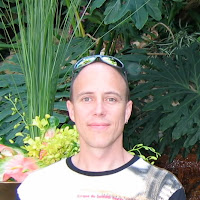
She attended Kimberley Girls High School and graduated with an MA in English from Rhodes University.

She taught at Rhodes University and then at various schools in South Africa. Currently, she lives and works in the UK.

The White Kudu (Picnic Publishing, 2010) is her first novel.

In this interview, Gisela Hoyle talks about her writing:

When did you start writing?

I have been writing since I was a child -- mostly poetry and mostly for occasions in the family or at school (I am a teacher).

I decided to get published about 18 months ago now -- because I had written my first complete novel, The White Kudu.

I took my manuscript to a Writers’ Clinic, where it was positively received, and I got some good advice on how to approach publishers; which I did.

How would you describe your writing?

Well I don’t think I’m a genre writer. I just write and let other people put it into categories.

The White Kudu has been described as both an Indiana Jones type of adventure story and a literary novel. I suppose this is because the plot follows this young geologist and his discoveries. These lead him to the local mythology -- which is what always seems to happen to Indiana Jones; and then the literary side, I suppose, has come from readers finding several layers of meaning in it, and perhaps the way it is written, I’m not sure. Also, because it is a story about stories and the role of narrative in defining identities, in the interaction between people and places.

Who is your target audience?

I don’t really write with a particular audience in mind -- I think ‘audiences’ are commercial categories for publishers, rather than real people. I’d like to think my writing would appeal to those -- of any age or gender or nationality.

What are the biggest challenges that you face?

Writing about South Africa’s past is a challenge. I want to do that compassionately and truthfully.

South Africa’s past (and present still) was fraught with conflict and violence -- brought on by deliberate injustice. There are so many stories and versions of stories and they each will have some element of truth, but they will each also be utterly subjective and almost inevitably biased.

When I was growing up there, everything you said, the most ordinary daily details -- like what you had for breakfast -- were politicised; placed you in a camp, somehow. It was extraordinarily tense and loaded. So, how can one speak about it clearly, fairly, objectively? I think this is what the Truth and Reconciliation Hearings were trying to address -- speaking about such a past is always a risk: it risks being unfair, it risks being misunderstood and yet if there is to be a future, it must be done and done in a spirit of reconciliation. It was abused, of course it was, but it was an astonishingly brave thing, too.

For me, writing about it now, from another country means risking rose-coloured spectacles and nostalgia on the one hand, and dramatisation on the other; both of which will skew the real, the human story. I have tried to focus on individuals within such a situation of strong group identification and the resulting violence -- what does it mean to live your life, and live it decently, in such a world?

In the writing you are doing, which authors influenced you most?

Probably mostly South African authors, such as Marguerite Poland, Andre Brink and Etienne van Heerden, who all share an interest I think in the mythology of South Africa and the relationship of various people (coloniser and native, missionary, shaman and farmer) to the land and the landscape.

How have your personal experiences influenced your writing?

Well, The White Kudu is set in the place where I grew up: a farm in the Northern Cape of South Africa. The place is a mission farm in an area, where land ownership was deeply contested -- and the questions of who the land belongs to, whether it can belong to anyone ; or whether it is not rather a question of people belonging to the land have always interested me. Also because of my own hybrid nationality. The time is the mid to late 90s -- so early post-Apartheid South Africa.

What are your main concerns as a writer?

I am interested in language: its role in defining our identities and how that works in multi-cultural or more specifically hybrid societies.

It is, I think, especially through stories that we achieve an understanding of ourselves and our societies. So The White Kudu is really a novel about stories -- their power over us, their beauty and their danger. But also their power to connect people and to help with understanding history.

You make reference to "hybrid nationality” and "hybrid societies". What do you mean by this?

I mean people and societies which are not defined by a single culture and that have been so for a time long enough to feel that they belong to both -- so, more than just multi-cultural.

I grew up in a German-speaking family with very close ties to Germany, as my parents worked for the Berlin Mission Society; but I also grew up in South Africa, went to South African schools, am ‘at home’ in South Africa. I belong to both. I think it is best expressed by a kind of ‘both and’; rather than ‘either/or’ approach to life -- it is always looking from two angles at once, and being OK with that.

Do you write every day?

I do try to write every day -- this is not always possible, especially during very busy times of term.

I get up early and write between 4 and 6 o’clock in the morning -- before school or anyone else in the family is even up. I love the quietness of that time.

I simply made a decision that a day in which I have not written is a day wasted and so I get up make a cup of tea and write.

At times I set myself a word target or just aim to get a certain scene or poem written. It ends because the rest of the day starts and I have to get to work.

How many books have you written so far?

The White Kudu is my first novel to be published.

It is the story of a young geologist, who is posted to a farm in the fairly remote rural area of the Northern Cape. He encounters there the legend of a white kudu as well as the story of his predecessor’s scandal. During his search for mineral wealth he uncovers an ancient skeleton, which adds another dimension the land claims battle raging in the area at the same time.

How did you choose a publisher for the book?

I chose Picnic Publishers because they stated very clearly that they were interested in the writing, the story or the poetry and not in the biography of the author. It is a small independent publisher, which is great as one stays far more involved in the entire process of publishing than I imagine one would with a bigger publisher.

Which were the most difficult aspects of the work that you put into the book?

There is quite a lot of anthropology in the novel -- that was an interesting challenge to work into the story. It was important for understanding the resolution, but it is not the sort of conversation people outside universities have much. So, I needed not to get too involved in that -- but it was very tempting, because it is so interesting.

What did you enjoy most?

I really enjoyed ‘reliving’ many of the stories of my childhood -- also doing the research on them and finding them to be a part of the authentic mythology of San people of South Africa. So the most difficult was also the most enjoyable, really.

What sets The White Kudu apart from other things you've written?

The strong mythological content makes it very different to many other books. The only other work I published is poetry, so as a novel it is very different. As a story it is also very closely linked to very specific places in the world -- poetry is not like that, or my poetry is not.

In what way is it similar?

The interest in language, in the power of naming things is present in all my work and the power language has to make connections: between people and the place in which they live, between people. The way shared language can create a sense of belonging -- but also the power of language to confuse and alienate.

Questions around who owns the land and who the land belongs to are contentious in many parts of Africa. Do you see a time when these questions will be resolved?

Yes, land ownership is very contentious, because it goes to the heart of the injustice of South Africa’s existence. When I was growing up, it was something constantly looming over our lives. The Nationalist government at the time did not trust the Berlin Mission at all and were constantly threatening to appropriate the land. So I grew up knowing that ‘home’ did not belong to us -- we were outsiders, from all sectors of South African society, but that did not prevent the feeling of belonging to the place. And I think that is perhaps a useful distinction: people belonging to the land and the land belonging to people.

People, for various reasons, have a right to live in a certain land: politically in South Africa the white farmers as a group had no right, because they had come by that land unjustly. But then, when you consider a farmer individually, who has worked the land, has got to know the land, has loved the land and taken care of it, perhaps even suffered for it -- what does that mean for ownership?

On the other hand, there are traditional claims to land ownership, there are blood-ties to land -- and the facts of stealing and war and conquest in history remain, too.

The farm I grew up on had been ‘given’ by the queen to the Mission Society as a refuge for those Black people, who had become Christian and were being persecuted by their people for it. So it occupies an interesting, ambiguous place in that history: it was both taken from the people but also being used for the people. The descendants of these communities still live there and the process of establishing their ownership of it is underway.

I have no answer to these problems but think that if history is so intractable, why can we not think about it practically -- what would be best for the land? I do not think that individual people owning an unworkably tiny piece of land as restitution for the past is a practical solution or is even fair in any real sense of the word.

The more I think about it, the more I find the concept of owning a piece of the earth strange. Perhaps we should only own time on the land, rather than the land itself?

What will your next book be about?

My next book is a coming of age story. It is also set in South Africa, but in the Knysna Forest in the Western Cape and further back in time -- still in the Apartheid era.

What would you say has been your most significant achievement as a writer?

I think it is very much too early to tell.

Possibly Related Books:

,,

Related Interview:
[Interview] Jason Blacker, author of "Black Dog Bleeding", Conversations with Writers, September 30, 2009

Wednesday, September 30, 2009

[Interview] Jason Blacker

South African author, Jason Blacker was born in Cape Town but grew up in Johannesburg. He moved to Vancouver, Canada when he was 18 years old and currently lives in Calgary.

He spent some time at art college before getting a degree in English Literature. He has worked, among other things, as a police officer, a privacy analyst, a school bus driver and a Starbucks Store Manager.

His first novel, Black Dog Bleeding (Lulu, 2008) explores South Africa's apartheid era and the personal cost paid by individuals who found the policy abhorrent and resisted it.

In this interview, Jason Blacker talks about his writing:

When did you start writing?

I started writing as soon as I could pick up a crayon. In the early days, kindergarten, I started off drawing and exploring colours before learning to write letters and and words.

I think, for me, writing was a natural evolution from drawing. I love drawing and took a couple of years at art college. But to write words that are transformed into images in the reader's mind is a great thrill. Especially if you get that poetic turn-of-phrase.

In grade 7 or 8 I wrote a poem about a man looking into a mirror and the poem was written as a mirror-image of itself. My teacher loved it, gave me an "A" and wrote some really generous comments. It was that experience that really turned on the light bulb for me. My A-ha moment where I thought: "Wow, people can really enjoy this thing I do with words just for fun." And that was the beginning of my journey to being a published and financially successful author. Prior to that, I had just messed around scribbling my own comics -- in the vein of spiderman and star wars. Huge fan of both. I'd do the drawings and writing and just dunk myself deeply into those imaginary worlds. Still today, there is nothing I like better than getting immersed in the story of my characters.

In university I took an undergrad in English Literature to explore some of my favourite authors. One class was on mystery fiction and we had the option of writing our own story. I did this and the professor loved it. She gave me another "A" and encouraged me to publish [the story]. It was at this time that I decided to write my first novel. Up to this point I had written poems and short stories.

My first novel, Black Dog Bleeding, was born during these days. It has been self published and is available at Lulu.com. It was important for me to write it. It deals with the life of someone like Stephen Biko who I greatly admire. Although fictitious, I needed to come to understand the sacrifice and courage of the heroes -- both men and women, black and white of the apartheid resistance. And I wanted to share that with the world.

How would you describe your writing?

My writing is informed by my poetic experience. And what I mean by that is that because I started out writing poetry in its various forms, poetry infuses my prose. I'm very interested in imagery and metaphors. And I love finding that phrase that captures an image in a poetic and original way. Some of my influences would be the poets -- Dylan Thomas, e. e. cummings, [Charles] Bukowski and Walt Whitman to name a few.

Some of the writer's I've enjoyed would be [John] Steinbeck, [Ernest] Hemmingway, [Chuck] Palahniuk and Dashiell Hammett. I think all of these folks have influenced my writing to degrees.

Who is your target audience?

This is an interesting question, as I have two answers to it. I started out writing literary fiction and wrote stories that I wanted to tell. I had no real audience in mind. These stories were character-driven. Based on characters that came to me and wrestled with me like a monkey on my back. I had to tell their tales without much thought to who would read them. But if I was pressed I'd say my stories focus on the theme of the triumph of the human spirit under duress. I write about the hopeful and optimistic potential of humanity. Although my stories are infused with suffering. I guess my audience would be those seeking more understanding of the human condition, and what it means to live this human existence.

On the other hand, I have started to write hard boiled detective novels too. My audience there is certainly for detective fiction fans. Especially those who are more interested in character than tricky story development.

You mentioned a number of authors who influenced you most. In what ways did they influence you?

The poets, as mentioned above, influenced me not only in their wonderfully fresh and innovative imagery but also in their understanding and compassionate take on life. I think, that is, the most influencing flavour is the writer's understanding and ability to relate, through his characters, the struggles of what it means to be human.

I love to be entertained too. And for me being entertained is enjoying the writing and the characters. The style the author has. These, too me are more important than tricky plots or clever red herrings.

With Hammett, he infused in me an abiding love of the hard boiled detective genre, escalating to the level of literary fiction, in my opinion. Also, I have yet to find many others who can write dialogue as forcefully and ironically as he does.

A couple of others I should mention are Nadine Gordimer, J. M. Coetzee and Alan Paton. All three being South African writers and their styles and empathy and my affinity for them as a fellow South African expat draw me into their works. A fourth South African writer deserves separate mention. K. Sello Duiker, a bright flame extinguished too soon showed great promise and is a sad loss to the global literary scene.

What are your main concerns as a writer?

My main concerns as a writer are what I would hope concern any caring and compassionate creative person. I am deeply concerned with the human condition. Especially the inequities and inequalities rampant even to this day within society. These affect me deeply and are what flavour most of my writing.

My goal in writing is one of uplifting the human spirit to greater heights, if that is possible, through writing -- which I hope and believe it is. I deal with my concerns through my artistic endeavours. Be they art, poetry or prose.

The concerns for my fellow man drive me in the pursuit of more generosity, more compassion and more equality as themes in my novels.

How have your personal experiences influenced your writing?

Well, as a first generation, white South African I have been affronted by the glaring disparities forced upon my countrymen. And both white South Africans as well as black South Africans were, I believe fractured by this disjoining. And to this day it creates difficulties that South Africa is confronted with and struggling to fix.

For me, even now living in Canada, I rage daily against these unacceptable disparities and they continue. I find solace in this sad state through the struggles my characters go through in their day-to-day lives.

Perhaps writers are mirrors to which society can see its faults and hopefully remove them.

What are the biggest challenges that you face?

On a professional level, the biggest challenges faced are trying to find publishers and agents. The road at times is long and the incline terribly steep. This is likely the biggest challenge to most emerging writers.

On the personal level, it is finding the time and energy to continually stay focused on a daily basis. Especially when there are multiple distractions and expectations attached to me. My family and employment income are challenges that continually need to be juggled in order to find the motivation and time to write.

Do you write everyday?

When I have a book on the go I do write every day except for weekends. But if I'm in the groove I'll write then too. I just sit down with my laptop to write and I review the previous day's writing and make very brief edits. I'm just looking for spelling and grammar mostly. Doing this review gets me into the character and it is easy to start up again.

Once I've done that I just start writing away on my laptop with the goal of 1,000 words. I use words rather than time as I occasionally will drift off. So some days it may take me an hour and others it might take two. I will write at least 1,000 words and I find I like to stop when I'm really into the story and things are going along smoothly. It is then easier the next day to pick up again if I've left off when I would have liked to continue on.

How many books have you written so far?

I have written three so far. The first Black Dog Bleeding is self-published through lulu.com. I published it in 2008.

As mentioned above, Black Dog Bleeding is a fictitious account of what I imagined the life of Stephen Biko might have been like. It follows my protagonist (Steven Bankulu), same initials on purpose, as he deals with immense personal loss but yet even in the midst of all of this finds a way to fight for the justice of all South Africans. Even though he ends up in jail on trumped up charges of treason. The novel is set in the 70's and 80's in South Africa.

Livid Blue is my second novel. It is not yet published though I continue to seek publishers and representations. It is a novel that follows two protagonists. The first is Janko who is dying from complications related to AIDS. The second is Michael, the psychiatrist who spends many sessions with Janko in order for him to come to terms with his difficult childhood in order to prepare for a peaceful death.

Janko carries a lot of anger and resentment having been abandoned by his mother and not knowing who his father is.

The novel explores different types of relationships and the validity of them. Why are blood relations seen as so strong when in fact they are often the weakest and most antagonistic? These are the kind of questions the novel deals with.

First Feature is a hard-boiled detective novel and has also not been published. Anthony Carrick is the main protagonist who is an ex-LAPD homicide detective now working on his own. He has been hired to find out who killed a high-powered Holllywood producer.

All is not as it seems in pristine Beverly Hills. And Anthony's employer (the production company) are eager to find out any skeletons before the mass media have a chance to feed on them. This novel follows Anthony through drug-adled Echo Park, a hippie vegetarian restaurant with the coroner and a fashionable gay bar all for the sake of solving a murder.

An interesting tidbit about this novel is that Anthony is named after my father and Carrick in Ireland where my ancestry is from.

What is your latest book about?

I'll talk about my fourth book, Red Reign, which I am in the process of writing. It will likely take me about a year for the first draft. Six months, if I could focus on it full time. And perhaps another six months to do all the edits where I feel it is well-dressed and presentable to the public. And the public in this case being agents and publishers.

I would likely choose a publisher based on a number of factors. Most often how well I get along with their representative I am dealing with. Oftentimes money will also be a factor as well as some of the other authors they publish too.

Which are the most difficult aspects of the work you put into your books?

The most difficult aspects of my books for me is the researching. I usually start a novel with a character and they will present their story to me and I head off under the bunker and start writing.

I research as I find it necessary to do so. But the major drawback of this is the break of continuity and rhythm that occurs when this happens. I deal with this by stubbornly sticking to only the research I need to do and ignoring any drifting or extraneous research that might catch my eye.

What do you enjoy most?

I enjoy really getting into the story of my characters. I enjoy the times when the writing flows and time stand still. It is at times like this when the character's really take on a life of their own and it is as if I am getting to know real people. When this happens it is magic. And I'm at the top of my game.

What sets Red Reign apart from other things you've written?

I'm getting better at writing all the time. My writing feels more fluid and the character more palpable.

What sets this book apart is also the fact that it takes place under more current political conditions. It deals with terrorism and corporate greed.

It [is similar to the others in that it] deals with the similar themes that infuse all my writing. That is human suffering and indifference and lack of compassion. But also the overcoming of these things to a spiritual salvation if you will.

After Red Reign, what will you work on next?

I will return to my hard boiled detective novel. It will be called Second Fiddle and will have intrigue, death, perhaps some romance and, of course, greed and fear.

What would you say has been your most significant achievement as a writer?

Just to be able to keep going under difficult circumstances. To keep it up after hundreds of rejections and many personal difficulties and changes in personal environments. To keep going at it while so many things rail against me. To not go gently into that good night as Dylan Thomas would say. And in the end... frankly, I'm just a stubborn bugger.

Possibly Related Books:

,,

Related Interview:
[Interview] Jennifer Armstrong, author of 'Minus the Morning', Conversations with Writers, September 27, 2009