Showing posts with label self-help. Show all posts

Friday, July 13, 2012

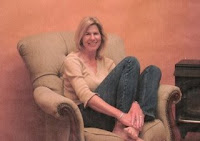
[Interview] Jennifer McBride

Jennifer McBride has written and published books that include Touching the Trees (2011); Cape of Leaves (2012); Basement Daisies (2012) and Child Less Parent (2012).

In this interview, she talks about her concerns as a writer:

When did you start writing?

I began writing a few years after I began to read. My first "produced" work was in 2nd grade. I was around seven or eight years old and I wrote a play that my teacher allowed me to make into a classroom production. At around the same time, I wrote a story that my uncle read aloud to a large family reunion. I was hooked after that.

What made you decide you wanted to be a published writer?

I resisted the urge to be published because I thought it was too difficult to achieve but once self-publishing became an option, I explored this avenue and found that I really enjoyed being involved in every aspect of the publishing process.

I majored in writing in college, but didn't do much with that for almost 15 years. Then I began taking writing classes at the Loft Literary Center in Minneapolis and knew I wanted to work at being a published author. More interesting, though, is that about six years ago I made a conscious decision to not write. I was trying to find a way to stay in a relationship and I knew writing was going to lead me to find myself... and lead me away from the sad comfort of that situation. So, I sat in a bar in Saint Paul, Minnesota, and announced "I will not be a writer."

In that funny way life has of changing one's mind, though, it wasn't three months later that the urge and desire and calling to write became overwhelming and I began taking classes again. I haven't stopped writing since.

Needless to say, I'm not in that relationship anymore.

How would you describe your writing?

It's funny you ask that. I'm kind of a Kelly Clarkson writer. I dabble in many genres... nonfiction, essay, blogging, poetry, and fiction... just like she's able to sing in many different ways: country, pop, soul, rock, etc. I am, however, primarily a non-fiction writer right now.

Who is your target audience?

My target audience has been slightly different for each book I've written.

Overall, my audience is women and men who have had to make significant changes in their lives, whether it's because of relationships, job transitions, illness, etc. I became motivated to write for this audience when I became divorced and in search of an identity other than "wife" and "carpooler."

In the writing you are doing, which authors influenced you most?

Mary Oliver and Billy Collins have influenced my poetry. I try to write accessible poems that express deep emotions. Mary Oliver's poetry sung to me and I heard Billy Collins speak in Minneapolis many years ago and I thought, "Wow. I really like his poetry. I should try writing some."

For my non-fiction, I'm inflenced by Elizabeth Gilbert and Anna Quindlen. Both women are frank, unashamed, and witty. I long to write like them!

For fiction, my "mentors" are Janet Evanovich and Jonathon Kellerman. I'm trying to find a balance between murder mystery, humor, and societal issues.

Have your own personal experiences influenced your writing in any way?

That's all they do! I write nonfiction "self-help" because I needed help and finally feel I can share what I've learned with others.

When I was getting divorced, I thought there had to be a better way to "do" the incredible changes that come from such a traumatic life experience. I didn't want my divorce to be in vain... I wanted to be a better, stronger, more alive person because of it.

One of my books is in reaction to finding out more about Parental Alienation Disorder and how un-noticed and un-handled it is in the family court system. One book was written as a series of affirmations for my father-in-law, who is/was going through cancer treatment. The book I'm working on now is all the things I wish I could tell my teenagers (if only they could hear me!).

In addition, I may be the most unknown writer to have a stalker, but because of that, I've had to make very conscious decisions to ignore the fear and threats and keep writing. Many times it would have been easier to power down the laptop (and I have shut down five different blogs because of this), but I can't let that person or uncertainty stop me. Not now. I do try to be a little more careful with what I write and have chosen an entirely different name for my fiction writing, but those are the only two concessions I'll make.

What are your main concerns as a writer?

My biggest concern is being able to make a living being a writer. I deal with this concern by producing quality work at a brisk pace. I network, seek out new venues, and make connections. Mostly, I believe that I'll reach my goal of self-sufficiency through writing and then I don't have to worry about it!

The biggest challenges I face are finding the right audience and convincing that audience that they want to read my work. I deal with this challenge by learning all I can about marketing, audience desires, and trends. I work on positioning my work, both in timing and content, to have the biggest impact on the market.

Do you write everyday?

I write about five days a week. Each session starts with poking around on the internet, checking email, Facebook, Twitter, etc. Once that's all done (or I'm irritated with myself for procrastinating), I pull up the piece I'm working on and re-read just a little before where I'm picking it up.

I learned during NANOWRIMO 2008 (National Novel Writing Month) that the best way to move forward in a piece is to keep going back to re-do what's already been written. And it's true. When I get busy editing the first part, I don't always get around to writing the next part.

My writing sessions end when I have to be somewhere, the kids come home, I'm exhausted, or I've reached a good stopping point. I've been known to write for five or six straight hours with almost no breaks. I always wonder where those days have gone!

How many books have you written so far?

I've written six books so far:
  • Child Less Parent: "Snapshots" of Parental Alienation: a primer, with photos, of what Parental Alienation is, how to prevent it, how to correct it, and (if all else fails) how to have hope that life will go on. Written with input from members of the Parental Alienation Awareness Organization. Published in April, 2012 by my company, CCS Communications.
  • Basement Daisies: a book of thirteen affirmations and accompanying photos for people who need hope. Originally published with the blessing of the Multiple Myeloma Research Foundation, Basement Daisies was a fundraiser to honor my father-in-law. Now it's available to all. Published in October, 2011 by CCS Communications.
  • Cape of Leaves: a compilations of poems about relationships and identity. I feel they are similar in style to Mary Oliver's work. Published in February, 2011 by CCS Communications.
  • Touching the Trees: a motivational memoir about finding identity through crisis. This book is a series of metaphors/stories that highlight all the changes one has to go through to find an authentic voice and life. Publishing in December 2010 by CCS Communications.
  • The Parents' Guide to Boys' Lacrosse: written under the name Jenni Lorsung, this book is a parent guide to understanding the sport of youth lacrosse. Published in January 2009 by CCS Communications.
  • The Parents' Guide to Girls' Lacrosse: written under the name Jenni Lorsung. This book is the companion guide to girls' youth lacrosse. Published in January 2009 by CCS Communications.
How would you describe the books you are working on at the moment?

My latest book is non-fiction and focuses on the ways I think "being" and "not being" are vital to a healthy life. For instance, in this case I'm "being" forthright in sharing my story with you!

I'm also concurrently working on a novel about a reporter who has great struggles in his relationship with his ex-wife and daughter while also chasing down a serial killer. I'm working on "not being" anxious about getting it done soon!

I'm still working on these two books.

Generally, how long does it take you to finish writing a book?

Child Less Parent and Basement Daisies each took about 4-6 months to write. My other books took over a year each.

For my longer non-fiction books, I allot about a year to do research, write, edit, and produce.

I self-publish all of my titles. I don't do this because I'm a control freak. Instead, I chose self-publishing so I could have tangible work product and potential income as soon as possible. I use CreateSpace as my production company because of their link to Amazon and (especially now that I've used them so much) their ease of developing a book. I also use Kindle as my exclusive e-book distributor. The disadvantage is that I have to do all the marketing myself, which is not my strength.

Which were the most difficult aspects of the work that went into the books you have published so far?

In Touching the Trees, I found it extremely difficult to be honest and vulnerable. I'd come from many years of silenced feelings and it felt very frightening to put all those feelings out in the world for anyone and everyone to see.

As I suspected, my family (current and ex) wasn't all crazy about some of what I wrote, but I believe that I have a right and an obligation to tell the story truthfully. Based on reactions to the book, it was the right decision to stare that fear down and write it anyway.

Which aspects of the work do you enjoy most?

I enjoy the beginning and the end of the book-writing process.

I love having the brainstorms and squirting out thousands of words a day getting a book started. At the end, once the editing is complete, I really like designing the interior and the cover and planning a marketing strategy.

The middle part... editing... is hard for me.

What sets Touching the Trees apart from other things you've written?

I try to bring a sense of hope and trust to all of my work. I don't want my audience put-off by proclamations, so I write to be disarming and compassionate.

Touching the Trees is the most autobiographical book I've written. The others, with the exception of Cape of Leaves, are more objective non-fiction. Touching the Trees gets to my core.

What are your plans for the future?

My next really big project will be about a place in Northern Minnesota that hosts very old inns and has great histories of dynamic, eccentric innkeepers. I see so much potential in this book and have begun interviewing people and visiting the inns.

What would you say has been your most significant achievement as a writer?

My most significant achievement as a writer is that I've been able to touch lives in ways I didn't know I could.

It's not the awards or the accolades that mean the most to me. It's the honestly... or hesitantly... written emails and comments that show me that my words have found a way to lodge themselves in someone else's soul and have made a positive difference. I always knew words had that effect on me... I just never realized I had the power to use my own to have an effect on others.

It's a privilege to be read.

Related books:

,,

Related articles:

Wednesday, July 20, 2011

[Interview] Deborah M. Plummer

Deborah M. Plummer is the author of books that include: Helping Children to Improve their Communication Skills (Jessica Kingsley Publishers, 2011); Helping Children to Cope with Change, Stress and Anxiety (Jessica Kingsley Publishers, 2010) and Anger Management Games for Children (Jessica Kingsley Publishers, 2008).

Formerly a clinical lead therapist working within the NHS, Deborah Plummer now lectures at De Montfort University, Leicester and runs workshops and short courses on the uses of imagery and issues of self-esteem.

In this interview, Deborah Plummer talks about her work:

What are the common causes of stress and anxiety in the children you work with?

For the last 15 years or so of my work within the NHS I specialised in working with adults and children who stammer. Although public awareness about the complex nature of communication difficulties is certainly improving, children who stammer still often experience a considerable amount of anxiety related to their speech, sometimes to the extent that communication becomes something to fear and avoid.

Many of the children I saw for therapy were also susceptible to other sources of stress. Teasing and bullying are perhaps the most publicised of the stresses faced by children with speech and language difficulties but there are other factors such as low self-esteem, coping with difficult family circumstances, coping with change, problems with friendships, hypersensitivity to exam stress, or a drive for perfection which can cause great frustration and anxiety.

Working with these children highlighted two important points for me - that stress is an inevitable part of every child's life, although the degree to which each child will experience stress will, of course, vary; and that children are remarkable in their capacity to adapt to stress and find their true potential if they are offered appropriate and timely support.

Can you describe one of the coping techniques featured in your new book?

The main emphasis in this and my other books is on fostering mindful interactions. We need to be very aware of the impact that our own ways of communicating can have on how a child views himself and on how he views the world.

So one technique is to help children to formulate their own solutions by pointing out the little successes, capitalising on their strengths, using solution-oriented language, praising appropriately and so on.

The other main orientation of my work is imagework.

What is imagework and how does it help with building self-esteem?

We tend to live our lives guided by the internal 'images' that we create about who we are and how the world works. The term 'imagework' was created by Dr Dina Glouberman, who leads imagework training courses internationally. It literally refers to 'working with images', although it is often image 'play' rather than 'work'! I think this concept of play is especially useful when we are helping children to utilise their imagination in a constructive way.

In relation to healthy self-esteem, let's say a child has a fear of 'being on show' and getting things wrong. If I asked this child to draw a picture that would show me what it's like to have such fears he might draw a time when he has experienced the fear or he might draw an animal or an object or just use colours to represent the fear. This is a fairly common strategy.

In imagework I would then help the child to explore the nature of the image in more depth. For example, I might encourage him to make up a story about the image and its 'opposite', and to explore how someone (or something) might move from one towards the other.

When a child comes up with an image that represents how he feels about a situation, he is tapping into something that goes way beyond logical thought processes. And when he realises that he can 'play' with these images and be creative in forming new images, then he can begin to take more control.

Imagework often triggers insights and shifts in perspective which may not come through logical thinking alone.

Children are naturally imaginative - it seems a waste not to use this capacity to support their emotional wellbeing.

What do you find most satisfying about the work you do?

I am currently devoting the majority of my time to lecturing and writing.

I am enjoying the opportunity of sharing concepts and strategies learned and developed over many years of working with adults and children in a therapeutic context.

I find it immensely satisfying to be able to engage students in exploring the psychological aspects of health and illness in a wider context (I teach students on health studies and public and community health degree courses as well as speech and language therapy students).

Frequent or prolonged periods of stress and anxiety can have far-reaching effects on physical health and emotional wellbeing. Practitioners working with children, young people and families therefore need to be skilled in assessing needs, addressing stresses and promoting resilience.

Occasionally I hear from social workers, teachers or parents who have used one of my books and they tell me about a breakthrough that they have had with a child - that is incredibly satisfying for me too - I love to hear how people are adapting the work for different needs and different settings.

You are currently working on a PhD proposal involving your titles what do you hope to find during your research?

The central theme of my books is that there is an identifiable set of criteria which will allow adults to maximise the potential for effectively supporting the emotional well-being of children. My thesis will be an exploration of these elements and will include an evaluation of how people are using the books in a variety of fields.

I am designing a questionnaire which will be available on my website. I am hoping that as many people as possible will take time to respond to this. Responses will be used to examine whether or not there is a specific or 'favoured' aspect of the approaches adopted in the books which practitioners find helpful, or if there is a certain combination of factors that appeals.

What are you currently reading in your spare time?

I am rediscovering books by James Hillman (e.g. Re-Visioning Psychology) - he has influenced my work for some time and I am thoroughly enjoying devoting time to re-reading some old favourites - his work with images and his love of language and metaphor are so incredible. I find new inspiration each time I read his work.

I am also reading Three Cups of Tea by Greg Mortenson and David Oliver Relin - an amazing book about the humanitarian vision of one man and his belief in the power of education to promote peace. Children are our hope for a more community-minded, peaceful future - we should be nurturing their imagination and emotional well-being in every way that we possibly can.

(c) Jessica Kingsley Publishers 2011


This article was first published in the Jessica Kingsley Publishers Social Work Newsletter in February 2010

Related Articles:

Thursday, October 22, 2009

[Interview: Part 2 of 2] Dave and Lillian Brummet

In the first part of this interview, Dave Brummet talked, among other things, about how most writers today are also having to play a bigger role in promoting and marketing the work that they are producing.

Lillian Brummet now gives her views on the work she and Dave are doing. Together they have written and published two "how-to" books, Purple Snowflake Marketing: How to make your book stand out in a crowd (2nd edition, BookLocker, 2009) and Trash Talk: Learn how you can impact the planet (PublishAmerica, 2004) as well as Towards Understanding (PublishAmerica, 2005) a collection of 120 poems on society, the environment and overcoming trauma.

They also host two online radio programmes, Conscious Discussions talk radio show and Authors Read radio program.

How would you describe your writing?

I began with the Trash Talk column because I really believe in the individual’s power to impact the health of the planet with really simple actions. The success of this column, and later the book that Dave and I wrote, was the fuel that got us going on the road we are traveling now.

For me, writing is about leading others by showing them just how easy it is to create a more peaceful, healthy world. Each of us has a legacy to leave behind and we already have the tools to do it, what we need is some inspiring, positive information that will urge us to get out of the rut of apathy and become more proactive in life. That is my passion, when it comes to writing. Our first two published books and most of our articles reflect this passion. The most recent book is a slight diversion from this focus in that we have provided a marketing plan development guide for fellow authors.

When you were thinking about Purple Snowflake Marketing, which authors would you say had the most influenced you?

Initially it was conversations on writer’s forums that got us thinking about releasing a book like Purple Snowflake Marketing. People were constantly asking us questions on how we were able to build the name recognition we have and how to go about each step of the marketing process.

As book reviewers and self-education enthusiasts we had ready access to writer’s resource materials, and from this we saw several areas that were really lacking in providing the key skills that help a writer develop a plan that suits their particular situation. We made note of any area we felt was lacking in other resource materials and made a great effort to create a well-rounded resource for writers, one they can use indefinitely to promote each piece they create.

We cover emotions, writer’s block and even how to handle the responses from the family and friends in our lives. Every writer we’ve ever met, either in person or Online, has been an influence in this regard.

What are your main concerns as a writer?

Time management is a real biggie for me. There is always so much to do. Someone wants a banner ad, another radio show needs a promo ad, there’s guests to book on the radio show and outlines for their interviews to create… writing the column for Poetic Monthly Magazine, and articles for newsletters or blogs… emails popping in every few minutes for an interview, or networking opportunity.

Keeping records of all of this and making sure that everyone has been followed up on, while finding new contacts, new opportunities to reach an audience that has not yet heard of our work -- this can eat up a lot of time.

Part of the struggle is keeping up with the new technologies, each of these takes a little time to become accustomed to.

New book releases are the most time-constraining for writers, we need to find patience through this busy time and know that there will be time for writing again soon enough. Besides being patient, keeping good records is essential to ensuring nothing is left behind along the way.

How many books have you written so far?

To date we have three books available to the public.

Trash Talk discusses the 4-R’s of waste management and the proper order for them. This being Refuse, Reduce, Reuse Then Recycle… before we even consider sending the item to the trash bin. Trash Talk focuses on the third R, Reuse – which also saves people a lot of money (through reduced shopping, reduced utility bills...) and provides a way to make a real and measurable contribution towards a healthier planet - enabling readers to feel more positive in life and leave a lasting legacy. Trash Talk is currently available in both paperback & hardcover formats.

Towards Understanding’s revised edition is a collection of 125 non-fiction poems written in chronological order. It is a true story of a young pre-teen female growing up on her own, struggling to survive, breaking the chains of inner demons and finally growing towards understanding of her value & purpose in life -- but not quite reaching it. Thus the title… Towards Understanding.

The original version of this book is still available in paperback & hardcover. This new revised edition offers 5 new poems, creating an ending the author is more comfortable with, and updated author information – and is available through booklocker.com.

Purple Snowflake Marketing: How to make your book stand out in a crowd, is a reference guide for self-marketing authors who want to be noticed in a snowstorm of writers. This book provides reassurance to authors along with ample advice for avoiding pit-falls and setting a pace for marketing endeavors.

Which were the most difficult aspects of the work you put into Purple Snowflake Marketing?

I turn to Dave (she laughs). It is true! You see -- the benefit of our working relationship is his skills take over where mine falter, my abilities rise where his are not so strong, his talents shine where mine are listless. When he is feeling tired, I take over -- and vise-versa. I don’t think there is one thing that our office produces that hasn’t had both of us working on it in some way -- whether or not both our names are in the by-line.

What sets the book apart from the other things you've written?

Purple Snowflake Marketing, although it is a self-help, how-to book -- it is quite different from the other products we’ve produced in the past. This is a book geared for a specific audience -- writers… rather then a general audience of individuals looking for inspiration.

What would you say has been your most significant achievement as a writer?

Getting published (she grins)! Winning all these amazing awards is pretty cool, all the acknowledgments from leading environmental and writer-education organizations continues to be a huge honor -- getting thanked by the Premier of BC for our environmental efforts was really amazing. But honestly when you strip all this away, the real addiction to this drug we call writing is the fact that it offers both Dave and I an avenue to leave a real legacy behind.

Now, let me clarify here that I don’t mean having our name in print and being ‘known’ or famous. When I say the word legacy I mean this -- answering questions like: Why we exist in this moment… What is the value of our life… How did this world benefit from our existence? These are the questions we hope to answer through our writing.

Possibly related books:

,,

Related resources:

Tuesday, June 2, 2009

[Interview] Carol Denbow

In 2006, Carol Denbow self-published her first book, Are You Ready to be Your Own Boss?

She followed this up with Stress Relief for the Working Stiff (Publish America, 2008), A Book Inside: How to Write, Publish, and Sell Your Story (Plain & Simple Books, LLC., 2008), How to Organize a Virtual Book Tour (eBook through Plain & Simple Books, LLC., 2008) and The Writer Within (Plain & Simple Books, LLC., 2008).

In this interview, Carol Denbow talks about her writing:

What are your main concerns as a writer?

The same as every other published author out there -- selling books. Secondly, is my writing good enough?

How I deal with these issues?

For one, I spend three or four hours everyday on the Internet marketing my books and sleepless nights trying to dream up new ways to do that successfully. As far as further developing my writing skills to perfection, I’m just doing the dreaming part of it. Mostly I read good work and try to pull the lessons from it as best I can.

My biggest challenge is one I face everyday -- to keep trying.

With near 300,000 new books released each year in the U.S. alone, there is some fierce competition out there. I think new authors are shocked at how difficult book selling is and how few books they sell -- me included. I try to remind myself daily that books really do sell just one-at-a-time.

Do you write everyday?

I do write everyday -- but not always books. I write articles, blog posts, and tons of emails to keep my titles up-to-date.

Some days, I will wake up with the burning desire to write a new book. When this happens, I take my muse and run with it! I once wrote a book in two days. Another time, when I wanted to try my hand at fiction, I drove up the coast to a beachside hotel and locked myself in silence for four days. During that time, I wrote about a third of an awesome crime novel with a twisted and suspenseful plot. Unfortunately, since then I haven’t had the “quiet time” I feel I need to finish the book -- pity.

How many books have you written so far?

To date, I have written five books and contributed to several other wonderful publications.

My first book, Are You Ready to be Your Own Boss? was released in 2006 through a publishing house I founded, Plain & Simple Books, LLC. I’m thrilled with the feedback I’ve received from this book. Many who have read it, have succeeded in creating very prosperous businesses they enjoy. Others have shied away from their business plans after reading the book; which was probably a good choice for them.

In 2008, Stress Relief for the Working Stiff was released by Publish America, followed by A Book Inside: How to Write, Publish, and Sell Your Story (Plain & Simple Books, LLC.), and How to Organize a Virtual Book Tour (eBook through Plain & Simple Books, LLC.).

My personal favorite and best seller is A Book Inside. That book has helped many a writer complete and publish their books -- that’s exciting for me!

With the help and contributions of several other very talented authors, I released The Writer Within through Plain & Simple Books, LLC. in late 2008. This short eBook is one full of inspirational articles and is offered free for the asking.

What would you say A Book Inside is about?

A Book Inside was out in September 2008. The title tells the content. This book is an accumulation of all I had learned and experienced during my book writing and publishing period of the previous four years. I didn’t submit the manuscript for this book to any traditional publishers. Not because of a fear of rejection, but because my experience with being traditionally published was negative in many ways.

I enjoy the “start to finish” of book publishing as well as the complete do-it-yourself process. In other words, I write, edit (hire out professionally), design and layout, print and sell my own books. It’s possible I am a control freak, but more likely I give myself the opportunity to present a polished and professional book of which I net more money per copy than a traditionally or Pod published author.

Which aspect of the work you put into the book was most difficult?

For non-fiction book writing, research is likely the most difficult aspect in preparation for publishing; that’s no different for me. My note pages for one book can be four inches thick. When you are writing a reference book, it’s extremely important to have your sources correct and organized, as they should be included in the contents of your finished book.

What did you enjoy most?

Even though I expressed, above, the difficulty of accurate research, I still find this part of my projects to be the most interesting and enjoyable; only second to the day I sold my first copy to someone other than a friend or family member.

I love to learn new things and research presents that opportunity.

What sets A Book Inside apart from other things you've written?

What can I say other than it’s quite possibly my best work. I get emails from writers who have ordered my book and they are so excited to finally be on the right track.

My first book was fulfilling in that I was privileged to meet new business owners who were fulfilling their dreams because of my book. But the number of responses from A Book Inside has been overwhelming and even more satisfying to me.

The satisfaction of knowing I’ve helped someone achieve their dream always gives me that warm and fuzzy feeling. I plan to reach for that same goal in my future releases.

What will your next book be about?

The competition for book sales is fierce. My next book is tentatively titled, 101 Ways to Market Your Book For Free (or really cheap). I have never spent a dime on book promotion yet my sales ranking is 200% better than the average author. There are numerous ways to promote for free; authors just need to know how to locate those free resources. I plan to show them in this new book. Respectfully, I’m guessing it will be released within the next two months.

How would you describe your writing?

I hope this doesn’t sound egotistical, but I like to help. I’m a volunteer for Hospice, I teach, train others, and enjoy communicating. All my books are categorized as self-help for the novice. Whether it be business start-up, dealing with the stress that follows, or writing one's own book -- my books are all references to the “best method” of fulfillment.

Writing isn’t something I planned or practiced like many other authors; it just happened one day. I was a self-employed single woman trying to make it in a primarily male dominated business. I struggled with this obvious obstacle as well as the complicated quest all self-employed persons attempt -- business success. Along the journey, I tried to think of how a small business owner could have a better chance to succeed; what would that take? I began to write and soon I was knee deep in my first-to-be book.

After nearly two years, my first writing project was complete. From there, the long and difficult publishing process began. Receiving at least five heart breaking rejection letters from traditional publishers, I made the decision to self-publish the book. Self-publishing requires a tremendous amount of research and planning -- just like the business did.

We all need a kick at some point to take the gamble and reach for our dreams. Had I not kicked myself in the fanny, I would never have accomplished what I have. Who is my target audience? -- the world! Those who dream of achievement, reaching the goal, leaving a legacy.

Which authors influenced you most?

I’d love to join the popular group and say [J. K.] Rowling or [Stephen] King, but I can’t. Influence is a mild word in relation to the inspiration I once (and still do) receive from a rather unknown author. When I was ready to quit, and that was pretty early in this career, it was a lady named Yvonne Perry who boosted my confidence and inspired me to push on. What began as most likely a “hit” to obtain my business (Yvonne is a writing coach, ghost writer, and editor), evolved into a life-long friendship and respect for her. No, she didn’t get my business, but she deserved to.

Have your personal experiences influenced your writing in any way?

Wow, I think I explained part of this in the first question. But influence is defiantly why we all start and complete our writing projects. If the inspiration runs out, we end up with numerous incomplete projects in our closets. My husband watched painfully as I learned the lessons of book publishing by trial and error. After my second book was traditional published, he said, “I really think you should consider sharing all you’ve learned through a new book on writing and publishing.”

Bingo!

My best book was born. I just love that guy -- he’s so smart!

What has been your most significant achievement as a writer?

We all have dreams, and the realistic dreamers like myself shoot for the lower placed stars in the sky. I love being a writer. But the greatest achievement to date is that in the process of book publishing, I have been blessed to have gained the respect and friendship of some very talented and wonderful authors to whom I am grateful. Maybe they are the stars higher up?

Possibly related books:

,,