Showing posts with label non-fiction. Show all posts

Friday, July 13, 2012

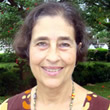
[Interview] Jennifer McBride

Jennifer McBride has written and published books that include Touching the Trees (2011); Cape of Leaves (2012); Basement Daisies (2012) and Child Less Parent (2012).

In this interview, she talks about her concerns as a writer:

When did you start writing?

I began writing a few years after I began to read. My first "produced" work was in 2nd grade. I was around seven or eight years old and I wrote a play that my teacher allowed me to make into a classroom production. At around the same time, I wrote a story that my uncle read aloud to a large family reunion. I was hooked after that.

What made you decide you wanted to be a published writer?

I resisted the urge to be published because I thought it was too difficult to achieve but once self-publishing became an option, I explored this avenue and found that I really enjoyed being involved in every aspect of the publishing process.

I majored in writing in college, but didn't do much with that for almost 15 years. Then I began taking writing classes at the Loft Literary Center in Minneapolis and knew I wanted to work at being a published author. More interesting, though, is that about six years ago I made a conscious decision to not write. I was trying to find a way to stay in a relationship and I knew writing was going to lead me to find myself... and lead me away from the sad comfort of that situation. So, I sat in a bar in Saint Paul, Minnesota, and announced "I will not be a writer."

In that funny way life has of changing one's mind, though, it wasn't three months later that the urge and desire and calling to write became overwhelming and I began taking classes again. I haven't stopped writing since.

Needless to say, I'm not in that relationship anymore.

How would you describe your writing?

It's funny you ask that. I'm kind of a Kelly Clarkson writer. I dabble in many genres... nonfiction, essay, blogging, poetry, and fiction... just like she's able to sing in many different ways: country, pop, soul, rock, etc. I am, however, primarily a non-fiction writer right now.

Who is your target audience?

My target audience has been slightly different for each book I've written.

Overall, my audience is women and men who have had to make significant changes in their lives, whether it's because of relationships, job transitions, illness, etc. I became motivated to write for this audience when I became divorced and in search of an identity other than "wife" and "carpooler."

In the writing you are doing, which authors influenced you most?

Mary Oliver and Billy Collins have influenced my poetry. I try to write accessible poems that express deep emotions. Mary Oliver's poetry sung to me and I heard Billy Collins speak in Minneapolis many years ago and I thought, "Wow. I really like his poetry. I should try writing some."

For my non-fiction, I'm inflenced by Elizabeth Gilbert and Anna Quindlen. Both women are frank, unashamed, and witty. I long to write like them!

For fiction, my "mentors" are Janet Evanovich and Jonathon Kellerman. I'm trying to find a balance between murder mystery, humor, and societal issues.

Have your own personal experiences influenced your writing in any way?

That's all they do! I write nonfiction "self-help" because I needed help and finally feel I can share what I've learned with others.

When I was getting divorced, I thought there had to be a better way to "do" the incredible changes that come from such a traumatic life experience. I didn't want my divorce to be in vain... I wanted to be a better, stronger, more alive person because of it.

One of my books is in reaction to finding out more about Parental Alienation Disorder and how un-noticed and un-handled it is in the family court system. One book was written as a series of affirmations for my father-in-law, who is/was going through cancer treatment. The book I'm working on now is all the things I wish I could tell my teenagers (if only they could hear me!).

In addition, I may be the most unknown writer to have a stalker, but because of that, I've had to make very conscious decisions to ignore the fear and threats and keep writing. Many times it would have been easier to power down the laptop (and I have shut down five different blogs because of this), but I can't let that person or uncertainty stop me. Not now. I do try to be a little more careful with what I write and have chosen an entirely different name for my fiction writing, but those are the only two concessions I'll make.

What are your main concerns as a writer?

My biggest concern is being able to make a living being a writer. I deal with this concern by producing quality work at a brisk pace. I network, seek out new venues, and make connections. Mostly, I believe that I'll reach my goal of self-sufficiency through writing and then I don't have to worry about it!

The biggest challenges I face are finding the right audience and convincing that audience that they want to read my work. I deal with this challenge by learning all I can about marketing, audience desires, and trends. I work on positioning my work, both in timing and content, to have the biggest impact on the market.

Do you write everyday?

I write about five days a week. Each session starts with poking around on the internet, checking email, Facebook, Twitter, etc. Once that's all done (or I'm irritated with myself for procrastinating), I pull up the piece I'm working on and re-read just a little before where I'm picking it up.

I learned during NANOWRIMO 2008 (National Novel Writing Month) that the best way to move forward in a piece is to keep going back to re-do what's already been written. And it's true. When I get busy editing the first part, I don't always get around to writing the next part.

My writing sessions end when I have to be somewhere, the kids come home, I'm exhausted, or I've reached a good stopping point. I've been known to write for five or six straight hours with almost no breaks. I always wonder where those days have gone!

How many books have you written so far?

I've written six books so far:
  • Child Less Parent: "Snapshots" of Parental Alienation: a primer, with photos, of what Parental Alienation is, how to prevent it, how to correct it, and (if all else fails) how to have hope that life will go on. Written with input from members of the Parental Alienation Awareness Organization. Published in April, 2012 by my company, CCS Communications.
  • Basement Daisies: a book of thirteen affirmations and accompanying photos for people who need hope. Originally published with the blessing of the Multiple Myeloma Research Foundation, Basement Daisies was a fundraiser to honor my father-in-law. Now it's available to all. Published in October, 2011 by CCS Communications.
  • Cape of Leaves: a compilations of poems about relationships and identity. I feel they are similar in style to Mary Oliver's work. Published in February, 2011 by CCS Communications.
  • Touching the Trees: a motivational memoir about finding identity through crisis. This book is a series of metaphors/stories that highlight all the changes one has to go through to find an authentic voice and life. Publishing in December 2010 by CCS Communications.
  • The Parents' Guide to Boys' Lacrosse: written under the name Jenni Lorsung, this book is a parent guide to understanding the sport of youth lacrosse. Published in January 2009 by CCS Communications.
  • The Parents' Guide to Girls' Lacrosse: written under the name Jenni Lorsung. This book is the companion guide to girls' youth lacrosse. Published in January 2009 by CCS Communications.
How would you describe the books you are working on at the moment?

My latest book is non-fiction and focuses on the ways I think "being" and "not being" are vital to a healthy life. For instance, in this case I'm "being" forthright in sharing my story with you!

I'm also concurrently working on a novel about a reporter who has great struggles in his relationship with his ex-wife and daughter while also chasing down a serial killer. I'm working on "not being" anxious about getting it done soon!

I'm still working on these two books.

Generally, how long does it take you to finish writing a book?

Child Less Parent and Basement Daisies each took about 4-6 months to write. My other books took over a year each.

For my longer non-fiction books, I allot about a year to do research, write, edit, and produce.

I self-publish all of my titles. I don't do this because I'm a control freak. Instead, I chose self-publishing so I could have tangible work product and potential income as soon as possible. I use CreateSpace as my production company because of their link to Amazon and (especially now that I've used them so much) their ease of developing a book. I also use Kindle as my exclusive e-book distributor. The disadvantage is that I have to do all the marketing myself, which is not my strength.

Which were the most difficult aspects of the work that went into the books you have published so far?

In Touching the Trees, I found it extremely difficult to be honest and vulnerable. I'd come from many years of silenced feelings and it felt very frightening to put all those feelings out in the world for anyone and everyone to see.

As I suspected, my family (current and ex) wasn't all crazy about some of what I wrote, but I believe that I have a right and an obligation to tell the story truthfully. Based on reactions to the book, it was the right decision to stare that fear down and write it anyway.

Which aspects of the work do you enjoy most?

I enjoy the beginning and the end of the book-writing process.

I love having the brainstorms and squirting out thousands of words a day getting a book started. At the end, once the editing is complete, I really like designing the interior and the cover and planning a marketing strategy.

The middle part... editing... is hard for me.

What sets Touching the Trees apart from other things you've written?

I try to bring a sense of hope and trust to all of my work. I don't want my audience put-off by proclamations, so I write to be disarming and compassionate.

Touching the Trees is the most autobiographical book I've written. The others, with the exception of Cape of Leaves, are more objective non-fiction. Touching the Trees gets to my core.

What are your plans for the future?

My next really big project will be about a place in Northern Minnesota that hosts very old inns and has great histories of dynamic, eccentric innkeepers. I see so much potential in this book and have begun interviewing people and visiting the inns.

What would you say has been your most significant achievement as a writer?

My most significant achievement as a writer is that I've been able to touch lives in ways I didn't know I could.

It's not the awards or the accolades that mean the most to me. It's the honestly... or hesitantly... written emails and comments that show me that my words have found a way to lodge themselves in someone else's soul and have made a positive difference. I always knew words had that effect on me... I just never realized I had the power to use my own to have an effect on others.

It's a privilege to be read.

Related books:

,,

Related articles:

Saturday, April 14, 2012

[Interview] Virginia W. Dike

Virginia W. Dike is Professor of Library and Information Science at the University of Nigeria where she specialises in school libraries, children's literature and library services.

She is also one of the founders of The Children's Centre, a comprehensive educational and recreational facility for children and young people that includes a model children's library.

In addition to that, she is a director with the Libraries for Literacy Foundation, a non-governmental organisation that works to extend library services to schools, communities and prisons and to generate local learning resources.

Her books include Library Resources in Education (Abic, 1993) and the children's non-fiction books, Birds of Our Land: A Child’s Guide to West African Birds (2nd ed. Abuja, Nigeria: Cassava Republic, 2011) and Why We Need Trees (Cassava Republic, Forthcoming).

In this interview, Virginia Dike talks about her writing and about the state of Nigerian children's literature:

When did you start writing?

I began writing during my teenage and college years, with journals containing my thoughts and experiences, a little poetry, and long letters to friends. This was writing just to express myself and communicate with others. Writing became especially important as a means of expression during the two years I spent in Tanzania after graduating from college. I was living in a small village where no one spoke English, only Swahili and KiBena - so I relied on letters home to articulate my experiences and keep my English, even.

Having said that, I now remember childhood beginnings - in second and third grade we wrote compositions, with a drawing, of an experience we’d had each week. It was pretty rudimentary (mine usually ending with “We had fun.”), but I took great pride in it. In the middle grades, I wrote an episodic chapter book about two girls’ primary school adventures and a musical play of medieval romance (perhaps inspired by Robin Hood and Ivanhoe movies), performed in my neighbourhood and on a visit to family friends. Those were my last forays into fiction.

In adulthood, most of my writing has been academic, as a lecturer in library and information science, until I started writing for children.

Looking at this background, I wonder if young people today have the same opportunities to develop writing craft. Education in Nigeria, as I’ve known it through my children’s experiences and my work with primary school pupils, often lacks these kinds of writing opportunities, both in creative and expository writing, as well as the copious voluntary reading on which writing skills are based. And looking at the world generally, others have as well commented on the decline in thoughtful journal and letter writing in an age of e-mail and text message communication, and the implications of this for writing craft, as well as for historical records.

I think we have much to do to encourage writing and the development of written communication skills.

How did decide you wanted to be a published writer?

I don’t remember deciding that I wanted to be a published writer. What happened was that I came to Nigeria and fell in love with the beautiful and fascinating birds I discovered here. I wanted a book that would allow me to share this excitement over West African birds with my children - and I couldn’t find such a book. This was about 1979, the International Year of the Child. Conversations with a friend, Miriam Ikejiani-Clark, about the possibility of our teaming up to write books on birds and trees for IYC led to contact with her cousin Arthur Nwankwo, the owner of a local publishing house. Fourth Dimension had just embarked on publication of a picture book series, and the first edition of my bird book, Birds of Our Land, eventually became part of this series.

It was a long process at that. I had to do considerable lobbying for the book, even though my friend Judith Osuala was their very knowledgeable and committed children’s editor at the beginning of the process. After Judith left to join the University of Nigeria, the publishers tried to veer it toward being more like a textbook and for a higher level. In response, I added a brief guide for parents and teachers, which turned out to be a good idea retained in the new edition. But due to their lack of conviction about a market, few copies were printed and the book almost immediately went out of print, without reaching the intended audience, this even though there were indications of high demand.

The other problem had to do with illustration. A picture book, and a guide to birds at that, absolutely depends on illustrations of the highest quality and appeal. I was left to find an illustrator. My observation was that most Nigerian artists are more inclined to abstract or impressionistic art, rather than the naturalistic style required for a book off this nature. I was fortunate to locate a budding landscape painter, Robin Gowen, a young American woman visiting her parents in Nsukka that year. She had grown up in Nigeria and loved birds, so it was a perfect match. However, the publishers did not see the role of the illustrator as we did, as an equal partner in creating a picture book, which is a holistic blend of text and illustration. In spite of all our protestations, Robin’s name did not appear on the title page, nor was she given copyright to the illustrations. I am happy to report that these problems did not re-occur with the new edition, also illustrated by Robin and published by Cassava Republic.

How would you describe the writing you are doing?

Nonfiction literature for children.

While I very much enjoy fiction for all levels, I have not felt inclined to write fiction or felt that I have a gift for it. I began writing for children as the result of the need I saw for a particular book, a guide to West African birds. Then in 1994 I participated in a workshop organized by the International Board on Books for Young People (IBBY), Nigerian Section to create nonfiction literature for children, which had been identified as a major need. For that I produced manuscripts on the uses of trees and the West African seasons.

More recently I have written on flowers. Natural history then seems to be my niche in writing, which is interesting since my background is history and social studies.

Long after I started writing, I began to read more about nonfiction literature for children as a genre - its importance as well as its under-valuation, the observations and insights of writers specializing in nonfiction literature - and so to place my writing in a larger context.

Who is your target audience?

Children from about 3 to 12 years.

My areas of specialization within library and information science are school librarianship and children’s literature and library services, so I am concerned with literature for this age-group in my teaching future librarians and teachers.

Most of my experience in sharing literature is also with this age group - first with my five children - then through the Children’s Centre Library I helped develop at the University of Nigeria and my work with local primary schools.

There is also a great need for Nigerian children’s literature at this level. It is ironic that the ages that need local literature most have the least. From the beginnings in the 1960s, the emphasis in Nigeria has been on fiction for pre-adolescents and secondarily for adolescents. There have only been a handful of picture books over the years. Yet these should be a child’s first books, since they build up an association between reading and pleasure, develop language skills essential for reading, and foster personal development in all areas.

Three major gaps in Nigerian children’s literature that impact particularly on younger children are locally based picture books, nonfiction literature, and books in Nigerian languages. I have tried to contribute to meeting the need in the first two areas by writing nonfiction picture books introducing the local natural environment.

As a writer, which authors influenced you most?

I read general literature before I came to writing for children. I believe the aspect that influenced me most in terms of my own writing style was the poetic prose found in some novels. Among those that made a deep impression were the opening of Charles Dickens Tale of Two Cities (“It was the best of times...”) and for African novels, the description of goldsmithing in Camara Laye’s African Childhood and the opening passage of Alan Paton’s Cry, the Beloved Country. Then there was poetry, including the descriptive poetry of the Bible, as found, for example, in the books of Job, Psalms and Isaiah.

More directly, in the course of sharing books with children, I came across many picture books that made such wonderful expressive use of language. One from my own childhood is The Littlest Angel, by Charles Tazewell, with such wonderful words as “precipitous,” “vociferously,” and “disreputable” - no controlled vocabulary there!

A few of the many examples I could mention, especially where the prose has a poetic quality, are Tomie de Paola’s The Legend of the Bluebonnet and The Clown of God; William Steig’s Sylvester and the Magic Pebble; James Riordan’s The Three Magic Gifts; and Gail. E. Haley’s A Story, a Story. There are so many others, including humorous stories in rollicking verse, like Horton Hatches an Egg by Dr. Seuss and The Duchess Bakes a Cake by Virginia Kahl. What I learned from these is that literature for children can be of the highest literary quality. It can help develop a sense of beauty in language, as the illustrations can also do in terms of art.

How have your own personal experiences influenced your writing?

I grew up attuned to nature wherever I found it, including my childhood home in urban Indianapolis. Then there were family vacation trips to my grandparents’ home in Texas, the Rocky Mountains and Southwest desert, the land-of-a-thousand-lakes in Maine. When I was 1l, my parents bought a vacation home in beautiful northern Michigan - an old one-room schoolhouse overlooking the lake; surrounded by pine woods, meadows and cherry orchards; a land filled with birds, trees and wild flowers. My parents were both enthusiastic birdwatchers and given to long walks down country roads, through the woods, along the lake.

Through my mother and secondary school English literature classes, I was also introduced to poetry, especially romantic poetry describing nature. Towards the end of secondary school, I became very interested in Eastern religions and wrote a term paper on the Chinese religion Taoism, which emphasizes wholeness with nature. I was also drawn to Judeo-Christian traditions that envisioned the inter-connectedness of the whole spiritual, natural and human world, for instance as found in St. Francis of Assisi. This fed into a growing awareness of environmental issues and the need for environmental conservation and biodiversity.

When I moved to Nigeria in 1975, I was immediately taken with the many beautiful and intriguing birds I found there (like the brilliant blue and orange kingfishers and wing-beating flappet lark). I began to keep a journal sketchbook of my observations and consulted guide books in the library to learn more about them. However, when I wanted to share these birds with my children, I discovered there was no children’s book on local birds.

I was also interested in learning more about Nigerian trees and flowers, tasks which proved even more daunting since even adult guides were missing. Again, in the Children’s Centre Library there were numerous books informing about the seasons of the temperate zone (winter, spring, summer and fall), but nothing about tropical rainy and dry seasons.

I also found that many children as well as adults lack an appreciation of nature and the need for a healthy environment.

All these helped lead to my choice of nature books for young children as the focus of my writing.

What would you say are your main concerns as a writer?

As a writer of nonfiction literature for young children, specifically books in the area of science, my concern is to find ways of opening the natural world up to children, of exciting and involving them in the world around us. This involves increasing their knowledge about birds or trees or the seasons but also interpreting their prior experience with these in the local environment. It also concerns heightening their powers of observation and analysis. Equally important, I want to encourage certain values and attitudes - appreciation of the value and beauty of the natural world, awareness of the importance of a healthy environment for human welfare, scientific thinking and a sense of inquiry as well as a sense of wonder.

To accomplish this I have to find an approach that will speak to children, an approach that will meet them at a point of their own experience and stimulate their imagination and curiosity to explore further. I also need to find the words and mode of expression that will communicate effectively to children at their own level.

What are the biggest challenges that you face?

The biggest challenges are two. One is getting and verifying the information I need in areas where there are few authoritative and accessible sources, even for adults. And these are in areas of science where I am not an expert but am learning as well. After all, I began this journey to answer my own questions.

I have tried to deal with this challenge by consulting experts in the field, for instance botanists; by broadening my search to materials on other tropical areas in Africa and the Caribbean; by consulting children’s books on these topics written in other countries; and by making informed use of the many sources now available on the Internet.

The second challenge is communicating what I have found in a way that will speak to young children. The concepts have to be expressed in simple and concrete terms that children can understand. This is a challenge often cited by well known writers of science books for children, like Millicent Selsam, since scientific ideas are often complex and abstract. Moreover, these must be expressed in simple language, simple in terms of both vocabulary and sentence structure. This can be a serious constraint. One must always strive to achieve a balance between saying things in the way that best describes or expresses a thought in literary or scientific terms and being understood by the children reading it. Having said that, I believe that reading good literature expands children’s powers of expression, both in terms of language expression generally and vocabulary, and that it’s better to err on the side of style than to produce writing that is ordinary and mundane.

Do you write every day?

Since my primary assignment is university teaching and administration, writing for children, while growing out of my area of specialization, is something I do on the side.

With the bird book, ideas often came on my morning walks - like the day I saw chattering weavers zooming back and forth carrying fronds from some palms to the tree where their nests were, and began playing with words and phrases to capture this sight for children. I can mull over passages in the course of daily life - walking; cooking lunch; driving on the highway; listening to music.

Since I’m writing nonfiction, once I get an idea the next step is usually research. In writing about birds, this was a combination of fieldwork (observing the birds directly and recording notes and sketches) and library research (checking the guide books and, in a few cases, the Internet).

In preparing to write about trees in the early 1990s, I discovered a wonderful series of old articles on economic uses of trees in Nigeria Magazine, like from colonial days. The problems were that many of the names given to the trees were no longer in use and information had to be updated, since uses of tree products have changed over time. I couldn’t find a satisfactory guide to Nigerian trees, but more recently I found a great source in the Internet, especially in getting details of some specific species. For flowers, I took a lot of photographs on morning walks, then consulted with a botanist friend to identify the flowers by name and pick up any interesting facts. I’ve also been to the Internet for specific species and consulted numerous American children’s books on flowers and plants.

Along with the research, I try to develop a focus, a central idea that will organize the content. This was relatively straightforward for Birds of Our Land, since it was organized as a guide to 25 West African birds, beginning with an introduction and ending with an activities section. However, several themes ran across the various entries - adaptation, classification, the interdependence of different forms of life, observation as a method for collecting information.

The book on trees posed a greater challenge in this regard. Information on individual species was less available and aside from economic trees, there were few common English names to easily identify them. I also felt that children, and most people, have a greater affinity for birds, which have so much in common with us (behaviour, social interaction, family life, movement), than for trees and other plants. For these reasons, I decided to focus on what connects trees to us - the uses of trees, both in terms of their role in the environment and products we get from trees. So the book is organized in terms of uses, the various environmental uses and the many types of tree products - artefacts, food, medicine, industrial products, etc. When this was getting a bit dry, I took my editors’ suggestion of including portraits of a few individual species as detailed examples. So the baobab is featured as an example of trees offering homes and food to animals, ebony as an example of numerous wood products, from chess pieces to piano keys, the shea nut tree as an example of foods, oils and medicines from trees.

Flowers presented even more of a problem than trees in terms of identification and human connections. I looked at a number of children’s books on plants, flowers and trees and found such a variety of approaches. Some were general guides to trees or wildflowers, for instance one in which children talked about their favourite tree. Some took up a particular group, like poisonous or medicinal plants. Others focused on a particular species; one I especially liked was on the banyan tree as the centre of an Indian village. Still others looked at the life of a tree, why we need trees, the role of flowers in plant reproduction, pollination, and the role colour plays in pollination. I decided to focus on colour as a way of introducing flowers to young children, with more detailed portraits of a few familiar or unique flowers. I also became interested in the socio-cultural role of flowers, as brought out so effectively in the book about the banyan tree. All this is preliminary to the actual writing.

How many books have you written so far?
  • Library Resources in Education (Enugu, Nigeria: Abic, 1993). A university-level textbook in three sections: the first discussing the relationship between modern education and school libraries; the second on various types of resources, nonfiction, literature, and audiovisual resources; and the third on the role of the library in promoting readings habits and skills, developing information skills, and expanding learning resources.
  • Birds of Our Land: A Child’s Guide to West African Birds (1st ed. Enugu, Nigeria: Fourth Dimension, 1986; 2nd ed. Abuja, Nigeria: Cassava Republic, 2011). An introduction to West African birds, including basic features of birds and hints for observation; portraits of 25 memorable birds; and bird watching activities. 
  • Why We Need Trees (Cassava Republic. Forthcoming). Focuses on the uses of trees, first in helping create a healthy environment and then in providing products of so many kinds, from furniture to musical instruments, from foods to art, from medicines to varnishes. Finally, a conclusion on how to save trees and activities involving trees.
Also books on flowers and seasons and perhaps more, all part of a nature series for children.

How did you find a publisher for your latest book?

My latest book, and also my first children’s book in a new edition, is Birds of Our Land: A Child’s Guide to West African Birds, published by Cassava Republic Press of Abuja in 2011, but just out. The name indicates the content: the new edition features 25 familiar or notable birds of West Africa. I wrote the original edition about 1980-1981, based on my observations of Nigerian birds carried out from about 1978.

The new edition developed out of my meeting with Bibi Bakare-Yusuf of Cassava Republic at a seminar organized by the Spanish Embassy in 2009. There was little additional editorial work: I added seven new birds and an activities section to the new edition, made more inquiries about names of birds in the three major Nigerian languages, and conferred with the illustrator in creating all new illustrations.

In this case, the publisher found me. Bibi was attracted to my book, which I used as an example during the seminar. It was just the kind of book she had been seeking for a new nature series of picture books that Cassava Republic wished to bring out. She immediately proposed they publish a new edition of my bird book.

What advantages or disadvantages did this present?

I already knew of Cassava Republic from their novels, which impressed me greatly both in terms of literary and production quality.

From everything said, it was apparent we shared a common philosophy about children’s books and a fruitful partnership was born. We agreed on the crying need for local nonfiction literature for Nigerian children. We likewise agreed on the importance of quality in every aspect of the work, including illustration and physical production, and on the need to acknowledge the crucial role of the illustrator in creating a picture book. I have also appreciated the very thorough editing of my proposed book on the uses of trees and the team of critics who helped to improve the work.

Any disadvantages have been due to Cassava Republic’s status as a new, small and yet to be fully established company. There have been delays in production - due to efforts to find sponsorship to support the work; due to locating a printer with the best balance of quality and cost and, as a result, relating to one in faraway India; and due to other unforeseen circumstances, like the January general strike over fuel price increases.

Marketing is also a major challenge for Nigerian publishers, especially those aiming at innovation and quality. But the need is so great, as are the possibilities: I feel Nigeria is where I can make a meaningful contribution.

What will your next book be about?

Three books in the nature series are at various stages - the one on uses of trees has been edited and is at the stage of layout and illustration, those on flowers and the seasons have been accepted.

Ideas for future books include small mammals and reptiles, insects, fish, foods... there is no end to possibilities.

What would you say has been your most significant achievement as a writer?

I think it is too early to talk of significant achievement. However, I believe I have created a beautiful book that can open the world of West African birds to children, and even adults. (Actually, many of the same or very similar species occur in East and Southern Africa as well.)

I believe that the three of us working in cooperation - I as writer, the illustrator and publisher - have created a model for a quality nonfiction picture book based on Nigerian environment. I hope this book will call attention to the need and value of nonfiction literature for children as a way of opening up the world of knowledge and discovering the pleasure and excitement to be found in the natural world. I hope it will help begin to fill this enormous gap in Nigerian children’s literature and lead to more high quality books in the future.

Photo credit: Nigerian School Library Association

Related books:

,,,

Related articles:

Saturday, September 18, 2010

[Interview] Nana Awere Damoah

Nana Awere Damoah is a Ghanaian Chevening alumnus who studied in Ghana and in the United Kingdom.

He keeps a blog of his articles at Excursions in my Mind.

So far, he has written and published two books, Through the Gates of Thought (Athena Press, 2010) and Excursions in my Mind (Athena Press, 2008).

His short stories have been featured in Ghanaian newspapers and magazines that include The Mirror and The Spectator as well as in the anthology, African Roar (Lion Press Ltd, 2010).

In this interview, Nana Awere Damoah talks about his writing:

When did you start writing?

My very first article, published in Through the Gates of Thought, was written in 1993 -- so I trace my writing life to that year. I was 18 years old then. But my appreciation of the literary form and my involvement in things literary actually started much earlier, in preparatory school, in the early 1980s when each class had to perform a play a day before the vacation day ... Small beginnings, appreciation of the arts, learning the rudiments of prose and poetry.

I remember being taught, in preparation for the Common Entrance in preparatory school, to answer the question: "Write a story ending with ‘…  and the boy learnt a lesson for life, that obedience is better than sacrifice" ... Small beginnings of creative writing.

Then in Form One, in 1986, I wrote what I consider my first creative work, in (you won’t believe this) my history class: “A Day in Carthage”. It was purely fictional, and I loved it!

In the sixth form, we wanted to form a Literary Club and that was what led me to write that first article published in Through the Gates of Thought.

My first break as a writer came in 1995 when I submitted a short story, ‘The Showdown’, to the popular weekly newspaper, The Mirror -- and it was published! Seeing my name in print, knowing that this newspaper was the best selling paper in Ghana and circulated all over the country, gave me immense confidence and encouragement.

My skills were further honed when I joined the Literary Wing of the Christian fellowship during University.

In my early days, and this hasn’t changed much, I wrote a lot during the day, in my study notebooks, on sheets of paper, whenever and wherever inspiration hit. I continued to submit stories to The Mirror, The Spectator (which published one story), magazines on the University campus and shared my writings with the Literary club and also posted them on notice boards in the Department and my hall of residence, Katanga Hall. Some of them were published, some were rejected!

I also did a lot of reading in the secondary school and University, to learn about various writing styles.

I started my writing journey with essays, but moved swiftly into short stories. In 1997, I entered and won a national competition for true short stories. I got into poetry in the University, during my undergraduate years, and used to recite my poems in church. I started writing these essays which form the material for both books, in Oct 2004 and circulated to my friends via email. When I was in the UK for my masters, I started updating them on my first blog, Excursions in My Mind.

After a while, friends who received my Empower series started encouraging me to publish a compilation for a wider audience. That was around 2005 whilst I was studying for my Masters in the UK.

I did a compilation and seriously started looking for options, whilst still writing the articles and sharing them online. On my way to Ghana, after a business meeting in Israel, I saw an advert in the Economist by my publisher and I decided to submit my manuscript.

That was in November 2007.

My first book was published in October 2008.

How would you describe your writing?

I write fiction, non-fiction, and poems.

I like to refer to my non-fiction as reflective, rather than motivational. The analogy in the differentiation is this: a motivational book may provoke you, positively, to start running, in whatever direction -- that is speed. A reflective book, which is more than (yet inclusive of) motivational, will cause you to run, in a direction, knowing where and why you are running -- that is velocity. Because it matters not how hard you row the boat if you are headed in the wrong direction.

Who is your target audience?

I write with young adults in mind, mostly.

I have, however, had middle-aged readers react very well to the books, because I believe the lessons adduced in the writings are universal -- across ages, cultures and social classes.

We practise oral tradition in most African cultures, where the thoughts, ideals and knowledge of the family, tribe or clan are transmitted from one generation to the other without a writing system. However, this system is flawed in the sense that a lot of African innovation, experience and culture have been lost.

I think of my descendants ... two, three or four generations from now; I think of my children ... 40, 50 years from now; I try to remember the stories my dad shared with me about his life’s experiences. Will my descendants know what I am going through today, what my wishes were for my generation and for them? Can the lessons I have picked up from the varied peregrinations in my life be crystallised for eternity, for the benefit of those yet unborn?

My attempt to answer these questions gave birth to my Empower series of articles, which form the materials for both Excursions in my Mind and Through the Gates of Thought.

In the writing you are doing, which authors influenced you most?

In terms of how I write in my Empower series which form the material for my two books -- Through the Gates of Thought and Excursions in my Mind -- Dale Carnegie has been a great influence on my style and the simple approach in my writing.

In terms of my works of fiction and drawing on my culture, Chinua Achebe has had a strong impact on me, and his book Things Fall Apart is an all-time favorite.

I look to the Bible (David, Solomon) for inspiration for my poetry.

I am, however, a voracious and indiscriminate reader and have been influenced by numerous writers of varied styles and genres. For instance, in my teenage years, I read a lot of fairy tales translated from Russian!

How have your personal experiences influenced your writing?

As indicated above, I draw lessons from my personal experiences, and also from what I read and hear.

I see myself as a distillation plant, that takes issues around me -- mundane, routine everyday occurrences -- as my raw material; then reflects on and processes them, producing various fractions, fit for use by my readers.

What are your main concerns as a writer?

In sharing thoughts through my writings, my earnest hope is that I may be able to change even one mind. If I can change one such mind, I would have contributed to the agenda of building our nation, our continent, our world.

Thus, in my books, I ensure the reader is not left hanging without an action point; each article provokes the reader to take an action, upon reflecting on the main points.

In my works of fiction, the main aim is to project African culture and folklore, which is where I am researching more and more these days. I am in love with our traditional sayings and proverbs and seek to incorporate them more in my stories. This is evident in my story, "Truth Floats", which appears in African Roar.

What are the biggest challenges that you face?

Being able to juggle my full time job with Unilever in Ghana (I am presently the Research and Development Technical Manager), my family and social responsibilities, and my passion for writing!

Seeing my writing as an extension of my Christian ministry, as the main vehicle and medium for me to impact my generation and beyond, helps to keep me focused. Because I see it as such, I invest and make time for writing, knowing and believing that through this talent, I can be significant. My wife has been quite supportive in this endeavor, giving me room to indulge in my literary passion and ministry.

Do you write everyday?

My principle is to write, think about my ideas or read daily. At least two hours a day. When I write, it is usually at dawn: when the world is asleep, my thoughts are clearer.

Usually I would have the idea in my mind, and would ruminate on it for some time. It took me three years to write one particular article; some articles take me a week from inception to finish.

I sit behind the PC and just write, once I have the flow in my mind. Then I do my edits, and do further research for quotes etc to enrich the scripts.

I never send out the first draft -- one rule of mine is to let the sun go down on my writing.

I write in chunks -- a chapter at a time. For my books, I circulate the articles, chapter by chapter first and get more inputs/feedback from my online readers and friends, to help enhance the final product.

How many books have you written so far?

I have two non-fiction books:

Through the Gates of Thought (Athena Press, April 2010) and Excursions in My Mind (Athena Press, October 2008).

I have also contributed to one anthology, African Roar (StoryTime, June 2010).

How did you chose a publisher for your latest book?

My latest book, Through the Gates of Thought, took about two years to complete.

It is an eclectic collection of stories, articles, poems, which touch various aspects of everyday life. I write about everyday events, common thoughts, normal issues -- but in a style that distills the key essence of life's lessons.

The stories will cause you to pause and think, think and reflect, reflect and take action -- an action for a positive change. Through these, I seek to affect my society, community, continent, world -- one mind at a time.

Through the Gates of Thought was published in April 2010, in the UK and USA. Athena Press published my first book and I stuck with them. I am happy so far with their professionalism, the thoroughness of the publishing process and the quality of the finished product.

Which were the most difficult aspects of the work you put into Through the Gates of Thought?

None, really.

Perhaps making the time to complete within my targeted schedule.

I enjoyed the interaction with readers online as I blogged the various chapters. And to hear the impact it had had on people.

Finally, the opportunity to mentor young readers who write to me to advise on their own writing, and other aspects of life -- it makes writing worthwhile and is in line with my vision to affect lives.

What sets  Through the Gates of Thought apart from other things you've written?

The interesting bit about my books is that each chapter is a standalone, unique in the lessons and thrust. So Through the Gates of Thought is as unique as the number of chapters it contains!

Personally, I see maturity in this second book as well. I keep reading the chapters again and again, as I go through similar situations.

In what way is it similar to the others?

The similarity comes with the simplicity of the topics intertwined with the power of déjà vu: stories that remind you of your own experiences, lessons of everyday life served with a different perspective, making you look at your experiences again -- resulting in new learning, all your own.

What will your next book be about?

I am already in chapter four of the next book. I am yet to find a title for it!

Its focus is more inspirational and aims to provoke the new generation of Africans, especially, to be the game-changing generation for our continent.

A long-intended project is to write a novel about the legendary spider in Ghanaian folklore.

I am also doing a compilation of my poems for publication soon -- we live to see which of these three books will out first!

What would you say has been your most significant achievement as a writer?

Can I give two?

First, winning the first prize in the Step Magazine National Story Writing Competition in 1997, which led to my story being published as part of an anthology.

Second, getting published, with my name on the cover of two books!

Related articles:

Thursday, November 5, 2009

[Interview: Part 1 of 2] Neil Marr

Publisher, author and former journalist, Neil Marr is the author of Bullycide: Death at Playtime (Success Unlimited, 2001), a groundbreaking book which exposed the epidemic of bully-related child suicides in the UK.

Bullycide received rave reviews around the world and sparked countless campaigns and Bullycide-dedicated websites, official studies, several follow up books and government and education authority action to combat school bullying in several countries.

In this interview, Neil Marr talks about his writing and the challenges he and his partners faced when they set up BeWrite.net, a publishing house that started off as a non-commercial writers’ website offering free professional editorial services and optional online showcasing.

How did the idea for Bullycide: Death at Playtime come about?

In the sixties, when I was a cub reporter of about seventeen or eighteen, I covered a huge police search for a missing child who lived just down the road from me. It was just after the horrific 1960s’ Moors Murders in England.

The search for Stephen Shepherd was the biggest UK police operation in UK history. When a child went missing, folks paled and talked of paedophile killings similar to those committed by Ian Brady and Myra Hindley. Turned out that the wee boy -- twelve year old Steve -- hadn’t been murdered at all: He’d taken his own life because he could no longer face school bullies.

The media then lost interest and dropped the story ... no juicy murder.

I never did lose interest. It haunted me for over thirty years. This was Bullycide (a catchy word I had to invent to snatch attention and to conveniently fit newspaper headlines – it’s now entered specialist vocabulary).

I was driven to do wee Steve justice; tell his tale and that of others in his predicament. More than thirty years later I kept the promise I’d secretly made at his funeral to tell the whole truth.

How long did it take you to write the book?

Writing a non fiction book is not a problem. It’s like a news story -- off the top. Second nature as a journo. The heavy work is in the research, making sure that your claims are fireproof and that your publisher will catch no flak. Like the investigative journalism I spent so many years with for major -- and attractively sueable (that a word?) newspapers and magazines -- it’s a matter of being able to back up every single line with signed shorthand notes and tapes.

Every single line of what you read in my book was self-edited by the bereaved families involved to be sure there wasn’t the slightest error or misunderstanding on my part. No shocks or heartache. They became part of the effort. They became friends.

The process took three years -- and I don’t begrudge a day of it. It’s a sensitive issue and had to be handled gently and with profound understanding.

How did you go about it? What was involved?

Gosh. That’s a big question. Like a reporter, I guess. Someone who listens, probes and seldom intrudes. I’d been an award-winning investigative journalist, on the street for thirty years. You might as well ask Al Pacino to teach you how to act King Lear over the phone. My work rested on decades of experience. I just did the job I was built for.

Where and when was Bullycide published?

2000. Small press in Oxford.

How did you choose a publisher for the book?

I didn’t. The publisher chose me. A big mainstream publisher bought the book and paid me an advance of a few thousand pounds on the idea alone. That financed some of my travel and research (I’m in France, the story was in Britain). He later disagreed with my figures and methodology, so I went elsewhere to a small press in Oxford and pulled in a ‘qualified’ co-author to back up my findings; the late Tim Field.

Of course, it later turned out that I had my ducks in a row and -- if anything -- my startling numbers were conservative.

How was the book received?

Amazingly (am attaching early reviews). More than I could have dreamed of.

But there’s more...

On the back of the book have been several other book publications, countless internet campaigns, moves by education authorities and central government in several countries, plays, movies ... the book’s done its job. I’m chuffed with that. That was the whole idea.

Have you written other books since?

Oh yes, but I’m keeping those to myself because they’re mainly ghosted (fiction and non-fiction for other people to keep body and soul together) but I have edited/co-written 120 novels over the past ten years. Some authors acknowledge my input, others don’t bother. Fair enough because I’m a back-room boy by nature and don’t ask for up-front credit.

What made you decide to leave journalism?

Newspapers and magazines that pay worth a darn no longer compete with TV; they compete with the TV Guide. I was bored to tears and also embarrassed to be prostituted. Also, heart and vascular problems kicked in and I could no longer flit around the world as I used to. Can’t even catch a bus. Funnily enough, though, the Sun in the UK (rotten paper but great payer and I still have old pals there) called me today for 500 words on an Italian football yarn that will pay me more in an hour or so than I’ve collected from BB this year!

How easy or difficult was the transition from being a foreign correspondent to being an entrepreneur, editor and publisher?

Hey, I’m no ‘entrepreneur’. I’m just at old hack who knows his job and loves his writers and their words. The transition hasn’t been too traumatic because I apply the same principles I always did... are these pages worth reading? Health hassles slowed me down, too, so I’ve learned to live with those. These days, I hardly miss my suitcase.

What were some of the challenges that you faced when you first set up BeWrite?

Money. We were broke. And we were dedicated to keeping things in the black and absolutely independent. We’ve never been short of the cash to pay our dues, admin costs, print fees and royalties, but have resisted all outside financial help. We’re always a couple of books ahead of the shoe-shine and two steps away from the county line. I doubt that any one of our stable of writers realises that we’ve all worked for the past eight years without a salary, mostly covering our own expenses. That everything’s for free. Why should they when they’re coming up with the most valuable commodity of all -- the raw material? We’ve only just started to break even so that one book helps finance the next release (if it sells OK). Before now. every penny of expenses has come from the shallow pockets of the partners, me and Sandy.

There are other wee hitches, of course, but we can live with those because our authors and the other folks we deal with -- printers, distributors, publicists and reviewers -- very soon become good, trusting friends. We play from a square bat and it seems to count.

What reception did BeWrite receive?

Bewrite.net (the non-commercial website) had 3,000 members. There was free professional editing and enormous feedback (I handled over four million words myself). Everyone was happy. But we had to move to stage two -- publishing -- because so many people deserved that.

We started with one or two co-authored collections by BeWrite Community writers as an experiment while we got to understand the technology, then we moved on. When it comes to selection, BB is as tough as old boots, you know, but we do read every line submitted.

We would take non-agented work from writers who knew they were only almost there and work with it to make it spot on there ... at no cost whatsoever and with some tremendous results. BB produces beautiful books.

Related resources:
Possibly related books:

,,

Sunday, September 27, 2009

[Interview] Jennifer Armstrong

Zimbabwean author, Jennifer Armstrong has worked as a martial arts journalist.

Her memoir, Minus the Morning (Lulu, 2009) explores what it was like to grow up in a white, Christian, Rhodesian family.

She is also the author of three e-books: Dambudzo Marechera (Lulu, 2009), which explores the link between Zimbabwean writer, Dambudzo Marechera, and shamanism; father, son, holy ghost (Lulu, 2009), which has been described as "a story of Oedipal knowledge and realisation, in Africa"; and, Skydive on Zimbabwe (Lulu, 2009), a poem in freeform verse. All three e-books are available to download free from Lulu.

Currently, Jennifer Armstrong lives in Perth, Australia.

In this interview, she talks about her writing:

When did you start writing?

The medium I had the most natural affinity for, at school, was art. When I begun to grow up, I had no idea what I wanted to be, so I gravitated towards the visual arts, only to find that I got much more of a thrill when explaining the concept of my art to others, as compared to actually making the art. That pointed me in the direction of philosophy and theory. It was my natural arena for questioning and developing ideas.

I began writing as an undergraduate in the humanities. Then I sprang into martial arts journalism.

I was still finding my feet as a writer and as a migrant from the Third World to the First World when my own, personal world came crashing down. I was bullied at work because of who I was, because of where I was from (Zimbabwe). That was when I first began to write as if I really meant it, as if something was at stake.

I wrote in order to figure out what was true and what wasn’t. To understand the world around me accurately was my greatest imperative. I wanted to know things accurately and not merely impressionistically, like before. So I began writing my memoir, but it was full of gaps that indicated that my knowledge of the world was still incomplete. I couldn’t make sufficient sense of my own narrative to write in a way that would have led to a swift completion of the memoir, because I had been brought up in a bubble of innocence -- innocent of politics and what that meant for me and the people around me (white and black), innocent of the ideologies and psychological torment that had been afflicting my father, I have very little conception of the world around me as a child growing up in Rhodesia (later Zimbabwe).

It seems that my culture had conspired to raise me as a Victorian child-woman, who would marry my rightful master, probably in all innocence about the biological intricacies of sex and gender roles.

Upon migration to the more sophisticated -- but more cynical and often mean-spirited First World -- I was totally at a loss as to what to make of almost everything around me. Nothing rang a bell. Everything was cold and life was seemingly driven by forces I couldn’t reckon with.

After enduring the workplace bullying incident (which had been driven by xenophobia, but also by a misplaced notion of political correctness -- that it was perfectly moral to bring a “white African” down a peg or two), I had to try to restore my physical health. It meant a lot of waiting around, and trying to build up the strength of my digestive system again. I had difficulty eating solids without my belly swelling up with air. (Even today, my digestive system has not fully recovered from that trauma.)

I had to wait twelve years for the bits and pieces of knowledge and the ability to conceptualise my experiences came together. The last pieces of the puzzle arrived in my consciousness late last year, and I was able to drop them into place.

After that, I was keen to publish the manuscript immediately, to get it out there, and out of my system.

How would you describe your writing?

I would say it is very difficult to describe the writing I am doing. It overlaps somewhat with my PhD interests, which is to study the psychology of one Dambudzo Marechera in the light of contemporary knowledge about shamanistic consciousness.

So, I am very interested in how people think, and why, and what enlightened thinking looks like.

What interests me a lot is to think about how we make unconscious assumptions about people, and act upon them. Where do these assumptions come from that are unconscious? They can be very racist or sexist assumptions, but somehow we often do not know we have them. So, I am thinking very much about identity, and how our views of our own or others’ identities do not seem to relate to rational processes very much, if at all.

Who is your target audience?

Ultimately, I've had so much negativity from some right wing trolls on the Internet -- (those who try to correct my thinking because it is not in tune with a narrow and obnoxious ideology of social conformity) -- that I decided to direct my writing to a non-populist level, to intellectuals and fellow artists.

In other words, I don’t want to direct my ideas to an audience who will only half swallow my thinking, to vomit up that which they have understood incompletely. I’m directing my writing towards intellectuals and academics of all sorts -- those who have a background of sufficient rigour to give my writing the consideration it deserves.

At the same time, I think there is a lot that can be readily ingested in my recently published memoir. There are some more difficult sections in it, but for the most part, anyone who has an appreciation for good literature should be able to read -- (and hopefully enjoy!!) -- my humble (but not-so-conformist) memoir.

Which authors influenced you most?

Of course Dambudzo Marechera would have to come to the top of my list.

I’m interested in other experimental writers like James Joyce. I really love philosophers like Friedrich Nietzsche and Georges Bataille.

There is a lot of quasi-Freudian influence in my memoir, but I do not love [Sigmund] Freud or his later adherents and interpreters as much because they are prone to produce theories that are only narrowly psychological, rather than more complex and taking into account other dimensions of life like social and cultural conditioning, history and politics.

There is a strong feeling of an affinity with ‘Nature’ as a powerful force of inspiration in my life. I am beholden to [William] Wordsworth and Percy Shelley.

How have your personal experiences influenced your writing?

As one whose identity was uprooted (after my family’s emigration from Zimbabwe in 1984), I have been exceedingly intrigued with the idea of identity, how identity is created, and how it can be undermined or destroyed at an emotional level.

I think identity is really a political formulation, but what is not so well known is that it can come under attack at any moment in a way that really is akin to the underhand way that spies and other ‘dark forces’ go about their business.

There are all sorts of indirect forms of coercion that work on our emotions at an unconscious level. Why are some identities considered more desirable than others? Why is it more difficult, in general, for someone who is female or who has black skin to get ahead in the world than for a white male to do so? What are the unconscious psychological forces that get us to treat these kinds of people differently, without necessarily even realising that we are doing it?

Dambudzo could not have a black, Rhodesian identity that had any self-determining qualities to it, since “black Rhodesian” and “self-determining” were contradictory qualities during the era of Ian Smith -- thus his anguish. Similarly, there are those who attribute rationality as being a quality pertaining to males, and not by any means to females. So there are members of my own family that are unable to consider me rational, despite the fact that I am doing a PhD and conduct myself with a level of bearing that is appropriate to my greater degree of knowledge and educational levels. In fact, my father is unable to recall what degree I’m doing, despite the fact that I have now been at if for several years. He wills himself not to know, because it contradicts his idea of womanhood that a female could be doing anything important.

What are your main concerns as a writer?

I’m concerned with understanding the real influences on human behaviour -- not what people claim to be influenced by, but what is really driving them to do what they do, and more importantly, what is also driving them not to do whatever it is they do not do.

I think there are broad as well as narrow political and historical currents that shape the characteristics of any people, in terms of their time and place in the global discourse. The degree to which we are not shaped by our conscious choices, but by the choices made for us by historical and social chance -- this largely goes unrecognised.

I think most people assume that we give ourselves our personal characteristics by the conscious, moral and political choices that we make. However, I couldn’t disagree with that notion more strenuously. I don’t think that’s the way it works at all!

My challenge as a writer is to try to convey that there are whole different mechanisms at work influencing our outlooks and behaviour, other than those that we would take to be rational. I take a look at the ‘pre-oedipal” or unconscious emotional dynamics that govern the way we relate politically to others in our social spheres. I use more than one authorial voice to get across this idea.

What are the biggest challenges that you face?

My biggest challenge is that I am not speaking to an audience that is a ready-made demographic. My writing has yet to seek out and discover an audience for itself.

I eschew identity politics, and writing for a ready-made demographic, because I have been so damaged by it.

I cannot speak precisely for the “ex-Rhodies”, many of whom might have been quite normal conservatives in the past, but have since turned to the extreme right, in my view. I could try to speak for black Zimbabweans perhaps… but I am white! Yet, much of my way of thinking was influenced by black Zimbabwean culture, as I have belatedly discovered. Perhaps those irreverent cultural aspects to my character were what brought on the workplace abuse? They are certainly not typically ‘feminine’!

I spent the first sixteen years of my life in Zimbabwe, and the last four years we were assimilated, blacks and whites, at my high school, Oriel Girls.

My thinking is also somewhat off-kilter in relation to that of Australian, middle-class whites. I don’t relate to their materialist middle-class aspirations at all. I don’t relate to their submissiveness and laissez-faire attitude to social ethics. They are not involved enough in their own lives, and seem to allow others to direct their views of what it right or wrong too much.

It is all very perplexing!

I try to deal with this situation I find myself in by writing in a way that can reach different people at different levels -- although, unlike the one who ended up carrying a donkey on his back, because he wanted to please all his critics, I’ve decided to draw a line (at least in my mind) against trying to please all.

Do you write everyday?

I write every day. It really depends on how much I’ve been reading, and whether I’ve allowed enough time for ideas (that I’ve been exposed to) to percolate in the subconscious mind. Suddenly, the subconscious ideas will be ready, and I will begin to experience a mood of general agitation, which doesn’t stop until I’ve written everything that was in me down.

It must be like the biological process of giving birth -- something I never hope to replicate in a concrete sense.

Sometimes I write huge amounts, sometimes only little. But I write every day.

How many books have you written so far?

Just one book so far, I’m afraid! It’s Minus the Morning, published by Lulu (Amazon is selling an earlier version, due to my mistake). It was released in early 2009. It’s kind of an “out of Africa” memoir, concerning the first three decades of my life.

Of course, it has to do with the issue of identity, from an experiential and philosophical point of view.

How did you choose a publisher for the book?

I decided to go the self-publishing route, via Lulu, just since, as I explained before, I don’t have a ready-made demographic of readers -- which might be necessary to lure a commercial publisher into accepting me.

Also, there are things I want to say which are not for everybody’s ears. I am critical of institutionalised abusiveness, for instance. This is not something everybody wants to hear, and it has the potential to make some people -- those who are prone to untoward behaviour and ideological sniping -- very uncomfortable.

Furthermore, I’m not trying to seduce my reader with my lyrical prose, like the excellent Alexandra Fuller. I’m not writing in a traditional feminine way at all -- I’m trying to speak directly to two parts of the readers’ minds: their own innate sense of what it means to belong or not to belong on an emotional level, and their intellect!

Lulu is a very efficient and exciting publisher, from my point of view. I can get any number of my books ready at hand, just by ordering them and paying for them on the basis of need. Of course, marketing is a problem when you have to do it by yourself, but I’m simply happy to make the book available online. It’s great technology that is available to writers at last -- in the 21st Century.

Which were the most difficult aspects of the work that you put into Minus the Morning?

The hardest part, for me, was writing about the hidden psychological dynamics that operate behind the dysfunctional relationship I have had (and probably still do) with my father. It was very hard because I didn’t know enough about his background, until much later, to be able to make sense of some of it.

There were a few family skeletons in the closet, which I have chosen not to reveal very much about, because my writing of this book has not been to cause people shame, but to elucidate my own responses to the situation of being brought up in a white, Rhodesian family, with a Christian ideology.

Which aspects of the work did you enjoy most?

I’ve enjoyed finishing it the most -- and seeing it in paperback. The whole thing took me more than a decade to write! It was a great relief to see it not as ether (something still in my mind) or as converted bits and bytes on a computer screen, but in a solid form -- in ink and paper!

Truly, it has been painful to finish in some ways, too. When I began writing it, I thought that if I made an exposé of some of the injustices in the world, that people would at least sit up and take notice. Nowadays, I thoroughly doubt that this is true or that it will happen.

Looking deeply into Dambudzo’s work, you can see that it is all about the injustice of having to accept an arbitrary social and political identity -- but people these days are still struggling to find that sort of meaning in his work. It is a difficult message to put across.

What sets Minus the Morning apart from other things you've written?

Merely that the other books do not exist as yet.

I do want to write a book that analyses the perversity of right wing consciousness, however.

I want to look into the psychology of bigotry and why bigots can be so efficacious at convincing others to get on their side and walk in lockstep with them. There is never a bully in this world except that he has those who take his side.

What would you say has been your most significant achievement as a writer?

Not resorting to compromising with the truth, or giving in to my impatience to get the work done. I waited and checked everything, until after more than twelve years, I knew that what I had was really psychologically accurate.

In Minus the Morning, I tell the truth about what it is like to grow up as a white Rhodesian (and later Zimbabwean) in a family that later turned to the right.

Possibly related books:

,,

Related Interview:

[Interview] Esther David, author of 'Shalom India Housing Society', Conversations with Writers, August 25, 2009

Tuesday, September 15, 2009

[Interview] J. R. Reardon

Novelist J. R. Reardon is a Boston native; Suffolk University Law School alum, and former partner of Saltzman & McNaught LLP.

She has practiced law in many areas including civil and criminal litigation. She is active in several legal associations in both Massachusetts and the District of Columbia and is admitted to practice in the federal and state courts of Massachusetts, the District of Columbia Court of Appeals, and the U.S. Supreme Court.

In addition, she has also taught insurance law and is published in the Suffolk University Law Review.

Her first novel, Confidential Communications (Xlibris, 2008) has been described as "...a compelling read that will keep you turning page after page, hoping that justice will prevail."

In this interview, J. R. Reardon talks about her writing:

When did you start writing? And, how did you decide you wanted to get published?

My mother encouraged my siblings and I to read early on, and we took regular trips to the library as children. I suppose that is one of the reasons why I have always had such an active imagination.

I began writing in grammar school -- a short story here, a short story there… and then when I was old enough to babysit I would tell stories to the children I was sitting at night.

My latest novel, Confidential Communications was written well over a decade ago. I was fresh out of law school, new to court appearances and had some down time. One night, the idea popped into my head and I found myself typing away feverishly at the computer. I printed out an 80-page draft for a very select group of people, had it copy-written, and then put it away in an old file cabinet. The story was well received, but life took over, my cases increased, and I became extremely busy.

In the fall of 2003, I married my husband David and moved from Massachusetts to Washington, D.C. In January, we learned that we were expecting our daughter. Instead of taking on a job in the District, Dave suggested that I sit back and enjoy my pregnancy. I had been a partner in my own law firm for quite some time and it was the perfect time to relax, sit back and smell the proverbial roses. During that time, Dave also suggested that I revisit the book (he was one of the few to have received a copy and he truly enjoyed it -- having seen first-hand for years what a critical eye he has with books he has read, I trusted his instincts).

After reading Confidential Communications for the first time in years, I decided “why not?” The original program was so old however, that I was unable to convert it to Word. So, I re-typed it and began the process of expanding it. With another decade of life under my belt, I was able to add some depth to the characters, as well as a few more scenarios. Some of the areas Dave and I had actually visited, and a few we thought would be fun to visit, so I did some research online and included those as well.

Once we were happy with the final version, off it went to print. New to the industry, I had circulated some query letters around, but stumbled upon Xlibris upon the recommendation of a college in Pennsylvania while I was writing my law review articles. At that point, I decided, “It’s done -- why wait?” The positive reviews on Amazon and Goodreads [make me] sure glad I didn’t, and am excited for the upcoming release of the sequel.

How would you describe your writing?

That is a great question. I have always lived life with an open mind, curious about everything that is going on around me. One of the best things and most difficult things I had to deal with when practicing law was my uncanny ability to put myself into other people’s shoes. Doing so, I could better understand other people’s perspectives. I could argue cases easier in court, settle cases easier out of court, and truly empathize with the feelings of others, no matter what side they were on.

I try to do the same with my writing. I put myself into the character’s shoes and try to see what they see, feel what they feel, hear what they hear, think what they think and react how they may react. That way, I can make the reader feel, see, and hear what they need to in order to fully enjoy the story.

Who is your target audience?

When I first wrote Confidential Communications, I honestly didn’t have a target audience. In fact, I still don’t “target an audience.” I write my story, release it into the world and let the audience find it.

I enjoy telling stories and sharing them with others. It is a means of escape -- whether it be to another state, another country, another setting, another life. In a crazy world if I can help someone to escape for at least a little while, I have done my job.

Which authors influenced you most?

I can’t really say that I have been influenced by other authors in my writing. I have enjoyed many an author’s writing in the course of my life, and now that I have more time to read, I am enjoying more and more. The books I choose to read depend on my mood.

If I want something that is for me, a quick, easy read… perhaps someone who has chapters I can breeze through at breakfast or lunch, I may pick up a Robert Parker book. If I want more detail but still escape to Boston, I may read something by Dennis Lehane. And if I’m cleaning out the old Tupperware tubs, I may pick up an old Beverly Gray mystery book that I had never read before just to see how people saw the world in the ‘50s. Lately I have read a lot of extremely talented indie authors.

I will say that my husband, my parents, teachers I had in grammar school, high school, college or law school, as well as judges and insurance adjusters -- were those who influenced my writing the most. I am forever thankful to them for that. Those people actually have read my writing and either commented, graded, or simply understood my position. They made me explain myself fully -- again, I put myself in their shoes so that they may understand what I am saying, even if it is as difficult as explaining someone else’s position -- i.e. my client.

Have your personal experiences influenced your writing in any way?

The story and the characters of Confidential Communications are all fictional, although I will admit that by the end, the character, Joshua, has a little of my husband David (who is also an attorney) in him. Also, Justice McNaught is based in part on my late grandfather who sat on the Federal District Court for the District of Massachusetts. He was the person who originally inspired me as a child to pursue a degree in law and took ethics extremely seriously. I figured, heck, why not “tip my hat” as a little thank you to him and make him a Justice of the United States Supreme Court?

The character Rebecca Lawson also is extremely ethical. As an attorney, I have always strived to be such an ethical person as my grandfather, and other members of the bar who I have met, that still do. There should be more. I hate the fact that I get such mixed reactions when people find out my profession, and hate more the number of legal insults that are out there due to the inappropriate actions of a select few. It is my hope that someday people will see the legal profession as it was made to be: a group of ethical leaders who we can look up to, to make a positive difference in our community.

What are your main concerns as a writer?

I think I have always been concerned with the quality of my writing: is there anything I missed in the editing process? Have the editors missed anything? Have I described something enough or too much? I don’t want to read anything boring or that is riddled with mistakes, and certainly wouldn’t want to subject anyone else to that either.

I am also sometimes concerned with people reading too much into my work. It is after all, a work of fiction. Many family/friends naturally thought that the character Rebecca Lawson was based on me, and my personal experiences. Not so, although I did fall under a firetruck in law school. There were also other characters who family and friends were convinced were based on people I hadn’t even thought of in years. Part of the fun in reading a book is picturing a character, and it has been extremely fun for me to hear how others see one of my characters, whether it be based on an actor/actress or someone I perhaps knew as a child.

What are the biggest challenges that you face?

There is not enough time in the day to do everything that I want to do.

Becoming a published author seemed to fall into place at the right time. I have met incredible people along the way and learned an incredible amount about the publishing process, marketing and promotion. Not long after Confidential Communications was published, I found myself typing away at the computer again with the sequel, and I’d love to share it with the world right now. But Confidential Communications hasn’t even been out a year yet and it has picked up so much steam that I’m doing a lot of promoting and answering fan mail from all over the world. Many fans are looking for the sequel already and I’m excited!

Do you write everyday?

I do write a little every day in addition to my daily emails, tweets, facebook, forums, blogs, etc.

Some days I write more than others.

Perhaps I only have time to jot a few notes on some stickies as I clean the house or take my daughter out somewhere, or it may be handwriting a 20-page chapter out on a legal pad during the course of a week to be typed into the computer later on a weekend.

My family always comes first. Writing is just a way to keep my mind fresh. But it is addictive. I am grateful that I type quickly.

How many books have you written so far?

I have written Confidential Communications, published by Xlibris in June of 2008, available through Xlibris, Amazon, Barnes and Noble, Borders and a number of other retailers. It is available in hardcover, softcover and now ebook versions.

The sequel to Confidential Communications is called Dishonored. It is expected to be released later this year.

While I was in the process of editing Confidential Communications, I was busy editing my first law review article with the Suffolk University Law Review. The title for that article is “Selecting Supreme Court Justices: Preserving the System, Protecting with Professionalism” and can be found in Volume 40, Book 4.

Which were the most difficult aspects of the work you put into Confidential Communications?

I think writing scenes which shock the reader are difficult, and there are a few in Confidential Communications. There were times that I worried my family and friends would over-analyze it, thinking they were true stories, or perhaps some reader would read it and not enjoy, but I just thought about all the other books out there with shocking twists and turns and just let it go.

It was also hard for me to take the original 80 pages of the book and re-type it, only to expand it and add things when I hadn’t done that type of project before. There is something to be said for finishing a piece of work. When you hit “save” and “print”, you want it to be perfect and done. After a while with the editing I had to take a break -- I was able to recite the first chapter and unable to find anything to change after a while. Taking breaks is highly recommended!

Then there was the difficulty of editing with my daughter at my side. She wanted my attention when I was working and I, of course, made time for her. There were many times I had to collect stickies at the end of the day where I’d jot down ideas or lines so that I wouldn’t forget to add them later.

What did you enjoy most?

I think I enjoyed shocking my husband when he took his first round of editing it once I took a break. He had read the original version and it was fun to have him tell me “I didn’t see that coming!”

I also love hearing the wonderful comments from my readers.

It was also fun seeing my daughter coloring at the table with me, pretending to “do her work” or “write a book like Mommy.”

Publishing a book was always on my “to do list”, although it is surreal to actually hold it and see people buying it… Here’s my philosophy in life: I don’t want to turn around at age 80 and say “I wish I had done that…” David and I want our daughter to live her life to the fullest in the same way. The world is a great place as long as you see it that way. If you hit any bumps in the road, maybe it’s a sign for you to slow down, open your eyes and your mind, and look at life in yet one more creative way.

What sets Confidential Communications apart from other things you've written

Well, writing a book is certainly different from filing a motion in court. A motion is based on facts and how the law applies to those facts, while this book is fiction.

My law review article also is based on law, public policy, civil procedure and legal history. Definitely a more serious type of work.

Are there any similarities?

Writing Confidential Communications, I was able to use a legal concept, and craft a realistic story around it, which ended up being scarily similar to stories on the news today. Like other legal thrillers, it involves ethical choices but I am told by many that it has a different perspective of the behind-the-scenes action that goes on in the legal world.

What will your next book be about?

As I stated above, my newest novel is called Dishonored, and is expected to be released later this year.

The synopsis is as follows: Federal Court Judge Rebecca Tameron seemed to have it all… a loving family, a prestigious career and the respect of her community -- that is, until her world falls apart.

Implicated in the disappearance of a Supreme Court Justice, and the shooting of a Federal agent, Tameron scrambles to uncover the truth. The problem is, each investigative avenue she pursues only leads to more questions, and every investigative avenue leads back to her. How can she clear her name?

While exploring the reaches, limits and dangers of our increasingly security-conscious and interconnected world, Dishonored questions the faith we place in both strangers and friends, and reminds us just how perilous our techno-savvy life can be.

What would you say has been your most significant achievement as a writer?

That is a tough question. Being published, being recognized, receiving fan mail and emails from all over the world, having the book sell well… the list goes on and on. And it hasn’t even been released a year yet.

I’ve received requests for signed copies and held book signings in the Mall. There is something new every day that I seem to be blessed with.

I will say that I loved seeing my daughter’s face when the first completed copy arrived at my house and she said “Mommy! That’s you on the back of that book!”

Related resources:

Author's website
Author's page, Xlibris

Possibly related books:

,,