Showing posts with label children's books. Show all posts

Saturday, April 14, 2012

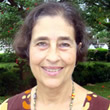
[Interview] Virginia W. Dike

Virginia W. Dike is Professor of Library and Information Science at the University of Nigeria where she specialises in school libraries, children's literature and library services.

She is also one of the founders of The Children's Centre, a comprehensive educational and recreational facility for children and young people that includes a model children's library.

In addition to that, she is a director with the Libraries for Literacy Foundation, a non-governmental organisation that works to extend library services to schools, communities and prisons and to generate local learning resources.

Her books include Library Resources in Education (Abic, 1993) and the children's non-fiction books, Birds of Our Land: A Child’s Guide to West African Birds (2nd ed. Abuja, Nigeria: Cassava Republic, 2011) and Why We Need Trees (Cassava Republic, Forthcoming).

In this interview, Virginia Dike talks about her writing and about the state of Nigerian children's literature:

When did you start writing?

I began writing during my teenage and college years, with journals containing my thoughts and experiences, a little poetry, and long letters to friends. This was writing just to express myself and communicate with others. Writing became especially important as a means of expression during the two years I spent in Tanzania after graduating from college. I was living in a small village where no one spoke English, only Swahili and KiBena - so I relied on letters home to articulate my experiences and keep my English, even.

Having said that, I now remember childhood beginnings - in second and third grade we wrote compositions, with a drawing, of an experience we’d had each week. It was pretty rudimentary (mine usually ending with “We had fun.”), but I took great pride in it. In the middle grades, I wrote an episodic chapter book about two girls’ primary school adventures and a musical play of medieval romance (perhaps inspired by Robin Hood and Ivanhoe movies), performed in my neighbourhood and on a visit to family friends. Those were my last forays into fiction.

In adulthood, most of my writing has been academic, as a lecturer in library and information science, until I started writing for children.

Looking at this background, I wonder if young people today have the same opportunities to develop writing craft. Education in Nigeria, as I’ve known it through my children’s experiences and my work with primary school pupils, often lacks these kinds of writing opportunities, both in creative and expository writing, as well as the copious voluntary reading on which writing skills are based. And looking at the world generally, others have as well commented on the decline in thoughtful journal and letter writing in an age of e-mail and text message communication, and the implications of this for writing craft, as well as for historical records.

I think we have much to do to encourage writing and the development of written communication skills.

How did decide you wanted to be a published writer?

I don’t remember deciding that I wanted to be a published writer. What happened was that I came to Nigeria and fell in love with the beautiful and fascinating birds I discovered here. I wanted a book that would allow me to share this excitement over West African birds with my children - and I couldn’t find such a book. This was about 1979, the International Year of the Child. Conversations with a friend, Miriam Ikejiani-Clark, about the possibility of our teaming up to write books on birds and trees for IYC led to contact with her cousin Arthur Nwankwo, the owner of a local publishing house. Fourth Dimension had just embarked on publication of a picture book series, and the first edition of my bird book, Birds of Our Land, eventually became part of this series.

It was a long process at that. I had to do considerable lobbying for the book, even though my friend Judith Osuala was their very knowledgeable and committed children’s editor at the beginning of the process. After Judith left to join the University of Nigeria, the publishers tried to veer it toward being more like a textbook and for a higher level. In response, I added a brief guide for parents and teachers, which turned out to be a good idea retained in the new edition. But due to their lack of conviction about a market, few copies were printed and the book almost immediately went out of print, without reaching the intended audience, this even though there were indications of high demand.

The other problem had to do with illustration. A picture book, and a guide to birds at that, absolutely depends on illustrations of the highest quality and appeal. I was left to find an illustrator. My observation was that most Nigerian artists are more inclined to abstract or impressionistic art, rather than the naturalistic style required for a book off this nature. I was fortunate to locate a budding landscape painter, Robin Gowen, a young American woman visiting her parents in Nsukka that year. She had grown up in Nigeria and loved birds, so it was a perfect match. However, the publishers did not see the role of the illustrator as we did, as an equal partner in creating a picture book, which is a holistic blend of text and illustration. In spite of all our protestations, Robin’s name did not appear on the title page, nor was she given copyright to the illustrations. I am happy to report that these problems did not re-occur with the new edition, also illustrated by Robin and published by Cassava Republic.

How would you describe the writing you are doing?

Nonfiction literature for children.

While I very much enjoy fiction for all levels, I have not felt inclined to write fiction or felt that I have a gift for it. I began writing for children as the result of the need I saw for a particular book, a guide to West African birds. Then in 1994 I participated in a workshop organized by the International Board on Books for Young People (IBBY), Nigerian Section to create nonfiction literature for children, which had been identified as a major need. For that I produced manuscripts on the uses of trees and the West African seasons.

More recently I have written on flowers. Natural history then seems to be my niche in writing, which is interesting since my background is history and social studies.

Long after I started writing, I began to read more about nonfiction literature for children as a genre - its importance as well as its under-valuation, the observations and insights of writers specializing in nonfiction literature - and so to place my writing in a larger context.

Who is your target audience?

Children from about 3 to 12 years.

My areas of specialization within library and information science are school librarianship and children’s literature and library services, so I am concerned with literature for this age-group in my teaching future librarians and teachers.

Most of my experience in sharing literature is also with this age group - first with my five children - then through the Children’s Centre Library I helped develop at the University of Nigeria and my work with local primary schools.

There is also a great need for Nigerian children’s literature at this level. It is ironic that the ages that need local literature most have the least. From the beginnings in the 1960s, the emphasis in Nigeria has been on fiction for pre-adolescents and secondarily for adolescents. There have only been a handful of picture books over the years. Yet these should be a child’s first books, since they build up an association between reading and pleasure, develop language skills essential for reading, and foster personal development in all areas.

Three major gaps in Nigerian children’s literature that impact particularly on younger children are locally based picture books, nonfiction literature, and books in Nigerian languages. I have tried to contribute to meeting the need in the first two areas by writing nonfiction picture books introducing the local natural environment.

As a writer, which authors influenced you most?

I read general literature before I came to writing for children. I believe the aspect that influenced me most in terms of my own writing style was the poetic prose found in some novels. Among those that made a deep impression were the opening of Charles Dickens Tale of Two Cities (“It was the best of times...”) and for African novels, the description of goldsmithing in Camara Laye’s African Childhood and the opening passage of Alan Paton’s Cry, the Beloved Country. Then there was poetry, including the descriptive poetry of the Bible, as found, for example, in the books of Job, Psalms and Isaiah.

More directly, in the course of sharing books with children, I came across many picture books that made such wonderful expressive use of language. One from my own childhood is The Littlest Angel, by Charles Tazewell, with such wonderful words as “precipitous,” “vociferously,” and “disreputable” - no controlled vocabulary there!

A few of the many examples I could mention, especially where the prose has a poetic quality, are Tomie de Paola’s The Legend of the Bluebonnet and The Clown of God; William Steig’s Sylvester and the Magic Pebble; James Riordan’s The Three Magic Gifts; and Gail. E. Haley’s A Story, a Story. There are so many others, including humorous stories in rollicking verse, like Horton Hatches an Egg by Dr. Seuss and The Duchess Bakes a Cake by Virginia Kahl. What I learned from these is that literature for children can be of the highest literary quality. It can help develop a sense of beauty in language, as the illustrations can also do in terms of art.

How have your own personal experiences influenced your writing?

I grew up attuned to nature wherever I found it, including my childhood home in urban Indianapolis. Then there were family vacation trips to my grandparents’ home in Texas, the Rocky Mountains and Southwest desert, the land-of-a-thousand-lakes in Maine. When I was 1l, my parents bought a vacation home in beautiful northern Michigan - an old one-room schoolhouse overlooking the lake; surrounded by pine woods, meadows and cherry orchards; a land filled with birds, trees and wild flowers. My parents were both enthusiastic birdwatchers and given to long walks down country roads, through the woods, along the lake.

Through my mother and secondary school English literature classes, I was also introduced to poetry, especially romantic poetry describing nature. Towards the end of secondary school, I became very interested in Eastern religions and wrote a term paper on the Chinese religion Taoism, which emphasizes wholeness with nature. I was also drawn to Judeo-Christian traditions that envisioned the inter-connectedness of the whole spiritual, natural and human world, for instance as found in St. Francis of Assisi. This fed into a growing awareness of environmental issues and the need for environmental conservation and biodiversity.

When I moved to Nigeria in 1975, I was immediately taken with the many beautiful and intriguing birds I found there (like the brilliant blue and orange kingfishers and wing-beating flappet lark). I began to keep a journal sketchbook of my observations and consulted guide books in the library to learn more about them. However, when I wanted to share these birds with my children, I discovered there was no children’s book on local birds.

I was also interested in learning more about Nigerian trees and flowers, tasks which proved even more daunting since even adult guides were missing. Again, in the Children’s Centre Library there were numerous books informing about the seasons of the temperate zone (winter, spring, summer and fall), but nothing about tropical rainy and dry seasons.

I also found that many children as well as adults lack an appreciation of nature and the need for a healthy environment.

All these helped lead to my choice of nature books for young children as the focus of my writing.

What would you say are your main concerns as a writer?

As a writer of nonfiction literature for young children, specifically books in the area of science, my concern is to find ways of opening the natural world up to children, of exciting and involving them in the world around us. This involves increasing their knowledge about birds or trees or the seasons but also interpreting their prior experience with these in the local environment. It also concerns heightening their powers of observation and analysis. Equally important, I want to encourage certain values and attitudes - appreciation of the value and beauty of the natural world, awareness of the importance of a healthy environment for human welfare, scientific thinking and a sense of inquiry as well as a sense of wonder.

To accomplish this I have to find an approach that will speak to children, an approach that will meet them at a point of their own experience and stimulate their imagination and curiosity to explore further. I also need to find the words and mode of expression that will communicate effectively to children at their own level.

What are the biggest challenges that you face?

The biggest challenges are two. One is getting and verifying the information I need in areas where there are few authoritative and accessible sources, even for adults. And these are in areas of science where I am not an expert but am learning as well. After all, I began this journey to answer my own questions.

I have tried to deal with this challenge by consulting experts in the field, for instance botanists; by broadening my search to materials on other tropical areas in Africa and the Caribbean; by consulting children’s books on these topics written in other countries; and by making informed use of the many sources now available on the Internet.

The second challenge is communicating what I have found in a way that will speak to young children. The concepts have to be expressed in simple and concrete terms that children can understand. This is a challenge often cited by well known writers of science books for children, like Millicent Selsam, since scientific ideas are often complex and abstract. Moreover, these must be expressed in simple language, simple in terms of both vocabulary and sentence structure. This can be a serious constraint. One must always strive to achieve a balance between saying things in the way that best describes or expresses a thought in literary or scientific terms and being understood by the children reading it. Having said that, I believe that reading good literature expands children’s powers of expression, both in terms of language expression generally and vocabulary, and that it’s better to err on the side of style than to produce writing that is ordinary and mundane.

Do you write every day?

Since my primary assignment is university teaching and administration, writing for children, while growing out of my area of specialization, is something I do on the side.

With the bird book, ideas often came on my morning walks - like the day I saw chattering weavers zooming back and forth carrying fronds from some palms to the tree where their nests were, and began playing with words and phrases to capture this sight for children. I can mull over passages in the course of daily life - walking; cooking lunch; driving on the highway; listening to music.

Since I’m writing nonfiction, once I get an idea the next step is usually research. In writing about birds, this was a combination of fieldwork (observing the birds directly and recording notes and sketches) and library research (checking the guide books and, in a few cases, the Internet).

In preparing to write about trees in the early 1990s, I discovered a wonderful series of old articles on economic uses of trees in Nigeria Magazine, like from colonial days. The problems were that many of the names given to the trees were no longer in use and information had to be updated, since uses of tree products have changed over time. I couldn’t find a satisfactory guide to Nigerian trees, but more recently I found a great source in the Internet, especially in getting details of some specific species. For flowers, I took a lot of photographs on morning walks, then consulted with a botanist friend to identify the flowers by name and pick up any interesting facts. I’ve also been to the Internet for specific species and consulted numerous American children’s books on flowers and plants.

Along with the research, I try to develop a focus, a central idea that will organize the content. This was relatively straightforward for Birds of Our Land, since it was organized as a guide to 25 West African birds, beginning with an introduction and ending with an activities section. However, several themes ran across the various entries - adaptation, classification, the interdependence of different forms of life, observation as a method for collecting information.

The book on trees posed a greater challenge in this regard. Information on individual species was less available and aside from economic trees, there were few common English names to easily identify them. I also felt that children, and most people, have a greater affinity for birds, which have so much in common with us (behaviour, social interaction, family life, movement), than for trees and other plants. For these reasons, I decided to focus on what connects trees to us - the uses of trees, both in terms of their role in the environment and products we get from trees. So the book is organized in terms of uses, the various environmental uses and the many types of tree products - artefacts, food, medicine, industrial products, etc. When this was getting a bit dry, I took my editors’ suggestion of including portraits of a few individual species as detailed examples. So the baobab is featured as an example of trees offering homes and food to animals, ebony as an example of numerous wood products, from chess pieces to piano keys, the shea nut tree as an example of foods, oils and medicines from trees.

Flowers presented even more of a problem than trees in terms of identification and human connections. I looked at a number of children’s books on plants, flowers and trees and found such a variety of approaches. Some were general guides to trees or wildflowers, for instance one in which children talked about their favourite tree. Some took up a particular group, like poisonous or medicinal plants. Others focused on a particular species; one I especially liked was on the banyan tree as the centre of an Indian village. Still others looked at the life of a tree, why we need trees, the role of flowers in plant reproduction, pollination, and the role colour plays in pollination. I decided to focus on colour as a way of introducing flowers to young children, with more detailed portraits of a few familiar or unique flowers. I also became interested in the socio-cultural role of flowers, as brought out so effectively in the book about the banyan tree. All this is preliminary to the actual writing.

How many books have you written so far?
  • Library Resources in Education (Enugu, Nigeria: Abic, 1993). A university-level textbook in three sections: the first discussing the relationship between modern education and school libraries; the second on various types of resources, nonfiction, literature, and audiovisual resources; and the third on the role of the library in promoting readings habits and skills, developing information skills, and expanding learning resources.
  • Birds of Our Land: A Child’s Guide to West African Birds (1st ed. Enugu, Nigeria: Fourth Dimension, 1986; 2nd ed. Abuja, Nigeria: Cassava Republic, 2011). An introduction to West African birds, including basic features of birds and hints for observation; portraits of 25 memorable birds; and bird watching activities. 
  • Why We Need Trees (Cassava Republic. Forthcoming). Focuses on the uses of trees, first in helping create a healthy environment and then in providing products of so many kinds, from furniture to musical instruments, from foods to art, from medicines to varnishes. Finally, a conclusion on how to save trees and activities involving trees.
Also books on flowers and seasons and perhaps more, all part of a nature series for children.

How did you find a publisher for your latest book?

My latest book, and also my first children’s book in a new edition, is Birds of Our Land: A Child’s Guide to West African Birds, published by Cassava Republic Press of Abuja in 2011, but just out. The name indicates the content: the new edition features 25 familiar or notable birds of West Africa. I wrote the original edition about 1980-1981, based on my observations of Nigerian birds carried out from about 1978.

The new edition developed out of my meeting with Bibi Bakare-Yusuf of Cassava Republic at a seminar organized by the Spanish Embassy in 2009. There was little additional editorial work: I added seven new birds and an activities section to the new edition, made more inquiries about names of birds in the three major Nigerian languages, and conferred with the illustrator in creating all new illustrations.

In this case, the publisher found me. Bibi was attracted to my book, which I used as an example during the seminar. It was just the kind of book she had been seeking for a new nature series of picture books that Cassava Republic wished to bring out. She immediately proposed they publish a new edition of my bird book.

What advantages or disadvantages did this present?

I already knew of Cassava Republic from their novels, which impressed me greatly both in terms of literary and production quality.

From everything said, it was apparent we shared a common philosophy about children’s books and a fruitful partnership was born. We agreed on the crying need for local nonfiction literature for Nigerian children. We likewise agreed on the importance of quality in every aspect of the work, including illustration and physical production, and on the need to acknowledge the crucial role of the illustrator in creating a picture book. I have also appreciated the very thorough editing of my proposed book on the uses of trees and the team of critics who helped to improve the work.

Any disadvantages have been due to Cassava Republic’s status as a new, small and yet to be fully established company. There have been delays in production - due to efforts to find sponsorship to support the work; due to locating a printer with the best balance of quality and cost and, as a result, relating to one in faraway India; and due to other unforeseen circumstances, like the January general strike over fuel price increases.

Marketing is also a major challenge for Nigerian publishers, especially those aiming at innovation and quality. But the need is so great, as are the possibilities: I feel Nigeria is where I can make a meaningful contribution.

What will your next book be about?

Three books in the nature series are at various stages - the one on uses of trees has been edited and is at the stage of layout and illustration, those on flowers and the seasons have been accepted.

Ideas for future books include small mammals and reptiles, insects, fish, foods... there is no end to possibilities.

What would you say has been your most significant achievement as a writer?

I think it is too early to talk of significant achievement. However, I believe I have created a beautiful book that can open the world of West African birds to children, and even adults. (Actually, many of the same or very similar species occur in East and Southern Africa as well.)

I believe that the three of us working in cooperation - I as writer, the illustrator and publisher - have created a model for a quality nonfiction picture book based on Nigerian environment. I hope this book will call attention to the need and value of nonfiction literature for children as a way of opening up the world of knowledge and discovering the pleasure and excitement to be found in the natural world. I hope it will help begin to fill this enormous gap in Nigerian children’s literature and lead to more high quality books in the future.

Photo credit: Nigerian School Library Association

Related books:

,,,

Related articles:

Wednesday, May 21, 2008

[Interview] Tony Robles

Tony Robles is a U.S. Navy submarine veteran, a retired federal agent and an author.

His debut children's book Joey Gonzalez, Great American challenges racism and prejudice.

In this interview, Tony Robles speaks about what motivated him to write the book.

When did you start writing?

I’ve been scribbling all my life but nothing serious or with such passion as I have in my children’s book, Joey Gonzalez, Great American.

What happened to me was one of those success stories you read or hear about once in a while. I had no plan to be a published writer or even to do any serious writing. Then I discovered World Ahead Publishing and their line of conservative children’s books. I realized I had a story inside me that could make a whopper of a conservative children’s book, on an issue so controversial that getting it published would be the longest of long shots. But here was a publishing house that I thought would have the courage and the vision to publish such a story. I wrote it in one draft with no revisions, submitted it and crossed my fingers. I went from having no idea I was going to write a story to being published -- in one easy step.

How would you describe your writing?

Joey Gonzalez is a sweet little children’s story with lovable characters that kids can identify with. It’s a story about ethnic pride, self reliance and courage, with a positive and affirmative message. But it is also a political commentary about one of the most controversial issues of our time: affirmative action.

It’s a story intended to provoke serious thought and hopefully encourage the notion of self-help, a conservative value and one that is quintessentially American. (I borrowed some of those words from Barack Obama, who described the notion of self-help as “quintessentially American -- and yes, conservative”).

Who is your target audience?

I wrote the story especially for American children who are descended from Spaniards and African Slaves (or both), but it’s a good story for any kid. For the black and Hispanic kids, it teaches that their ancestry is not a weakness but a source of strength, that there was greatness in their ancestors and that greatness has been passed on. It encourages reading, education and self reliance while discouraging dependence on special preferences.

For the rest of the kids it shows that black and Hispanic children are not different, that they have the same hopes and dreams and, most importantly, that they are not weak or inferior.

I have seen the affirmative action mentality take an ugly turn. It has become politically correct to be prejudiced against multitudes of people simply because of their ancestry. It is now perfectly acceptable to believe that all blacks and Hispanics are inferior and need special preferences in order to compete. That poison is being fed to our children.

I wrote the story to give kids a positive and truly affirmative alternative to that negative stereotyping.

Who would has influenced you most?

My late mother was the true inspiration for this story. She didn’t raise me to be a victim. She never let me believe that ancestry or poverty could hold me back as long as I had the will to succeed. I put her dream and her teachings into Joey Gonzalez, Great American.

My whole life has been preparation to write Joey Gonzalez, Great American. I was already a young man when the government decided that blacks and Hispanics were so inferior that they needed special preferences and quotas to compete.

No one had ever told me that my ancestry or my poverty would hold me back or make it hard for me to learn and compete. Yet, by today’s standards I was doomed to fail; all the cards were stacked against me: poor, Hispanic, segregated, drug and gang infested neighborhood, no father, and a segregated high school. And there was no affirmative action to help me along. Yet, I did fine.

I have lived the American dream just as my mother promised, through education and hard work. As little Joey Gonzalez does in the story, I reject the affirmative racism lie because I know better. My life has been the proof.

What are your main concerns as a writer?

Right now my main concern is getting the message out to as many kids as possible. That means selling a lot of books.

I’m dealing with this by doing everything I can personally to promote the book: reading/book signing events, seeking publicity wherever I can find it, and doing whatever the publisher asks me to do. I’m currently doing a lot of radio interviews on talk shows, etc, and, of course, I’m doing this virtual book tour which includes this stop at OhmyNews International.

What are the biggest challenges that you face?

I just picked a fight with one of the biggest, toughest bullies on the block.

I know my book may cause some hard feelings because there is a whole generation out there that has been convinced affirmative action preferences are good and necessary to level the playing field. My strategy will be to get the book out to as many people as possible and let Joey do the talking. He does a good job and has already changed a few minds and got some others at least thinking.

Do you write everyday?

I don’t write every day. I only write when I have something to say. I wrote Joey Gonzalez in one draft in one sitting. I think it took me about four hours.

Before I wrote the first word, I knew exactly what I wanted Joey to do and say. All I had to do was introduce the characters and set up the confrontation in the classroom. At that point Joey and his classmates came alive and the story told itself.

It took the artist, my good friend, Jimmy Pryor several months to paint the watercolor illustrations and the book was published in March 2008 by World Ahead Media in Torrance, CA.

I believe World Ahead Media was the only conservative book publisher with a line of children’s books. That was unique and I was intrigued and inspired by the idea of teaching conservative values through children’s literature.

Which aspects of the work you put into the book did you find most difficult?

Getting the artwork right was a challenge.

Jimmy Pryor, the illustrator made color pencil drawings as prototypes for a layout. The drawings looked so good that the publisher decided to use them instead of the watercolor paintings they had originally requested. But, after Jimmy had made a full set of illustrations, we found that the pencil colors weren’t intense enough. Jimmy had to retool and redo all the illustrations in watercolor. Jimmy has always used acrylics and oils. He had never painted with watercolor, so he had to work by trial and error. Understandably, that took a long time.

Then the publisher gave us a deadline.

Jimmy worked five days without sleep in order to finish the artwork on time.

Which aspects of the work did you enjoy most?

I enjoyed working with Jimmy Pryor. The book turned out to be a true collaboration.

When I first visited Jimmy to show him the manuscript, he had a large canvas hanging on his wall depicting Buffalo Soldiers coming two by two up a steep hillside. The landscape in the background looks endless and barren, making the column of soldiers seem small and lonely and exposed. Yet in their carriage there is a clear depiction of strength and confidence and military discipline. It is a beautiful and powerful painting.

I said I wished we could put something like that into the book. Jimmy said that, if I added some text about the Buffalo Soldiers, he would be happy to make an illustration to go with it. I added the text and, as promised, Jimmy painted a beautiful portrait.

Jimmy is a great guy, a talented artist and a true professional. We have developed a strong friendship and we hope to work together on future projects.

What sets the book apart from the other things you've written?

The only published piece I’ve ever had other than Joey Gonzalez is the essay published in the National Submarine Review, “The Last Voyage of the USS Sunfish”. What sets Joey Gonzalez apart from the Sunfish essay is, obviously, the magnitude of the project, a book versus a simple essay.

There are similarities.

The day I read the Sunfish essay for the first time at a crew reunion, there was hardly a dry eye in the house. Someone told me later that I wrote with courage. When I wrote Joey Gonzalez I realized courage is essential. And not only courage, but honesty and passion as well. I believe that’s what these two very different stories have in common: honesty, passion and courage.

How did the Sunfish essay come about?

I wrote a personal essay, “The Last Voyage of the USS Sunfish” which was published in the National Submarine Review (I believe in 1997). It is posted on the USS Sunfish website (there’s a link on my website, joeygonzalez.us). I rode along as a civilian on the submarine’s last voyage, from San Diego to Bremerton, Washington where she was scrapped. As I had been on the commissioning crew and sailed on her maiden voyage, it was a very emotional experience. The crew has adopted the essay and it has become a tradition for someone to read it at every reunion.

What will your next book be about?

I’m sure it will be another conservative children’s book.

Monday, October 1, 2007

[Interview] Sally H. Taylor

Sally H. Taylor made her debut as a children's author and illustrator with the publication of The Magic in You (Outskirts Press, 2007), a 40-page book which aims to teach children and adults, alike, that we need to forgive and love ourselves if we are to live healthy, fulfilled lives.In a recent interview, she spoke about her writing.

What are your main concerns as a writer?

I have developed a lot of ideas for children’s stories over the years. They are still in my head. With the pressures of a full time job and such, it’s hard to find the quiet time to craft a story that comes together well. However, I am working on that one.

When did you decide you wanted to be a writer?

After a hard road of recovering from an abusive marriage, I found that my writing and my art work was not only an aid to my healing process, but a way of reaching past myself and offering hope to other wounded hearts.

An abusive relationship can damage your soul so severely that you begin to second guess everything you do. You can’t bear to make a mistake, because it is a painful reminder of what you really think about yourself, a big mistake. There was so much negativity in my life I actually believed that I deserved the abuse. I think I always knew what I needed to do, but wasn’t strong enough to do it. Through the care and kindness of others I found value and purpose again. My experiences have taught me that a heart of chivalry is created by learning from your mistakes, instead of wallowing in them. That’s the message!

At present most of my writing is geared to preschoolers, which offers a means of incorporating my illustrating talents. The agent who was marketing my pen & ink and watercolors, always told me that I had a knack for integrating rhythm and movement into my work and suggested I try to illustrate and write children’s books.

What would you say are the biggest challenges that you face?

If we don’t guard ourselves against negativity it can find a way to get the best of us. The biggest challenge in writing for me is just keeping focused through all of the smaller ones. The biggest challenge in my life is still accepting myself just as I am, with all of my flaws and failures.

How do you deal with these challenges?

Keeping focused on my writing is just reminding myself that we all have a story worth telling. Dealing with my failures comes in knowing that I have a Creator who loves me in spite of myself!

Who would you say has influenced you the most?

As a child I spent many summers with my Aunt who always encouraged my creativity. She was an extremely gifted and talented person.

Do you write every day?

I wish I had the time to write every day, but I don’t. Most of the time I have to schedule my writing time on my calendar along with so many other things that I either want to or need to accomplish.

I have written several [books], but The Magic in You (Outskirts Press, 2007) is my first published book. The book is about a little flower who gets pushed from her comfort zone. Although her circumstances are less than ideal, she learns that she has the power to influence other living creatures around her through kindness, love and, most of all, forgiveness.

How long did it take you to write this book?

I actually started it over 15 years ago and got frustrated because I could not find a publisher. Last year I took it out of the basement and started to read it again, and thought, "Boy ,this story seems kind of shallow.” I think that was because 15 years ago I was probably that shallow. Because I’ve grown since then I was able to make some changes to the illustrations and the story line.

How did you choose a publisher for The Magic in You?

Looking for a publisher can be a gruesome experience and I have learned that just because you are rejected doesn’t mean your book is not good. It just means that your work does not fit into the theme that particular publishers are marketing. So I tried several self publishing companies and decided to go with Outskirts Press. They were very helpful and flexible enough to help me publish my book the way I wanted it to look.

The first book was a learning process. I decided to prepare the print ready file myself because I did not want to send out my original illustrations. Outskirts Press was very helpful and gave us step by step instructions to create the file. My husband (that’s my second husband of whom I’ve been married to for 18 years) was a tremendous help as well. I am not really a technical person, so he created the PDF file for me.

Mostly, I enjoyed creating the illustrations. If you were around you would have heard my snickers as I was creating the scenes. Some of them are quite comical.

What sets The Magic in You apart from the other things you have written?

In many ways the book is my biography. The healing process of this damaged little flower is not just her story, but it’s my story too.

In what way is it similar?

I have tried to set a theme of a heart of chivalry to my writing, and I think this fits right in.

What will you next book be about?

I am working on my next book now. The name of the book is The Most Valuable Treasure. It is about a small village of people who go out of their way to care for each other. They also go out of their way to avoid one rickety old house on the outskirts of the village. Rumors of witches and goblins have kept the villagers at a distance for years. As the story unfolds, however, the villagers learn that things are not always as they appear, and perhaps they could have been a little more gracious than they thought themselves to be.

What do you think is your most significant achievement as a writer?

When I see adults break down in tears as they read The Magic in You, I know my message of forgiveness and grace has touched their hearts. That’s the real achievement!

How did you get there?

A lifetime of learning to love myself.

This article was first published by OhmyNews International.

Monday, July 30, 2007

[Interview] Jenny Alexander

Jenny AlexanderJenny Alexander has written over a hundred books for children, among them, Finding Fizz (A & C Black, 2006); Tom, Sid, the Goth and the Ghost (Longman, 2004); and Stranded! (Longman, 2003).

Her non-fiction books include When Your Child is Bullied (Pocket Books, 2006); Bullies, Bigmouths and So-called Friends (Hodder Children's Books, 2003) as well as The 7-day Stress-buster; The 7-day Brain-booster; The 7-day Bully-buster and The 7-day Self-esteem Super-booster (Hodder Children's Books, 2007) which seek to empower children and their families in dealing with issues concerning bullying, self-esteem and self-confidence.

She is also the author of How 2 B Happy (A & C Black, 2006); How to Be a Brilliant Writer (A & C Black, 2005) and Going Up! The No-worries Guide to Secondary School (A & C Black, 2004).

In a recent interview, Jenny Alexander spoke about her writing.

What prompted you to write your first book?

I decided I was going to be a poet when I was about 7 years old -- well, either a poet or an artist. Writing and drawing were my favourite pastimes, a quiet oasis in a very noisy, busy, family -- I was the middle one of four children.

In my teens I stopped writing poetry because learning literature at school convinced me that I didn’t really understand it. Poetry had felt like a natural thing, like talking, but we dissected poems like dead bodies, trying to force them to yield up their secrets, instead of enjoying their music and sensing the shades of meaning in the words.

I wrote a number of adult novels in my late teens and twenties but didn’t really try to find a publisher. Writing at that stage was a way of trying to make sense of my own experience and publishing the stories I was writing then would have felt exposing for both me and my family. I find the current popularity of ‘misery memoirs’ very unsettling and I’m really glad I didn’t freeze my own family within the story I had of them when I was in my turbulent twenties.

What prompted me to write for publication was that I needed a proper job after my last child started full-time school. I sent a lot of material to an agent, including an adult crime novel and several pieces of children’s fiction.

When was this material written?

I wrote them while my youngest child was at playgroup, for a few hours each morning, with the express intention of trying to find an agent and start my writing career. A couple of months after she took me on, she sold my first children’s novel to Hamish Hamilton. It had taken me about two weeks to write the novel. When I got the call I whooped for joy -- it was the most amazing feeling because suddenly a writing career felt completely possible, not just a dream.

Who would you say has influenced you the most?

I write all different sorts of books, both fiction and non-fiction for readers aged 4-years-old to adults, as well as magazine articles and the odd poem, so I’d say my biggest influence has been the wonderful British library service. When I left university, almost completely cured of the urge to write anything original at all, I took a job in a branch library where I discovered the absolute joy of reading adventurously.

Why did university have this effect on you?

I studied French with English, so lots of reading analytically. When I wasn’t working, I didn’t read for leisure -- that would have been a busman’s holiday -- and the activity of reading became an intellectual process, which although it is a sort of pleasure, can interfere with the emotional satisfaction of responding to a text on the personal, heart level.

Do you remember some of the books you read when you were working in the library or how you selected them?

I read all the Agatha Christie mysteries, literary fiction, non-fiction of every kind -- pictorial histories of steam railways, royal biographies, practical art and craft books, animal books... and best of all, children’s books such as The Lion, the Witch and the Wardrobe and the entire contents of the kinder box, which I fell upon having never possessed any books as a child or belonged to a public library.

How have your personal experiences influenced the direction of your writing?

I think the decade I spent as a stay-at-home parent has provided the inspiration for a lot of my stories as well as the experience to write non-fiction about life-strategies for children. Virtually everything I write comes out of first-hand experience rather than research -- looking after your rabbit, living on an island, understanding your dreams…

What would you say are the biggest challenges that you face and how do you deal with them?

I think writers have pressure these days to keep working to the same formula once they become established. A lot of writers I know feel trapped by that expectation and I don’t want to be pigeon-holed. I enjoy the thrill of trying new things, seeing what I can do.

I write different things in my spare time and between contracts and then try to sell them.

How many books have you written so far?

I stopped counting when I passed 100 -- but lots of them are very short.

Of all the books you have written, which was the most difficult to write? Which was the easiest? Why do you think this is so?

The most difficult was How 2 B Happy. It’s a straightforward book based on the principles of cognitive behavioural therapy and positive psychology but I happened to land the contract just before my marriage broke up.

I had just written a book on bullying and was asked to put together some material on self-esteem. I wasn’t keen on the whole idea of self-esteem, mostly because I thought people often have mad ideas about what good self-esteem constitutes, so I went for happiness instead since I think happy people tend to have good self-esteem anyway. The most difficult thing was feeling authentic writing this book when I was struggling with unhappy feelings about the events unfolding in my life at that time -- but of course, one of the things you need in order to be happy is the pragmatic acceptance that shit happens and sometimes you’re bound to go through gloomy patches. It’s not about being happy all the time, but being buoyant and recovering quickly if you get knocked down.

Researching involved revisiting books like Susan JeffersFeel the Fear and Do It Anyway which served to remind me of exactly what I needed to do for myself as well as for my book.

The easiest was the first one, Miss Fischer’s Jewells (reissued in paperback as Haunting for Beginners) because when I started writing, after putting my ambition on hold for so long, I was completely fuelled by joy. The idea behind the book was a gift -- it just arrived all on its own, and I wrote it a chapter a day, no rewrites, just a bit of tinkering with the text before sending it off.

And what's your latest book about?

I’ve just done a series of children’s non-fiction books called The 7-day Stress-buster; The 7-day Brain-booster; The 7-day Bully-buster and The 7-day Self-esteem Super-booster. The idea for the series came about because my publisher wanted another book on bullying. Her first idea was to do a workbook, so children could do the exercises and tasks I suggest in spaces within the text because, often, with self-help books you race through, intending to do the tasks later and then don’t get around to it.

In the series, I offer a menu of quick tasks for each day, so that children can develop a practice of thinking and behaving in self-affirming ways, not just think about the ideas in the chapter. Modern childhood is nothing like it was for today’s adults -- children have to handle enormous stresses both at school and at home, with fractured families and parents often working all the hours or not working at all, and feeling too stressed themselves to really be there and spend time with their children. I think of myself as an elder in a society which doesn’t really have elders any more, writing the sort of reassuring common sense that grandparents used to be there for when families had more leisure and were less geographically dispersed.

How long did it take you to write the series?

I did the four books in about 7 months. In Great Britain, the first two books were published in January 2007 and the second two in April.

With non-fiction I always find the planning gorgeous, the first draft frustrating and re-drafting satisfying. I think the first draft is hard because you have to find a way of expressing your ideas that is both interesting and accessible, and sometimes that makes my brain hurt.

Which aspects of the work that you put in the series did you enjoy most?

Devising the quizzes and special features. I like the playfulness of quizzes and the extra dimension that comes with writing visually varied types of text.

What sets these four books apart from the other things you have written?

It’s the first series I’ve done.

In what way is it similar?

I’d already written several other life-skills books for 8 to 12-year-olds: Bullies, Bigmouths and So-called Friends; Going up!: The No-worries Guide to Secondary School; How To Be a Brilliant Writer and How 2 B Happy.

What will your next book be about?

My spare-time book is an adult workbook on dreams. I think most dream books are very disappointing because they either comprise stock interpretations which never fit any individual dream or theoretical ideas that distort the way we approach dreams and detract from their power.

I’m [also] putting together material for two fiction series that will hopefully be my next contract. One is for girls aged 9 to 12 years, a favourite age group for me -- the other for boys age 6 years and up. The main difference is that these will be for trade publishers, and since my first few books I’ve only written fiction for educational publishers.

What would you say has been your most significant achievement as a writer?

Overcoming first my fear of failure and then my fear of success.

How did you get there?

I think I was propelled by this life-long feeling that I was meant to be a writer and the sense of home-coming I felt every time I put pen to paper.

What are your main concerns as a writer?

To enjoy myself and keep pushing back my boundaries by trying new things. Why is it important that I push back boundaries? I’m stumped by this! I just don’t know. I guess I think of writing, like life itself, as a big adventure, and the main business of it is to keep pushing into new areas in order to become the most that you possibly can.

You have also written a number of books on bullying. What motivated these books and how much of a problem, for young people and for children, do you think bullying is?

One of my children was bullied at school and I discovered that all the advice available to him and to me, as a parent, was useless. The latest ChildLine research found that 5 to 10 percent of children will suffer prolonged bullying at school no matter what interventions staff make or how good the school is. These kids tend to be different in some way -- exceptionally bright or attractive, physically or mentally less-able, or not fitting into gender stereotypes, for example -- but it could equally be some poor child who had suffered a bereavement or family break-up, fallen foul of bullies at a vulnerable moment and then got overwhelmed by it, enabling a pattern to set in.

It seemed to me that those kids and their families needed strategies for surviving and not being damaged by the experience through learning skills such as how to handle anxiety and self-doubt. The added bonus is that emotionally robust people make less satisfying targets for bullying, so toughening up is also the best chance for getting the bullying to stop.

I think unkindness, envy and so on are part of human nature, so bullying will always exist, but the fashion for mocking, practical-joke-style humour in the media is certainly making it worse because it blurs the lines about what is acceptable and makes children feel it’s cool and funny to humiliate other people.

This article was first published on OhmyNews International.

Related books:

,,