Showing posts with label how to. Show all posts

Monday, January 4, 2010

[Interview_2] Sue Moorcroft

In an earlier interview, creative writing tutor and author, Sue Moorcroft spoke about her main concerns as a writer.

She now talks about her latest non-fiction book:

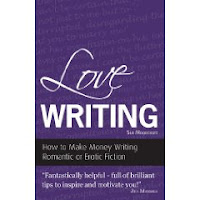
How would you describe Love Writing: How to Make Money Writing Romantic or Erotic Fiction?

The title says it all, really.

We chose a title like that so that it would show up well in searches on-line. Readers of ‘how to’ books tend to search using phrases that describe the content of the book.

The book brings together many of the areas I work in:I’d also written courses for the London School of Journalism, so had some experience of assessing what would be useful to the reader and arranging it coherently.

Having writing colleagues who had utilised their abilities in writing books on the craft of writing, it had occurred to me that, at some time, I might do the same.

Then two things coincided: I went through something in my personal life that made me find long fiction too emotionally demanding to write -- and I was invited out to a dinner at which Hazel Cushion of Accent Press would be present. Accent Press already published a selection of "how to write" books.

I told Hazel my idea and she asked to see a proper book proposal, after, in time-honoured fashion, we had roughed out some ideas on the back of an envelope. A few weeks later she accepted the proposal and offered a contract.

How long did it take you to write the book?

About seven months. Because I critique the work of distance learning students in the mornings, that would be afternoons. But I was also writing short stories and a serial and working on the edits for my novel, Starting Over.

You have to be versatile, in my game.

The proposal was where all the planning took place.

I began with chapter headings, which I played with until the order seemed logical, and then broke each one into sub-headings. That was pretty much the layout of the finished book, although I did consolidate a couple of chapters as they developed.

The publisher asked me to use my contacts in the world of romantic fiction to get input from other writers and industry professionals and I also collected some questions, mainly from unpublished writers. Getting these answered was a reasonable way of establishing what readers wanted to know.

I had to do a lot of research and that was really enjoyable -- reading on-line articles or debates, talking to speakers at conferences and so on.

I knew the wordcount that Accent Press wanted and I knew the ground that I wanted to cover. When I got to the end of the first draft of my planned subjects I had about 4,000 words too many. That was ideal, because I always cut quite hard when I’m polishing, which I feel creates pace. So I ended up bang on the money with the wordcount and about 15 days ahead of deadline.

Which were the most difficult aspects of the work that went into the book?

I was diffident about a couple of aspects of Love Writing.

The first was asking for quotes and input from published writers and industry professionals. However, I found that nobody seemed to mind being approached. A few refused nicely and said it wasn’t for them, a few just didn’t reply so I took that as a ‘no’. But the vast majority of them were happy to quote and, professionals that they are, went to great pains with their contributions. I’m grateful to them because their insight is gold dust.

My second reservation was whether I could write convincingly about areas I don’t write in, myself, such as speculative romance or hot erotica. But I discovered that it was possible to research these areas and canvass opinion, just like much non-fiction. I had a couple of segments read by writers in the relevant field and they okayed them, which gave me confidence.

What did you enjoy most?

Non-fiction is more black and white than fiction. There are answers to be found to questions. In that respect, it’s easier to write than grappling with the endless possibilities of fiction.

Love Writing is completely different to my other books, which were all novels, but I’d written ‘how to’ articles for writing magazines as well as two courses and a supplement for the London School of Journalism, so I felt Love Writing was a progression. A development.

I have an idea for another ‘how to’ book and Hazel at Accent is interested -- but I have to make certain that the material isn’t going to clash with another book they publish, before I write the proposal.

And I have another novel to finish, first…

Resources:Possibly related books:

,,

Related article:
  • Sue Moorcroft [Interview: 1 of 3], Conversations with Writers, March 10, 2009
  • Sue Moorcroft [Interview: 3 of 3], Conversations with Writers, February 26, 2010
  • Dave and Lillian Brummet [Interview: 1 of 2], Conversation with Writers, October 19, 2009

Monday, October 19, 2009

[Interview: Part 1 of 2] Dave and Lillian Brummet

Canadian authors, Dave and Lillian Brummet have written and published two "how-to" books, Purple Snowflake Marketing: How to make your book stand out in a crowd (2nd edition, BookLocker, 2009) and Trash Talk: Learn how you can impact the planet (PublishAmerica, 2004) as well as Towards Understanding (PublishAmerica, 2005) a collection of 120 poems on society, the environment and overcoming trauma.

In addition to writing, the Brummets host two online radio programmes, Conscious Discussions talk radio show and Authors Read radio program.

In this, the first of two interviews, Dave Brummet talks about the work they are doing:

When did you start writing?

I’ve been writing all my life.

I decided to become published around 1999 after taking a writing course and learning, most importantly, how to present one's self to a publisher. I just felt that writing was my calling and wanted to “follow my bliss” (from Joseph Campbell) -- so to speak. I also educated myself on the business and politics side of writing in order to query in a professional manner.

Who is your target audience?

Our target audience, with Purple Snowflake Marketing, is any writer -- because every writer needs the knowledge to be able to promote their work.

These days, as a writer, publishing companies expect authors to be willing to market themselves and their work, often with their own resources. We realized that there is a huge void in the information available for us, as writers, to do this.

How have your personal experiences influenced your writing?

Because we like to write about the things we love in life, for example gardening, cooking and outdoor recreation, these experiences become a part of each and every story. Even if it is a how-to article, I try to relay through the writing how I learned myself, as a first-timer, thus connecting with the reader.

I tend to write as if I am speaking to a person, often with some humor, rather than a textbook dictation-like approach. This seems to come across as more reader-friendly this way.

Do you write everyday?

Ideally I would like to write everyday but unfortunately editing, graphics, web maintenance, ads, radio promos, voiceovers, interviews (he laughs)… and life in general all have to maintain a balance as well.

When I do write I begin with outlines and well-thought out plans, I then extrapolate from there and size the article accordingly to the specified word count.

After the initial writing, an article or a book will need edits (often over and over) and the writers must take the time to get away and let their minds recover -- to come back to a piece fresh and proofread it.

At some point you have to stop editing because, with our ever-flexible English language, you could go on for forever. You need to trust in your talent and believe that it is going to be good enough for your market.

How would you describe your latest book?

Purple Snowflake Marketing: How to make your book stand out in a crowd, is our most recent release. The first edition was put out in 2007 and within 18 short months it had made the recommended reading list of a dozen writing courses.

We’ve created this new revised edition with updated information, hundreds of new resources and several new sections -- which is now available through booklocker.com We compiled it from our own market plans for our articles and books, which started back in 2004 with our first book Trash Talk.

We chose to create this project as an e-book specifically because writers are already at their computers and they benefit from the live links that link them to promotional opportunities and well-researched resources with the click of a mouse.

Which aspects of your work do you enjoy most?

I like the creative process of writing -- crafting a sentence out of nothing in order to convey what you want the reader to get out of the piece. To me this is the true art of writing, the reason why I got into it at first… this creative aspect of writing.

I also now enjoying the graphics and creative design of book covers, bookmarks, ads, business cards, radio promotion blurbs -- everything a writer needs to promote. I love the fact that we have more control and save a lot of money by doing this in-house. Graphic design work is not cheap.

What will your next book be about?

We have a series of garden, cookbook, animal rescue and landscaping books that we are currently working on.

As a musician and a drum-maker, I also have plans to share my years of knowledge and experience in these rather unique fields. I’ve repaired and refurbished a wide variety of instruments, built drums and taught students for 25 years -- this has given me a unique insight into the trade that I feel is worth sharing with readers.

Which one is next is a good question!

Related resources:
Possibly related books:

,,

Friday, April 25, 2008

[Interview] Dr Barbara Becker Holstein

Dr Barbara Becker Holstein is a positive psychologist in private practice, licensed in the states of New Jersey and Massachusetts.

She has done extensive research on adult development focusing on how to overcome obstacles and bring pleasure into one’s life while living a life of meaning and purpose. Based on that research and on her experiences working with women who had internalized negative messages they received as children, Dr Holstein has written and published five books which, among other things, help people develop more positive emotions while understanding how to cope with daily living.

Her books include The Enchanted Self, A Positive Therapy (Routledge, 1997); Recipes for Enchantment, The Secret Ingredient is You! (1st Books Library, 2000); Delight (AuthorHouse, 2005); The Truth (I'm ten, I'm smart and I know everything) and The Truth (I'm a girl, I'm smart and I know everything) (The Enchanted Self Press, 2008).

In this interview, Dr Barbara Becker Holstein talks about her writing.

When did you start writing?

I started writing when I was nine. My first efforts were my diary which I faithfully kept three days late for three years. I misspelled tons of words, but persisted and that 'secret' experience really got the juices rolling for me to become a writer.

How and when did decide you wanted to be a published writer?

This happened in various stages. I wrote a Master's Thesis with two other women for my Masters in Education and loved sharing the writing. Then I wrote a workbook based on our research with one of the two gals, Toby Levien, that I had written the thesis with. This workbook was published by Synectics, Inc. a creative thinking company based in Cambridge. The workbook was geared to 4-6th graders, teaching them creative thinking and writing. I really loved this project. However, I was aghast when our names did not appear as authors and realized in one blow how tough the publishing field can really be!

For those interested, the series of workbooks was called, Making It Strange. I was listed as a research associate, which certainly didn't feel like what I was doing -- writing the actual text week after week in the summer of 1965. Ah -- you see how long ago it was.

Then came my doctoral dissertation, again using the Synectics metaphorical ways of thinking to teach creative writing to children. I published a couple of articles based on my dissertation and then gave in to the pressures of life. I worked in the schools for many years as a school psychologist, raised two kids, got my license as a practicing psychologist in New Jersey and kept writing.

Fast forward, in the last 12 years I have published four books, two with two versions each, and also helped my mother publish her first and only book.

My first book is The Enchanted Self, A Positive Therapy. It was published in 1997. My second is Recipes for Enchantment, The Secret Ingredient is You! was published in 2001. The third, in two editions is Delight. This was published in 2005. One edition in paperback and one as a CD-rom with music, art, my voice and the written words. Then came my mother's book, Feel Good Stories, and last, The Truth in two versions. The version for women is The Truth (I'm ten, I'm smart and I know everything), 2007. The edition for girls, tweens, teens and their moms is The Truth (I'm a girl, I'm smart and I know everything), published in 2008.

How would you describe your writing?

All of my writing is designed to be inspirational and uplifting. I want to help people access more joy and pleasure in their lives and be able to find purpose and meaning in daily living. To that end, as a positive psychologist, I have written with slightly different intentions.

My first book, The Enchanted Self, A Positive Therapy is geared to help women and therapists actually go on a positive journey of self discovery. The case studies and suggested paradigm shifts are put in to really change the way therapists practice the art of psychotherapy and to help the reader actually change her perceptions of herself and her life. My self revelations and the exercises at the end of this chapter are all for this purpose. My second and third books use inspirational stories and exercises at the end of each story for the same purpose.

In Recipes for Enchantment, the stories are from real life, including long ago. Many of the stories are mine, but seven other authors contributed stories. In Delight, again stories are the method used. They are all mine and involve spiritual and emotional experiences I have had coming back to my origins as a Jewish woman. The exercises are designed for any woman, regardless of her background.

My mom's book, Feel Good Stories is also inspirational, but very funny, taking the reader from the day my mom was born to her retirement escapades.

And The Truth, well that is a whole new journey for me. Both editions are pure fiction with embedded positive psychology truths. What fun! I can't wait to finish up the second in the series of The Truth books! Of course they have introductions and reader's questions geared to the inspirational nature of the books.

For The Truth (I'm a girl, I'm smart and I know everything) my target audience is girls, tweens and teens and their moms, grandmas, teachers, guidance counselors and of course those interested dads.

Who would you say has influenced you most?

For my new book, The Truth (I'm a girl, I'm smart and I know everything) I would say that the writers of my childhood such as Laura Ingalls influenced me the most. Authors who have know how to capture a pure voice and create a vivid atmosphere.

For my first book, The Enchanted Self, A Positive Therapy I would say that psychologists from the feminist tradition such as Carol Gilligan influenced me the most.

How have your personal experiences influenced your writing?

I must challenge you in this question and encourage you to read The Enchanted Self, A Positive Therapy, as I intimately and fully reveal in that book how my personal experiences have affected my growth as a woman, a psychologist and, of course, as a writer.

In a chapter, titled "Singing The Song Of One's Soul", I explain how we tap into our true purpose and finally emerge doing what we are meant to do. For me, part of that is being a writer.

What are the biggest challenges that you face?

Currently one of the biggest challenges I face is helping my aging mother. It is very hard to see someone slipping away and always having some pain and other issues to contend with. Staying centered while realizing the fragility of life is a challenge!

Another challenge is bringing my new book, The Truth to the public. It is very hard work. I want to just fly with this book and yet everyday I have to take the time to plod along. For example, right now I am looking for schools were I can go in and actually work with the kids around the concepts in the book such as having a crush, being teased, bullies, growing up physically, parents fighting, etc.

Do you write everyday?

I go in spurts. Right now I am not writing every day, but I will again soon as I finish up the second book in The Truth series which takes the 'girl' from age 11 1/2 to almost 14.

I've got the ending already in my mind and just have to get back to daily writing.

I've been back and forth with the second book in The Truth series, as at the same time I've been working on a version for China which has more school vignettes in it than the American version. It has already been translated into Chinese and my translator is a professor in China. This has been very exciting.

How long did it take you to write The Truth (I'm a girl, I'm smart and I know everything)?

I wrote it over a year in spurts. It is published by the Enchanted Self Press and distributed by Blu Sky Media Group.

I wanted to control all aspects of this book, as it is the first in a series and after a lot of advice decided it was most important to find a distributor -- which I did. I'd love to have a major publishing house publishing the book, but then I wouldn't have as much control.

Which aspects of the work that you put into the book did you find most difficult?

The most difficult is the editing and proofing. The easiest part is the rough draft. I had two women help me with the editing and proofing. That really helped.

I like writing the rough draft. I guess because it is pure inspiration.

What sets the book apart from others you've written?

This is my first fiction. It has a purity, almost like poetry, that I really love about it, yet as great poetry, there is so much depth to each page.

It is similar to my others in that it inspires and teaches at the same time.

What will your next book be about?

The 'girl' growing older and having a ton of adventures that will strike a chord in most of us. They are universal and yet unique to her.

What would you say has been your most significant achievement as a writer?

My first book, The Enchanted Self, A Positive Therapy, as a pathfinder book in the field of positive psychology, and this book, as I believe the first fiction in the field of positive psychology.

Thursday, April 24, 2008

[Interview] Gabriella Goddard

Gabriella Goddard worked in international marketing and branding before setting up her own business, Goddard International Ltd., which develops and offers personal development products and where she works as an executive coach and speaker.

Her clients include senior executives in FTSE100 companies, TV presenters, authors, journalists and entrepreneurs.

Goddard is also the author of Gulp!: The 7 Day Crash Course to Master Fear and Break Through Any Challenge (Bantam, 2007) as well as three audiobooks, among them, 10 Ways to Fast Track Your Career (audible.com, 2007).

In this interview, Gabriella Goddard talks about her writing.

When did you start writing?

As a child I loved writing and I used to write poems and short stories for the school newsletter. At the tender age of seven, I even wrote the school play. But all of that disappeared as I got older and veered towards doing the sensible thing of studying maths and science so I’d “never be out of a job.”

That was until about 30 years later when I received a wake up call.

How did decide you wanted to be a published writer?

A few years ago I had the traumatic experience of going through a breast cancer scare. It was a massive wake up call and a crucial turning point in my life. Faced with the possibility of dying, something flipped inside me and that’s when I reconnected to my childhood dream of being a writer. After all, if not now…then when?

And that’s when I began to write again.

How would you describe your writing?

The books I’m currently writing are non-fiction personal development and “how to” guides which tie in with my role as an executive coach and motivational expert.

Plus, I’ve just started shaping my first novel which has been very exciting. It’s also been a big challenge from a creative perspective -- but I’m ready for it now. I’ve blocked out some time in August this year to really get stuck into it and I can’t wait!

Who is your target audience?

For my self-help and personal development books the target audience is women and men who are interested in personal growth and self–improvement. Often they’re going through a period of change in their life or facing issues in their career, relationships or life direction. And what they’re looking for is inspiration, insight, practical steps, action plans and most of all “hope.”

It made sense to write for this audience because as an executive coach and motivational expert, I’ve worked with thousands of people to help them make transformational changes in their life. Plus I’ve been through a fair few myself. So I have the theoretical and practical know-how to really help people who find themselves in a bit of a pickle. And by putting all this into a book like Gulp!, it means I can help so many more people.

Who would you say has influenced you most?

There are some amazing authors in the self-help genre. People like Paolo Coelho, Deepak Chopra and Marianne Williamson are three of my favorites. Reading their books really encouraged to be open, honest and authentic as a writer. I’m also a huge fan of Jodi Picoult and I love the way she really draws you into her stories.

What are your main concerns as a writer?

What concerns me most about being a writer is how difficult it can be to earn a living from it. You have to be really motivated to keep it up and develop a thick skin to cope with the rejection letters. It’s no wonder that so many people give up. But these days, with the advent of digital technology, there are many alternative routes to getting published, for example, self-publishing print on demand, audio books and eBooks for Amazon Kindle.

What I’ve done is to self-publish a number of short audio books to compliment Gulp! and because I own the rights, 100% of the net profit comes back to me. Plus I have a couple of eBooks coming out on Amazon Kindle later this year. I’ll still be pitching my next self-help book to the major publishers, but thankfully this is no longer the only route to the reader's bookshelf.

What are the biggest challenges that you face?

One of the biggest challenges I face is “distraction” (or possibly procrastination?). When I was writing Gulp! I’d spend hours doing research on Google. The problem was that by the end of the day I would have only written a few pages!

Another challenge I face is the frustration around the time it takes to get words typed out. In my ideal world I’d be able to telepathically transmit all my thoughts onto a Word document. But until that happens, I’ll just have to sit down and spend hours typing.

And finally, perhaps the greatest challenge I face is trying to sort out all the amazing ideas buzzing around in my head.

How have your personal experiences influenced the direction of your writing?

My personal experiences have been pivotal in shaping my writing. They say that when you write a book, you’ll either write about what you’ve been through or write about what you’re going to go through. Underpinning Gulp! is my personal journey of coping with a breast cancer scare and finding the confidence and courage to follow my dream to be a published author. In fact, the 7-day roadmap is based on the process I went through to cope with these challenges.

How many books have you written so far?

My first book, Gulp!: The 7 Day Crash Course to Master Fear and Break Through Any Challenge has just come out in the U.S.

Gulp! is a personal development book aimed at people who have reached a crossroads in their life or are going through a big change. It provides them with a 7-step roadmap, practical tools and techniques and action plans as well as inspirational stories and motivational quotes.

I’ve also written and recorded three audio books which are available on iTunes and Amazon internationally. They are:

Power Up Brand YOU -- which is all about how to build a powerful personal brand and stand out in the crowd; ideal if you’re looking to change jobs or go for a promotion.

10 Ways to Fast Track Your Career -- which is all about how you can work smarter in your job and covers ten effective and practical strategies to get ahead at work.

Say Goodbye to Fear Forever -- which is an extract from Gulp! and covers ten powerful ways that you can overcome fear and turn it from a brake that holds you back into a propeller that moves you forward.

Do you write everyday?

Oops…you’ve just reminded me that I need to start my “daily ramblings” again.

Writing is a like muscle, and you do need to exercise it to keep it in good shape. When I do sit down and write, I have a little routine. First of all the desk has to be cleared of all papers and any junk. Secondly, I make a cup of tea in my favorite “lucky writer’s cup”. Thirdly, I make sure my two cats are settled on their cushions on my desk. And finally, I light a candle or some incense to create a relaxing vibe. Then I wait for divine inspiration. And if that doesn’t come, I go and make another cup of tea.

How long did it take you to write Gulp!?

Gulp!: the 7 Day Crash Course to Master Fear and Break Through Any Challenge is a personal development guide for people who want to face their fears, step outside their comfort zone and make fundamental changes in their life. “Gulp!” stands for “Give Up Living Passively!”

I only had about five months to write “Gulp!” from the date I signed the contract. For the first two months I suffered from “writer’s procrastination” and did everything BUT write the book. It was only when I realized that I had three months to write 60,000 words, that the panic set in and I pretty much dedicated the whole three months to writing, editing and finishing my manuscript. Luckily I made the deadline.

Gulp! was published in the U.K. by Penguin and we had a fabulous launch party in their penthouse suite overlooking the River Thames in London. What I liked about Penguin was how quickly they “got” me and got the concept of “Gulp!” As a first-time author, they took a big risk on me, which is something I’ll never forget.

Not long afterwards Bantam Dell snapped up the U.S. rights to Gulp! and it has just been launched. Once again it was a huge honor to be published by such a reputable New York publisher.

The major advantage of being with a big publisher is the distribution opportunities and the media contacts that they have. If anyone is going to get your career off the ground, it’ll be them. The main disadvantage is that you’re a small fish in a big pond and you might not get the individual attention that comes from being with a smaller publisher.

Which aspects of the work that you put into the book did you find most difficult?

When my first contract arrived, it was one of the scariest moments of my life. After all that dreaming, there, right in front of me on the kitchen table, was a contract. Now all I had to do was write 60,000 words -- and make ‘em good ones. It was a real moment and it was this experience which motivated me to explore fear in such detail when I was writing Day 2 of Gulp! I tried all the techniques out on myself first -- and thankfully they worked.

Another big challenge for me as a first time author was finding my own “writing rhythm.” After much trial and error I discovered that I wrote better in the mornings and evenings. So I used to go to the gym in the afternoon.

I really enjoyed doing the research and conducting interviews. It made what I was doing feel very real and really motivated me to keep going.

Another part that I enjoyed was the editing process.

When I’d written a huge chunk of copy, I’d head off to Starbucks with a red pen and put my “editor’s hat” on, crafting it, shaping it and tightening it up. It was like being an archeologist dusting off the top soil to reveal the ancient gems below.

What sets Gulp! apart from other things you've written?

Gulp! is my first book and in many ways it has become my benchmark for everything that follows. I feel so much more confident now about sitting down and writing the next book. I’ve found my writer’s voice. And I’ve discovered my writer’s rhythm.

There are some things I’m definitely going to do differently. One thing is to leave at least two weeks for the final manuscript to “marinade” before going through the final edits. And another thing is to ban anything containing chocolate from the house!

What will your next book be about?

My next books is going to be a career guide for people who really want to accelerate their success and find a greater sense of fulfillment. I can’t go into too much detail about it, but basically it will be an easy to read, insightful and practical self-coaching guide that will help people make fundamental shifts in who they’re being, what they’re doing and how they’re performing.

What has been your most significant achievement as a writer?

My most significant achievement as a writer was to actually get published. I’m originally from New Zealand which is a small country “down under” with only 4 million people. So to have been commissioned and published in the U.S. and the U.K. is a big achievement, especially given how many great writers there are out there.

I’m hoping this will be the first of many books to get published!

How did you get there?

If you’ve ever seen the New Zealand rugby team, cricket team or sailing team in action you’d have seen an immense amount of discipline, focus and determination. So I guess some of that “Kiwi zeal” has rubbed off on me too!