Creative writing tutor and author,
Sue Moorcroft was born in Germany and spent much of her childhood in Cyprus and Malta.
In addition to teaching creative writing classes, she has written and published five novels, among them,
Uphill All the Way (Transita, 2005);
A Place To Call Home (Magna, 2007) and
Family Matters (Robert Hale, 2008).
Her short stories have been published in anthologies that include
Sexy Shorts for Christmas (Accent Press Ltd, 2003) and
Scary Shorts for Hallowe'en (Accent Press Ltd, 2004) .
She is also the editor of
Loves Me, Loves Me Not, an anthology of short stories by the members of the
Romantic Novelists' Association, which seeks to celebrate the RNA's 50th birthday in 2010. The anthology is to be published by
Mira Books, in hardback in Autumn 2009 and paperback in February 2010.
In this interview, Sue Moorcroft talks about her writing:
Do you write everyday?
I normally write, or do something associated with writing or teaching writing, from 8 a.m. to 6 p.m., Monday to Friday. But I'm flexible and will sometimes take a day out in the week and work at the weekend.
Sometimes I work all seven days! It depends on what I'm doing and how much work I have on.
I tend to begin each day with e-mails and keeping up with writers' forums because they're valuable in networking and information gathering. Then I move on to students, then to writing.
What are your main concerns as a writer?
Making a living is always a concern. So I work hard and, I hope, with intelligent application, and that seems to bring enough money in, one way or another.
As I indicated at the beginning of the interview, I write in several areas. If I just wrote one novel a year I wouldn't make ends meet unless I miraculously got a wonderful contract, one that has escaped me until now.
Sometimes I find it hard to get going and I have to give myself a talking to, otherwise I'd spend all day writing e-mails and surfing the Net.
In the writing you are doing, who would you say has influenced you most?
Good question. I don't really have an answer to it as I have so many influences upon me: other writers, the wants of my agent or an editor, the state of my bank account ...
How have your personal experiences influenced the direction of your writing?
I like to write about things that mean something to me.
My first published novel,
Uphill All the Way, is set partly in Malta. A bit of my heart will always live in Malta because I lived there as a child. I have set other works there and got a good response from editors and readers and I enjoy sending my characters there -- so it seems sensible, as well as enjoyable, to carry on.
And one always draws upon one's own emotions, of course. How can you describe being frightened if you've never had a fright?
On the other hand, what I don't know I research or I imagine. I think I'm quite empathetic and that helps in knowing how my characters will feel in a certain situation. My fiction is always about characters who could be real in situations any of us could find ourselves in.
My second novel,
Family Matters, is about the effect that money can have on people. Some people will sacrifice a lot, friends and family, just so they can get their hands on some money. I'm not talking about to have enough money to eat, I'm talking about extra money so that they can have extra things. This happened in my family and gave me a bit of a disdain of people like that. I can see that money is useful to have, of course! But it's not the be all and end all.
What are the biggest challenges that you face?
It's like almost anything -- I work hard. I put the hours in, I pitch work to editors, I do work 'on spec' that may never be bought. I may be lucky in that my response to even a huge emotional incident is to bury myself in work.
Rejection is difficult, of course. If you've done your very best work and it is rejected, that's a horrible feeling. It can sometimes be a challenge to try again. Self-belief is part of my make up, happily.
Who is your target audience?
Most of what I write is for mainstream fiction and probably appeals more to women, although men do read my stuff and enjoy it. I often have male viewpoint characters.
I suppose I write roughly what I like to read and so I write for people roughly like myself.
How many books have you written so far?
I've written a lot more than I've published!
Uphill All the Way (Transita, ISBN 978-1905175000) was published in April 2005 and is a book about recovery. In it, Judith has to get over losing her younger lover, her life in Malta and most of her money; Adam from losing three fingers, two homes and one wife. It's about a giant mid-life wobble and that there's life after it.
Family Matters came out in hardback with Robert Hale (ISBN 978-0709085232) in March 2008. It's about money and family and who thinks which is most important. It begins with a helicopter crash, one of the most difficult things I've ever written but it gets a good reaction, and that proves to be the catalyst for many secrets spilled...
A Place To Call Home (Magna, ISBN 978-1842625446) was a serial and it's out now as a large print book and follows the Randle family after they lose their nice life in Germany and have to return to the U.K. It explores how you start all over again when your old life crumbles through no fault of your own. It proves that it can be done!
Between Two Worlds was a serial, too, and it will be coming out as a large print book, but I have no details yet. It explores the modern phenomenon of two people marrying, a second marriage for each of them, and making two families into one. In this case, they come from very different backgrounds and have a lot of adjustment to make.
How did you chose a publisher for your latest book?
My latest published book is
Family Matters. It took quite a while to write, maybe 18 months, because I began it four times before I was happy with the way it was going. There was a lot of research involved, too, particularly concerning a young character, Tamsin, who has some emotional and behavioural problems. I enjoyed working with her. I liked the central character, Diane, too, as is someone who will only take so much from people before she loses her cool. She is loyal to her husband for all of their marriage, even though some of his decisions seem to disadvantage her and their daughter, Bryony -- but once he lets her down, all hell breaks loose.
Family Matters was published by Hale in the U.K. in March 2008.
'Choosing' a publisher isn't really an option -- my agent sells my books for me. If she ever had the happy situation of more than one publisher making an offer then I would have a choice to make. But not till then.
Hale produce a great book and is professional to work with. However, the company only produce a hardback and it's difficult to get them to reprint when the first print run sells out, even if it sells out quickly, as mine did.
Which aspects of the work that you put into the book did you find most difficult?
I think it was the scope of the book that troubled me. Initially, it seemed too shallow with just one viewpoint character -- Diane -- and it was when I included viewpoints from Gareth, James and Tamsin that the book began to come alive.
One can only solve a problem like that by thinking it through and maybe talking it over with like-minded friends.
Which aspects of the work did you enjoy most?
Researching helicopters! I like helicopters! And planes and cars...
What sets the book apart from other things you've written?
I think it dealt with quite a hard subject and I'm quite proud that it didn't point the reader at a conclusion. There's room in the book for different attitudes and I think some readers will think that Diane was right in what she did but some will see the point of view of her husband, Gareth. I think it makes a good reading group book, for that reason.
In what way is it similar to the others?
Relationships! I like relationship books.
What will your next book be about?
Actually, it's about an aeroplane ... No, it's about learning to forgive yourself.
I've given Brenna an awful lot of things to contend with, a husband who goes missing, a building project that has gone wrong, losing her job, struggling with her teenaged son and also her older learning-disabled sister, Libby. Brenna feels guilty about Libby as she is convinced she was instrumental in the accident that left Libby with traumatic head injury. (But there really is an aeroplane in the book, the
Unforgettable Juliet of the title.)
When did you decide you wanted to be a published writer?
I suppose I wanted to be seen as good enough to be published. I also wanted to earn money as a writer so I didn't have to do a 'proper job'.
It was a slow process.
After the first couple of novels, I began trying short stories because I read that if you had a track record of about 20 short stories with national magazines, a book publisher would take you seriously. This did work for me but I had sold 87 stories before I sold the first book!
I expand my areas of writing all the time. As well as short stories and books, I write articles and profiles for writing magazines and courses for the London School of Journalism. I have ideas for non-fiction articles and a non-fiction book that I haven't yet attempted. But the day will come.
I found building this body of work hard but rewarding and 'doable'. I learnt, through my course, through writing magazines, how-to books, conferences and seminars, how to approach editors, how to study the market and write for it. Then I did it!
I work with students all the time but am certain that only a small number send their work out to editors, agents or competitions. Editors rarely come knocking on the door to ask if you have anything in your desk that they might like to publish and pay for.
I learn about writing and publishing by staying in contact with those in the industry, reading what I need to read and putting it to intelligent use.
How would you describe the writing you are doing?
Hard work but enjoyable.
This week I have finished drafting the final episode of a serial called
One Summer Night in Malta for a U.K. magazine,
The People's Friend. I have sent that to a writing friend to read before I polish it. I'm not convinced that the ending is yet strong enough and anticipate that there's more work to be done.
I have also drafted a profile of a fiction editor of a new American fiction magazine and got together the visuals and sidebars for that. I've sent out four stories to overseas markets, stories that have been published in the U.K. already and needed some revision to suit the new market (and have sold one of them already).
In the back of my mind is my current novel,
Unforgettable Juliet, which is also awaiting revision. But I've had a bereavement this summer and find I don't have the emotional energy for the novel, right now. It can wait.
What would you say has been your most significant achievement as a writer?
Um ... doing it, I suppose. Making it stick. Making a living. It's not a success in the
J. K. Rowling category but it's still a success.
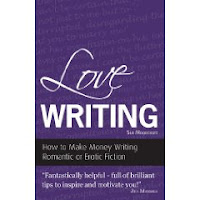
*This article is based on an email interview with Sue Moorcroft which took place in September 2008. Since then, the non-fiction book she referred to in the interview, one that was only an idea at the time, is now a reality and will be published in January 2010 by Accent Press as Love Writing: How to Make Money Writing Romantic or Erotic Fiction.
Possibly related books:
,
,
Possibly related articles:
- An Interview with ... Sue Moorcroft, by juliemt, Single Titles, April 12, 2008
- The Story Seller, Interview by Myra Kersner
- Sue Moorcroft, Wired Malta (formerly known as Wired Temples), April 15, 2005
- RNA Special Part 2: An Interview with Sue Moorcroft, by Mike Atherton, Great Writing, July 7, 2005
 Romance author and creative writing tutor, Sue Moorcroft's novels include Starting Over (Choc Lit, 2009), Family Matters (Robert Hale, 2008) and Uphill All the Way (Transita, 2005).