Showing posts with label romance. Show all posts

Wednesday, August 29, 2012

[Interview] Lauri Kubuitsile

Lauri Kubuitsile writes romances novels; crime fiction; books and stories for children and teenagers; and, literary fiction.

She was shortlisted for the 2011 Caine Prize for African Writing and has won awards that include the PanAfrican prize for children’s literature, The Golden Baobab Prize and the Orange/Botswerere Botswana Artists Award.

Her books include the collection of short stories, In the Spirit of McPhineas Lata and Other Stories (HopeRoad, 2011); and the novels, Signed, Hopelessly in Love (August 2011) Tafelberg, 2011) and Mr Not Quite Good Enough (Sapphire Press, 2011).

In this interview, Lauri Kubuitsile talks about her concerns as a writer:

When did you start writing?

I started writing 8 years ago, just when I was turning 40.

I actually became a published author almost by accident. My books in my Kate Gomolemo Mystery Series were actually all first published in a small newspaper I owned in Botswana. We were changing format and wanted to see what we could do to maintain our readership. I decided I would write a serialised novel, 1,000 words each issue.

When the first book finished in the newspaper, people called the office asking for parts they had missed. On a whim I sent the manuscript to Macmillan hoping that they might publish the book so that our newspaper readers could get the parts they’d missed. Macmillan agreed, and that was my first published book. It was published in 2005.

How would you describe the writing you are doing?

I write primarily popular fiction.

I have four published romances with the South African publisher Sapphire Press, an imprint of Kwela Books. I also have two detective series. I write for children and teens as well. And I write short stories, and occasionally, literary stories.

Who is your target audience?

To be honest I write for myself, my hope is that other people will enjoy my stories too.

In the writing you are doing, which authors influenced you most?

I have many influences. I love J. D. Robb, John Steinbeck, Margaret Atwood, Kate Atkinson… actually it’s difficult to mention all of them.

I do find that certain writers, though they may not come out explicitly in my work, they inspire me to write. For example, Steinbeck. I go back to his work often for inspiration. His simple solid sentences resonate with me and my hope is to someday be able to move a story along in such an honest way.

How have your own personal experiences influenced your writing?

I think there is hardly a story I have written that does not start with a personal experience. It might be something in my own life, something I witnessed, or something I heard.

What are your main concerns as a writer?

I think my concerns are like every writer, to write the story I need to write the best way that I can.

What are the biggest challenges that you face?

Well, I’m a full time writer living in Botswana, the toughest thing for me is to try to make a liveable income from my work. It is a constant challenge. I try different things, I try to keep abreast of what is happening in the industry. For example, I recently published three of my Kate Gomolemo Mysteries on Amazon. Two have been published traditionally before but I kept the ebook rights. I don’t know anything about self publishing but I’m learning. I just try to be adaptable.

Do you write everyday?

I’m a full time writer and I treat my writing as my work. I usually get to my office (which is separate from my house) at about ten. I attend to administrative work first and then get to work on whatever my day’s project is. I usually knock off about 6:30.

How many books have you written so far?
  • The Fatal Payout (2005) fiction, first book in Kate Gomolemo Mystery Series, publisher Macmillan prescribed book by Ministry of Education, Form 1 
  • Murder For Profit (2008), fiction, second book in Kate Gomolemo Mystery Series publisher Pentagon Publisher 
  • Mmele and the Magic Bones ( 2009) children's fiction, Pentagon Publishers, Prescribed book for Ministry of Education, Standard 5
  • Three Collections of Short Stories for Std. 5, 6, and 7 (2009) Pentagon Publishers co-written with Wame Molefhe and Bontekanye Botumile. All three prescribed books by Ministry of Education. 
  • Lorato and the Wire Car (2009), Vivlia Publishers (RSA), a children’s book 
  • Birthday Wishes and other Stories (2009) Vivlia Publisher (RSA), a collection of three short stories for children 11-14 
  • Kwaito Love (April 2010) romance, Sapphire Press an imprint of Kwela Books South Africa 
  • Can He Be the One? (August 2010) romance, Sapphire Press an imprint of Kwela Books South Africa 
  • The Curse of the Gold Coins  (2010) Vivlia Publishers (RSA), a mystery for children 
  • Anything for Money (third book in the Detective Kate Gomolemo series), third book in Kate Gomolemo Mystery Series, Vivlia Publishers (RSA) 2011 
  • Signed, Hopelessly in Love (August 2011) Tafelberg South Africa, a humorous novel for teens 
  • Mr Not Quite Good Enough romance July 2011 Sapphire Press an imprint of Kwela Books South Africa 
  • In the Spirit of McPhineas Lata and Other Stories, ebook, HopeRoad London, Dec 2011, a short story collection, all stories set in Botswana 
  • Love in the Shadows, Romance-thriller, April 2012, Sapphire Press 
  • Murder For Profit, Anything for Money, Claws of a Killer, ebooks, May 2012 , self published at Kindle Direct Publishing
What is different about your latest books?

My latest books are the self published ebooks: Murder for Profit; Anything for Money and Claws of a Killer.

The series is set in Botswana and the books are fast paced mysteries. If you love mysteries, you’ll love these books! I know as a reader I’ve always loved series because you can follow the protagonist for some time, in different places. These books are like that. Kate’s life will change quite a bit from the first book to the last. I’ve received great feedback on the books. The first book in the series, The Fatal Payout, is currently read in all junior secondary schools in Botswana and I meet people everywhere who love the book.

Murder for Profit; Anything for Money and Claws of a Killer were self published at Amazon, Kindle Direct Publishing (KDP), my first attempt at self publishing.

I wanted to try KDP and I was lucky to still have the e-rights for these three books.

What advantages and/or disadvantages has this presented?

The advantages are that you have complete control over the books - the covers, the design, the marketing. That’s also sort of the disadvantage too. You really need to put time into marketing. There are so many books published at KDP so you need to work hard to get some attention for your books.

My hope was if I published all three of them at the same time I might build a readership a bit quicker. I’m currently on a very steep learning curve.

Which aspects of the work you put into the books did you find most difficult?

The marketing is tough. Especially trying to get people to read the books and do reviews, and then to put the reviews up at Amazon. It takes a lot of time. Much more than I anticipated.

Which aspects of the work did you enjoy most?

I love starting a book. I work out the plot and character bibles by hand before I start writing, I like that part.

I also like writing the rough draft. I write very quickly/ I can write up to 8,000 words in a day at that stage.

What will your next book be about?

I’ve just finished the rough draft for a new romance. It’s called There’s Something About Him. I hope to have it to the publisher in the next two months or so.

What would you say has been your most significant achievement as a writer?

I’ve won or been shortlisted for quite a few writing prizes. I’ve twice won the PanAfrican prize for children’s story, The Golden Baobab Prize. I won our national award for creative writers sponsored by our Ministry of Youth Sports and Culture, the Orange/Botswerere Prize, and last year (2011) I was shortlisted for the Caine Prize which is perhaps the most prestigious prize for African short story writers.

Related books:

,,

Related articles:

Monday, August 13, 2012

[Interview] Jean Holloway

Jean Holloway lives in Kennesaw, GA.

Her books include Ace of Hearts (PHE Ink, 2009)) which is also available as an audiobook; Black Jack (PHE Ink, 2009); Deuces Wild (PHE Ink, 2010) and Full House (PHE Ink, 2011).

In this interview, Jean Holloway talks about her concerns as a writer:

When did you start writing?

It all began when my sister, Lori, commented, ‘You read so much, I bet you could write book,’ and I answered, ‘I bet I can!’ and began writing Ace of Hearts in long-hand in 1980. I completed the manuscript in 1982.

I was 30 years old and the mother of six.

I never considered the possibility of becoming a published writer, in fact, if someone had told me I would become a published author at the age of 57, I wouldn’t have believed them. Lori pushed me into this career when she bought me a ticket to the National Book Club Conference in Atlanta and instructed me to print copies of my manuscript and give them to anyone who wouldn’t throw them back. That’s where I met my first publisher.

Two years later at a literary event in Houston, I met T.L. James, CEO of PHE Ink. I recognized a kindred spirit and switched publishers.

How would you describe your writing?

I’m a genre bender, writing risqué romantic thrillers with a splash of the paranormal.

My target audience is mainly women over 21. I thought they could empathize with my protagonist, Detective Shevaughn Robinson.

Which authors influenced you most?

All my life I’ve been a fan of Stephen King, Dean Koontz, Tananarive Due and Jean Auel. I admired their ability to transport me into their world and take me on a roller coaster ride. I wanted to have the same effect on my readers.

And how have your own personal experiences influenced your writing?

I thought the influence was minimal until my sister, April pointed out the similarities of my characters (especially Shevaughn’s) experiences to correlating events and attitudes in my own life. What an eye-opener!

What are the biggest challenges that you face?

I think my biggest challenge is getting readers who are unfamiliar with my work to give me a chance. I find there are a lot of readers who only read their favorite authors and won’t gamble on someone new.

How are you dealing with this challenge?

I’ve put excerpts on all my social networks. Usually, once they read a smidgen, either they love me or hate me.

Do you write everyday?

No, not every day. I usually write when my characters tell me to. A session starts when I hear one of them whisper in my mind. Then I go to my computer and write what I hear. It ends when they get quiet. Since they seem to be nocturnal, sometimes I find myself jumping out of bed at three in the morning running down to the computer to get down our thoughts before I forget.

How many books have you written so far?

  • Ace of Hearts, PHE Ink – Writing Solutions Firm, July 13, 2009, Second Edition
  • Black Jack, PHE Ink – Writing Solutions Firm, May 14, 2009
  • Deuces Wild, PHE Ink – Writing Solutions Firm, October 10, 2010. That was my 60th birthday present to me!
  • Full House, PHE Ink – Writing Solutions Firm – November 22, 2011

The four novels complete the Deck of Cardz series.

Detective Shevaughn Robinson is the main character in all four novels. You get to follow her life and career from rookie to Captain of the Homicide Division. As Portsborough, NY’s first Black female homicide detective in 1981, you watch as she strives to prove herself in a male-dominated workforce. You also meet her new partner, Jared Benjamin, and Tony O'Brien, an unexpected love interest.

The series introduces you to a series of sexual predators, starting with Eric Becker in Ace of Hearts, a psycho who has the inexperienced Shevaughn in his sights.

What is your latest book about?

In Full House, the final novel of the Deck of Cardz series, Captain Shevaughn Robinson is at the pinnacle of her career and living the challenging life of a single mother of two. It doesn’t help that her adolescent daughter still communicates with the dead and is in a relationship that’s way too serious for her age. Or that Nonna, the only one she can depend on, is beginning to show signs of Alzheimer's.

When she hears allegations that the police are ignoring the growing number of missing black women in Portsborough, Shevaughn pledges to personally investigate their disappearance. It leads her to one of the most unusual crimes in her entire career and gives new meaning to the phrase, "honor thy mother".

How long did it take you to write the novel?

Full House took me a year because it’s the last novel of the Deck of Cardz series and after working on this series since 1980, I really hated to let it go. I procrastinated a bit.

Which aspects of the work did you enjoy most?

I loved seeing how everything came together.

I don’t use outlines or storyboards or anything. I write by the seat of my pants and once I’m through getting it all out, I have to arrange everything chronologically like a time puzzle.

What sets Full House apart from other things you've written?

This time I have an entire dysfunctional family instead of my usual one psychopath.

In what way is it similar to the others?

Shevaughn is one tough cookie from start to finish.

How did you choose a publisher for the book?

When I met T.L. James, we clicked. I chose PHE Ink because it’s a small, independent press which allowed them to give me the personal attention I wanted. It’s more like a literary family. I really don’t see any disadvantages since I’m now Managing Partner.

What will your next book be about?

I’m contemplating collaborating with another author or maybe another series, but haven’t worked out the details as of yet.

What would you say has been your most significant achievement as a writer?

Ace of Hearts was nominated against the esteemed Walter Mosley’s The Tempest Tales in 2008. Of course, he beat me like a bad child, but what an honor!

Now Ace is an audiobook, but not your usual audiobook; it has music and sound effects like a classic radio show. And last year, I became a member of the GA Peach Authors. I’m proud to be touring with such a group of well-respected authors.

Related Books:

,,

Related articles:

Tuesday, October 11, 2011

[Interview] Myne Whitman

Myne Whitman was born in Enugu, Nigeria.

She has a Master’s degree in Public Health Research and is the author of two romantic suspense novels, A Heart to Mend (Authorhouse, 2009) and A Love Rekindled (CreateSpace, 2011), which are both set in Nigeria.

In this interview, Myne Whitman talks about her concerns as a writer:

When did you start writing?

I've been writing for a very long time, well, since I was about 11 or so. Unfortunately, most of those scribbles were lost when we moved cities. I started writing seriously around my third year in university, took a break for work and further studies and, now, writing is my full time career.

The decision to send my work out into the world matured in 2009 after I had been writing again for about six months full time. I had joined a writing group, started a blog, and people seemed to like what I had to write about.

I researched available options of publishing, and gave traditional publishing a try for a few months. The rejections I received had a common thread. While most agents liked my writing, they didn't think it suited them, and there were a couple that suggested I change some fundamental parts of my story. I found that idea abhorrent, and further research yielded some resources on self-publishing.

When I had satisfied myself that I understood what self-publishing entailed and was ready to face the challenge, I decided to go with Authorhouse to design, print and distribute my books. On the editorial angle, I drafted my manuscript several times, working with feedback from my writing group, beta readers on my blog, and finally an editor, to make sure it was ready for a mass audience.

How would you describe your writing?

My writing is romantic fiction.

It has been described as a marriage of literary and pulp fiction.

I write about the romantic experiences of the hero and heroine in my story, and frame them in a background of realistic day-to-day life of their setting. My stories are set in Nigeria where I grew up and lived for most of my life. My language is simple and direct, accented by the tones of local people in the Nigerian setting but adapted for an international audience.

My target audience is international ... anyone who has ever loved or felt emotions as they interacted with other people. I decided on romantic fiction because romance is universal ... most people will experience relationships more than anything else in their lifetime.

When I started A Heart to Mend as an 18 years old, I had at the back of my mind, not only the loads of Mills & Boon romances, but also the Pacesetters and African Writers Series I had devoured as a teenager. I was motivated to write stories that featured people like me, and that people like me could identify with.

When I went back to the story, I was living in the US, and in rewriting it, I made it a story in which I could share my background and world view with those that were different from me. For everyone who reads it, if there is one thing to take away, I want it to be the universality of what makes us human ... the experiences, the emotions, and the aspirations of life and love.

In the writing you are doing, which authors influenced you most?

The authors that I take as my role models include Nora Roberts, Danielle Steele, Buchi Emecheta, Cyprian Ekwensi and Helen Ovbiagele, among others. I love these authors because of their writing (their works drew emotions out of me, they made me think, and they also educated and informed me) and because of what they've been able to achieve (they are prolific, and their stories are accessible to a wide audience, the stories are those that a large number of people can relate to).

Have your own personal experiences influenced your writing in any way?

Mostly because my stories are set in locations that I've either lived in or visited.

Also, I write on themes that are universal, and I've personally felt some of the emotions I describe in my books. That said, nothing in my books are autobiographical.

What are your main concerns as a writer?

First and foremost, I want to tell a good story, one that will hook the reader into it and take them on a journey. I want my readers to enjoy my books, and I also hope that I will make them feel (laugh, cry, and think) while they read. Also, because I am self published, I'm concerned about how to ensure that my books are of very good quality.

I believe in my stories, and I believe in the message I want to pass through them so my biggest challenge is how to get my books to as large an audience as possible. I deal with that by investing a good amount of time in promotion. I also utilize the strategy of giving away free books in order to build a following.

My first book, A Heart to Mend, stayed at #1 on the AmazonUK Kindle store for romantic suspense (free) for over two weeks, with almost 20,000 copies downloaded. It was a very good feeling to know that even half of that number will read the story and it would fit into how they make sense of the world around them.

Do you write everyday?

I do not write everyday, not that I wouldn't like to though.

I write when I feel like it, and usually I would've been thinking about the story and so it comes easily to my fingers as I type (I used to write long hand, but I now write directly to MS Word on my laptop).

When I have start thinking about what to write, or whether it makes sense, then I stop.

How many books have you written so far?

I have written two books so far:

A Heart to Mend was published through Authorhouse in December 2009. It tells about the coming of age of a young woman, Gladys, who falls in love with Edward, a wealthy businessman. They become romantically linked but emotional issues from Edward's past make it hard for him to fully trust Gladys. Their relationship is further complicated when she becomes embroiled in a plot to take over his business.

A Love Rekindled was published through Createspace in March 2011. Efe is an independent woman who returns to Nigeria ready to face the future, after years in the United States. However, it is the past that she first has to confront when her former fiance, Kevwe, comes back into her life claiming he's never stopped loving her. He has to unravel the mystery of their broken engagement before she is willing to rekindle their love.

How would you describe A Love Rekindled?

A Love Rekindled is my latest book, and it took about a year to write and edit. It was first published in the United States.

I moved from Authorhouse to CreateSpace for my second book because I found that the latter's services were more affordable. The next advantage was that they worked directly with Amazon.com which my first book had shown me was my biggest market.

Which were the most difficult aspects of the work you put into A Love Rekindled?

I enjoy telling stories and giving free reign to my imagination. I think this is because I'm recreating the world through my characters, and breathing life into them in such a way that readers will be emotionally invested in what happens to them.

For me, the most difficult part of writing is the editing process. The primary reason being that I do not have a formal background in Writing, English, Communication or Literature. Taking several free online courses and joining writing groups have been very helpful in increasing my strength in these areas. I have also tried to improve my knowledge of the publishing industry in terms of branding, publicity and marketing.

What sets A Love Rekindled apart from other things you've written?

A Love Rekindled differs from A Heart to Mend in that it spans a longer period of time. Readers will be transported to the years at the turn of the millenium and to the days of first love and loss.

The two books are similar in that they are set in Nigeria and are about people dealing with issues of love, family, and personal development.

The book I'm working on now is about a woman who has just clocked the big 30 and has to determine whether marriage is the next step in her life as everyone one around her expects. Being seduced by a local lothario during a vacation to Nigeria does not make this decision any easier.

What would you say has been your most significant achievement as a writer?

I think it is too early to conclude, but I'll like to be counted among those that revived the writing of popular and commercial fiction in Africa.

Related books:

,,

Related articles:

Monday, December 20, 2010

[Interview] Eva Gordon

Fantasy and paranormal romance author, Eva Gordon lives in Northern California.

Her books include the kabbalistic fantasy, The Stone of the Tenth Realm as well as the three novels that make up her Wolf Maiden Chronicles series: Werewolf Sanctuary (Vanilla Heart Publishing, 2009); Beast Warrior: Viking Werewolf (Vanilla Heart Publishing, 2009), and White Wolf of Avalon: Werewolf Knight (Vanilla Heart Publishing, 2010).

In this interview, Eva Gordon talks about her writing:

When did you start writing?

I started seriously writing about 7 years ago. I enjoyed telling stories to my high school students and realized my imagination took me to wonderful places.

I wanted to share my stories and getting published became my goal.

I joined a critique group, and began to edit and edit. I then sent out my query letters to both agents and publishers. A small UK Press published my first fantasy novel, but we dissolved our contract because they no longer had printing rights in the US.

How would you describe your writing?

Paranormal romance and fantasy writing. Paranormal/Fantasy Romance. The majority are historical.

My target audience are adults - most likely woman though men enjoy my novels as well.

I love all types of stories but books with a great romance make reading them much more enjoyable. I like happily-ever-after.

Which authors influenced you most?

So many, from Jane Austen to Frank Herbert.

However Michael Crichton and Diane Gabaldon touched a chord. Like me they were trained in the sciences and I like their style of grabbing you into the story.

How have your personal experiences influenced your writing?

My passion for wildlife, especially wolves, ravens and horses inspired me to go in a direction that would include them. I love wolf and werewolf lore and do workshops on both topics.

My degrees in zoology and biology influenced my writings by adding a bit of science here and there.

My women characters are often academic or healers. I have taught AP Biology and Anatomy Physiology so women in my stories are smart and independent. They have the brain and their love interest has the brawn.

What are your main concerns as a writer?

Finding the time to promote, because like most writers I would rather create stories and nothing else.

However, I do set time apart for promotional work and have learned that this is my time to connect with social groups and have fun.

What are the biggest challenges that you face?

The lack of money from the countless hours of work and dedication. This amount of energy in any other work situation would have made me a CEO by now.

Do you write everyday?

At least five to six days a week.

I first check my e-mails and put them in folders for later. Then I sit in my office and begin.

I start by looking at my outline and the story plays out like a movie I am watching. I never know what the characters will do until I watch them in my imaginary movie. I then translate the visual into the written word.

I aim for at least 2,000 words a day.

I also do research since most of my paranormal novels are historical. I end the day when I have reached my scene goal or, if overwhelmed, I end it when 2,000 words have been completed.

How many books have you written so far?

I have four fantasy novels.

The first, The Stone of the Tenth Realm is a kabbalistic fantasy first published by a UK Press. I am now out of contract and am trying to sell and I will let you know later.

The next three are part of my Wolf Maiden Chronicles series:
What would you say your latest novel is about?

White Wolf of Avalon: Werewolf Knight takes place during Arthurian Times.

It is Book 3 in the Wolf Maiden saga and revolves around intrigue and circumstances within the lycan secret society in Arthur’s Britain.

In the novel, Bledig, a werewolf raised by humans, only wants to be a knight in King Arthur’s court but is told he must unite a pack against evil lycan lord, Gorlagon. He refuses to follow his destiny until he meets Annora, a woman philosopher and his destined mate.

How long did it take you to write White Wolf of Avalon: Werewolf Knight?

The rough draft usually takes about three/four months but I edit daily.

The novel was published by Vanilla Heart Publishing in March 2010 because a small Indie seemed like a good starting place. Small Indies are more open to new writers. Very helpful to newbie questions.

One disadvantage small publishers present is that there is no distribution at book stores or chains such as Target so one must go to the bookstore to request a signing. Most folks buy books because they see them out in the front of the store and that is the disadvantage of a small publisher.

What sets Werewolf Knight apart from other things you've written?

It’s still a paranormal romance historical/fantasy novel but with problems only found during King Arthur’s times. Unlike the earlier stories my male protagonist does not want to be a lycan.

Since it is part of a series, the secret lycan universe is the same. There is always an alpha lycan looking for his human female mate, a wolf maiden with the mark of the lycan print.

And what will your next book be about?

Lycan Gladiator, which takes place during Roman times.

I am also working on my Stone Trilogy and a Raven Shifter trilogy. And another lycan contemporary in the series is also in the works.

What would you say has been your most significant achievement as a writer?

Getting published and getting some really great reviews.

Possibly related articles:

Monday, April 5, 2010

[Interview_2] Gail McFarland

African-American contemporary romance author, Gail McFarland has written and published seven novels, among them, Lady Killer (Domhan Books, 2003); All For Love (Lulu.com, 2006); and Dream Runner (Genesis Press, 2008).

Her work has also been featured in the anthologies, Bouquet (Pinnacle Books, 1998) and Can a Sistah Get Some Love? (Lady Leo Publishing, 2010) and includes the ebook, If Ever (Lady Leo Publishing, 2009).

In this interview, Gail McFarland talks about her latest novel, Dream Keeper (Genesis Press, 2009):

What motivated you to start working on the novel?

I have to say that it was a combination of love for the characters and curiosity.

I had barely written the last words of Dream Runner before I began wondering about the rest of the story -- well, that and the characters started to “haunt” me.

I also got tons of emails and letters asking (actually demanding!) to know about Rissa and Dench.

How would you describe Dream Keeper?

Here’s hoping that I did an absolutely brilliant job on Dream Runner, and readers will remember Rissa and Dench …

Dream Keeper begins about five years later, and we find that Rissa and Dench are now married and enjoy a nearly perfect marriage. Though neither of them would ask for more in a mate, Dench was raised by an aunt and has no other family, while Rissa had both parents and her much loved brother. Knowing that the connection of family has always been one of Dench’s deep desires, Rissa wants a baby for them, and when she finds herself pregnant she is sure that their dreams are about to be fulfilled.

But when she loses the baby, she’s faced with anger, depression, and obsession. Dench has always been the man for her, and he is the man who would walk through fire for her, but is he man enough to hold on to her? And will a baby ever make three?

How did the idea behind Dream Keeper come about?

Oddly, it just sort of slipped up and ambushed me.

Rissa and Dench are secondary characters in Dream Runner, and I thought that was where they would stay, but they had other ideas, and thoughts of Dream Keeper were born. In writing, they grew and began to develop themselves in my thoughts and I liked them and their connection enough to know that they would have a story of their own.

As for the loss of a child and infertility issues, I work in wellness/fitness and have had to follow clients through somewhat similar circumstances, and it was something I wanted to view more intimately. In my thoughts, Rissa and Dench had the kind of connection that would help a couple survive and thrive through that kind of situation -- and Dream Keeper is the result.

How would you describe the process that went into creating and producing the novel?

Because I am a traditionally published author, one of my biggest issues could have been convincing a publisher that Dream Keeper was worthy of the money and effort that would go into producing it. Happily, my publisher (Genesis Press) loved the story as much as I did and has been very supportive.

It helped that Rissa and Dench were clearly a couple at the end of Dream Runner, so that left me looking at who and what they were destined to become. With that in mind, I began with a simple outline -- a blank page where I listed the things that I could see happening to them over a period of months and years. By the time I got to item # 20, and knew that I could continue, I knew that I had a story that could be fully developed and passionately written.

I used my initial outline as the skeleton for the story. The items I had initially listed became the framework for chapters that I could move into logical patterns and build upon.

Ultimately, the framework allowed me to develop the characters and their story.

How did you know when and where to stop?

This is a hard one … Like most writers, there is always one more line, or just a little more to tell.

And, yes, I am the woman who once tried to talk the postman into giving a manuscript back because I thought of something I wanted to add.

But the reality is that every story must come to an end, and you have to give your baby a chance to stand on its own.

For me, this is where the outline is an invaluable tool. If an item, or a story detail doesn’t fit into the timeframe, locations, or other dictates of the outline, it’s out -- and you have to be very definite about it!

How long did it take you to write Dream Keeper?

Every minute of four months -- this was an almost non-stop project.

Which were the most difficult aspects of the work that went into the novel?

The hardest thing for me was the chronology. Keeping things in order is hard enough in the real world where we rely on things like clocks and calendars to keep us straight, but to have to set up separate calendars, and then go back and re-read both the first book and its notes in order to outline and plot the third book was … difficult, confusing, and way too much fun, because I learned a lot in the process.

I am, by nature, process-oriented. This doesn’t mean neat or organized, so I had to learn a whole new set of skills to cope with organizing the information and developing the characters in and for Dream Keeper.

What did you enjoy most about the work that went into the novel?

I don’t know if I ever shared the fact that I am an only child.

One of the things I enjoy most in life is watching the interaction between siblings, and Dream Keeper gave me a chance to not only watch, but to manipulate the relationships between siblings, friends, and lovers, to my satisfaction.

How different is this novel from other books you have written?

Dream Keeper, like all of my other books is an African-American contemporary romance.

It is different from my other work because it is the first sequel I have written. I usually write single-titles, meaning that each story is completely told in one book, and my characters do not usually overlap books, even when their locales coincide -- but this time was different. I found Marlea and AJ, and Rissa and Dench to be passionate, compelling, real, and likeable -- to an extent, I felt obligated to finish their story.

Was this by accident or by design?

Dream Keeper was an initial accident, but has ultimately become part of the story design.

What are your plans for the future?

I will be a contributor to Can a Sistah Get Some Love? -- a romantic anthology from Lady Leo Press (February, 2010). My story, “The Twentieth Century Fox” will be one of four in the volume, and I can promise enough sighs and smiles to keep everybody reading.

And, if I did my job well in writing Dream Runner, readers will remember bad girl Bianca Coltrane -- and she was very, very bad. But I believe in redemption, and will be sharing her story in a new novel, Wayward Dreams (June, 2010). Without offering a “spoiler”, I can tell you that fate has a lot in store for her on the way to love.

Possibly related books:

,,

Related articles:

Friday, February 26, 2010

[Interview_3] Sue Moorcroft

Romance author and creative writing tutor, Sue Moorcroft's novels include Starting Over (Choc Lit, 2009), Family Matters (Robert Hale, 2008) and Uphill All the Way (Transita, 2005).
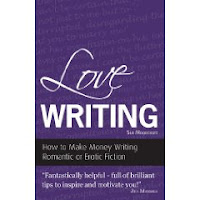
She is also the author of a non-fiction book, Love Writing: How to Make Money Writing Romantic or Erotic Fiction (Accent Press Ltd, 2010).

Her short stories have been featured in anthologies that include Sexy Shorts for Christmas (Accent Press Ltd, 2003) and Scary Shorts for Hallowe'en (Accent Press Ltd, 2004).

In this interview, Sue Moorcroft talks about her latest novel, Starting Over:

What would you say the novel is all about?

Starting Over is about Tess Riddell who, whenever she has a problem in her life, just moves on and starts over somewhere new. It’s a strategy that family and friends have problems with and, eventually, Tess finds a strong enough reason to tough things out.

How did the idea behind the novel come about?

The central male in the book, Ratty (Miles Rattenbury), came to me first. I was watching Kevin Kline as the Pirate King in a film of The Pirates of Penzance, my favourite Gilbert & Sullivan operetta. He was so swashbuckling, joyful and energetic … and that’s how Ratty entered my imagination. I like Ratty because he likes cars and so do I.

In Tess, I wanted quite a flawed heroine. One who had to really learn a lesson by the time the story concludes. She struggles with facing up to things for the whole book and it brings about a stormy finale when Tess forces herself to face up to something but goes about it all the wrong way.

These characters really captured my imagination and the combination of their two quite different personalities was bound to produce sparks. What interested me was whether they could work things out. Or whether they’d bother.

How long did it take you to write the novel?

I began this book a long time ago -- about eight or nine years. It wasn’t right, then, although it got me an agent.

Later, I heard about the publisher, Choc Lit, and when I saw that they wanted a strong hero with part of the book written from his point of view, I felt the time had come to revisit the book and see if I could see what was wrong.

Time gave me objectivity and I re-wrote sections, particularly at the beginning. A book’s content can age quite rapidly -- mobile phones had gone from a luxury item to a commonplace one, for example. It’s surprising what a difference that can make to the logic of the plot.

How would you describe the process that went into creating and producing the book?

Initially, I just began to write and let the plot take care of itself. (This isn’t an effective way of plotting, for me!) Then I went back and took out everything I realised wasn’t impacting directly on the thrust of the book. Then I explored the function of Olly, Tess’s ex-fiancé, a little more thoroughly. This brought the book into shape. I saw that having him only off-stage, as he once was, was illogical.

Stopping a relationship book is reasonably straightforward -- you have to decide whether the characters will get together or be ripped apart and then you do that, in a decisive manner. The temptation is to try and stay with them too long but I was quite stern about leaving Tess and Ratty at the conclusion to the story. Well … except for a short epilogue just to check up on them!

And giving Ratty a little cameo role in the next book …

When you’ve spent a long time with lovely characters it can be hard to let them go.

Which were the most difficult aspects of the work that went into the book?

I have to say that I enjoyed writing this book and also the re-writing that went into it. I understood comparatively late that something was wrong with the first chapter and, when I had that in shape, I had a really good feeling about the whole.

There is a scene in the book where Olly tries to bring Tess into line by insisting that her friend’s child, Jenna, is Tess’s (and, therefore, Olly’s) born in the interval between Olly backing out of their engagement and returning to seek Tess out some time later.

For a long time, I felt that Olly might actually have whisked Jenna away to use as a weapon against Tess. Finally, I saw that it wasn’t appropriate. Kidnapping -- which is what it amounted to, although you’d have a hard time convincing Olly of that -- belongs in a book that explores different issues to Starting Over. Kidnapping needs to be the focus of a story, not a sub-plot. So, I modified the situation and now I think it’s an impactful scene rather than a segment that’s out of keeping with the rest.

What did you enjoy most?

What I always enjoy -- polishing and editing.

Getting the first draft down is always the most difficult part.

How similar and/or different is it to the other books you have written?

It’s different to Uphill All the Way and Family Matters in that the central characters are a little younger and there is a focus on two characters, Tess and Ratty rather than four.

Starting Over is also a touch more humorous then the first two -- in fact, it’s categorised as a romantic comedy. The book that I hope will be published in 2010, All That Mullarkey, will be, too.

When I sold Uphill All the Way and Family Matters, there were openings for middle-aged heroines with ‘issues’ to address. That’s what some publishers were looking for, so that’s what I gave them. But Starting Over and All That Mullarkey are what I write from my heart -- the same kind of stuff as I like to read, with an involving central relationship and a few smiles along the way.

Resources:
Possibly related books:

,,

Related article:
  • Sue Moorcroft [Interview: 1 of 3], Conversations with Writers, March 10, 2009
  • Sue Moorcroft [Interview: 2 of 3], Conversations with Writers, January 4, 2010

Monday, January 4, 2010

[Interview_2] Sue Moorcroft

In an earlier interview, creative writing tutor and author, Sue Moorcroft spoke about her main concerns as a writer.

She now talks about her latest non-fiction book:

How would you describe Love Writing: How to Make Money Writing Romantic or Erotic Fiction?

The title says it all, really.

We chose a title like that so that it would show up well in searches on-line. Readers of ‘how to’ books tend to search using phrases that describe the content of the book.

The book brings together many of the areas I work in:I’d also written courses for the London School of Journalism, so had some experience of assessing what would be useful to the reader and arranging it coherently.

Having writing colleagues who had utilised their abilities in writing books on the craft of writing, it had occurred to me that, at some time, I might do the same.

Then two things coincided: I went through something in my personal life that made me find long fiction too emotionally demanding to write -- and I was invited out to a dinner at which Hazel Cushion of Accent Press would be present. Accent Press already published a selection of "how to write" books.

I told Hazel my idea and she asked to see a proper book proposal, after, in time-honoured fashion, we had roughed out some ideas on the back of an envelope. A few weeks later she accepted the proposal and offered a contract.

How long did it take you to write the book?

About seven months. Because I critique the work of distance learning students in the mornings, that would be afternoons. But I was also writing short stories and a serial and working on the edits for my novel, Starting Over.

You have to be versatile, in my game.

The proposal was where all the planning took place.

I began with chapter headings, which I played with until the order seemed logical, and then broke each one into sub-headings. That was pretty much the layout of the finished book, although I did consolidate a couple of chapters as they developed.

The publisher asked me to use my contacts in the world of romantic fiction to get input from other writers and industry professionals and I also collected some questions, mainly from unpublished writers. Getting these answered was a reasonable way of establishing what readers wanted to know.

I had to do a lot of research and that was really enjoyable -- reading on-line articles or debates, talking to speakers at conferences and so on.

I knew the wordcount that Accent Press wanted and I knew the ground that I wanted to cover. When I got to the end of the first draft of my planned subjects I had about 4,000 words too many. That was ideal, because I always cut quite hard when I’m polishing, which I feel creates pace. So I ended up bang on the money with the wordcount and about 15 days ahead of deadline.

Which were the most difficult aspects of the work that went into the book?

I was diffident about a couple of aspects of Love Writing.

The first was asking for quotes and input from published writers and industry professionals. However, I found that nobody seemed to mind being approached. A few refused nicely and said it wasn’t for them, a few just didn’t reply so I took that as a ‘no’. But the vast majority of them were happy to quote and, professionals that they are, went to great pains with their contributions. I’m grateful to them because their insight is gold dust.

My second reservation was whether I could write convincingly about areas I don’t write in, myself, such as speculative romance or hot erotica. But I discovered that it was possible to research these areas and canvass opinion, just like much non-fiction. I had a couple of segments read by writers in the relevant field and they okayed them, which gave me confidence.

What did you enjoy most?

Non-fiction is more black and white than fiction. There are answers to be found to questions. In that respect, it’s easier to write than grappling with the endless possibilities of fiction.

Love Writing is completely different to my other books, which were all novels, but I’d written ‘how to’ articles for writing magazines as well as two courses and a supplement for the London School of Journalism, so I felt Love Writing was a progression. A development.

I have an idea for another ‘how to’ book and Hazel at Accent is interested -- but I have to make certain that the material isn’t going to clash with another book they publish, before I write the proposal.

And I have another novel to finish, first…

Resources:Possibly related books:

,,

Related article:
  • Sue Moorcroft [Interview: 1 of 3], Conversations with Writers, March 10, 2009
  • Sue Moorcroft [Interview: 3 of 3], Conversations with Writers, February 26, 2010
  • Dave and Lillian Brummet [Interview: 1 of 2], Conversation with Writers, October 19, 2009

Tuesday, March 10, 2009

[Interview_1] Sue Moorcroft

Creative writing tutor and author, Sue Moorcroft was born in Germany and spent much of her childhood in Cyprus and Malta.

In addition to teaching creative writing classes, she has written and published five novels, among them, Uphill All the Way (Transita, 2005); A Place To Call Home (Magna, 2007) and Family Matters (Robert Hale, 2008).

Her short stories have been published in anthologies that include Sexy Shorts for Christmas (Accent Press Ltd, 2003) and Scary Shorts for Hallowe'en (Accent Press Ltd, 2004) .

She is also the editor of Loves Me, Loves Me Not, an anthology of short stories by the members of the Romantic Novelists' Association, which seeks to celebrate the RNA's 50th birthday in 2010. The anthology is to be published by Mira Books, in hardback in Autumn 2009 and paperback in February 2010.

In this interview, Sue Moorcroft talks about her writing:

Do you write everyday?

I normally write, or do something associated with writing or teaching writing, from 8 a.m. to 6 p.m., Monday to Friday. But I'm flexible and will sometimes take a day out in the week and work at the weekend.

Sometimes I work all seven days! It depends on what I'm doing and how much work I have on.

I tend to begin each day with e-mails and keeping up with writers' forums because they're valuable in networking and information gathering. Then I move on to students, then to writing.

What are your main concerns as a writer?

Making a living is always a concern. So I work hard and, I hope, with intelligent application, and that seems to bring enough money in, one way or another.

As I indicated at the beginning of the interview, I write in several areas. If I just wrote one novel a year I wouldn't make ends meet unless I miraculously got a wonderful contract, one that has escaped me until now.

Sometimes I find it hard to get going and I have to give myself a talking to, otherwise I'd spend all day writing e-mails and surfing the Net.

In the writing you are doing, who would you say has influenced you most?

Good question. I don't really have an answer to it as I have so many influences upon me: other writers, the wants of my agent or an editor, the state of my bank account ...

How have your personal experiences influenced the direction of your writing?

I like to write about things that mean something to me.

My first published novel, Uphill All the Way, is set partly in Malta. A bit of my heart will always live in Malta because I lived there as a child. I have set other works there and got a good response from editors and readers and I enjoy sending my characters there -- so it seems sensible, as well as enjoyable, to carry on.

And one always draws upon one's own emotions, of course. How can you describe being frightened if you've never had a fright?

On the other hand, what I don't know I research or I imagine. I think I'm quite empathetic and that helps in knowing how my characters will feel in a certain situation. My fiction is always about characters who could be real in situations any of us could find ourselves in.

My second novel, Family Matters, is about the effect that money can have on people. Some people will sacrifice a lot, friends and family, just so they can get their hands on some money. I'm not talking about to have enough money to eat, I'm talking about extra money so that they can have extra things. This happened in my family and gave me a bit of a disdain of people like that. I can see that money is useful to have, of course! But it's not the be all and end all.

What are the biggest challenges that you face?

It's like almost anything -- I work hard. I put the hours in, I pitch work to editors, I do work 'on spec' that may never be bought. I may be lucky in that my response to even a huge emotional incident is to bury myself in work.

Rejection is difficult, of course. If you've done your very best work and it is rejected, that's a horrible feeling. It can sometimes be a challenge to try again. Self-belief is part of my make up, happily.

Who is your target audience?

Most of what I write is for mainstream fiction and probably appeals more to women, although men do read my stuff and enjoy it. I often have male viewpoint characters.

I suppose I write roughly what I like to read and so I write for people roughly like myself.

How many books have you written so far?

I've written a lot more than I've published! Uphill All the Way (Transita, ISBN 978-1905175000) was published in April 2005 and is a book about recovery. In it, Judith has to get over losing her younger lover, her life in Malta and most of her money; Adam from losing three fingers, two homes and one wife. It's about a giant mid-life wobble and that there's life after it.

Family Matters came out in hardback with Robert Hale (ISBN 978-0709085232) in March 2008. It's about money and family and who thinks which is most important. It begins with a helicopter crash, one of the most difficult things I've ever written but it gets a good reaction, and that proves to be the catalyst for many secrets spilled...

A Place To Call Home (Magna, ISBN 978-1842625446) was a serial and it's out now as a large print book and follows the Randle family after they lose their nice life in Germany and have to return to the U.K. It explores how you start all over again when your old life crumbles through no fault of your own. It proves that it can be done!

Between Two Worlds was a serial, too, and it will be coming out as a large print book, but I have no details yet. It explores the modern phenomenon of two people marrying, a second marriage for each of them, and making two families into one. In this case, they come from very different backgrounds and have a lot of adjustment to make.

How did you chose a publisher for your latest book?

My latest published book is Family Matters. It took quite a while to write, maybe 18 months, because I began it four times before I was happy with the way it was going. There was a lot of research involved, too, particularly concerning a young character, Tamsin, who has some emotional and behavioural problems. I enjoyed working with her. I liked the central character, Diane, too, as is someone who will only take so much from people before she loses her cool. She is loyal to her husband for all of their marriage, even though some of his decisions seem to disadvantage her and their daughter, Bryony -- but once he lets her down, all hell breaks loose.

Family Matters was published by Hale in the U.K. in March 2008.

'Choosing' a publisher isn't really an option -- my agent sells my books for me. If she ever had the happy situation of more than one publisher making an offer then I would have a choice to make. But not till then.

Hale produce a great book and is professional to work with. However, the company only produce a hardback and it's difficult to get them to reprint when the first print run sells out, even if it sells out quickly, as mine did.

Which aspects of the work that you put into the book did you find most difficult?

I think it was the scope of the book that troubled me. Initially, it seemed too shallow with just one viewpoint character -- Diane -- and it was when I included viewpoints from Gareth, James and Tamsin that the book began to come alive.

One can only solve a problem like that by thinking it through and maybe talking it over with like-minded friends.

Which aspects of the work did you enjoy most?

Researching helicopters! I like helicopters! And planes and cars...

What sets the book apart from other things you've written?

I think it dealt with quite a hard subject and I'm quite proud that it didn't point the reader at a conclusion. There's room in the book for different attitudes and I think some readers will think that Diane was right in what she did but some will see the point of view of her husband, Gareth. I think it makes a good reading group book, for that reason.

In what way is it similar to the others?

Relationships! I like relationship books.

What will your next book be about?

Actually, it's about an aeroplane ... No, it's about learning to forgive yourself.

I've given Brenna an awful lot of things to contend with, a husband who goes missing, a building project that has gone wrong, losing her job, struggling with her teenaged son and also her older learning-disabled sister, Libby. Brenna feels guilty about Libby as she is convinced she was instrumental in the accident that left Libby with traumatic head injury. (But there really is an aeroplane in the book, the Unforgettable Juliet of the title.)

When did you decide you wanted to be a published writer?

I suppose I wanted to be seen as good enough to be published. I also wanted to earn money as a writer so I didn't have to do a 'proper job'.

It was a slow process.

After the first couple of novels, I began trying short stories because I read that if you had a track record of about 20 short stories with national magazines, a book publisher would take you seriously. This did work for me but I had sold 87 stories before I sold the first book!

I expand my areas of writing all the time. As well as short stories and books, I write articles and profiles for writing magazines and courses for the London School of Journalism. I have ideas for non-fiction articles and a non-fiction book that I haven't yet attempted. But the day will come.

I found building this body of work hard but rewarding and 'doable'. I learnt, through my course, through writing magazines, how-to books, conferences and seminars, how to approach editors, how to study the market and write for it. Then I did it!

I work with students all the time but am certain that only a small number send their work out to editors, agents or competitions. Editors rarely come knocking on the door to ask if you have anything in your desk that they might like to publish and pay for.

I learn about writing and publishing by staying in contact with those in the industry, reading what I need to read and putting it to intelligent use.

How would you describe the writing you are doing?

Hard work but enjoyable.

This week I have finished drafting the final episode of a serial called One Summer Night in Malta for a U.K. magazine, The People's Friend. I have sent that to a writing friend to read before I polish it. I'm not convinced that the ending is yet strong enough and anticipate that there's more work to be done.

I have also drafted a profile of a fiction editor of a new American fiction magazine and got together the visuals and sidebars for that. I've sent out four stories to overseas markets, stories that have been published in the U.K. already and needed some revision to suit the new market (and have sold one of them already).

In the back of my mind is my current novel, Unforgettable Juliet, which is also awaiting revision. But I've had a bereavement this summer and find I don't have the emotional energy for the novel, right now. It can wait.

What would you say has been your most significant achievement as a writer?

Um ... doing it, I suppose. Making it stick. Making a living. It's not a success in the J. K. Rowling category but it's still a success.

*This article is based on an email interview with Sue Moorcroft which took place in September 2008. Since then, the non-fiction book she referred to in the interview, one that was only an idea at the time, is now a reality and will be published in January 2010 by Accent Press as Love Writing: How to Make Money Writing Romantic or Erotic Fiction.

Possibly related books:

,,

Possibly related articles:

Sunday, July 27, 2008

[Interview] Linda Ballard

Romance novelist Linda Ballard lives in California in the United States.

Her books include Dreams of Forever, which was first published by Lavender Isis Press in March 2007, and Moments in Forever (Lulu, 2007).

Currently, Linda Ballard is working on the next three books in her "Forever" series of romance novels.

In this interview, she talks about her concerns as a writer.

How would you describe your writing?

100% Romance! I’m a romantic at heart, and I love the whole process of falling in love.

In real life we struggle with our hearts. The uncertainty and fear of when you first fall in love consumes us, unrequited love and the exquisite pain it produces, and the absolute joy when you discover that the man you pined over loves you just as much in return. However, in fiction, that fascinating process can be enhanced into levels of passion the average reader will never completely experienced in life. It is a fantasy of love, but based enough in reality that we can share the process and root for the lovers.

Who is your target audience?

Women between the ages 15 and 50, really, for all women in general.

When did you decide you wanted to be a writer?

I have been telling stories all my life, but dyslexia prevented me from realizing those stories on paper. It took years and my first computer before I was able to express my thoughts in an organized fashion. Unfortunately, it does take me twice as long to compose even to this day. Yet, the dream and my own determination to write was always there, even in childhood.

Who influenced you most?

Probably the work of Jane Austin. She has such a simple, but direct way of telling a story. I admire her very much.

What are your main concerns as a writer?

Without a doubt, it’s telling the story. As a writer, we have the rare privilege of taking our readers on a journey, one hopefully, they will enjoy and remember.

How have your personal experiences influenced your writing?

While I am writing I don’t realize how much of “me” or my life experience is being infused into the manuscript until I read back over it. Though I have a unique perspective on Hollywood through my own personal experience, I end up asking myself how I would feel under the circumstances I have created. Every question is basically answered by my own heart in a very human way.

Do you write everyday?

I am the most creative in the morning, so I am up about four. I will write five or six hours before I will take a break. Then I will come back later in the day to reread what I worked on earlier. As the manuscript expands, I jump from scene to scene, editing, rewriting, deleting until I get it right.

What is Dreams of Forever about?

Dreams of Forever is first of five in the "Forever" series. It is the story of movie star Daniel Hunter, who falls in love with his director, Rachel West while filming on location in Northern California.

In the first installment Daniel struggles with the notion that he just may be in love for the first time in his life. The 6’5” hunk has been adored by his fans, and can have any women he wants, but he’s never met anyone like Rachel. From their very first meeting he feels the grip of destiny.
He is certainly not alone, Rachel is well aware she is dealing with one of the most desired and sought after men in the world, but from the very first glance, she sees more than just his handsome face and muscular body. She seems to know that behind his beautiful blue eyes there is a gentle soul that captivates her heart.

How long did it take you to write the book?

I had been toying with the plot for a number of years, but it wasn’t until the last two before I got really serious about completing the manuscript.

Which aspects of the work you put into the book did you find most difficult?

I don’t like the bad guys, and there always has to be, at least, one to create the conflict. Actors find it to be more interesting to play evil characters, believing they are somehow more complicated. However, being bad is easy, in my opinion. You have no constraints on your evil quest.

I find the struggle to do the right thing in life far more interesting. This is something we all live with, deal with on a daily basis, and so therefore, we identify with the struggle in an honest manner. Bad is simple, the quest to do the right thing is tough.

Which did you enjoy most?

I enjoy the whole process of bringing the lovers together, from the first moment to the last. I look forward to the first kiss the most.

What sets the book apart from other things you have written?

It is the most human.

Dreams of Forever is a work of fiction, but it challenges our most basic flaws and strengths. We all struggle with the issue of faith when what we want the most seems at odds with what we believe. It addresses the common problem of how we can be our own worst enemy, and yet, still somehow rise above adversity, but most of all it deals with the conquest of personal fears. Most important, I wanted to test the boundaries of love and found there are no limits, there is nothing we would not do for love.

This article has also been featured on OhmyNews International.

Related article:

Interview with Linda Ballard, Romance at Heart Magazine.

Related books:

,,