Showing posts with label Deborah Tyler-Bennett. Show all posts

Wednesday, July 24, 2019

Interview _ Deborah Tyler-Bennett

Deborah Tyler-Bennett is a poet and fiction writer with eight volumes of poems and three volumes of short linked stories to her credit. She is currently working on her first novel, Livin' in a Great Big Way. Her new volume, Ken Dodd Takes a Holiday, will be out from King's England in 2019.

Her poems have also been featured in anthologies that include Bollocks to Brexit: an Anthology of Poems and Short Fiction (CivicLeicester, 2019), Leicester 2084 AD: New Poems about The City (CivicLeicester, 2018) and Welcome to Leicester (Dahlia Publishing, 2016).

In an earlier interview, Deborah talked about her concerns as a writer, and some of the influences she draws on.

In this new interview, Deborah talks about her latest book, Mr Bowlly Regrets, and about poetry and politics:

Do you write every day?

I do write everyday: on trains; in cafés; in bars; at home; in other settings. I try and give myself a timetable between teaching Adult Ed creative writing, workshops, and performances, and the writing itself. I think the important thing is to do it. If the session is me writing alone, I split my day between the writing and reading aloud what I’ve done so far. I end when I feel the writing’s becoming stale and I need a break. I think knowing when to stop’s an art like anything else.

How many books have you written so far?

I have just finished the manuscript of my ninth poetry collection and am working on my first novel. I’ve also written three books of linked short fictions set in the world of variety. Also, I’ve had published a poetry pilot for schools and three creative writing textbooks and packs. I was fortunate enough to co-author the Victoria and Albert Museum’s creative writing web package with Gillian Spraggs. See below for details:

Volumes and Chapbooks: Poetry

Forthcoming 2019: Ken Dodd Takes a Holiday (King’s England).

Mr Bowlly Regrets (King’s England, 2017)

Napoleon Solo Biscuits (King’s England, 2015)

Volume Using Record Office Collection, Leicester:

Friendship’s Scrapbook (University of Leicester, 2015, reprinted and re-issued as two volumes in 2017, with extracts being published by the University’s Centre for New Writing in Women’s Writing in the Midlands 1750-1850, 2016). Two of the poems were later displayed on the front of Leicester University’s David Wilson Library and in the new Digital Resource Centre, for International Women's Day, 2018. ‘A Walk with Susanna Watts’ from the collection also appeared in Welcome to Leicester (Dahlia Publishing, 2016). Two Responses to the poems, plus a poem based on images of child migrants appeared in Leicester 2084 AD (CivicLeicester, 2018).

Kinda Keats (Shoestring, 2013): Inspired by Residency at Keats House, Hampstead.

Revudeville (King’s England, 2011): Featured many poems inspired by adult and school museum workshops.

Mytton … Dyer … Sweet Billy Gibson (Nine Arches, 2011). Three portraits in verse.

Pavilion (Smokestack, 2010). Poems set in Brighton and featuring images of Dandies.

Clark Gable in Mansfield (King’s England, 2003)

Selected Poems:

Take Five (Shoestring, 2003); The Staring Owl: An Anthology of Poems by the Poets of the King’s England Press (King’s England, 2017)

Special Museum Volume:

Ballad of Epping and Other Poems (Leicestershire Open Museum Pilot, 2007-2008)

Three linked books of short stories set in the 1940s/ 1950s/ 1960s world of variety:

Turned Out Nice Again (King’s England, 2013),

Mice That Roared (King’s England, 2015),

Brand New Beat (King’s England, 2017).

Museum and Education Volumes:

Words and Things: Writing Creatively from Objects and Art (with Mark Goodwin et al, Leicestershire County Council, 2008).

Speaking Words: Writing for Reading Aloud (Crystal Clear, 2005),

Poetry, Prose, and Playfulness for Teachers and Learners (with Mark Goodwin, Leicestershire County Council, 2004).

Museum Packs:

Leicestershire and Nottingham museums (includes Art and Education packs for Leicester’s Open Museum).

Special Commission, Victoria and Albert Museum:

Co-authored creative writing adult education web-package for the Victoria and Albert Museum with Gillian Spraggs, which included two of my poems on objects, these have since been used for summer schools at Wake Forest University, NC, USA and elsewhere.

See also Wellcome Collection work at the British Society for the History of Science (BSHS).
What is your latest book about?

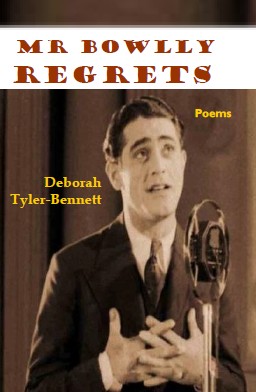
It’s called Mr Bowlly Regrets, is a book of poems, and came out from King’s England Press in 2017. It has many poems about growing up, memory, and change, some on performers, including Britain’s Bing Crosby, the wonderful Al Bowlly. It also contains a sequence on the First World War, which came from a series of Lottery Funded workshops done for Diseworth and other Leicestershire villages. Those poems often contain images of real soldiers from the villages’ war memorials.

I’ve also just completed a further volume of poems for King’s England, Ken Dodd Takes a Holiday which is due out later in 2019. The poems are mainly about theatre and imagery from the lives of Music Hall and Variety performers – of which an elegy for Ken Dodd (to my mind the last of the Victorian inspired performers) is key to the rest of the poems.

On top of these, I’m working on my first novel, Livin’ in a Great Big Way, for the same publisher. This tells the story of Dad, Rosa, and their daughter, Spring, who live on Velia Street, Sutton-in-Ashfield. When the novel opens it’s 1946. Spring’s beloved Aunt, Reena, is dying, and her husband, Nev, is just back from service in Italy. The family have kept things buttoned-up throughout the war, but as Reena fades, secrets and confessions begin spilling out. Also, Dad has visions of moving up in the world, while Rosa’s happy where she is. This is not to mention Grandad Stocks who lives with Mrs Close, much to the family’s shame, Mrs Jim, next door neighbor and Velia Street’s beating heart, and Butcher Mr Cole and his odd wife – whose dreadful crime will come to haunt them all.

How long did it take you to write the book? 

My forthcoming book of poems has taken me a couple of years but, interestingly-enough, some of the poems are earlier ones I had in magazines and have since re-written. The poems in Mr Bowlly, likewise, took a couple of years to write, and King’s England published it in 2017. The novel was begun on the way back from the Callander Poetry Weekend in Scotland, in 2017. At first, I thought it was a short story, but it got longer and longer. So, in the end I had to admit it was a novel and carry on!

How did you chose a publisher for the book? Why this publisher? What advantages and/or disadvantages has this presented? How are you dealing with these?

Over the years I’ve had many publishers including Shoestring Press, Smokestack, University of Leicester Press, Leicester County Council Press, Nine Arches Press, and others. But the majority-of my stories and poems have been published by King’s England Press, Huddersfield, under direction of Steve Rudd. When they accepted my first volume of poems, Clark Gable in Mansfield in 2003, they published mainly historic and children’s books. Over years their poetry and fiction lists have grown, and I’ve come to trust Steve’s judgement as an editor. He’s allowed me a lot of consultation on how the volumes look, and how my poetry and prose is presented. He’s also allowed me to experiment and been honest over what did and didn’t work. So, I’ve enjoyed working with him and continue to do so.

Which aspects of the work you put into the book did you find most difficult? Why do you think this was so? How did you deal with these difficulties?

I think with most of my books of poems I deal with memory and characters a lot. I want the poems to be true to the ‘voices’ of various narratives and narrators. So, I think about who sees, who speaks, and period detail as I work. In Mr Bowlly, I wanted the title poem to bring Al Bowlly’s life, the fact he’s such a great performer and yet didn’t get his fair dues from history (he died in 1941 during the blitz, is buried in a communal grave, and has a blue plaque but no statue), and his wonderful singing voice to life. In performance I sing bits of the poem. If someone comes away from reading the volume to watch a clip of him on YouTube, I’ll be happy.

Which aspects of the work did you enjoy most? Why is this?

I enjoyed playing with poetic form in Mr Bowlly – there are sonnets, monologues in rhyming couplets, shaped poems, a poem to the rhythm Longfellow uses in ‘Hiawatha’, unrhymed couplets, and poems chiefly in dialogue. I love playing with form and have previously used sestinas and villanelles, which I go back to in my forthcoming book. Form really tests you, makes you think, and alters the poetic ‘voice.’ I review many poetry books and always feel a bit cheated when a poet doesn’t stretch themselves via form. Lots of unrhymed ‘free verse’ (like many poems I find the term doesn’t really describe what a verse with structures you come up with is) can feel much the same to me. So, I like testing the limits of a poem, and form helps me do this.

What sets the book apart from other things you’ve written?

Although most books represent developments and, hopefully, advancements in style and technique, I think Mr Bowlly differed in that I wanted the sections of the book to be read in tandem, but also stand alone.

I also think I dealt with the subject matter of the First World War in a more sequential way. Those poems were important to me as they dealt with histories of real soldiers that I came across during my workshops and I really wanted to get things right. I also realised that I used the poems to memorialise people who may not have got much of a memorial in death, a technique I began with an earlier poem about my Great Grandad’s son – ‘James William Gibson’ (in Mytton …Dyer …Sweet Billy Gibson) – who died in infancy and was buried below the cemetery wall. The soldiers I came across and used in poems for this newer volume often came from Institutions like the Industrial Schools, so, their next of kin might be their last employer.

In what way is it similar-to the others?

I think I’ve looked at similar histories and voices throughout my poetic career – maybe I’m fascinated with the ‘little things’ in history (both familial and wider) which, as my friend Ray Gosling once remarked, might be more important than the big things.

What will your next book be about?

As this will be the novel, I’d say about family life, of the triumphs and tragedies of human beings being able to live and work together. I realised, also, that the book has a lot of images of craft, (sewing, making, cooking etc.) that may go un-sung as a talent because people separate if from art. I collect vintage items from the 1940s, and often go to 1940s events, loving the music, endurance, and style of the period. Talking to historians and re-enactors (there are some splendid displays on the Home Front, from wedding dresses to the contents of a larder) has made me aware that making something from nothing is a skill to celebrate and venerate – yet often it’s passed-over in favour of the more showy-and-expensive object.

I have begun collecting brooches made by women (started when Mum gave me a brooch made by my Great Aunt from fuse wire, a belt buckle, and buttons shaped like flowers) and marvel at the artistry they create from things you would throw away. I wanted the novel to celebrate craft as someone’s art, their talent, and love – hence Reena in the book is a wonderful seamstress, and Mrs Jim comments at what she might have achieved with money behind her.

What would you say has been your most significant achievement as a writer?

I think, like most writers it’s carrying on writing. Not many people get to do what they love every day, and I think that’s something to be celebrated and, also, marveled at. Obviously, getting published is significant, as it gives your voice an audience, and I hope never to take this for granted. I’ve also been very lucky in the places I’ve worked and read in from the Wellcome Trust, Brighton Pavilion, and Keats House in Hampstead (where I did a residency), to small art galleries, schools and colleges – I wouldn’t have guessed, early on, that I’d work for any of them.

You have a poem featured in Bollocks to Brexit: An Anthology of Poems and Short Fiction. How did the poem come about?

I was tremendously pleased to be asked to be in the book and another poem on Brexit, ‘Ennui’, appears in my new collection. As a writer and someone who has always considered themselves a European, the divisions occasioned by Brexit have made me tremendously sad. I think that the poem, which I wrote especially for the volume, gave me an opportunity to highlight these divisions as they seem to me.

I hope the poem gives you a whistle-stop tour of what I observed after the vote, and how I consider it is the young who will suffer loss of opportunities, from which European Citizens such as myself benefited, from this most disastrous decision. When you feel that your voice is not being heard above shouting – poetry can give you your voice back.

Why is it important for poets to speak up on social, political and related matters?

Poetry has always spoken out on such matters! From Shelley to Blake, Suffragette poets to John Cooper Clarke, poets speak for themselves but also often for the excluded, and those finding themselves ‘voiceless.’

I think it’s worth considering that people sometimes remember lines from a poem giving protest, such as poems by Sassoon, Owen, and Graves from the First World War and those lines come to represent certain times in history perhaps more poignantly than anything else.

What do anthologies like Bollocks to Brexit add to poetry and public discourse?

In a time of shouting, it’s important to hear something more measured, and in a time when phrases such as ‘will of the people’ are being bandied about, it’s a good thing to remember that not all ‘people’ are being represented. You can read a poem over-and-over again, and think about it, come back to it. I always thought Barrack Obama sounded a better statesman than most, because I felt he’d considered his words with care.

Poetry considers its words with care.

Seamus Heaney talked of the right words in their proper places. I think public discourse, at present, is lacking in thoughtful, measured words. Perhaps it’s up to poetry to fill-in the gap.

Friday, July 19, 2019

Interview _ Deborah Tyler-Bennett

Deborah Tyler-Bennett’s forthcoming volume, Ken Dodd Takes a Holiday, is out from King’s England Press in 2019, and her first novel, Livin’ In a Great Big Way is in preparation for the same publisher. She also has two recent volumes from the same publisher – Mr Bowlly Regrets – Poems, and Brand New Beat: Linked Short Fictions Set in the 1960s (both 2017).

She’s had seven collections of poetry published, some previous volumes being Napoleon Solo Biscuits (King’s England, 2015), poems based on growing up in the 1960s and ‘70s, and Kinda Keats (Shoestring, 2013), work deriving from a residency at Keats House, Hampstead.

Her first collection of linked, 1940s set, short stories, Turned Out Nice Again came out from King’s England in 2013, and a sequel, set in the 1950s, Mice that Roared was published in 2015, Brand New Beat, set in the 1960s, represents the final part of the trilogy.

In 2016, The Coffee House Anthology from Charnwood Arts marked the final volume of Coffee House magazine, which she edited for twenty-five issues over fifteen years (this was featured on the Poetry Society’s poetic map of England).

Translations and publications of her poems have appeared in Spain, Ireland, The US, Scotland, Austria, and Romania, where they were broadcast on Radio Bucharest. She’s also read in Belgium.

Deborah regularly reviews poetry and has written books and education packs on creative writing.

Recent poems have appeared in the anthologies Double Bill (Red Squirrel, 2014), Maps and Legends (Nine Arches, 2013), Strike Up the Band: Poems for John Lucas at Eighty (Plas Gwyn Books, 2017), and the Max Miller Society journal, who recently published the elegy for Ken Dodd that forms the title poem in her new book. New poems appear in Leicester 2084 AD (CivicLeicester, 2018).

She regularly performs her work and has appeared at many venues in Brighton, London, the East Midlands and nationally. She occasionally teams up with music hall expert Ann Featherstone to perform variety stories from her first two collections. She also does many workshops for adult and school groups, teaches writing classes for the WEA, and hosts workshops for national galleries and museums.

In 2018 one of her poems was displayed on the side of Leicester University Library, and one at its new digital resource centre, for International Women’s Day.

With Gillian Spraggs, she co-authored the Victoria and Albert Museum’s creative writing web pages. She’s also currently working on a new poetic sequence, The Ladies of Harris’s List set in the eighteenth-century, and a series of music hall poems with Andy Jackson.

In this interview, Deborah Tyler-Bennett talks about her writing:

When did you start writing?

I’ve been writing things down for as long as I can remember being able to write and recall composing poems and bits of stories from the age of about eight. I don’t think I started taking the writing seriously until I was in my early twenties. Then you realise you’re starting to have drawers and notebooks full of stuff and you need to do something creative with it. I don’t think I felt I’d earned being called a ‘writer’ until I’d had a significant amount of work published.

How did you decide you wanted to be a published writer?

I think the above realisation (that you have lots of work and unless someone else gets to read it, it’s a little pointless, and also you have no feedback on what others think of it) drives you to send work out. Personally, I began sending poems to little magazines and competitions. I felt that if I had a body of published work behind me, and people responded to it, then maybe I could send work away for consideration as a collection.

The more I had published in little magazines, the more I felt I was becoming part of a poetic community and, also, most crucially, the more I learned. Editors sending advice and encouragement was invaluable to me. I also considered the range of where I sent to – I had quite a few things published in Ireland and found the magazines there an aesthetic delight. To achieve publication takes a thick skin and the old cliché about all writers getting used to rejections is true – but these make the publications you do get, sweeter.

How would you describe the writing you are doing?

I think my writing has changed a lot over the years. At-the-moment, I’ve just finished my ninth volume of poetry and am working on new poems. I’m also writing my first novel. This comes after three volumes of linked short stories. It’s always hard to describe your own work but I think I’ve become fascinated by the lives of so-called ‘ordinary’ people – and have come to believe that no one has an ‘ordinary life.’

I think writing is a great way of conveying past and present – and have noticed two things, recently, in commentaries on my work. Firstly, people comment on my use of Nottinghamshire dialect, as if it’s something unusual to use. Secondly, people often think I’ve invented elements that come from my own background and family history. I feel as if we’re living at a cultural time where, if we’re not careful, and despite the success of writers like Sally Wainwright and Andrew Graves on the script writing and poetry scenes, we’ll be going back to the idea of the arts as a preserve of the privileged and socially connected.

I realise what’s not unusual for me, seems unusual to some, and that there are many assumptions made about writing from ‘ordinary’ life.

I’m also using a lot of images and characters from music hall in my poetry (my new book’s titled Ken Dodd Takes a Holiday) as I do think that this reflects a type of history that often gets ignored, sidelined, or damned with the loaded phrase ‘popular culture.’

I’ve also started to take my painting more seriously and exhibit work and suspect that the colours and textures I use in visual art creep into my poems and stories.

Who is your target audience?

This question is interesting. When I started, I don’t think I thought in terms of a ‘target audience.’ Most poets I know are just glad to get an audience. But I do think over time I’ve become aware that with poetry in particular - I want my work to be accessible to the widest possible audience. I don’t really want someone to leave a reading of mine saying: “I didn’t get it.” Or “I think that was aimed at a poetry or literary-critical group.”

The same is also true of fiction. I like it when an audience laughs, holds its breath, or even joins-in. Maybe that’s the music hall influence again. I like it even more when someone approaches me after a reading to say that they didn’t think poetry was for them, but they enjoyed what I did and would go to a reading again. I try my stories out on local audiences, or reading them aloud at home, and hope that anyone who wanted to read something could do so without fear of being either talked at, down to, or addressed in a jargon clearly meant for a specific crowd.

In the writing you are doing, which authors influenced you most?

Like most writers, I love so many authors (both classic and contemporary) that it’s hard to narrow it down. I think the biggest influence on my poetry and storytelling has been the Orkney writer George Mackay Brown. He wrote novels, stories, poems, a column for his local paper, libretti, dramas and work for festivals. He could catch how people spoke, vibrant imagery of time and place and was fascinated by blurring boundaries between chronological periods. And his images are so vital, instead of saying someone was hungover he describes them as having a mouth ‘full of ashes’, lipstick imprinting a man’s cheek becomes ‘red birds’ – magic!

There are so many contemporary poets I admire, and I like those such as Emma Lee and Andrew Graves who are always experimenting and pushing the boundaries of what they do. Simon Armitage, Mark Goodwin, and John Hegley make me question how I write and what I can learn from people experimenting with language. Carol Leeming makes me think of how I perform and how I can do more, as do Ian Macmillan, Benjamin Zephaniah, and others. John Cooper Clarke, obviously, has an unmatchable status as performer and writer, I’ve always loved watching, hearing and reading him. I think it was Mark E. Smith of The Fall who said he didn’t wholly trust people who didn’t like John Cooper Clarke, and I think that’s sound (oh, that, and Elvis, too).

In prose, I’m still a huge fan of Dickens, as I think he tells such memorable stories full of such vibrant oddities. I did a PhD thesis on Djuna Barnes, and still find her work extraordinary. One book that I’ve found my most re-read is an anthology by John Sampson called The Wind on the Heath, about gypsies and published in the nineteen twenties. The stories and poems in it sing.

Likewise, I write a lot of ghost stories and am a huge fan of the form, loving E. Nesbit, Mary E. Braddon, Dickens, M.R. James, Ian Blake, and Susan Hill. Stars all. I think ghost stories are hard but worth it and reading around the genre helps you know your way around the structures of it. I swap ghost stories with Scottish writer, Ian Blake, and we enjoy a correspondence over the genre.

Sally Evans who edited Poetry Scotland has been a huge influence on my work, reading techniques, and has inspired me as a poet. Her poems do so much within economic lines and lingering images and I’ve never met anyone so welcoming and generous to her fellow poets. For years she and Ian King ran the Callander Poetry Weekend and it was a joy to attend and perform at that.

Lastly, I love European writing, and have always considered myself blessed as a writer to be part of Europe. The culture which includes writers as diverse as Balzac, Marco Vici, Hugo and Colette is an ever self-enriching one, and we have been fortunate indeed to be part of that.

How have your own personal experiences influenced your writing?

I think even if your telling of a certain story doesn’t seem connected to your own life experience, that experience will be embedded in this somewhere. Sometimes stories come directly from my family history, places travelled or lived in, or people met. Other stories might seem removed from the above, but actually- have elements of my experience in them.

Occasionally I write from a current event, and it’s true that living in ‘interesting times’ (a polite way of saying that you turn the news on every night wondering what on earth could have happened today) these ‘event’ based poems grow in number. Over the past year I’ve written poems as responses to the disaster of Brexit and about how lack of empathy leads people to disregard what’s happening to fellow human beings in front of their noses.

Even a poem based in the nineteenth century (‘The Boy Acrobat’s Villanelle’ published in Leicester 2084 AD) ended with an image of twenty-first century child migrants, children whose Dickensian plight can only be ignored via a spectacular lack of empathy.

What are your main concerns as a writer? 

Like most writers, I want to tell a story (whether in poetry or prose) well, and make the reader feel that the read was worth it. I also like putting people and places before the reader that come from my own growing-up, family stories, and local legends. I became aware in my late teens that my Grandma’s language, her bit of Nottinghamshire, and the world she grew up in, was vanishing. Like George Mackay Brown’s Orkney, I wanted to get some of it down before it went all together.

When I was writing my three volumes of stories set in variety, I had a desire to make the reader’s emotional response to the short fictions similar to those they’d get in a theatre – a story might bring a lump to your throat one minute and make you laugh in the next.

As with all such techniques and concerns, writers just have-to keep going, and I know whatever I’ve planned the story might well have other ideas. During the variety stories, an old lady, Grandwem (a cross between my Grandma and Great Aunt, plus some others) was going to be a minor character. She had other ideas and became the mainstay of all three books, the glue holding the family together.

In my current novel, the plan I’d made crashed and burned as a minor character did something awful as I wrote, and I had to go back and revise the whole first part of the book! Like painting, I love the unknown element that creeps in when you write, making me think of the old blues adage: ‘Make God laugh, tell him all your plans.”

What are the biggest challenges that you face? And, how do you deal with them?

I think for writers, challenges can be divided into practical working challenges, and aesthetic challenges.

The second category includes the obvious thing of being true to your ‘voice’ and the stories and poetic narratives you want to tell. In other words, it’s easy to become distracted from your purpose, think there are more fashionable things you could be writing, or forget why you wanted to tell a certain story in the first place. I’ve found it very useful to stop from time-to-time and ask: ‘why did you want to write this?’ I also find Robert Graves idea of ‘the reader over your shoulder’ very useful. Imagine someone looking at your work ‘over your shoulder’ – ask ‘what will they get out of it?’ If the answer is ‘not enough’ then that’s the time for a re-write or re-vision.

The first category I mentioned - the practical working challenge - may cover several bases. How much money do you need to earn to keep writing? Where does funding come from? How much time a week do you spend actually-writing? Is this time enough?

Due to current events, arts funding is going to become tighter, outreach for writers lessening as they are excluded from European opportunities, and I foresee writers who flourish will be previously established, have to work many more hours to stay afloat, or have private incomes and connections.

Reading information from literary bodies already indicates as much. I hope I’m wrong, and that writers beginning as I did from ordinary schools and backgrounds will have opportunities similar to mine. But I think most writers from state schools will struggle more, and that all writers will face challenges we couldn’t have seen prior to 2017. The challenge is (to mis-quote a US President) to do it because it is hard, to do it because it is there – to do it because that’s what you do. And (to misquote a US boxing legend) if you do what you love, strive to be the best at it you can be.